private pilot licence cost
Private Pilot Licence Cost: 2026 Breakdown
13 Sep 2026 · 17 min read
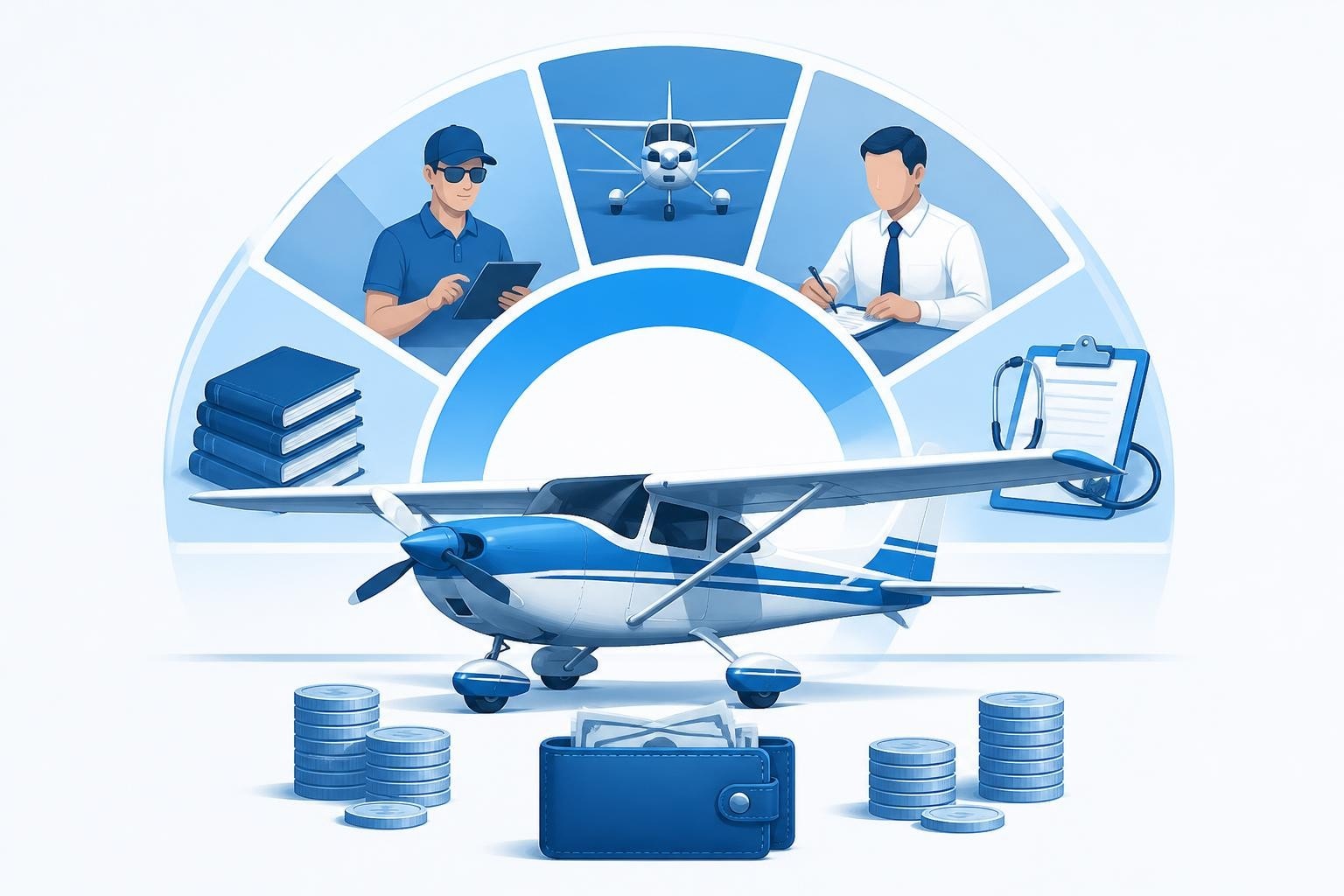
Private pilot licence cost typically ranges from £8,000 to £15,000 in the UK and $10,000 to $15,000 in the United States, depending on the route you choose and how efficiently you complete training. The total reflects three main components: aircraft rental charged by the hour, instructor fees, and one-time fixed costs such as exam fees, medical certificates, and study materials. Your final number depends on how many hours you need to meet the legal minimum, how often you fly, and where you train.
Every licence requires a defined minimum flight time, a written knowledge test, and a practical check-ride with a designated examiner. The FAA sets testing requirements for the Private Pilot Certificate at 40 hours total time, though the national average hovers closer to 60-70 hours. UK students pursuing a National Private Pilot Licence (NPPL) need at least 32 hours, while an EASA Part-FCL PPL(A) demands 45 hours. Rules change; always confirm current minimums and fees against official sources from your national regulator before you begin training.
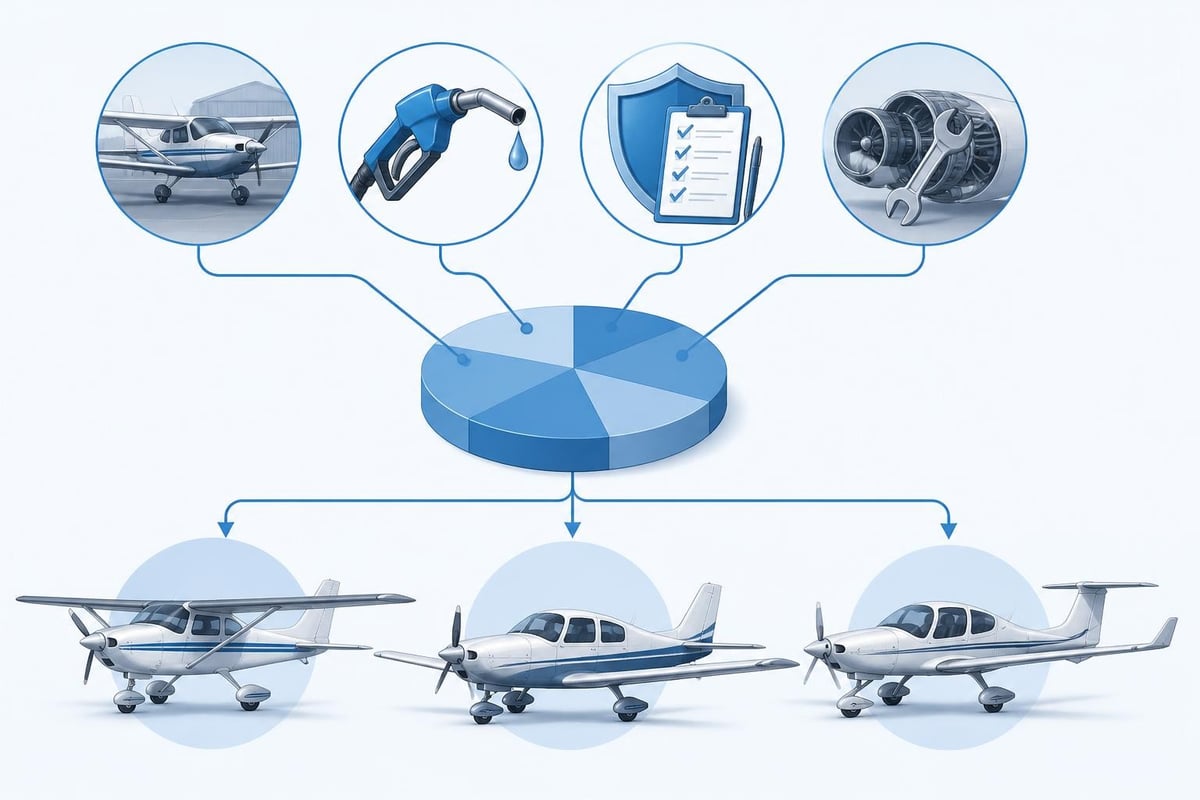
Hourly aircraft rental and fuel
Aircraft hire is the largest variable expense in your private pilot licence cost. Single-engine trainers such as a Cessna 152 or Piper PA-28 cost between £120 and £180 per hour in the UK, wet (fuel included). In the United States, expect $130 to $180 per hour for the same aircraft types at a typical Part 61 school.
Rental rates depend on several factors:
- Aircraft age and avionics: older analogue panels cost less; modern glass-cockpit trainers with Garmin G1000 suites can add 20-30% to the hourly rate.
- Location: airports near large cities charge higher tie-down and hangar fees, which schools pass on in their rates.
- Fuel surcharges: Avgas prices swing with oil markets; some schools add a temporary fuel surcharge when prices spike.
You will spend the majority of your total budget here. If you train for 60 hours at £150 per hour, aircraft costs alone reach £9,000. Fly more efficiently and finish in 50 hours, and you save £1,500.
Flight instructor fees
Flight instructors charge separately from the aircraft in most training environments. Typical rates range from £40 to £60 per hour in the UK and $50 to $75 per hour in the United States. Some schools bundle the instructor fee into a single "dual rate," while others itemize it on your invoice.
Your instructor bills for flight time, pre-flight briefings, and post-flight debriefs. A one-hour lesson often means 0.5 hours ground briefing, 1.0 hours flight, and 0.2 hours debrief, so you pay for roughly 1.7 hours of instruction. Clarify billing practices during your introductory flight.
Dual versus solo time: once your instructor endorses you for solo flight (typically after 10-15 hours), you fly certain lessons alone. Solo time costs only the aircraft rental, cutting your per-hour expense nearly in half. FAA regulations require at least 10 hours solo for a Private Pilot Certificate; EASA Part-FCL PPL(A) requires 10 hours solo supervised. Budget for about 40-50 hours dual and 10-20 hours solo in a realistic training plan.
Knowledge test and exam fees
Before your practical check-ride, you must pass a written knowledge test covering regulations, weather theory, aerodynamics, navigation, and aircraft systems. The FAA knowledge test costs $175 in 2026, administered by PSI or CATS testing centres. UK students taking the NPPL nine-paper exam pay approximately £300 in total CAA fees; EASA PPL candidates face similar charges spread across multiple subjects.
Study materials add another £150 to £300:
- Ground-school course (online or in-person): £100 to £250
- Textbooks and manuals (PPL guides, charts, plotter): £50 to £100
- Practice test software or apps: £20 to £50
Many flight schools include ground school in a bundled package. If you study independently using free resources and the AOPA's pilot-license cost guide, you can trim this line item significantly.
Designated examiner fees and check-ride costs
Your final hurdle is the practical test, administered by a Designated Pilot Examiner (DPE) in the US or an approved Flight Examiner in the UK. DPE fees are not regulated and vary by region. The Federal Register includes FAA estimates for DPE fees, which ranged from $600 to $900 in 2024 and have held steady in 2026. UK examiners typically charge £250 to £400.
You will also rent the aircraft for the check-ride itself. The oral and flight portions together take 3-4 hours, though you may log only 1.5-2.0 hours flight time. Budget one additional aircraft hour beyond the examiner's fee. If you fail a section, you pay for a re-test (partial or full, depending on what you failed), adding another examiner fee and aircraft rental.
| Exam component | US cost | UK cost |
|---|---|---|
| Knowledge test | $175 | £300 (NPPL) |
| DPE / examiner fee | $600–$900 | £250–£400 |
| Aircraft (check-ride) | $200–$300 | £200–£300 |
| Total exam costs | $975–$1,375 | £750–£1,000 |
Medical certificate expenses
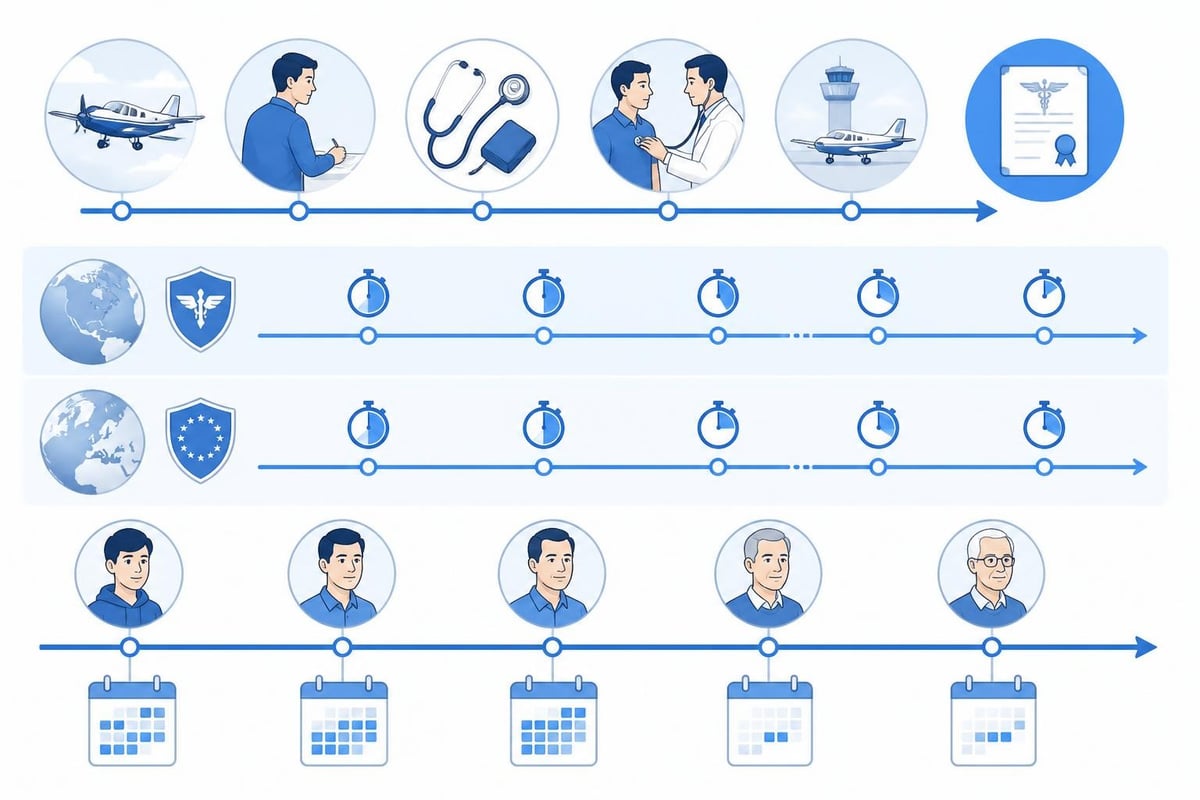
All private pilot applicants must hold a valid medical certificate. In the United States, you need at least a third-class medical issued by an FAA Aviation Medical Examiner (AME). The exam costs $75 to $150 and is valid for 60 months if you are under 40, or 24 months if you are 40 or older. UK NPPL candidates can use a UK driving licence medical declaration if they meet the criteria, avoiding separate medical fees; otherwise, an EASA Class 2 medical costs £150 to £250 and is valid for 60 months (12 months over age 40).
If you have a history of certain medical conditions, the AME may defer your application to the FAA or CAA for further review, which can add weeks or months and require specialist reports at your expense. Address medical questions early in your training to avoid costly delays.
Additional fixed costs
Several smaller expenses round out the private pilot licence cost:
- Headset: £100 to £400. Budget models (passive noise reduction) work fine; active noise-cancelling headsets improve comfort on long flights.
- Pilot supplies: kneeboard, logbook, plotter, E6B flight computer, charts - £50 to £100 total. Many students now use a digital pilot logbook from day one, eliminating paper logbook costs.
- Chart subscriptions: if you train under VFR, you need current aeronautical charts. Digital subscriptions (ForeFlight, SkyDemon) cost £50 to £150 per year; paper chart sets cost similar amounts and expire every 56 days.
- Insurance: renters insurance is optional but recommended. Policies covering hull damage and liability run £150 to £300 per year for student pilots.
- Registration and licence fees: FAA charges $5 for the actual plastic certificate once you pass; UK CAA charges approximately £120 for initial licence issue.
Training at Part 141 schools versus Part 61
In the United States, you can train under FAA Part 61 (individual instruction) or Part 141 (approved school syllabus). Part 141 schools must follow a structured curriculum approved by the FAA and can certificate students at 35 hours minimum instead of 40. In practice, average completion time at Part 141 schools is 50-55 hours, versus 60-70 hours at Part 61 operations.
Part 141 programs often cost more per hour because of higher overheads (dedicated classrooms, standardized materials, staff). A bundled Part 141 course might quote $12,000 to $14,000 upfront. Part 61 students pay as they go, which offers flexibility but less cost predictability. The FAA's Airman Certification Standards define the tasks you must master under either pathway, so your readiness, not the regulation, drives total hours and cost.
UK NPPL versus EASA PPL(A)
UK students face a choice between the National Private Pilot Licence (NPPL) and the EASA Private Pilot Licence (Aeroplanes). The NPPL is simpler and cheaper: 32 hours minimum flight time, nine written exams, and fewer privileges (UK airspace only, maximum four seats, no night flying). The UK CAA's NPPL guidance estimates total costs around £6,000 to £8,000.
An EASA Part-FCL PPL(A) requires 45 hours, a more comprehensive syllabus, and nine theoretical exams at a higher standard. Total cost typically reaches £10,000 to £14,000, but the licence is valid throughout EASA member states and can be used for further ratings (night, aerobatic, type endorsements). For pilots planning to fly across Europe or add an instrument rating later, the EASA route offers better value long-term.
Scholarships and financial aid
Funding a private pilot licence cost upfront is difficult for many students. Scholarships can reduce your net expense significantly. The AOPA Foundation scholarship program awards dozens of grants each year, ranging from $2,500 to $10,000 for flight training. The LIFT Scholarship Guide lists hundreds of additional opportunities from aviation organizations, manufacturers, and local flying clubs.
In the UK, government research has examined barriers to training; the Department for Transport report on pilot training costs highlights systemic issues but also points to industry-led scholarship schemes and cadetship programs. Apply widely, meet deadlines, and tailor your essays. Many scholarships require only a short application and a letter of recommendation from an instructor or mentor.
Hidden costs and budget overruns
Most students underestimate their final private pilot licence cost because they budget for the legal minimum hours. The 2026 Rotate pilot-cost guide breaks down line items transparently, showing that pre-solo students average 12-15 hours, solo students need another 10-15 hours of supervised practice, and cross-country and test prep add 15-20 hours more.
Other common overruns:
- Weather cancellations: if you fly once a week and half your lessons cancel for weather, your training stretches over 18 months instead of 6. Longer timelines mean more review flights.
- Skill plateaus: mastering landings or emergency procedures sometimes takes extra sessions. Budget 5-10 contingency hours.
- Discontinuances: if the examiner stops your check-ride due to weather or a failed task, you pay for another session.
- Currency gaps: if you pause training for months, you need refresher flights before resuming solo work.
Add 10-15% to your initial budget as a contingency fund.
Worked example: US Part 61 student
Here is a realistic breakdown for a student training under FAA Part 61 in the United States, completing in 60 hours:
| Item | Rate | Hours/Qty | Subtotal |
|---|---|---|---|
| Aircraft rental (dual) | $150/hr | 45 | $6,750 |
| Aircraft rental (solo) | $150/hr | 15 | $2,250 |
| Flight instructor | $60/hr | 50 | $3,000 |
| Knowledge test | $175 | 1 | $175 |
| DPE fee | $750 | 1 | $750 |
| Aircraft (check-ride) | $150/hr | 2 | $300 |
| Medical certificate | $125 | 1 | $125 |
| Study materials | lump sum | 1 | $200 |
| Headset and supplies | lump sum | 1 | $250 |
| Total | $13,800 |
This student trained twice per week over seven months, passed the knowledge test on the first attempt, and passed the check-ride with no discontinuance. The total matches the middle of the typical US range. A student finishing in 50 hours would save roughly $1,500 in aircraft and instructor fees.
Worked example: UK EASA PPL(A) student
A UK student training for an EASA Part-FCL PPL(A) and completing in 55 hours:
| Item | Rate | Hours/Qty | Subtotal |
|---|---|---|---|
| Aircraft rental (dual) | £140/hr | 40 | £5,600 |
| Aircraft rental (solo) | £140/hr | 15 | £2,100 |
| Flight instructor | £50/hr | 45 | £2,250 |
| Ground school | lump sum | 1 | £200 |
| Theoretical exams (nine) | £300 | 1 | £300 |
| Examiner fee | £350 | 1 | £350 |
| Aircraft (skill test) | £140/hr | 2 | £280 |
| EASA Class 2 medical | £200 | 1 | £200 |
| Study materials and charts | lump sum | 1 | £150 |
| Headset and supplies | lump sum | 1 | £200 |
| CAA licence issue fee | £120 | 1 | £120 |
| Total | £11,750 |
This student flew twice per week, passed all nine theoretical exams on the first sitting, and completed the skill test in one session. The cost sits near the middle of the UK EASA range. Choosing an NPPL instead would have saved approximately £3,000-£4,000 but limited future privileges.
How flight frequency affects cost
Flying more often reduces your total private pilot licence cost. Students who fly three or four times per week retain skills between lessons and need fewer review sessions. A student flying twice per month will forget procedures, require extra pattern work, and stretch training over 18-24 months, adding 10-20 hours to the total.
Compare two students starting with the same goal:
- Student A flies four times per week, completes training in four months, logs 50 hours, spends £7,000 on aircraft, £2,500 on instruction.
- Student B flies once per week, completes training in 14 months, logs 70 hours, spends £9,800 on aircraft, £3,500 on instruction.
Student A saves £3,300 by maintaining momentum. Frequency also keeps you sharp for the knowledge test and practical exam, reducing the chance of expensive re-tests.
Regional cost variations
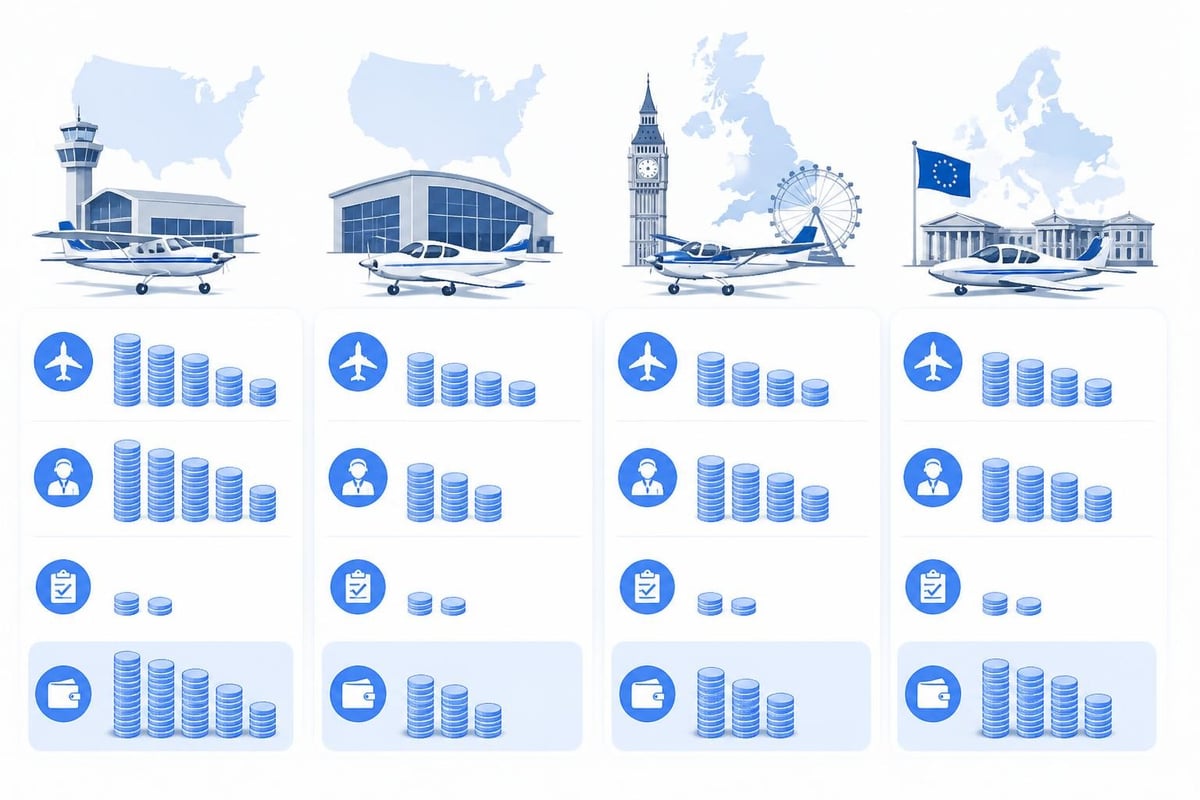
Private pilot licence cost varies significantly by region. Coastal US cities (Los Angeles, New York, Miami) and major UK airports (London-area fields) charge premium rates for aircraft and instruction because of higher real-estate, insurance, and operating costs. Rural airports in the Midwest, Scotland, or Wales offer lower hourly rates.
United States: expect $10,000-$12,000 in the Midwest and South, $12,000-$16,000 on the coasts. Alaska and Hawaii add further premiums.
United Kingdom: £8,000-£10,000 in northern England, Scotland, and Wales; £11,000-£15,000 in the South-East. London-area schools can exceed £16,000 for a full EASA PPL(A).
Europe: EASA training costs vary widely. Spain, Portugal, and Eastern European countries offer lower rates (€8,000-€10,000), while Germany, France, and Scandinavia align with UK pricing. The European Commission's pilot training analysis provides deeper context on regulatory and economic factors driving these differences.
Tracking your progress and staying current
Once you earn your licence, maintaining currency is essential. FAA regulations (14 CFR 61.57) require three takeoffs and landings in the preceding 90 days to carry passengers; night currency requires three night takeoffs and landings to a full stop in the preceding 90 days. EASA Part-FCL (specifically FCL.060) requires 12 hours flight time in the preceding 12 months, including six hours as pilot-in-command and 12 takeoffs and landings, plus a training flight with an instructor if you have not met these minimums.
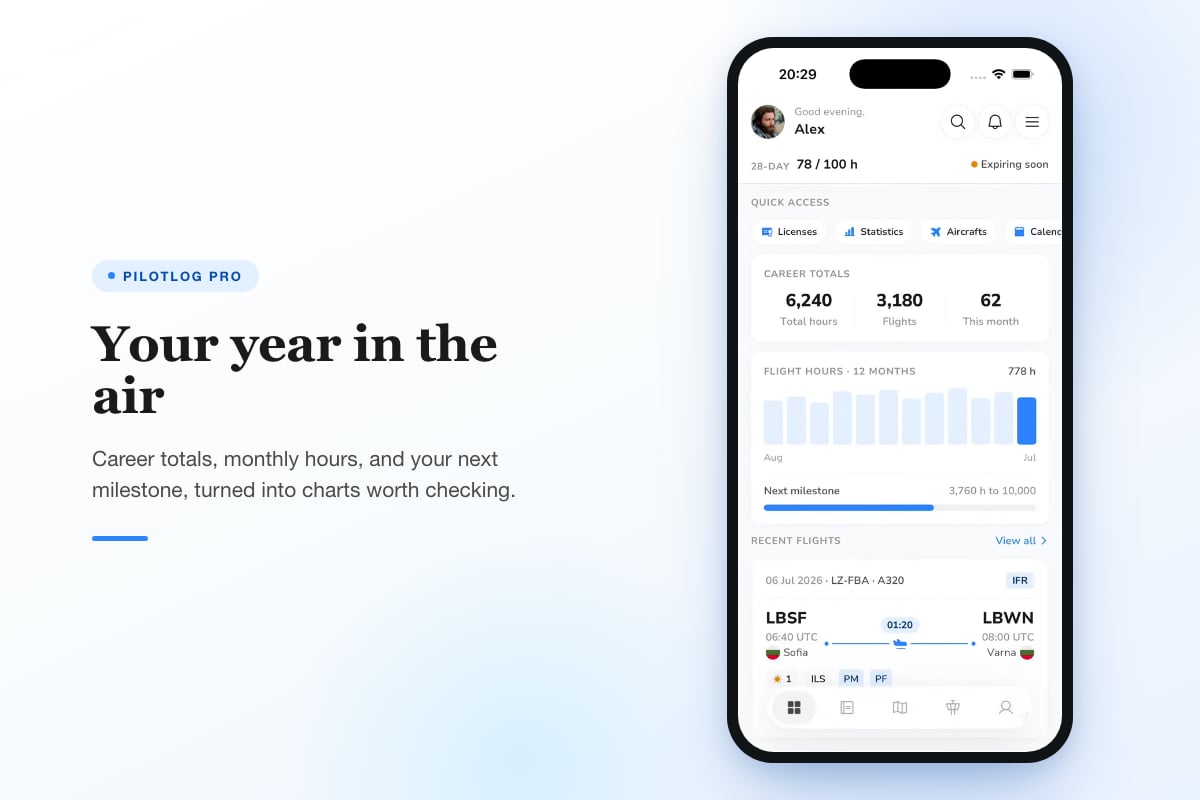
Staying current means regular flying, which adds ongoing cost beyond your initial training. Pilotlog Pro tracks your rolling 90-day takeoff and landing totals, alerts you when currency lapses, and flags licence and medical expiry dates so you never miss a renewal deadline. It helps you plan which flights maintain the specific currency you need.
Budgeting tips for student pilots
Set a realistic total: use the worked examples above and adjust for your region and expected pace. Add 15% contingency.
Pay as you go or block time: some schools offer discounts if you prepay blocks of 10 or 20 hours. This saves 5-10% but locks in your funds. Only prepay at established schools with strong financial track records.
Track every expense: from day one, log flight costs, ground-school fees, exams, and supplies. A digital logbook for aviation makes it easy to record not just flight hours but also associated costs, helping you spot budget creep early.
Minimize gaps: consistency is cheaper than stop-start training. If you must pause, keep studying regulations and procedures to reduce the review time when you resume.
Shop around: request quotes from three schools. Compare not just hourly rates but aircraft condition, instructor experience, and pass rates. The cheapest school is not always the best value if older aircraft or high instructor turnover slow your progress.
You can explore broader context on pilots licence cost across different certificate levels, or compare with helicopter lessons cost if you are considering rotorcraft training.
Financing and payment plans
Few students pay the full private pilot licence cost upfront. Many US flight schools partner with lenders offering pilot-training loans at variable interest rates (currently 7-12% APR in 2026). Loan terms typically run 3-5 years, with monthly payments of $200-$400 for a $12,000 loan. Compare lenders carefully; some specialize in aviation training and offer flexible deferment if you pause training.
In the UK, pilot-training loans are less common. Some schools offer in-house payment plans spreading cost over 6-12 months. Personal loans or credit cards are alternatives, though interest rates may be higher. Scholarships remain the best way to reduce your net cost; apply early and often.
Insurance and liability
Student pilots are high-risk from an insurer's perspective. Most flight schools carry hull and liability insurance covering their aircraft, but that policy may have a deductible ($1,000-$5,000 in the US, £1,000-£3,000 in the UK) for which the student is liable in the event of an accident. Renters insurance protects you against this deductible and provides additional liability coverage.
Renters policies cost $150-$300 per year for students. They often include coverage for checkout flights in unfamiliar aircraft and short-term rentals away from your home base. If you plan to rent after you earn your licence, renters insurance remains a sensible ongoing expense. Factor it into your long-term flying budget, not just your training cost.
What happens after the private pilot licence
Earning your PPL opens the door to further ratings and certificates, each with its own cost structure. An instrument rating adds 40-50 hours and $8,000-$12,000. A commercial certificate requires 250 total hours and another $15,000-$25,000 beyond your PPL. Multi-engine and type ratings vary widely.
Every additional rating builds on your private pilot licence cost, so choosing the right initial training path matters. If you plan a professional career, budget for the full sequence from day one. If you fly for recreation, a simple NPPL or Sport Pilot certificate may meet your needs at lower cost. Understanding your long-term goals helps you allocate training funds wisely and avoid expensive backtracking.
For pilots pursuing airline careers, resources such as flight time limits and currency cheat sheets become essential tools once you begin logging multi-crew time and managing complex duty rosters.
Using a digital logbook from day one
Starting your training with a best digital logbook for pilots offers advantages beyond simply recording hours. Digital logbooks calculate your totals automatically, flag currency requirements, and export data for insurance, job applications, or check-ride prep. You avoid transcription errors common in paper logs and can back up your records in the cloud.
Many students begin with paper and later migrate to digital, which requires manual re-entry of months or years of flights. Starting digital from your first lesson saves that labour. Modern apps sync across devices, so you can log a flight on your phone immediately after shutdown and review progress on a tablet during ground school.
Comparing options such as Jeppesen Pro Pilot Logbook or newer platforms helps you choose the tool that fits your workflow and budget. Some logbooks charge monthly subscriptions; others offer lifetime licences. Evaluate features such as currency tracking, automatic backups, and regulatory compliance before committing.
Final cost summary
Private pilot licence cost in 2026 breaks down into predictable categories: aircraft rental (largest), instructor fees (second largest), and fixed costs (exams, medical, materials). Your total depends on how many hours you fly, how often you train, and which regulatory pathway you choose. Realistic budgets range from £6,000 for a UK NPPL to $15,000 for a US Part 61 PPL completed in 70 hours.
Efficiency matters. Students who fly frequently, prepare thoroughly for each lesson, and manage their medical and knowledge-test timelines early will finish faster and spend less. Scholarships, payment plans, and careful school selection further reduce your net expense. Track your costs from the first lesson, add a contingency buffer, and plan for ongoing currency and insurance costs after you earn the licence.
Rules, fees, and hour requirements evolve. Always verify current minimums and charges with your national aviation authority before beginning training.
Private pilot licence cost varies with training pace, location, and pathway, but careful budgeting and consistent flying keep expenses predictable and manageable. Once you earn your licence, maintaining currency and tracking expiries become the next challenge. Pilotlog keeps you current, legal, and ready by logging flights in seconds, tracking rolling currency windows, and alerting you to upcoming medical and licence renewals so nothing catches you by surprise.
- private pilot licence cost
- ppl training cost
- flight training fees
- aircraft rental rates
- checkride fees
A logbook that keeps itself.
Join the waitlist and be first in line when Pilotlog launches.
Free to join, no spam. Unsubscribe any time.