helicopter lessons cost
Helicopter Lessons Cost: Real Numbers & Budget Planning
9 Sep 2026 · 11 min read

Helicopter lessons cost between £250 and £450 per hour in the UK and $300 to $500 per hour in the US, depending on aircraft type, school location, and instructor experience. A private pilot licence (helicopter) typically requires 45 hours under EASA rules or 40 hours under FAA regulations, putting total training cost between £11,000 and £20,000 (or $12,000 to $20,000). Commercial training runs significantly higher, requiring 150+ hours total time and pushing costs to £50,000–£90,000. Regional differences, simulator use, block-hour discounts, and hidden fees can shift these numbers substantially.
Understanding helicopter lessons cost starts with three core variables: hourly aircraft rental, instructor fees, and minimum hour requirements set by your national regulator. The aircraft itself is usually the largest component, ranging from £200 to £350 per hour for a Robinson R22 or R44. Instructor fees add £40 to £100 per hour on top. Ground school, exam fees, medical certificates, and licence application costs layer on several thousand more.
Helicopter Lessons Cost by Licence Type
Private Pilot Licence (Helicopter)
Under UK CAA rules, a PPL(H) requires 45 hours minimum flight time, including 25 hours dual instruction and 10 hours solo (five solo cross-country). Most students complete between 50 and 60 hours before reaching test standard. At £300 per hour dual and £250 per hour solo, total flying cost runs £14,000 to £17,000.
Ground school adds £1,000 to £2,500 for classroom tuition, materials, and nine written exams. Medical certificate (Class 2) costs £150 to £250. Skills test fees run £500 to £750. Total PPL(H) cost typically lands between £15,500 and £21,000.
FAA private helicopter pilots face a 40-hour minimum under Part 61 (20 dual, 10 solo), but national averages sit closer to 55 hours. The FAA Helicopter Flying Handbook outlines manoeuvres and knowledge areas tested on the practical exam, which directly shape training hours needed. US schools charge $300 to $450 per dual hour, $250 to $350 solo, for a typical total of $16,500 to $25,000.
Commercial Pilot Licence (Helicopter)
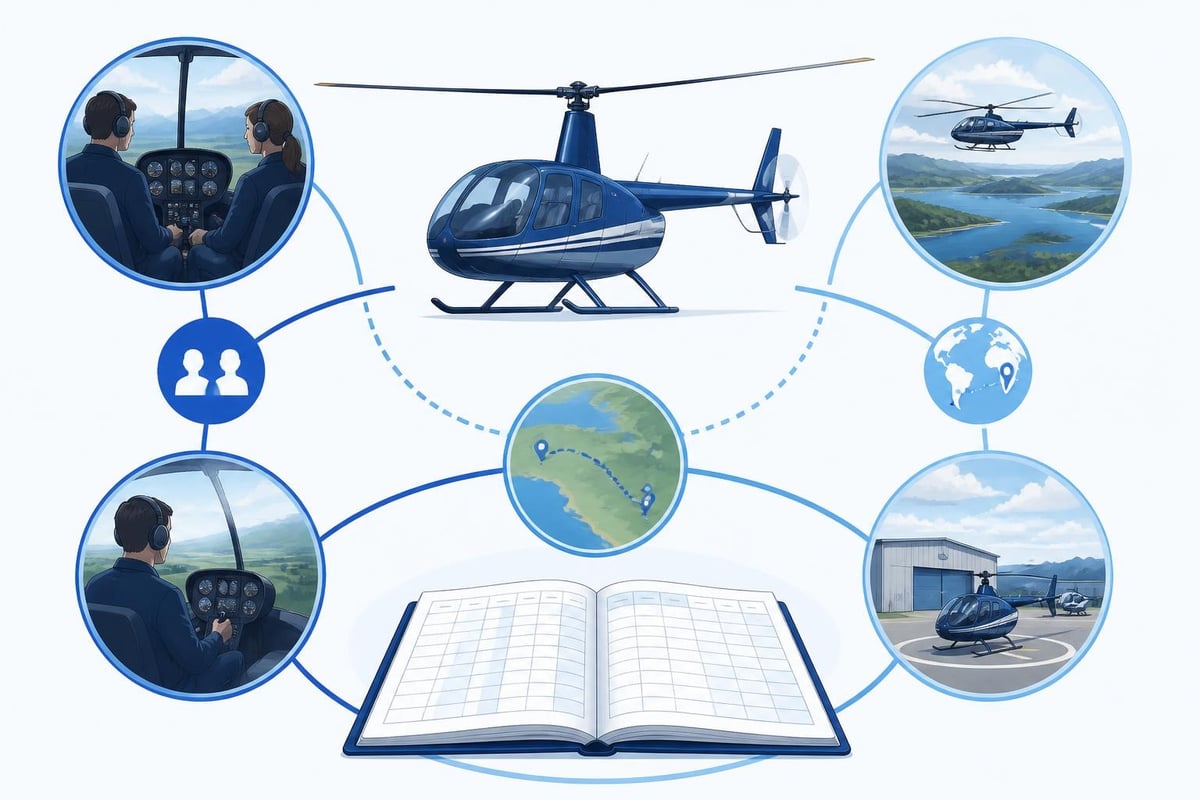
UK CAA commercial helicopter training requires 185 hours total time, including 50 hours as pilot-in-command and 35 hours dual. Many students enter with a PPL(H), so the commercial add-on is typically 100 to 120 additional hours plus advanced instrument and navigation training. At £300 to £400 per hour, commercial add-on cost runs £30,000 to £48,000.
Total zero-to-CPL(H) cost in the UK ranges from £55,000 to £90,000 when combining private and commercial training, exams, and medicals (Class 1). Integrated courses offered by larger schools can reduce the total by 10 to 15 per cent through block pricing.
FAA commercial helicopter pilots need 150 hours total time under Part 61, including 100 hours PIC and 20 hours dual cross-country. Most reach checkride standard at 155 to 165 hours. Pilot Institute's cost breakdown shows typical US zero-to-commercial totals of $60,000 to $85,000, depending on aircraft and school efficiency.
| Licence | Min. Hours | Typical Hours | Hourly Rate | Total Flight Cost | Ground + Exams | Total Cost |
|---|---|---|---|---|---|---|
| PPL(H) UK | 45 | 50–60 | £250–£350 | £12,500–£21,000 | £2,000–£3,500 | £14,500–£24,500 |
| PPL(H) US | 40 | 50–60 | $250–$450 | $12,500–$27,000 | $1,500–$3,000 | $14,000–$30,000 |
| CPL(H) UK | 185 total | 185–200 | £250–£400 | £46,000–£80,000 | £9,000–£12,000 | £55,000–£92,000 |
| CPL(H) US | 150 total | 155–170 | $250–$500 | $38,750–$85,000 | $8,000–$12,000 | $46,750–$97,000 |
Aircraft Type and Hourly Rate Breakdown
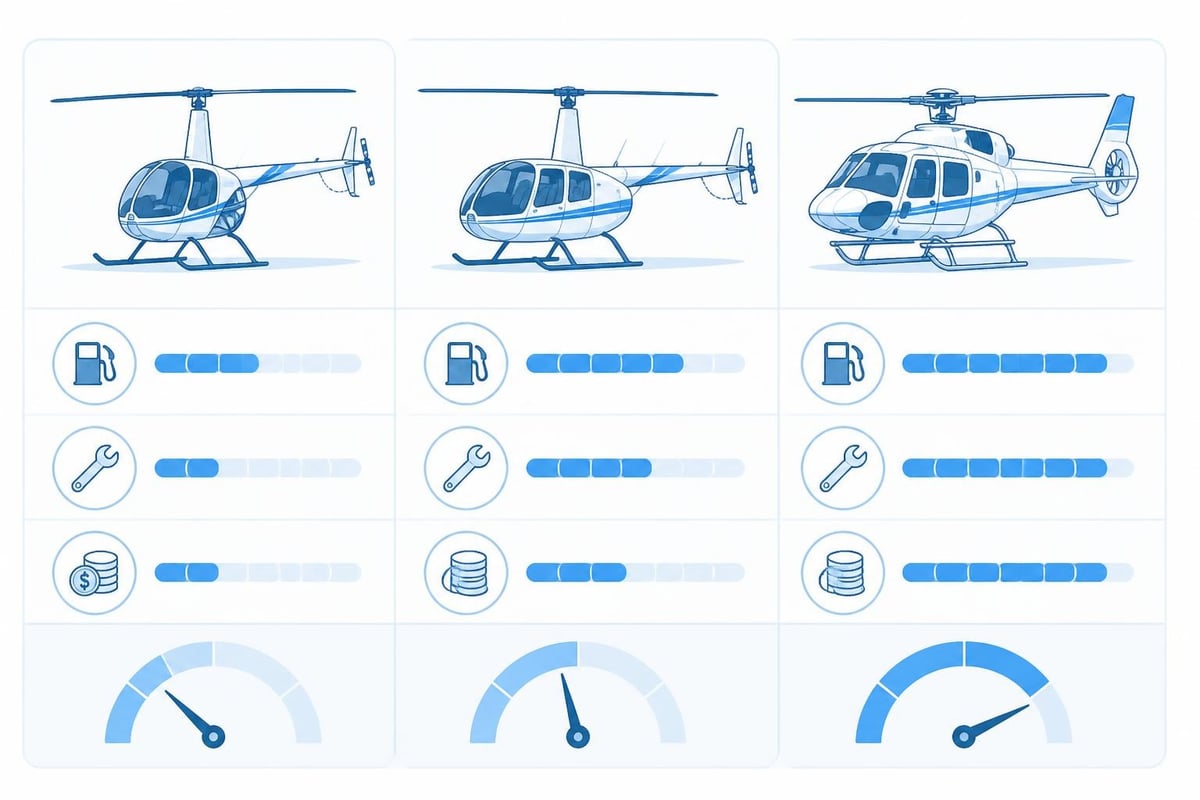
Robinson R22 is the most common training helicopter in the world. Wet rental (fuel included) runs £200 to £280 per hour in the UK, $220 to $350 per hour in the US. Two-seat capacity limits it to solo or one-on-one instruction. Lower operating cost makes the R22 the budget baseline for calculating helicopter lessons cost.
Robinson R44 offers four seats, glass cockpit options, and greater payload. Rental runs £280 to £400 per hour (UK) or $300 to $500 per hour (US). Many schools transition students from R22 to R44 for commercial training or advanced cross-country work. The Robinson operating-cost guidance shows fuel burn, maintenance reserves, and insurance components that drive rental pricing.
Turbine helicopters (Bell 206, Airbus H125) are rarely used for ab-initio training but appear in advanced commercial or type-rating courses. Hourly cost runs £800 to £1,500. Most commercial pilots log initial hours in piston machines, then transition to turbine for job-specific training.
Simulator time reduces total cost when approved by your regulator. EASA allows up to five hours of FNPT-II credit toward PPL(H) requirements; FAA rules vary by device approval. Simulator rates run £80 to £150 per hour. The Redbird State of Flight Training report shows simulator adoption rising across rotary training, particularly for instrument and emergency procedures.
Hidden Costs and Budget Surprises
Helicopter lessons cost extends beyond the Hobbs meter. Ground instruction is billed separately at most schools: £40 to £80 per hour for pre-flight and post-flight briefings, exam prep, and oral-test coaching. Budget 0.5 to 1.0 ground hours for every flight hour.
Repeat tests add cost when students do not pass on the first attempt. Skills test fees run £500 to £750 each time; most regulators require a minimum three hours dual refresher before a retest. Budget an extra £2,000 to £3,000 contingency for potential retests and stage-check repeats.
Medical certificates require renewal. Class 2 (private) is valid five years under age 40, two years over 40 (EASA). Class 1 (commercial) is annual under age 40, six-monthly over 60. Factor £150 to £300 per renewal into multi-year training plans.
Landing fees, charts, headsets, and exam materials add £500 to £1,200 across a full course. Some schools include these in course packages; others bill separately.
Insurance and school overhead are embedded in hourly rates but fluctuate regionally. Metropolitan schools near London or Los Angeles charge 15 to 25 per cent more than rural operators. Coastal or offshore-specialist schools may run higher still due to insurance and facility costs.
Strategies to Reduce Training Cost
Block-hour purchases offer 5 to 15 per cent discounts at most schools. Buying a 10-hour or 20-hour block upfront locks in the rate and provides modest savings. Confirm refund or transfer policies before committing large sums.
Scholarships and grants reduce out-of-pocket cost significantly. Vertical Aviation International (formerly HAI) awards multiple rotorcraft scholarships annually, ranging from $2,500 to full-course sponsorship. AOPA, Women in Aviation, and regional helicopter associations offer additional awards. Applications typically open in autumn for the following training year.
Part 141 vs Part 61 training in the US affects cost and timeline. Part 141 schools operate under FAA-approved syllabi, often reducing minimum hours by 5 to 10 hours. Part 61 training is more flexible but may require additional hours to meet proficiency standards. Lake Superior College publishes transparent helicopter flight fees for their Part 141 programme, showing structured cost and hour allocations.
Flying frequently reduces total hours to proficiency. Students flying three or four times per week typically complete training 10 to 20 per cent faster than those flying once per week, because skill retention is higher and less time is wasted on revision. Shorter overall training timelines reduce exposure to hourly-rate inflation and instructor turnover.
Owner-maintained or club aircraft can cut hourly cost by 20 to 40 per cent if you have access. Some helicopter clubs offer equity or non-equity membership with reduced wet rates. Confirm your insurer and regulator permit training in club aircraft before committing.
Real-World Cost Example: Zero to Commercial
A UK student training zero to CPL(H) on an integrated course might follow this path:
- 45 hours PPL(H) training at £300/hour dual, £250/hour solo: £13,750
- Ground school and exams (PPL): £2,200
- Skills test and medical (PPL): £900
- 135 additional hours CPL(H) training at £350/hour: £47,250
- Ground school and exams (CPL, including ATPL theory): £9,500
- Commercial skills test and Class 1 medical: £1,200
- Contingency (repeats, delays): £3,000
Total: £77,800
Most students spread this cost over 18 to 24 months. Some finance through personal loans (5 to 8 per cent APR), parental support, or career-development loans. Monthly cash flow averages £3,200 to £4,300 during active training periods.
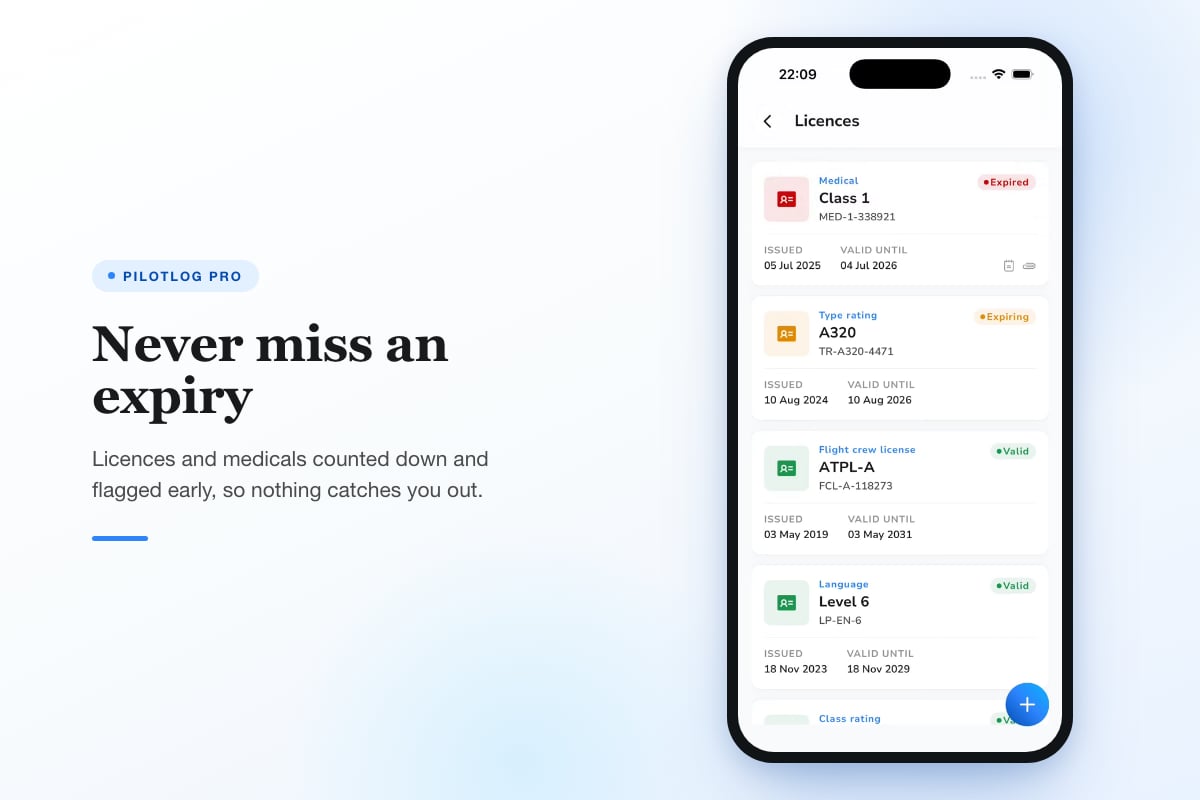
Tracking every flight hour, currency requirement, and medical expiry becomes critical once you begin logging. Pilotlog Pro automatically monitors your 90-day passenger-carrying currency, tracks total time toward licence thresholds, and flags medical and licence renewals well in advance. Pro's duty-time tracking and flight-hour summaries give you a real-time view of progress against your training budget and regulatory minimums.
Regional and International Cost Variations
Helicopter lessons cost varies significantly by country and region. Australia and New Zealand training runs AUD 18,000 to AUD 35,000 for PPL(H), with commercial totals near AUD 90,000 to AUD 130,000. Coastal and outback schools charge differently due to operating environment and demand.
European schools outside the UK show similar EASA-compliant pricing: Spain and Greece run 10 to 15 per cent below UK rates; Norway and Switzerland run 20 to 30 per cent higher due to cost of living and insurance.
US costs vary widely by state. California, Florida, and Arizona schools benefit from year-round flying weather, reducing downtime and per-student overhead. Mountain states and northern regions see seasonal training pauses, which can extend timelines and increase total cost.
Always confirm FAA Airman Certification Standards or your local regulator's current hour requirements before signing a contract. Regulatory changes occur periodically, and schools sometimes quote outdated minima in marketing materials.
<image_prompt alt="Helicopter training cost by region">Global comparison of private and commercial helicopter training costs across UK, US, Australia, and Europe showing hourly rates, total hours, and licence pathway expenses</image_instruction>
Financing and Payment Options
Most helicopter schools require payment per flight or per block. Few offer in-house financing. External options include:
- Personal loans from banks or credit unions (5 to 10 per cent APR, terms up to seven years)
- Career development loans (UK government-backed, up to £11,000, deferred repayment until training completes)
- GI Bill benefits (US veterans, covering up to 100 per cent of approved Part 141 programmes)
- Employer sponsorship (oil-and-gas, EMS, or utility companies sometimes fund training in exchange for service contracts)
AOPA's pilot licence cost guidance includes financing calculators and comparison tools. Pay particular attention to interest capitalisation and early-repayment penalties when comparing loan products.
Additional Ratings and Recurrent Costs
After earning a CPL(H), most pilots pursue an instructor rating or turbine type rating. UK flight instructor course (FI(H)) costs £8,000 to £12,000 for 30 to 40 hours instruction plus teaching-practice hours. Instrument rating (IR(H)) adds £12,000 to £18,000 for 50 hours training, exams, and test.
Recurrent training is mandatory for commercial pilots. EASA Part-FCL requires licence revalidation every 12 months, involving a proficiency check (£500 to £800). Simulator recurrent sessions run £150 to £300 per hour. Budget £1,500 to £2,500 annually for currency maintenance once you hold a commercial licence.
Type ratings for specific turbine helicopters (Bell 212, S-76, AW139) cost £10,000 to £30,000 depending on aircraft and training location. Many employers cover type-rating cost as part of initial hiring, but freelance pilots often self-fund.
Choosing a School and Managing Expectations
Compare helicopter lessons cost across at least three schools. Request a detailed breakdown: aircraft rental (wet or dry), instructor fees, ground time, exam fees, and test costs. Confirm simulator availability and credit limits.
Visit the school in person. Inspect aircraft maintenance logs, meet your instructor, and ask about student pass rates. High first-time pass rates (75 per cent or above) usually indicate strong instructional quality and realistic hour estimates.
Expect delays. Weather, aircraft maintenance, instructor availability, and your own learning curve will extend training beyond the minimum hours. Plan for 20 to 30 per cent more hours than the regulatory minimum when budgeting.
Accurate digital logbook records become essential as training progresses. Logging every flight with precise times, manoeuvres, and conditions helps you track progress toward rating requirements and identify weak areas early. Many students discover they are short on specific manoeuvre hours (autorotations, confined-area landings) only when preparing for the skills test, forcing last-minute revision flights that inflate cost.
Rules change. EASA updated Part-FCL syllabi in 2024; FAA updates the ACS periodically. Always confirm current minima and validity periods against official sources before committing to a training contract or budget.
Helicopter lessons cost depends on aircraft choice, regulatory pathway, training intensity, and regional pricing, but realistic budgets for private licences start near £15,000 to £20,000 and commercial pathways reach £55,000 to £90,000. Track every flight hour, currency limit, and medical expiry from day one so nothing derails your progress or budget. Pilotlog logs flights in seconds, monitors rolling currency, and flags licence and medical renewals early, keeping you current, legal, and ready throughout training and your career.
- helicopter lessons cost
- ppl(h) cost
- cpl(h) training
- helicopter pilot training
- robinson r22 rental
A logbook that keeps itself.
Join the waitlist and be first in line when Pilotlog launches.
Free to join, no spam. Unsubscribe any time.