flight school selection
Pilot Aviation Academy: What to Look for in 2026
20 Aug 2026 · 11 min read

A pilot aviation academy is a certified flight school that trains student pilots through structured, regulator-approved syllabuses, often under FAA Part 141 or equivalent EASA standards. These academies combine ground school, simulator sessions, and dual and solo flight instruction to prepare you for private, commercial, instrument, or multi-engine ratings. Choosing the right academy depends on certification type, fleet, instructor quality, and how well the program tracks your progress toward licensing requirements.
What defines a pilot aviation academy
A pilot aviation academy differs from an independent instructor or flying club by offering a formal curriculum approved by a national authority. In the United States, FAA Part 141 pilot schools must meet detailed standards for syllabuses, instructor qualifications, facilities, and equipment before certification. The FAA specifies minimum ground and flight hours for each rating, and Part 141 schools can often reduce total time to licence compared with Part 61 training.
Outside the US, ICAO's competency-based training frameworks guide how academies design courses for ab-initio students and type ratings. EASA-certified Approved Training Organisations (ATOs) in Europe follow Part-FCL and Part-ORA, which mandate documented training and assessment for each licence module.
Certification types and structure
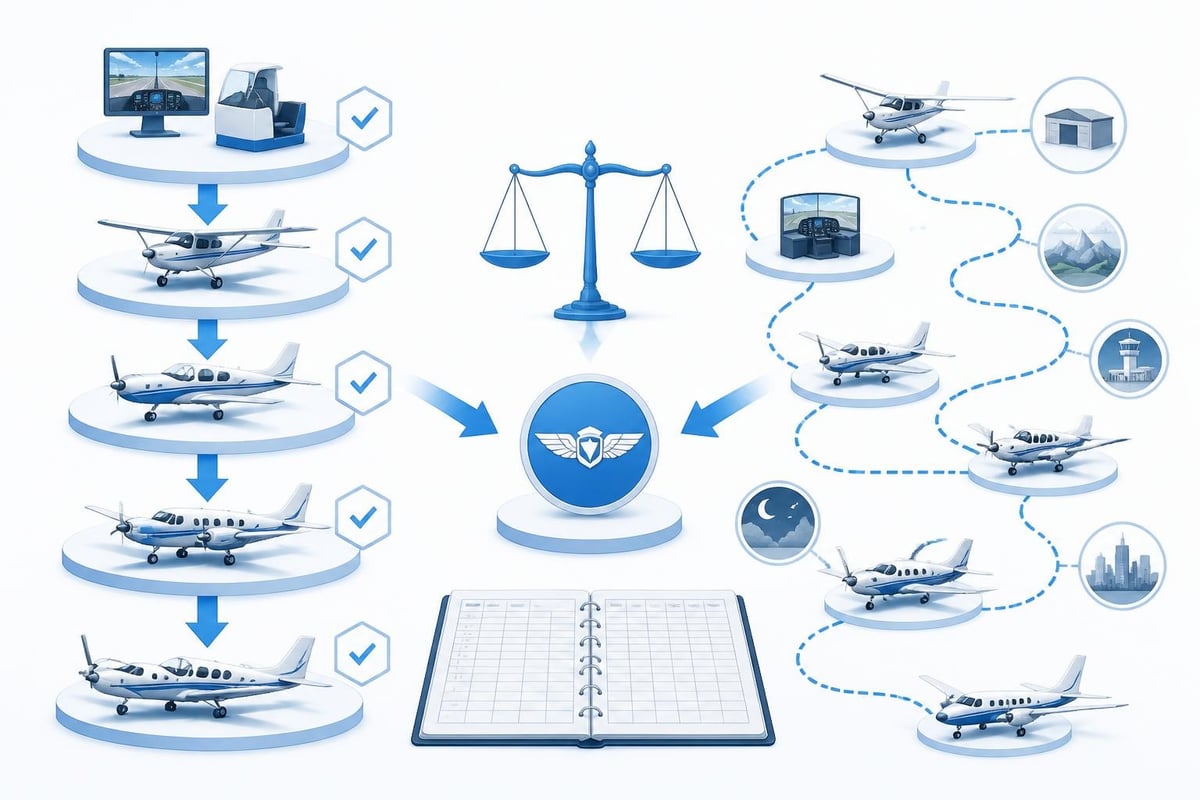
Part 141 academies operate under an FAA-approved training course outline (TCO) that lists every lesson, manoeuvre, and ground topic. This structure means less flexibility in scheduling, but faster progression: you can earn a commercial pilot licence in 190 hours of total flight time (Part 141) versus 250 hours (Part 61). The academy must conduct stage checks, monitor student progress, and report completion rates to the FAA annually.
Key benefits of a certified pilot aviation academy:
- Approved syllabus with defined stages and check-rides
- Reduced minimum hours for each rating
- Dedicated ground-school classrooms and briefing rooms
- Fleet standardisation (similar aircraft types)
- Qualified chief instructor and assistant chief instructors
Part 61 training is more flexible: you book lessons as needed, and you can train at any airport with any instructor. There is no formal stage structure, so you log the minimum hours required by regulation and demonstrate proficiency to an examiner. Many smaller flight schools operate under Part 61, which suits pilots training part-time or moving between locations.
Curriculum and hour requirements
A pilot aviation academy publishes a detailed training manual for each course. For a private pilot licence (PPL) under Part 141, the minimum is 35 hours of flight time, including at least 20 hours of dual instruction and three hours of solo cross-country. The FAA's guidance on pilot schools explains that Part 141 programs reduce the PPL minimum from the Part 61 standard of 40 hours because of the structured oversight.
For an Airline Transport Pilot Licence (ATPL), the FAA requires completion of an ATP Certification Training Program (CTP), a 30-hour course covering high-altitude aerodynamics, crew resource management, and transport-category aircraft systems. Many pilot aviation academies integrate CTP into their commercial or multi-engine courses, preparing you for the written ATP exam before you reach 1,500 total flight hours.
Ground school and theory
Ground instruction covers aerodynamics, meteorology, navigation, regulations, and human factors. Part 141 academies must deliver a minimum number of ground hours for each rating, and instructors must hold a ground or flight instructor certificate. Theory exams are sat at designated testing centres, and you must pass before scheduling your practical check-ride.
EASA ATOs deliver theory courses that align with Part-FCL ATPL(A) syllabuses, which include 14 exam subjects. Students must pass all 14 within 18 months of the first attempt, and academy quality is measured by first-time pass rates and training record audits.
Fleet, simulators, and equipment
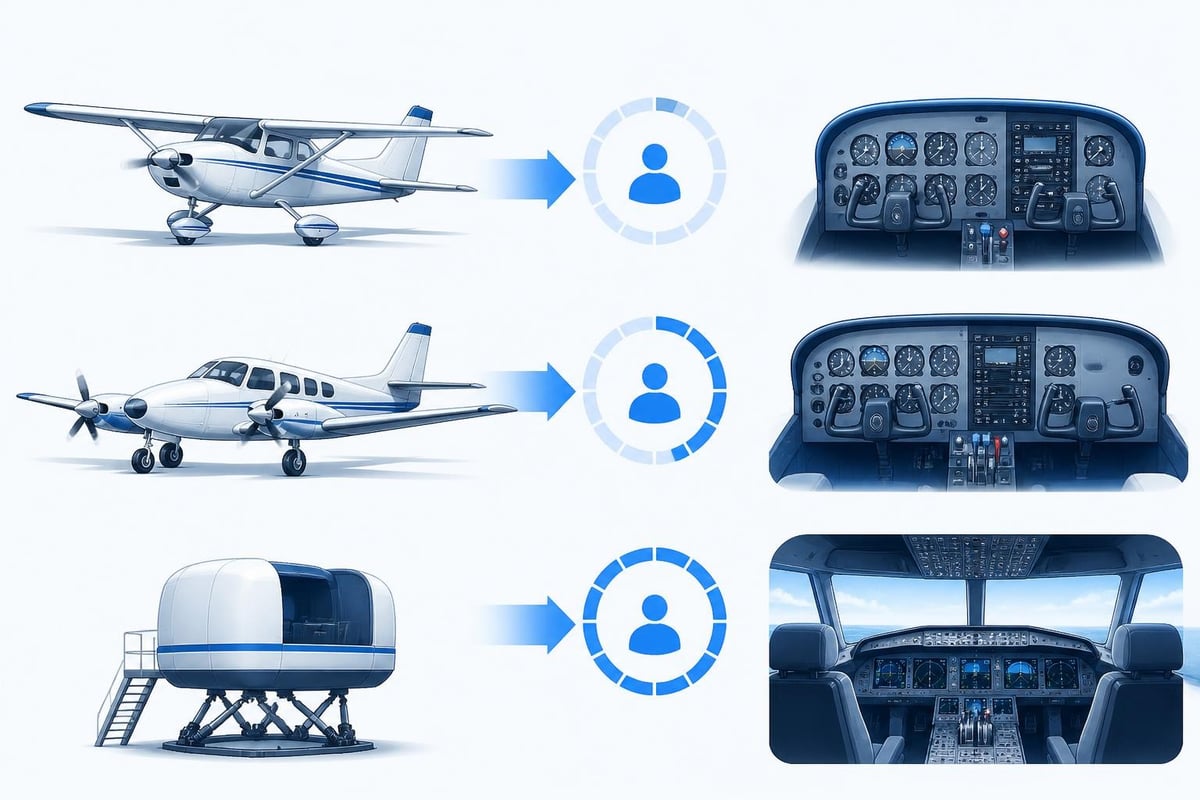
The aircraft fleet and simulators define the realism and cost of your training. A modern pilot aviation academy operates a mix of single-engine trainers (Cessna 152, Piper PA-28, Diamond DA40) and complex or multi-engine types (Piper PA-44, Beechcraft Baron, Cessna 310). Each aircraft is maintained to Part 43 or Part-M standards, with scheduled inspections and airworthiness directives tracked in maintenance logs.
| Aircraft Type | Typical Use | Advantages | Hourly Cost (approx) |
|---|---|---|---|
| Cessna 152 | PPL, first solo | Low operating cost, simple systems | £120-£140 |
| Diamond DA40 | PPL, instrument rating | Glass cockpit (G1000), fuel efficiency | £180-£220 |
| Piper PA-44 Seminole | Multi-engine rating | Twin-engine, suitable for commercial training | £320-£380 |
| Beechcraft Baron | Advanced multi-engine, type rating prep | Retractable gear, pressurised cabin option | £400-£500 |
Simulators are essential for instrument and multi-engine training. The EU's 2026 regulation on flight simulation training devices sets new standards for device fidelity, motion cueing, and visual systems. Full-flight simulators (FFS) replicate a specific aircraft type and are approved for zero-flight-time type ratings. Aviation Training Devices (ATDs) and Flight Training Devices (FTDs) are used for procedural training and can log toward instrument rating hour requirements.
Instructor quality and student ratios
Chief Flight Instructors (CFIs) at a pilot aviation academy hold ATP or commercial licences with at least 2,000 hours' experience. They oversee the training syllabus, conduct standardisation checks, and ensure instructors teach to the approved TCO. Assistant CFIs manage stage checks and remedial training for students who need extra sessions.
Student-to-instructor ratios vary. A well-run academy maintains a ratio of 6:1 to 8:1, ensuring each student flies regularly without long gaps. Scheduling software tracks instructor availability, aircraft maintenance, and weather windows, so you can plan lessons weeks ahead.
Instructor turnover and continuity
Many flight instructors treat academy teaching as time-building toward airline jobs. High turnover can disrupt your training if you switch instructors mid-course. Ask prospective academies about average instructor tenure and whether you will fly with the same CFI from PPL through to commercial. Continuity improves learning and reduces stage-check failures.
Tracking progress and currency
As you advance through each rating, you must track dual hours, solo hours, cross-country distance, night landings, and instrument approaches. A pilot aviation academy provides a training record (FAA Form 8710 or equivalent) that lists each completed lesson, but it is your responsibility to maintain an accurate pilot logbook.
What to log during academy training:
- Date, aircraft registration, departure and arrival airports
- Total flight time, dual received, solo, PIC
- Day and night hours, including night take-offs and landings
- Instrument approaches (type, runway, airport)
- Cross-country flights over 50 nautical miles
- Instructor endorsements for solo, stage checks, and pre-check-ride sign-off
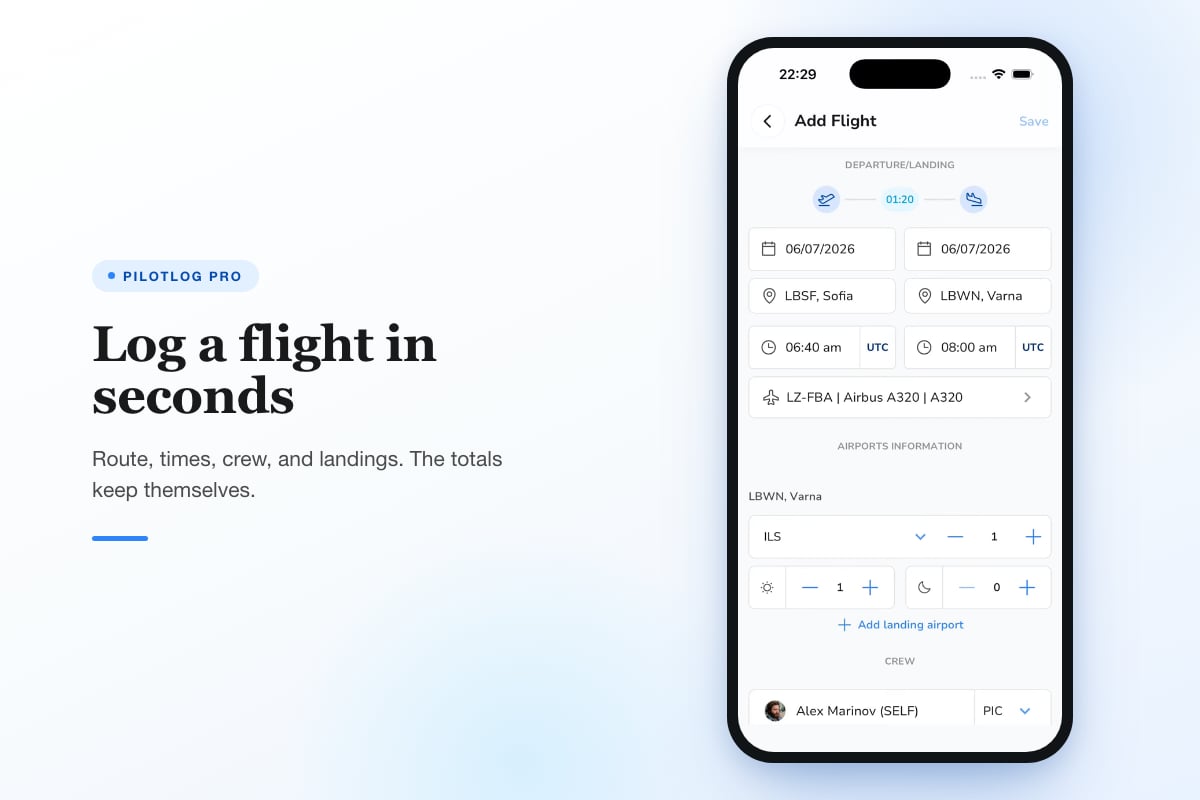
Students often lose track of specific requirements. For example, the FAA requires three take-offs and landings in the preceding 90 days to carry passengers (14 CFR 61.57), and night currency demands three night landings to a full stop. A digital pilot logbook calculates these rolling windows automatically, flagging when you need a refresher flight before your currency lapses.
Pilotlog Pro tracks rolling 28-day and 365-day flight-time and duty limits, passenger and night currency with lapse dates, and licence and medical expiry alerts. For academy students juggling multiple ratings and stage checks, automated alerts ensure you never miss a deadline or let currency expire mid-course.
Cost, financing, and return on investment
Pilot aviation academy fees vary by country, certification path, and total hours. Integrated ATPL programs in Europe (0 to frozen ATPL) cost between £80,000 and £120,000, covering theory, PPL, instrument rating, multi-engine rating, and multi-crew cooperation (MCC). In the US, Part 141 programs from zero to commercial multi-engine with instrument rating range from $60,000 to $90,000.
Many academies offer financing or payment plans. The KPMG Aviation Leaders Report 2025 notes that global pilot demand is driving academy expansion and pushing lenders to develop training loans with repayment deferred until employment. Some airlines sponsor cadet programs, covering full fees in exchange for a bond or minimum service commitment.
Hidden costs and extras
Check what is included in the quoted price. Additional costs often include:
- Theory exam fees (each sitting, re-sits)
- Medical certificates (Class 1 initial and renewals)
- Check-ride examiner fees (£500-£800 per rating)
- Uniform, headset, charts, and training materials
- Accommodation and travel if the academy is residential
A realistic budget includes 10-15% contingency for extra hours if you need remedial training or weather delays extend your course.
Choosing the right academy for your career goals
Your choice of pilot aviation academy should align with the licence you need and your timeline. If you are aiming for airline first officer seats, an integrated ATPL program offers the fastest route, with all ratings completed in 18-24 months. Modular training (PPL, then IR, then CPL, then MEP) takes longer but spreads costs and allows you to work between modules.
Questions to ask during academy visits:
- What is the first-time pass rate for check-rides?
- How many aircraft are available, and what is the average dispatch rate?
- Can I transfer credits if I relocate mid-course?
- Are instructors full-time or time-building toward airline jobs?
- What partnerships exist with airlines or charter operators?
Visit the academy, fly a trial lesson, and speak to current students. Check online reviews and ask about job placement rates. Some academies publish employment statistics: percentage of graduates hired within six months, average time to first airline interview, and partnership pathways with regional carriers.
Staying current and legal during and after training
Even during academy training, you must maintain currency for solo flights. If you take a break between ratings, your recency for passengers, night operations, or instrument approaches may lapse. Tracking currency in a structured logbook ensures you schedule refresher flights before your next stage check.
After graduation, your licence and medical have fixed validity periods. EASA licences require a proficiency check every 12 months for single-engine piston (SEP) class ratings, and instrument ratings expire if you do not complete an IPC within 13 months. FAA pilots must complete a flight review every 24 calendar months (14 CFR 61.56) and maintain instrument currency (six approaches, holding, intercepting and tracking courses in the preceding six months) to file IFR.
How to fill out your pilot logbook correctly from day one saves confusion later when you apply for ratings or airline jobs. Examiners and training captains scrutinise logbook accuracy, and missing endorsements or incorrect totals can delay your application.
Regulatory changes and future training standards
Pilot aviation academy curricula evolve as regulators update training standards. The EU's 2026 simulator regulation reflects advances in visual systems and motion platforms, allowing academies to credit more simulator hours toward type ratings. In the US, the FAA is reviewing upset prevention and recovery training (UPRT) for commercial pilots, which may increase simulator requirements for spin awareness and aerodynamic stalls.
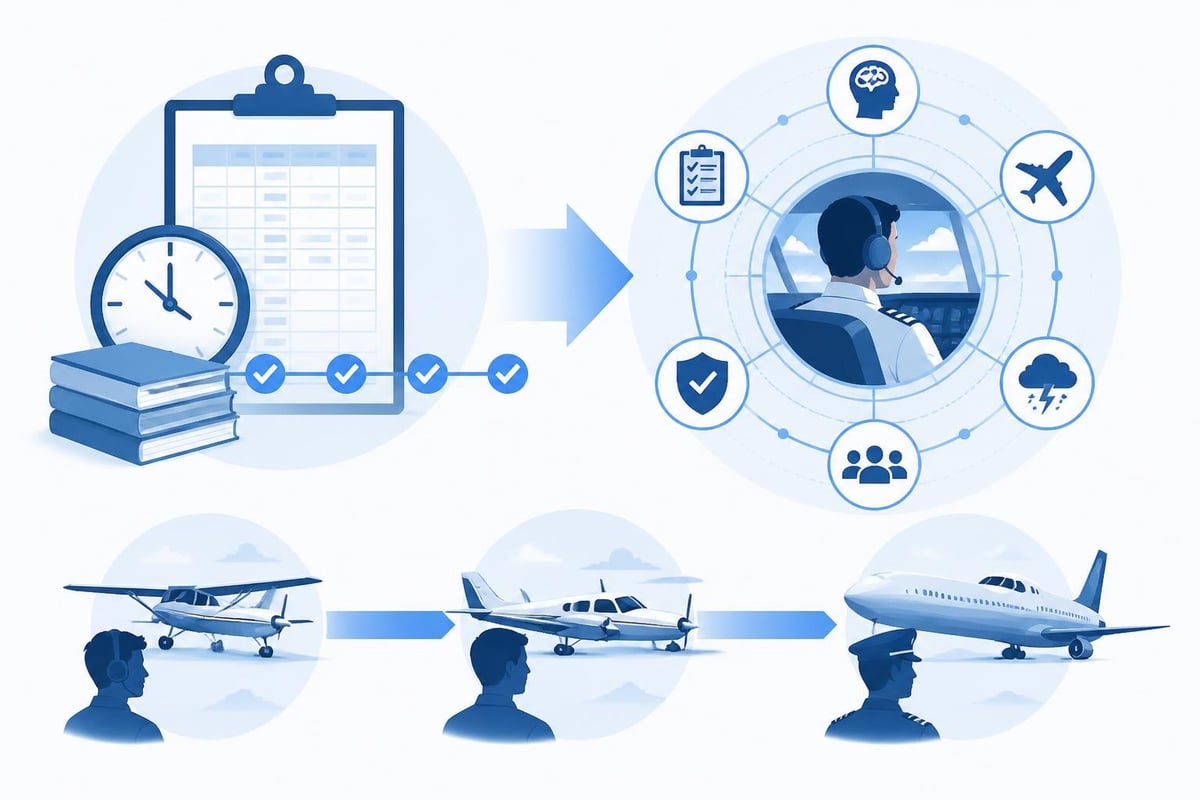
Competency-based training and assessment (CBTA) is replacing hour-based syllabuses in some jurisdictions. Instead of logging a fixed number of circuits or instrument approaches, you demonstrate competency in specific tasks (e.g. go-around from unstable approach, single-engine landing in crosswind). ICAO's frameworks guide this shift, and academies are developing evidence-based training programs that adapt to individual student progress.
Academy accreditation and global recognition
If you plan to convert your licence to another jurisdiction, confirm your pilot aviation academy holds internationally recognised accreditation. FAA Part 141 schools are accepted for credit toward EASA licences, but you may need additional theory exams or skill tests. EASA ATO approvals are recognised across EU member states and many countries with bilateral agreements.
Check the academy's approval number and training organisation certificate. The FAA publishes a list of certificated pilot schools, and EASA maintains a database of ATOs by member state. Unapproved schools cannot issue the endorsements or certificates required for licence application, and you risk repeating training if records are not accepted by your target authority.
Record-keeping and logbook accuracy
Accurate record-keeping is not optional. Every flight must be logged with date, aircraft type, registration, departure and arrival points, total time, and category of flight (dual, solo, PIC). Instructors must endorse your logbook for solo flights, night training, and pre-check-ride sign-offs. Missing or incorrect entries can invalidate your application for a rating or delay your airline interview.
A robust logbook for aviation system consolidates all data in one place. Digital logbooks calculate totals automatically, flag currency lapses, and export CSV or PDF summaries for job applications. As you progress from student to commercial pilot, your logbook becomes your professional record, verified by every employer and examiner you meet.
Regulations and hour requirements change. Always confirm current rules with the FAA, CAA, or EASA before making training decisions.
Choosing a pilot aviation academy is one of the most important decisions in your flying career. The right program provides structured training, quality instructors, and accurate record-keeping from day one. Pilotlog keeps your flight hours, currency, and expiries organised throughout training and beyond. Log each flight in seconds, track rolling currency windows, and receive alerts before your licence or medical expires, so you stay current, legal, and ready for the next stage of your career.
- flight school selection
- faa part 141
- atpl training
- flight simulators
- pilot licence requirements
A logbook that keeps itself.
Join the waitlist and be first in line when Pilotlog launches.
Free to join, no spam. Unsubscribe any time.