ifr currency
IFR Currency: Rules, Requirements & How to Stay Legal
14 Jul 2026 · 12 min read
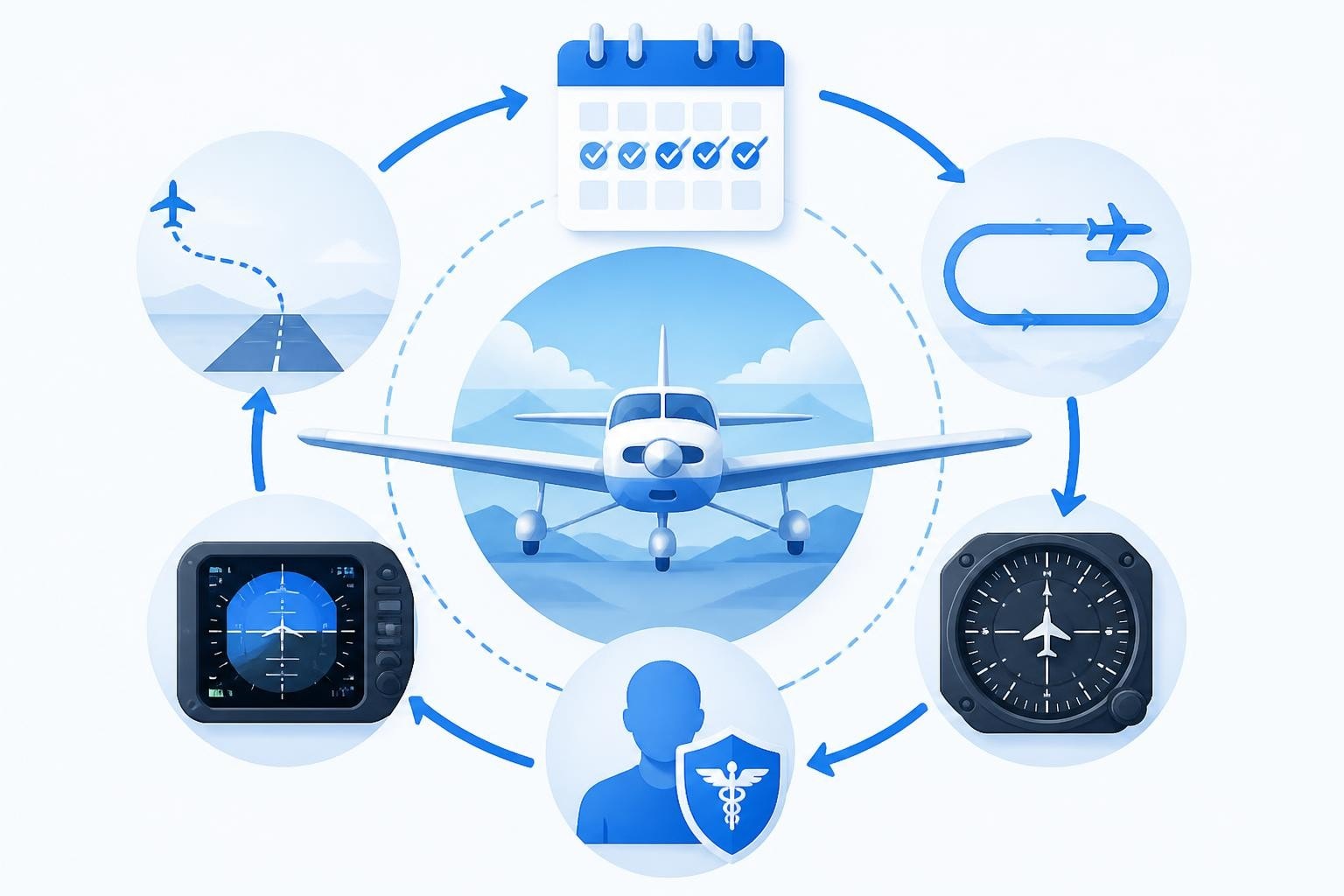
IFR currency is your legal authority to act as pilot in command under instrument flight rules in instrument meteorological conditions. Under 14 CFR 61.57(c), you must complete six instrument approaches, holding procedures, and intercepting and tracking courses within the preceding six months. If you let that currency lapse, you enter a six-month grace period during which you can regain currency under the hood with a safety pilot, after which you need an instrument proficiency check.
This requirement sits entirely separate from your instrument rating validity. You can hold a current instrument rating but lack IFR currency, which means you're legal to fly VFR but not to file IFR or operate in IMC as PIC. Understanding these rules and tracking your compliance keeps you legal and safe.
Understanding the 6-6-6 Rule
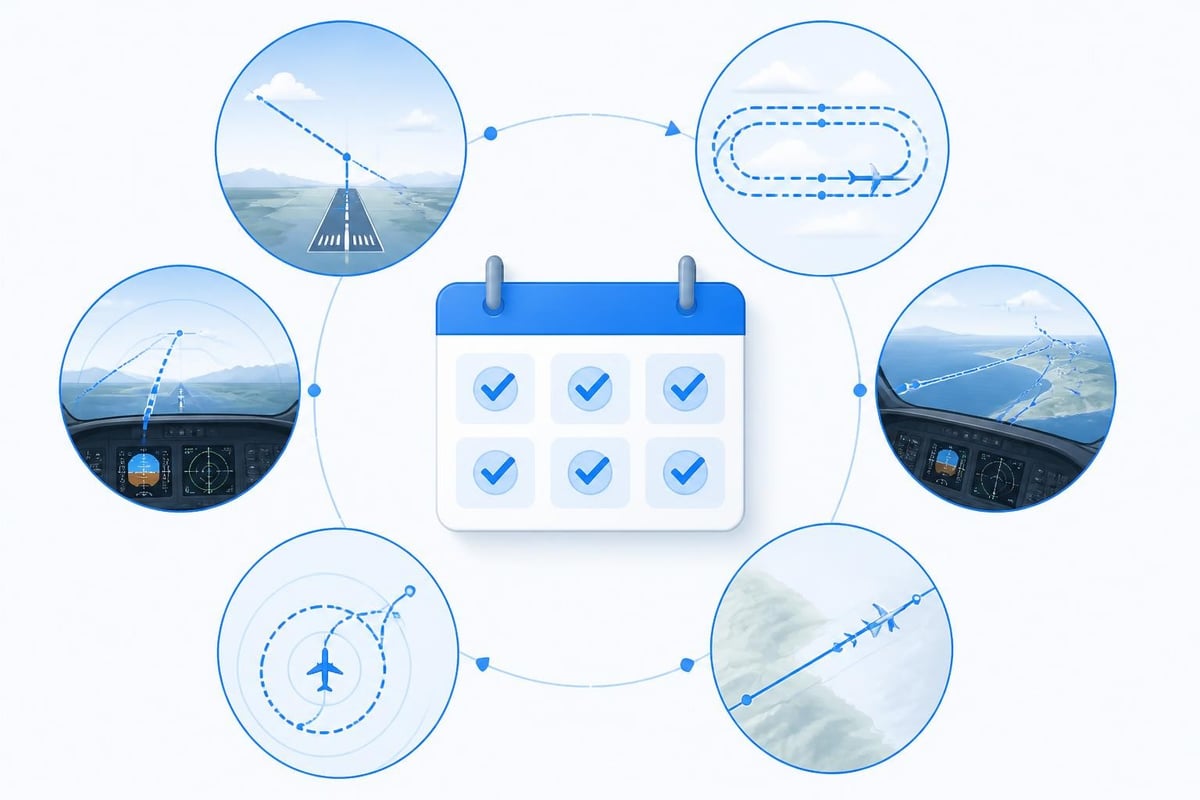
The core of IFR currency is often called the 6-6-6 rule: six approaches, holding procedures, and intercepting and tracking courses in the preceding six calendar months. The FAA writes this clearly in FAR §61.57(c).
Here's what each element requires:
- Six instrument approaches: These can be precision or non-precision, in actual or simulated IMC, in an aircraft, approved flight simulator, or approved flight training device. A visual approach does not count.
- Holding procedures: At least one holding pattern, either published or ATC-assigned, flown to completion.
- Intercepting and tracking courses: Using navigation systems through radials, courses, or GPS tracks. Normal IFR operations satisfy this requirement naturally.
The approaches must be flown within six calendar months. Calendar months matter: if your last qualifying approach was on January 15, you remain current through July 31. On August 1, you're no longer current unless you've flown additional approaches that fall within the new six-month window.
What Counts as an Approach
Only instrument approaches count. That means an approach flown by reference to instruments, following a published procedure, to minimums or until you reach a position from which a normal landing can be made.
You must fly the full approach. Flying vectors to final and intercepting the glideslope three miles out doesn't count unless you fly the complete published segment. Practice approaches under VFR count if flown in simulated IMC with a view-limiting device and safety pilot, or if flown in actual IMC.
Circling approaches count as one approach, not two. The approach type determines the count: one ILS, one RNAV, one VOR. Fly six different approach types or six of the same type, both satisfy the requirement.
The Six-Month Grace Period
When your six-month currency expires, you don't immediately need an IPC. You enter a six-month grace period during which you can regain currency, but only under specific conditions.
| Phase | Duration | What You Can Do | Restrictions |
|---|---|---|---|
| Current | 6 months from last approach | Act as PIC under IFR in IMC | None |
| Grace period | Months 7-12 | Regain currency with safety pilot | Cannot file IFR or fly IMC as PIC |
| Lapsed | After month 12 | Must complete IPC | Cannot file IFR or fly IMC as PIC |
During the grace period, you can fly under the hood with a safety pilot and log the approaches needed to regain currency. The safety pilot must hold at least a Private Pilot Licence with category and class ratings appropriate to the aircraft. They don't need an instrument rating, but they must be able to act as PIC for the flight.
Once you complete the required approaches, holding, and tracking during the grace period, your currency resets. You're legal to act as PIC under IFR again.
After the Grace Period Expires
If you don't regain currency within those 12 months total (six months current plus six months grace), you must complete an Instrument Proficiency Check. An IPC is essentially a practical test to IFR standards, administered by an examiner, authorized instructor, or military check pilot.
The check must cover representative tasks from the Instrument Rating ACS across all four areas: preflight procedures, air traffic control clearances and procedures, flight by reference to instruments, and approaches. You'll fly approaches, holds, partial panel work, and unusual attitudes. Once you pass, your currency resets.
No written test is required for an IPC, and there's no fee beyond what the examiner or instructor charges. Most pilots complete an IPC in 2-3 hours of flight time plus ground briefing.
Logging IFR Currency Correctly
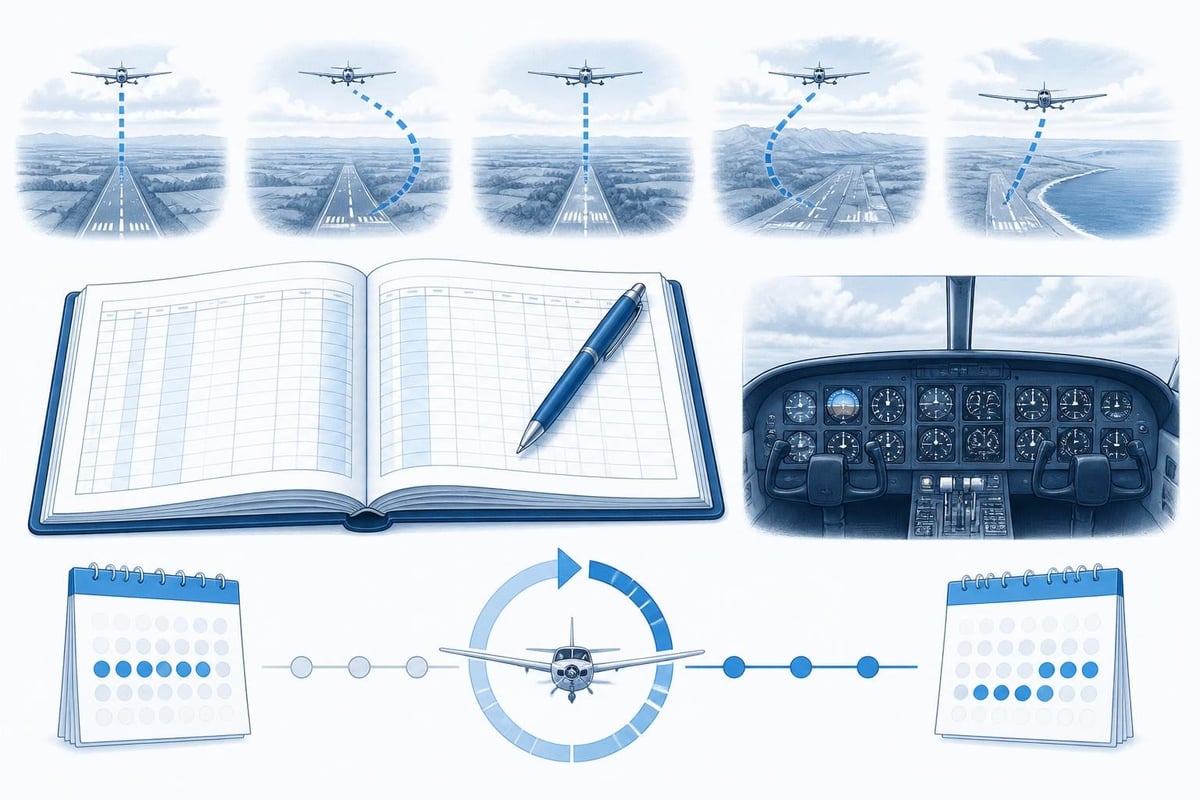
Accurate logging is essential. Your logbook must show the approaches, holds, and tracking work clearly enough that an inspector or check airman can verify your currency.
For each approach, log:
- Date
- Approach type (ILS, RNAV, VOR, etc.)
- Location identifier
- Whether actual or simulated IMC
Most pilots use the "Approaches" column in their logbook and note the specifics in the remarks section: "3 ILS KJFK, 1 RNAV KLGA, actual IMC, hold HAARP."
Simulators and Flight Training Devices
You can maintain full IFR currency in an approved simulator or flight training device without flying an aircraft. The device must be approved under 14 CFR Part 60 (full flight simulator) or be an approved aviation training device.
The advantage: you can fly approaches in weather you'd never accept in the aircraft, practice failures and emergencies, and knock out six approaches in an hour. The limitation: you still need recent flight experience in category and class to act as PIC, which simulators don't satisfy.
Combining aircraft and simulator time works well: fly three approaches in the aircraft, three in the sim, and log holding and tracking in both. Many professional pilots maintain IFR currency entirely in the simulator between recurrent training cycles.
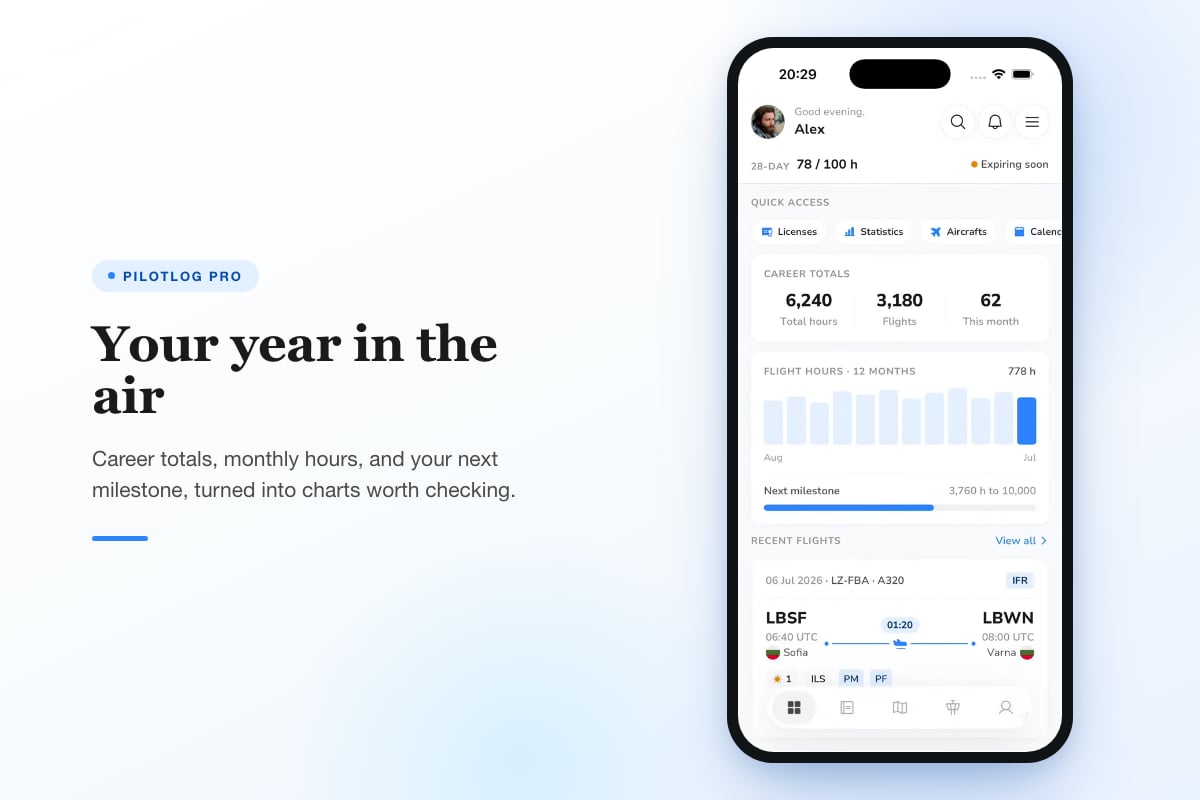
For pilots tracking multiple currency requirements, a digital logbook can automatically calculate rolling windows and flag upcoming lapses. Pilotlog Pro tracks 28-day and 365-day totals, passenger and night currency, and IFR currency with lapse dates built in. Log a flight once and the system updates every currency requirement tied to that flight time.
Common Scenarios and Questions
Real-world flying creates edge cases. Here are scenarios pilots commonly ask about when maintaining ifr currency.
Can You Mix Actual and Simulated IMC?
Yes. The regulation doesn't distinguish between actual and simulated instrument conditions. Six approaches under the hood on a clear day satisfy the requirement just as well as six approaches in solid IMC. You can mix them freely: three actual, three simulated, all six simulated, or all six actual.
Do Practice Approaches Under Flight Following Count?
As long as you fly the full published approach in simulated or actual IMC, it counts. You don't need to be on an IFR clearance. Many pilots fly practice approaches VFR with flight following, wearing a view-limiting device, with a safety pilot. Those approaches count toward currency if flown correctly.
The catch: you must fly the complete published segment. Vectors direct to the final approach fix, then flying the last three miles, doesn't count. You need the full procedure.
What If You Fly Internationally?
FAA currency rules apply to FAA certificate holders regardless of where you fly. If you're an FAA-certificated pilot flying in Europe, you still follow 14 CFR 61.57(c) for your FAA instrument privileges.
EASA pilots follow different rules under Part-FCL. EASA IR currency requires operation of an aircraft under IFR as PIC or with an instructor, including an approach, within the preceding 12 months. After 12 months, you need a proficiency check. The systems are different, so confirm which regulations apply to your licence and where you plan to fly.
Does Safety Pilot Time Count as PIC?
The safety pilot can log PIC time when they're the sole manipulator of the controls, but that's separate from currency. The pilot under the hood logs the approaches toward their currency. The safety pilot logs PIC time if they meet the requirements, but they don't log the approaches unless they fly them.
Only one pilot can act as PIC on a flight. Typically, the pilot under the hood acts as PIC for the flight if they're current and rated in the aircraft. If they're not current, the safety pilot acts as PIC.
Staying Ahead of Currency Lapses
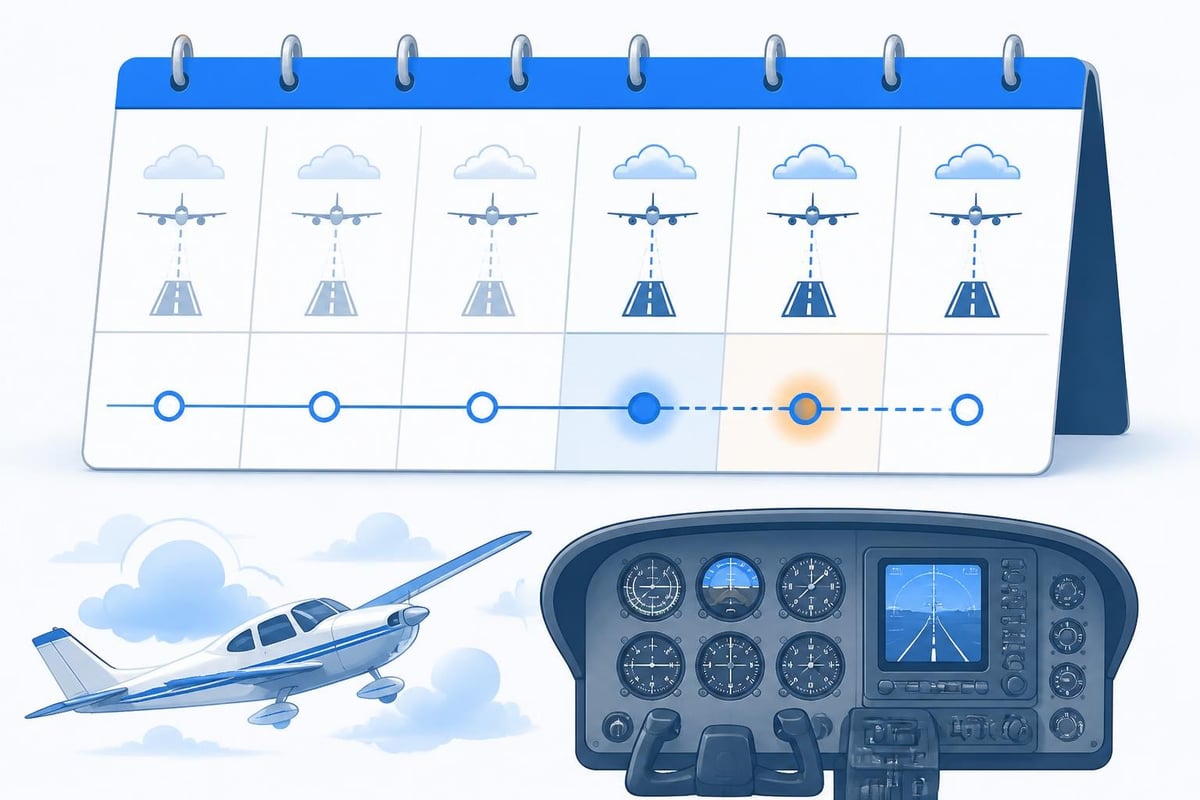
The six-month window arrives faster than most pilots expect. A busy spring can turn into a slow summer, and suddenly you're two weeks from lapsing with no IFR time on the schedule.
Set up alerts 60 days before your currency expires. That gives you time to schedule flights, arrange a safety pilot, or book simulator time. If you track currency manually, add calendar reminders. If you use a digital logbook like Pilotlog, set the alert threshold to your preference.
Building a Currency Plan
Professional pilots often maintain a rolling plan:
- Fly at least one approach per month when able. This keeps you well ahead of the six-month requirement.
- Combine currency work with regular flying. File IFR for a short cross-country and fly the approach at your destination. Two approaches per trip builds a cushion quickly.
- Use slow months for simulator work. Winter weather or summer vacations can ground you. Book simulator time and knock out six approaches in one session.
- Track holds separately. Some approaches include published holds. Others require you to request practice holds from ATC. Make sure you're logging at least one hold every six months.
The tracking-courses requirement is rarely a problem. Normal IFR operations satisfy it automatically. Focus your planning on approaches and holds.
When to Schedule an IPC
Even if you maintain currency, many pilots schedule an IPC annually as a proficiency check. Currency is a minimum legal requirement, not a proficiency standard. You can be current and still rusty.
Consider scheduling an IPC when:
- You've maintained currency but haven't flown actual IMC in months
- You're transitioning to a new aircraft type with different avionics
- You're returning to regular IFR flying after a period of VFR-only operations
- You want a formal check of your instrument skills before a challenging trip
An IPC takes 2-3 hours and costs whatever your instructor charges. Many pilots find the investment worthwhile for the proficiency gain and the peace of mind.
The IPC also resets your currency completely. You don't need to fly six approaches in the preceding six months. The IPC itself establishes your currency for the next six months.
Currency Versus Proficiency
IFR currency is a legal minimum. Meeting the requirement doesn't guarantee you're proficient enough to fly safely in hard IMC.
Six approaches in six months averages one approach per month. That might be adequate for a pilot flying IFR regularly in actual conditions, where those six logged approaches represent a fraction of their total instrument time. For a pilot who flies VFR most of the year and squeezes in six approaches under the hood to stay current, proficiency may lag well behind legality.
Assess your proficiency honestly. If you haven't flown actual IMC in a year, are you comfortable shooting an ILS to minimums in low ceilings and visibility? If your last hold was a practice pattern six months ago, can you efficiently enter and fly a hold assigned by ATC in busy airspace?
Staying legal keeps you out of trouble with the FAA. Staying proficient keeps you out of trouble in the air. These are related but different goals.
Practical Tips for IFR Currency
Building currency into your regular flying is easier than setting aside dedicated currency flights.
- File IFR even in good weather. The approaches count whether you're in actual or simulated IMC. Use a view-limiting device if needed and log the approaches.
- Request the full approach. When ATC offers vectors to final, ask for the full procedure if you need the approach for currency. Most controllers accommodate the request if traffic permits.
- Fly a variety of approach types. The regulation doesn't require different types, but proficiency does. Mix precision and non-precision, GPS and ground-based approaches.
- Practice with an instructor occasionally. Even if you don't need an IPC, flying with an instructor sharpens skills and catches developing bad habits before they become ingrained.
- Join a safety pilot network. Many flying clubs and online groups connect pilots who need safety pilots. Trade flights: you fly under the hood while they watch, then swap roles.
Regulations can change. Always confirm current requirements against official FAA sources before relying on any summary or guide, including this one.
Multi-Engine and Tailwheel Considerations
IFR currency is category- and class-specific. If you want to act as PIC under IFR in a multi-engine airplane, your six approaches in six months must be in a multi-engine airplane (or an approved simulator representing one).
This creates challenges for pilots who fly multiple aircraft types. If you maintain IFR currency in a single-engine aircraft but want to fly IFR in your multi-engine airplane, you need separate currency in that class.
The solution: fly approaches in both aircraft, or use a simulator that can be configured for both single-engine and multi-engine operations. Many approved training devices allow you to switch between aircraft types, letting you maintain currency in multiple classes in one session.
Tailwheel endorsements don't affect IFR currency directly, but they do affect your overall ability to act as PIC. Make sure all your endorsements, ratings, and currency requirements align before you file IFR.
How Digital Logbooks Simplify Currency Tracking
Manual currency tracking requires looking back through logbook entries, counting approaches, checking dates, and calculating whether you're still within the six-month window. It's error-prone and time-consuming.
A digital logbook automates the calculation. Enter your flight with approach details, and the system updates your currency status instantly. You see exactly how many approaches you need, when your currency expires, and whether you're in the grace period.
The best systems go further: they track multiple currency requirements simultaneously. Night currency for passengers, takeoff and landing recency, medical and licence expiries, and IFR currency all update from the same flight entries. You see your complete status at a glance.
For pilots flying professionally or managing complex currency requirements across multiple aircraft types, automation eliminates risk. You're never surprised by a lapsed currency two days before a planned IFR trip.
IFR currency is straightforward in principle but requires consistent attention in practice. The six-approach, six-month rule is clear, but staying ahead of it demands planning and accurate tracking. Whether you fly regularly or occasionally, maintaining currency keeps you legal and helps maintain the proficiency needed for safe IFR operations. Pilotlog tracks your approaches, holds, and currency windows automatically, flagging upcoming lapses before they become a problem. Log your flights and let the system handle the calculations so you stay current, legal, and ready.
- ifr currency
- 6-6-6 rule
- instrument rating
- ipc
- instrument approaches
A logbook that keeps itself.
Join the waitlist and be first in line when Pilotlog launches.
Free to join, no spam. Unsubscribe any time.