helicopter flying
Helicopter Flying: Complete Guide for Rotorcraft Pilots
5 Oct 2026 · 10 min read
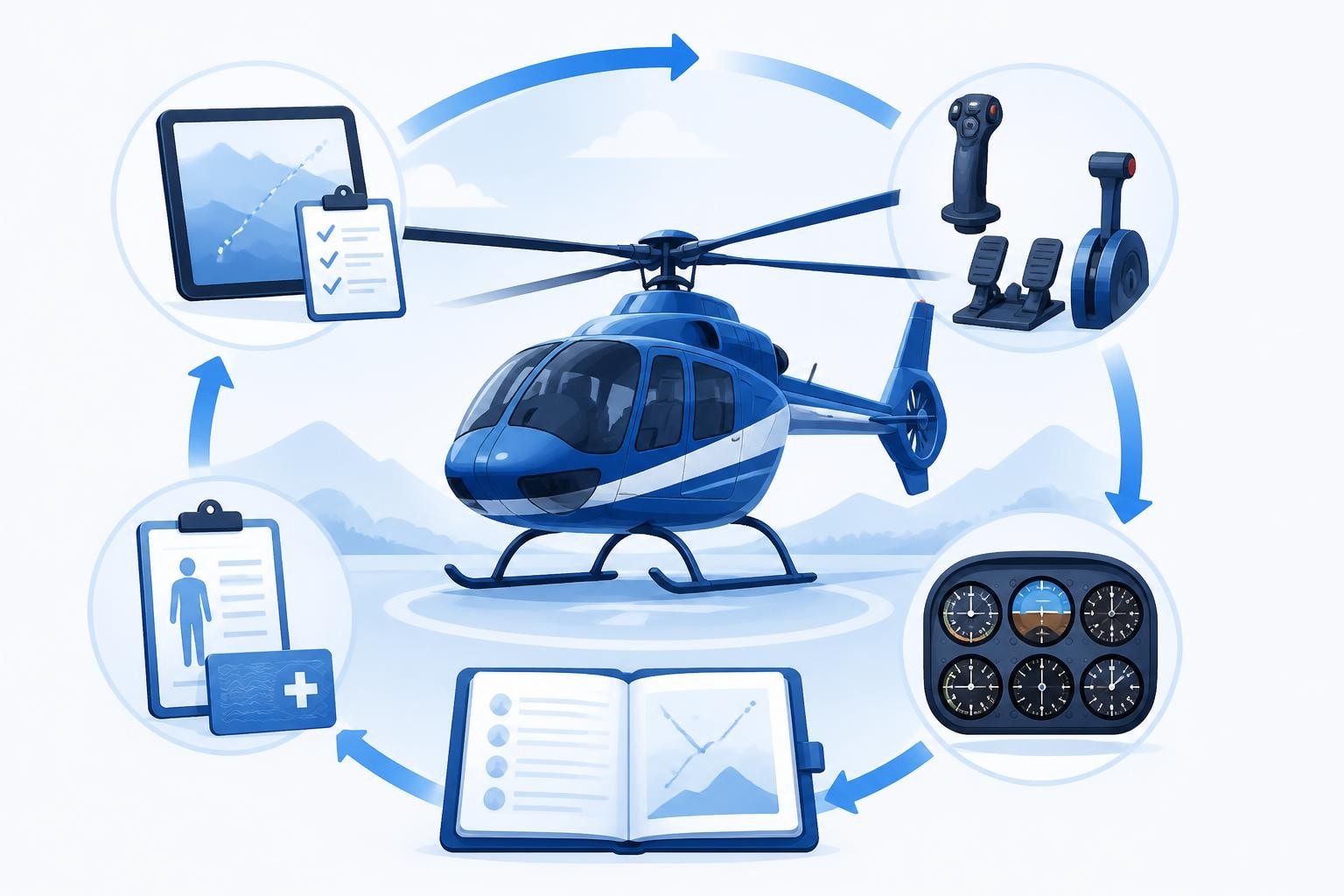
Helicopter flying demands a different mindset from fixed-wing operations. You control vertical movement directly through collective pitch, manage torque with anti-torque pedals, and navigate a unique set of performance limitations tied to power available versus power required. The principles remain constant whether you're logging dual instruction toward a helicopter pilot licence or building turbine PIC time in an offshore operation. This guide walks through the fundamentals, regulatory requirements, and practical skills that keep rotorcraft pilots current and safe.
Core Principles of Rotorcraft Flight
Helicopter flying centres on managing four flight controls simultaneously. The cyclic stick tilts the rotor disc to move forward, back, left, or right. The collective lever changes rotor blade pitch to climb or descend. Anti-torque pedals counter main-rotor torque and control yaw. The throttle (or governor in turbine machines) maintains rotor RPM within limits.
Understanding power required versus power available shapes every phase of flight. Hovering in ground effect typically demands 60 to 75 per cent of available power. Climbing out of ground effect or hovering at altitude pushes that figure higher. FAA guidance on rotorcraft aerodynamics details how density altitude, gross weight, and wind affect these margins.
Height-Velocity Diagram Restrictions
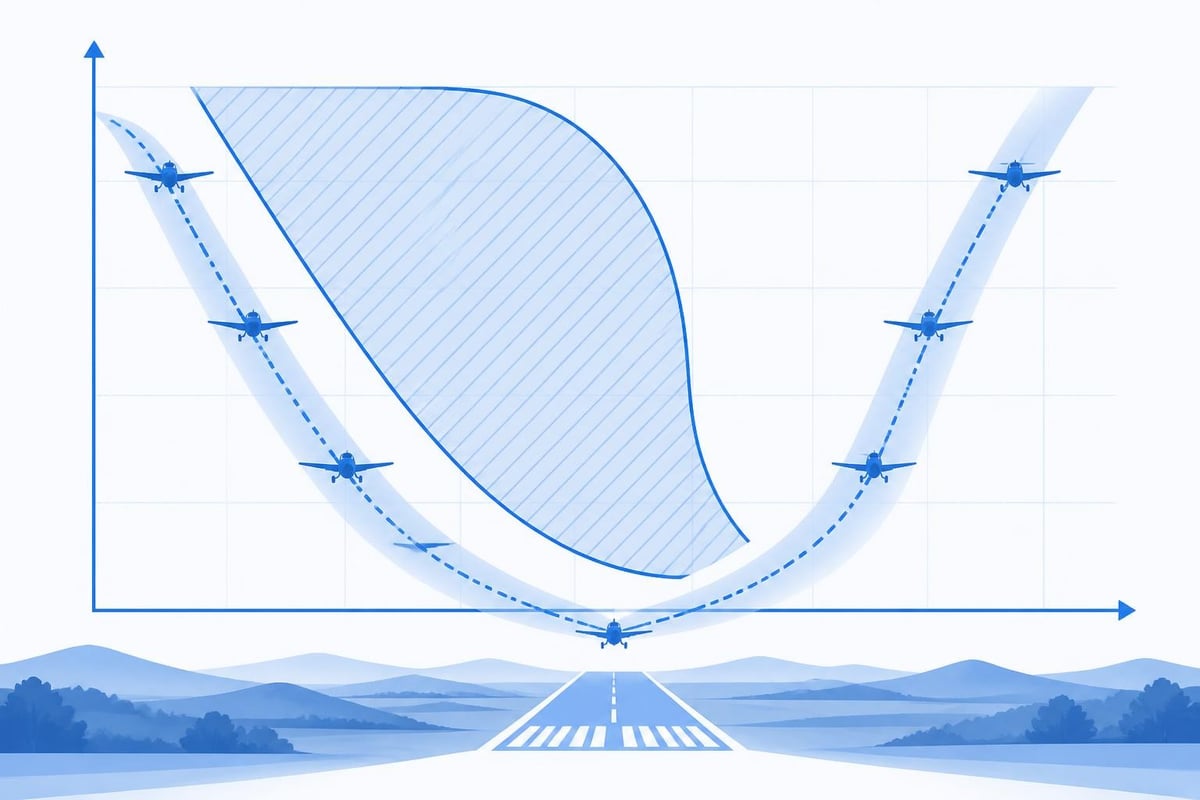
Every type certificate includes a height-velocity diagram, the shaded avoid area on the chart. Operating inside that envelope leaves insufficient height or speed to execute a safe autorotation if the engine fails. Typical dead-man's curve profiles show danger zones below 500 feet AGL at low forward speeds and another hazard band near the surface during hover.
- Stay outside the shaded area during normal operations
- Plan approach and departure profiles to minimise time in the avoid zone
- Know your machine's chart by memory for the weights and temperatures you fly
Licence Requirements and Training Hours
Helicopter flying requires a specific category rating. Under EASA Part-FCL, the PPL(H) demands a minimum of 45 hours total time including at least 25 hours dual and 10 hours supervised solo. That solo time must include 5 hours solo cross-country and one qualifying navigation of at least 185 kilometres with two full-stop landings at different aerodromes.
The CPL(H) requires 155 hours total, including 50 hours PIC, 10 hours cross-country PIC, 5 hours night (including 5 night take-offs and landings), and 30 hours dual on helicopters. Integrated courses may credit some hours differently but the 155-hour floor remains. Type ratings and instrument ratings layer on top. UK CAA and EASA maintain near-identical standards through Part-FCL alignment.
| Licence Level | Minimum Total Hours | Dual Instruction | Solo/PIC Hours | Cross-Country |
|---|---|---|---|---|
| PPL(H) | 45 | 25 | 10 solo | 5 hours solo |
| CPL(H) | 155 | Varies (30+) | 50 PIC | 10 hours PIC |
| ATPL(H) | 1,000 total | - | 350 PIC | 200 hours XC |
Regulations change. Always confirm current minimums against official Part-FCL or national CAA publications before planning training.
Flight Maneuvers and Handling Techniques
Helicopter flying relies on coordinated inputs. A simple pedal turn in the hover means adding left pedal (in most Western helicopters) to yaw left, feeding in left cyclic to stop drift, and raising collective slightly to counter the increased induced power as the disc tilts. Every control movement triggers a chain reaction.
Transitions and Autorotations
Transitioning from hover to forward flight requires lowering the nose with cyclic, adding collective as translational lift kicks in around 16 to 24 knots, and adjusting pedal to stay in balance. The aircraft becomes easier to fly once effective translational lift builds. Returning to the hover reverses the sequence: reduce airspeed with aft cyclic, lower collective as induced power rises, add right pedal as torque drops.
Autorotation is the emergency descent with engine off or drive failed. You lower collective immediately to keep rotor RPM in the green, adjust airspeed for best glide (typically 60 to 80 knots depending on type), and flare at the bottom to bleed off speed before a cushioned collective pull arrests descent. Practice autorotations form the backbone of helicopter flying proficiency. Most operators and training syllabi require monthly or quarterly currency.
- Entry: lower collective, maintain rotor RPM, establish best-glide speed
- Descent: scan for a landing area, adjust track with cyclic and pedal
- Flare: time the aft cyclic application to trade airspeed for rotor energy
- Touchdown: level the aircraft, apply collective smoothly to cushion landing
Practical safety guidance around helicopter operations highlights ground-crew and passenger-approach protocols that complement airborne skills.
Currency and Regulatory Compliance
Helicopter flying demands specific recency requirements. EASA Part-FCL mandates three take-offs and landings in the preceding 90 days to carry passengers. That's FCL.060(b)(1) and the clock runs per type or variant group. If your recency lapses you fly with an instructor or solo until current again.
Night currency under FCL.060(b)(2) requires one take-off and landing at night within the past 90 days. IFR recency depends on whether you hold an IR(H) and follows the six-approach rule within six or twelve months depending on the method chosen. Tracking multiple currency windows across type ratings, night privileges, and instrument ratings becomes complex fast.
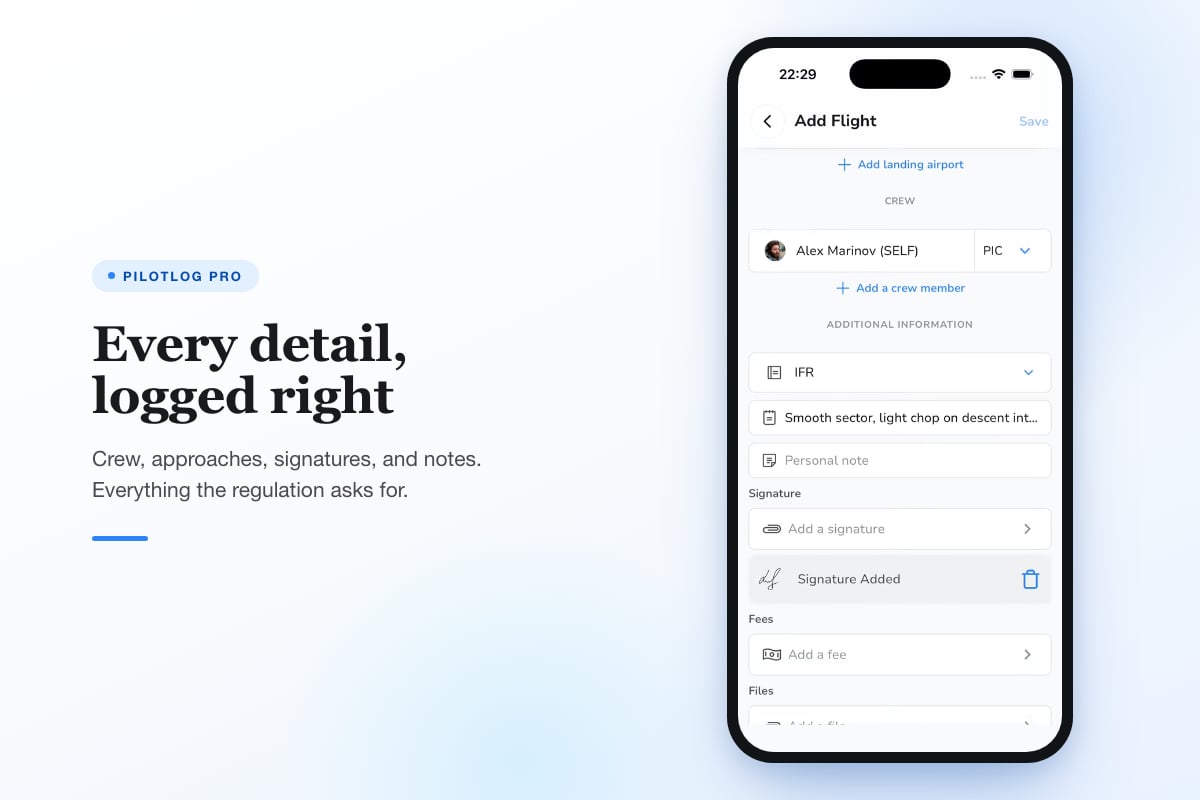
A digital pilot logbook simplifies the arithmetic. Pilotlog Pro calculates rolling 28-day and 365-day totals, flags passenger and night currency lapse dates, and sends alerts for licence and medical expiries. You log the flight and the system tracks the rest, particularly useful when you rotate between single-pilot and multi-crew operations or hold multiple type ratings.
Medical and Licence Expiry
Class 1 and Class 2 medical certificates have validity periods that shorten with age. A Class 1 issued to a pilot under 40 lasts twelve months for single-pilot commercial operations but only six months after age 40. Forgetting a renewal can ground you mid-roster. Licence revalidation often ties to proficiency checks whose timing depends on whether you fly under an ATO, an approved organisation, or privately.
- Set reminders 60 days before medical expiry
- Track hours toward revalidation or renewal by experience
- Keep scans of certificates accessible on mobile devices
Operational Environment and Flight Planning
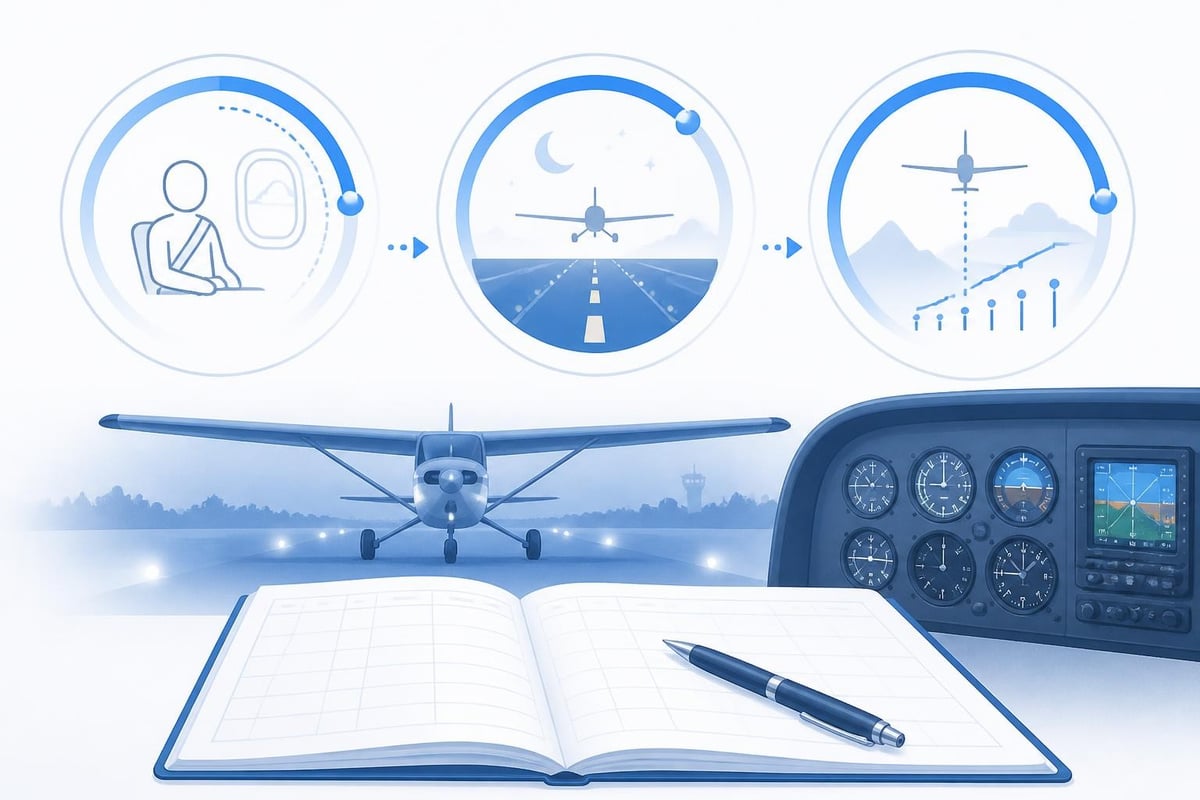
Helicopter flying opens routes fixed-wing aircraft can't touch. Offshore platforms, mountain pads, hospital helipads, and confined areas all demand precise planning. Performance calculations account for pressure altitude, temperature, and gross weight to confirm you have power margin for vertical take-off, climb to clear obstacles, and safe landing.
Weight and Balance
Centre of gravity moves more dramatically in helicopters. A single rear-seat passenger or external load shifts CG aft. Most helicopters have narrow longitudinal CG envelopes (often just 3 to 6 inches). Forward CG reduces aft cyclic authority; aft CG reduces forward cyclic travel. Both extremes risk loss of control.
Calculate weight and balance for every flight. Use the aircraft's specific loading graph, not a generic chart. Confirm fuel burn doesn't push CG out of limits at any point during the flight. If you add or remove passengers or baggage, recalculate before engine start.
Weather Minimums and Visual Flight Rules
Most helicopter flying is VFR. The VMC minima for helicopters below 3,000 feet AMSL and at or below 140 knots (EASA definition) allow 1,500 metres visibility, clear of cloud, and in sight of the surface. That's more permissive than aeroplane rules in the same airspace but still demands caution. Low cloud, rain, and reduced visibility kill rotorcraft pilots every year.
EASA's rotorcraft safety roadmap lists controlled-flight-into-terrain and weather-related accidents as priority areas. NTSB reports, such as this 2024 EC130 investigation, repeatedly cite weather decisions and loss of visual references. Recognise when conditions erode below personal minimums and divert or land.
Advanced Skills and Type-Specific Procedures
Helicopter flying complexity scales with aircraft type. Transitioning from a piston R22 to a turbine AS350 introduces a correlator that manages throttle automatically, a governor that holds rotor RPM, and substantially more power. Bigger twins like the AW139 or S-92 add FADEC, stability augmentation, autopilots, and multi-crew standard operating procedures.
Multi-Engine and Transport Category
Multi-engine helicopters operate under CAT A or CAT B performance classes. CAT A means continued safe flight after engine failure at any point. That requires sufficient power from the remaining engine(s) to climb away or execute a rejected take-off. CAT B accepts that certain phases (low hover out of ground effect) offer no guarantee of continued flight. Your take-off and approach profiles change accordingly.
- CAT A: plan every departure assuming engine failure at the worst point
- CAT B: minimise exposure below minimum height for safe autorotation
- OEI (one engine inoperative) training every six months in multi-engine types
Type ratings require dedicated ground school and simulator sessions. Flight hours logged in pistons don't automatically translate to twins. Endorsements for external loads, winching, night-vision goggles, and offshore operations each carry their own training and recency demands. Keep those endorsements current or plan recurrency before the next tasking.
Safety Culture and Continuous Improvement
Helicopter flying safety improves through data and discipline. The Vertical Aviation Safety Team's safety library and Vertical Aviation International's resource hub offer rotorcraft-specific guidance on wire-strike prevention, approach techniques, and operational risk management.
Standard Operating Procedures
Every operator publishes SOPs covering normal, abnormal, and emergency procedures. Single-pilot operations demand self-discipline to follow checklists even when no one is watching. Multi-crew environments rely on challenge-and-response flows and clear task allocation between pilot flying and pilot monitoring.
Deviations creep in over time. Rushing a pre-start check, skipping a brief, or deferring a maintenance write-up because "it's minor" erodes margins. Flight Safety Foundation's 2024 report highlights organisational culture as a primary factor in accident chains. Strong operators foster environments where any crew member can call a halt.
Continuing Education and Recurrent Training
Helicopter flying skills decay without practice. Most insurance policies and commercial approvals require annual or six-monthly proficiency checks. Those sessions aren't box-ticking exercises. Use simulator time to explore edge-of-envelope handling, practice failures you can't safely replicate in the aircraft, and refine crew coordination.
- Schedule recurrent training early; don't wait until expiry week
- Chair-fly emergencies and memory items between check rides
- Brief every approach and departure as if carrying passengers
- Debrief after complex flights; note what worked and what didn't
Logbook Practices and Career Progression
Accurate flight hours documentation underpins every rating, job application, and insurance renewal. Helicopter flying generates complex hour splits: PIC, dual received, night, NVG, instrument, external load, mountain, offshore. Each category matters for different roles.
Recording entries consistently prevents later disputes. Log total flight time (Hobbs or tach), PIC time if you were sole manipulator or legal PIC, and remarks noting special operations or unusual events. Digital systems sync across devices and calculate totals automatically, reducing arithmetic errors and giving you instant access to current totals when an operator asks during a phone interview.
Track pilot hours by type, role, and operating environment. Employers value turbine PIC time differently from dual received. Offshore or mountain endorsements open specialist markets. A well-organised logbook tells your career story at a glance.
<image_prompt alt="Helicopter career progression">Career timeline showing student phase (45 hours PPL), instructor hours (building 500-1,000 hours), first turbine job (1,000+ hours), and offshore or HEMS roles (2,000+ hours with type-specific endorsements)</image_content>
Helicopter Flying in 2026 and Beyond
Technology shapes modern helicopter flying. Glass cockpits, synthetic vision, terrain databases, and ADS-B all enhance situational awareness. Autopilots and stability augmentation reduce pilot workload, particularly in instrument conditions or at night. Some emerging platforms introduce fly-by-wire controls and envelope protection borrowed from fixed-wing transport jets.
NASA rotorcraft research explores noise reduction, handling qualities, and urban air mobility. Electric and hybrid powerplants promise lower operating costs and cleaner emissions. Commercial adoption remains years away but the direction is clear: helicopters will fly quieter, cleaner, and with more automation.
Regulation lags technology. ICAO flight operations guidance and national authorities update standards as new systems mature. Pilots must stay current not only on stick-and-rudder skills but also on regulatory changes, operational approvals, and emerging best practices. Continuing professional development isn't optional; it's how you remain employable and safe.
Helicopter flying combines precise control coordination, thorough planning, and disciplined adherence to currency and safety standards. Whether you're building hours toward a commercial licence or managing multi-engine operations, tracking recency windows and expiry dates demands attention. Pilotlog keeps you current and legal with automated currency calculations, rolling limits, and alerts for licences and medicals, so nothing catches you by surprise. Log your flights and stay ready.
- helicopter flying
- rotorcraft training
- ppl(h)
- autorotation
- pilot currency
A logbook that keeps itself.
Join the waitlist and be first in line when Pilotlog launches.
Free to join, no spam. Unsubscribe any time.