helicopter licence
Helicopter Pilot Licence: Requirements and Training
7 Sep 2026 · 14 min read
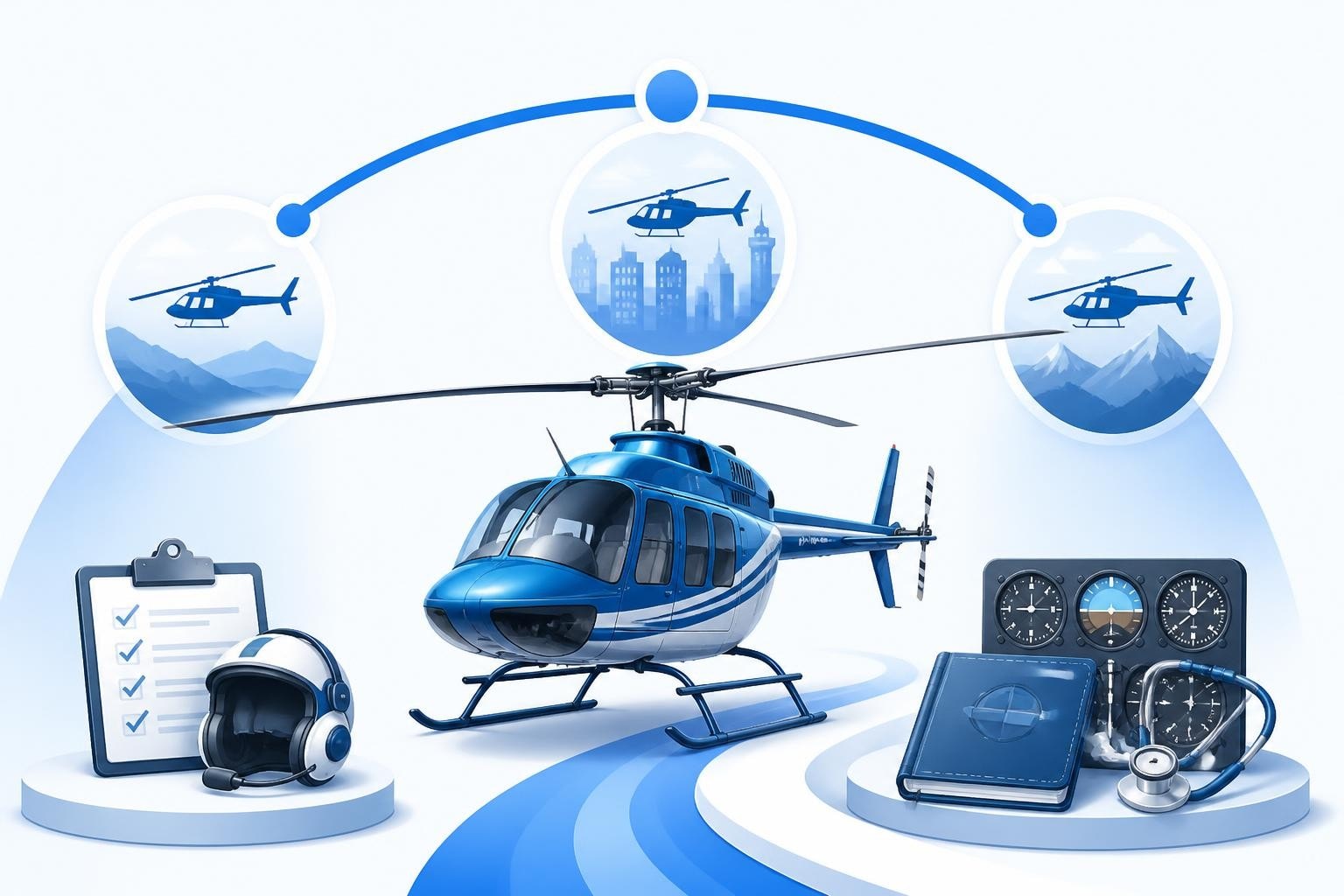
A helicopter pilot licence certifies you to fly rotorcraft for private, commercial, or airline transport operations. Different ratings exist for each privilege level, from basic private flying (PPL(H)) through to professional airline transport (ATPL(H)), each with specific hour requirements, medical standards, and currency obligations. Understanding which licence suits your goals and how to maintain it ensures you stay legal, current, and ready to fly.
What Is a Helicopter Pilot Licence
A helicopter pilot licence is the legal permission from a national aviation authority to act as pilot-in-command of a rotorcraft. Most countries issue licences aligned with ICAO standards, though regional differences exist. The FAA in the United States issues rotorcraft certificates with helicopter ratings under 14 CFR Part 61, while EASA member states follow Part-FCL regulations for PPL(H), CPL(H), and ATPL(H) licences.
Your licence lists ratings, type ratings, and privileges. A private pilot (helicopter) rating lets you carry passengers and fly for personal use but not for hire or reward. A commercial pilot (helicopter) rating permits paid operations. An airline transport pilot (helicopter) rating is required to command multi-pilot helicopters in commercial operations.
Each licence level builds on minimum flight hours, ground school, practical tests, and medical certification. You cannot fly legally without the appropriate rating for your operation and aircraft type, and every flight must comply with currency and recency rules.
Private Helicopter Pilot Licence Requirements
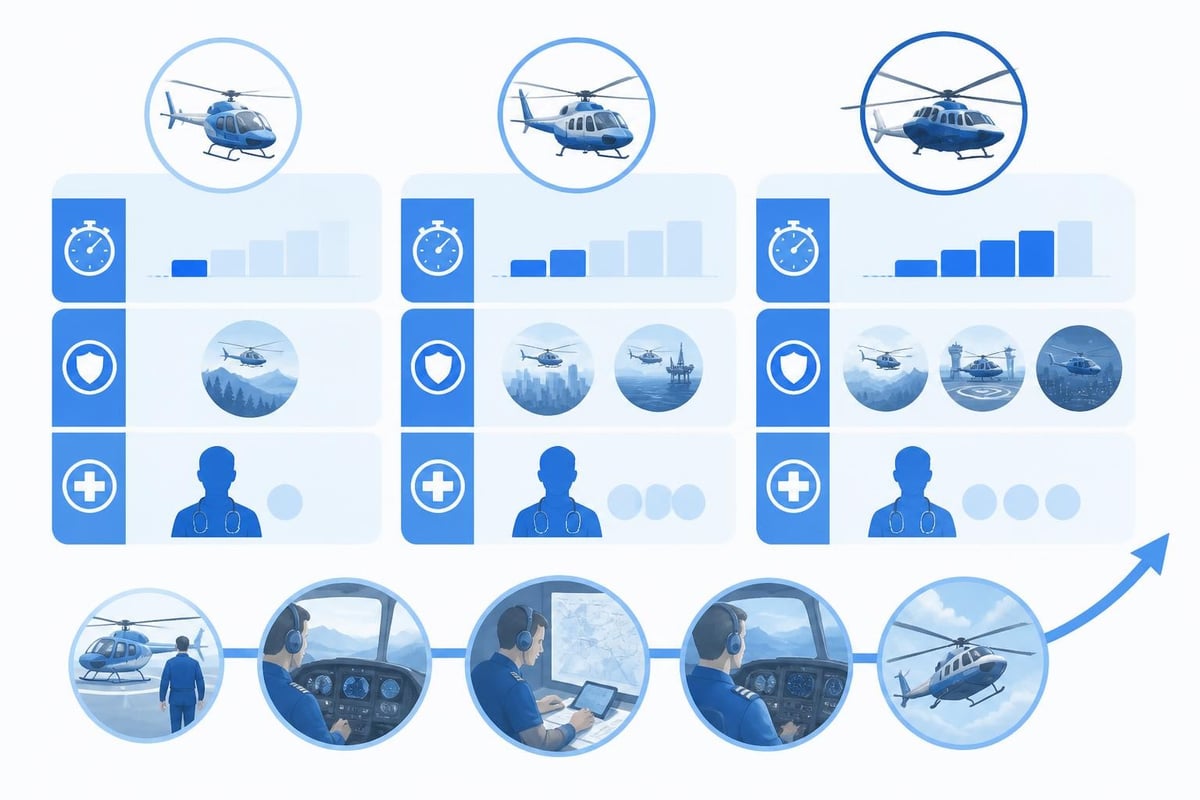
The private helicopter pilot licence (PPL(H)) is your entry point to rotorcraft flying. In EASA states, Part-FCL AMC1 FCL.210.H sets the minimum at 45 flight hours, including at least 25 hours dual instruction and 10 hours supervised solo flight, of which 5 hours must be solo cross-country including one flight with a landing at two different aerodromes each at least 46 km (25 NM) from departure. You also need at least 35 hours of theoretical knowledge instruction.
The FAA Private Pilot (Rotorcraft-Helicopter) ACS requires 40 flight hours under 14 CFR 61.109(c), including 20 hours with an instructor and 10 solo hours. Solo requirements include 3 hours cross-country and 3 hours night flight (except Alaska). You sit a written knowledge test and a checkride with a designated pilot examiner.
Medical certification varies. EASA PPL(H) requires at least a Class 2 medical. FAA rotorcraft private pilots need a third-class medical or BasicMed for non-commercial operations. UK CAA follows EASA Part-MED rules; a medical expires every 60 months under age 40, every 24 months between 40 and 50, and annually over 50 for PPL(H) holders.
Training Pathways and Syllabus
Flight training covers hover work, transitions, circuits, autorotations, navigation, and emergency procedures. The FAA Helicopter Flying Handbook describes ground resonance, retreating blade stall, loss of tail-rotor effectiveness, vortex ring state, and other rotorcraft-specific hazards. You train on a specific type (Robinson R22 or R44 is common) and your licence endorses that type.
Ground school addresses aerodynamics, meteorology, navigation, flight planning, human performance, and regulation. Most schools offer integrated courses (zero to PPL(H) in 6-12 months) or modular training where you complete hours at your own pace. Budget approximately £12,000 to £18,000 for Part-FCL PPL(H) training in the UK or $15,000 to $25,000 for FAA private rotorcraft in the US, depending on location and aircraft hire rates.
Key training milestones:
- First solo hover (typically 10-15 hours)
- First solo circuit (15-20 hours)
- First solo cross-country (25-30 hours)
- Final skills test (40-45 hours)
After passing your skills test or checkride, you hold a helicopter pilot licence valid for life (FAA) or requiring revalidation every 24 months through a proficiency check or 12 hours flight time in the preceding 12 months, including 6 hours PIC and one training flight with an instructor (EASA Part-FCL FCL.740.H).
Commercial Helicopter Pilot Licence and Career Progression
A commercial helicopter pilot licence (CPL(H)) allows you to fly for hire or reward. EASA Part-FCL FCL.315.H requires 185 flight hours total time for an integrated CPL(H) course or 155 hours if you already hold a PPL(H) and add the commercial rating modularly. You need at least 50 hours PIC, 10 hours instrument instruction, and 5 hours night. The course includes advanced navigation, slinging operations, confined-area work, and performance planning.
FAA 14 CFR 61.129(c) sets 150 flight hours for a rotorcraft commercial certificate, including 100 hours PIC, 50 hours in helicopters (of which 10 hours must be in a helicopter for the rating), 20 hours cross-country, and 10 hours instrument training. You must pass a commercial knowledge test and practical test to commercial ACS standards.
Most operators want a CPL(H) plus additional ratings. An instrument rating (IR(H)) permits flight in IMC and is required for many professional roles. EASA IR(H) under Part-FCL FCL.625 demands 50 hours cross-country PIC (of which 10 may be in aeroplanes) and 10 hours instrument dual in helicopters. FAA rotorcraft instrument ratings require 50 hours cross-country PIC and 40 hours actual or simulated instrument time, including 15 hours with an instructor.
Building Hours Toward ATPL(H)
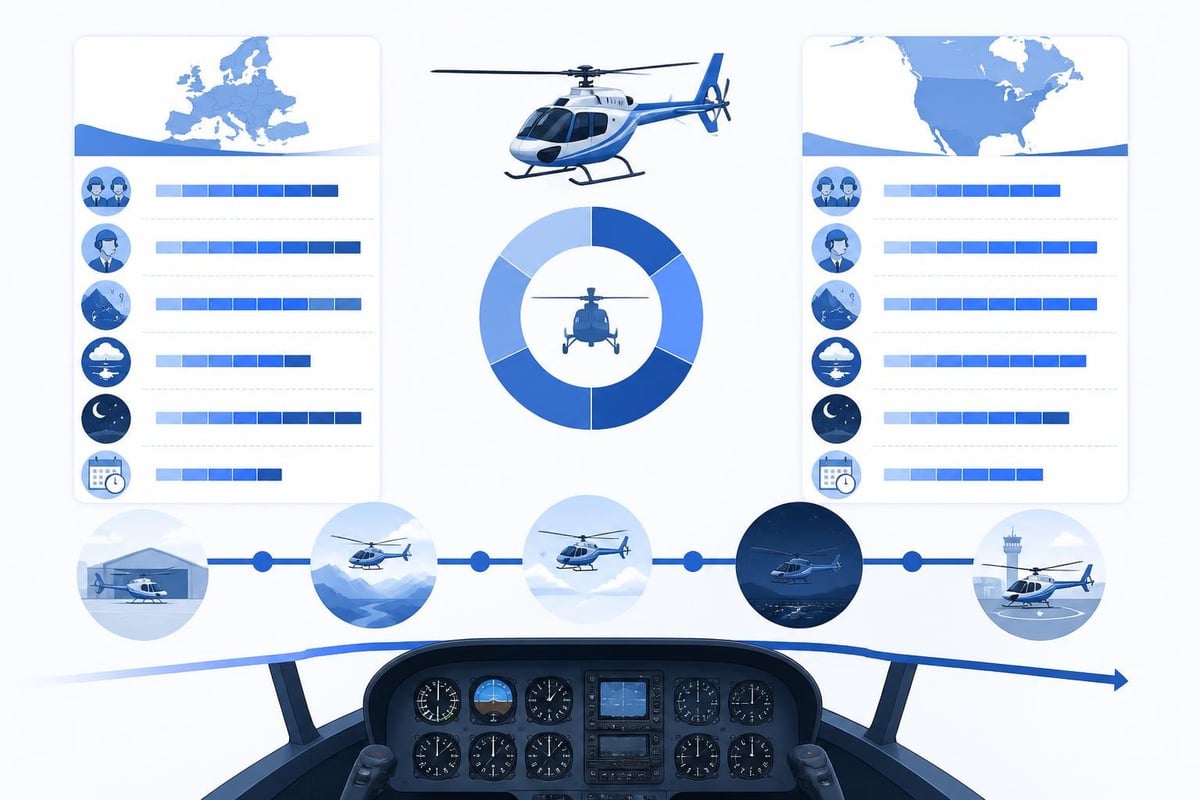
The airline transport pilot (helicopter) licence is the highest certification. EASA ATPL(H) under Part-FCL FCL.515.H requires 1,000 flight hours including 350 hours PIC (of which 250 may be PICUS under supervision), 100 hours night, 200 hours cross-country, and 75 hours instrument (of which 30 may be in a simulator). You complete 14 ATPL theory exams and a multi-pilot type rating on a complex helicopter.
FAA ATP rotorcraft certification under 14 CFR 61.161(c) requires 1,200 flight hours, including 500 cross-country, 100 night, 75 instrument (50 in actual flight), and 200 hours in helicopters (of which 75 must be PIC or SIC performing PIC duties under supervision). Many pilots reach ATPL(H) hours through instructing, offshore support, EMS, or utility operations.
Career pathways differ by region:
| Stage | Typical Hours | Role Examples |
|---|---|---|
| Newly qualified CPL(H) | 155-200 | Flight instructor, tour pilot |
| Intermediate | 500-800 | Utility, firefighting, agricultural |
| Experienced | 1,000-2,000 | Offshore oil/gas, EMS, corporate |
| ATPL(H) command | 2,000+ | Multi-pilot IFR, SAR, airline operations |
Tracking every flight, duty period, and endorsement becomes essential as you build toward higher ratings. A digital logbook simplifies accurate hour tallies for licence upgrades and employer verification.
Staying Current and Legal
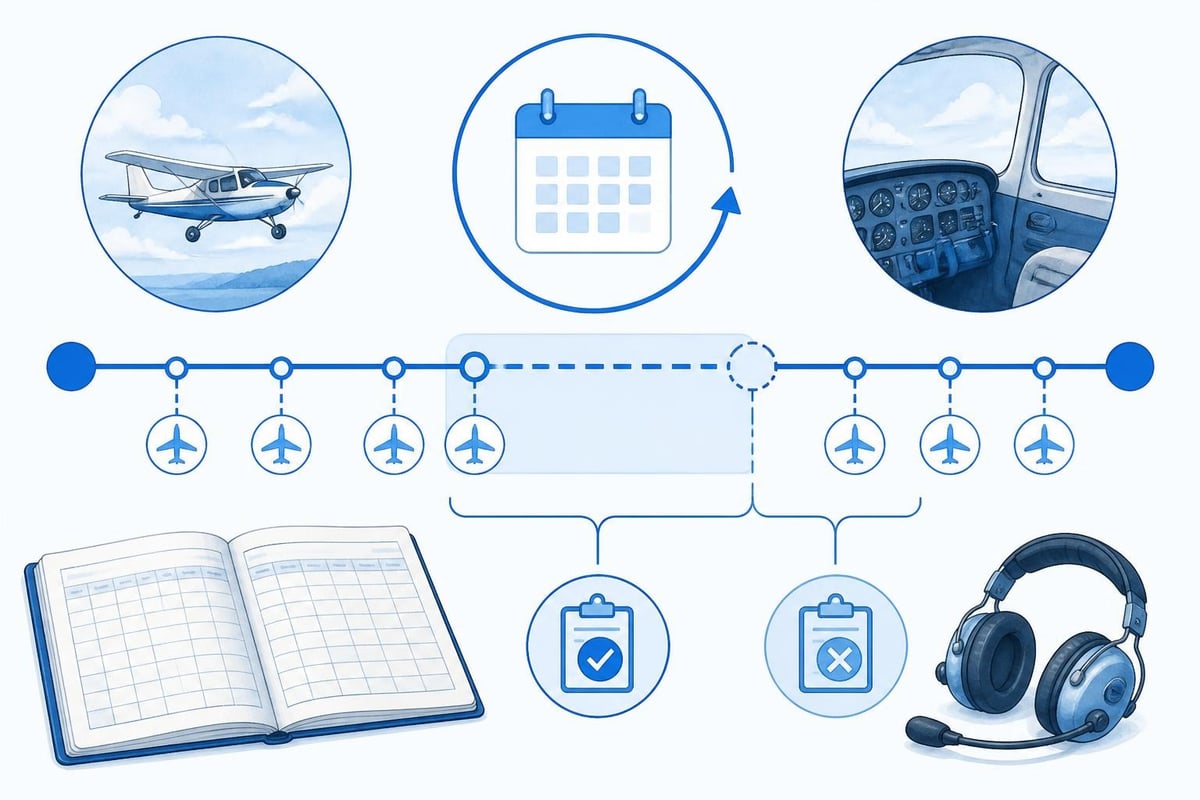
Holding a helicopter pilot licence is only the start. You must maintain currency and revalidate ratings to stay legal. EASA Part-FCL FCL.060 sets general recency: to carry passengers, you need 3 take-offs and 3 landings in the preceding 90 days in the same class or type. Night passenger currency requires 1 take-off and 1 landing at night in the preceding 90 days. If you lapse, you must complete training or a proficiency check before carrying passengers again.
FAA 14 CFR 61.57(a) mirrors the rule: 3 take-offs and 3 landings in the preceding 90 days to carry passengers in a rotorcraft. For night currency, those must occur between one hour after sunset and one hour before sunrise. Instrument currency under 61.57(c) requires 6 approaches, holding, and intercepting/tracking in the preceding 6 months (or an instrument proficiency check).
Medicals expire on a fixed schedule. Class 1 medicals (required for commercial multi-pilot operations) expire every 12 months under age 40, every 6 months over 40 in EASA states. FAA second-class medicals last 12 months for commercial operations. Pilotlog Pro flags expiry dates early and tracks rolling 28-day and 90-day currency windows automatically, so you always know whether you're legal for your next booking.
Type ratings and instrument ratings require revalidation or renewal. EASA type ratings on single-pilot helicopters expire every 12 months and renew via a proficiency check or (for certain single-pilot single-engine types) by logging 12 hours in type in the past 12 months including 6 sectors, 1 hour with an instructor, and takeoffs/landings. FAA flight reviews under 61.56 are required every 24 months: 1 hour ground and 1 hour flight with an authorized instructor.
Common Currency Pitfalls
Many pilots unknowingly lapse currency by miscounting landings or forgetting night recency. A touch-and-go counts as one landing for currency purposes in both EASA and FAA rules. If you fly VFR-only for months, your instrument currency expires and you cannot file IFR until you regain it via approaches or an IPC.
Frequent lapses include:
- 90-day passenger currency (especially after vacation or seasonal work)
- Night currency for passenger flights
- Instrument currency (6-month clock)
- Medical certificate expiry
- Flight review or proficiency check due date
Set alerts at least 30 days before expiry. Digital tools that auto-calculate currency from your logbook entries reduce the risk of nasty surprises when an operator asks for your availability. For more on maintaining IFR currency in rotorcraft, detailed tracking makes compliance straightforward.
International Recognition and Conversion
Helicopter pilot licences are not always directly transferable. ICAO Annex 1 sets global standards, but each state implements them differently. An FAA rotorcraft commercial certificate may be validated in some countries via a short conversion or temporary permit, but others require a full licence issue based on your FAA certificate.
EASA and FAA have no automatic mutual recognition. An FAA commercial helicopter pilot seeking an EASA CPL(H) must apply for licence conversion, demonstrate English proficiency (ICAO Level 4 or higher), pass EASA theory exams (some credit may be given), and complete a skills test on an EASA-registered aircraft. Conversely, an EASA CPL(H) holder moving to FAA jurisdiction files for a certificate based on foreign licence under 14 CFR 61.75, sits FAA written tests, and completes a checkride.
The EASA licensing overview describes how Part-FCL licences issued in one member state are valid across all EASA countries. UK post-Brexit licences are now UK CAA Part-FCL, not EASA, so UK pilots need EASA validation to fly EASA-registered helicopters commercially in EU states, and vice versa. Always confirm current bilateral agreements before accepting a job abroad.
Regulatory Oversight and Safety Standards
Every helicopter pilot licence operates under the oversight of the issuing authority. The FAA enforces standards through inspectors, designated examiners, and ramp checks. EASA delegates authority to national aviation agencies (CAA in the UK, DGAC in France, etc.) who conduct oversight and issue licences under Part-FCL. ICAO sets global standards that member states adopt and adapt.
Safety initiatives shape licensing rules. The United States Helicopter Safety Team (USHST) publishes monthly accident data and best-practice recommendations. The Vertical Aviation Safety Team (VAST) provides international guidance on training standards and operational risk mitigation. These efforts influence exam content, practical test standards, and recurrent training requirements.
Accident investigations by the NTSB inform regulatory changes. The 2024 NTSB annual report highlights recurrent themes in helicopter accidents: loss of control, low-altitude operations, and inadequate pre-flight planning. Licence standards evolve to address these findings through enhanced upset training, scenario-based testing, and stricter instructor qualifications.
Cost, Duration, and Choosing a School
Budgeting for a helicopter pilot licence depends on location, aircraft type, and training intensity. In the UK, integrated PPL(H) courses range from £12,000 to £18,000 and take 6 to 12 months full-time or 12 to 24 months part-time. Modular training costs roughly the same but spreads over a longer period. In the US, private rotorcraft training averages $15,000 to $25,000 for 40 to 50 hours including instructor fees, aircraft hire, exam fees, and materials.
CPL(H) training is more expensive. EASA integrated CPL(H) from zero hours costs £60,000 to £90,000 and takes 12 to 18 months. FAA commercial rotorcraft from zero to 150 hours runs $70,000 to $100,000. Modular add-on CPL(H) for existing PPL(H) holders costs £25,000 to £40,000 (EASA) or $30,000 to $50,000 (FAA), depending on how many hours you already hold.
Factors affecting total cost:
- Aircraft hire rate (£250-£400/hour in UK; $300-$500/hour in US)
- Instructor fee (£50-£80/hour UK; $60-$100/hour US)
- Exam and test fees (£1,500-£3,000 total)
- Ground school materials and simulator time
- Extra hours beyond minimum (most students need 50-60 hours for PPL(H))
Choose a school approved by your national authority. EASA schools hold an Approved Training Organization (ATO) certificate. FAA schools operate under Part 141 (structured syllabus) or Part 61 (individual training). Visit multiple schools, inspect aircraft maintenance records, ask about instructor experience and pass rates, and confirm insurance coverage. Industry bodies like Helicopter Association International list accredited schools and offer scholarships for aspiring pilots.
Time to licence varies. Full-time students finish PPL(H) in 4 to 6 months. Part-time training stretches to 12 to 18 months. Weather, aircraft availability, and personal schedule all affect duration. Track your progress carefully: knowing you have 38 of 45 hours logged and need 2 more solo cross-countries keeps training on schedule and within budget.
Endorsements, Type Ratings, and Specializations
Your helicopter pilot licence lists specific endorsements and type ratings. Single-pilot single-engine helicopters (Robinson R22, R44, Bell 206) require a type rating in EASA states and a make-and-model endorsement under FAA rules. Complex or turbine helicopters need a dedicated type rating course involving ground school, simulator sessions, and a flight test.
Multi-pilot helicopters (AgustaWestland AW139, Sikorsky S-76, Airbus H145) require a multi-pilot type rating and, for commercial operations, an ATPL(H) or MPL(H). Type-rating courses last 2 to 6 weeks and cost £8,000 to £25,000 depending on aircraft complexity. Recurrent training every 6 or 12 months maintains the rating.
Specialized endorsements include:
- Night rating (EASA; included in FAA private)
- Mountain flying endorsement (high-altitude, confined areas)
- External load / sling operations
- NVIS / night-vision goggles
- Hoist operations (SAR, EMS)
Each endorsement requires additional ground and flight training. Tracking which endorsements are current, especially if you hold multiple type ratings and work across different roles, demands meticulous logbook records. Resources like Pilotlog's expiry and checkride audit help manage complex endorsement schedules.
Maintaining Your Logbook and Records
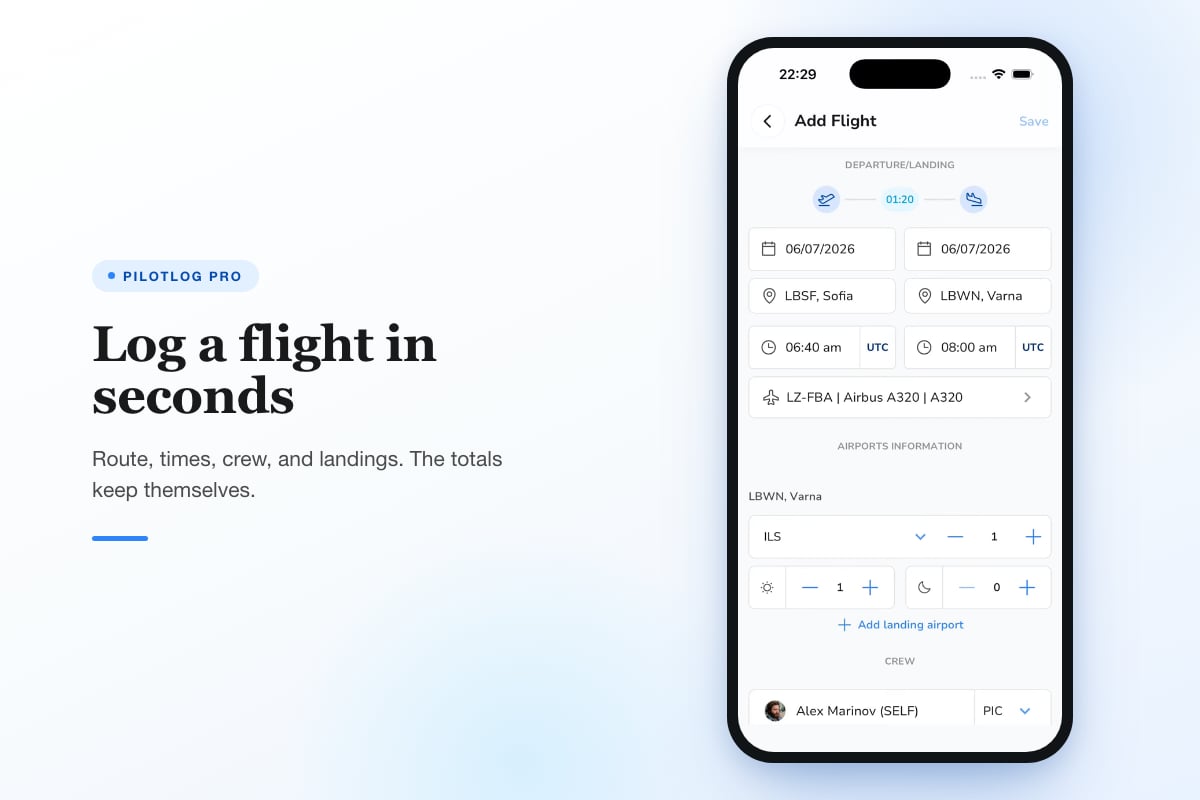
Accurate logbook records are a legal requirement and a professional necessity. EASA Part-FCL FCL.050 and FAA 14 CFR 61.51 both mandate that pilots record each flight, including date, aircraft type and registration, departure and arrival aerodromes, flight time, and pilot function (PIC, dual, PICUS). Examiners, employers, insurers, and regulators all inspect logbooks.
Paper logbooks work but are vulnerable to loss, damage, and arithmetic errors. A best digital logbook syncs across devices, auto-totals hours, and flags currency. You can filter by aircraft type, operation (VFR/IFR), or date range to prove compliance during ramp checks or job applications.
Log every sector accurately. Record take-off and landing times, not block-to-block if your authority requires airborne time. Note PIC, dual received, or SIC time according to your role. If you log PICUS (pilot-in-command under supervision), ensure your instructor or supervising captain endorses it. Incorrect logs can void insurance, fail audits, or delay licence upgrades.
Keep supporting documents: training records, endorsements, test results, medical certificates, and instructor sign-offs. Scan or photograph them and store backups. Digital platforms let you attach PDFs of checkride reports or type-rating certificates directly to the relevant logbook entry, creating a complete career record in one place.
Practical Considerations for Helicopter Pilots
Flying helicopters demands different skills than aeroplanes. Hovering requires constant control inputs; autorotations are your emergency descent profile; and confined-area operations test planning and judgement. Transitioning from aeroplanes to helicopters (or vice versa) means unlearning some habits and building new muscle memory.
Weather minimums are often more restrictive. VFR helicopters typically need 1 statute mile visibility and clear of cloud in Class G airspace (FAA), or 1,500 m flight visibility and clear of cloud below 3,000 ft AMSL or 1,000 ft AGL in EASA states. Low-level operations in poor visibility are high-risk; many accidents occur when pilots continue VFR into IMC.
Weight and balance calculations matter every flight. Helicopters have narrow CG envelopes. Load fuel, passengers, and cargo carefully. Performance planning accounts for density altitude, which dramatically reduces power available on hot days or at high elevation. Always calculate hover out-of-ground-effect performance before departure.
Daily pilot tasks include:
- Pre-flight inspection (main rotor, tail rotor, controls, fluids)
- Weight-and-balance calculation and performance chart review
- NOTAM and weather briefing
- Fuel planning with reserves (typically 20 minutes plus alternate)
- Currency and endorsement check (am I legal for this flight?)
Maintaining proficiency between flights is critical. If you fly only a few hours per month, consider regular refresher training with an instructor. The 90-day currency rule is a minimum; many pilots aim for one flight every 30 days to stay sharp.
Earning and maintaining a helicopter pilot licence requires meeting precise hour thresholds, passing rigorous tests, and staying current through regular flight and recurrent checks. Rules change, so always verify requirements against current official sources and your national authority. Pilotlog keeps your hours, currency, and expiries in one place, with alerts that flag medicals, ratings, and recency windows before they lapse, so you can focus on flying rather than spreadsheet arithmetic.
- helicopter licence
- ppl(h)
- cpl(h)
- rotorcraft training
- pilot ratings
A logbook that keeps itself.
Join the waitlist and be first in line when Pilotlog launches.
Free to join, no spam. Unsubscribe any time.