helicopter flying handbook
FAA Helicopter Flying Handbook: Essential Guide 2026
6 Nov 2026 · 8 min read
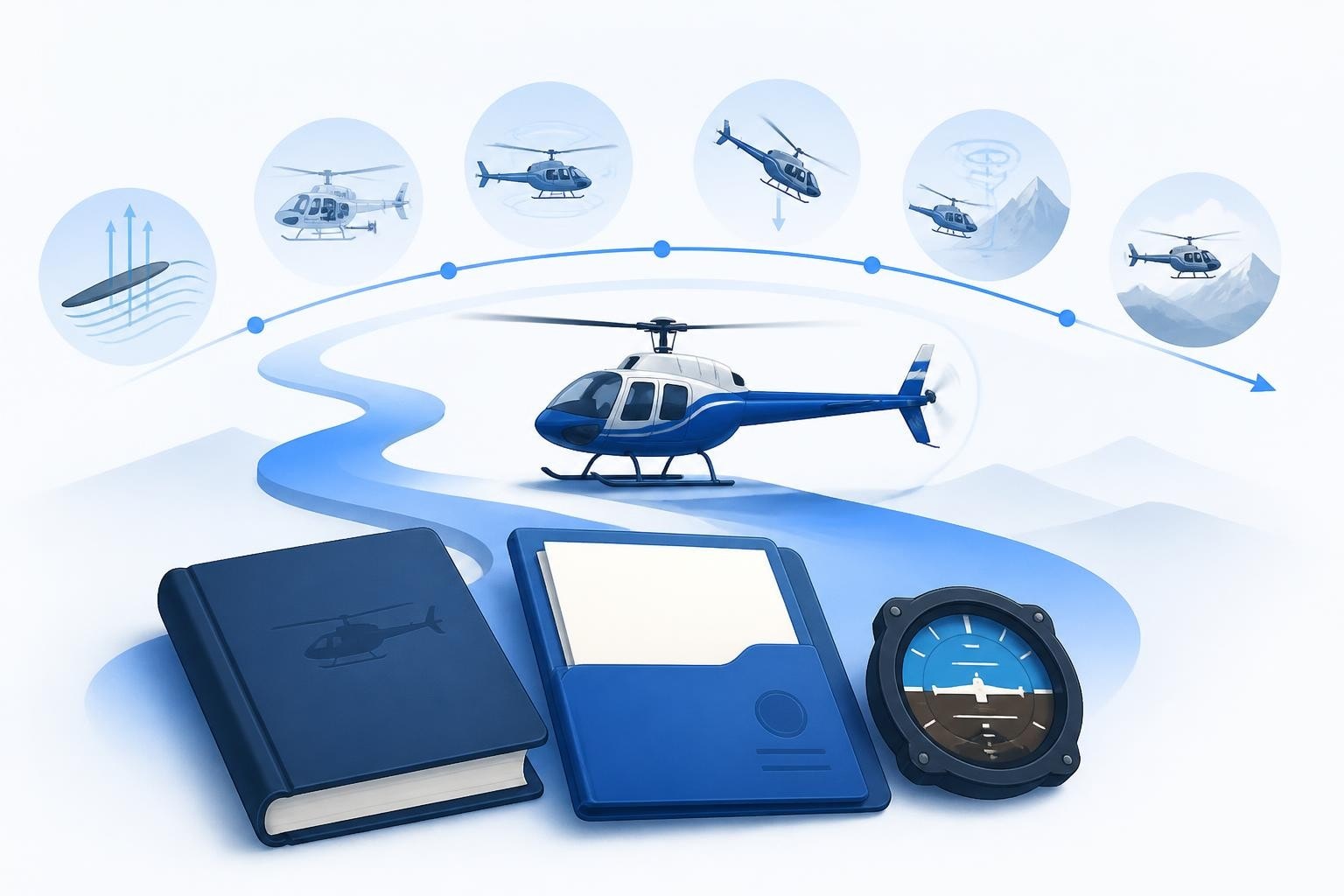
The faa helicopter flying handbook (FAA-H-8083-21B) is the official Federal Aviation Administration manual for rotorcraft pilots and instructors. It covers aerodynamics, flight controls, systems, maneuvers, performance, emergencies, and autorotations. Published by the FAA and updated regularly, the handbook applies to FAA 14 CFR training and certification in the United States. You can download the full PDF from the FAA or access it through the official FAA handbook page.
What the Handbook Covers
The faa helicopter flying handbook runs to over 250 pages across 14 chapters. Each chapter addresses a specific aspect of rotorcraft flight.
Core Topics and Chapters
- Aerodynamics of Flight: Lift, thrust, drag, rotor systems, dissymmetry of lift, translating tendency, ground effect
- Flight Controls: Collective, cyclic, anti-torque pedals, throttle correlation, governor systems
- Helicopter Systems: Powerplants, transmissions, fuel systems, hydraulics, electrical systems
- Aerodynamics and Performance: Power required, height-velocity diagram, weight and balance, density altitude effects
- Maneuvers: Normal takeoffs and landings, hovering, turns, traffic patterns, pinnacle and confined area operations
- Autorotations: Entry, descent, flare, touchdown technique for engine-off landings
- Emergencies: Engine failure, tail rotor failure, low rotor RPM recovery, settling with power, mast bumping
- Advanced Operations: Mountain flying, external loads, night operations, water operations
The handbook is structured for both ab initio training and recurrent study. Chapter 11 focuses entirely on autorotations, the critical emergency maneuver every helicopter pilot must master. AOPA's practical guide to autorotations complements the FAA guidance with operational technique.
How Pilots Use the Handbook
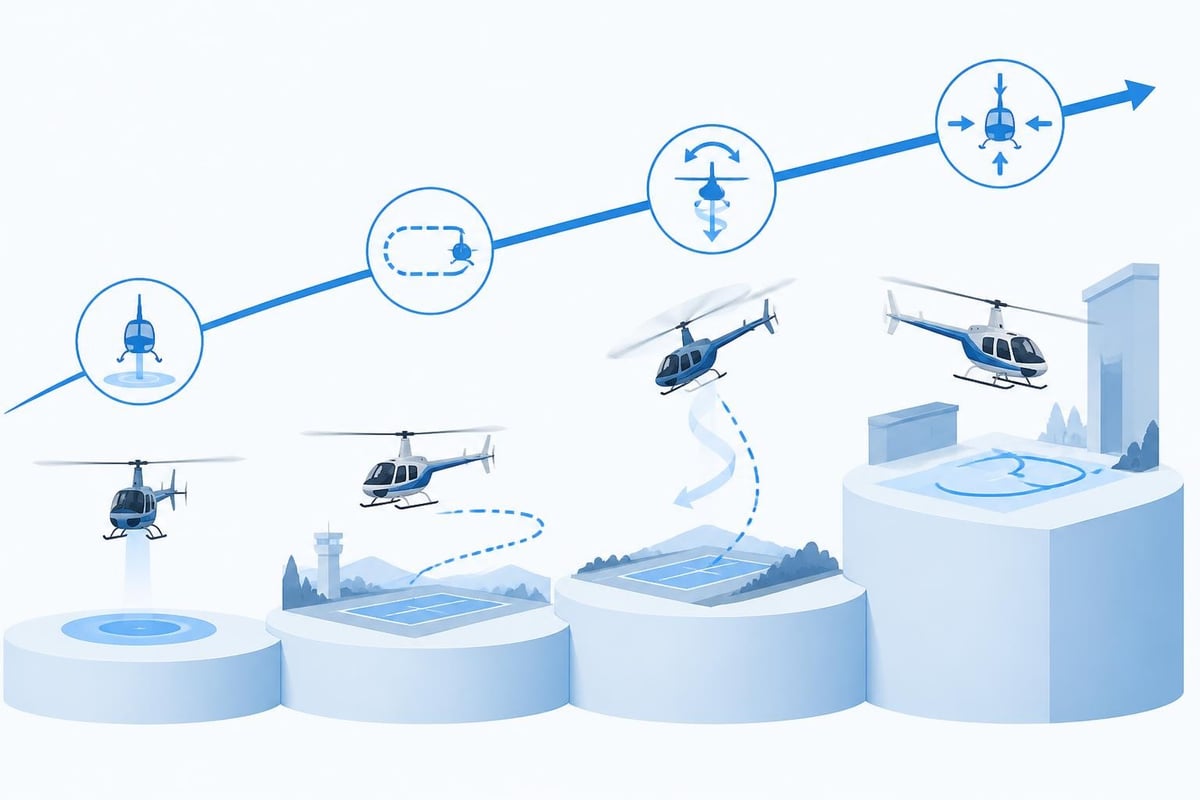
Helicopter students rely on the faa helicopter flying handbook throughout private, commercial, and instructor training. The FAA references it in the Airman Certification Standards (ACS) for all rotorcraft ratings.
Training and Certification
Examiners expect you to demonstrate knowledge from the handbook during oral exams. For a private helicopter checkride under 14 CFR Part 61, you must explain aerodynamic concepts, systems, and emergency procedures. The handbook provides the authoritative answers.
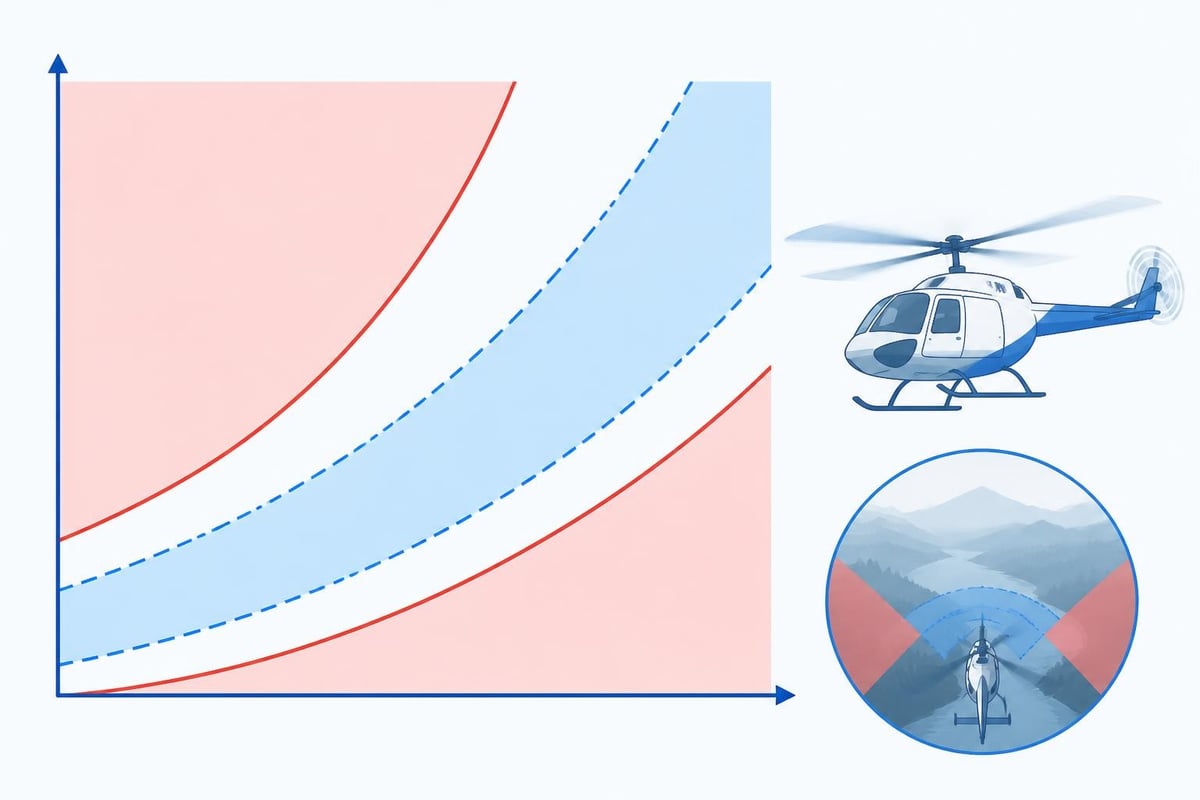
Flight instructors use the manual to build lesson plans and ground briefings. For example, Chapter 10 covers height-velocity avoidance, the forbidden zones where safe autorotation becomes impossible. Instructors teach this using the handbook's diagrams and performance charts, then demonstrate it in flight.
| Training Phase | Key Handbook Chapters | Typical Hours |
|---|---|---|
| Pre-solo | 2, 3, 4, 5 (controls, systems, maneuvers) | 0-15 hours |
| Private solo | 6, 8, 11 (advanced maneuvers, emergencies, autorotations) | 15-40 hours |
| Commercial | 9, 10, 12, 13 (performance, operations, mountain, night) | 40-150 hours |
After certification, pilots return to the handbook for recurrent training, unfamiliar operations, or accident study. NTSB accident reports often reference handbook guidance that was misunderstood or ignored.
Autorotation: The Critical Skill
Chapter 11 of the faa helicopter flying handbook devotes 18 pages to autorotations. This engine-off landing technique stores rotor energy during descent, then trades it for a controlled touchdown.
The Four Phases
- Entry: Lower collective immediately, enter autorotative descent, maintain rotor RPM in green arc
- Descent: Adjust airspeed (typically 60-80 KIAS for best glide), select landing area, plan approach
- Flare: At 40-100 feet AGL (model-dependent), apply aft cyclic to arrest descent and trade forward speed for rotor energy
- Touchdown: Level the helicopter, apply collective to cushion landing, touch down with forward ground speed
The handbook specifies rotor RPM limits, entry airspeeds, and flare altitudes for different helicopter types. A Robinson R22, for example, requires 60-70 KIAS autorotation speed and a flare beginning around 40 feet. The EASA instructor guide provides complementary European perspective on autorotation training standards.
Autorotation proficiency requires consistent practice. FAA guidance recommends regular training autorotations to a power recovery at altitude, with periodic full-down touchdown autorotations for currency.
Performance and Limitations
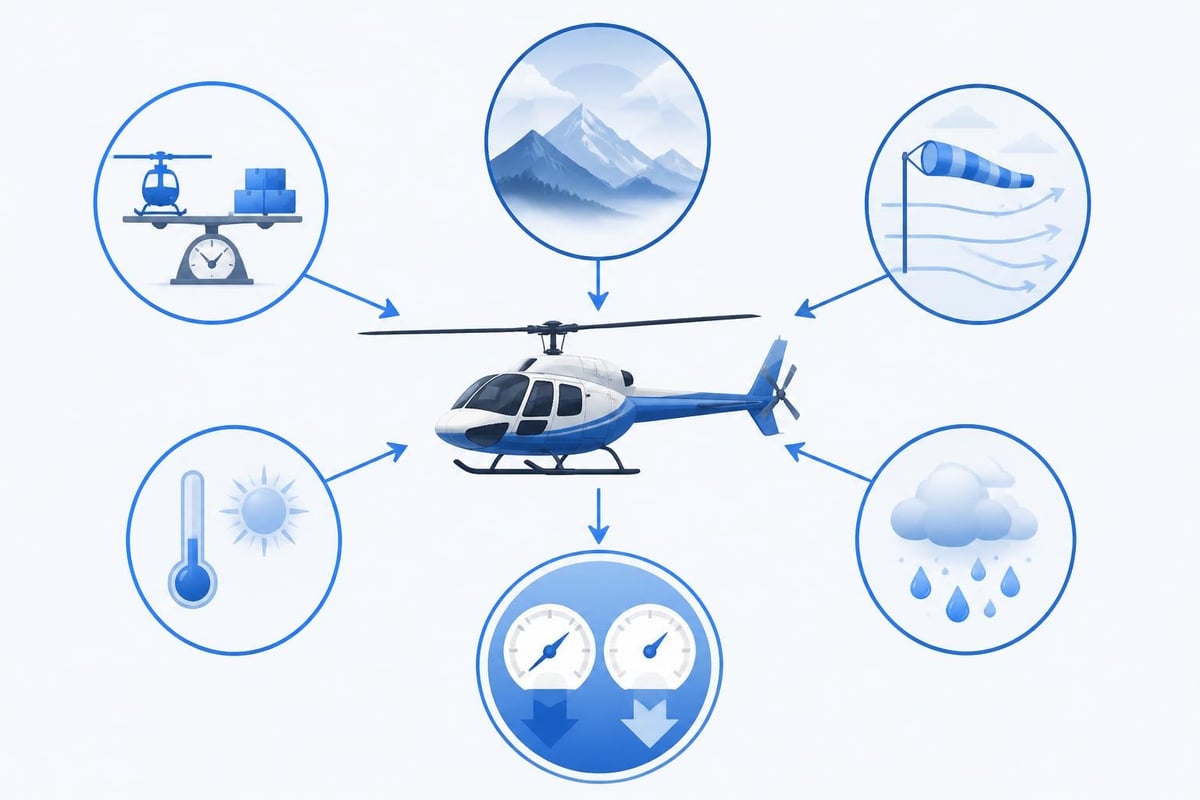
Chapters 9 and 10 detail helicopter performance planning. Weight, density altitude, wind, and temperature all affect what your aircraft can do.
Hovering performance depends on power available versus power required. At high density altitude or heavy weight, you may have insufficient power to hover out of ground effect. The handbook teaches you to calculate this before flight using the pilot's operating handbook (POH) charts.
Height-velocity diagram shows altitude and airspeed combinations to avoid. If you suffer an engine failure in the shaded zones, you may not have enough altitude or airspeed to complete a successful autorotation. Typical avoid areas include 0-500 feet at low airspeed and a narrow corridor around translational lift speed.
Worked Example: Density Altitude Calculation
Your helicopter is at an airport where pressure altitude is 4,000 feet and temperature is 30°C (86°F). Standard temperature at 4,000 feet is 9°C.
- Temperature deviation: 30°C - 9°C = 21°C above standard
- Density altitude correction: approximately 120 feet per °C
- Total correction: 21°C × 120 = 2,520 feet
- Density altitude: 4,000 + 2,520 = 6,520 feet
At 6,520 feet density altitude, your POH shows reduced power available. If maximum gross weight hovering ceiling is 6,000 feet, you cannot hover out of ground effect at this weight and temperature. The faa helicopter flying handbook explains this relationship in Chapter 9.
Pilots training for commercial or instructor ratings must demonstrate performance calculations during checkrides. Accurate logbook records help you track experience in different conditions. Pilotlog Pro tracks flight hours, currency, and expiries automatically, including medical and licence renewals, so you can focus on flying safely. Check out Pilotlog Pro to keep your rotorcraft logbook current and organized.

Updates and Editions
The FAA revises the helicopter flying handbook periodically. The current edition is FAA-H-8083-21B, published in 2019. Previous editions were FAA-H-8083-21A (2012) and the original FAA-H-8083-21 (2000).
Updates typically reflect:
- Regulatory changes to 14 CFR Part 61 or Part 141
- Accident trends identified by the NTSB or FAA Safety Team
- Technology advances in avionics, systems, and training devices
- Industry feedback from instructors, examiners, and manufacturers
Always verify you are using the current edition. The FAA handbook page lists the latest version and any advisory circulars or updates.
International Perspective
While the faa helicopter flying handbook applies to FAA 14 CFR operations, pilots worldwide use it as a reference. EASA and national aviation authorities publish their own guidance, but the FAA manual is widely recognized.
EASA rotorcraft training follows Part-FCL and uses the EASA Flight Instructor Guide. Maneuver standards, medical requirements, and currency rules differ from FAA regulations. For example, EASA night currency under FCL.060 requires three takeoffs and landings in the preceding 90 days, while FAA requires three takeoffs and landings to a full stop in the preceding 90 days for night currency under 14 CFR 61.57(b).
If you hold or plan to hold licences under multiple authorities, track each set of currency requirements separately. Mixing FAA and EASA figures or citations leads to confusion during training and checkrides.
Practical Application Tips
- Read the relevant chapter before each training phase: Chapter 6 before you start traffic pattern work, Chapter 11 before your first autorotation
- Use handbook diagrams during ground instruction: The aerodynamic and system diagrams clarify complex concepts
- Cross-reference with your POH: The handbook is generic; your aircraft manual is specific
- Practice explaining concepts aloud: If you can teach it from the handbook, you understand it well enough for a checkride
- Track your training hours by maneuver category: Knowing you have 12.4 hours of autorotation practice versus 8.6 hours of confined-area work helps you and your instructor plan
A digital logbook like Pilotlog makes it simple to track hours by maneuver type, operation category, and conditions. When you can see exactly how much mountain or night time you have logged, you can prioritize the training areas the handbook emphasizes.
Frequently Asked Questions
Is the FAA Helicopter Flying Handbook legally required reading?
No regulation requires you to read it, but the FAA Airman Certification Standards reference it extensively. Examiners expect you to know the material for all checkrides under 14 CFR Part 61 and Part 141.
Does the handbook cover turbine helicopters?
Yes. Chapters 3 and 13 discuss turbine engines, fuel control units, and turbine-specific systems. The aerodynamic and maneuver guidance applies to both piston and turbine helicopters.
Can I use the handbook for EASA or UK CAA training?
The faa helicopter flying handbook is an FAA publication for 14 CFR operations. EASA and CAA have separate guidance. You may use the FAA handbook as supplementary reading, but cite EASA Part-FCL or UK CAA requirements for European training and exams.
Keeping Current with Regulatory Changes
Regulations, handbooks, and best practices evolve. Always verify current requirements with official FAA sources before making training or operating decisions. The information in this article reflects guidance available as of November 2026.
For ongoing training insights and logbook tips, explore the Pilotlog blog, which covers topics from learning to fly to flight instructor guidance.
The faa helicopter flying handbook is the foundation of rotorcraft training under FAA 14 CFR, covering everything from aerodynamics to emergency autorotations. Whether you are working toward a private rating or building commercial hours, the handbook provides authoritative guidance you will reference throughout your career. Pilotlog helps you track every training hour, currency requirement, and medical expiry so you stay current and legal while you focus on mastering the skills the handbook teaches. Log your flights in seconds and let Pilotlog handle the rest.
- helicopter flying handbook
- autorotation technique
- rotorcraft training
- faa-h-8083-21b
- height-velocity diagram
A logbook that keeps itself.
Join the waitlist and be first in line when Pilotlog launches.
Free to join. We’ll email you about the launch and Pilotlog news. Unsubscribe any time. Privacy policy