flight hours logging
Pilot Hours: How to Log, Track, and Build Your Flight Time
19 Jul 2026 · 14 min read
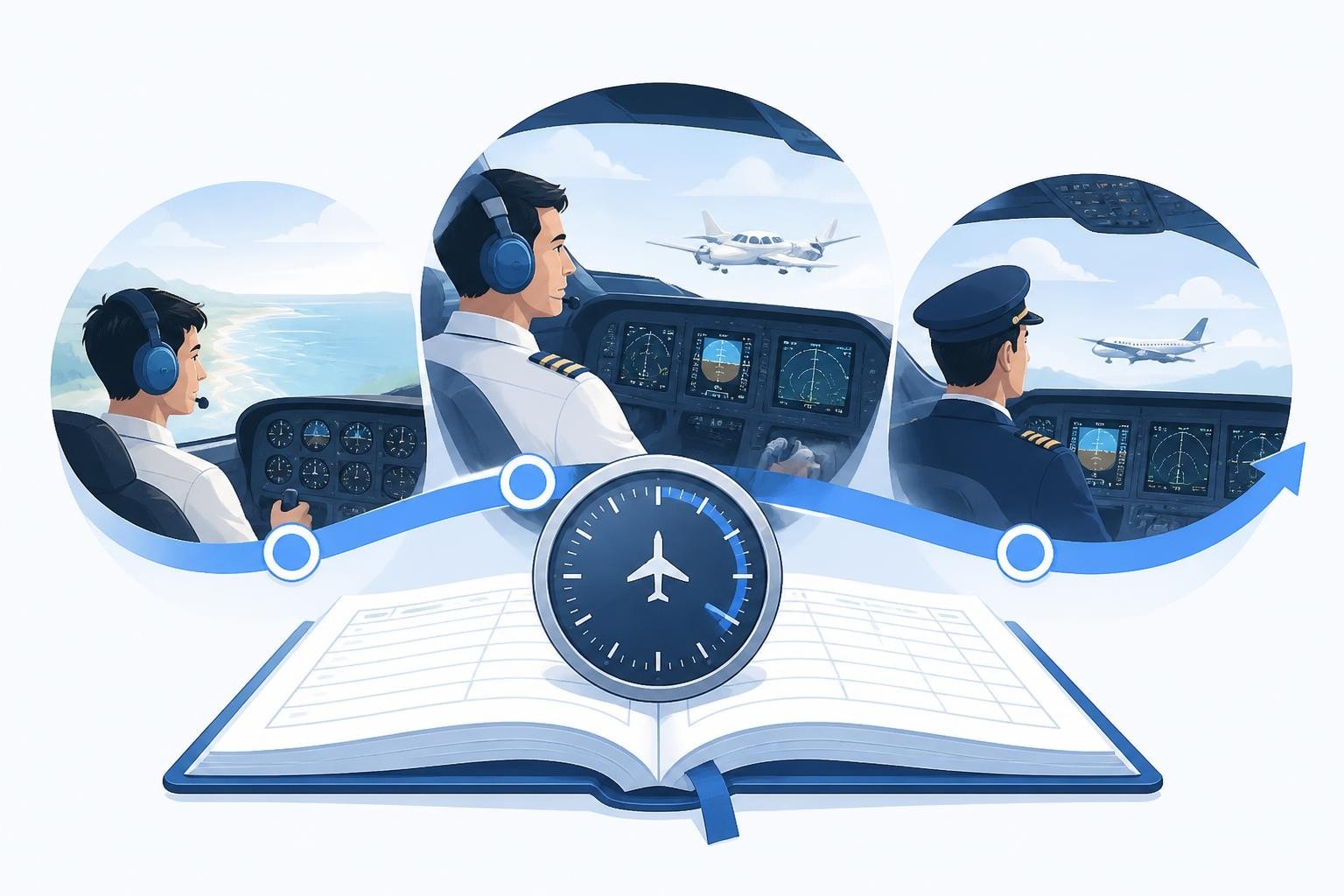
Pilot hours are the currency of your aviation career. Every logged flight builds your experience, opens the door to new certificates and ratings, and demonstrates you meet regulatory minimums for currency and legality. Whether you're working toward your first private pilot licence or logging time as a commercial pilot, understanding what counts, how to record it correctly, and how to use those hours strategically matters for every flight you make.
What Counts as Pilot Hours
Not every minute you spend near an aircraft adds to your logbook. Regulatory authorities define what qualifies as flight hours with precision, and mixing up the categories can leave you short when applying for a new licence or rating.
Flight Time vs Block Time vs Hobbs Time
Flight time begins when the aircraft first moves under its own power for the purpose of flight and ends when it comes to rest after landing. Block time runs from chocks off to chocks on. Hobbs time ticks whenever the engine runs or the master switch activates, depending on installation. For most regulatory purposes, you log flight time, not Hobbs or block time, though some operators use block time for scheduling and billing.
Key loggable categories include:
- Total time: all pilot-in-command, dual, and solo flight time
- PIC time: time acting as pilot in command or sole manipulator of the controls in an aircraft for which you hold the appropriate category and class rating
- Dual instruction received: time logged with an authorised instructor
- Solo time: flight time during which you are the sole occupant
- Cross-country time: flights meeting distance and landing requirements (varies by regulation)
- Instrument time: actual or simulated instrument conditions
- Night time: flight conducted between the end of evening civil twilight and the beginning of morning civil twilight
Ground time spent on pre-flight briefings, simulator sessions, or taxiing without intent to fly does not count. The FAA outlines hourly requirements for certificates and ratings, and those minimums refer strictly to flight time as defined in regulation.
How to Log Pilot Hours Correctly
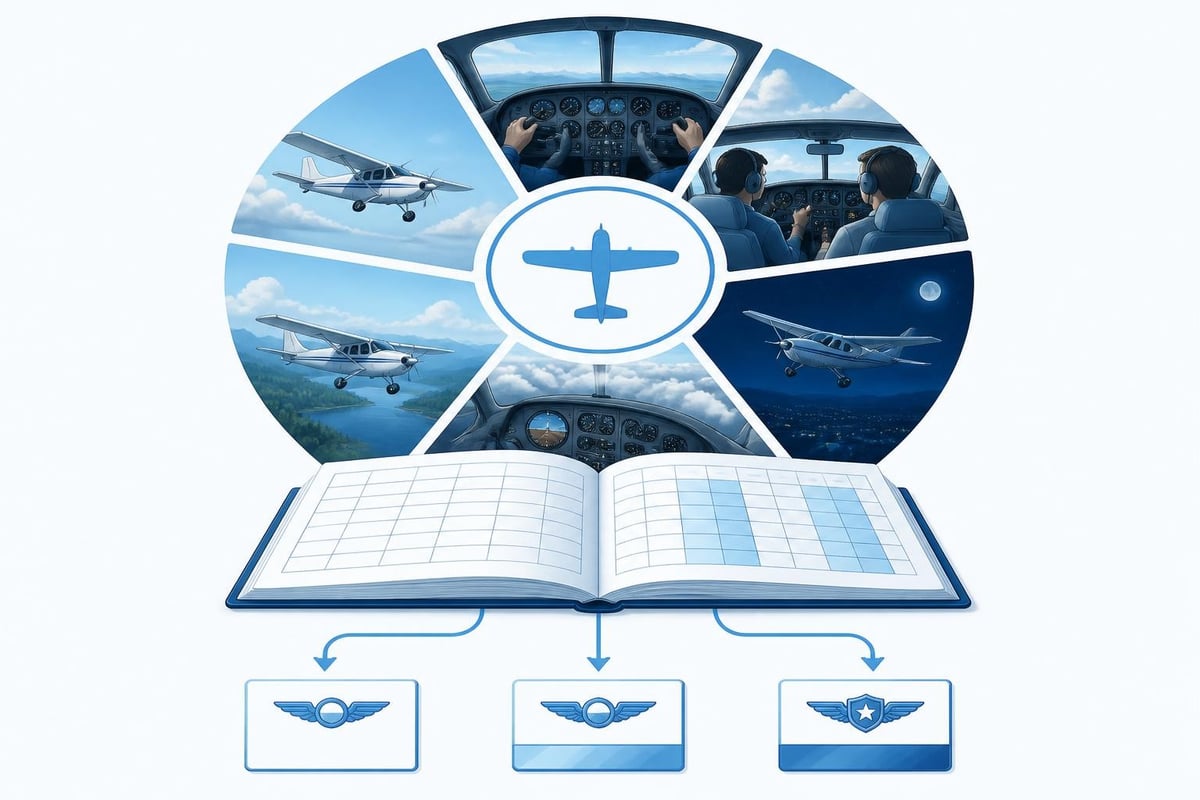
Accuracy in your logbook protects your certificates, satisfies ramp checks, and ensures you meet experience requirements when you need them. The FAA requires specific logbook entries under 14 CFR §61.51, and EASA Part-FCL demands similar detail under FCL.050.
Required Logbook Entries
Each flight entry must include:
- Date of the flight
- Aircraft make, model, and registration
- Departure and arrival points
- Total flight time or flight time for the lesson
- Type of piloting time (PIC, dual, solo, second-in-command)
- Conditions of flight (day, night, actual instrument, simulated instrument)
For training flights, log the manoeuvres and procedures practised. For flights used to meet recent experience, note takeoffs and landings, including full-stop landings at night if maintaining night currency. Endorsements for solo, complex aircraft, or high-performance operations must appear with instructor signatures and certificate numbers.
Missing entries or vague descriptions raise questions during check rides and certificate applications. Logging flight hours efficiently means recording details immediately after shutdown, when times and conditions are fresh.
| Logbook Column | What to Record | Example Entry |
|---|---|---|
| Date | Day of flight | 19 July 2026 |
| Aircraft | Make, model, registration | Cessna 172S, N12345 |
| Route | Departure to arrival | EGKK–EGHH |
| Flight Time | Total time, airborne to landing | 1.2 hours |
| PIC / Dual / Solo | Category of time | 1.2 PIC |
| Conditions | Day, night, IMC, VMC | Day VFR |
| Remarks | Manoeuvres, landings, notes | 3 landings, steep turns |
Building Flight Time Toward Certificates and Ratings
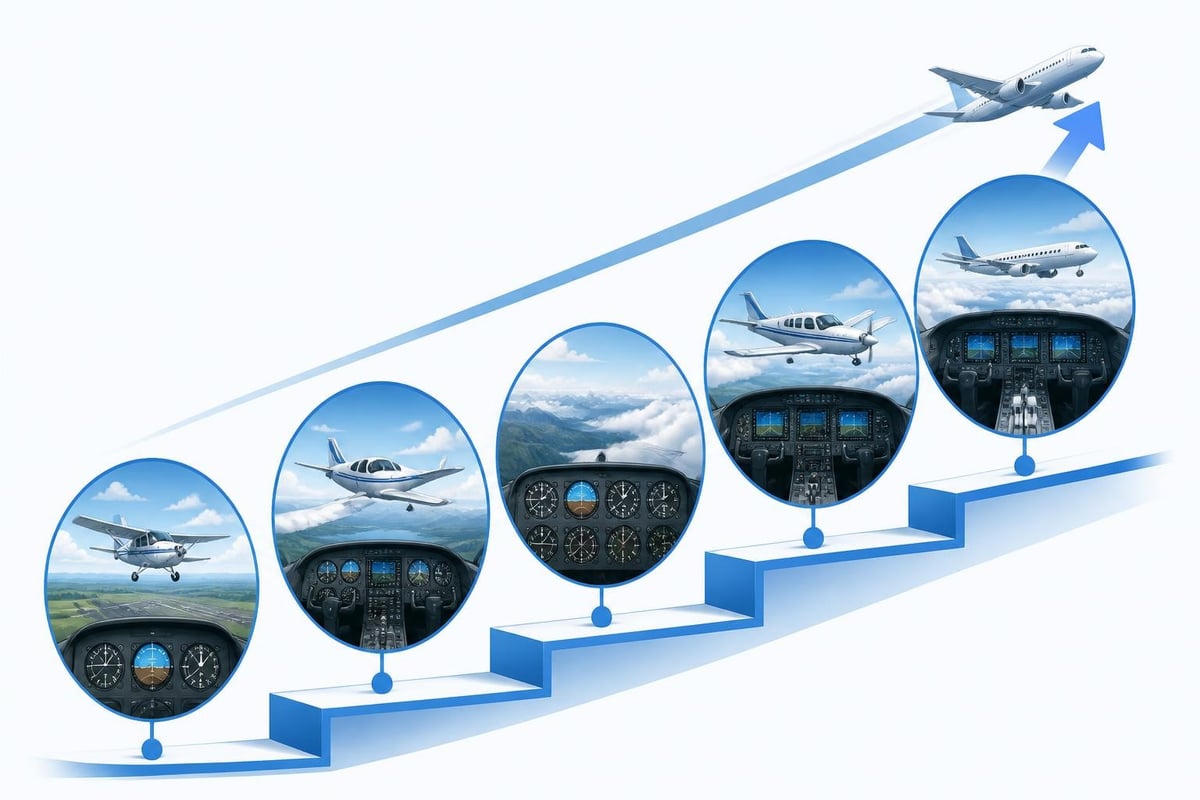
Minimum hour requirements set the entry point for each certificate, but the way you build those hours shapes your progression. Commercial pilot aeronautical experience under FAA rules demands 250 total hours, including 100 hours of PIC time and 50 hours of cross-country PIC. EASA CPL applicants need 200 hours total, with 100 hours as PIC or PICUS and specific night, instrument, and cross-country minimums under Part-FCL.
Efficient Hour-Building Strategies
Time-building flights should serve multiple purposes. A cross-country solo flight logs PIC time, cross-country time, and solo time in one entry. Night flights with an instructor add dual, night, and possibly instrument time if you file IFR. Every flight you plan should tick at least two or three requirement boxes.
- Combine instrument training with cross-country flights to log both categories simultaneously
- Use complex or high-performance aircraft when appropriate to add endorsements alongside hours
- Fly safety pilot for another pilot under the hood to log PIC time in conditions you already hold ratings for
- Participate in angel flights or volunteer aviation to build cross-country PIC while serving a purpose
Hour requirements vary by regulation and certificate. Always confirm current minimums against the authority under which you hold or seek your licence. Regulations change, and citing outdated figures during an application wastes time.
Understanding PIC Time and the Sole Manipulator Rule
Confusion around logging PIC time under FAA rules costs pilots loggable hours and creates headaches during reviews. The regulation distinguishes between acting as PIC and logging PIC time. You can log PIC time whenever you are the sole manipulator of the controls in an aircraft for which you are rated, even if another pilot is acting as PIC for the flight.
Practical PIC Logging Scenarios
You hold a private pilot licence with a single-engine land rating. During a flight review with an instructor, you fly the entire lesson from the left seat. You log the full time as PIC because you are sole manipulator, rated for the aircraft. The instructor also logs PIC because they are the acting PIC during instruction.
On a complex aircraft checkout, you manipulate the controls under supervision. Once you hold the category and class rating, you log PIC time for the portions you fly. Before the rating or endorsement, you log dual received, not PIC.
Safety pilot operations let you build PIC time efficiently. If you are rated for the aircraft and acting as safety pilot while another pilot flies under the hood in VMC, you may log PIC for the time the other pilot is hooded, provided you are the required crew member and agree in advance who is acting PIC.
Key points for logging PIC:
- You must hold the appropriate category, class, and type rating if required
- Sole manipulator time qualifies even when another pilot is acting PIC
- Instrument time logged during actual IMC or simulated instrument conditions adds to your instrument total
- Always note who is acting PIC in remarks if multiple pilots log PIC on the same flight
Understanding how to calculate and log flight time correctly keeps your logbook defensible and your hours accurate when you need them for applications or currency checks.
Tracking Currency and Regulatory Minimums
Logging hours is only half the task. Tracking which hours count toward currency, rolling limits, and licence requirements demands attention to detail. Passenger currency under EASA FCL.060 requires three takeoffs and landings in the preceding 90 days in the same class or type. Night passenger currency adds a night condition to those landings.
Rolling Time Windows and Flight Duty Limits
Commercial pilots face rolling 28-day and 365-day flight-time limits. Under EASA, flight time may not exceed 100 hours in any 28 consecutive days or 900 hours in a calendar year, with 1,000 hours maximum in any 12 consecutive months. Tracking these windows manually invites error, especially when flights span multiple time zones or calendar boundaries.
IFR currency under FAA rules requires six instrument approaches, holding procedures, and intercepting and tracking courses within the preceding six months. Let that lapse and you need an instrument proficiency check before acting as PIC under IFR again. EASA instrument currency follows similar principles under Part-FCL, though specifics vary by licence type.
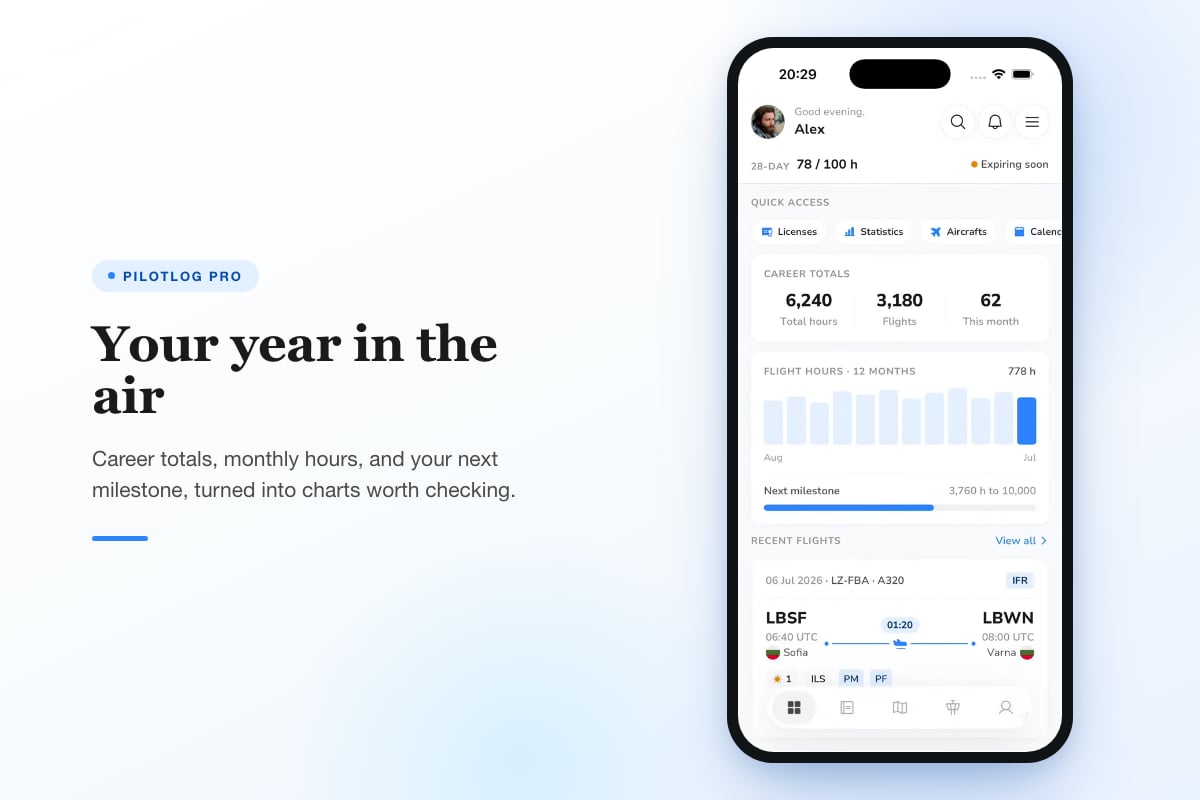
Currency expires in days, not flights. A pilot who flew three landings 89 days ago remains current. One day later, currency lapses, and you may not carry passengers until you complete three more takeoffs and landings. A digital logbook that calculates rolling windows and flags upcoming lapses saves you from grounding surprises.
Pilotlog Pro tracks rolling 28-day and 365-day limits, passenger and night currency with lapse dates, and licence and medical expiry alerts flagged early. You log the flight in seconds, and Pro calculates the rest, keeping you current, legal, and ready for the next sector.
Common Logging Mistakes and How to Avoid Them
Even experienced pilots make logbook errors. Incorrect PIC claims, missing instructor signatures, or vague entries can stall certificate applications or raise questions during audits. How to log flight hours and avoid common mistakes starts with understanding what each column means and filling it honestly.
Frequent Errors and Fixes
| Mistake | Why It Matters | Fix |
|---|---|---|
| Logging PIC without proper rating | Falsifies experience, violates regulations | Only log PIC when you hold the required ratings |
| Rounding flight times up | Inflates hours, creates discrepancies | Record actual flight time to the nearest tenth |
| Missing endorsements or signatures | Invalidates training, delays checkrides | Obtain and record all required signatures immediately |
| Vague remarks | Fails to prove specific experience | Note manoeuvres, approaches, landings, and conditions clearly |
| Logging ground time as flight time | Violates definitions, inflates totals | Only log time when aircraft moves for flight to landing |
Backfilling logbooks from memory introduces errors. If you lose a logbook or discover missing entries, reconstruct from flight school records, maintenance logs, or other documentary evidence. Estimated entries should be noted as such, with supporting documentation attached.
Some pilots log takeoffs and landings inconsistently. A touch-and-go counts as one landing and one takeoff. A stop-and-go counts the same. Full-stop landings matter for night currency and some endorsements. Record the type of landing if it affects currency or experience requirements.
<image_prompt alt="Logbook accuracy checklist">Essential elements of an accurate logbook entry: date, aircraft registration, route, flight time, pilot-in-command designation, conditions, and remarks, with examples of complete versus incomplete entries that meet or fail regulatory standards</image_description>
How Digital Logbooks Simplify Hour Tracking
Paper logbooks work, but they demand manual arithmetic, leave no backup if lost, and require constant vigilance to catch expiring currency or rolling limit breaches. Digital logbooks automate calculations, sync across devices, and alert you before currency lapses.
Advantages of Digital Logging
A digital system calculates totals instantly. Log a 1.8-hour flight with three landings, and your night currency countdown updates if the flight occurred after evening civil twilight. Add an ILS approach, and your instrument currency counter increments. Forget to check manually, and the app flags your passenger currency lapsing in 14 days.
Digital logbooks offer:
- Automatic summation of total time, PIC, dual, cross-country, instrument, and night hours
- Real-time currency tracking with alerts before expiry
- Backup and sync across devices, preventing total loss from a single failure
- Export to PDF or spreadsheet for applications, interviews, or archive
- Search and filter by aircraft type, route, instructor, or date range
Transitioning from paper to digital does not require re-entering decades of flights. Most platforms import from common formats or allow manual entry of totals carried forward. Once current flights populate digitally, the system maintains accuracy going forward.
Pilotlog logs flights in seconds and tracks currency, expiries, and rolling limits automatically, with mobile apps for iOS and Android ensuring your logbook is always in your pocket.
Planning Your Path to Higher Certificates
Every pilot hour you log is a step toward the next licence, rating, or type. A student pilot at 45 hours is five hours from a private pilot certificate under FAA Part 61 minimums. A commercial pilot at 1,200 hours is 300 hours from ATP minimums. Knowing where you stand and what remains focuses your flying.
Setting Hour Milestones
Break total hour requirements into quarterly or monthly targets. If you need 250 hours for CPL and currently have 180, you need 70 more hours. Flying ten hours per month gets you there in seven months. Flying five hours per month pushes it to 14 months. Time-building becomes a project with a timeline, not an abstract goal.
Track specific categories separately. You may have 250 total hours but only 30 hours of instrument time when the CPL requires 50. Prioritize instrument training flights to close that gap while still building total time. Similarly, cross-country PIC requirements may lag behind total PIC, demanding longer trips instead of local pattern work.
Use your logbook data to identify gaps early. If you have 95 hours of night time but need 100 for a particular operation, schedule five night flights before the deadline. If your tailwheel endorsement expires in 60 days under operator policy, plan refresher flights now, not the week before.
Worked example: A pilot holds a CPL with 320 total hours, 180 PIC, 60 night, and 55 instrument. They aim for a position requiring 500 total hours, 250 PIC, 100 night, and 75 instrument. They need:
- 180 more total hours
- 70 more PIC hours
- 40 more night hours
- 20 more instrument hours
Flying 15 hours per month, with eight hours PIC, four hours night, and two hours instrument, they reach all minimums in 12 months.
Maintaining Your Logbook for the Long Term
Your logbook is a legal record and a career document. Treat it accordingly. Keep backups, store originals securely, and ensure every entry meets regulatory standards. Airlines, charter operators, and insurance underwriters review logbooks during hiring and qualification. Sloppy records cost opportunities.
Best Practices for Logbook Integrity
- Back up digital logbooks to cloud storage and local files weekly
- Photocopy or scan paper logbooks every 50 hours and store copies separately
- Use ink, not pencil for paper entries to prevent tampering allegations
- Never alter entries without a clear note and signature explaining the correction
- Obtain instructor signatures immediately after dual flights, not weeks later
- Review totals quarterly to catch arithmetic errors before they compound
Some pilots maintain parallel paper and digital logs, cross-checking totals monthly. Others transition fully digital and print annual summaries for archive. Either approach works if you remain consistent and ensure no single point of failure.
Regulatory authorities may audit logbooks during investigations or certificate actions. Accurate, contemporaneous entries demonstrate professionalism and protect your certificates. Fabricated or altered records result in certificate suspension or revocation and potential criminal liability.
International Logbook Recognition and Conversion
Pilots moving between regulatory systems face logbook recognition challenges. FAA hours may not transfer directly to EASA, and vice versa. Some authorities accept foreign logbooks with certification from the issuing state. Others require conversion or revalidation flights.
Cross-Border Hour Acceptance
When applying for a licence under a new authority, research that authority's policy on foreign flight time. EASA typically accepts FAA logbook hours for equivalent experience requirements, provided the logbook meets basic standards and contains required details. Some categories, like night time, use different definitions (FAA defines night as the period from one hour after sunset to one hour before sunrise for logging purposes, though other night definitions exist for currency and operations).
If you hold an FAA CPL with 300 hours and apply for an EASA CPL, your total time generally transfers. Specific categories may require scrutiny to ensure they meet EASA definitions. Cross-country under FAA rules requires a landing at least 50 nautical miles from departure. EASA cross-country under Part-FCL requires a landing at a point different from departure, with solo cross-country requiring a specific distance for training purposes. Verify definitions before claiming hours under the new system.
Steps for international logbook conversion:
- Review target authority requirements for experience recognition
- Ensure logbook entries meet that authority's detail standards
- Obtain certified copies or official validation from the issuing authority if required
- Prepare a summary of hours by category aligned with target definitions
- Submit logbooks and summaries with your application, anticipating questions on discrepancies
Maintain detailed remarks and supporting documents (flight school records, instructor endorsements, medical certificates) to substantiate claimed hours if challenged.
Pilot hours form the foundation of your flying career, documenting every takeoff, approach, and landing from your first lesson to command of heavy jets. Logging them accurately, tracking currency, and building time strategically keeps you current, legal, and progressing toward your next goal. Pilotlog simplifies the process: log a flight in seconds, and the system tracks rolling limits, currency, and expiries automatically, so you stay focused on flying, not arithmetic.
- flight hours logging
- pilot logbook
- building flight time
- faa hour requirements
- pic time
A logbook that keeps itself.
Join the waitlist and be first in line when Pilotlog launches.
Free to join, no spam. Unsubscribe any time.