flying lessons price
Flying Lessons Price: What Pilots Pay in 2026
19 Oct 2026 · 16 min read
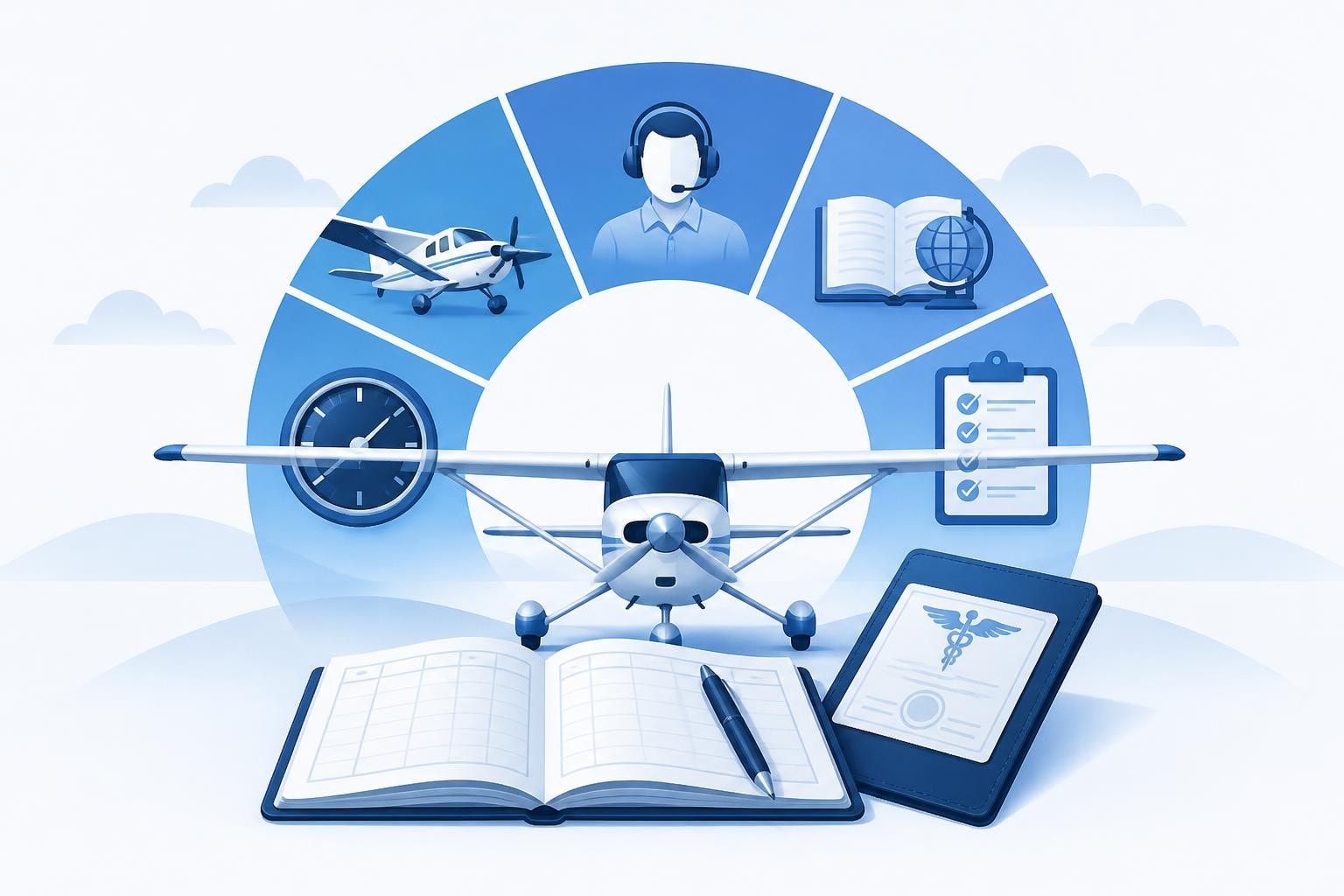
The flying lessons price you'll pay depends on three factors: the certificate you're chasing, the aircraft you fly, and where you train. A private pilot licence in the United States typically runs £8,000 to £15,000, while commercial and airline transport paths can push past £80,000. These figures reflect 2026 rates for instruction, aircraft hire, examinations, and medicals. The hourly cost of lessons breaks down into aircraft rental (£100–£300), instructor fees (£40–£80), and ground instruction (£35–£70). Rules and minimum hours vary by jurisdiction and training pathway, so confirm current requirements with your national regulator before budgeting.
What Makes Up Flying Lessons Price
Understanding the line items helps you forecast what you'll spend. Every lesson combines airborne and ground components, and both appear on your invoice.
Aircraft Hire and Fuel
Aircraft rental is billed by the Hobbs or tach hour. A Cessna 172 averages £140 per Hobbs hour in the United States, £180 in the United Kingdom, and £160 in mainland Europe. Fuel is usually included, though some schools bill it separately when prices spike. Complex or high-performance singles add £40–£80 per hour; multi-engine piston twins run £250–£400.
Light-sport and microlight aircraft offer a lower entry point. An EASA-compliant ultralight can cost £80–£110 per hour, and the licence requires fewer total hours, which shrinks the overall flying lessons price.
Instructor Fees
Flight instructors charge £40 to £80 per hour depending on experience, location, and demand. Ground instruction (pre-flight briefing, post-flight debrief, lesson planning) is billed separately at £35–£70 per hour. A typical one-hour lesson consumes 1.0 flight hour and 0.5 ground hour, so the real cost is closer to £180–£240 per session when you add aircraft and instructor time.
Senior instructors and examiners command higher rates. A checkride with a designated pilot examiner runs £500–£800 for the examiner's time, plus aircraft hire for the practical test flight.
Ground School and Materials
Ground school can be completed through a Part 141 school (structured classroom, included in package pricing), an independent provider (£300–£800 for a complete course), or self-study using books and online platforms. Open-source ground school initiatives are reducing the barrier in 2026, with free curricula and practice tests now available for PPL and instrument ratings.
Books, charts, and digital subscriptions add £150–£400. A current FAR/AIM, pilot's operating handbook, and navigation plotter are mandatory. Electronic flight bag subscriptions (ForeFlight, SkyDemon) cost £80–£200 annually but replace paper charts and simplify flight planning.
Written Exams and Checkrides
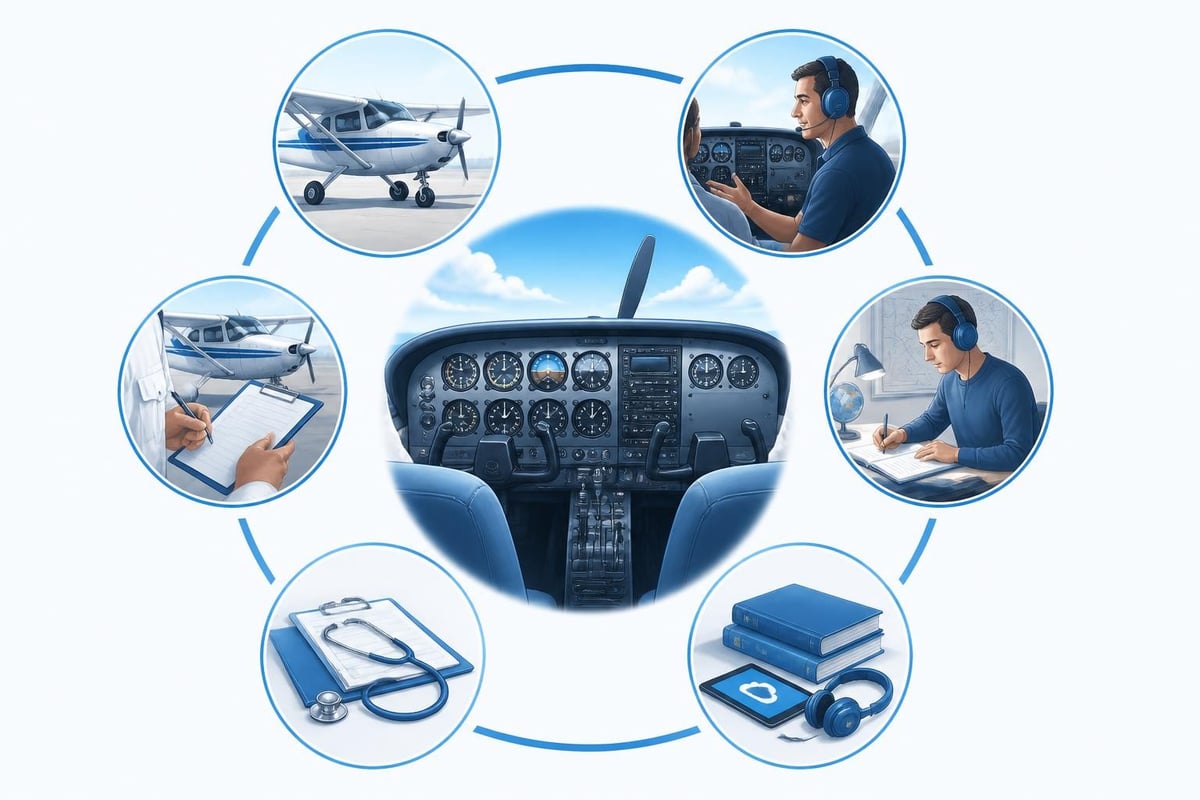
The FAA private pilot knowledge test costs £165. The practical test (checkride) examiner fee is £600–£800, and you'll hire the aircraft for two to three hours at checkride rates. Budget £900–£1,200 total for the final stage.
In EASA states, theoretical exams for PPL(A) are administered by the national authority. The UK CAA charges around £290 for the full set of nine papers. The skill test with an examiner runs £400–£650 plus aircraft.
Medical Certification
A Class 3 (FAA) or Class 2 (EASA) medical certificate is required for private pilot training. In the United States an aviation medical examiner charges £100–£150 for the initial exam. BasicMed (available for certain operations under FAA rules) uses a standard physician and costs £50–£80, but student pilots need the full Class 3 first.
EASA Class 2 medicals cost £200–£350 in the UK and €250–€400 across Europe. Renewal intervals depend on age: every 60 months below age 40, every 24 months from 40 to 50, and annually above 50 (EASA Part-MED). Track your expiry dates so renewals don't interrupt training.
Flying Lessons Price by Certificate Type
Different certificates demand different minimum hours and training stages. The FAA sets Part 61 and Part 141 pathways, each with distinct hour requirements that drive total cost.
Private Pilot Licence (PPL)
The FAA requires a minimum of 40 hours under Part 61 or 35 hours under Part 141. Most students finish in 55–70 hours due to weather, scheduling, and skill consolidation. At £180 per flight hour (aircraft plus instructor) and £35 per ground hour, a 60-hour syllabus costs:
| Item | Hours | Rate | Total |
|---|---|---|---|
| Flight instruction | 60.0 | £180 | £10,800 |
| Ground instruction | 30.0 | £35 | £1,050 |
| Ground school | - | - | £500 |
| Books & materials | - | - | £300 |
| Written exam | - | - | £165 |
| Checkride (examiner + aircraft) | - | - | £1,100 |
| Medical | - | - | £125 |
| Total | - | - | £14,040 |
This figure aligns with AOPA's cost guide, which reports national PPL averages of $10,000–$15,000 (approximately £7,700–£11,500) in the United States.
EASA PPL(A) requires 45 hours minimum, but real-world completion sits at 55–65 hours. UK schools quote £11,000–£16,000 all-in, reflecting higher aircraft and instructor rates in Europe.
Sport Pilot and Recreational Licences
The FAA sport pilot certificate requires only 20 hours minimum (15 dual, 5 solo). Flying light-sport aircraft at £100 per hour and instructor at £50 per hour brings the total flying lessons price to around £6,000–£8,000. The FAA sport pilot brochure details privileges and limitations, which include daylight VFR only and no complex or high-performance endorsements.
Recreational pilot certificates (FAA) and the UK's National Private Pilot Licence (NPPL) fall between sport and full PPL in cost, typically £7,500–£10,000.
Instrument Rating
An instrument rating adds 40–50 hours of instruction (FAA Part 61 requires 40 hours instrument time, including 15 with an instructor). Much of this can be logged in a simulator at £40–£80 per hour, reducing the flying lessons price compared to all-aircraft training. Real-world IR costs range from £8,000 to £12,000.
EASA IR(A) training is more structured, often delivered as a modular course costing £10,000–£14,000 or an integrated ATPL phase.
Commercial Pilot Licence (CPL)
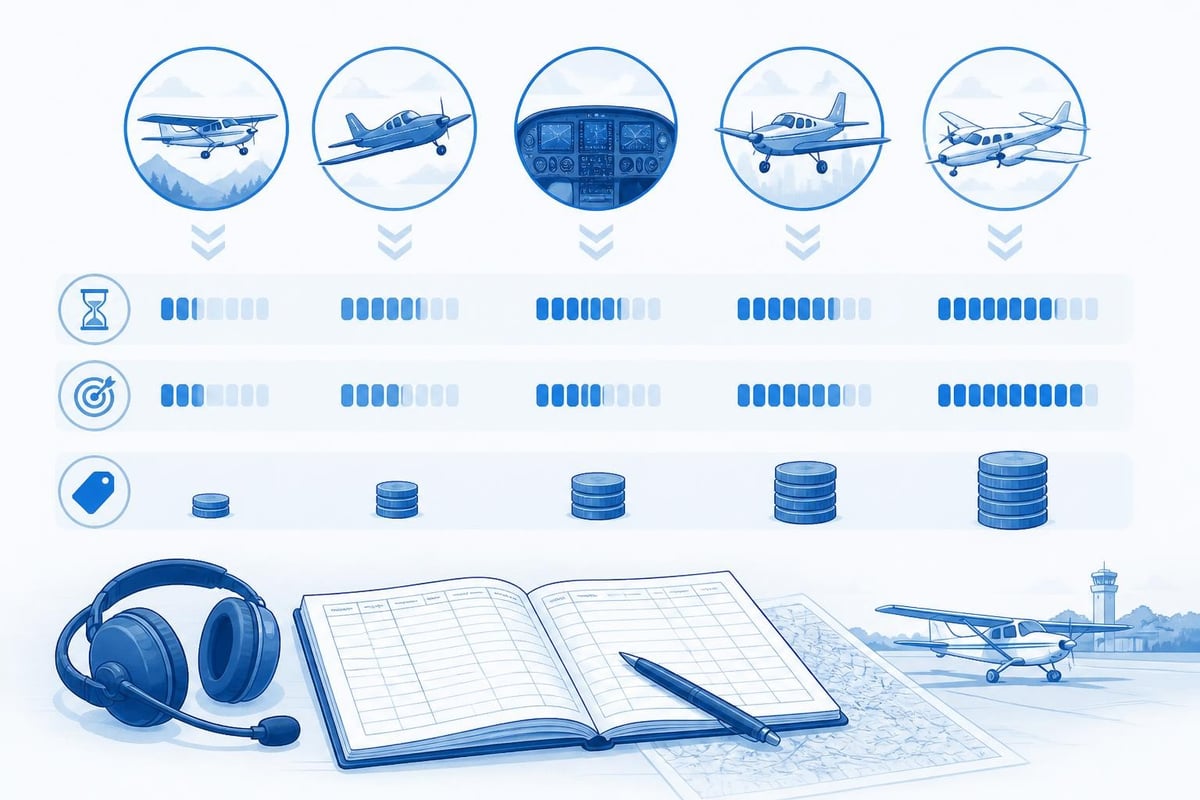
The FAA requires 250 total hours for a commercial certificate, including specific cross-country, night, and instrument time. If you arrive with a fresh PPL and IR (110 hours), you need another 140 hours. At an average £160 per hour (a mix of solo, dual, and complex time), the CPL phase adds £22,400. Add ground school (£800), written exam (£165), and checkride (£1,200), and the total reaches £24,500 on top of your PPL and IR investment.
EASA CPL(A) integrated courses run £50,000–£70,000 from zero hours to frozen ATPL, including all ground school, flight training, and exams. Modular routes (PPL, then hour-building, then CPL) can be cheaper if you fly economically during the hour-building phase.
Multi-Engine and Type Ratings
A multi-engine class rating requires 10–15 hours dual in a twin at £300–£400 per hour, plus examiner fees. Budget £4,500–£7,000. Jet type ratings (required for turbine transport-category aircraft) cost £15,000–£35,000 depending on the airframe and whether you train in a full-motion simulator or the actual aircraft.
How Location and School Type Affect Price
Geography and business model create wide variation in the flying lessons price you'll encounter.
Part 141 vs Part 61 Schools
FAA Part 141 schools operate under an approved training syllabus with lower minimum hours (35 for PPL instead of 40). They often bundle ground school, stage checks, and progress tracking into a fixed package. Expect to pay £12,000–£16,000 for a turnkey PPL course. The structure suits students who want a clear timeline and can train intensively.
Part 61 training is more flexible. You pay as you go, choose your instructor, and adapt the syllabus to your schedule. Average airplane lesson costs under Part 61 are lower per hour but total hours often run higher, so final price can match or exceed Part 141.
Regional Cost Differences
Flying lessons price varies by region due to fuel, insurance, hangar rent, and instructor supply. A coastal city in the United States (Los Angeles, Miami, New York) will charge £200+ per flight hour, while rural Midwest schools quote £140–£170. The UK is consistently expensive: Southeast England averages £200 per hour, Northern Ireland and Scotland £160–£180.
Training abroad is an option. Some pilots complete PPL or CPL in the United States or Australia where costs and weather are favourable, then convert the licence to EASA. Conversion requires exams and sometimes additional flight tests, but total spend can still be lower. EASA training cost analysis explores these dynamics in detail.
University and Cadet Programmes
University aviation degrees integrate flight training with academic coursework. Four-year programmes in the United States cost £80,000–£140,000 (tuition, fees, and flight training combined), but graduates leave with a bachelor's degree and often 200–300 hours. Airline cadet schemes (British Airways, Lufthansa, Emirates) finance training through bonds or deferred payment, with total cost recovered from salary over several years.
Government and industry scholarships reduce the upfront flying lessons price. The ICAO training report on funding reviews global financing models, from national loan schemes to employer sponsorship.
Reducing Your Flying Lessons Price
Smart planning and a few strategic choices trim thousands from your bill without cutting corners on safety or quality.
Fly More Frequently
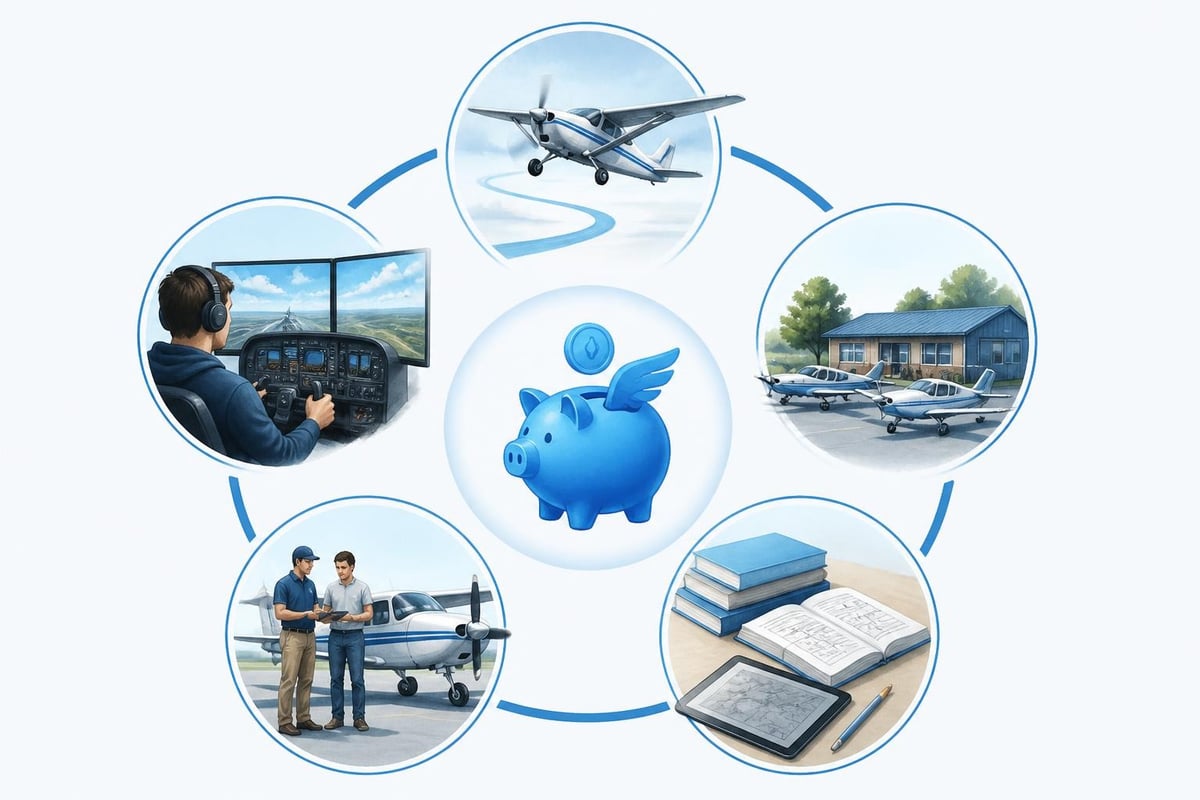
Proficiency decays between lessons. A student who flies once a week will need fewer total hours than one who flies once a month, because less time is wasted on revision. Three lessons per week during an intensive block can cut 10–15 hours from your PPL total, saving £1,800–£2,700.
Chair Fly and Use Simulators
Home simulators (X-Plane, Microsoft Flight Simulator with basic controls) cost £300–£800 and let you practice procedures, checklists, and navigation without burning fuel. One study found students who chair-flew before each lesson required 12 per cent fewer flight hours on average.
FAA-approved flight training devices and advanced aviation training devices can log up to 2.5 hours towards the private pilot instrument requirement (Part 61.109(k)) and larger portions of instrument and commercial training. Sim time costs £40–£80 per hour, a fraction of aircraft rates.
Join a Flying Club
Equity flying clubs charge an initiation fee (£500–£2,000) and monthly dues (£50–£150) but offer aircraft at cost plus a small margin. Hourly wet rates can be 20–30 per cent below commercial schools. Clubs also provide a community of pilots who share knowledge, which accelerates learning and reduces dual instruction hours.
Buy Back Your Aircraft Time
If you have access to family or friend aircraft, you can hire an independent instructor and eliminate the school's aircraft markup. Ensure the aircraft is legally registered, insured for instruction, and current on inspections. Instructor fees alone run £50–£70 per hour, and you pay only direct operating costs for the aircraft.
Optimise Ground Study
Pass the written exam early. Knowing the material reduces in-flight question time and lets you focus on stick-and-rudder skills. Free or low-cost test prep (FAA Knowledge Test database, online practice tools) costs nothing beyond your time. Open-source ground school platforms are expanding in 2026, especially for Part 107 and PPL.
Tracking Hours and Costs During Training
Once lessons begin, controlling the flying lessons price means tracking every flight, every dollar, and every currency threshold.
From day one, log each flight with date, aircraft registration, route, flight time, and lesson cost. A digital flying logbook consolidates hours automatically and flags when you hit regulatory thresholds (solo minimums, cross-country requirements, night hours). Spreadsheet tracking works but takes discipline; most students abandon it after 20 entries.
Monitoring rolling totals helps you see if you're trending above or below budget. If you've flown 30 hours and spent £6,000, you're on track for a 60-hour, £12,000 PPL. If costs are running high, you can adjust: fly more often, switch to ground-only sessions for weak topics, or move some instrument practice to a sim.
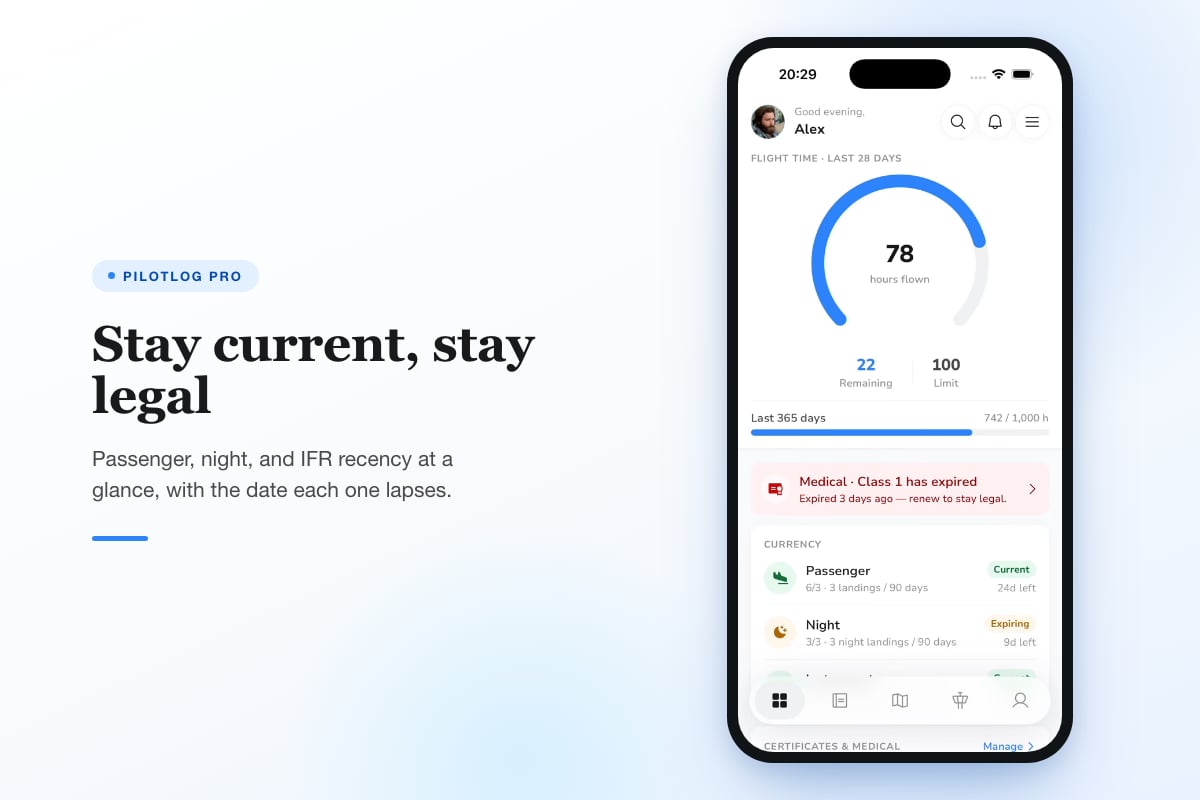
Currency tracking becomes critical post-licence. To carry passengers, FAA regulations require three takeoffs and landings in the preceding 90 days in the same category and class (14 CFR 61.57(a)). Night passenger currency adds three night takeoffs and landings to a full stop. Letting currency lapse means dual instruction to regain it, adding unexpected cost. Pilotlog Pro tracks 28-day and 365-day limits, passenger and night currency with lapse dates, and medical expiry, so you stay ahead of deadlines and avoid surprise dual flights.
EASA pilots must track licence and rating expiry (PPL(A) requires 12 hours and 12 takeoffs/landings in 24 months, plus a proficiency check or skill test every 24 months per FCL.740.A) and class/type rating revalidation. Missing a revalidation date means a full skill test instead of a simpler proficiency check, which can double the cost.
International Licence Conversion and Validation
If you train under one regulator and later move jurisdictions, conversion affects the total flying lessons price.
FAA to EASA
An FAA PPL holder can obtain an EASA PPL(A) based on the FAA licence. EASA Part-FCL requires the applicant to pass EASA theoretical exams (nine subjects for PPL), complete a skill test with an EASA examiner, and demonstrate English language proficiency (Level 4 minimum). Some national authorities (UK CAA, Irish Aviation Authority) also require differences training if the FAA licence was earned on aircraft with different handling or systems. Total cost: £1,500–£3,000 for exams, training, and skill test.
EASA to FAA
EASA licence holders can apply for an FAA PPL under 14 CFR 61.75. The process requires a US medical, a TSA citizenship verification (non-US citizens), and demonstration of English proficiency. No flight test is required if the foreign licence is current. Cost: medical (£125), FAA application fee (£50), and any required paperwork translation (£100–£300).
Commonwealth and ICAO State Transfers
Countries that recognise ICAO Annex 1 may issue a validation or temporary licence without full conversion. Australia, Canada, New Zealand, and South Africa have bilateral agreements with EASA and the FAA that streamline the process. Check with your target civil aviation authority for current requirements.
Conversion often requires proving logged flight time. Keep your logbook current and legible, with each entry signed by an instructor when applicable. Digital logbooks simplify this: export a certified PDF or printed summary for the authority.
Financing and Payment Plans
Few students pay the full flying lessons price upfront. Schools and lenders offer financing, though terms and eligibility vary.
School Payment Plans
Many Part 141 schools and university programmes allow monthly instalments. A £15,000 PPL course might be split into 12 payments of £1,250. Interest is typically included in the sticker price rather than stated separately. Read contracts carefully: some plans tie you to that school and forfeit prepaid funds if you leave.
Private Loans
Aviation-specific lenders (AOPA Finance, Sallie Mae Career Training, Stratus Financial in the US) offer loans for flight training. Rates in 2026 range from 6 to 12 per cent APR, and repayment begins immediately or after a short deferment. A £20,000 loan at 8 per cent over five years costs approximately £405 per month.
Check whether your loan covers only tuition and fees or also living expenses. Some lenders restrict funds to direct school invoices, which limits flexibility if you're training Part 61.
Scholarships and Grants
Dozens of organisations award flight training scholarships. The Aircraft Owners and Pilots Association, Experimental Aircraft Association, Women in Aviation International, National Gay Pilots Association, and Organisation of Black Aerospace Professionals each run annual programmes. Awards range from £1,000 to full-ride sponsorships. Applications typically open in autumn and require essays, references, and proof of enrollment or intent.
Military and veteran benefits (GI Bill in the United States) cover flight training at approved schools. The UK CAA's workforce strategy explores policy options for broader government funding of pilot training to address industry shortages.
Employer Sponsorship
Regional airlines, cargo carriers, and corporate flight departments sometimes sponsor cadets or pay for ratings in exchange for a training bond or minimum service commitment. NBAA reports growing interest in cadet pathways within business aviation as a response to pilot shortages.
Hidden Costs and Budget Buffers
Even careful planning leaves room for surprises. Add a 15 per cent buffer to your baseline flying lessons price estimate.
Checkride Failures and Retests
If you fail a stage check or the final practical test, you'll pay for additional dual instruction (£200–£500) and a retest fee (£600–£800). Industry average first-time pass rates hover around 80 per cent for PPL checkrides, so one in five students retests at least once.
Medical Issues
A deferred or denied medical can pause training. Special issuance medicals (required for conditions like controlled diabetes, past mental health treatment, or cardiac history) take months and may require specialist consultations (£300–£1,000). Budget time and money if your history raises questions.
Aircraft Downtime and Cancellations
Maintenance, weather, and examiner availability cause delays. A two-week grounding mid-course won't cost you cash but will stretch the calendar, and skills decay. If you train over a long period, you may need extra dual hours to maintain proficiency.
Chart and Database Subscriptions
Electronic flight bags need current data. ForeFlight costs £200 per year, SkyDemon £150, and chart updates for portable GPS units (Garmin, Avidyne) run £100–£300 annually. If training spans a renewal cycle, add that to your total.
Comparing Flying Lessons Price Across Ratings
Here's a summary table of typical 2026 costs by certificate in the United States and United Kingdom:
| Certificate / Rating | Min Hours (FAA/EASA) | Typical Hours | US Cost (£) | UK Cost (£) |
|---|---|---|---|---|
| Sport Pilot (FAA) | 20 | 25–30 | 6,000–8,000 | - |
| PPL(A) | 40 / 45 | 55–70 | 10,000–15,000 | 11,000–16,000 |
| Instrument Rating | 40 / - | 50–65 | 8,000–12,000 | 9,000–14,000 |
| CPL(A) | 250 total / 200 total | 250–280 | 50,000–70,000 | 55,000–75,000 |
| Multi-Engine | - | 10–15 | 4,500–7,000 | 5,000–8,000 |
| CFI / FI(A) | - | 20–30 | 6,000–9,000 | 7,000–11,000 |
Figures include aircraft, instructor, ground school, exams, and checkride but exclude medical, books, or living expenses. Flying Magazine's cost surveys track similar ranges and note that inflation and fuel prices in 2024–2026 pushed costs up by roughly 8 per cent compared to 2022.
When to Start and How to Budget
Start saving and planning at least 12 months before your first lesson. Research schools, visit them in person, and talk to recent graduates about real costs versus advertised rates.
Open a dedicated training account and automate monthly deposits. If your target is £12,000 over 18 months, save £670 per month. Track every expense in a simple spreadsheet or app so you can see progress and adjust if costs creep.
Consider your timeline. Training intensively (three to five lessons per week) over three to six months costs the same per hour but fewer total hours due to better retention. Spreading training over two years increases total hours and cost but eases monthly cash flow.
Discuss cost with your instructor early. A good instructor will help you train efficiently: solid pre-flight prep, focused lessons, clear debrief, and homework between flights. Poor instruction wastes hours and money. If you're not progressing, change instructors before you've burned another ten hours.
Regulations Change
Training requirements, medical standards, and certification rules evolve. The figures and regulations in this article reflect 2026 standards as published by the FAA, EASA, and national authorities. Always confirm current minimums, fees, and procedures with your regulator or school before committing funds.
Flying lessons price breaks down into aircraft rental, instructor fees, ground school, exams, and medicals, with total cost shaped by the certificate you pursue and where you train. Tracking every flight hour and every expense keeps you on budget and ensures you meet regulatory minimums without overshooting. Pilotlog helps you log flights in seconds and automatically tracks rolling currency, medical expiries, and hour totals, so you stay current, legal, and ready without manual spreadsheets. Start your digital logbook today and keep your training on course.
- flying lessons price
- ppl cost
- pilot training cost
- flight instructor fees
- aviation medical
A logbook that keeps itself.
Join the waitlist and be first in line when Pilotlog launches.
Free to join, no spam. Unsubscribe any time.