recreational pilot certificate
Recreational Pilot: Rules, Training & Limitations 2026
23 Sep 2026 · 11 min read
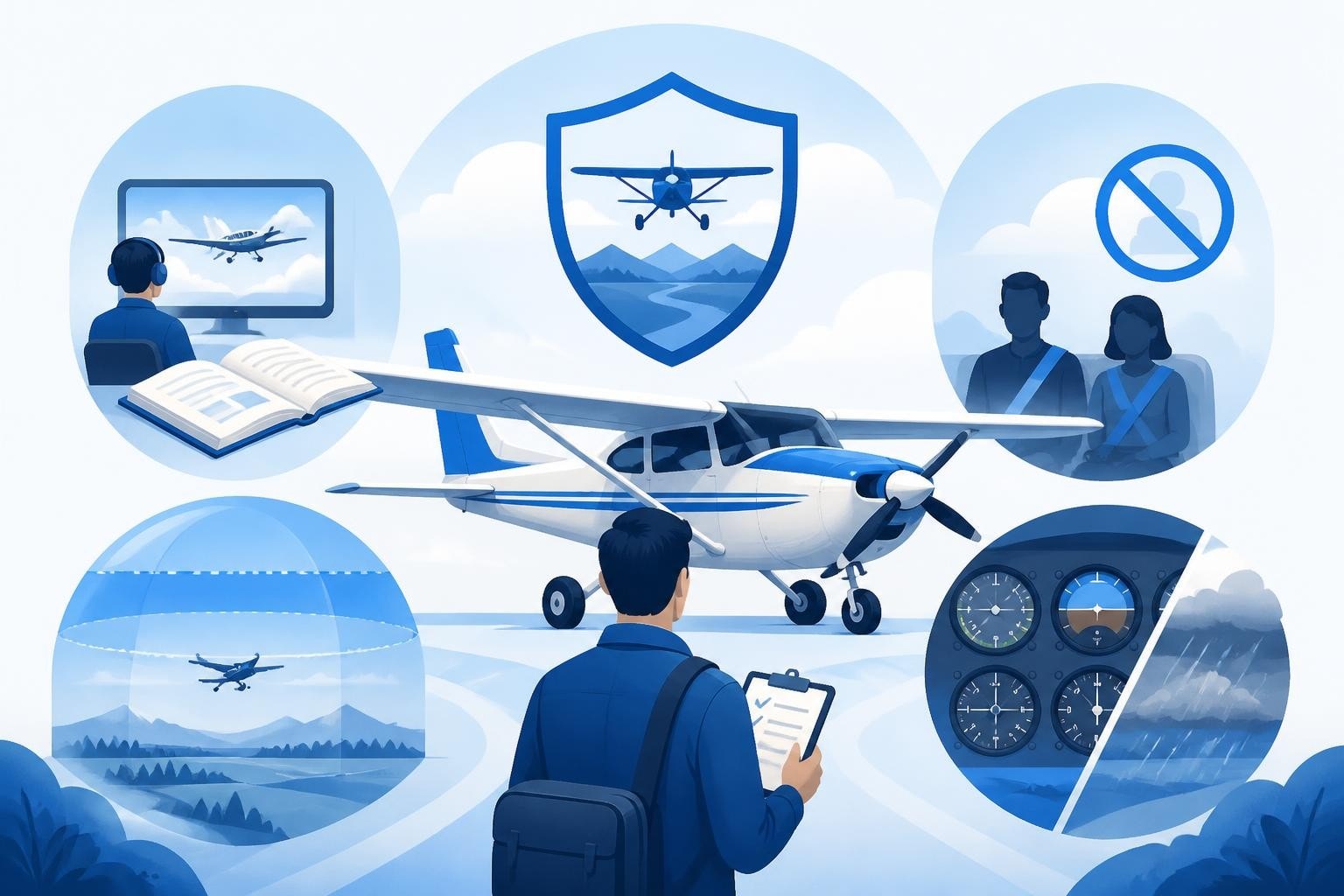
A recreational pilot certificate is an FAA pilot licence that requires fewer training hours than a private pilot certificate but comes with specific operational restrictions. Created under 14 CFR §61.101, the recreational pilot certificate allows you to fly certain aircraft for personal enjoyment with one passenger, during daylight hours, within 50 nautical miles of your departure airport, and below 10,000 feet MSL. It costs less to earn but limits where and how you can fly compared to a private pilot licence.
What is a recreational pilot certificate?
The recreational pilot certificate sits between a sport pilot certificate and a private pilot certificate in the FAA licensing structure. It requires 30 hours minimum flight time, compared to 40 hours for a private pilot certificate and 20 hours for a sport pilot certificate.
The certificate was designed to offer a middle path for pilots who want more capability than sport pilot but do not need the full privileges of a private pilot licence. In practice, relatively few pilots pursue this certificate because the cost and time savings are modest while the restrictions are significant.
Training requirements
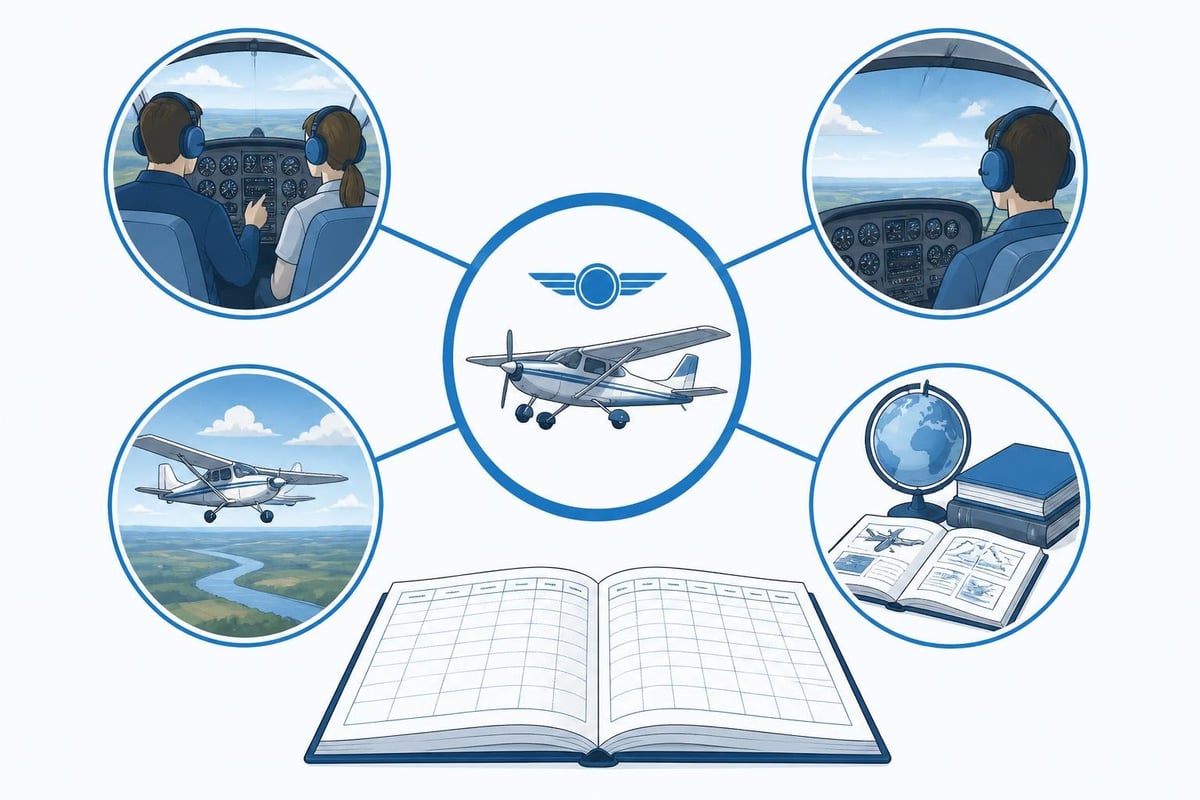
Under FAA regulations, you must complete at least 30 hours of flight time to qualify for a recreational pilot certificate. That breaks down as follows:
- 15 hours of dual instruction from an authorized instructor
- 3 hours of dual cross-country flight training
- 2 hours of dual instruction within 60 days before the practical test
- 3 hours of solo flight time
The solo time must include at least one solo cross-country flight of more than 50 nautical miles total distance, with a full-stop landing at a minimum of two points and one segment of at least 25 nautical miles between takeoff and landing locations.
You also need ground training covering aeronautical knowledge areas specified in 14 CFR §61.97 and must pass the FAA recreational pilot knowledge test with a score of at least 70 per cent.
| Requirement | Recreational Pilot | Private Pilot | Sport Pilot |
|---|---|---|---|
| Minimum flight time | 30 hours | 40 hours | 20 hours |
| Dual instruction | 15 hours | 20 hours | 15 hours |
| Solo time | 3 hours | 10 hours | 5 hours |
| Cross-country (solo) | 1 flight (50+ nm) | 5 hours (includes 150+ nm) | 1 flight (75+ nm) |
Medical requirements are stricter than sport pilot but identical to private pilot: you need at least a third-class medical certificate from an FAA aviation medical examiner.
Privileges and operational limits
Once certificated, a recreational pilot can act as pilot in command of an aircraft certificated for no more than four occupants, with a single engine, and a maximum certificated takeoff weight of 1,320 pounds or less (if a landplane).
Passenger and distance restrictions
You may carry only one passenger at a time. You cannot fly for compensation or hire. All flights must be conducted during the day (no night flying privileges).
The 50-nautical-mile radius rule is the most significant limitation. You cannot fly more than 50 nautical miles from the departure airport without additional endorsements from an instructor. To fly beyond 50 nm, you must receive ground and flight training for the specific route and obtain a logbook endorsement for that particular flight.
Altitude is capped at 10,000 feet MSL or 2,000 feet AGL, whichever is higher. You cannot fly in controlled airspace that requires communication with air traffic control without a specific endorsement.
Airspace and communication
A recreational pilot may not operate in Class B, C, or D airspace or at an airport with an operating control tower without ground and flight training and a logbook endorsement. Airspace classifications become critical when planning any flight as a recreational pilot.
- Class B (busy terminal areas): prohibited without endorsement
- Class C (moderate terminal areas): prohibited without endorsement
- Class D (towered airports): prohibited without endorsement
- Class E (controlled airspace): permitted below 10,000 feet
- Class G (uncontrolled): permitted
You also cannot act as pilot in command on a flight outside the United States unless specifically authorized by the country where the flight occurs.
Why pilots choose or skip this certificate
The recreational pilot certificate remains uncommon. Most flight schools focus on private pilot training because students invest similar time and money for significantly greater privileges.
AOPA guidance on training progression shows that many recreational pilot candidates decide to continue training for a private pilot certificate after accumulating the first 30 hours. The additional 10 hours required for a private pilot certificate remove nearly all the recreational pilot restrictions.
Cost comparison
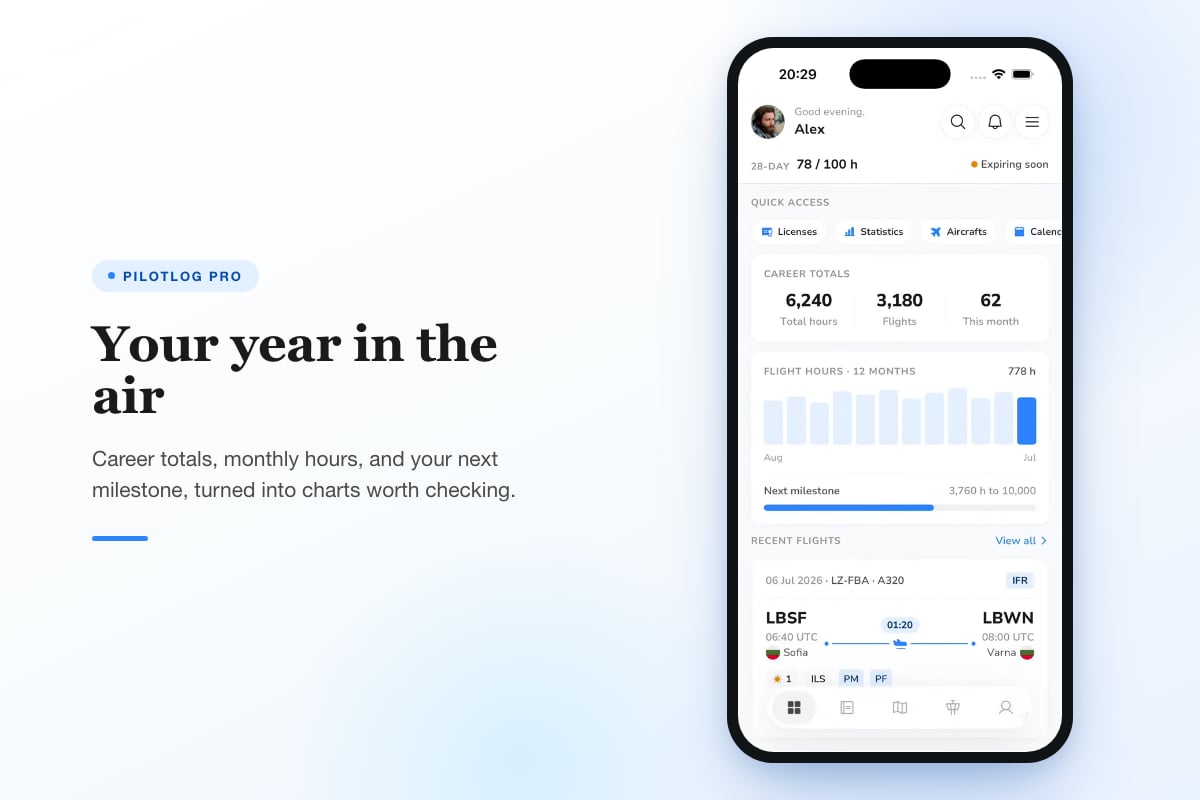
Training for a recreational pilot certificate typically costs between £4,500 and £7,000 depending on location and aircraft type. A private pilot certificate costs £7,500 to £12,000. The difference is smaller than many expect because the recreational pilot still requires the same medical certificate, written exam, and practical test structure.
Real-world cost breakdown for recreational pilot training:
- Flight instruction: 30 hours at £150–£200/hour = £4,500–£6,000
- Ground instruction: 10–15 hours at £40–£60/hour = £400–£900
- Written exam fee: £150
- Practical test (checkride): £500–£700
- Medical certificate: £100–£150
- Study materials: £200–£400
For an additional £2,000–£4,000, you gain night flying, unlimited passengers (up to aircraft capacity), no distance restrictions, and the ability to fly in controlled airspace and to airports with control towers.
Currency and record-keeping requirements
Like all certificated pilots, a recreational pilot must maintain currency to carry passengers. The 90-day rule applies: to carry a passenger, you must have made three takeoffs and three landings within the preceding 90 days in the same category and class of aircraft.
If you fly a tailwheel aircraft, those takeoffs and landings must be to a full stop. These currency requirements appear simple but require diligent tracking, especially if you fly irregularly.
Logging flight time
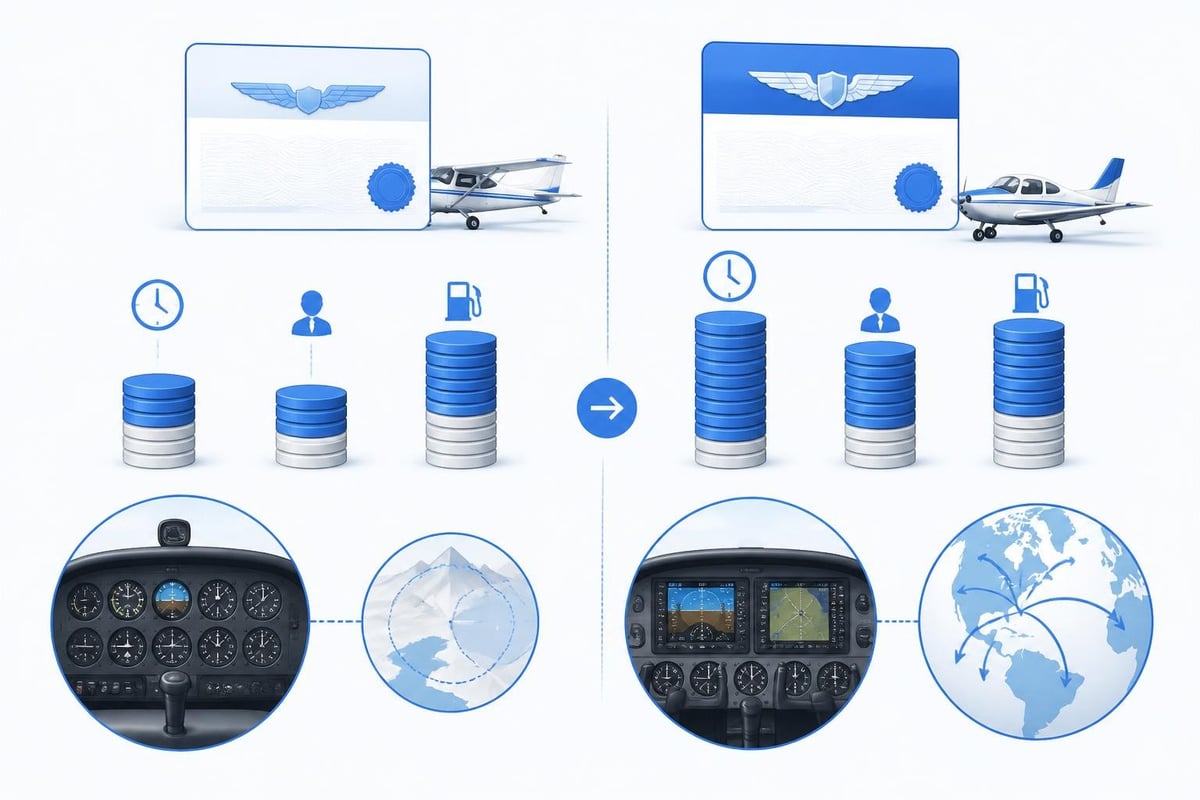
Every flight must be logged to document experience, currency, and compliance with limitations. Flight records must include:
- Date of flight
- Total flight time or lesson time
- Location (departure and arrival airports)
- Type and identification of aircraft
- Name of pilot in command or instructor
- Conditions of flight (day/night, actual/simulated instrument)
For a recreational pilot working toward endorsements or considering upgrading to a private pilot certificate, accurate logging of dual instruction, solo cross-country time, and specific route training becomes essential.
A digital logbook simplifies tracking these details. Pilotlog Pro automatically tracks rolling 90-day currency for passengers, flags upcoming medical expiries, and maintains a complete record of endorsements and training milestones. When you need to prove currency or verify route-specific training before a flight beyond 50 nm, having instant access to your complete flight history saves time and prevents errors.
Upgrading and adding endorsements
Most recreational pilots eventually upgrade to a private pilot certificate or add endorsements to expand their privileges. The path forward is straightforward.
Converting to private pilot
Credit all 30 hours of recreational pilot training toward the 40-hour private pilot requirement. You need only 10 additional flight hours, provided those hours include the specific private pilot requirements you have not yet met (such as additional solo cross-country flights and night training).
The knowledge test for recreational pilot does not satisfy the private pilot knowledge test requirement, so you must sit the private pilot written exam.
Endorsements to expand privileges
Instead of upgrading, you can obtain specific endorsements that remove individual restrictions:
- Class B, C, or D airspace: Ground and flight training in that airspace class, followed by an instructor endorsement
- Flights beyond 50 nm: Ground and flight training for a specific route, with an endorsement valid for that route only
- Additional aircraft: Transition training and endorsement for different makes and models within the aircraft category and class
Each endorsement requires documentation in your logbook and must reference the specific regulation under which it is granted.
Practical scenarios and real numbers
Consider a pilot based at a small uncontrolled airport in rural Pennsylvania. As a recreational pilot, she can fly her Cessna 150 (two seats, single engine, under 1,320 pounds) within 50 nm during the day with one passenger. Her home airport has no control tower and sits in Class G airspace, so she operates without restriction there.
She wants to visit a friend at an airport 65 nautical miles away. The route crosses Class E airspace but does not enter Class B, C, or D. The destination airport is uncontrolled. She contacts her flight instructor, who provides ground training on the route (weather, navigation, emergency procedures) and conducts a dual training flight along that specific route. Her instructor then issues a logbook endorsement permitting her to fly that route solo or with a passenger.
Three months later, she has logged 78 of 100 hours total time and decides she wants night privileges and the ability to fly anywhere without route-specific endorsements. She contacts a flight school and begins training for a private pilot certificate. Her 78 hours count fully toward the private pilot requirement, and after 15 additional hours focused on night operations, additional cross-country experience, and checkride prep, she earns her private pilot certificate.
Medical and safety considerations
All recreational pilots require a valid third-class medical certificate, which is valid for 60 months if you are under 40 years old and 24 months if you are 40 or older at the time of examination.
The FAA Pilot's Handbook of Aeronautical Knowledge emphasizes that pilots must self-assess fitness before every flight. Medical certification establishes a baseline, but each pilot must evaluate their own condition before acting as pilot in command.
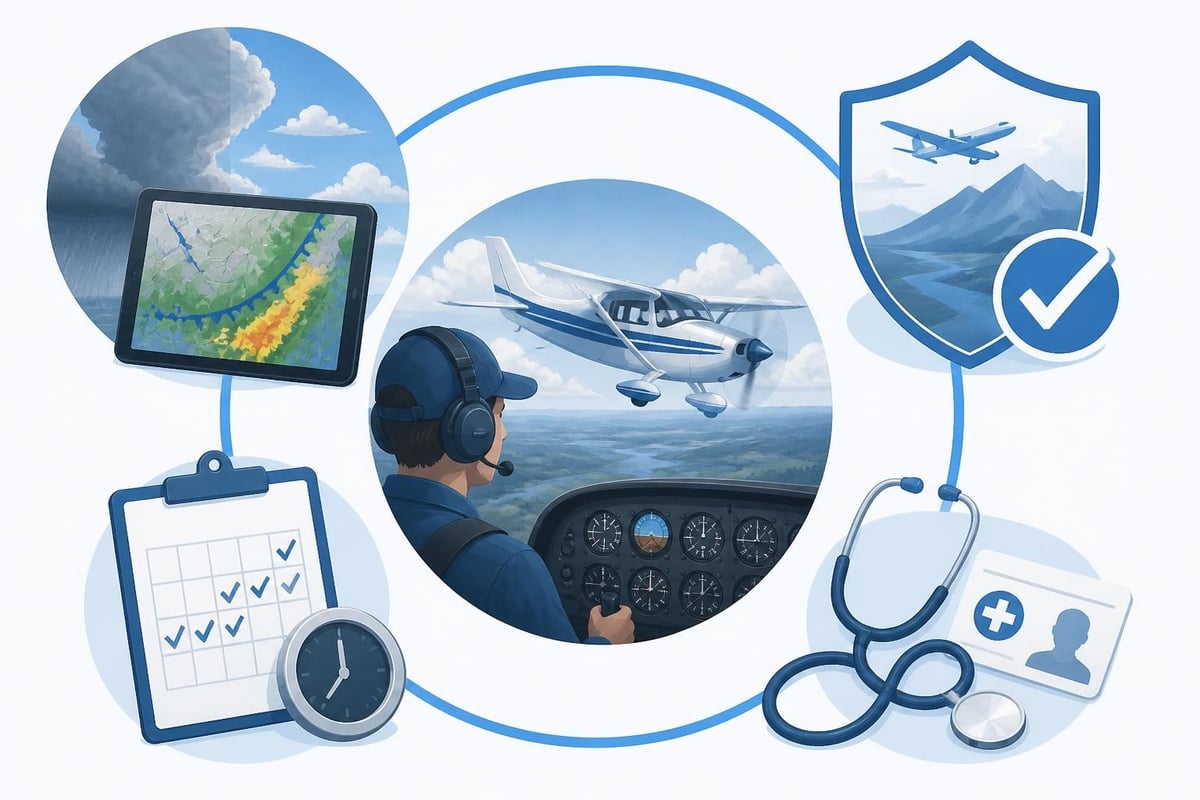
Weather planning is critical for safe recreational flying. Without instrument privileges and limited to day VFR, a recreational pilot must understand METAR, TAF, and graphical weather products. The NOAA pilot's guide to aviation weather services provides current information on accessing and interpreting these forecasts.
| Safety topic | Key consideration | Resource |
|---|---|---|
| Medical validity | Track expiry and renewal dates | CFR §61.23 |
| Weather minimums | 3 SM visibility, clear of clouds in Class G (day) | CFR §91.155 |
| Passenger currency | 3 takeoffs/landings in 90 days | CFR §61.57 |
| Flight reviews | Required every 24 months | CFR §61.56 |
Recent NTSB safety data shows that general aviation accidents often involve loss of control, controlled flight into terrain, and poor weather decisions. A recreational pilot operating under clear limitations and maintaining strict personal minimums reduces exposure to these risks.
Training resources and pilot organizations
Flight training for a recreational pilot certificate follows the same structure as private pilot training but with reduced hours. Choose a flight school and instructor who understand the specific recreational pilot requirements and can provide focused training that meets the regulatory minimums without unnecessary expense.
EAA pilot resources offer proficiency programs and safety seminars valuable for all general aviation pilots, including those holding recreational pilot certificates. The organization's Young Eagles program and flight training resources emphasize safe, practical flying skills.
Ground school can be completed through in-person classes, online courses, or self-study using FAA materials and commercial test prep. The recreational pilot knowledge test covers:
- Applicable regulations
- Airspace and airport operations
- Weather information and services
- Aircraft systems and performance
- Aerodynamics and flight controls
- Navigation and cross-country planning
- Emergency procedures
- Human factors and decision-making
After passing the knowledge test (valid for 24 months), schedule your practical test with an FAA designated pilot examiner. The checkride includes an oral exam covering aeronautical knowledge and a flight test demonstrating proficiency in all required maneuvers and procedures.
When the recreational pilot certificate makes sense
The recreational pilot certificate suits specific situations. If you plan to fly only occasionally, from a small uncontrolled airport, with one passenger at a time, during daylight, and you are comfortable staying within 50 nautical miles of home, the certificate meets your needs at lower initial cost.
It also works as a stepping stone if immediate financial constraints prevent you from completing private pilot training but you want to begin flying legally while building toward the full certificate.
However, for most pilots, the modest cost difference and significant operational restrictions make the private pilot certificate the better initial investment. Carefully consider your actual flying goals before committing to recreational pilot training.
Regulations change, and pilots must verify current requirements against official FAA sources before making training decisions. The information here reflects 2026 rules but should be confirmed with current FAR/AIM references and your flight instructor.
The recreational pilot certificate offers a lower-cost entry into powered flight with clear limitations on where and how you can fly. Accurate record-keeping and currency tracking become essential under these restrictions. Pilotlog gives you instant visibility into your flight hours, passenger currency, medical expiry, and endorsement history, whether you are working toward a recreational pilot certificate, planning an upgrade to private pilot, or managing ongoing compliance as a certificated pilot.
- recreational pilot certificate
- faa pilot licensing
- pilot training requirements
- private pilot comparison
- flight training cost
A logbook that keeps itself.
Join the waitlist and be first in line when Pilotlog launches.
Free to join, no spam. Unsubscribe any time.