logbook requirements
Flying Log Book: Requirements, Rules & Best Practice
2 Sep 2026 · 13 min read
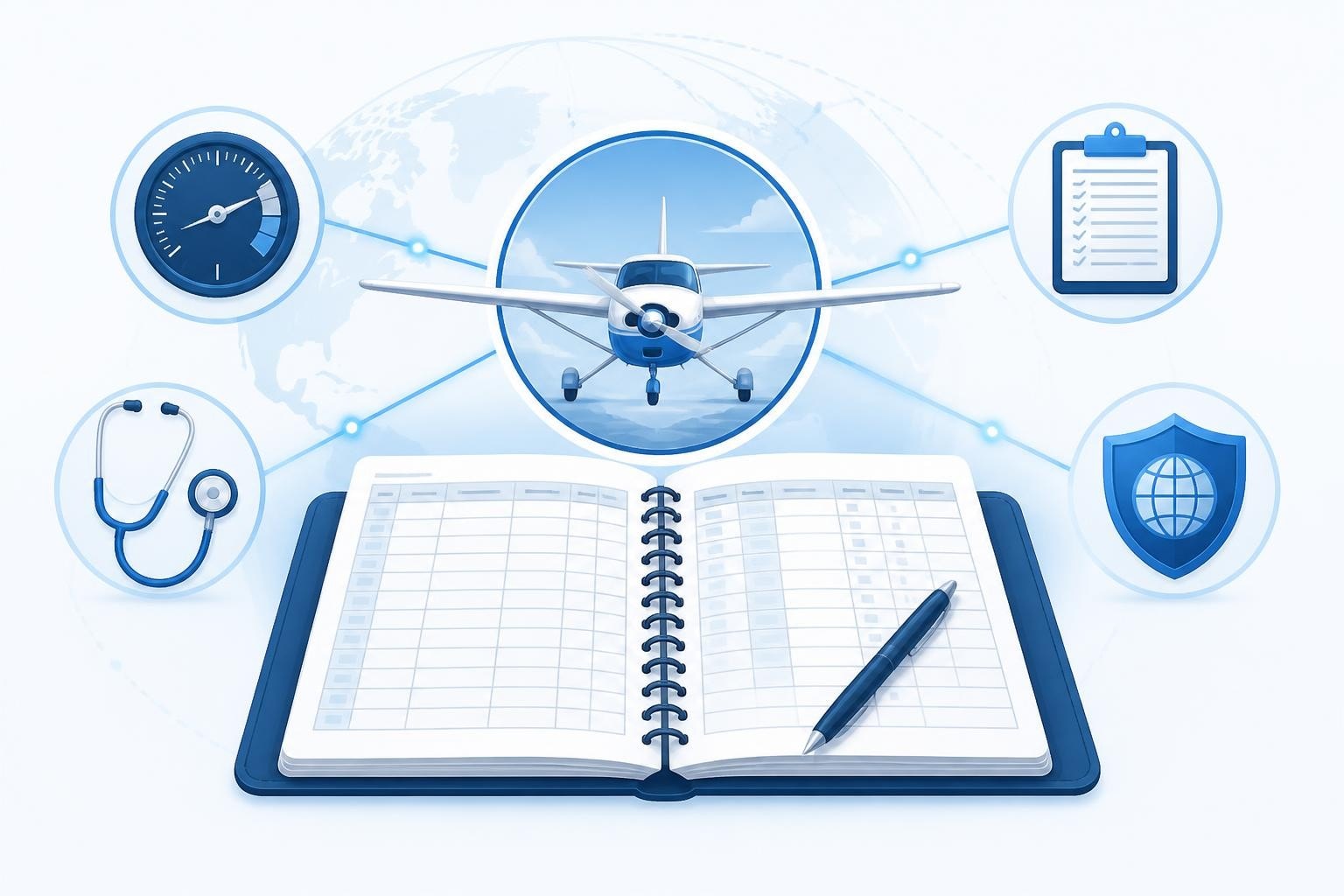
A flying log book is your official record of every flight you complete. It documents your total hours, recency, and experience, and serves as the primary evidence when applying for licences, ratings, or employment. Under U.S. federal regulations and EASA rules, pilots must maintain a reliable record of all flights to prove they meet currency and experience requirements.
What Must Be Recorded in Your Flying Log Book
Civil aviation authorities around the world specify minimum entries for every flight. Understanding these requirements ensures your logbook remains legally valid and complete.
Mandatory Fields Under U.S. and EASA Rules
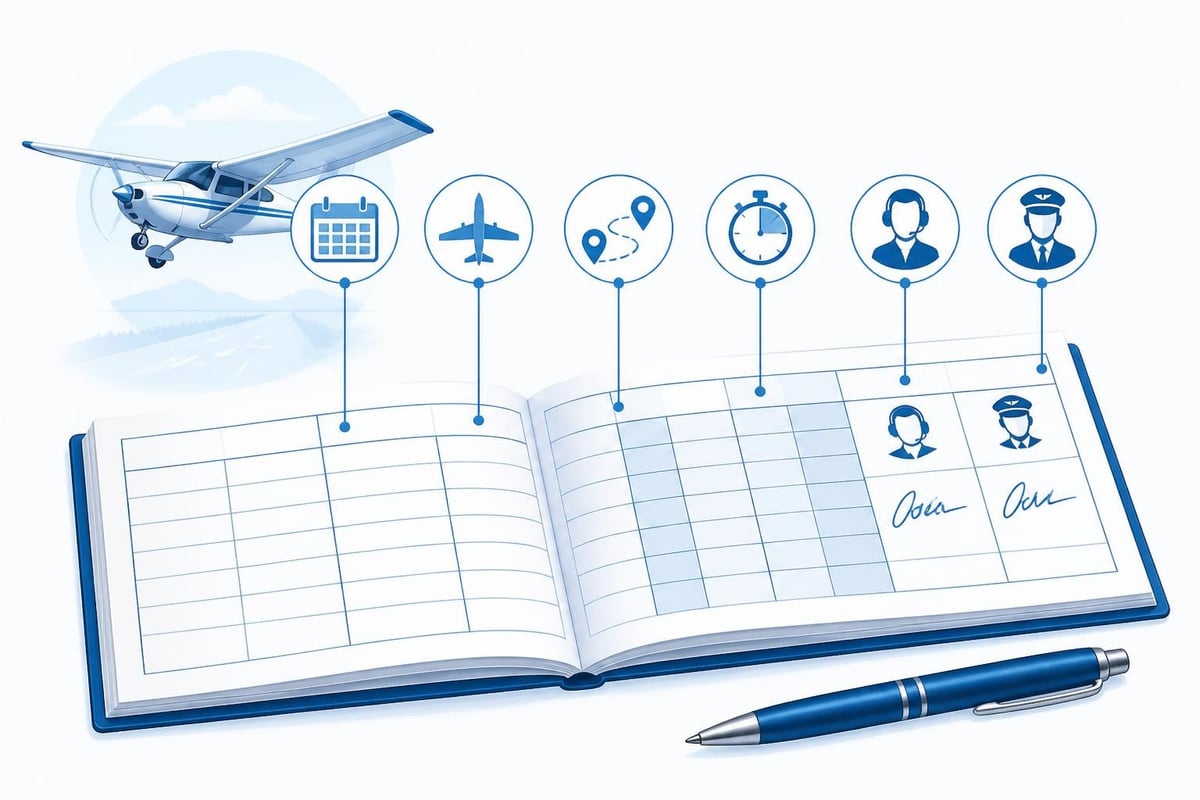
In the United States, 14 CFR §61.51 lists the information each pilot must record. The regulation requires date, total flight or lesson time, location of departure and arrival (or training area), type and identification of aircraft, and the name of a safety pilot if required. You must also log the nature of the flight: dual received, pilot in command (PIC), second in command (SIC), solo, or instrument time.
EASA Part-FCL AMC1 FCL.050 similarly requires:
- Date of each flight
- Departure and arrival points (or exercise area for training)
- Aircraft type and registration
- Total time of flight (block to block)
- PIC name (or student pilot name if solo)
- Details of the duty: PIC, co-pilot, dual instruction, or solo
- Instrument time (actual or simulated, including type of approach)
- Night time
- Remarks (approaches, unusual occurrences, training exercises)
For instrument approaches, note the approach type (ILS, RNAV, VOR) and whether actual or simulated. For night landings, record whether each was to a full stop (required for passenger-carrying currency). Cross-country flights should include the route and distance to prove compliance with licence requirements.
Instructor and Examiner Signatures
When you fly with a certificated flight instructor (CFI), they must sign your logbook to certify the instruction given. The signature should include the instructor's certificate number, expiration date (if applicable), and a brief description of the training provided. Under Part 61, this endorsement is proof that you completed required training or a flight review.
Similarly, an examiner who conducts a skill test or proficiency check must sign your logbook or issue a certificate or statement. In Europe, examiners often complete a skill test report form that should be attached to or referenced in your logbook.
How Long to Keep Your Flying Log Book
Regulations require pilots to keep logbook records for specific periods. Under U.S. rules, you must retain logbook entries as long as you wish to use that time to meet currency or experience requirements. In practice, most pilots retain all logbook records for their entire career.
| Jurisdiction | Retention Requirement | Purpose |
|---|---|---|
| FAA (U.S.) | Indefinite for PIC and training time | Prove currency and experience for licences and ratings |
| EASA (EU/UK) | Until superseded by new licence or rating | Evidence for applications and renewals |
| ICAO Annex 1 | Recommended indefinite | Best practice for career documentation |
For example, if you logged 55 hours of cross-country PIC time five years ago and wish to apply for an instrument rating today, you must retain those entries. Commercial and airline transport pilot licence (ATPL) applications often require proof of 1,500 hours or more, so your logbook becomes a career-long document.
In the UK, the CAA advises that applicants submit original logbooks or certified true copies for licence applications. Keep digital backups and photocopies in case originals are lost during postal submission.
Paper Versus Electronic Flying Log Books
For decades, pilots used bound paper logbooks to record their flights. Today, electronic logbooks offer automated tracking, instant totals, and cloud backups that reduce the risk of lost records.
Legal Acceptance of Electronic Logbooks
Both the FAA and EASA accept electronic logbook systems. FAA Advisory Circular AC 120-78B provides guidance on electronic signatures and recordkeeping systems, noting that electronic records are acceptable if they are accessible, readily retrievable, and include an audit trail.
EASA does not mandate a specific format, stating only that the logbook must be reliable and allow accurate verification of flight time. National authorities may issue additional guidance. For example, India's DGCA published a July 2024 circular on e-LogBooks, standardising electronic logbook systems for scheduled operators.
Advantages of a Digital Flying Log Book
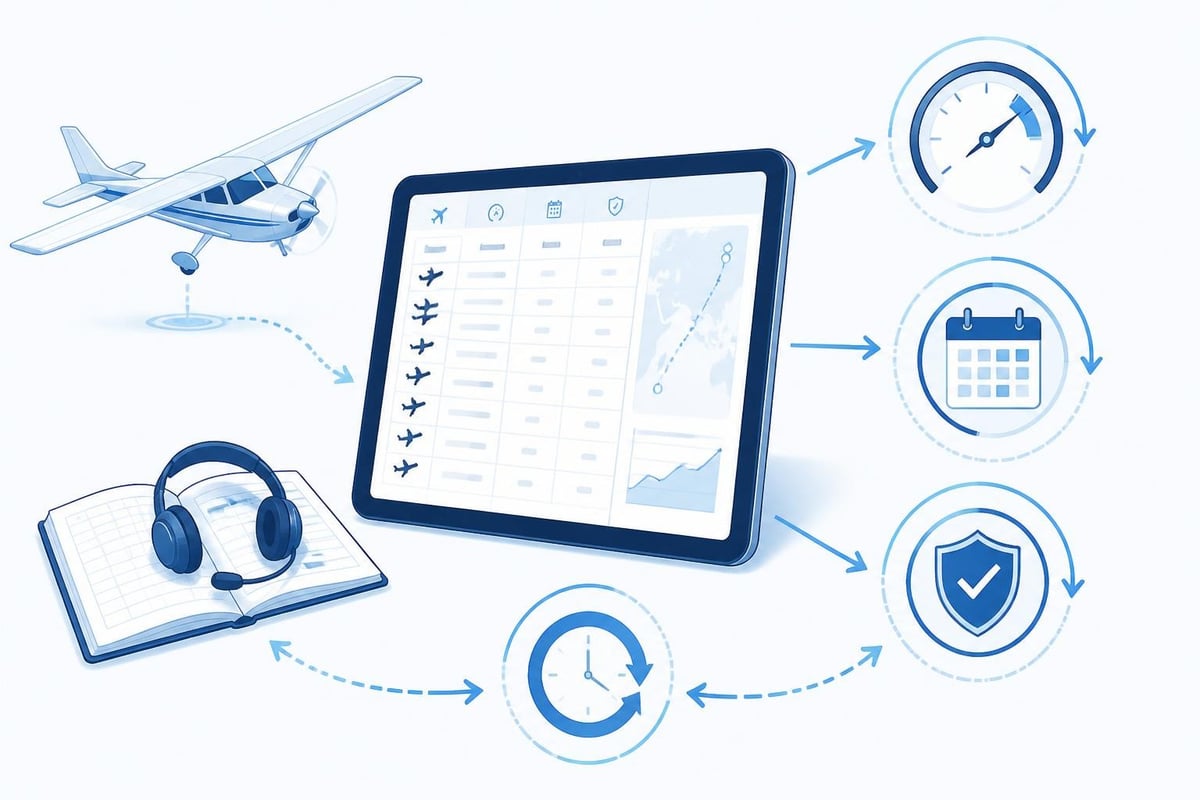
A digital logbook calculates totals automatically. Instead of manually adding columns after each flight, the app or platform maintains running totals for total time, PIC, dual, night, instrument, and cross-country hours. This reduces arithmetic errors that can delay licence applications.
Currency tracking is another major benefit. Many pilots struggle to remember when they last carried passengers at night or flew three instrument approaches. Pilotlog Pro tracks 28-day and 365-day rolling totals, passenger currency with lapse dates, and IFR recency. The app flags expiries early, so you never find yourself grounded the day before a planned flight. Built for pilots from students to airline crew, Pro handles rolling duty limits, licence and medical alerts, plus full logbook export.
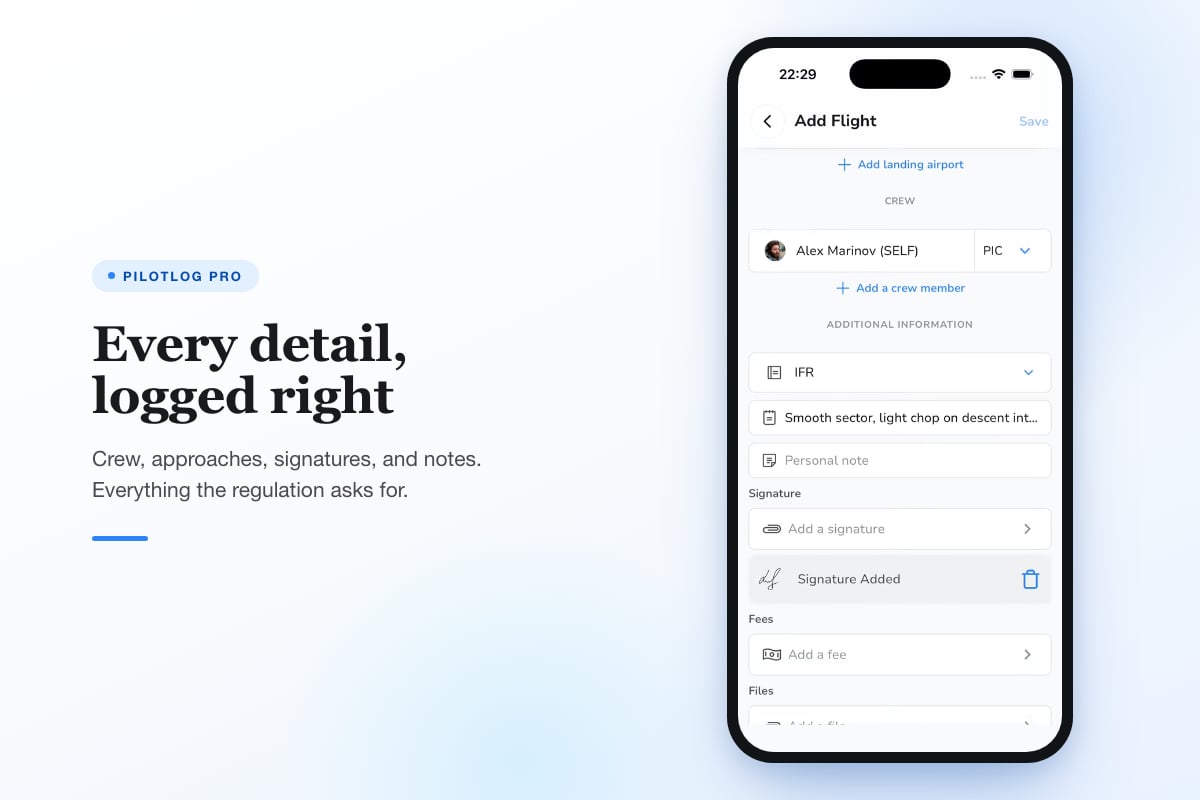
Key digital logbook features include:
- Instant totals and subtotals by aircraft, route, or date range
- Automatic currency calculations (90-day passenger, IFR approaches, night landings)
- Licence and medical expiry alerts
- Cloud backup and multi-device sync
- CSV and PDF export for licence applications
- Search and filter by aircraft type, registration, or route
Common Entries and Examples
To illustrate how logbook entries work, consider a few typical scenarios that student and commercial pilots encounter.
Example 1: Student Solo Cross-Country
On 15 August 2026, a student pilot completes a solo cross-country flight from EGHH (Bournemouth) to EGBE (Coventry) via EGBP (Kemble). The aircraft is a Cessna 172, G-BXYZ. The route totals 162 nautical miles. Block time is 2.1 hours.
Logbook entry:
| Date | Aircraft | Reg | Departure | Arrival | Route | Total Time | PIC | Solo | X-C | Remarks |
|---|---|---|---|---|---|---|---|---|---|---|
| 15/08/26 | C172 | G-BXYZ | EGHH | EGHH | EGBE, EGBP | 2.1 | 2.1 | 2.1 | 2.1 | Solo nav ex., 162 nm |
The student logs all 2.1 hours as PIC (because solo students are PIC under most jurisdictions), solo, and cross-country. The route and distance prove compliance with solo cross-country requirements for the PPL. The instructor does not need to sign this entry (solo flights are already endorsed separately), but best practice is to have the instructor review the entry at the next lesson.
Example 2: IFR Proficiency Check
An instrument-rated private pilot flies with an examiner to renew IFR privileges. The flight is conducted on 3 September 2026 in a Piper PA-28, G-ABCD, from EGKK (Gatwick) with two ILS approaches and one RNAV approach, all in simulated instrument conditions. The examiner occupies the right seat as safety pilot. Total time is 1.4 hours; instrument time is 1.2 hours.
Logbook entry:
| Date | Aircraft | Reg | Departure | Arrival | Total Time | PIC | Instrument | Approaches | Remarks | Examiner Signature |
|---|---|---|---|---|---|---|---|---|---|---|
| 03/09/26 | PA28 | G-ABCD | EGKK | EGKK | 1.4 | 1.4 | 1.2 (sim) | 2×ILS, 1×RNAV | IPC pass | J. Smith, FI(A) 12345 |
The pilot logs PIC time because they hold the appropriate rating and are the sole manipulator of the controls. The examiner signs and includes their Flight Instructor (Aeroplane) certificate number. This entry renews the pilot's instrument privileges for another 12 months under EASA Part-FCL.
Example 3: Night Currency Flight
To remain current for night passenger carrying, a pilot must complete three takeoffs and landings to a full stop at night within the preceding 90 days (14 CFR §61.57(b) in the U.S.; FCL.060(b)(2) in EASA). On 10 September 2026, a private pilot flies local circuits at EGBJ (Staverton) in a Cessna 152, G-EFGH. The flight begins at 21:30 local, after official night (30 minutes after sunset). Block time is 0.7 hours, with four full-stop landings.
Logbook entry:
| Date | Aircraft | Reg | Departure | Arrival | Total Time | PIC | Night | Landings (night) | Remarks |
|---|---|---|---|---|---|---|---|---|---|
| 10/09/26 | C152 | G-EFGH | EGBJ | EGBJ | 0.7 | 0.7 | 0.7 | 4 full stop | Night currency |
The pilot logs 0.7 hours of night time and records four night landings. This satisfies the 90-day requirement for the next three months. A digital logbook would automatically update the currency expiry date to 9 December 2026.
Special Categories of Flight Time
Not all flight time fits neatly into PIC or dual instruction. Understanding how to log these flights ensures accurate totals and compliance with regulations.
Safety Pilot and Simulated Instrument Time
When you practice instrument flying under the hood in VMC, regulations require a safety pilot in the other seat. Under U.S. rules, the pilot flying the aircraft (under the hood) may log PIC time as sole manipulator of the controls, provided they hold the appropriate category and class rating. The safety pilot may log PIC time if they act as PIC for the flight and meet all currency requirements.
Record simulated instrument time separately from actual IMC. Note the safety pilot's name and certificate number in the remarks column. EASA rules are similar: the pilot under the hood logs the time as dual if receiving instruction, or PIC if rated and acting as commander.
Second in Command and Multi-Crew Operations
Airline and multi-crew operations require careful SIC logging. Under Part 61, SIC time can only be logged when more than one pilot is required by the aircraft type certificate or the regulations under which the flight is conducted. Simply flying with another pilot in a single-pilot aircraft does not create loggable SIC time.
For type rating and ATPL applications, EASA and the FAA count SIC time differently. Review the specific requirements in Part-FCL or Part 61 before relying on SIC hours for a licence application. Some countries allow SIC time in certain synthetic training devices to count toward total time; check your authority's rules.
Public and Military Flight Time
A recent U.S. rulemaking amended how public aircraft flight time may be credited. The October 2024 final rule clarifies that pilots may count qualifying public operations flight time toward commercial and ATP certificates, provided the flight meets Part 61 definitions.
Military pilots transitioning to civilian aviation must ensure their logbook clearly identifies which flights meet civilian logging criteria. Some military time (e.g., flight engineer or weapons officer duties) may not count as PIC or SIC under civil rules. Always confirm with your authority before submitting military logbook records for civilian licence credit.
Submitting Your Flying Log Book for Applications
When you apply for a new licence, rating, or job, expect to submit your logbook for review. Examiners and licensing authorities verify that you meet the minimum experience and currency requirements.
What Examiners Look For
An examiner or authority inspector will check:
- Total hours in each category (aeroplane, helicopter, glider)
- PIC time to prove command experience
- Cross-country distance and route to confirm navigation experience
- Instrument time (actual and simulated) and approach types
- Night time and night takeoffs/landings
- Dual instruction received with CFI signatures and endorsements
- Recent experience (flight review, IPC, medical validity)
Missing signatures, vague entries ("local area"), or arithmetic errors raise red flags. Before submitting, review every page and total each column. If you find a mistake, draw a single line through the incorrect entry, write the correction, and initial it. Never use correction fluid or erase entries in a paper logbook.
Electronic Submissions and Backups
Some authorities accept PDF exports from digital logbooks. Others require paper printouts signed by the pilot as a true copy. The UK CAA may request original logbooks by post, so always keep backups before mailing originals.
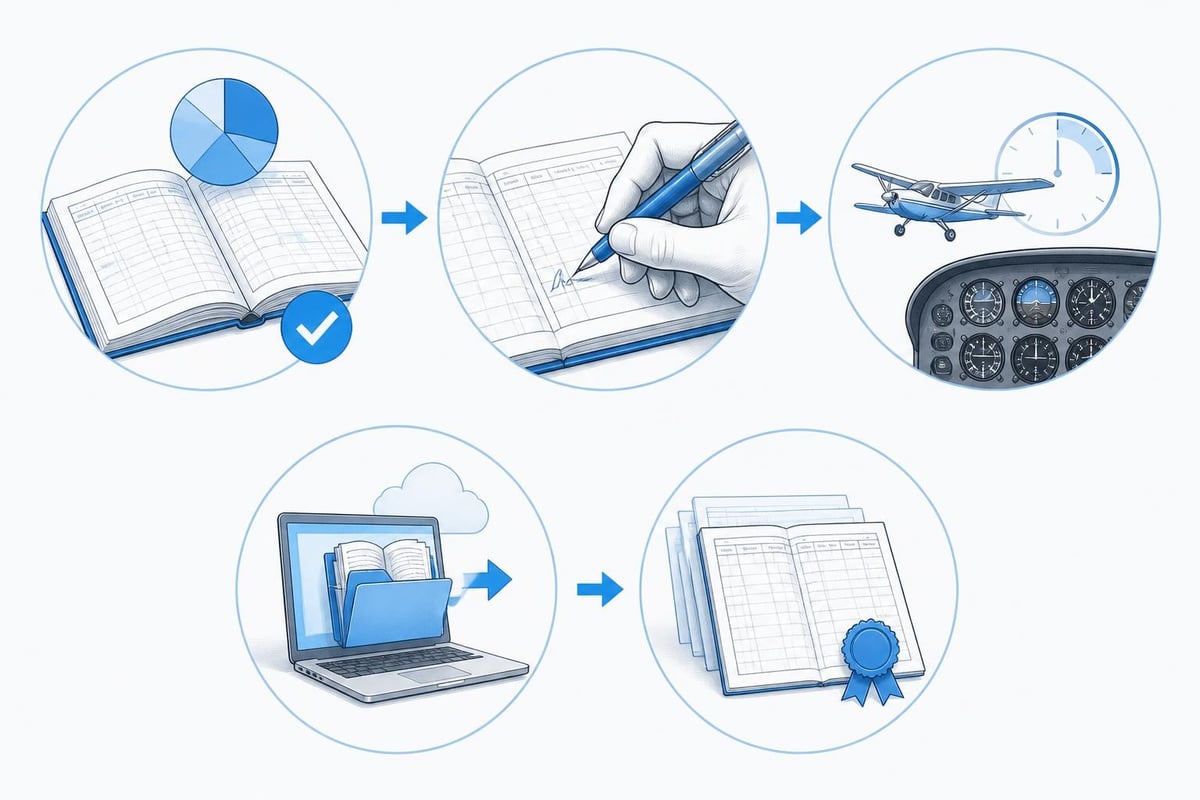
Digital logbook platforms offer CSV and PDF export, allowing you to generate reports for specific date ranges or aircraft types. Print a full logbook summary annually and store it in a safe location. Cloud backups protect against device failure, but a physical archive provides peace of mind.
Currency and Expiry Tracking
Beyond recording flights, your logbook is the tool you use to track currency and upcoming expiries. Falling out of currency can ground you unexpectedly.
Passenger Carrying Currency
To carry passengers in an aeroplane, you must complete three takeoffs and landings in the same category, class, and type (if a type rating is required) within the preceding 90 days. For night passenger operations, those three landings must be to a full stop at night within 90 days.
EASA FCL.060(a) and 14 CFR §61.57(a) codify these requirements. A digital logbook calculates your currency window automatically. Instead of counting backwards 90 days, the app shows your next expiry date. For more detail, see the currency cheat sheet and guide to IFR currency.
Instrument Currency
Instrument-rated pilots must complete six instrument approaches, holding procedures, and intercepting/tracking courses within the preceding six calendar months (EASA) or six months (FAA, with slight differences). If you let currency lapse, you must complete an instrument proficiency check with an examiner.
Record each approach by type (ILS, RNAV, VOR) and note whether actual IMC or simulated. A lapse in IFR currency means you cannot file or accept an IFR clearance, even in VMC.
Licence and Medical Expiries
Your pilot licence may have validity periods for specific ratings. For example, an instrument rating under EASA expires 12 months after issue unless renewed by a proficiency check or sufficient IFR flight time. SEP class ratings remain valid indefinitely if you complete 12 hours and a proficiency check every 24 months.
Medical certificates expire on fixed dates. A UK Class 1 medical is valid for 12 months (6 months over age 40). A Class 2 medical lasts 60 months for pilots under 40, 24 months under 50, and 12 months thereafter. If your medical expires mid-month, you are grounded from the first day of the following month unless you renew.
Tracking these dates in your flying log book, or linking them via a digital platform, ensures you receive advance warning. Many pilots have been caught out by a medical expiring just before a planned trip.
Best Practices for Logbook Accuracy
Accurate logbook keeping protects your career. Inconsistent or incomplete records can delay licence applications, cause problems during audits, or undermine your credibility in incident investigations.
- Log every flight immediately. Memory fades quickly. Record the date, aircraft, route, and times within 24 hours of each flight.
- Use decimal hours, not minutes. Aviation logbooks record time in tenths (1.3 hours), not hours and minutes (1:18). This convention simplifies totals and aligns with billing practices.
- Be specific in remarks. Instead of "circuits," write "5 circuits, 3 T/O & ldg." Instead of "instruments," write "ILS 27, RNAV 09, hold at BIG VOR."
- Sign and date endorsements. If you provide dual instruction or act as safety pilot, sign the other pilot's logbook with your certificate number and expiry.
- Reconcile totals monthly. At the end of each month, verify that your running totals match the sum of individual entries. Digital tools do this automatically, but always spot-check for data-entry errors.
- Archive your logbook annually. Export a full PDF or print your digital logbook once a year. Store it with your licence and medical certificates.
Regulations evolve. Cross-check current rules against official sources before relying on logbook entries for applications.
A flying log book is your career-long proof of experience, currency, and compliance. Whether paper or electronic, it must capture every mandatory field, support your licence applications, and keep you aware of upcoming expiries. Pilotlog logs flights in seconds, tracks rolling currency windows, and alerts you when a medical or rating is due. Available on iOS and Android, it keeps you current, legal, and ready.
- logbook requirements
- electronic logbook
- faa 61.51
- easa part-fcl
- pilot logbook
A logbook that keeps itself.
Join the waitlist and be first in line when Pilotlog launches.
Free to join, no spam. Unsubscribe any time.