ppl cost
Airplane Lessons Cost: Full Breakdown for 2026
24 Sep 2026 · 11 min read
Learning to fly in 2026 requires a realistic budget, careful planning, and a clear understanding of where every pound goes. The airplane lessons cost depends on aircraft type, instructor rates, training frequency, and whether you fly at a large school or a local club. Total costs typically range from £8,000 to £15,000 for a private pilot licence (PPL) in the UK, with variations driven by how quickly you train, what you fly, and how efficiently you progress through the syllabus.
What Drives Airplane Lessons Cost in 2026
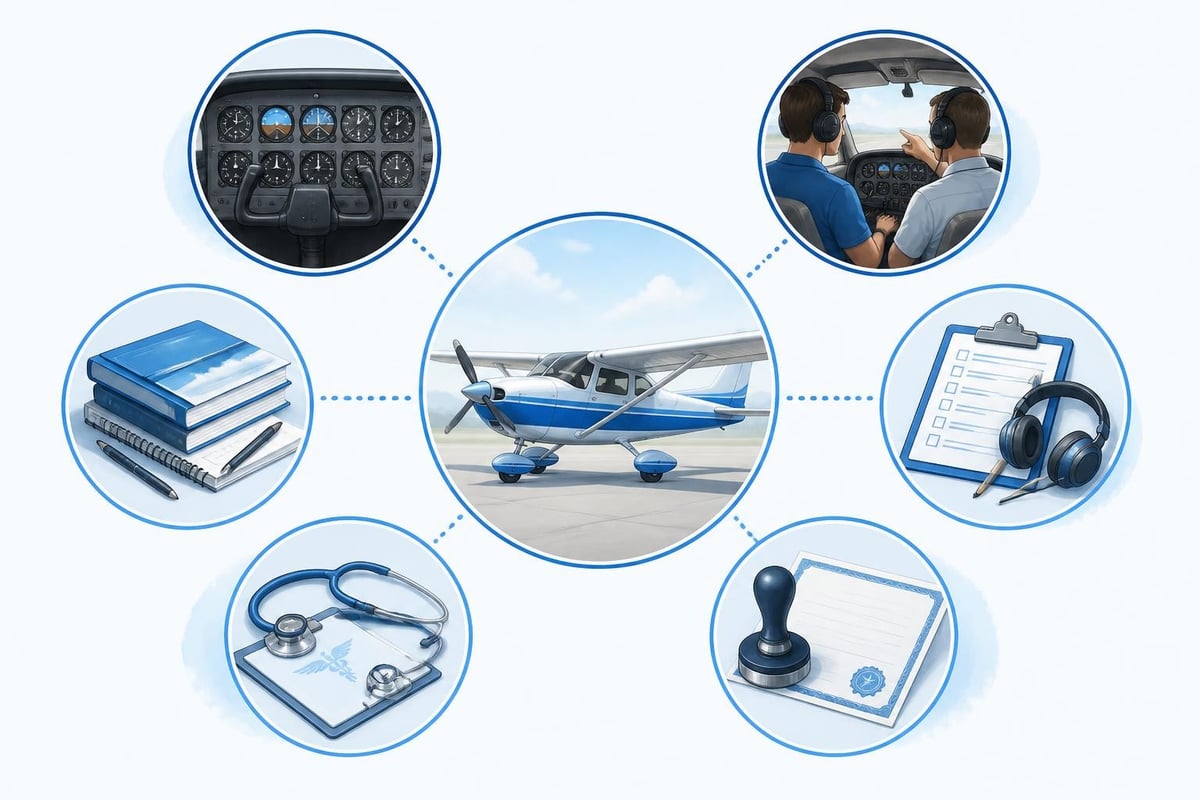
Every flight lesson consists of three core expenses: aircraft hire, instructor time, and ground school. The hourly rate for a basic single-engine piston aircraft (such as a Cessna 152 or Piper PA-28) sits between £140 and £200 at most UK schools. Add an instructor at £40 to £60 per hour, and you pay £180 to £260 per flying hour.
Ground school can be self-study using books and online resources (£200 to £500 total), a structured classroom course (£800 to £1,500), or a blended programme. You also need a Class 2 medical certificate from an Aviation Medical Examiner (AME), which costs £100 to £150 and is valid for five years if you are under 40, two years from 40 to 50, and annually thereafter (UK CAA Part-MED).
Hourly Rates by Aircraft Type
| Aircraft Type | Wet Hire Rate (£/hr) | Typical Use |
|---|---|---|
| Cessna 152 | £140–£170 | Initial PPL training |
| Cessna 172 / PA-28 | £180–£220 | PPL, hour building |
| Diamond DA40 | £210–£250 | Modern glass cockpit |
| Twin-engine (light) | £300–£400 | Multi-engine rating |
Wet hire includes fuel. Dry hire (where you pay separately for fuel) is less common but may save a small amount if you negotiate bulk rates with a club.
Total Budget for a Private Pilot Licence
The FAA requires 40 hours for a private certificate in the United States, while EASA mandates a minimum of 45 hours (Part-FCL.210.A PPL(A)), including at least 25 hours dual and 10 hours supervised solo. UK CAA follows EASA rules. Most students need 50 to 65 hours to reach test standard, not the regulatory minimum.
Worked example for a UK PPL in 2026:
- 55 flight hours at £200/hr (aircraft + instructor): £11,000
- Ground school (distance learning): £400
- Nine EASA theoretical exams at £25 each: £225
- Skills test (examiner fee + aircraft): £450
- Class 2 medical: £120
- Licensing and application fees: £150
- Charts, headset, books: £250
Total: £12,595
If you finish in 50 hours, the airplane lessons cost drops to around £11,500. Train at 70 hours and it climbs past £15,000. Frequency matters: pilots who fly twice per week retain lessons better and finish faster than those flying once per fortnight.
AOPA's cost guide confirms similar ranges in the US, where total PPL costs run $10,000 to $15,000 (roughly £7,500 to £11,500), though US minimums are lower and many schools charge less per hour than UK equivalents.
How Training Frequency Affects Cost
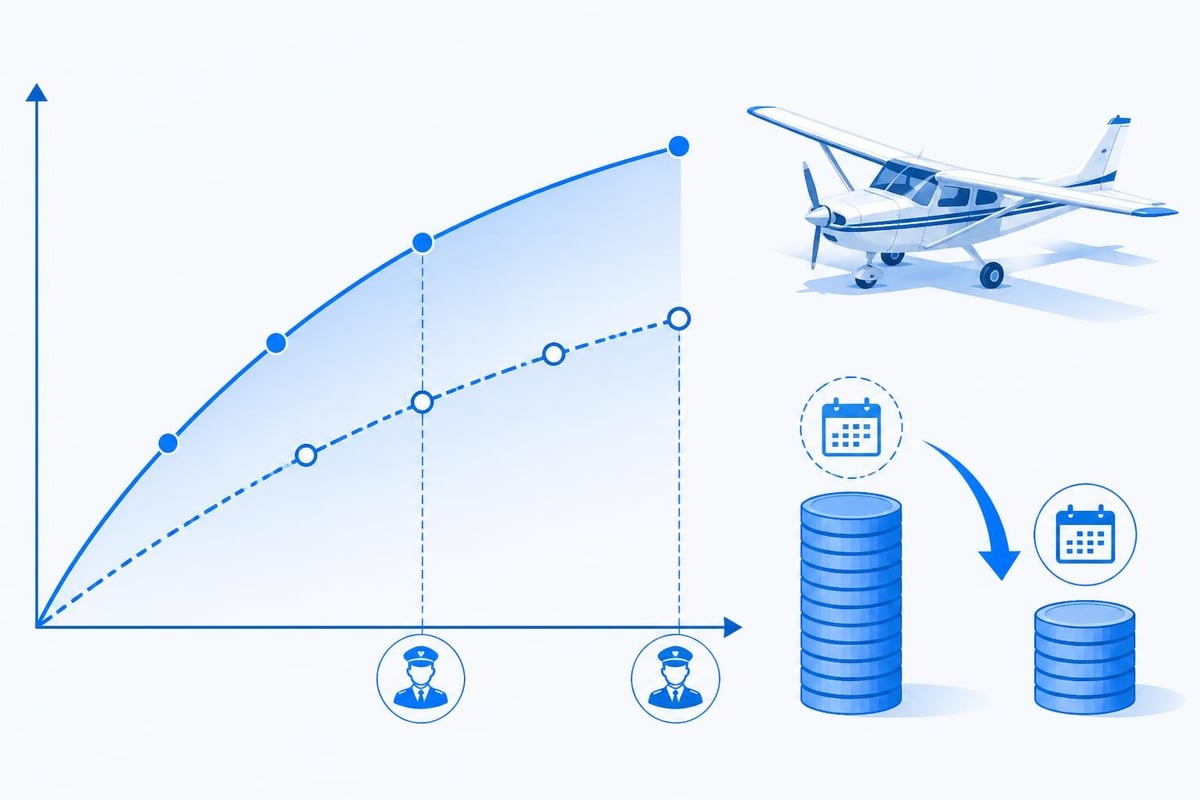
Flying once per week sounds sustainable, but the learning curve is slower. You spend the first ten minutes of each lesson re-familiarising yourself with procedures from the previous flight. Fly twice per week and your muscle memory stays fresh. You reach solo in 12 to 15 hours instead of 18 to 22, saving three to seven hours of dual instruction.
Cost comparison over 12 weeks:
| Frequency | Hours Flown | Estimated Total Cost (£) |
|---|---|---|
| Once per week | 12 | £2,400 (likely need 65–70 hr total) |
| Twice per week | 24 | £4,800 (likely finish in 50–55 hr) |
Training intensively for two or three weeks (such as a PPL course abroad or a UK 'fast-track' package) can be even cheaper per licence, though it requires block leave from work. FLYING Magazine's cost analysis highlights that consistency is the biggest controllable cost factor.
Reducing Airplane Lessons Cost Without Cutting Corners
Fly at a Club, Not a Commercial School
Flying clubs often charge £20 to £40 less per hour than commercial academies. Membership fees (£200 to £500 per year) are quickly offset by lower hourly rates. Clubs may use older aircraft, but a well-maintained Cessna 150 teaches the same stick-and-rudder skills as a glass-panel Cirrus.
Use an Independent Instructor
Some clubs allow you to bring your own instructor. An independent instructor might charge £35 to £45 per hour instead of £50 to £60 at a school. Combined with lower club aircraft rates, you can save £30 per flight hour (£1,500 to £2,000 over a full PPL).
Simulator Time for Instrument and Procedure Practice
EASA permits up to five hours of approved FNPT (Flight and Navigation Procedures Trainer) time to count toward your 45-hour PPL minimum. An FNPT session costs £40 to £70 per hour, half the price of the real aircraft. Use it for instrument scan practice, radio procedures, and emergency drills. FLYING Magazine notes that simulator training also reduces wear on the aircraft fleet, which keeps rental rates stable.
Self-Study Ground School
Classroom ground school is thorough but expensive. Self-study courses from providers like CATS, BGS, or AFE cost £200 to £500 and let you work at your own pace. You still sit the same nine EASA exams, and most students pass on the first attempt with disciplined study.
Share Flights for Hour Building
After your skills test, you need to build hours for further ratings or to stay current. Share flights with another pilot: one flies the outbound leg, the other returns. You log PIC or PU/T (pick-up training) time and split the cost. Over 20 hours, that halves your post-licence flying budget.
Costs Beyond the Private Pilot Licence
Many pilots aim for an Instrument Rating (IR) or a Commercial Pilot Licence (CPL). The IR requires 50 hours cross-country PIC (Part-FCL.615.IR), at least 40 hours of instrument instruction (15 may be in an FNPT), and a skill test. Total cost: £7,000 to £12,000. The CPL demands 200 total hours, including night, cross-country, and complex-aircraft time, plus ground exams and a skill test. Budget £30,000 to £50,000 from zero to frozen ATPL if you train modularly in the UK.
For those considering helicopter training, the airplane lessons cost structure is similar but hourly rates are higher (£250 to £400 for a Robinson R22 or R44), and the PPL(H) requires 45 hours under EASA Part-FCL.
Veterans in the United States can use GI Bill benefits to offset a significant portion of training. The VA's comparison tool shows which schools are approved and how much is covered. In the UK, there is no direct equivalent, though some employers sponsor training via apprenticeship levy funds.
University Flight Programs and Integrated Courses
Integrated courses at universities such as Embry-Riddle bundle degree tuition and flight training. Total four-year cost of attendance can exceed $200,000 (£150,000), but you finish with a degree and all licences through ATPL. The headline tuition figure often excludes flight fees, which are billed separately.
Modular training is usually cheaper overall but takes longer and requires more self-discipline. You fly when your schedule and budget allow, rather than following a fixed syllabus. The airplane lessons cost per hour is often lower at a local club, but the total may creep higher if training drags on for years.
Tracking Costs and Hours as You Train
Keeping a detailed record of every lesson, every pound spent, and every syllabus item completed helps you spot inefficiencies. A digital pilot logbook simplifies this: log each flight in seconds and see rolling totals for dual, solo, cross-country, and instrument time. You know exactly how many hours remain to meet the minimum and how much more budget you need.
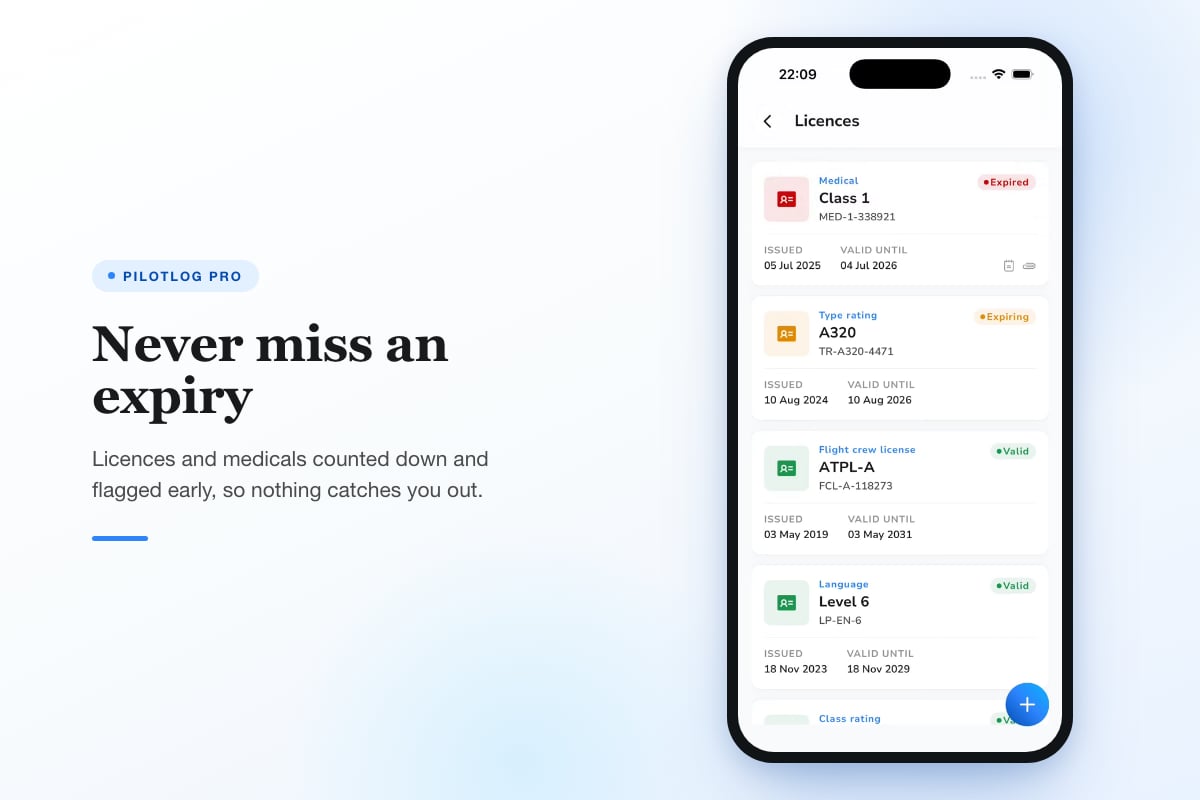
Pilotlog Pro takes that further by tracking not just hours but currency and expiry dates. Once you hold a licence, staying current for passengers (three take-offs and landings in the preceding 90 days, per FCL.060) or night flying (one hour and three circuits at night in the preceding 90 days, FCL.060) becomes critical. The app flags lapses early, so you never pay for a check flight you could have avoided with one planned evening circuit session.
Hidden Costs to Budget For
Beyond the advertised airplane lessons cost, several smaller expenses add up:
- Failed exams or skill-test referrals: Each EASA theory exam resit is £25; a partial skill-test resit (one section) costs £200 to £300 in examiner and aircraft fees.
- Additional solo or dual hours: If you need ten extra hours to meet the standard, that is £2,000 to £2,500.
- Weather cancellations: You may book and pay a deposit, then lose it to fog or high winds. Some schools apply cancellation credits; others charge a fee.
- Insurance excess: If you are named on the school's insurance, an incident (even a minor taxiway scrape) may cost you £500 to £1,000 excess.
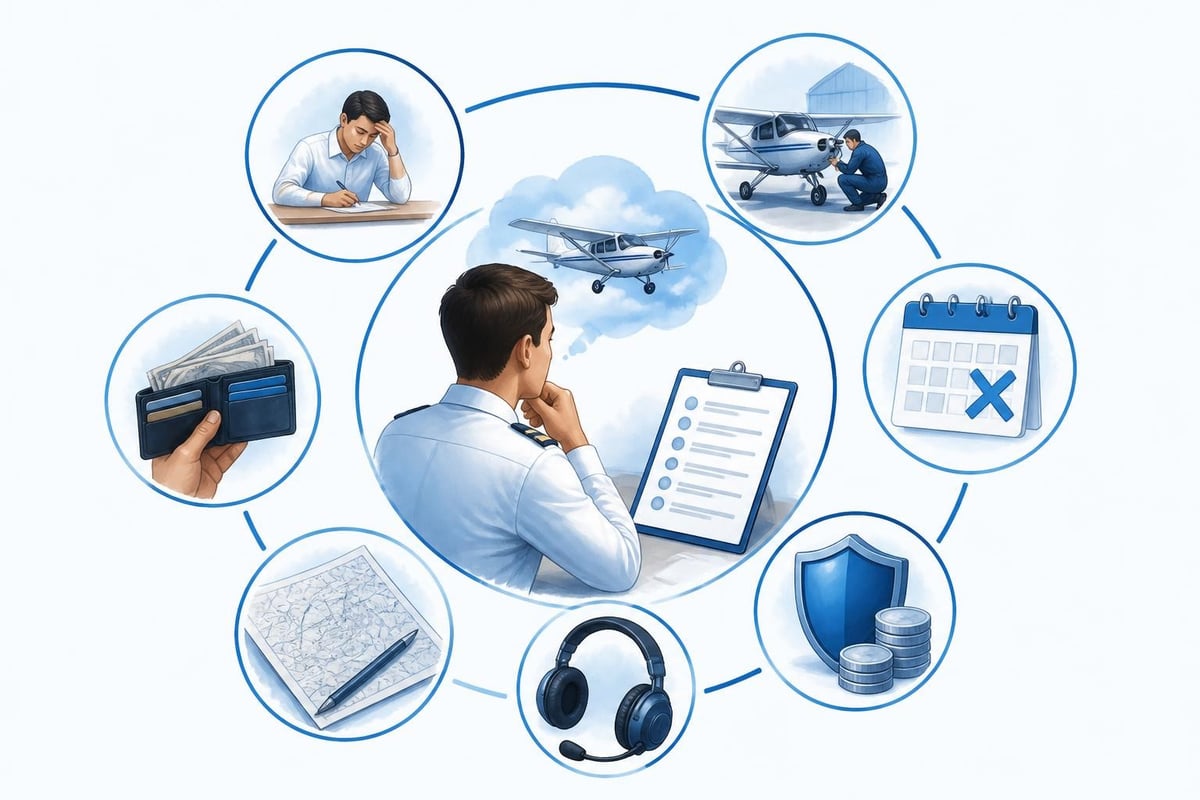
- Headset and equipment: A decent ANR headset (such as a Bose A20 or David Clark DC ONE-X) costs £700 to £1,000. Cheaper passive sets (£80 to £150) work but offer less hearing protection.
- Chart subscriptions and updates: CAA 1:500,000 and 1:250,000 charts, plus a VFR supplement, run £50 to £80 per year.
Comparing UK, US, and European Training Costs
The airplane lessons cost varies by region. In the United States, wet rates for a Cessna 172 sit around $150 to $180 per hour ($110 to $135), and instructors charge $50 to $70 per hour ($40 to $55), yielding a total hourly cost of $200 to $250 (£150 to £190). The FAA's 40-hour minimum means lower total spend if you finish on time, but most students still need 60 to 70 hours.
In mainland Europe (France, Germany, Spain), EASA rules apply, but hourly rates can be 10% to 20% lower than the UK, especially in southern Spain where weather is better and cancellations are rarer. Some UK students fly to Spain for intensive courses, paying €8,000 to €11,000 (£7,000 to £9,500) for a PPL with accommodation.
Australia and New Zealand offer another option: lower rates (AUD $250 to $300 per hour, roughly £130 to £160) and excellent weather. A UK-issued EASA PPL can be converted to an Australian RPL or PPL after a short differences course, making it feasible to train abroad and return home with a valid licence.
Tax and Financing Considerations
Flight training is rarely tax-deductible for private pilots in the UK. If you are a professional pilot and paying for a rating or recurrent training required for your job, you may claim it as an allowable business expense. AOPA's tax guide (US-focused) explains when training qualifies as a deductible education expense; UK rules are stricter, and HMRC typically treats PPL training as a personal hobby cost.
Some schools offer payment plans or partner with finance companies. Interest rates range from 6% to 12% APR, adding hundreds or thousands to the total bill. Paying upfront (if you can) avoids interest and sometimes unlocks a small discount (5% to 10% off a block-hours package).
Mentorship and Community Resources
The EAA Mentor Pilot Handbook includes a section titled 'How much does it cost to learn to fly?' and emphasises flying clubs, shared-ownership groups, and volunteer mentors as ways to reduce the airplane lessons cost. In the UK, the Light Aircraft Association (LAA) and regional flying clubs run Young Aviator schemes that subsidise first lessons or offer scholarships (£500 to £2,000) to students under 21.
Connecting with an experienced pilot who has recently finished training gives you realistic cost expectations and tips on choosing instructors, negotiating block rates, and avoiding common budget traps.
Managing Your Budget Over the Full Training Arc
Break your PPL training into phases and set a budget for each:
- Pre-solo (15–20 hours): Focus on basic handling, circuits, and emergency procedures. Budget £3,000 to £4,000.
- Solo consolidation (10–15 hours): Build confidence with solo circuits and local navigation. Budget £2,000 to £3,000.
- Navigation and night (15–20 hours): Cross-country flights, night rating, and advanced exercises. Budget £3,500 to £4,500.
- Test preparation (5–10 hours): Mock tests, examiner briefing, final polish. Budget £1,500 to £2,500.
Tracking each phase in a structured flight logbook helps you see progress and adjust spending. If you overspend in phase one, tighten the budget in phase two by flying solo more often or using the simulator for instrument work.
Regulatory Minimums and Real-World Averages
EASA Part-FCL.210.A sets the PPL(A) minimum at 45 hours, but the CAA and flight schools report a UK average of 55 to 60 hours. The FAA Pilot's Handbook describes the aeronautical knowledge and skill standards that underpin those hours. Weather, aptitude, instructor consistency, and lesson frequency all affect how many hours you need.
No two students are identical. One pilot solos at 10 hours and finishes the licence in 48; another needs 25 hours before first solo and completes training at 70 hours. Both are normal. The airplane lessons cost is an average, not a guarantee.
Regulations change. Always confirm hour requirements, medical standards, and exam syllabuses against the current CAA Part-FCL or FAA Part 61 before you start training. This article reflects EASA and FAA rules as of September 2026.
The airplane lessons cost in 2026 is substantial but predictable if you plan each phase, fly consistently, and track your hours and spending carefully. From your first lesson to the skills test, every flight builds toward a licence that opens a lifetime of flying. Pilotlog keeps your hours, currency, and expiries organised so you stay legal, current, and ready for every flight. Log each lesson in seconds and let the app track the rest.
- ppl cost
- flight training cost
- learning to fly
- private pilot licence
- flight training uk
A logbook that keeps itself.
Join the waitlist and be first in line when Pilotlog launches.
Free to join, no spam. Unsubscribe any time.