pilot licence types
Pilots Licence: Types, Requirements & How to Qualify
1 Sep 2026 · 12 min read
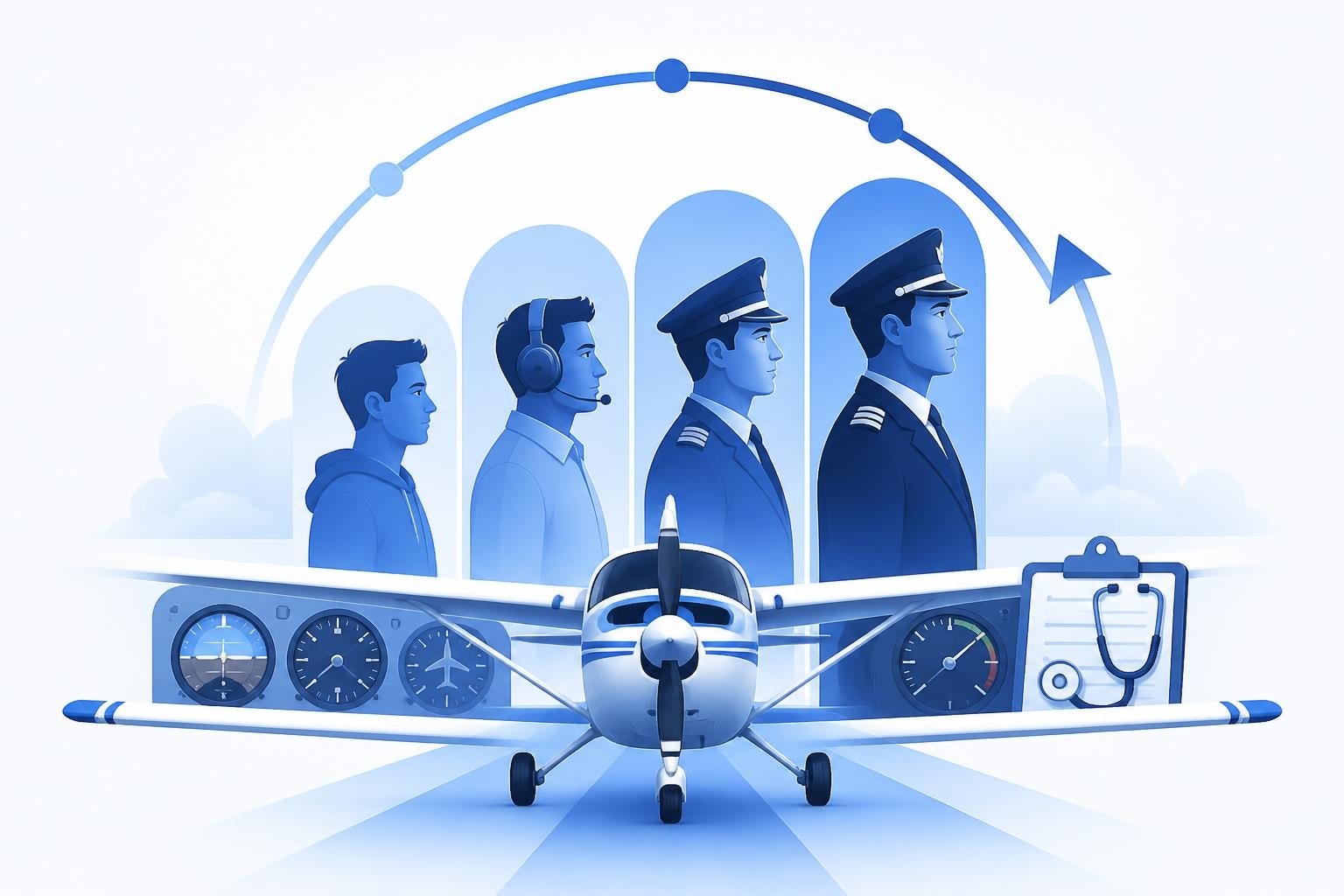
A pilots licence is your legal authority to operate an aircraft, granted after you meet specific training, flight-hour, knowledge, and medical standards set by your national aviation authority. Different licence types-from private (PPL) to commercial (CPL) to airline transport (ATPL)-authorise different privileges, from flying yourself to carrying passengers for hire to commanding multi-crew airliners. Each demands progressively more experience, deeper knowledge, and stricter medical fitness.
Whether you're starting flight school or adding ratings to an existing licence, the path forward centres on three pillars: structured training, documented flight hours, and maintaining currency. Rules vary by country (FAA in the United States, EASA across Europe, UK CAA in Britain), but the core architecture is similar worldwide. This guide explains which licence you need, what each demands, and how to plan your route through training and certification.
Why a Pilots Licence Matters
A pilots licence proves you've met minimum safety and skill standards. Without one, you cannot legally act as pilot in command of an aircraft. The licence also defines what you may fly (aircraft category, class, and type) and under what conditions (day VFR, night, IFR, single-pilot or multi-crew). Holding a current licence protects you legally and insurers, aircraft owners, and passengers financially.
Your licence grants specific privileges:
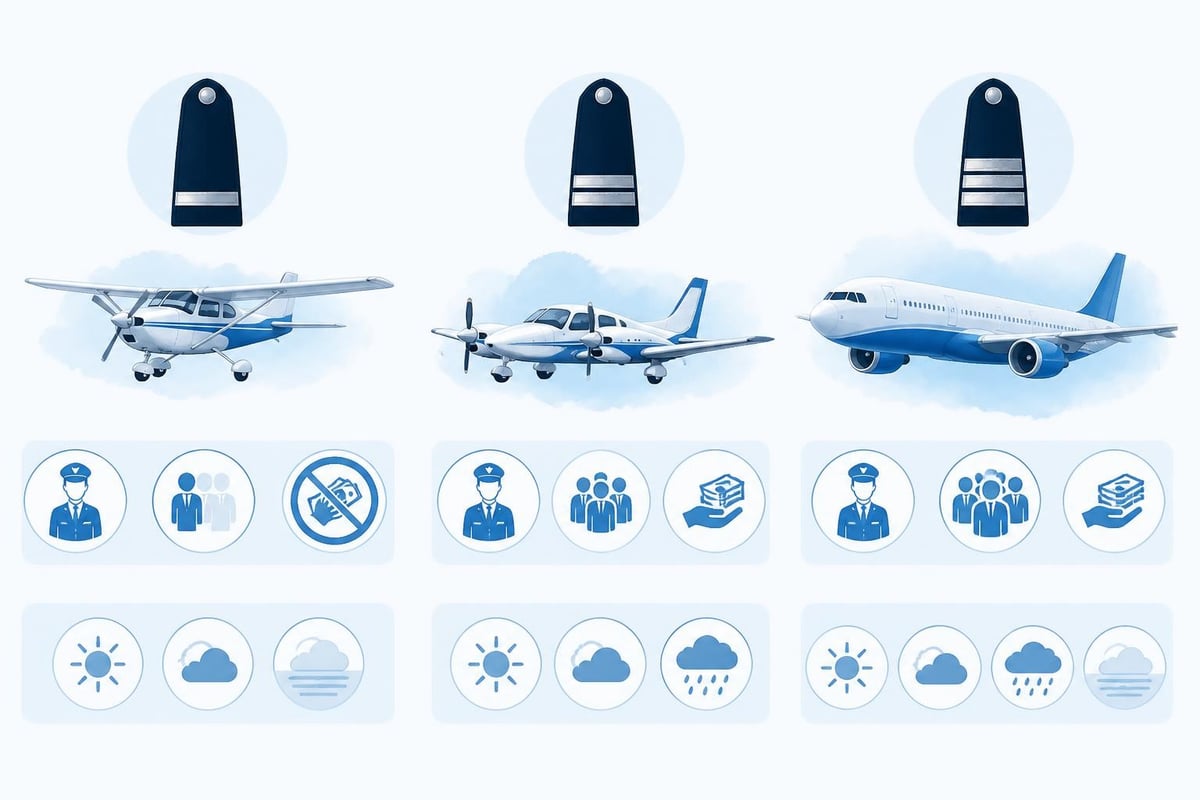
- PPL (Private Pilot Licence): Fly for personal or recreational purposes; no compensation.
- CPL (Commercial Pilot Licence): Fly for hire or reward; act as pilot in command in commercial operations (single-pilot aircraft).
- ATPL (Airline Transport Pilot Licence): Act as captain in multi-crew airline operations.
Beyond the initial issue, every pilots licence carries expiry dates, currency requirements, and revalidation conditions. Licence and medical tracking ensures you catch renewals before they lapse and stay legal.
Private Pilot Licence (PPL): Entry-Level Certification
A private pilots licence is where most careers begin. It authorises you to fly single-engine piston aircraft (and later, if you add ratings, multi-engine or instrument privileges) under VFR, carrying passengers but not for hire. In the United States, FAA Part 61 sets PPL requirements at a minimum of 40 flight hours (Part 141 schools may certify at 35 hours). EASA demands 45 hours, including at least 25 dual and 10 solo. UK CAA follows EASA Part-FCL standards for UK-issued licences.
Training and Flight-Hour Breakdown
Your training splits between dual instruction (with an instructor) and solo flight. A typical PPL syllabus includes:
| Requirement | FAA (Part 61) | EASA/UK CAA (Part-FCL) |
|---|---|---|
| Total minimum hours | 40 | 45 |
| Dual instruction | 20 (minimum) | 25 (minimum) |
| Solo | 10 (minimum) | 10 (minimum) |
| Cross-country (solo) | 5 hours, one flight ≥150 nm | 5 hours, one flight ≥150 nm |
| Night (dual + solo) | 3 hours dual (FAA) | 5 hours (EASA, inc. 5 solo take-offs/landings) |
| Instrument (dual) | 3 hours (FAA) | Not required for PPL (EASA) |
Training also covers ground school (aerodynamics, meteorology, navigation, regulations, human factors) and you'll sit a written knowledge test. The FAA Airman Certification Standards (ACS) defines the knowledge, risk-management, and flight-proficiency areas tested on the practical (checkride). EASA uses a syllabus of nine theoretical knowledge exams.
Medical and Age Requirements
Before you solo, you need a medical certificate. FAA requires at least a third-class medical for PPL (or BasicMed after initial certification). BasicMed lets eligible U.S. pilots fly certain aircraft without a traditional FAA medical, after completing an online course and a physician examination every four years. EASA demands a Class 2 medical for PPL, valid 60 months (under age 40) or 24 months (age 40+). Minimum age to solo is 16 (FAA) or 16 (EASA); minimum age for licence issue is 17.
Costs and Timeframes
According to the 2025 Redbird Flight Training Survey, U.S. private pilot students averaged $12,500 to $15,000 in total costs (aircraft rental, instructor fees, ground school, exams, checkride) and completed training in 12 to 18 months. European costs run higher, often €10,000 to €15,000, due to fuel prices and longer minimum-hour requirements.
Commercial Pilot Licence (CPL): Flying for Hire
A commercial pilots licence lets you fly for compensation or hire. You can work as a charter pilot, flight instructor, banner-tow pilot, or aerial-survey pilot. The CPL does not authorise you to fly as captain in airline operations (that requires an ATPL), but it is the gateway to professional flying.
FAA CPL requirements (Part 61):
- Minimum 250 total flight hours
- 100 hours PIC
- 50 hours cross-country PIC
- 10 hours complex or turbine aircraft (or TAA)
- 20 hours dual, including 10 hours instrument and cross-country flight
- Second-class medical (minimum)
EASA CPL requirements (Part-FCL):
- Minimum 200 total hours (150 if integrated course, including credits)
- 100 hours PIC (including 20 cross-country)
- 5 hours night (including 3 dual, 5 solo take-offs and landings)
- 10 hours instrument instruction (IR may be required for commercial operations)
- Class 1 medical
Your CPL training adds advanced manoeuvres, commercial flight planning, multi-engine rating (often required by employers), and instrument rating. Many pilots add an instrument rating before or alongside CPL, since most commercial work demands IFR capability.
Multi-Engine and Instrument Ratings
A multi-engine class rating typically requires 6 to 10 hours of dual instruction and a skill test. An instrument rating (IR) demands significant additional training: FAA requires 50 hours cross-country PIC and 40 hours actual or simulated instrument time; EASA requires 50 hours cross-country PIC and 55 hours instrument instruction (integrated course). Both add substantial cost (often $8,000 to $12,000) but open the majority of commercial flying jobs.
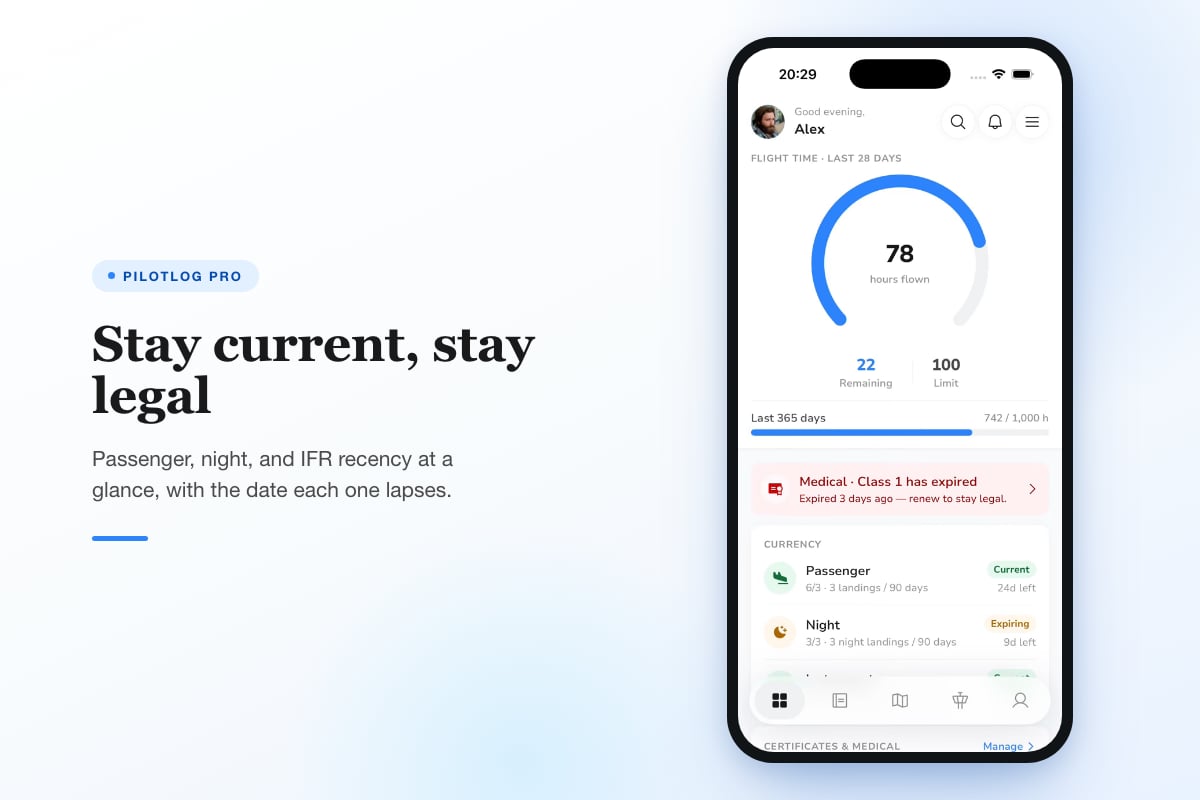
Tracking currency and expiry dates becomes critical once you hold a CPL. Rolling 28-day and 90-day limits, night currency, and IFR currency all demand accurate records. Pilotlog Pro monitors these automatically, flagging passenger currency lapses, flight-time limits, and medical expiry well before you're caught short.
Airline Transport Pilot Licence (ATPL): Command Authority in Multi-Crew Operations
The airline transport pilots licence represents the highest level of pilot certification. It authorises you to act as captain (PIC) in airline or multi-crew operations. All major airline captains hold an ATPL. First officers may operate on a CPL with ATPL theory credits (frozen ATPL in EASA terminology) until they accumulate the hours needed for a full ATPL.
Hour and Experience Requirements
| Authority | Total Hours | Multi-Crew / Turbine | Cross-Country | Night | Instrument |
|---|---|---|---|---|---|
| FAA | 1,500 | 250 (or 100 turbine, 50 multi) | 500 | 100 | 75 actual or simulated |
| EASA | 1,500 | 500 multi-crew or 250 + MPL | 200 cross-country PIC | 100 night | 75 instrument (IR holder) |
EASA also permits the Multi-crew Pilot Licence (MPL), an integrated airline pathway starting at zero hours, but most pilots still build hours via the CPL-to-ATPL route.
Theoretical Knowledge and Skill Tests
ATPL theory is extensive. EASA demands 14 exams (air law, airframes and systems, flight planning, human performance, meteorology, navigation, operational procedures, principles of flight, communications, performance, mass and balance, and more). FAA requires the ATP written exam plus an ATP checkride in a multi-engine aircraft. Both demand deep knowledge of jet transport aerodynamics, high-altitude weather, RVSM, ETOPS, crew resource management, and airline standard operating procedures.
Medical Standards
FAA requires a first-class medical for ATP operations, valid 12 months (under age 40) or 6 months (age 40+) for airline flying. EASA Class 1 medical is valid 12 months (under age 40), 6 months (age 40 to 59), and 4 months (age 60+). Pilots must stay vigilant about expiry dates; missing a renewal grounds you until you pass a new examination. Digital logbooks that track expiries and send alerts prevent surprises.
Type Ratings and Additional Endorsements
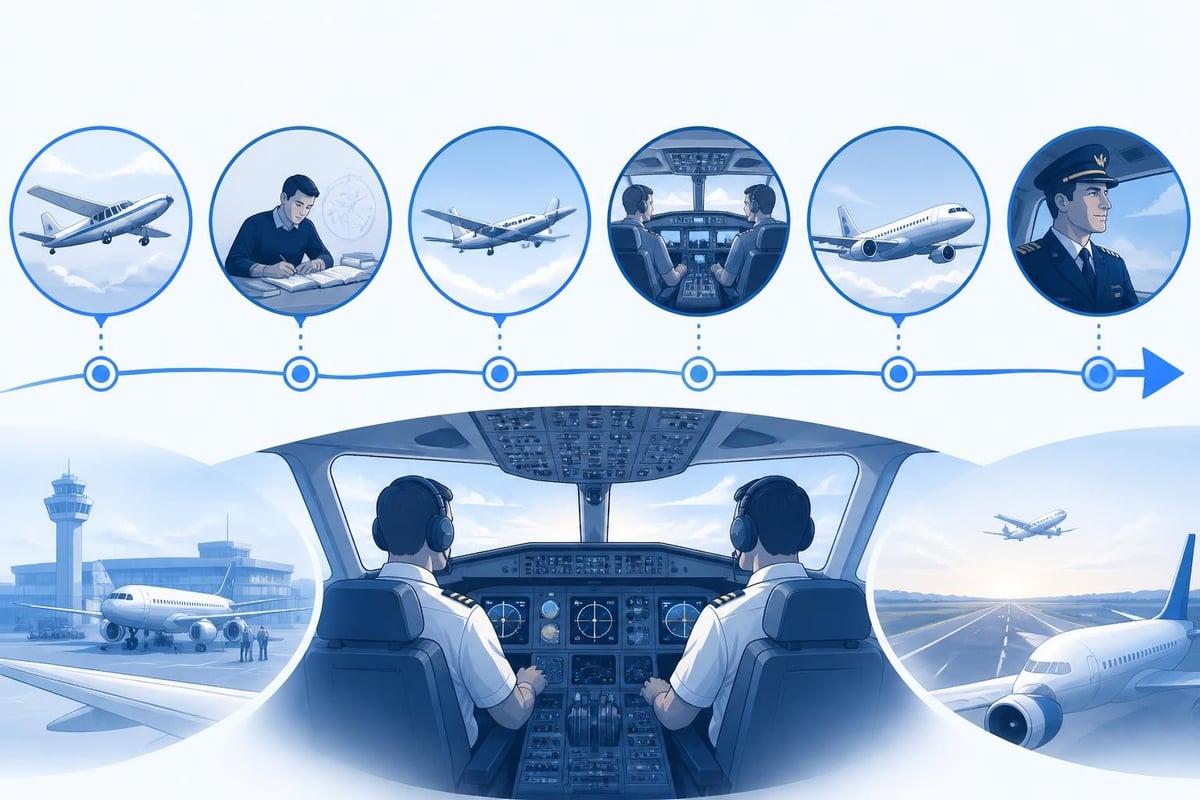
Once you hold a CPL or ATPL, specific aircraft demand a type rating. FAA and EASA both require type ratings for aircraft over 12,500 lb maximum take-off mass (or turbojet aircraft, regardless of weight). A Boeing 737 type rating, for example, involves ground school, simulator sessions, and a type-rating checkride. Smaller aircraft may only need a class rating (single-engine piston, multi-engine piston) or an endorsement (high-performance, complex, tailwheel).
Common endorsements and ratings:
- High-performance (FAA): aircraft with engines over 200 hp
- Complex (FAA): retractable gear, flaps, controllable-pitch propeller
- Tailwheel: conventional landing gear
- Aerobatic
- Seaplane (ASES, AMES classes)
- High-altitude / pressurised aircraft
- Glass-cockpit / TAA (Technically Advanced Aircraft)
Each adds to your logbook and expands your employability. Tracking every rating, endorsement, and currency requirement manually is tedious; flight-time tracking tools centralise the data and calculate rolling totals automatically.
Maintaining Currency and Revalidating Your Pilots Licence
Earning your pilots licence is only the start. Staying current and legal requires ongoing flight activity and periodic renewals.
Currency Rules
Passenger currency (FAA § 61.57):
To carry passengers, you need three take-offs and landings in the same category, class, and type (if type-rated) within the preceding 90 days. Night currency demands three night take-offs and landings to a full stop within 90 days.
Instrument currency (FAA § 61.57):
Six instrument approaches, holding procedures, and intercepting/tracking courses within the preceding 6 months. If you lapse, you must complete an instrument proficiency check (IPC) before acting as PIC under IFR.
EASA (Part-FCL.060):
To carry passengers, you need three take-offs and landings in the preceding 90 days in the same class or type. Night currency requires one take-off and landing at night every 90 days (or night training/proficiency check). Instrument currency in EASA demands refresher training or a proficiency check if you haven't completed the minimum approaches and hours in the past 12 months.
Licence Revalidation and Renewal
PPL and CPL licences don't expire, but your ratings do. An FAA flight review (every 24 months) keeps your licence current. EASA class and type ratings expire every 12 months (single-engine piston) or 12/24 months (depending on type) and require either minimum flight hours plus a proficiency check with an examiner, or a renewal training course.
Medical certificates expire on fixed schedules. Missing the deadline means you cannot exercise your licence privileges until you pass a new medical. Pilots tracking their licences digitally receive alerts 30, 14, and 7 days before expiry, leaving time to book an examiner or aviation medical examiner (AME).
International Recognition and Licence Conversion
If you earned your pilots licence under one authority (say, FAA) and want to fly in another jurisdiction (EASA or UK CAA), you may need to convert or validate your licence. ICAO Annex 1 sets standards that most countries follow, easing mutual recognition. FAA and EASA have bilateral agreements, but you'll still sit exams or complete differences training.
Typical conversion steps:
- Submit certified copies of your current licence, medical, and logbook to the target authority.
- Sit theoretical knowledge exams (usually air law, operational procedures, and communications for the new jurisdiction).
- Complete a skill test or proficiency check with a local examiner.
- Receive the new licence with your ratings endorsed.
Conversion can take 3 to 6 months and cost several thousand pounds or dollars. Planning ahead and consulting the ICAO Safety Reports on international standards helps set realistic timelines.
Digital Logbooks and Recordkeeping Compliance
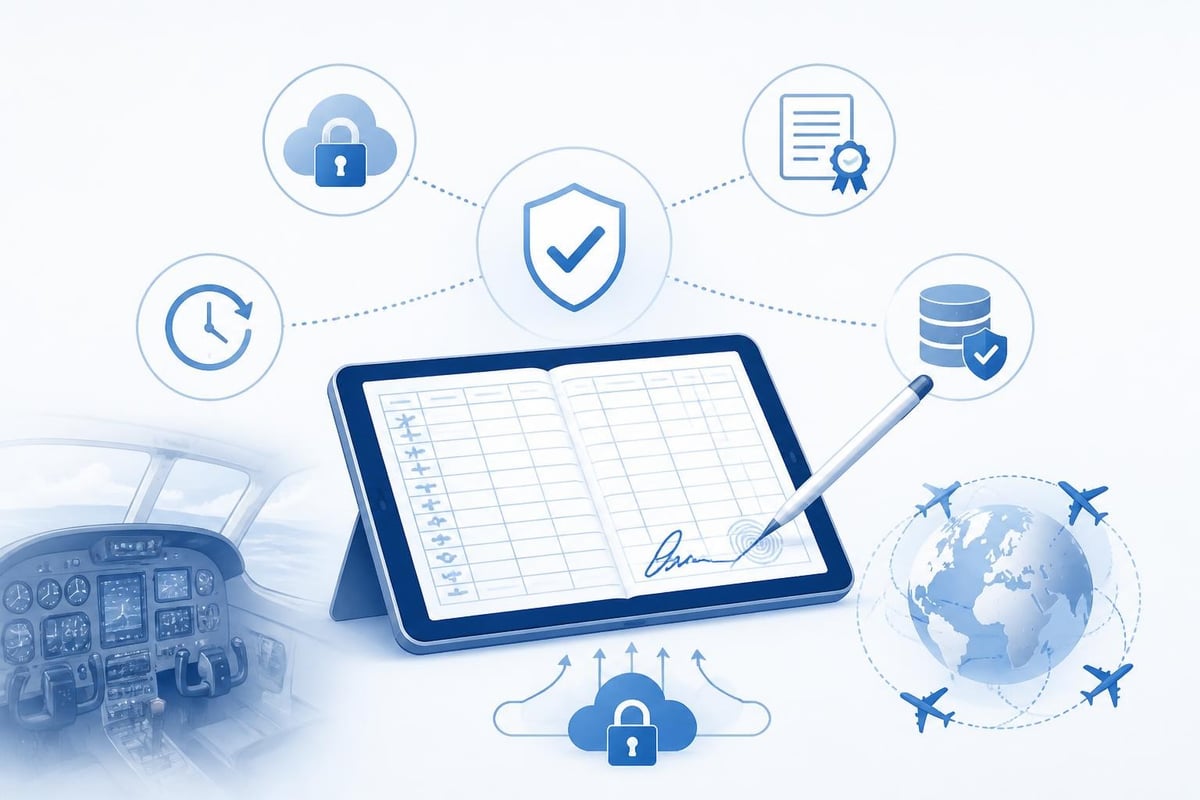
Every pilots licence rests on accurate records. Regulators accept electronic logbooks provided they meet reliability, signature, and audit standards. The FAA Advisory Circular AC 120-78B offers guidance on electronic signatures and recordkeeping for commercial operators, and many of the same principles apply to personal logbooks: tamper-evident entries, secure backups, and the ability to produce records on demand.
Modern digital pilot logbooks automatically calculate rolling totals for flight-time limits, alert you to approaching currency deadlines, and export your entire logbook in PDF or spreadsheet format for interviews, audits, or licence applications. This saves hours of manual arithmetic and catches errors before they cost you a checkride or job offer.
Common Mistakes and How to Avoid Them
1. Letting currency lapse unnoticed.
Pilots forget the 90-day passenger rule or the 6-month IFR window, then discover they're illegal to fly the day before a planned trip. Set calendar reminders or use automated alerts.
2. Confusing licence validity with rating validity.
Your PPL never expires, but your class rating and medical do. Missing a rating revalidation date often means a full skill test instead of a simple proficiency check.
3. Incomplete logbook entries.
Missing aircraft registration, departure/arrival aerodromes, or PIC name can invalidate hours for licence applications or insurance claims. Log every detail immediately after each flight.
4. Assuming rules are universal.
Night currency in FAA means full-stop landings; EASA counts take-offs and landings without the full-stop requirement. Always confirm the specific regulation (Part 61 § 61.57, FCL.060, etc.) for your authority.
5. Waiting until the last minute for medicals.
Class 1 medicals can take weeks if the AME defers to the authority for review. Book 60 days before expiry to avoid last-minute scrambles.
Planning Your Licence Journey
If you're starting from zero, map your route:
Student to PPL (12 to 18 months):
Ground school, 40 to 45 flight hours, written exam, checkride. Budget $12,000 to $15,000 (U.S.) or €10,000 to €15,000 (Europe).
PPL to CPL (12 to 24 months):
Hour-building to 200 or 250 total, multi-engine rating, instrument rating, commercial ground school, CPL checkride. Budget $30,000 to $50,000 total.
CPL to ATPL (24 to 60 months):
Flight instructing, charter work, or airline cadet scheme to reach 1,500 hours. ATPL theory exams, ATP checkride. Timeline depends on job availability and flying frequency.
Track every hour, every sector, every take-off and landing. Your logbook becomes your CV. Accurate records open doors to jobs, type ratings, and command upgrades.
Earning and maintaining a pilots licence demands precision, ongoing study, and meticulous record-keeping at every stage from PPL through ATPL. Regulations change, currencies expire, and medicals lapse-but you stay ahead when you track it all in one place. Pilotlog logs your flights in seconds, calculates rolling limits, monitors passenger and IFR currency, and flags licence and medical expiries early, so you're always current, legal, and ready for the next sector.
- pilot licence types
- ppl requirements
- cpl training
- atpl certification
- flight training hours
A logbook that keeps itself.
Join the waitlist and be first in line when Pilotlog launches.
Free to join, no spam. Unsubscribe any time.