night currency
Night Currency: Rules, Requirements & How to Stay Legal
12 Jul 2026 · 11 min read
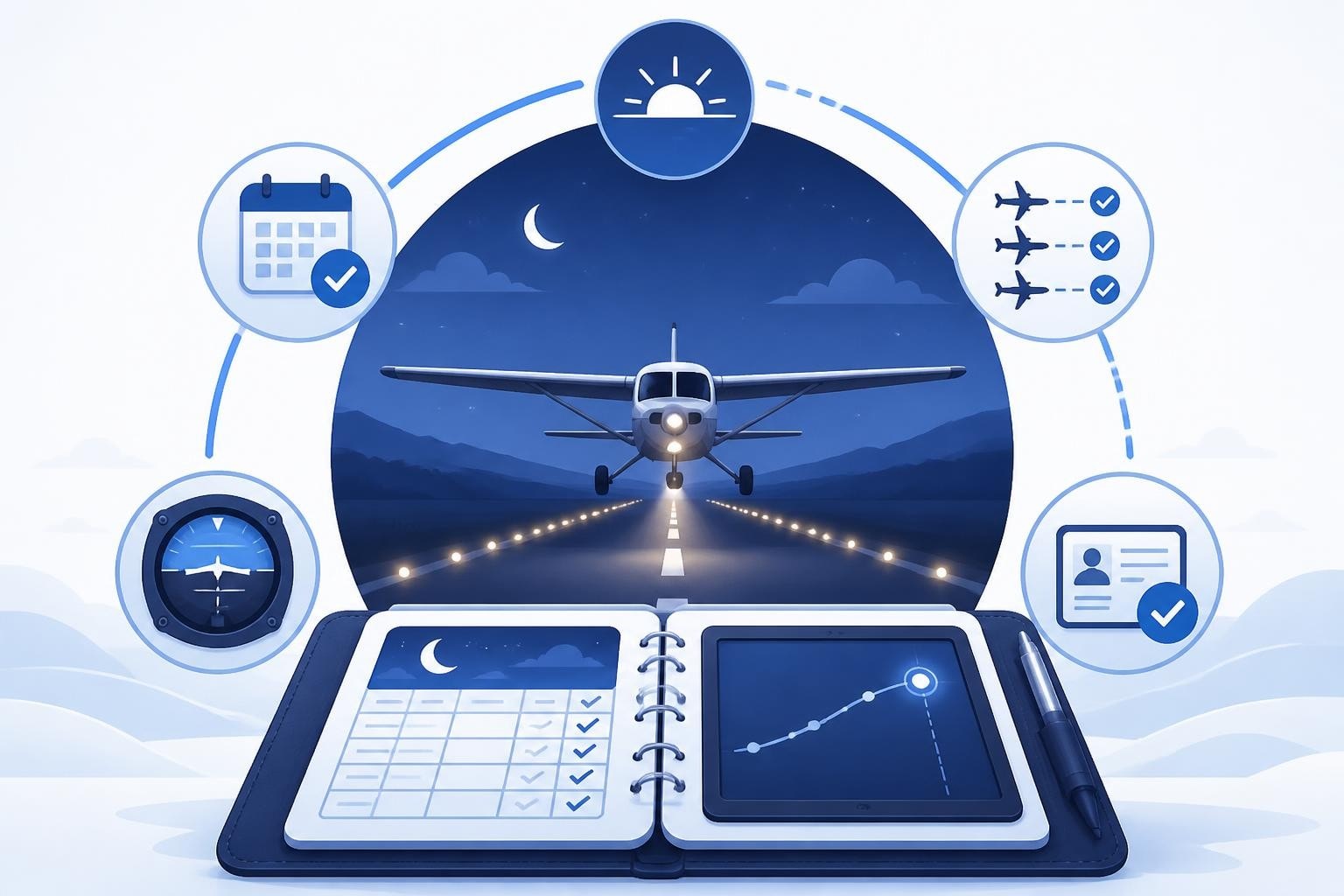
Night currency is the regulatory requirement that allows you to carry passengers during night hours. Under FAA rules, you must complete three takeoffs and three landings to a full stop during the period beginning one hour after sunset and ending one hour before sunrise within the preceding 90 days. EASA requires one takeoff and one landing at night within the same 90-day window. Lose your night currency and you fly solo at night until you regain it.
What Night Currency Actually Means
Night currency keeps you legal to carry passengers when flying at night. It exists because night operations demand different skills: altered depth perception, reliance on instruments, visual illusions, and reduced emergency landing options.
The FAA defines night currency in 14 CFR 61.57(b). You need three takeoffs and three full-stop landings as sole manipulator of the controls during the period from one hour after sunset to one hour before sunrise. Complete these within 90 days and you can carry passengers at night.
EASA sets the standard in Part-FCL AMC1 FCL.060. You need one takeoff and one landing conducted at night within the preceding 90 days. Simpler on paper, but the outcome is identical: no currency means no passengers after dark.
The Three Definitions of Night
Aviation uses three different definitions of night, each for different purposes. Confusion here trips up many pilots.
Night for currency purposes (FAA): one hour after sunset to one hour before sunrise. This is when your takeoffs and landings count toward the 61.57(b) requirement.
Night for logging purposes (FAA): the period between the end of evening civil twilight and the beginning of morning civil twilight. You log this time as night flight time in your logbook, even if it doesn't count toward currency.
Night for position light requirements (FAA): sunset to sunrise. You must have position lights on during this entire period.
EASA defines night as the period between the end of evening civil twilight and the beginning of morning civil twilight, or such other period between sunset and sunrise as may be prescribed by the appropriate authority. This definition applies to both currency and operations.
How to Maintain Night Currency
Maintaining night currency demands planning. You cannot simply add three night landings during your normal flying routine if you fly mainly during daylight hours.
The 90-Day Rolling Window
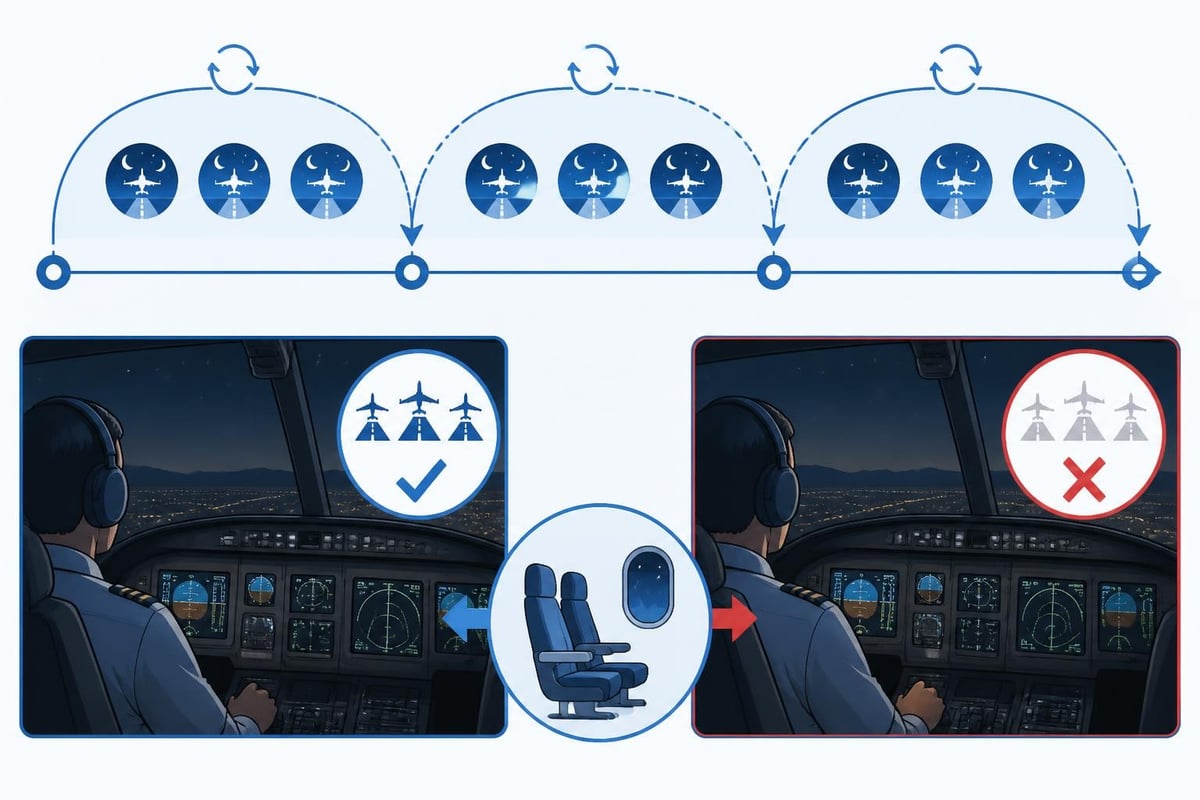
Your currency window rolls continuously. If you complete three night takeoffs and landings on January 15, you remain current until April 15. Complete another set on March 20, and your window extends to June 18.
Let your currency lapse and you have options. You can fly solo at night to regain currency. You can fly with an instructor. Or you can use an approved flight simulator to complete the required takeoffs and landings, though not all simulators qualify.
Key points for maintaining currency:
- Track your last qualifying night flight
- Calculate 90 days forward from that date
- Plan currency flights before the window closes
- Remember that touch-and-goes don't count under FAA rules (full stop required)
- EASA allows touch-and-go landings for currency
Tailwheel and Type-Specific Requirements
If you fly a tailwheel aircraft, your night currency applies only to tailwheel aircraft. The three landings must be to a full stop in a tailwheel aircraft to carry passengers in a tailwheel aircraft at night.
Type ratings follow the same logic. Your night currency in a single-engine piston aircraft doesn't transfer to a multi-engine turboprop. Each category, class, and type stands alone.
| Requirement | FAA (14 CFR 61.57) | EASA (Part-FCL) |
|---|---|---|
| Period | 90 days | 90 days |
| Takeoffs | 3 | 1 |
| Landings | 3 (full stop) | 1 |
| Time window | 1hr after sunset to 1hr before sunrise | Night as defined |
| Solo flight allowed | Yes | Yes |
Logging Night Time and Currency
Accurate logging separates legal pilots from those who think they're legal. Night time in your logbook serves multiple purposes: it counts toward certificate and rating requirements, it demonstrates experience, and it proves currency.
What Counts as Night Flight Time
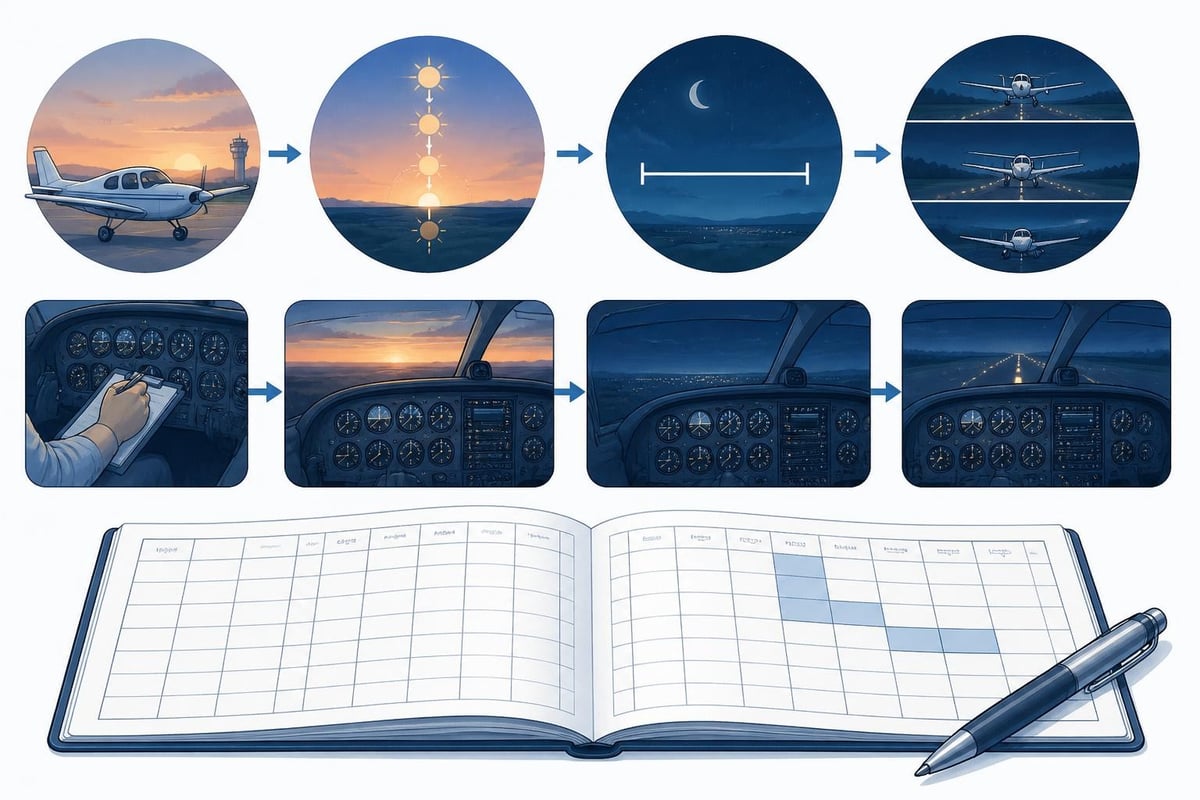
Under FAA rules, you log night flight time from the end of evening civil twilight to the beginning of morning civil twilight. This differs from the currency window. You might log night time without building currency, or build currency without logging much night time.
Night time logging requires precision. If you take off 45 minutes after sunset and land two hours later, you log the entire flight as night time. If you complete your three landings one hour and ten minutes after sunset, those landings count toward currency even though you might not log significant night time.
EASA requires night time to be logged separately. The definition ties to civil twilight, and many pilots find this calculation less intuitive than the FAA's sunset-based currency window.
Recording Currency-Building Flights
A proper logbook entry for a night currency flight includes:
- Date and aircraft registration
- Departure and arrival times
- Total flight time
- Number of night takeoffs and landings
- Confirmation that landings were to a full stop (FAA)
- Confirmation that operations occurred within the currency window
Your logbook should make it easy to prove currency to a ramp checker or during a flight review. Digital logbooks excel here, automatically tracking your currency status and flagging upcoming lapses.
Night Currency for Different Pilot Certificates
Private pilots and commercial pilots share the same night currency requirements. ATP certificate holders follow identical rules when acting as PIC carrying passengers. The certificate level doesn't change the 90-day requirement or the number of takeoffs and landings.
Student Pilots and Night Flying
Student pilots training under FAA Part 61 must complete specific night training: three hours of night flight training including one cross-country flight of over 100 nautical miles total distance and ten takeoffs and ten landings to a full stop at an airport. This builds foundational night experience but doesn't establish ongoing currency.
Once certificated, the 90-day currency clock starts with your first passenger-carrying night flight. Many newly certificated pilots lose night currency within months because they don't plan for it.
Instrument-Rated Pilots
Holding an instrument rating doesn't exempt you from night currency requirements. The two currencies run independently. You can be IFR current but not night current, or night current but not IFR current.
EASA currency requirements separate even further: passenger currency, night currency, and instrument currency each have distinct windows and requirements. Part-FCL pilots must track all three independently.
Practical Strategies for Staying Current
Night currency doesn't maintain itself. You need a system, particularly if you fly irregularly or if your flying season limits night operations.
Build a currency rhythm:
- Schedule a currency flight every 60 days, giving yourself a 30-day buffer
- Pair currency flights with other training (instrument approaches, navigation practice)
- Use multiple airports to vary the experience
- Practice with an instructor occasionally, even when not required
Winter months in northern latitudes offer more night currency opportunities. Sunset arrives early, giving you more hours to fly within the currency window without flying late into the evening.
Using Flight Simulators
FAA-approved ATDs (Aviation Training Devices) and FTDs (Flight Training Devices) can be used to regain night currency. The device must be approved for the task, and you must complete the training with an authorized instructor.
This option works well for pilots in winter climates where night VFR flying carries higher risks. Three takeoffs and landings in a simulator with an instructor costs less than aircraft rental and keeps you legal.
| Method | Pros | Cons |
|---|---|---|
| Solo night flights | Inexpensive, builds real experience | Weather dependent, requires existing currency |
| Flights with instructor | Immediate feedback, safer | Higher cost, scheduling required |
| Approved simulator | Weather independent, controlled environment | Must be approved device, requires instructor |
When Night Currency Lapses
Losing night currency doesn't ground you. It restricts you from carrying passengers at night until you regain currency. You can fly solo at night, or you can fly with passengers during the day.
Regaining currency follows the same path as building it initially. Complete three takeoffs and three landings to a full stop (FAA) or one takeoff and one landing (EASA) during the required time window. The clock resets immediately.
Many pilots choose to regain currency with an instructor aboard, particularly if months have passed since their last night flight. Night flying demands specific skills that deteriorate faster than daytime proficiency: scanning techniques, spatial orientation, illusion management, and emergency procedures.
Planning for Currency Gaps
Career breaks, seasonal flying, and aircraft availability all create currency gaps. Smart pilots plan for these:
- Before a planned flying break, complete a currency flight close to the end of the break
- If you know you'll be non-current, plan a dual currency flight with an instructor when you return
- Track your lapse date and don't accept night passenger flights near the edge of currency
- Consider whether night passenger flights are worth the effort to maintain currency
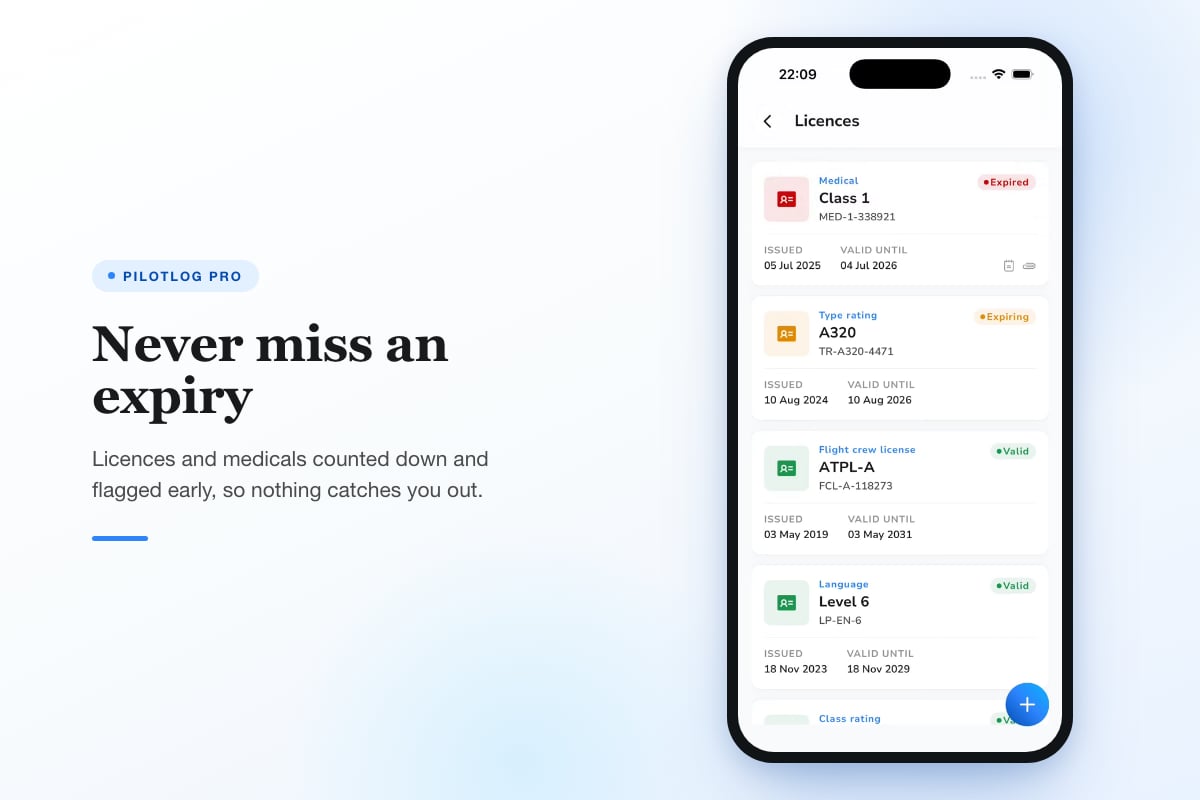
Pilotlog Pro automates currency tracking across all requirements. It calculates your night currency lapse date from your logged flights, alerts you before currency expires, and shows exactly how many days remain. For pilots juggling passenger currency, IFR currency, and night currency simultaneously, automated tracking eliminates manual calculation errors and missed deadlines.
Night Currency Under Different Regulatory Regimes
FAA pilots operating in the United States face different requirements than EASA pilots in Europe or pilots under other civil aviation authorities. If you hold multiple licences or fly in multiple jurisdictions, understand which rules apply.
EASA Night Rating vs. Night Currency
EASA separates the night rating qualification from ongoing night currency. To obtain a night rating under Part-FCL, you complete specific training: five hours of flight time at night including three hours of dual instruction and one hour of cross-country navigation with a cross-country flight of at least 50 kilometres.
Once qualified, maintaining your night rating requires that one takeoff and one landing every 90 days. The training requirement is front-loaded, but the currency requirement is lighter than the FAA standard.
Operating Internationally
If you fly internationally on a FAA certificate with an ICAO conversion, you operate under the rules of the state where you're flying. A UK pilot flying on an FAA certificate in the United States follows FAA night currency rules. An FAA pilot flying in EASA territory on a validation follows EASA rules.
This creates complexity for pilots who cross borders regularly. Your logbook must support currency under both regimes if you operate in both jurisdictions.
Regulatory comparison:
- FAA (14 CFR 61.57): Three takeoffs, three full-stop landings, one hour after sunset to one hour before sunrise, 90 days
- EASA (Part-FCL AMC1 FCL.060): One takeoff, one landing, at night as defined, 90 days
- UK CAA post-Brexit: Follows EASA Part-FCL standards with UK-specific amendments
- Transport Canada: Three takeoffs and landings within five preceding years if not carrying passengers; currency rules differ for passenger-carrying operations
Common Night Currency Mistakes
Even experienced pilots make night currency errors. Most stem from confusion over the multiple definitions of night or from poor record-keeping.
Counting the Wrong Window
The most common mistake: counting landings that fall outside the currency window. If sunset occurs at 1900 and you complete three landings at 1945, none of them count. The currency window opens at 2000 (one hour after sunset).
Some pilots confuse the logging window (civil twilight) with the currency window (one hour after sunset). Time logged as night flight time doesn't automatically mean currency-building time.
Touch-and-Go Confusion
Under FAA rules, night currency landings must be to a full stop. Touch-and-goes don't count. This differs from day currency requirements and catches pilots who build daytime passenger currency with touch-and-goes.
EASA allows touch-and-go landings for night currency purposes, creating another point of confusion for pilots who operate under both regimes.
Aircraft Category and Class
Your night currency in a single-engine land aircraft doesn't extend to seaplanes, multi-engine aircraft, or helicopters. Each category and class requires separate currency.
If you add a multi-engine rating and want to carry passengers at night in your new aircraft, you must build night currency specifically in that category and class.
Building Night Experience Beyond Currency
Night currency is a minimum standard. Building broader night experience makes you a safer, more capable pilot.
Comprehensive night flying preparation includes understanding human factors, equipment requirements, and emergency procedures specific to night operations. Night VFR accidents often involve controlled flight into terrain, spatial disorientation, or fuel exhaustion. All three risks increase when you fly at night.
Regular night cross-country flights build skills beyond the traffic pattern. Night navigation demands stronger instrument scan habits, better pre-flight planning, and greater awareness of terrain and obstacle clearances.
Consider occasional night dual instruction even when not required. An instructor can identify developing bad habits, introduce you to unfamiliar airports at night, and provide guidance on weather minimums and risk management.
Night currency keeps you legal and prepared for passenger-carrying operations after dark, but the regulatory minimums represent only the baseline. Whether you track FAA, EASA, or other requirements, accurate logging and proactive planning ensure you never face an unexpected lapse. Pilotlog calculates your night currency automatically from your logged flights, alerts you before currency expires, and shows exactly what you need to regain currency if it lapses, taking the guesswork out of staying legal and ready to fly.
- night currency
- 14 cfr 61.57
- night flight logging
- faa easa night rules
- night landing requirements
A logbook that keeps itself.
Join the waitlist and be first in line when Pilotlog launches.
Free to join, no spam. Unsubscribe any time.