ppl cost
Pilot Lessons Cost: Budget & Breakdown for 2026
3 Oct 2026 · 11 min read
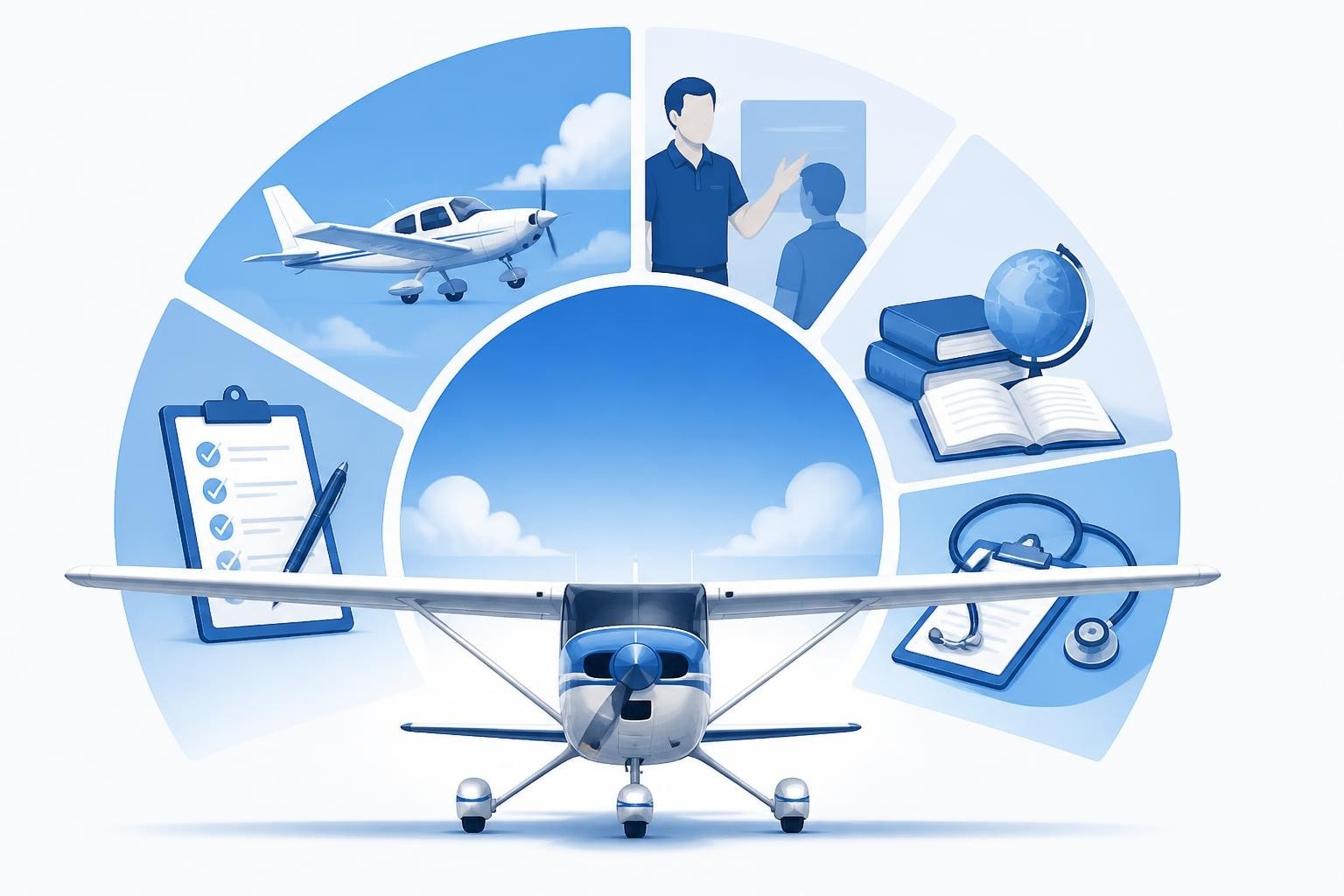
Pilot lessons cost in 2026 typically ranges from £12,000 to £18,000 for a Private Pilot Licence (PPL), though the final figure varies based on aircraft type, school location, and how efficiently you progress through training. Hourly aircraft rental sits between £150 and £280, instructor fees add another £45 to £70 per hour, and you'll need a minimum of 45 flight hours under EASA Part-FCL rules or 40 hours under FAA Part 61. Beyond flight time, budget for ground school, exams, medical certificates, and equipment-costs that add up quickly but rarely surprise pilots who plan ahead.
Core Training Costs Explained
Flight time makes up the largest share of your total spend. EASA Part-FCL.210.A requires at least 45 hours total time for a PPL(A), including 25 hours dual instruction and 10 hours supervised solo. The FAA requires 40 hours minimum, though most students log 60 to 75 hours before they're test-ready.
Calculate your base cost by multiplying expected hours by the combined aircraft and instructor rate. A Cessna 152 at £165 per hour plus an instructor at £50 per hour equals £215 per hour. If you finish in 50 hours, flight time alone runs £10,750. A Piper Warrior at £220 per hour with the same instructor takes that to £13,500 for the same 50 hours.
Aircraft Rental Variations
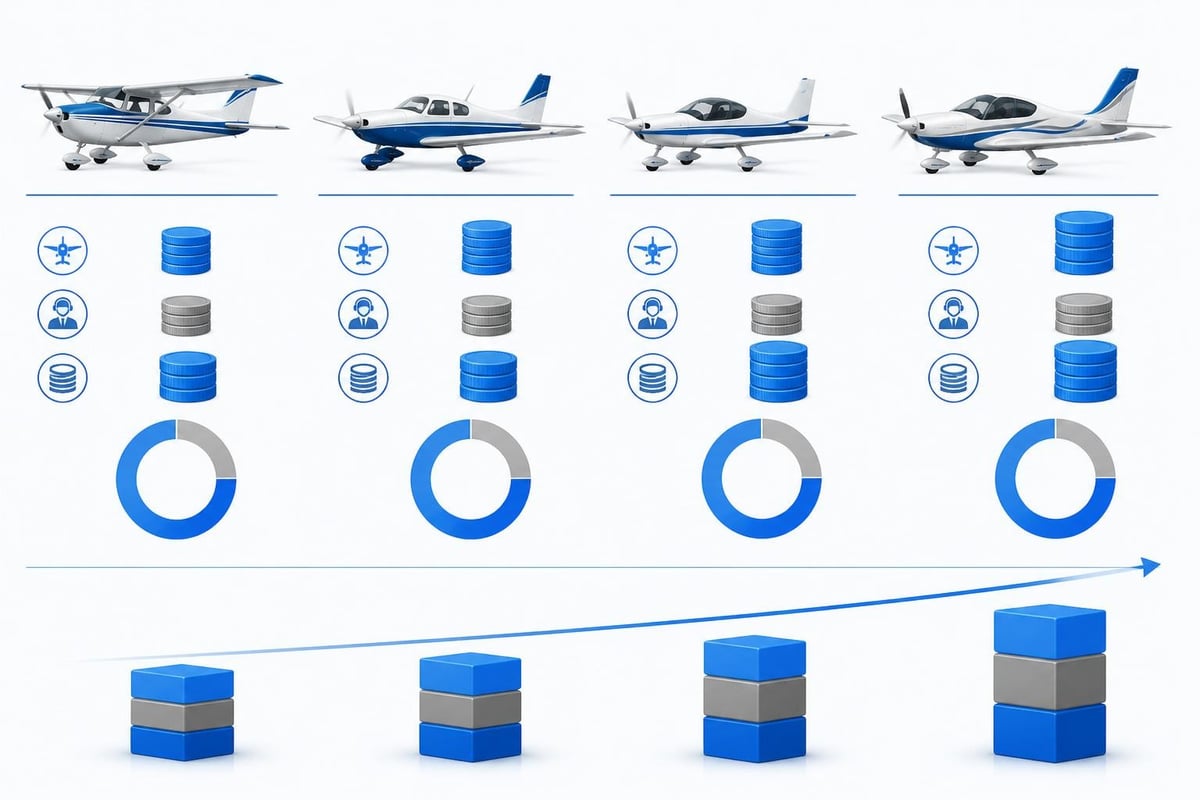
Aircraft type drives the biggest cost difference. Single-engine piston trainers break down as follows:
| Aircraft Type | Typical Hourly Rate | Notes |
|---|---|---|
| Cessna 152 | £150–£180 | Two-seat, efficient, limited payload |
| Cessna 172 | £180–£220 | Four-seat, most common trainer |
| Piper Warrior | £190–£230 | Four-seat, stable, roomy cockpit |
| Diamond DA40 | £220–£280 | Modern avionics, glass cockpit, faster |
Older steam-gauge aircraft cost less per hour but may offer fewer advanced-system skills. Glass-cockpit models like the DA40 prepare you for modern equipment but push hourly rates higher. Schools in busy southern airports typically charge 15–25% more than rural aerodromes.
Ground School and Examination Fees
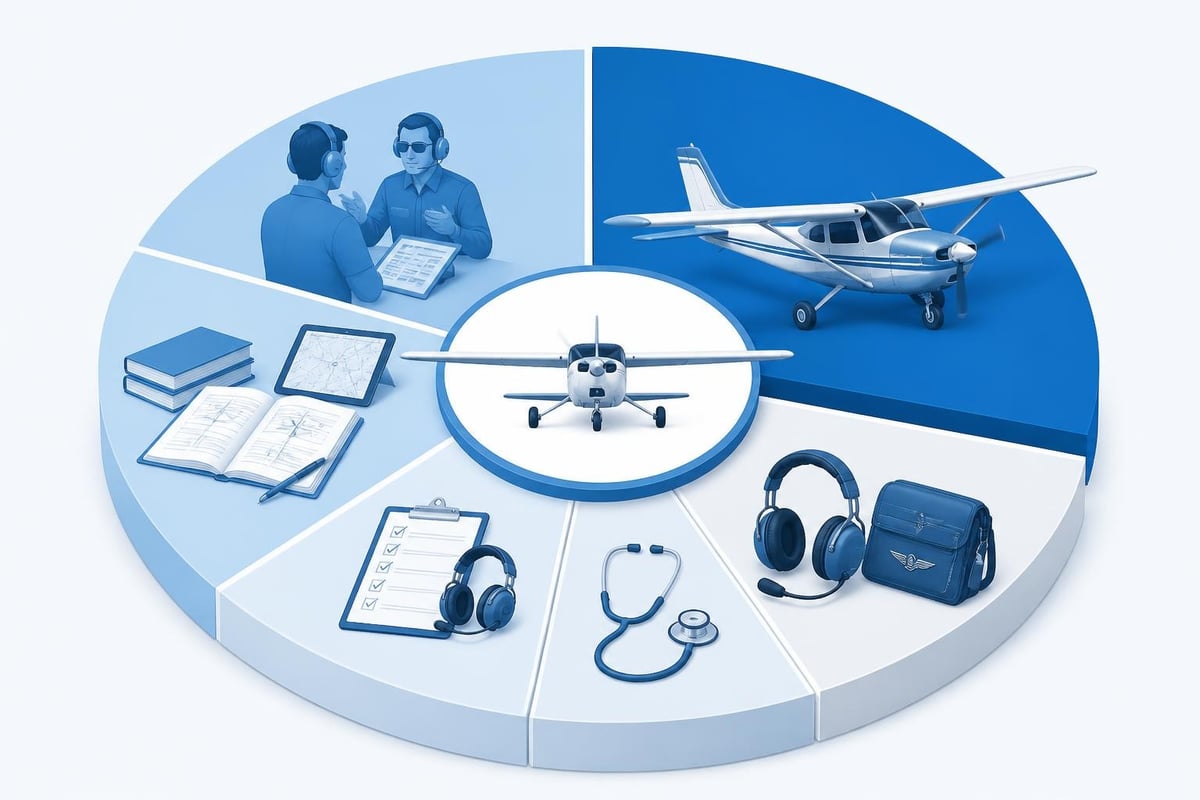
Ground training covers nine subjects under EASA rules: air law, aircraft general knowledge, flight performance and planning, human performance, meteorology, navigation, operational procedures, principles of flight, and communications. You'll complete this through classroom courses, online modules, or self-study.
Classroom ground school runs £800 to £1,500 and includes structured lessons, mock exams, and instructor access. Online courses cost £400 to £900 and let you work at your own pace. Self-study with textbooks and question banks drops material costs to £200 to £400 but demands strong discipline.
EASA theoretical knowledge exams cost roughly £430 total across all nine papers. The practical skills test (checkride) adds another £300 to £450 for the examiner's fee. FAA written exams run about $175 each, and the checkride costs $600 to $800 depending on region. Budget an extra £150 to £300 for study aids, pilot supplies, and chart subscriptions.
Medical Certificate Requirements
You need a Class 2 medical for PPL privileges under EASA Part-MED or a third-class medical under FAA rules. Initial Class 2 medicals cost £150 to £250 and must be renewed every 60 months if you're under 40, every 24 months if you're 40 or older. Factor this into your first-year budget and track expiry carefully-many pilots use digital logbooks to monitor medical validity alongside licence recency.
Variable Costs That Shift Totals
Training efficiency matters. A student who flies twice weekly in good weather and studies consistently might finish close to minimum hours. Someone flying once a month or frequently cancelling for weather can stretch training over two years and log far more dual time.
Weather delays are common in northern Europe. Winter months reduce usable VFR days, slowing solo consolidation. If you start training in November, expect slower progress until spring. Instructor availability affects scheduling too-popular instructors book weeks ahead, and gaps between lessons cost you retention and repetition.
Aerodrome location changes hourly rates but also affects flight variety. A busy controlled airport teaches radio work and controlled-airspace procedures early but may limit navigation exercises. A quiet grass strip cuts costs but requires extra time building towered-airport confidence before the skills test.
- Part 141 vs Part 61 schools: FAA Part 141 schools follow structured syllabi and can qualify students with fewer minimum hours (35 instead of 40), but charge higher rates. Part 61 training offers flexibility and often lower costs but may require more total hours to reach proficiency.
- Aircraft availability: Schools with larger fleets reduce scheduling friction. Single-aircraft operations mean maintenance groundings halt your training entirely.
- Pre-solo requirements: Some schools require additional dual before first solo, padding hours and cost but potentially improving safety margins.
Real-World Budget Example
Here's a realistic PPL budget for a student training at a mid-size school in the Midlands, flying a Cessna 172, finishing in 55 hours:
| Item | Quantity/Rate | Subtotal |
|---|---|---|
| Aircraft rental (C172) | 55 hrs × £200 | £11,000 |
| Instructor fees | 35 hrs × £55 | £1,925 |
| Ground school (online) | One-time | £650 |
| Theoretical exams (9 papers) | EASA fee | £430 |
| Skills test (examiner) | One session | £380 |
| Class 2 medical | Initial exam | £200 |
| Books, charts, supplies | Materials | £280 |
| Total | £14,865 |
This student flew dual for 35 hours and solo for 20 hours, trained year-round with moderate weather delays, and passed all exams on first attempt. Add 10–15% contingency for a retake, extra dual, or unexpected maintenance cancellations. The final pilot lessons cost here sits comfortably in the typical range but could easily reach £16,500 with an additional 10 hours or glass-cockpit aircraft.
Financial Aid and Cost Reduction
Scholarships exist but competition is fierce. The AOPA Foundation awarded £2.2 million in 2025, covering partial tuition for hundreds of students. The EAA Aviation Foundation offers multiple programmes targeting young pilots and specific training stages. Most scholarships cover £1,500 to £5,000-helpful but rarely funding an entire PPL.
Payment plans spread costs over training duration. Many schools offer monthly instalments or block-hour discounts (buy 10 hours, get 5% off). Block purchases reduce per-hour rates but lock funds with one school, so verify their financial stability first.
Cost-saving strategies include:
- Fly frequently: Twice-weekly lessons reduce repetition and total hours compared to monthly gaps.
- Chair-fly procedures: Rehearse checklists, patterns, and manoeuvres at home to use flight time efficiently.
- Study ahead: Arrive for each lesson with ground knowledge ready so you're not paying flight rates to learn theory.
- Choose off-peak slots: Midweek morning bookings often cost less and face fewer delays than weekend prime time.
- Join a flying club: Club membership can cut hourly rates by 20–40% versus commercial schools, though you'll handle more administration yourself.
The Flight School Association of North America publishes guidance on comparing school quotes and spotting hidden fees. Read contracts carefully-some schools charge cancellation fees, minimum monthly dues, or extra charges for instructor scheduling changes.
Beyond PPL: Advanced Ratings
Pilot lessons cost continues beyond your private licence. An Instrument Rating (IR) under EASA Part-FCL.610 requires 50 hours of instrument time (including up to 30 hours in a simulator), plus theoretical exams and a skill test. Total IR cost typically runs £8,000 to £12,000. FAA instrument rating requirements sit at 40 hours instrument time with similar cost ranges.
Commercial Pilot Licence (CPL) demands 200 total hours including specific cross-country, night, and instrument time. Training from PPL to CPL costs £30,000 to £50,000 depending on pathway. Multi-engine and instructor ratings add another £5,000 to £10,000 each. Understanding IFR currency becomes critical once you hold an instrument rating-tracking approaches, holds, and recency requirements prevents expensive lapses.
Modular vs integrated training: Integrated programmes bundle PPL through CPL/IR in one package, often with financing and guaranteed progression. They cost £80,000 to £120,000 total but include everything. Modular training lets you pay as you go, pause between ratings, and work while training, though total cost may run slightly higher and take longer.
Once you start logging serious hours, keeping track of flight time limits and rolling totals becomes essential-especially if you're building toward commercial operations. Professional pilots rely on accurate records for every medical, licence renewal, and job application.
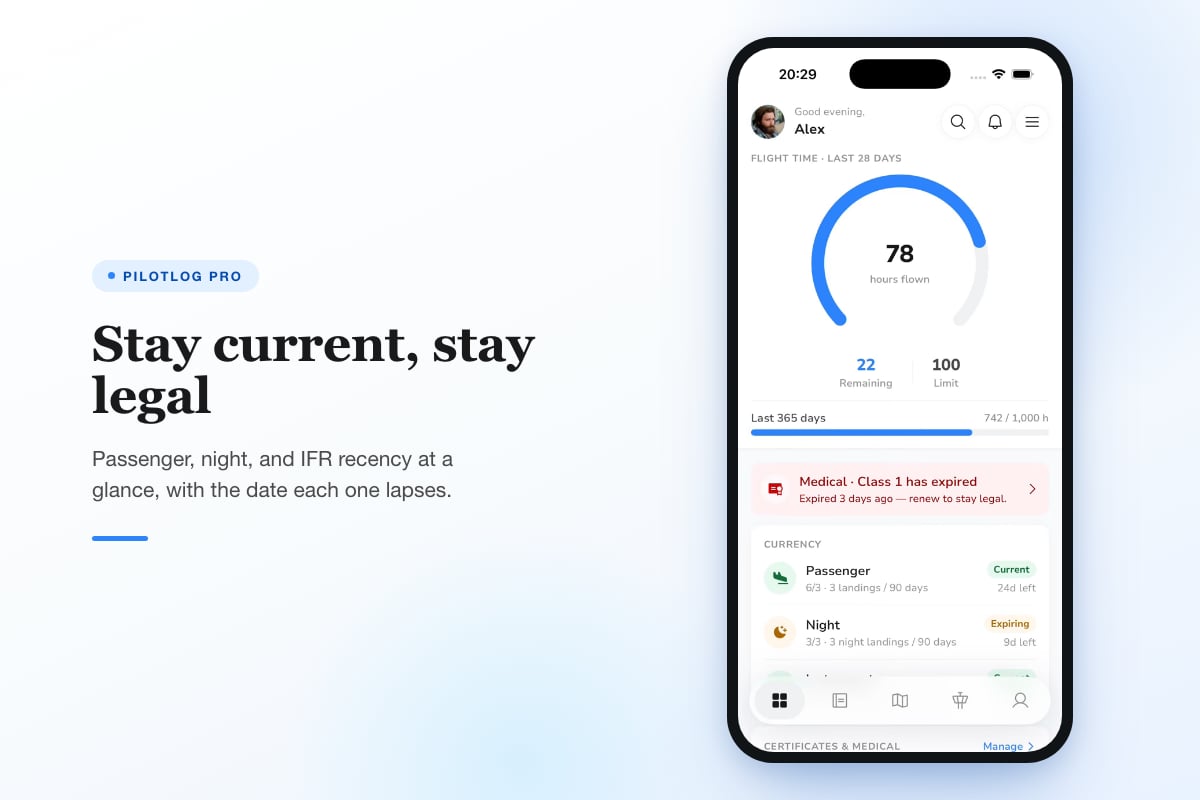
Staying current after training means tracking passenger recency, night currency, and medical expiries alongside your growing logbook. Pilotlog Pro automates those calculations, flagging 90-day passenger currency lapses, rolling 28-day and 365-day duty limits for commercial crew, and upcoming medical renewals weeks before they catch you off guard.
International Variations
Pilot lessons cost varies globally. US Part 61 training in Florida or Arizona can run $10,000 to $15,000 (£7,800 to £11,700) thanks to better weather, lower fuel costs, and competitive markets. Canadian PPL training costs CAD $12,000 to $18,000 (£7,000 to £10,500). Australian schools charge AUD $18,000 to $25,000 (£9,500 to £13,200).
EASA licence holders can convert FAA certificates and vice versa under bilateral agreements, though conversion adds administrative fees and sometimes requires additional checkrides. ICAO training reports track global training capacity and cost trends, noting that instructor shortages in high-demand regions push prices upward while emerging markets in Asia and Africa work to expand affordable access.
If you train abroad, confirm your home authority's conversion requirements before committing. Some pilots save money by training overseas then discover expensive validation processes or additional hour requirements that erase the savings.
Budgeting for the Long Term
Career pilots eventually log thousands of hours. Your first 100 hours cost the most per hour because you're paying for dual instruction and initial certificates. Hours 100 to 1,500 come cheaper-you're renting aircraft for time-building, splitting costs with safety pilots, or instructing to log free PIC time.
Track every flight from day one. Paper logbooks work but require manual totals and risk loss. Digital platforms like Pilotlog let you log flights in seconds, automatically summing hours by category (dual, PIC, night, IFR, multi-engine) and exporting complete records for job applications or authority audits. Whether you're a student working toward PPL or an airline pilot managing complex currency requirements, accurate logs prove your qualifications and keep you legal.
Hidden Fees and Surprise Costs
Beyond advertised rates, watch for these extras:
- Landing fees at busy airports (£10–£30 per landing, sometimes included in rental, sometimes not)
- Fuel surcharges when prices spike
- Insurance excess if you're named on the school's policy
- Checkride retakes (£300–£450 each for examiner and aircraft)
- Weekend/holiday premiums (10–20% higher rates)
- Instructor travel time if training away from base
Ask schools for a detailed written quote including all fees. The AOPA's cost breakdown guide helps you compare apples-to-apples across different programmes.
Brexit and VAT changes affected UK flight training costs in 2021–2023. Training now attracts VAT where previously some was exempt, raising effective prices. Confirm whether quotes are inclusive or exclusive of tax.
Making Training Affordable
Pilot lessons cost shouldn't block capable people from flying. Spread training over a longer period if cash flow is tight-flying once weekly for 18 months costs the same total as an intensive three-month programme, though you'll log a few extra hours relearning between gaps. Some pilots fund training through:
- Part-time instruction: Once you hold CPL and instructor rating, teaching offsets your own advanced training
- Employer sponsorship: Airlines and charter operators sometimes fund type ratings or bonds in exchange for service commitments
- Tax relief: Self-employed pilots or those training for commercial work may claim training as business expenses (consult an accountant)
- Equity release or loans: Aviation-specific lenders offer training loans at competitive rates for creditworthy applicants
Budgeting apps and spreadsheets help you track spending against plan. Log every payment-aircraft rental, instructor fees, exam charges, equipment purchases-so you know exactly where your money goes and can adjust if costs run high.
For helicopter pilot training, expect higher numbers-helicopter flying lessons cost typically runs 30–50% more than fixed-wing due to higher operating expenses and hourly rates. If your goal is rotary-wing flying, budget £18,000 to £25,000 for PPL(H).
Final Considerations
Pilot lessons cost in 2026 reflects real operating expenses: fuel, maintenance, insurance, instructor salaries, and facility overhead. Cheaper schools aren't always worse, but scrutinise what you're getting. A well-maintained fleet, experienced instructors, and a structured syllabus justify higher rates. Rock-bottom prices sometimes mean older aircraft, high instructor turnover, or hidden fees.
Visit schools in person. Inspect aircraft logbooks, ask about maintenance schedules, meet instructors, and talk to current students. A school that feels professional and organised will likely deliver better value even at a premium price than a chaotic operation with low advertised rates.
Training rules change. EASA updates Part-FCL periodically, the FAA revises Advisory Circulars, and national authorities adjust medical or currency requirements. Always confirm current rules against official sources before committing to a training plan. This article reflects 2026 standards but won't catch mid-year regulatory shifts.
Pilot lessons cost between £12,000 and £18,000 for PPL in 2026, with flight time, ground school, exams, and medical certificates forming the bulk of your spend. Smart budgeting, efficient training habits, and accurate record-keeping from day one set you up for success-and once you're flying, Pilotlog keeps every hour, currency deadline, and expiry date organised so you stay current, legal, and ready for the next flight.
- ppl cost
- pilot training budget
- flight training cost
- easa ppl
- pilot lessons
A logbook that keeps itself.
Join the waitlist and be first in line when Pilotlog launches.
Free to join, no spam. Unsubscribe any time.