flight schools
Flight Lessons Near Me: Finding the Right Instructor
4 Oct 2026 · 13 min read
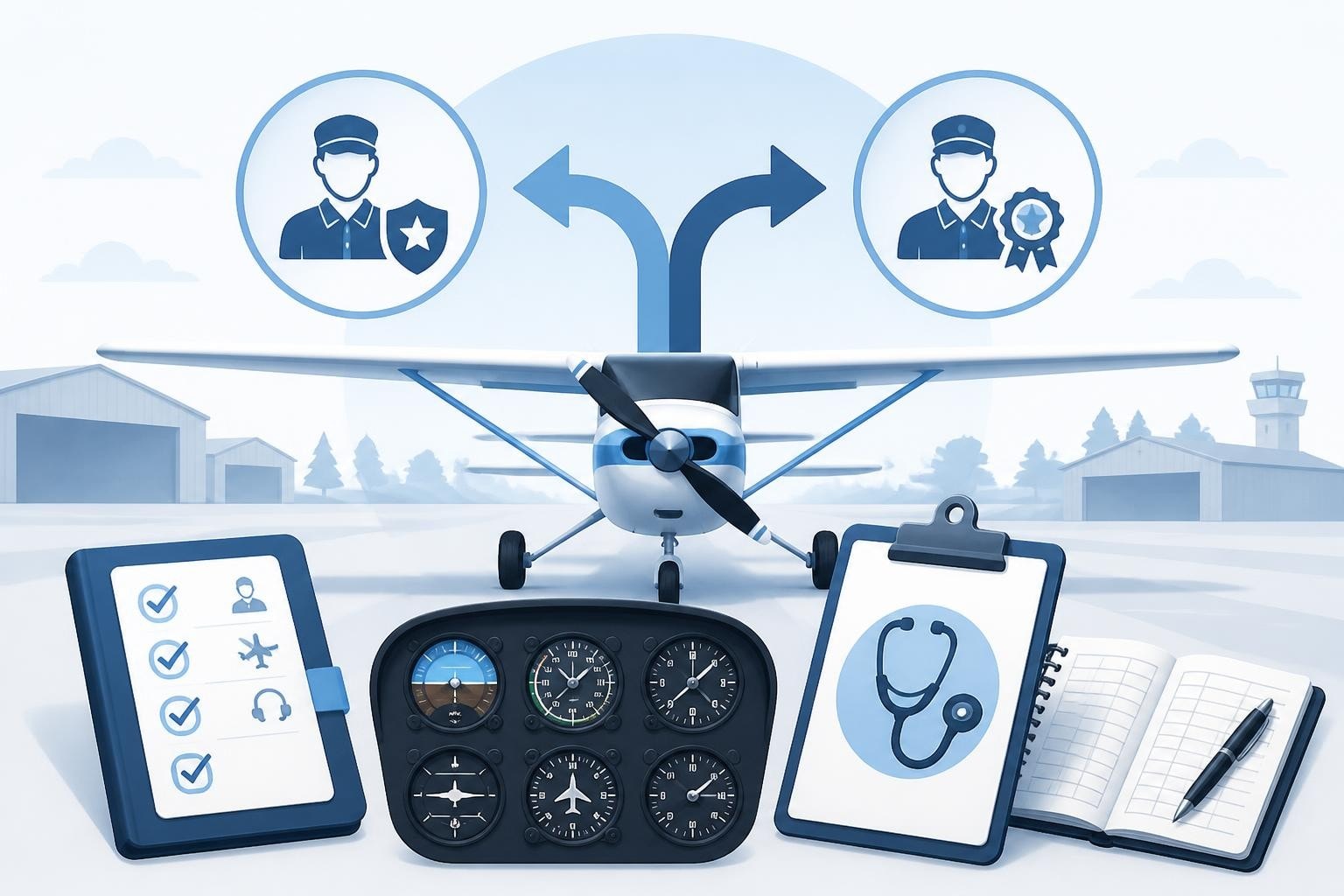
Searching for "flight lessons near me" starts your journey toward becoming a pilot, but the search results alone will not tell you which local school or instructor fits your goals, schedule, and budget. The best training provider combines qualified instructors, well-maintained aircraft, a syllabus that matches your licence target, and a location you can reach regularly. This guide walks you through evaluating local flight schools, understanding regulatory differences, checking instructor credentials, and structuring your training so that every lesson builds toward currency, competency, and eventual certification.
Understanding Part 61 and Part 141 Training Paths
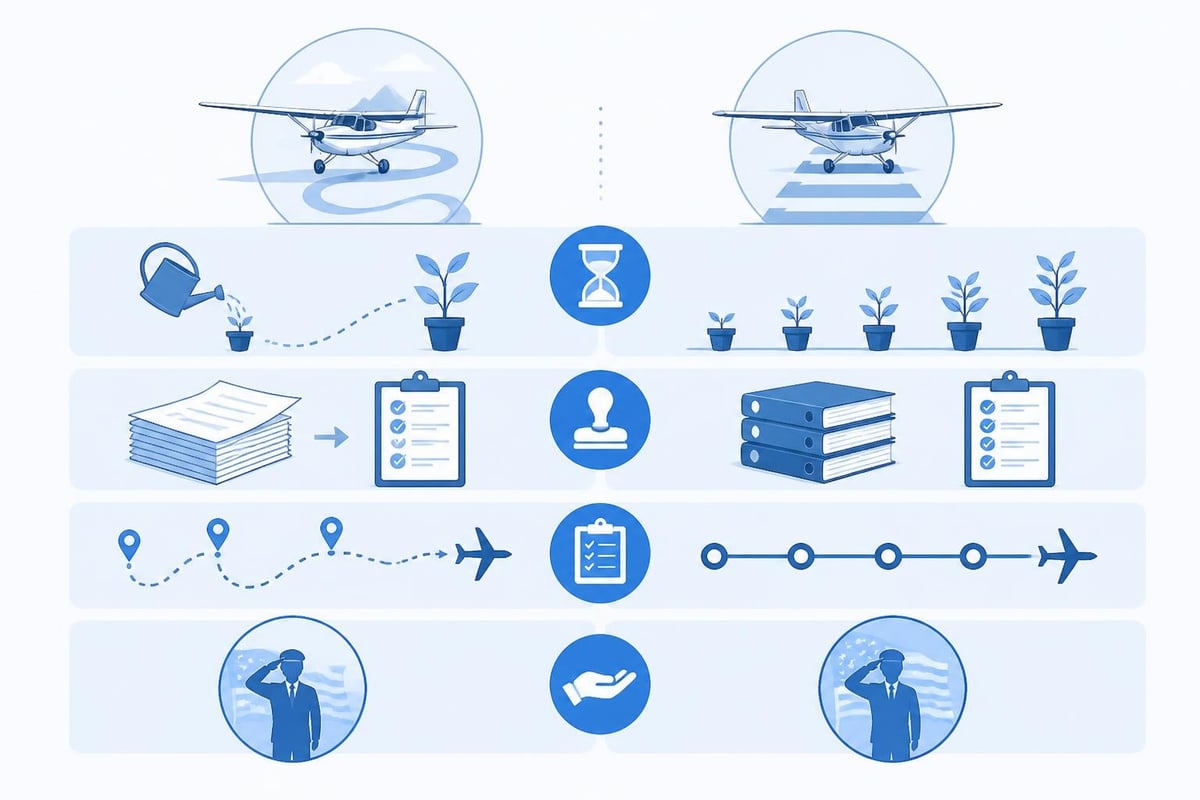
Two regulatory frameworks govern flight training in the United States: Part 61 and Part 141. Part 61 offers flexibility with a minimum 40-hour requirement for a private pilot licence (PPL), though the national average hovers near 60 to 70 hours. Part 141 schools operate under an FAA-approved syllabus with tighter structure, requiring just 35 hours minimum for a PPL but demanding stricter progress tracking and stage checks.
Part 61 advantages:
- Flexible lesson scheduling and pacing
- Tailored syllabus adapted to your learning speed
- Often lower administrative overhead and costs
- Easier to switch instructors or aircraft types mid-training
Part 141 advantages:
- Structured curriculum with defined stages
- Five fewer minimum hours for private licence
- Eligible for VA benefits and some scholarship programs
- Regular progress checks ensure consistent quality
Most pilots searching for flight lessons near me will find both types locally. Plane & Pilot's comparison of Part 141 vs Part 61 offers detailed regulatory context, while Pilot Institute's explainer breaks down practical differences in recordkeeping and typical student outcomes. Choose Part 141 if you value structure and qualify for benefits that require it; choose Part 61 if you need scheduling flexibility or plan to train at your own pace.
Evaluating Local Flight Schools and Instructors
Once you have identified flight schools within reasonable driving distance, assess each one against criteria that matter for safety, progress, and cost. Visit at least two schools before committing, and ask for a tour of the facilities, aircraft logbooks, and a sample training syllabus.
Fleet Condition and Availability
Inspect the aircraft you will fly. Look for well-maintained interiors, up-to-date avionics, and current annual inspection stickers. Ask how many aircraft are in the fleet and what happens if your usual trainer goes down for maintenance. Schools with three or more aircraft in the same category reduce scheduling delays and keep you flying consistently.
Check the aircraft's equipment list. Basic VFR trainers suffice for early lessons, but if you plan to pursue an instrument rating locally, confirm the school has aircraft with IFR-certified avionics, dual nav/com radios, and an operational autopilot. Tracking your instrument currency becomes easier when you train in capable platforms from the start.
Certified Flight Instructor Credentials
Your CFI is the single most important factor in training quality. The FAA's Certified Flight Instructor handbook outlines instructor qualifications, but you should verify that your prospective CFI holds a current flight instructor certificate, a current medical, and relevant experience in the aircraft type you will fly.
Ask potential instructors:
- How many students have you taken to checkride in the past 12 months?
- What is your first-time pass rate?
- How do you structure lesson debriefs and progress tracking?
- What is your availability over the next three months?
A CFI who trains five to ten students per year, maintains a first-time pass rate above 80 per cent, provides written post-flight summaries, and commits to regular weekly slots will accelerate your progress. AOPA's guide to finding a flight instructor offers practical advice on trial flights and what to look for in local instructors.
Safety Record and Insurance
Request the school's safety record and ask whether any aircraft in the fleet have been involved in incidents during the past five years. The NTSB CAROL database lets you search accident reports by operator name or aircraft registration. A clean record is not essential, schools do experience incidents, but the school's response and corrective actions matter more than a single event.
Confirm the school carries hull and liability insurance covering both the aircraft and dual instruction. Ask whether you need renter's insurance as a student pilot. Some schools include it in their hourly rate; others require you to purchase a separate non-owned aircraft policy.
Cost Structure and Budgeting for Flight Lessons Near Me
Flight training costs vary widely by region, aircraft type, and instructor experience. FLYING Magazine's cost breakdown and FlightCents' 2026 market analysis provide recent benchmarks: expect to pay between $12,000 and $18,000 for a private pilot licence in 2026, assuming 60 hours of flight time.
| Cost Component | Typical Range (USD) | Notes |
|---|---|---|
| Aircraft rental (per hour) | $140–$220 | Depends on type, avionics, fuel burn |
| CFI fee (per hour) | $50–$90 | More experienced instructors charge higher rates |
| Ground instruction | $40–$70/hour | Pre- and post-flight briefings, exam prep |
| Written exam fee | $175 | FAA Knowledge Test (fixed fee) |
| Checkride fee (DPE) | $600–$900 | Designated Pilot Examiner, varies by region |
| Books and materials | $300–$500 | Charts, manuals, online courses |
Book lessons in blocks when possible. Many schools offer discounts for pre-paid packages of ten or twenty hours. Pay-as-you-go offers flexibility but rarely qualifies for bulk pricing. Track every lesson and expense from day one; choosing a digital logbook that syncs across devices makes this straightforward and ensures you never lose flight-time records.
Medical Certificate and Student Pilot Certificate Requirements
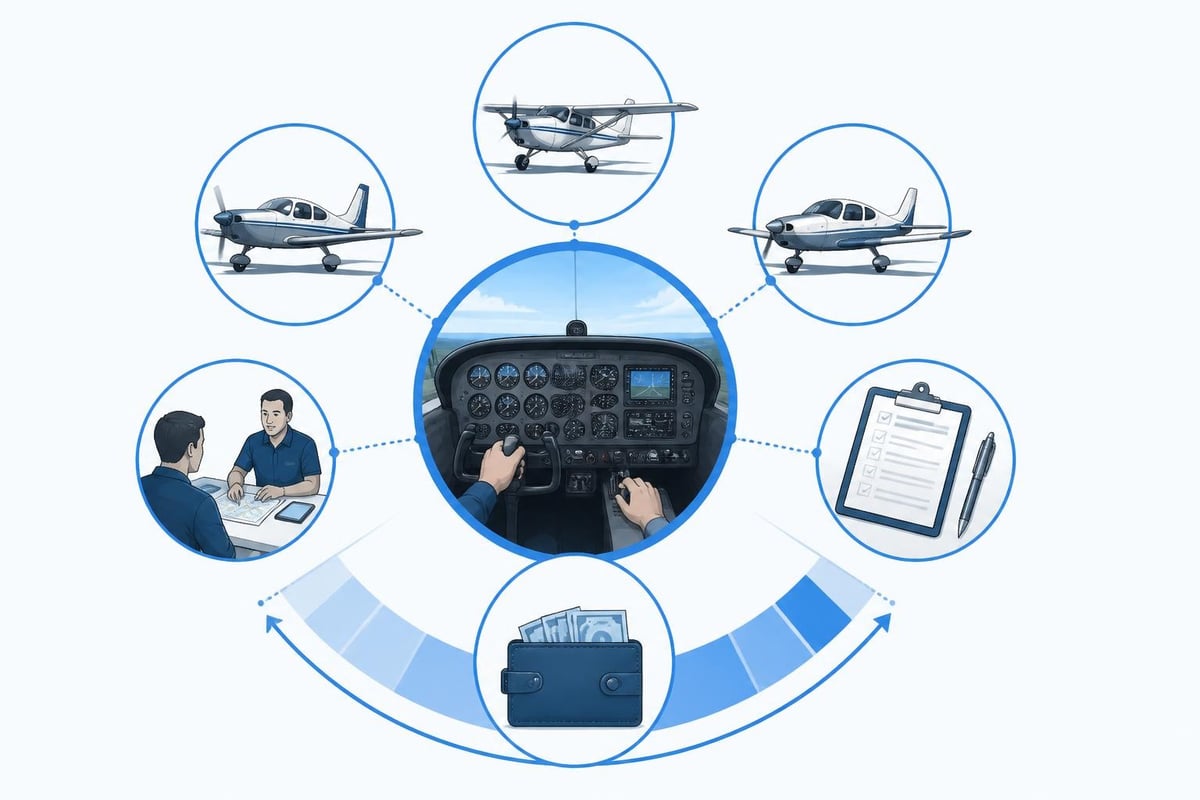
Before you can solo, you need both a student pilot certificate and a medical certificate. The FAA's guidance on becoming a pilot explains the application process: apply for your student pilot certificate through the FAA's Integrated Airman Certification and Rating Application (IACRA) system, and schedule a medical exam with an Aviation Medical Examiner (AME).
Most pilots require a third-class medical, valid for 60 calendar months if you are under 40 at the time of examination, or 24 calendar months if 40 or older. AOPA's medical certification guide covers common medical issues, the AME search tool, and what to expect during the exam. Book your medical early; discovering a disqualifying condition after you have paid for ten hours of dual instruction wastes time and money.
Your CFI will endorse your student pilot certificate for solo flight once you demonstrate competency in pre-solo manoeuvres and emergency procedures. That endorsement is valid for 90 days and must be renewed if you do not solo within that window (14 CFR 61.87). Plan your training schedule to reach solo within two to three months of starting lessons, maintaining momentum and currency.
Scheduling Lessons for Consistent Progress
Flying once per week is the minimum cadence to retain skills and build proficiency. Gaps longer than ten days between lessons often require review of previous manoeuvres, slowing overall progress. Ideal training involves two to three lessons per week, each lasting 1.5 to 2 hours from briefing through debrief.
Sample weekly schedule for accelerated PPL training:
- Monday: 1.5-hour flight lesson (pattern work, landings)
- Wednesday: Ground school session (regulations, airspace)
- Friday: 1.5-hour flight lesson (cross-country planning, pilotage)
- Weekend: Self-study (procedures, aircraft systems)
This pace lets you complete a PPL in four to six months with 50 to 60 total hours. Slower schedules stretching across 12 or 18 months remain viable but require discipline to maintain recency and avoid relearning basics.
Tracking pilot hours across dual, solo, cross-country, and night categories becomes critical as you approach checkride minimums. A structured digital logbook flags when you have met each regulatory requirement, from the three solo cross-countries totalling 150 nautical miles to the three hours of night flight including ten takeoffs and landings.
Finding Scholarships and Financing Options
Flight training represents a significant investment, but scholarships, grants, and financing can reduce out-of-pocket costs. The EAA Ray Aviation Scholarship awards up to $11,000 to young pilots and is administered through local EAA chapters. Eligibility requires nomination by a chapter, so contact your nearest chapter before applying.
Other funding sources include:
- AOPA High School Flight Training Scholarship: $10,000 awards for students aged 15–18
- Women in Aviation International Scholarships: Various amounts for female pilots at all training stages
- Military and VA benefits: Part 141 schools often qualify for GI Bill funding
- Private financing: Aviation-specific lenders offer loans with deferred payments until after licence completion
Apply for multiple scholarships simultaneously. Many have overlapping deadlines in the first quarter of the calendar year, so start your search in late 2025 if you plan to begin flight lessons near me in early 2026.
Conducting a Trial Lesson Before Committing
Most flight schools offer introductory or discovery flights priced between $100 and $200. These one-hour sessions let you meet an instructor, fly a short route, and experience basic aircraft control before signing a training contract.
During your trial lesson, evaluate:
- Instructor communication style and patience
- Aircraft condition, cleanliness, and equipment functionality
- Pre-flight briefing thoroughness and safety emphasis
- Post-flight debrief quality and feedback specificity
- Overall professionalism and organisation of the school
A strong trial lesson leaves you with written notes, a logbook entry signed by the CFI, and clear next steps for starting formal training. A weak trial lesson feels rushed, omits the debrief, or pressures you into an immediate commitment. Trust your instincts; if the environment or instructor does not feel right, try a second school before deciding.
Logging and Tracking Your Training from Day One
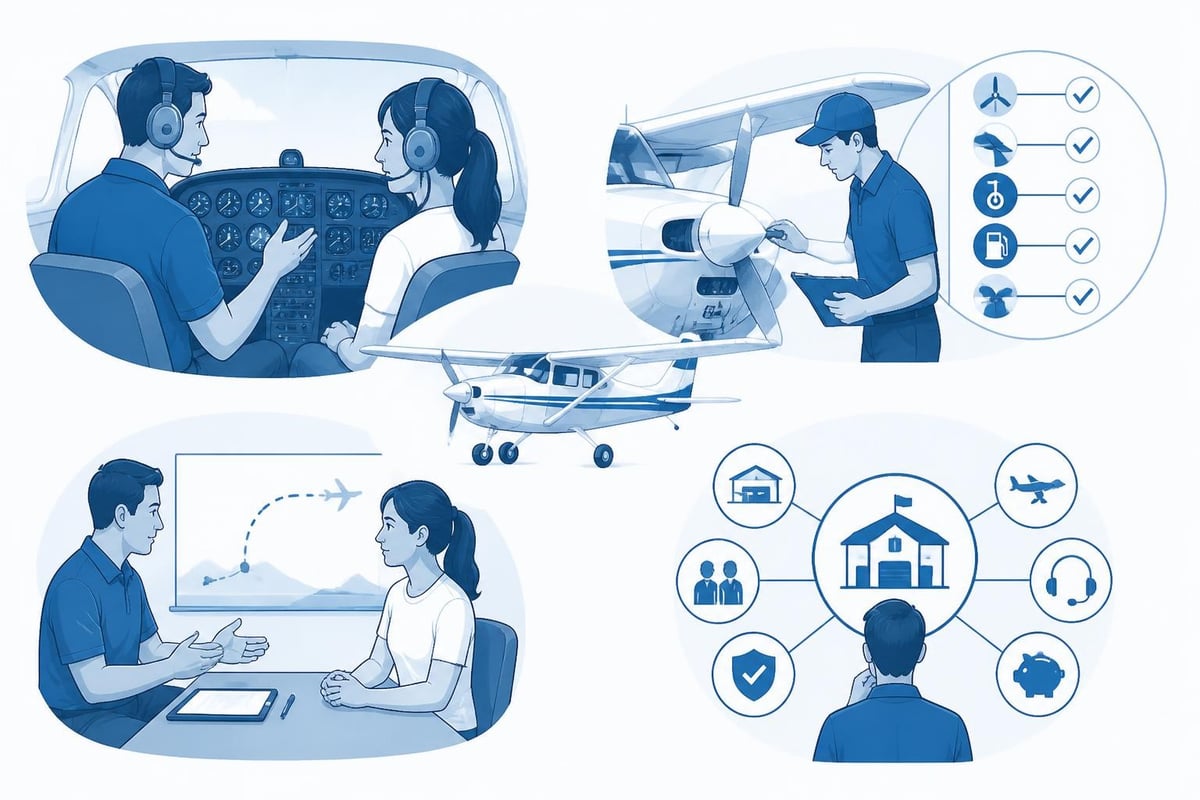
Accurate logbook records are non-negotiable. The FAA requires you to present a complete and legible logbook at your checkride, showing compliance with all experience requirements in 14 CFR 61.109. Digital logbooks simplify this process, automatically calculating category totals, flagging currency lapses, and exporting summaries for DPE review.
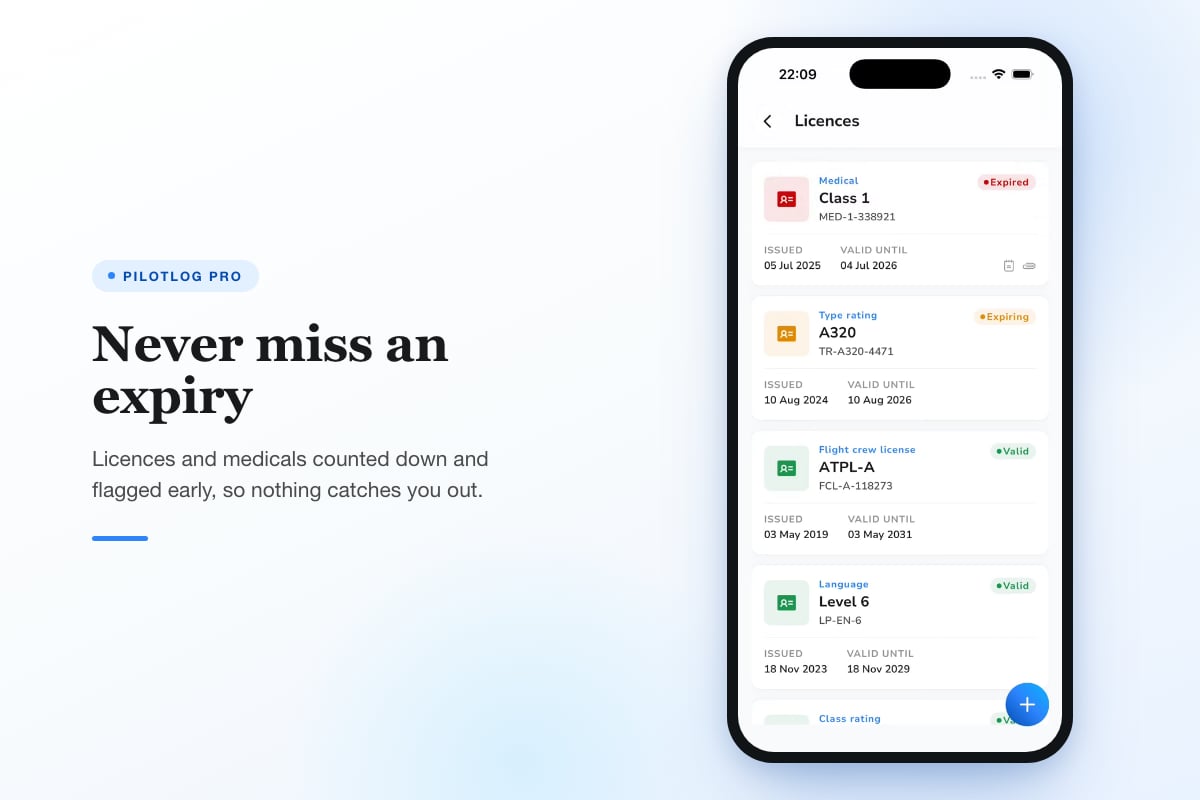
Pilotlog Pro tracks rolling 28-day and 365-day flight-time and duty limits, passenger and night currency with lapse dates, and licence and medical expiry alerts flagged early, ensuring nothing catches you by surprise. For student pilots juggling solo requirements, dual instruction, and cross-country minimums, Pro's automatic tallies save time and reduce errors.
Beyond checkride prep, logging every lesson creates a career-long record. Even if you pause training for months or years, a complete logbook lets you resume without guesswork about what you have already accomplished. Switching from a paper logbook to digital format early avoids manual data entry later.
Progressing Through Solo, Cross-Country, and Checkride Prep
Student pilot training follows a predictable arc: ground school and dual instruction, first solo, solo consolidation, dual cross-country, solo cross-country, and checkride preparation. Each phase builds specific competencies required by 14 CFR 61.
First Solo
Your first solo occurs after 10 to 20 hours of dual instruction, once you can safely execute takeoffs, landings, go-arounds, and emergency procedures without CFI intervention. Your instructor will endorse your logbook and student pilot certificate, then watch from the ground as you complete three takeoffs and landings to a full stop.
Solo flight builds confidence and decision-making. You are pilot in command, responsible for every choice. This responsibility continues through all subsequent solo flights, including pattern work, manoeuvring practice, and eventually cross-country navigation.
Cross-Country Requirements
A private pilot applicant must log at least 5 hours of solo cross-country time, including one flight of 150 nautical miles total distance with full-stop landings at three points, one leg at least 50 nautical miles from the original departure point (14 CFR 61.109(a)(5)). Plan these flights carefully: select airports with varied runway lengths and controlled/uncontrolled tower operations, file a VFR flight plan, and brief weather, NOTAMs, and TFRs before departure.
Your CFI will provide dual cross-country instruction before endorsing you for solo cross-country. These dual flights teach flight planning, pilotage, dead reckoning, VOR navigation, and in-flight decision-making when weather or traffic change your plan.
Checkride Preparation
The final ten hours before your checkride focus on polishing manoeuvres to Airman Certification Standards (ACS) tolerances: steep turns within 100 feet and ten degrees, slow flight within ten knots and 100 feet, stalls with minimal altitude loss, and emergency landings within 200 feet of a designated point. Your CFI will conduct a mock checkride, simulating both the oral exam and flight test, then issue a logbook endorsement certifying you are ready.
Schedule your checkride with a Designated Pilot Examiner (DPE) at least four to six weeks in advance. Popular examiners book quickly, especially during summer months. Confirm the DPE's fee, preferred checkride location, and aircraft requirements before the appointment.
Maintaining Currency After Earning Your Licence
Earning a private pilot licence is the start, not the finish. To carry passengers, you must complete three takeoffs and landings within the preceding 90 days in the same category and class of aircraft (14 CFR 61.57(a)). Night currency requires three takeoffs and landings to a full stop between one hour after sunset and one hour before sunrise within the preceding 90 days.
Instrument currency demands six approaches, holding procedures, and intercepting and tracking courses through the use of navigational electronic systems within the preceding six calendar months (14 CFR 61.57(c)). If you let IFR currency lapse beyond six months, you need an instrument proficiency check (IPC) with a CFI or examiner.
Digital logbooks automate these calculations. Pilotlog flags currency lapses before they occur, so you can schedule proficiency flights and stay legal without manual arithmetic. Understanding flight time limits becomes even more important if you transition into commercial flying, where Part 117 duty and rest rules apply.
Comparing Local Schools: A Practical Example
Suppose you find three flight schools within 30 minutes of your home. School A operates under Part 61 with a fleet of four Cessna 172s, charges $165 per flight hour plus $65 per CFI hour, and has availability six days per week. School B is Part 141 with two Piper Warriors, charges $150 per flight hour plus $60 per CFI hour, and requires a $2,000 upfront enrolment fee. School C is a flying club with five aircraft, charges $140 per flight hour and $55 per CFI hour to members (membership: $200 initiation, $50 per month), and offers flexible scheduling through an online system.
| Factor | School A (Part 61) | School B (Part 141) | School C (Club) |
|---|---|---|---|
| Aircraft rate | $165/hour | $150/hour | $140/hour |
| CFI rate | $65/hour | $60/hour | $55/hour |
| Upfront cost | $0 | $2,000 | $400 (init + 4 months) |
| Fleet size | 4 | 2 | 5 |
| Availability | 6 days/week | 5 days/week | 7 days/week |
| Regulatory path | Part 61 | Part 141 | Part 61 |
| Estimated PPL cost (60 hours) | $13,800 | $14,600 | $12,100 |
School C offers the lowest total cost but requires membership. School B's Part 141 structure suits students eligible for VA benefits or those who value a defined syllabus. School A balances cost and flexibility without upfront fees. Your choice depends on budget, schedule, and learning style.
Rules and requirements evolve, so confirm all regulatory citations and hour minimums against current FAA or CAA publications before making training decisions.
Finding quality flight lessons near me requires evaluating local schools on fleet condition, instructor credentials, cost structure, and training philosophy, not just proximity. Once you start training, consistent scheduling, accurate logbook records, and proactive currency tracking keep you progressing toward your licence and beyond. Pilotlog helps you log flights in seconds, track currency and expiries, and receive alerts for licences and medicals so nothing catches you by surprise, available on iOS and Android at Pilotlog.
- flight schools
- flight instructor
- part 61 vs part 141
- learn to fly
- private pilot license
A logbook that keeps itself.
Join the waitlist and be first in line when Pilotlog launches.
Free to join, no spam. Unsubscribe any time.