flight time
Flight Time: Complete Guide for Pilots (2026 Rules)
24 Jul 2026 · 13 min read
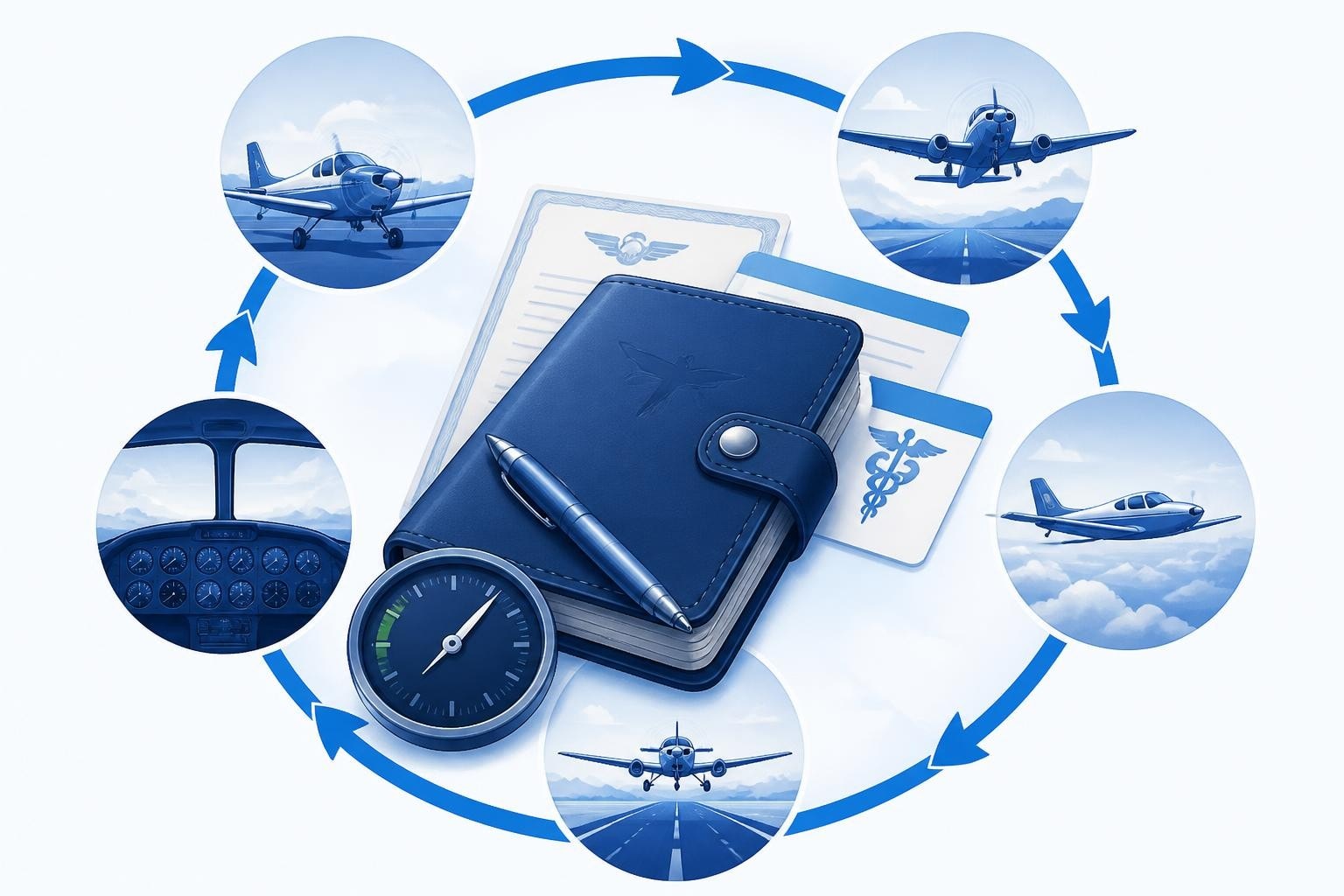
Flight time is the period from when an aircraft first moves under its own power for the purpose of flight until it comes to rest at the end of the journey. For pilots, this definition matters legally, financially, and operationally. Every flight builds your hours, maintains your currency, and counts toward duty limits that keep you safe and compliant.
What Flight Time Actually Means
The regulatory definition varies slightly between authorities, but the core concept remains consistent. Under FAA 14 CFR Part 1, flight time is "pilot time that commences when an aircraft moves under its own power for the purpose of flight and ends when the aircraft comes to rest after landing." EASA defines it similarly in Part-FCL.010 as time from the moment the aircraft first moves for the purpose of taking off until it comes to rest at the end of the flight.
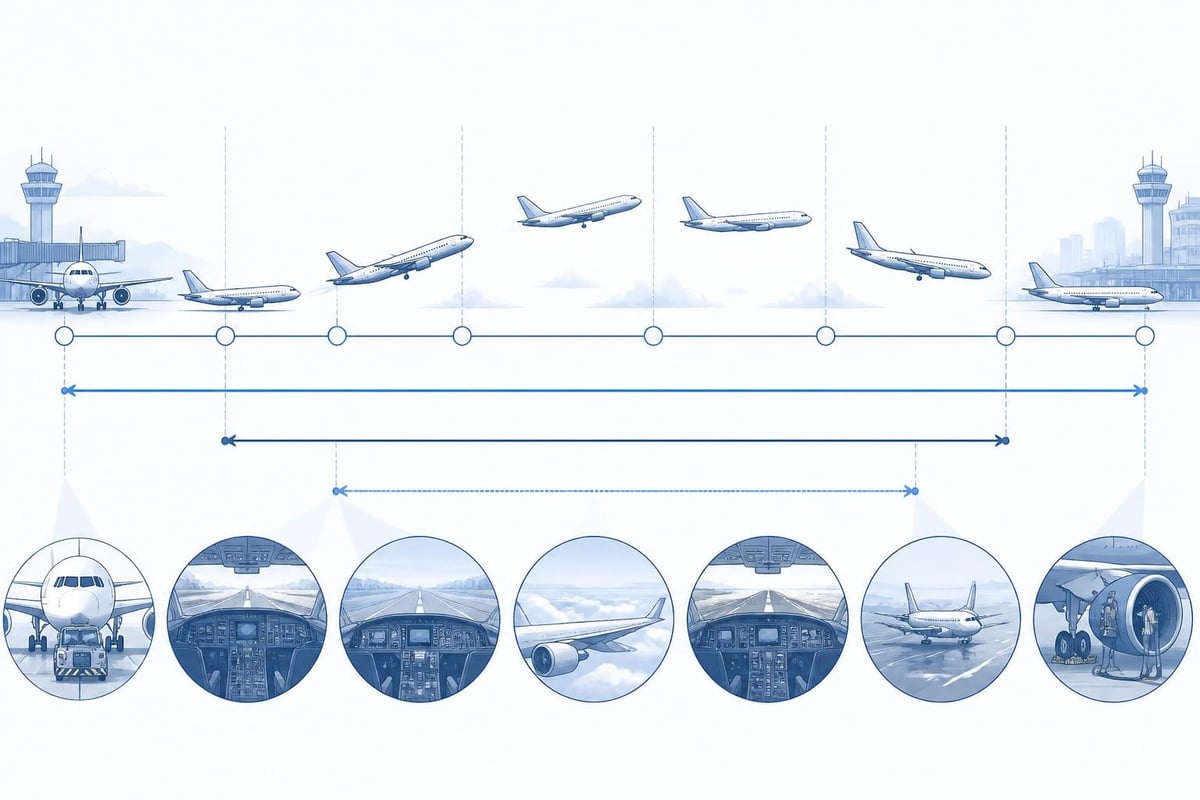
This differs from block time, which some operators measure from chocks off to chocks on, and air time, which counts only wheels-up to wheels-down. For regulatory purposes and pilot logbook entries, flight time is the standard.
Engine Start to Engine Shutdown
Most pilots log flight time from engine start to engine shutdown, provided the aircraft moves for flight. A maintenance run-up doesn't count. A taxi to the hangar after flight does count if the engine remains running. The distinction matters when you're tracking currency or approaching duty limits.
Key scenarios:
- Standard flight: Engine start, taxi, takeoff, flight, landing, taxi, shutdown. Full time counts.
- Aborted takeoff: If you taxi back without becoming airborne, the time still counts as flight time.
- Touch-and-goes: Continuous flight time from first movement until final shutdown, even with multiple landings.
How Flight Time Gets Calculated
Different stakeholders calculate flight time using various methods. Airlines may use scheduled block times for planning, but actual logged time depends on real movement. Flight planning tools estimate duration based on distance, cruise speed, and forecast winds.
The flight time calculation methods used by scheduling software include Great Circle (direct distance), wind-adjusted predictions, and historical route data. These estimates help with planning, but your logbook records actual flight time only.
Manual vs. Automated Logging
Traditional paper logbooks require pilots to note Hobbs meter readings or watch times. Hobbs meters typically start when oil pressure builds and stop when the engine shuts down, giving a close approximation of flight time. Tach time measures engine revolutions and undercounts actual time at low power settings.
Digital logbooks automate much of this work. Modern apps can import flight data, calculate totals, and track rolling limits without manual arithmetic. This reduces errors and saves time, especially for pilots logging multiple sectors daily.
Regulatory Limits on Flight Time
Aviation authorities impose maximum flight time limits to prevent fatigue. These vary by operation type, crew size, and duty period length.
FAA Flight Time Limits
For Part 117 operations (most scheduled airlines), flight time limitations depend on your scheduled duty period and number of flight segments. A typical two-pilot crew faces these maximums:
| Scheduled Duty Period | Maximum Flight Time |
|---|---|
| 9 hours or less | 8 hours |
| 10 hours | 8 hours |
| 11 hours | 9 hours |
| 12 hours | 9 hours |
| 13+ hours | 9 hours |
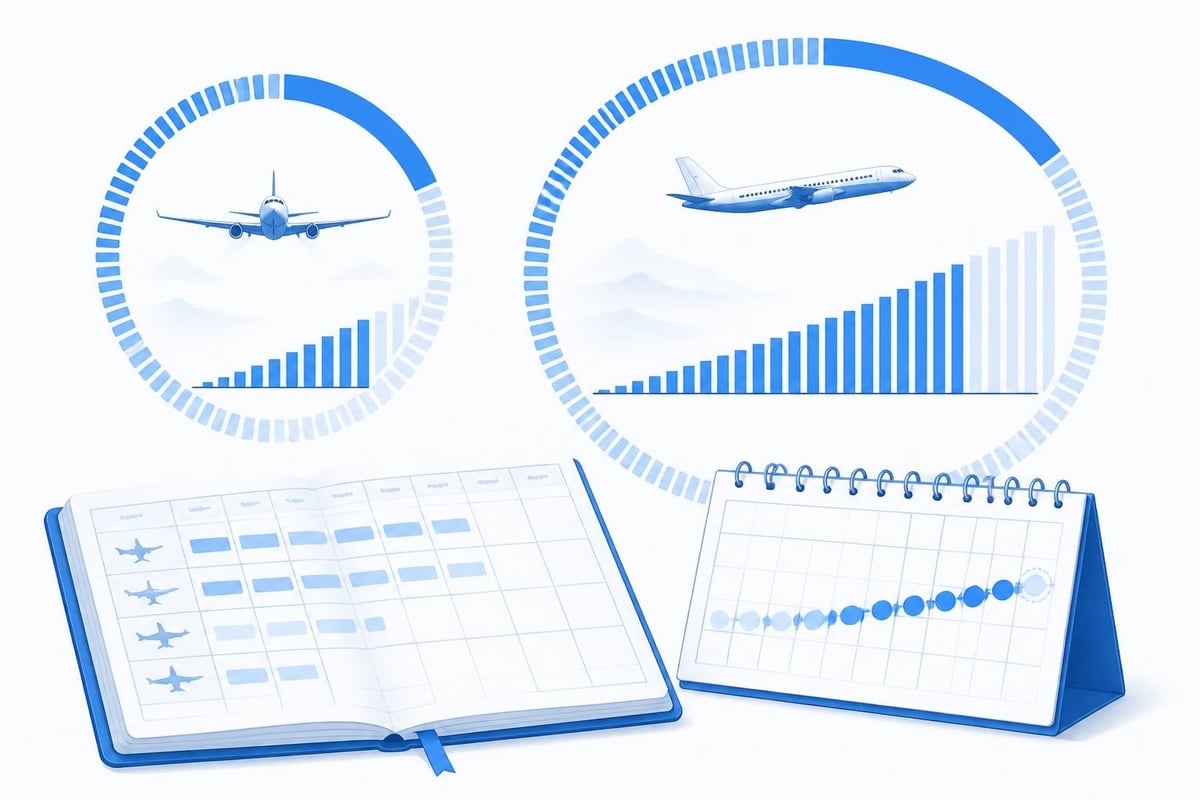
Part 121 operations also impose flight time limitations: 100 hours in any 672 consecutive hours (28 days), 300 hours in any 365 consecutive days, and 1,000 hours in any 365 consecutive calendar days.
For Part 135 scheduled operations, different limits apply: 8 hours in 24 consecutive hours for single-pilot ops, with variations for multi-pilot crews.
EASA Flight and Duty Time Limitations
EASA's FTL scheme (Commission Regulation EU 83/2014) sets cumulative flight time limits:
- 900 flight hours in any calendar year
- 100 flight hours in any 28 consecutive days
These limits apply across all flying, regardless of operator. A pilot flying for multiple companies must track the combined total.
Flight Time and Currency Requirements
Your logged flight time determines whether you remain current to carry passengers, fly IFR, or act as PIC in type.
Passenger Currency
FAA 14 CFR 61.57(a) requires three takeoffs and landings in the preceding 90 days in the same category, class, and type (if a type rating is required). For night currency, those landings must occur between one hour after sunset and one hour before sunrise, to a full stop in a tailwheel aircraft.
EASA FCL.060 has similar rules: three takeoffs and landings in the preceding 90 days in the same class or type. If currency lapses, you need a training flight with an instructor or solo practice to regain it.
IFR Currency
To act as PIC under IFR, FAA rules require six instrument approaches, holding, and intercepting/tracking courses in the preceding six months. EASA pilots need to log time in actual or simulated IMC.
Tracking these requirements manually invites errors. A digital logbook calculates currency automatically and flags lapses before they occur. Pilotlog Pro monitors passenger, night, and IFR currency with exact lapse dates, plus rolling 28-day and 365-day flight-time limits, so you never approach a regulatory ceiling by surprise.
How Different Operations Use Flight Time
Flight time serves different purposes across aviation sectors.
Airlines and Commercial Operators
Airlines track flight time to ensure regulatory compliance, schedule crews legally, and process payroll. Many pilot contracts tie pay to credited flight hours. Schedulers must plan rosters that keep all crew members within Part 117 or FTL limits while maximizing aircraft utilisation.
Rostering systems pull data from multiple sources:
- Planned block times from the schedule
- Actual flight times from ACARS or manual crew reports
- Duty period start and end times
- Rest period compliance checks
General Aviation and Private Pilots
GA pilots track flight time for different reasons: building hours toward certificates and ratings, maintaining currency, and managing aircraft operating costs. An owner might log Hobbs time for engine maintenance intervals while logging a slightly different figure for personal records.
Common GA tracking needs:
- Total time for insurance minimums
- PIC time for ATP requirements (1,500 hours in the U.S.)
- Cross-country time for certificates (defined as landing >50 nm from departure)
- Complex, high-performance, or tailwheel time for endorsements
Flight Training
Students and instructors both log flight time, but categorise it differently. Dual received vs. dual given, solo time, and specific manoeuvre practice all count as flight time but serve distinct training and regulatory purposes.
A student working toward a private pilot licence (PPL) needs to accumulate 45 hours minimum under EASA Part-FCL, including at least 25 hours of dual instruction and 10 hours of supervised solo. Under FAA Part 61, the minimum is 40 hours with at least 20 hours of dual and 10 hours of solo.
Tools for Calculating and Tracking Flight Time
Pilots have numerous options for managing flight time records.
Planning Tools
Before a flight, you might estimate duration using a flight time calculator that accounts for wind, cruise speed, and routing. These tools help with fuel planning and ATC estimates but don't replace actual logged time.
Wind has a major effect on flight time. A 30-knot headwind on a 400 nm leg at 120 knots groundspeed adds 40 minutes compared to zero wind. Planning tools adjust for forecast winds, but actual flight time depends on what you encounter.
Digital Logbooks
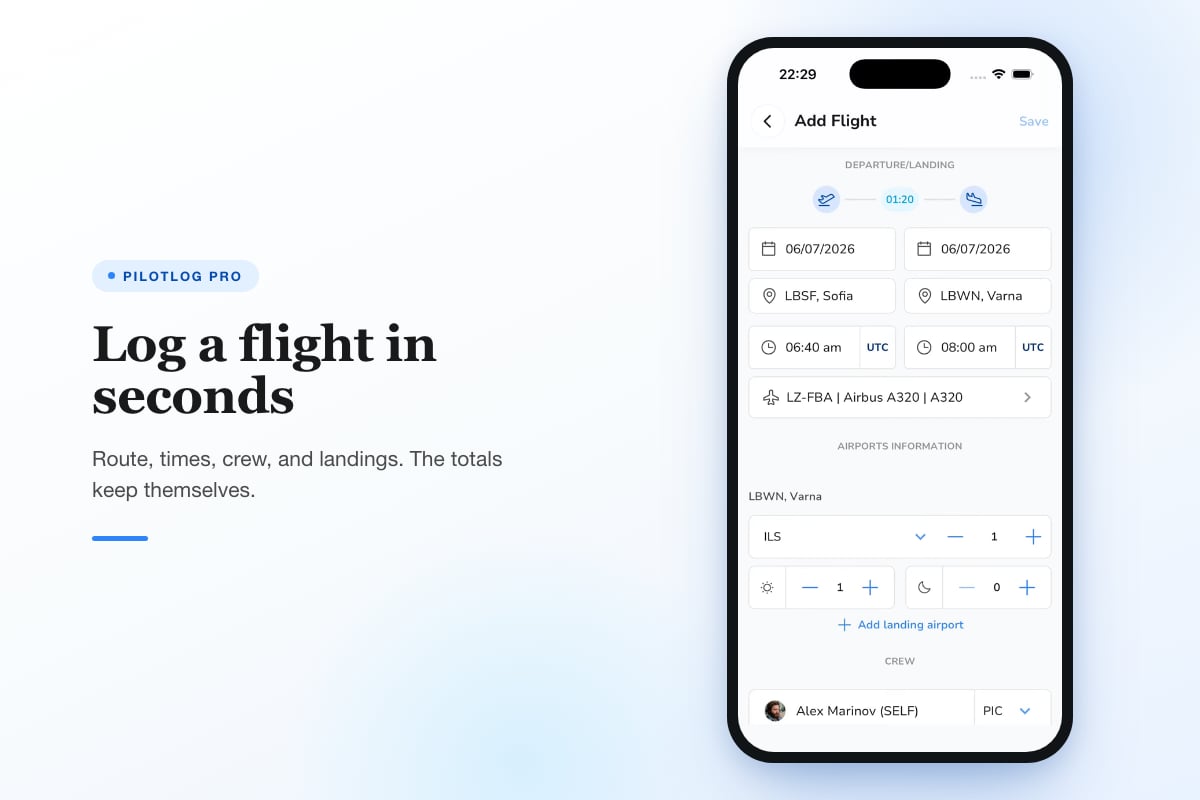
Modern digital logbooks automate calculations and track compliance. After each flight, you enter basic details like departure, arrival, and times. The app calculates totals, updates currency counters, and flags upcoming expiries.
Advantages of digital logging:
- Automatic calculations: No manual arithmetic or risk of adding errors
- Currency tracking: Real-time status for passengers, night, and IFR
- Limit monitoring: Rolling 28-day and annual totals update with every entry
- Backup and export: Cloud storage protects against lost paper books
- Career analytics: Trends, milestones, and stats across aircraft types and roles
A currency cheat sheet helps you understand what counts toward each requirement, while an expiry checkride audit ensures you haven't missed critical dates.
Common Flight Time Questions
Does Ground Instruction Count?
No. Flight time requires the aircraft to move under its own power for flight. Ground instruction, simulator sessions (unless in an FSTD approved for logging), and briefings don't count as flight time. They may count as training time for other purposes.
What About Ferry Flights or Repositioning?
All flight time counts, regardless of purpose. Ferrying an empty aircraft, repositioning between bases, or flying for maintenance all log as flight time and count toward duty limits.
Can You Log Flight Time as a Passenger?
Only if you're a required crew member. Riding in the jumpseat or back of a transport aircraft doesn't count unless you're performing crew duties. Some regional pilots log flight time while occupying a cabin jumpseat for positioning, but only if company policy and regulations allow it.
How Do Time Zones Affect Flight Time?
Flight time is actual duration, not affected by time zone changes. A flight from London (UTC) to New York (UTC-5) taking 7 hours 30 minutes logs as 7.5 hours, even though the local time difference might suggest otherwise. The flight time guide explains how zulu time eliminates confusion.
Keeping Accurate Flight Time Records
Accuracy matters for legal, insurance, and career reasons. Exaggerated hours can end a career if discovered during an airline interview or accident investigation. Under-logging costs you credit for time flown.
Best Practices
Log flights promptly. Memory fades, and reconstructing a week's worth of flights from memory invites errors. Many pilots log immediately after shutdown or at the end of a duty day.
Use consistent sources. If you log Hobbs time, always use Hobbs. If you use watch time, start when the aircraft first moves and stop when it comes to rest.
Record supporting details. Aircraft registration, departure and arrival airports, and flight conditions help verify entries later. Include duty time for commercial operations.
Reconcile regularly. Compare your logbook totals to company records if you fly commercially. Discrepancies might indicate missed flights or data entry errors.
Backup everything. Paper logbooks can burn in a house fire. Digital logbooks can suffer from device failure or app shutdowns. Maintain redundant copies and periodic exports.
| Method | Pros | Cons |
|---|---|---|
| Paper logbook | No technology dependence, tactile | Manual calculations, no backups |
| Spreadsheet | Flexible, customisable | Prone to formula errors, no automation |
| Digital app | Automated, backed up, portable | Depends on app longevity |
| Hybrid | Redundancy, best of both | Duplicate entry effort |
Flight Time Across Your Career
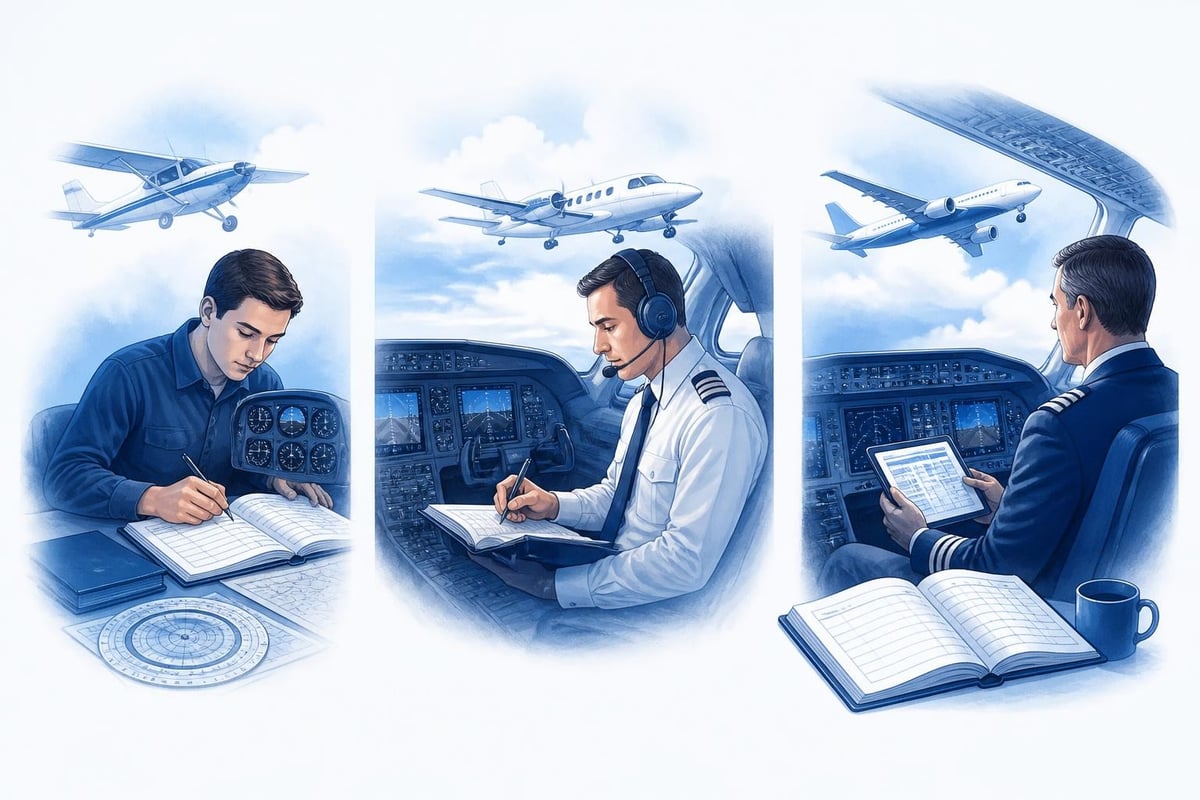
Your relationship with flight time evolves as you progress. A student obsesses over every tenth of an hour toward certificate minimums. A regional first officer tracks monthly totals to bid for captain upgrade. An airline captain monitors rolling limits to avoid roster disruptions.
Early career: You build hours to meet hiring minimums. ATP requires 1,500 hours total time (FAA) or integrated/modular training routes (EASA). Every flight hour counts toward that goal, so accurate logging matters.
Mid career: Currency and recency take priority. You've met the hour requirements, but you need recent flight time in type to remain qualified. Airlines often require 90 days of recency to return from extended leave.
Late career: You track rolling limits to plan retirement timing or manage part-time schedules. Staying under annual maximums while maintaining currency requires careful scheduling.
Regulations Change
Rules governing flight time limits, duty periods, and currency requirements change as authorities update regulations based on fatigue research and operational experience. The examples and figures in this article reflect 2026 standards but may not match future regulations. Always confirm current requirements against official FAA, EASA, or CAA sources before making compliance decisions.
Flight Time and Medical Certificates
Your flight time often determines medical certificate class requirements. An airline transport pilot needs a Class 1 medical (EASA) or First Class medical (FAA) to exercise ATP privileges. Commercial pilots flying for hire need at least a Class 2 or Second Class. Private pilots need a Class 2 (EASA) or Third Class (FAA).
Medical validity periods vary by age and operation type. A Class 1 medical for a pilot under 40 (EASA) lasts 12 months for single-pilot commercial operations and 6 months after age 40. Tracking these expiries alongside your flight time ensures you don't inadvertently fly with an expired medical.
Combining flight time tracking with medical and licence expiry monitoring in a single system prevents compliance gaps. When your medical expires in 14 days and you have 78 of 100 hours logged this month, seeing both figures at a glance helps you plan renewals and manage your schedule.
Understanding Flight Time Calculation Methods
Different systems use different calculation methods, which affects flight planning and logbook accuracy. The flight time calculation methods wiki details how various platforms compute estimates:
Great Circle measures the shortest distance between two points on a sphere and divides by cruise speed. It ignores airways and wind but gives a baseline estimate.
Wind-adjusted predictions use forecast winds aloft to calculate groundspeed along the route. Accuracy depends on forecast quality.
Historical route data averages actual flight times from previous flights on the same route, accounting for real-world factors like ATC routing and typical winds.
For planning purposes, a flight time calculator helps you estimate block time by adding taxi, climb, descent, and contingency time to the cruise estimate. But your logbook records actual time only.
Flight Time vs. Duty Time
Flight time and duty time are different figures with different limits. Duty time starts when you report for a duty period and ends when you're released from all duties. It includes pre-flight planning, post-flight paperwork, and standby time, not just flight time.
Under Part 117, maximum duty periods range from 9 to 14 hours depending on the number of flight segments and the time you report for duty. You might fly only 6 hours during a 12-hour duty period because of ground time between flights.
For one or two pilot crews, duty time limits ensure adequate rest between duty periods. Tracking both flight time and duty time separately prevents fatigue-related violations.
Flight Time in Type and Multi-Engine Time
Not all flight time is equal for hiring or insurance purposes. Type-specific flight time shows experience in a particular aircraft model. An airline hiring A320 pilots wants A320 time, not just turbine PIC time.
Multi-engine time matters for insurance minimums and multi-engine endorsements. A policy might require 100 hours PIC in multi-engine aircraft before you can rent a twin. Logging multi-engine time accurately from the start saves headaches later.
Some pilots split time between single-engine and multi-engine aircraft throughout their careers. Your logbook should categorise every flight so you can pull totals by category, class, and type when needed.
Flight Time for Licence Applications and Interviews
When applying for a new certificate, rating, or airline position, you'll need to prove your flight time. Expect scrutiny. Interviewers spot inconsistencies, and training departments verify totals against company records.
Prepare supporting documentation:
- Endorsements from instructors for dual time
- Aircraft rental receipts matching logbook dates
- Company flight records for commercial time
- Medical certificate dates matching logged flights
An audit-ready logbook speeds the process and builds confidence. Digital logbooks with cloud backup provide instant access to complete records and can generate summary reports for applications.
Flight time is the foundation of your flying career, determining your certificates, currency, and compliance with duty limits. Accurate logging from day one protects your credentials and simplifies applications, interviews, and regulatory checks. Pilotlog automates the tracking, calculates rolling limits and currency, and alerts you to upcoming expiries so you stay ahead of every requirement. Log a flight in seconds and let Pilotlog handle the rest, keeping you current, legal, and ready.
- flight time
- pilot logbook
- faa flight limits
- easa ftl
- currency requirements
A logbook that keeps itself.
Join the waitlist and be first in line when Pilotlog launches.
Free to join, no spam. Unsubscribe any time.