private pilot license
Private Plane Pilot Guide 2026: Training, Costs & Career
11 Sep 2026 · 12 min read
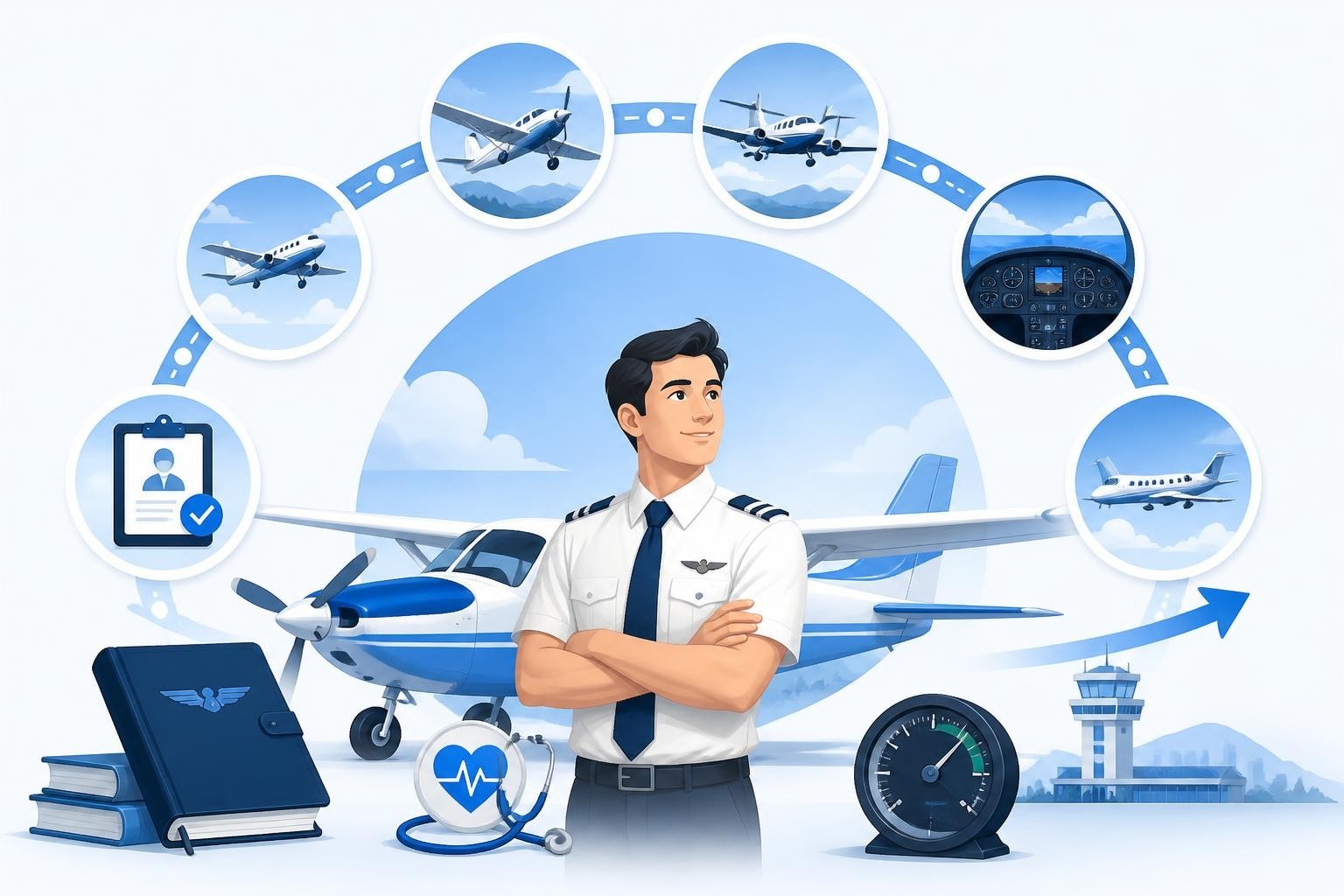
A private plane pilot holds a certificate that permits you to act as pilot in command of an aircraft carrying passengers or property, without compensation. This is the foundation licence for most general aviation careers, granting privileges to fly single-engine and multi-engine aeroplanes under visual flight rules and, with additional training, instrument flight rules. The private pilot certificate represents the first major milestone in aviation, combining legal authority with the skills to manage a flight from planning through to landing.
Becoming a private plane pilot involves meeting eligibility requirements, completing structured training, passing written and practical exams, and maintaining currency through ongoing flight experience. The pathway is well-defined by regulators like the FAA and EASA, but actual timelines, costs, and career outcomes vary widely depending on training intensity, aircraft choice, and personal goals. This guide covers the complete journey from first lesson to active flying, with real numbers and regulatory citations.
Eligibility and Medical Requirements
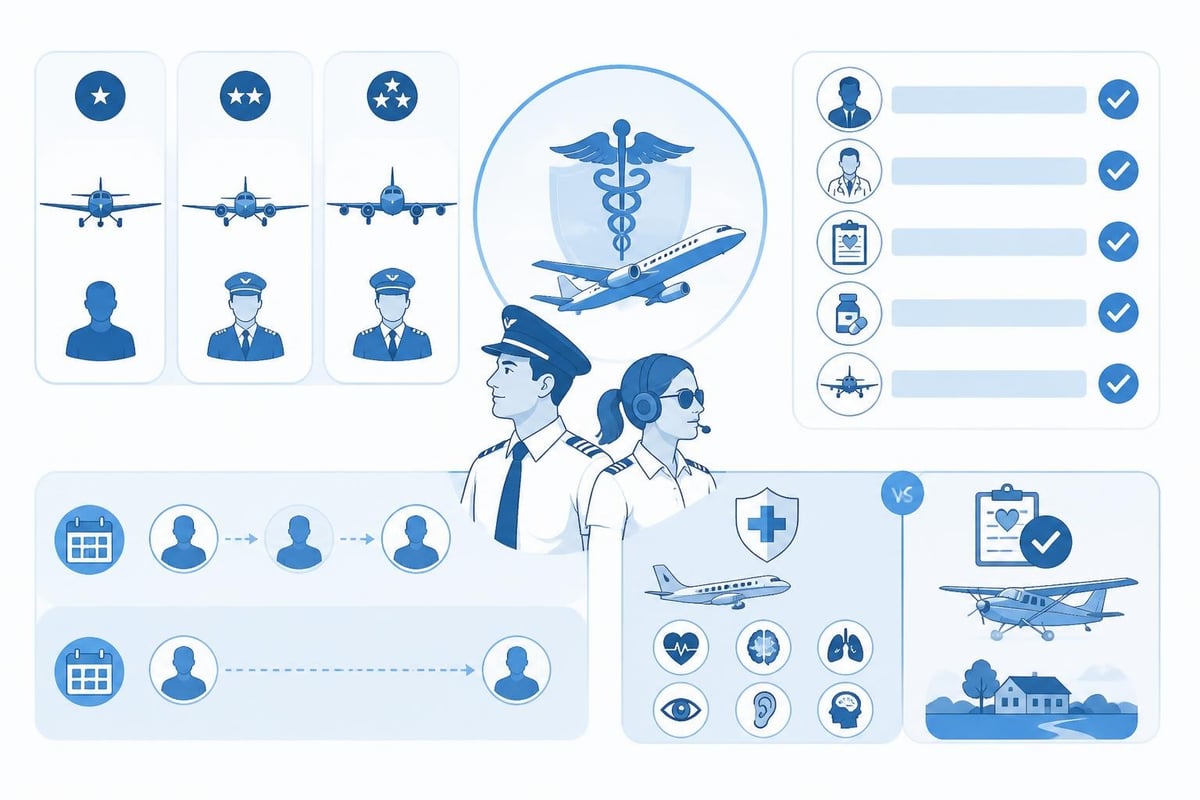
To qualify for a private pilot certificate under FAA rules, you must be at least 17 years old and able to read, speak, write, and understand English. You need either a third-class medical certificate or BasicMed, an alternative medical pathway introduced in 2017. BasicMed permits private plane pilot operations in aircraft up to 6,000 pounds with no more than six seats, flying below 18,000 feet and under 250 knots.
BasicMed requires a state-licensed physician to complete a physical exam every four years and an online medical education course every two years. It offers flexibility for pilots who cannot hold a traditional medical certificate due to certain conditions, provided those conditions are stable and documented. If you plan to fly internationally or operate larger aircraft, you will still need a standard FAA medical.
Third-class medicals remain valid for 60 calendar months if you are under 40 at the time of examination, and 24 months if you are 40 or older. Medical expirations can catch pilots off guard, especially when scheduling checkrides or planning extended trips.
Training Pathway and Certification Standards
The FAA's Airman Certification Standards define every knowledge area and flight manoeuvre a private plane pilot must demonstrate. Training divides into ground school and flight instruction. Ground school covers aerodynamics, weather theory, navigation, regulations, and aeronautical decision-making. Flight training teaches aircraft control, airport operations, cross-country navigation, emergency procedures, and night operations.
Federal regulations require a minimum of 40 flight hours for Part 61 training or 35 hours under Part 141, but national averages run closer to 60-70 hours. Your total includes at least:
- 20 hours dual instruction with a certificated flight instructor
- 10 hours solo flight time, including 5 hours solo cross-country
- 3 hours cross-country training
- 3 hours night training (including one cross-country over 100 nautical miles and 10 takeoffs and landings)
- 3 hours instrument training under the hood or in an approved flight simulation device
- 3 hours checkride preparation within 60 days of the practical test
Solo cross-country flights must include one trip of at least 150 nautical miles total distance, with landings at three points and one leg of at least 50 nautical miles between takeoff and landing. These flights build decision-making skills and real-world navigation experience under your own authority as a student pilot.
Written knowledge tests contain 60 multiple-choice questions drawn from the private pilot question bank. You need 70% or higher to pass. The practical test combines an oral exam and flight test, typically lasting three to four hours. Examiners evaluate your ability to plan a cross-country flight, explain systems and regulations, and fly manoeuvres to ACS standards.
For a detailed look at the steps to certification, the EAA's private pilot guide offers practical advice on choosing schools, instructors, and aircraft types.
Realistic Cost Breakdown
Cost is the single largest barrier for most aspiring pilots. AOPA's cost guide estimates total private pilot training ranges from $10,000 to $15,000 in 2026, depending on aircraft type, location, and training pace. Here is a detailed breakdown based on 60 total hours:
| Expense Category | Cost per Unit | Total Hours/Sessions | Total Cost |
|---|---|---|---|
| Aircraft rental (Cessna 172) | $165/hour | 60 hours | $9,900 |
| Flight instructor | $70/hour | 30 hours dual | $2,100 |
| Ground school (online) | $300 flat | 1 course | $300 |
| Written test fee | $175 | 1 exam | $175 |
| Practical test (examiner) | $800 | 1 checkride | $800 |
| Study materials & supplies | $400 flat | 1 set | $400 |
| Medical certificate | $150 | 1 exam | $150 |
| Total estimate | $13,825 |
Training in a Piper Cherokee or Diamond DA40 will shift costs slightly; complex or high-performance aircraft add $50 to $100 per hour. Training part-time over 12 months costs more than full-time training over three months because you spend extra hours refreshing skills between lessons. Weather delays, checkride rescheduling, and additional instruction can push totals higher.
Some pilots reduce costs by joining flying clubs, which offer lower hourly rates and shared ownership models. Scholarships from organisations like the Aircraft Owners and Pilots Association, Experimental Aircraft Association, and Women in Aviation International can offset $2,000 to $10,000 of training expenses.
Logbook Requirements and Legal Record-Keeping
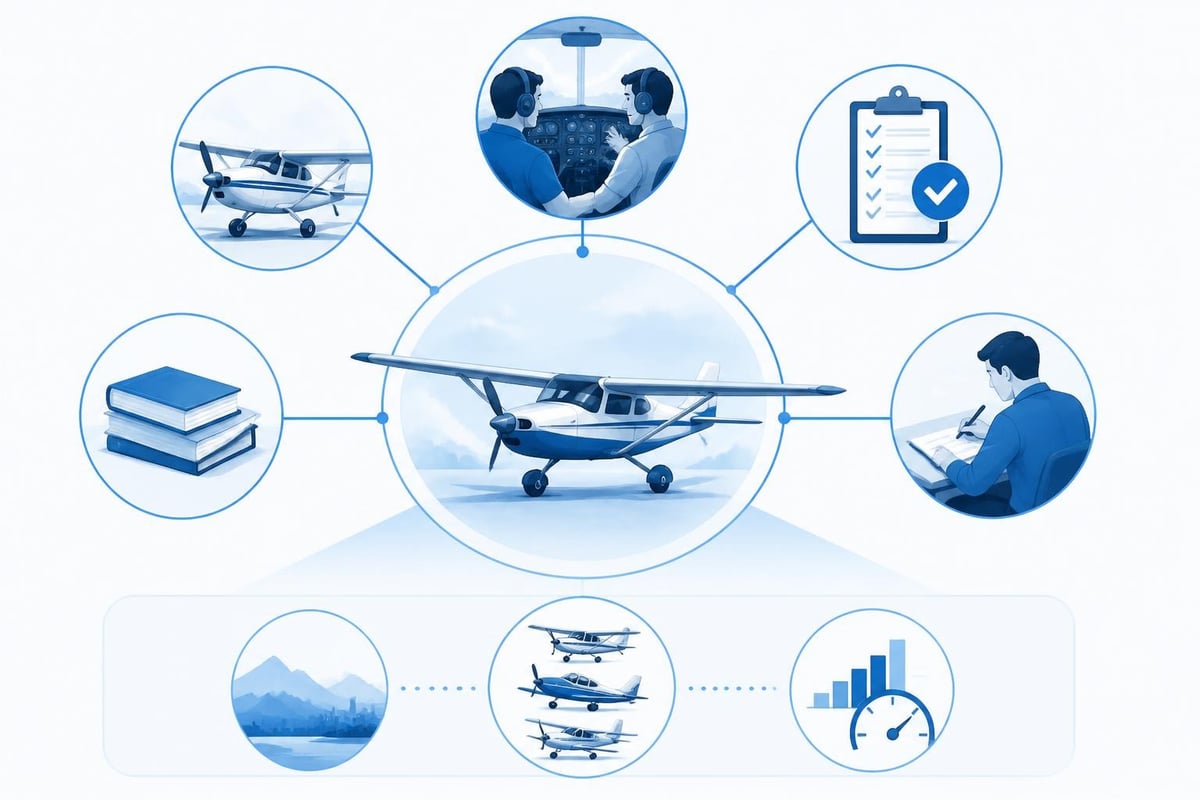
Every private plane pilot must maintain an accurate logbook. 14 CFR §61.51 specifies what you must record: date, total flight time, location of departure and arrival, type and identification of aircraft, and whether the flight was PIC, dual, or solo. You must also log the conditions of flight: day, night, actual instrument, simulated instrument, and cross-country.
Logging currency is equally important. To carry passengers, you need three takeoffs and three landings within the preceding 90 days in the same category, class, and type (if a type rating is required). For night passenger currency, those three takeoffs and landings must occur between one hour after sunset and one hour before sunrise.
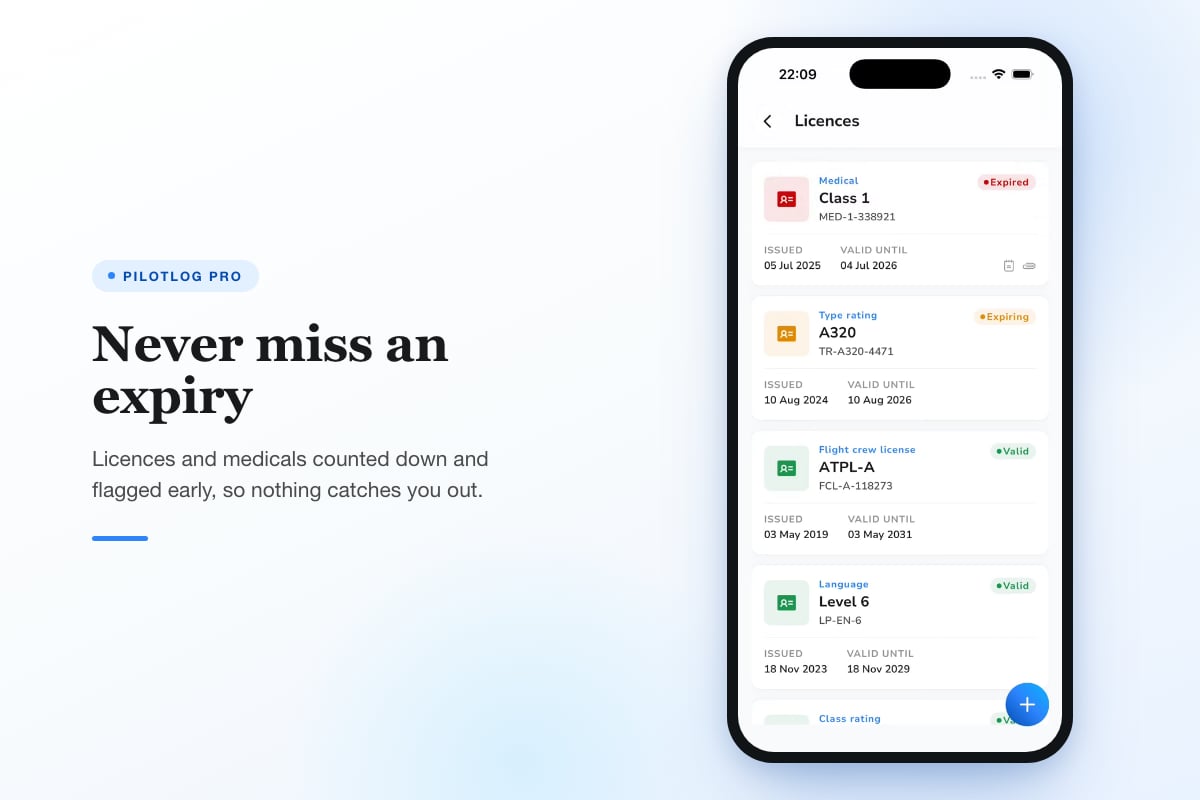
Digital logbooks streamline this process. Instead of manual calculations, platforms like Pilotlog automatically track rolling 90-day currency, flight-time totals, and medical expiry. You log a flight in seconds, and the system flags upcoming lapses, so you stay ahead of currency requirements without spreadsheet math. For pilots juggling multiple aircraft types, instrument currency, and flight reviews, automation eliminates errors and saves time.
For more on how aviation logbooks work and what you must record, see our logbook aviation guide.
Currency, Flight Reviews, and Recurrent Training
Holding a private pilot certificate does not mean you remain current indefinitely. 14 CFR §61.56 requires every pilot to complete a flight review every 24 calendar months. A flight review consists of at least one hour of ground training and one hour of flight training, covering manoeuvres and procedures the instructor determines are necessary for safe operation.
Flight reviews are not pass/fail exams; they are proficiency checks. Instructors tailor reviews to your flying habits, weak areas, and recent regulatory changes. Pilots who complete certain FAA WINGS courses or earn additional certificates or ratings within the preceding 24 months satisfy the flight review requirement automatically.
In addition to the biennial review, you must maintain landing currency for day and night passenger operations. If you let your 90-day currency lapse, you can restore it by completing three takeoffs and landings solo before carrying passengers again. Instrument currency requires six approaches, holding procedures, and intercepting and tracking courses within the preceding six calendar months. If instrument currency lapses beyond six months, you need an instrument proficiency check with an instructor or examiner.
Our currency cheat sheet breaks down the FAA's currency rules by operation type, making it easier to track what you need before your next flight.
Career Pathways and Flying Opportunities
A private plane pilot certificate opens doors beyond recreational flying. Many pilots build hours toward commercial and airline transport certificates, using private pilot time as the foundation. Others pursue specialist roles: pipeline patrol, aerial survey, wildlife observation, or volunteer flights for charities like Angel Flight.
Time-building is the most common next step. Commercial pilot certificates require 250 total hours, so private pilots often fly cross-country trips, join flying clubs, or work as safety pilots for instrument-rated pilots under the hood. Some pursue a flight instructor certificate at 250 hours to teach while building time toward airline minimums.
Private plane pilot roles also exist outside traditional career tracks:
- Corporate and personal flying: Wealthy individuals and small businesses hire private pilots to operate personal aircraft, often turboprops or light jets.
- Fractional ownership programs: Pilots fly for NetJets, Flexjet, or similar operators, requiring commercial certificates but drawing from the same skill base.
- Agricultural aviation: Crop dusting and aerial application demand precision flying and specialised training.
- Backcountry and mountain flying: Pilots operate in remote strips, requiring advanced skills in short-field and high-density-altitude operations.
Flying as a private plane pilot also supports business development. Real estate agents, consultants, and executives use private flying to reach clients faster than commercial airlines, turning travel time into competitive advantage.
Safety Statistics and Risk Management
Understanding accident data helps private plane pilots make informed decisions. The NTSB's accident dashboard shows that general aviation accident rates have declined over the past decade, but fatal accidents still occur. In 2024, the NTSB recorded 1,064 general aviation accidents in the United States, resulting in 189 fatalities. Loss of control in flight, controlled flight into terrain, and fuel management errors remain leading causes.
The NTSB announced enhancements to its accident dashboard in May 2026, adding detailed findings data to support better trend analysis. Pilots can now filter accidents by phase of flight, contributing factors, and aircraft type, making it easier to identify risks specific to their operations.
Risk management starts with training but continues through every flight. Private plane pilots should:
- Conduct thorough preflight planning, including weather analysis, weight and balance, and fuel reserves
- Use checklists religiously, even for familiar aircraft
- Maintain personal minimums for weather, crosswinds, and daylight operations
- Practice emergency procedures regularly, including engine failures, electrical malfunctions, and forced landings
- Stay proficient by flying frequently and seeking additional training when skills degrade
Accident reviews consistently show that disciplined adherence to standard operating procedures prevents the majority of incidents. The private plane pilot who flies by the book, cross-checks instruments, and avoids unnecessary risks builds a long, safe flying career.
Regulations Change: Always Verify Current Rules
Aviation regulations evolve. The FAA updates the ACS, revises medical standards, and issues new advisory circulars regularly. EASA and other civil aviation authorities follow similar processes. While this guide reflects rules current in 2026, you should verify all requirements with official sources before making decisions. For FAA-certificated pilots, the official FAA pilot resources page provides the latest guidance on certificates, training, and medical standards.
Tracking licence and medical expiries, flight review due dates, and currency requirements manually is prone to error. Digital tools designed for pilots eliminate guesswork and keep you compliant without constant cross-referencing of regulations. A missed medical renewal or lapsed currency can ground you at the worst possible time.
Choosing Aircraft and Building Experience
Your choice of training aircraft shapes your skills and budget. Cessna 172s and Piper Cherokees dominate flight schools because they are forgiving, affordable, and widely available. Taildraggers like the Piper Cub and Citabria teach precision and stick-and-rudder skills but add complexity for new pilots. Light sport aircraft offer lower operating costs and simpler systems, but the sport pilot certificate has limitations on passengers, aircraft weight, and night flying.
After earning your certificate, many private plane pilots rent or join flying clubs rather than buying aircraft outright. Ownership brings flexibility and pride, but costs include hangar or tiedown fees, insurance, annual inspections, and unscheduled maintenance. A Cessna 172 costs roughly $50,000 to $100,000 to purchase, with annual operating costs of $15,000 to $25,000 depending on flight hours.
Partnerships and flying clubs spread these costs among multiple pilots. Co-ownership of a $75,000 aircraft among three pilots reduces individual capital outlay to $25,000, and monthly fixed costs drop proportionally. Scheduling conflicts are the main downside, but most partnerships establish fair booking rules.
For detailed cost estimates and financial planning, our pilots licence cost guide covers training, certification, and ongoing expenses across multiple licence types.
International Licence Recognition and Conversion
Private plane pilot certificates issued by the FAA are recognised worldwide under ICAO Annex 1, but you may need a validation or conversion to fly in other countries. European pilots holding EASA Part-FCL licences can validate FAA certificates through their national aviation authority, and vice versa. Procedures vary by country, so check with the local civil aviation authority before planning international flights.
Some countries require foreign pilots to pass a written exam on local airspace and regulations. Others accept your home certificate with a simple administrative process. If you plan to fly regularly in another jurisdiction, converting your licence may be more practical than repeated validations.
Flight time logged under one authority generally counts toward certificates in another, provided your logbook meets the receiving authority's standards. Accurate, detailed records are essential. Digital logbooks that comply with 14 CFR §61.51 and equivalent international rules simplify this process.
Building a Sustainable Flying Routine
Staying proficient as a private plane pilot requires regular flying. Pilots who fly only a few hours per year see skills degrade, especially in areas like radio communication, navigation, and emergency procedures. A sustainable routine balances cost, time, and skill maintenance.
Aim for at least one flight every two weeks, even if it is only an hour in the pattern. Monthly cross-country trips keep navigation skills sharp and expose you to varied airspace and weather. Join a flying club or partnership to reduce hourly costs and increase aircraft availability.
Consider advanced training beyond the private certificate:
- Instrument rating: Expands your capabilities into IMC and complex airspace, making you a safer, more versatile pilot.
- High-performance endorsement: Qualifies you to fly aircraft with engines over 200 horsepower.
- Complex endorsement: Covers retractable landing gear, flaps, and controllable-pitch propellers.
- Tailwheel endorsement: Builds stick-and-rudder skills and opens access to classic aircraft.
Each endorsement or rating adds new challenges and keeps flying fresh. Transitioning to new aircraft types forces you to study systems, practice different handling characteristics, and sharpen decision-making.
Our best digital logbook guide explores how pilots at every stage track their hours, endorsements, and currency requirements efficiently.
Becoming a private plane pilot is a structured journey with clear milestones, real costs, and ongoing responsibilities. From meeting medical requirements and logging the necessary hours to maintaining currency and building experience, success depends on discipline, accurate record-keeping, and regular flying. Pilotlog helps you stay current, legal, and ready by automating flight-time tracking, flagging currency lapses, and alerting you to licence and medical expiries well before they catch you by surprise.
- private pilot license
- flight training costs
- faa certification
- learn to fly
- basicmed requirements
A logbook that keeps itself.
Join the waitlist and be first in line when Pilotlog launches.
Free to join, no spam. Unsubscribe any time.