private flying lessons
Private Flying Lessons: What to Expect in 2026
30 Oct 2026 · 8 min read
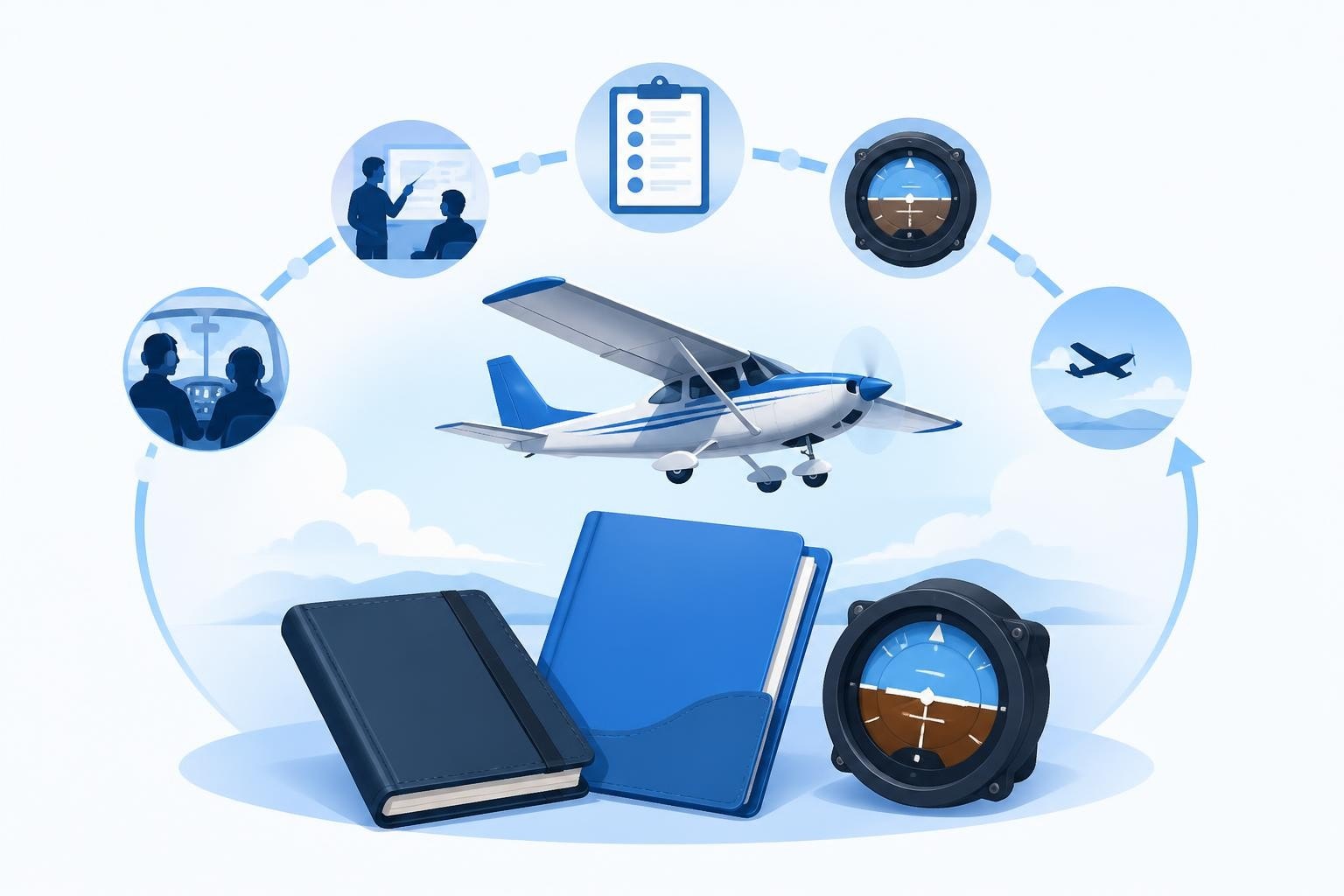
Private flying lessons combine airborne dual instruction with ground school to teach you the skills, judgment, and regulatory knowledge needed for a Private Pilot Licence. Most courses require 45 to 60 flight hours (EASA Part-FCL minimum 45 hours PPL(A); FAA minimum 40 hours per 14 CFR 61.109) plus several dozen hours of classroom and self-study. You will work one-on-one with a flight instructor who tailors each session to your pace, weather, and progression.
What You Actually Do in Private Flying Lessons
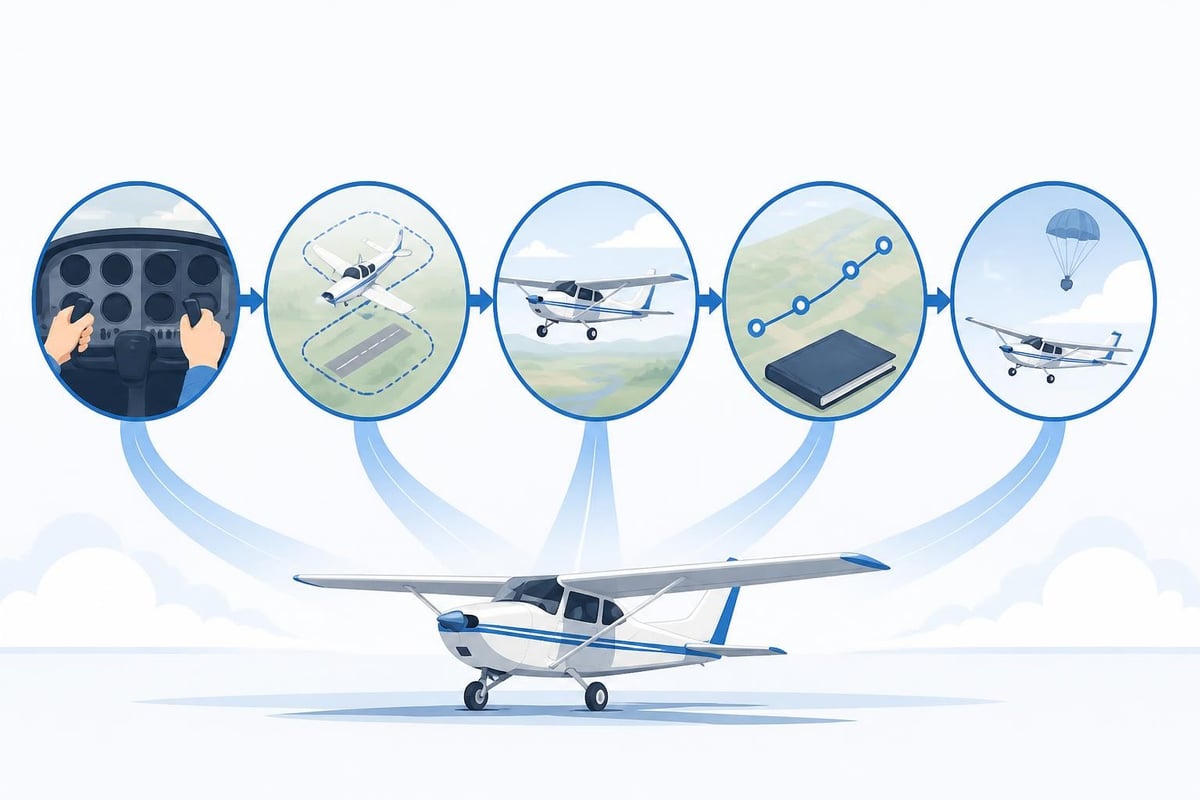
Each lesson begins with a preflight briefing: the instructor explains the manoeuvre or scenario you will practise, safety considerations, and success criteria. You then walk around the aircraft together, checking fuel, oil, control surfaces, and tyres. Once airborne, you fly from the left seat under the instructor's supervision.
Early lessons focus on:
- Straight and level flight, climbs, and descents
- Medium and steep turns (30° and 45° bank)
- Slow flight and stall recovery
- Traffic-pattern work and landings
Later lessons add:
- Cross-country navigation using pilotage, dead reckoning, and radio navigation
- Emergency procedures: engine failure, lost procedures, diversion
- Solo flight after demonstration of consistent control and safe decision-making
After each flight you debrief on the ground, reviewing what went well and what to practise. The instructor signs your logbook and records the lesson content, PIC time (if solo), and dual time. Keeping accurate records of flight time, landings, and solo hours is essential because the FAA Airman Certification Standards (ACS) or EASA Part-FCL requirements specify minimum experience before the skills test.
How Many Lessons and How Long It Takes
EASA Part-FCL PPL(A) requires a minimum of 45 flight hours, including:
- 25 hours dual instruction
- 10 hours supervised solo (5 hours solo cross-country, including one flight of at least 150 nautical miles with two full-stop landings)
FAA 14 CFR 61.109 requires a minimum of 40 flight hours, including:
- 20 hours dual instruction
- 10 hours solo (5 hours solo cross-country)
In practice, most students finish between 50 and 70 hours. Training twice a week keeps skills fresh; once a week often means repeating manoeuvres. Weather cancellations, aircraft maintenance, and instructor availability all affect the timeline. Flying three times a week in good weather can complete training in four to five months; once a week in winter can stretch to twelve months or more.
| Training pace | Flights per week | Typical duration | Expected total hours |
|---|---|---|---|
| Intensive | 3-5 | 3-4 months | 50-60 |
| Regular | 2 | 5-7 months | 55-65 |
| Slow | 1 | 10-15 months | 65-75 |
Ground School and Theory
Ground school covers aerodynamics, meteorology, navigation, regulations, human factors, and aircraft systems. EASA requires nine written exams; FAA requires one multi-section knowledge test. Most schools offer evening classroom sessions or self-paced online courses. Budget 60 to 100 hours of study time.
You must pass the theory exams before the practical skills test. EASA exam passes are valid for 24 months (Part-FCL AMC1 FCL.025); FAA knowledge test results are valid for 24 calendar months (14 CFR 61.39).
Choosing an Instructor and Flight School
Look for a flying instructor with current qualifications (FI(A) rating under EASA; CFI under FAA), recent teaching experience, and a teaching style that matches how you learn. Ask:
- How many students have you taken to skills test in the last 12 months, and what was the pass rate?
- What is your availability, and how far ahead do you book?
- Do you use structured syllabi, and can I see a sample lesson plan?
Visit the school and inspect the aircraft. Check the maintenance logs, avionics fit, and interior condition. Ask about cancellation policies, fuel surcharges, and whether the quoted rate includes landing fees and insurance.
AOPA's cost and planning guide gives realistic hourly rates for different aircraft types and regions. In 2026, expect £150 to £200 per hour for a single-engine piston in the UK (wet rate, instructor included) or $180 to $250 in the US.
Tracking Your Progress and Currency
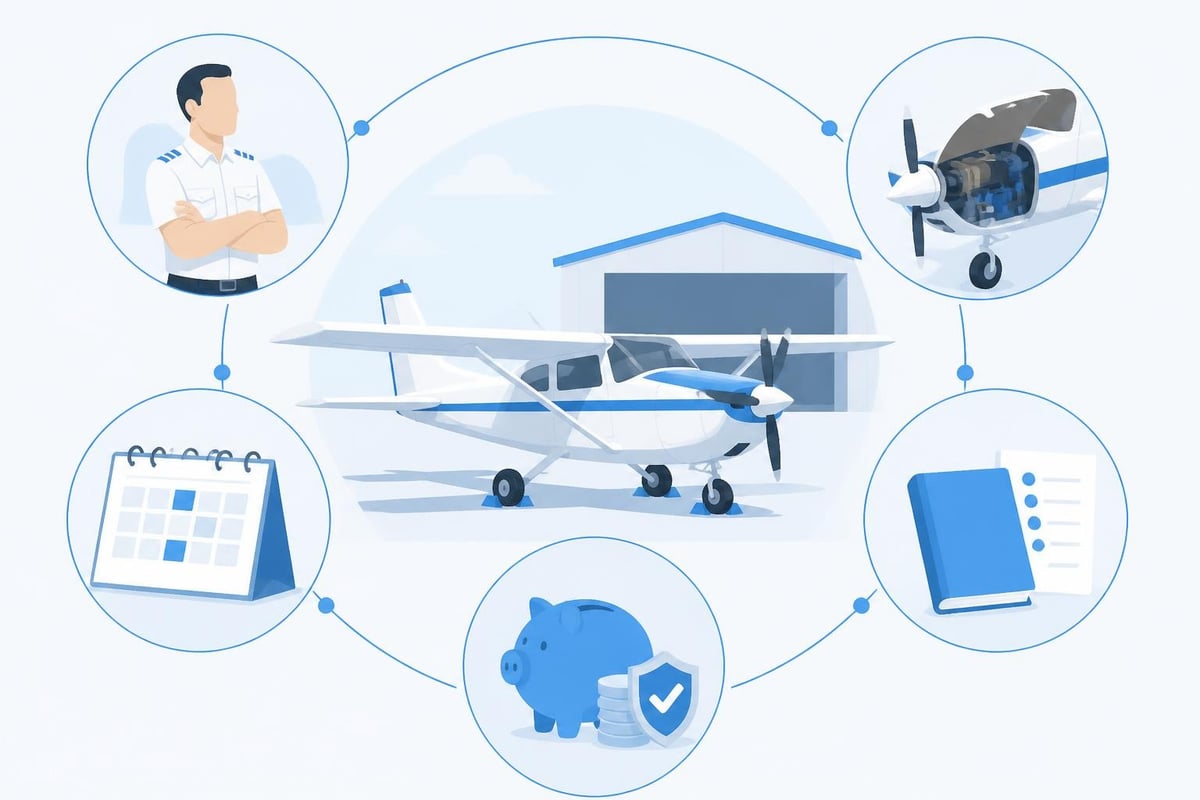
Once you begin private flying lessons, you must track dual time, solo time, cross-country distance, night hours (if required), and the number of take-offs and landings. The skills test examiner will verify these totals against your logbook.
Digital logbooks simplify the arithmetic. Pilotlog lets you log a flight in seconds and automatically tallies rolling totals, flags currency lapses, and alerts you when you approach minimums. For students juggling theory exams, medical validity, and lesson scheduling, having one system that tracks everything reduces the risk of missing a deadline.
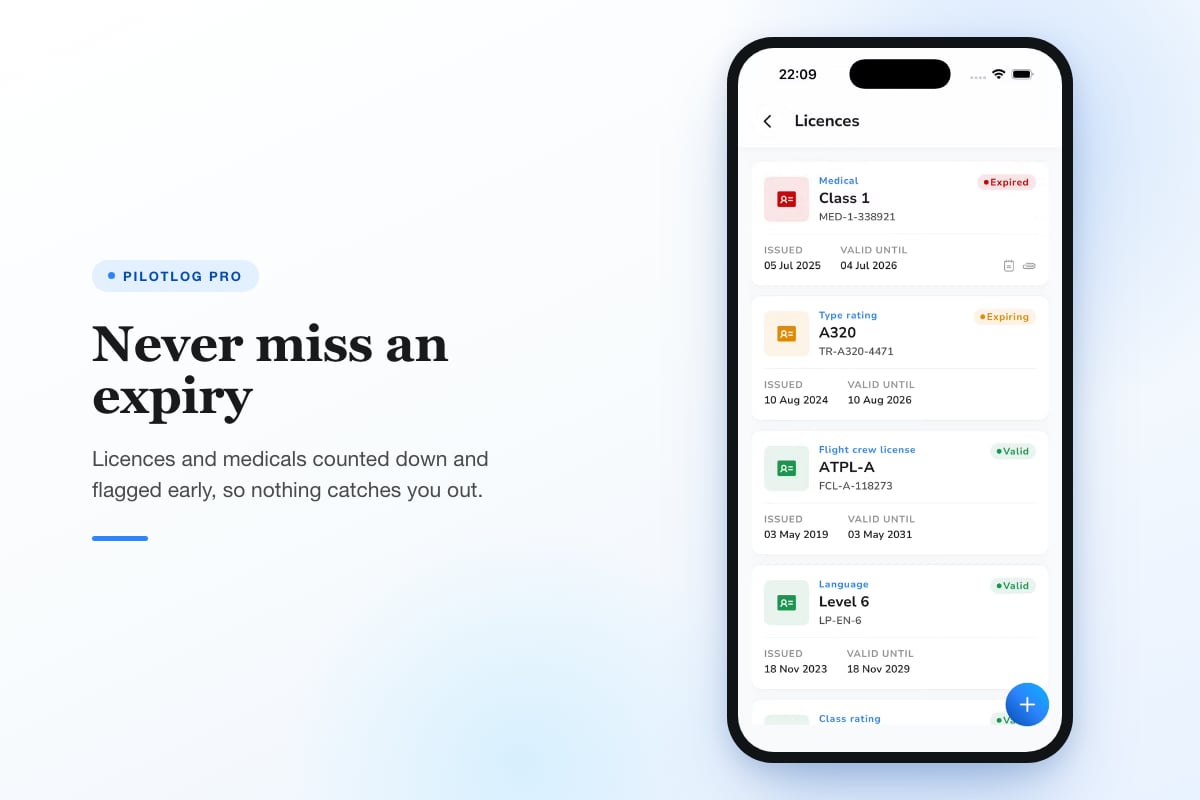
After you earn your licence, currency rules apply. EASA Part-FCL.060(b) requires three take-offs and three landings in the preceding 90 days to carry passengers. FAA 14 CFR 61.57(a) requires three take-offs and landings in the preceding 90 days, with night currency requiring the same in the preceding 90 days between one hour after sunset and one hour before sunrise. Pilotlog Pro tracks 28-day and 365-day limits, passenger currency, and night currency with lapse dates, so you always know when you need a refresher flight.
Weather Minimums and Flight Planning
Student pilots operate under VFR. EASA VMC minima for Class G airspace below 3,000 feet AMSL require 1,500 metres visibility and clear of cloud. FAA basic VFR in Class G below 1,200 feet AGL requires 1 statute mile visibility and clear of cloud (14 CFR 91.155).
Every lesson begins with a weather briefing. Use Aviation Weather Center for METAR, TAF, and AIRMET/SIGMET. Your instructor will teach you to decode reports, assess flyability, and make go/no-go decisions. Poor weather decision-making is a common factor in accidents involving student pilots; the NTSB accident database documents numerous VFR-into-IMC events where continuing into deteriorating conditions led to loss of control.
Worked Example: Calculating Time to Solo
Assume you start private flying lessons on 1 January 2026. Your school's syllabus targets first solo at 15 hours, subject to consistent performance. You fly twice a week, averaging 1.2 hours per lesson.
- Week 1: 2 lessons = 2.4 hours (total 2.4)
- Week 2: 2 lessons = 2.4 hours (total 4.8)
- Week 3: 1 lesson (weather) = 1.2 hours (total 6.0)
- Week 4: 2 lessons = 2.4 hours (total 8.4)
- Week 5: 2 lessons = 2.4 hours (total 10.8)
- Week 6: 2 lessons = 2.4 hours (total 13.2)
- Week 7: 2 lessons = 2.4 hours (total 15.6)
You reach 15.6 hours in early February (approximately 7 weeks). If your landings are consistent and you demonstrate safe circuit procedure, the instructor may send you solo. After solo, you continue dual lessons for cross-country, instrument basics, and advanced manoeuvres, building toward the 45 or 40 hour minimum.
What Private Flying Lessons Cost
Total cost depends on aircraft type, region, and how many hours you need. Using UK rates in 2026:
- 60 flight hours at £170/hour = £10,200
- 9 EASA theory exams at £40 each = £360
- Skills test (examiner fee, aircraft hire) = £450
- Books, charts, headset, medical = £400
- Total: approximately £11,410
US costs (FAA route, 60 hours):
- 60 flight hours at $220/hour = $13,200
- Knowledge test fee = $175
- Checkride (examiner, aircraft) = $800
- Books, charts, headset, medical = $500
- Total: approximately $14,675
Factors that reduce cost: flying a less expensive aircraft (C152 instead of C172), training at a non-towered field, and minimising repetition by flying frequently. The EAA student pilot resources page lists scholarships and community support for new pilots.
For a detailed breakdown of cost components and budgeting tips, see our guide to private pilot cost.
Common Questions About Private Flying Lessons
How fit do I need to be to start private flying lessons?
You must hold a Class 2 medical (EASA) or third-class medical (FAA). Vision correctable to 20/40, no disqualifying cardiac or neurological conditions, and ability to reach all controls are typical requirements. Most healthy adults qualify.
Can I choose which aircraft I train on?
Yes, within your school's fleet. High-wing aircraft like the Cessna 152 offer better visibility for navigation; low-wing types like the Piper Warrior have better cruise performance. Discuss pros and cons with your instructor.
What if I fail the skills test?
You may retake any failed sections after additional training. The examiner provides a detailed debrief and pink slip (FAA) or fail notice (EASA) listing the areas to address. Most students who fail pass on the second attempt.
Summary Checklist for Starting Private Flying Lessons
- Obtain a Class 2 or third-class medical before booking lessons
- Choose a qualified instructor and inspect the training aircraft
- Budget for 50 to 70 flight hours plus ground school and exam fees
- Fly at least twice a week to maintain skills and reduce total cost
- Track flight time, solo hours, and currency using a reliable logbook
- Study meteorology and learn to use official weather products for preflight
- Plan for 6 to 12 months from first lesson to skills test, depending on frequency
Regulations change. Always verify current requirements with the CAA (UK) or FAA (US) before starting training.
Private flying lessons follow a clear path: dual instruction, supervised solo, cross-country navigation, and a skills test that proves you can operate safely as pilot in command. Tracking your hours, currency, and expiry dates accurately is just as important as mastering steep turns or crosswind landings. Pilotlog gives you a single digital logbook that logs flights in seconds, tracks rolling totals and currency, and alerts you to upcoming deadlines, so you stay current, legal, and ready from your first lesson through your entire flying career.
- private flying lessons
- ppl training
- flight training hours
- flight school
- pilot logbook
A logbook that keeps itself.
Join the waitlist and be first in line when Pilotlog launches.
Free to join, no spam. Unsubscribe any time.