private pilot cost
Private Pilot Cost 2026: Real Numbers and Budgeting
17 Oct 2026 · 13 min read
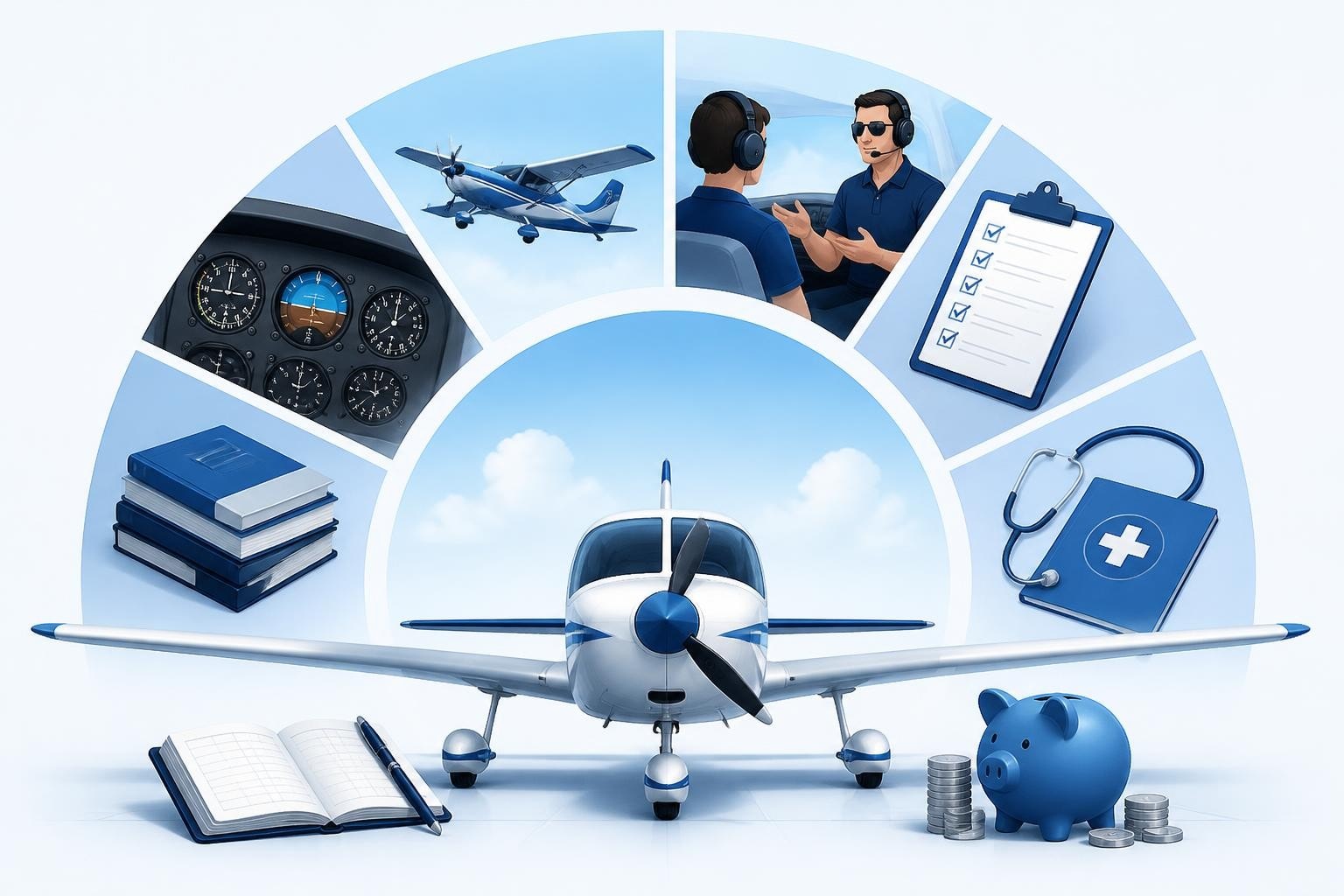
Earning your private pilot licence in 2026 typically costs between £8,000 and £15,000 in the UK, or $12,000 to $18,000 in the US, depending on aircraft type, location, and how efficiently you complete training. The bulk of this expense comes from flight hours billed by the hour, which means your pace, the weather, and your ability to fly regularly all affect the final bill. Understanding where the money goes and how to control variables helps you budget realistically and avoid surprises halfway through training.
What Makes Up Private Pilot Cost
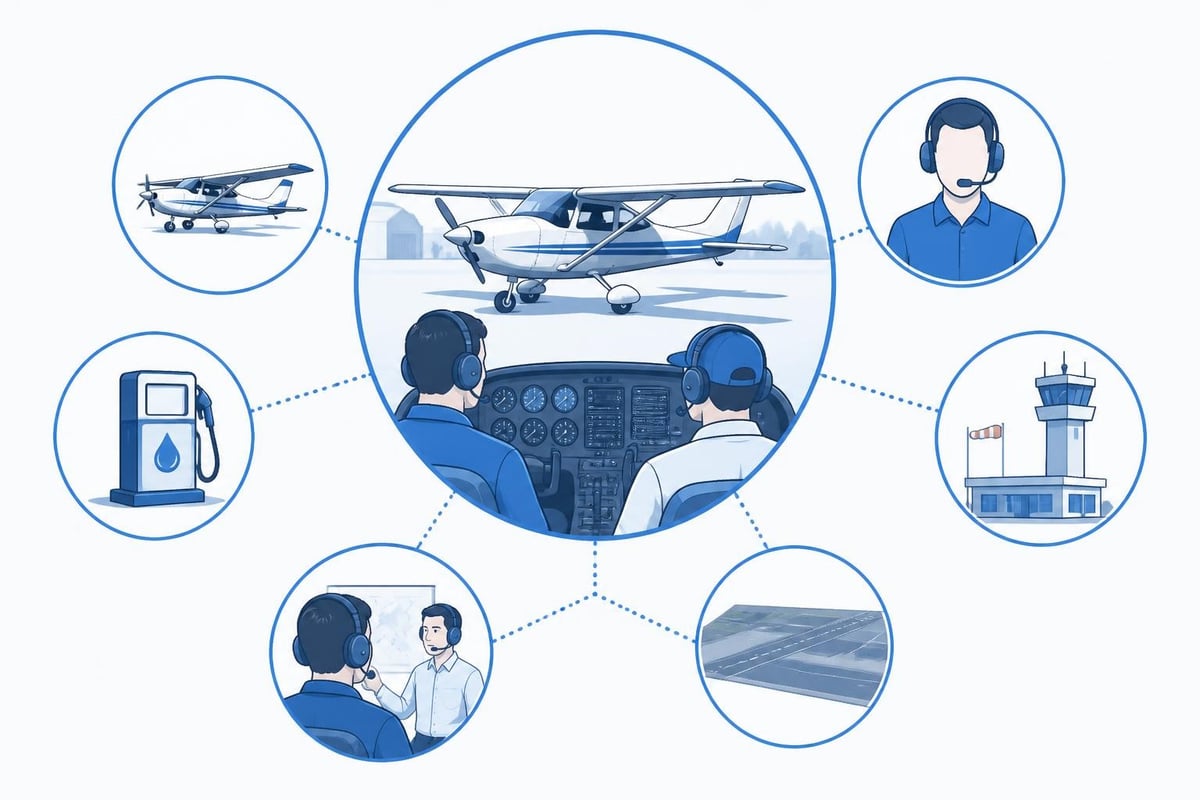
The FAA requires a minimum of 40 hours for a Private Pilot Certificate, though most students finish closer to 60 or 75 hours nationally. EASA Part-FCL demands 45 hours minimum, with students often reaching 50 to 65 hours before their skills test. Every hour you fly incurs two charges: aircraft rental and instructor fees. These rates vary significantly by geography and aircraft type.
Aircraft Rental Rates
In the UK in 2026, a Cessna 152 or Piper PA-28 typically rents for £120 to £180 per hour, wet (fuel included). In the US, the same aircraft might range from $140 to $200 per hour. Glass-cockpit variants and larger singles (Cessna 172 or Diamond DA40) command £160 to £220 per hour in the UK, or $160 to $240 in the US. Training at a busy airport or urban area usually means higher rates because hangar costs, insurance, and demand drive prices up.
Aircraft type comparisons:
| Aircraft Type | UK Rate (per hour) | US Rate (per hour) | Typical Use |
|---|---|---|---|
| Cessna 152 | £120–£150 | $140–$180 | Budget training, solo |
| Piper PA-28-140 | £130–£165 | $150–$190 | Standard training |
| Cessna 172 (analog) | £150–£180 | $160–$200 | Popular trainer |
| Cessna 172 (G1000) | £180–£220 | $200–$240 | Glass-cockpit experience |
| Diamond DA40 | £190–£230 | $210–$250 | Modern, efficient |
Instructor Fees
Flight instructors typically charge £40 to £65 per hour in the UK, or $50 to $80 in the US. You pay this for every dual hour, plus pre- and post-flight briefings, ground lessons, and exam preparation. Ground instruction often costs the same hourly rate as flight instruction, though some schools bundle ground school into a flat fee of £500 to £1,200.
Calculating Your Total Private Pilot Cost
Start with the AOPA guide to pilot license cost to understand the range, then apply local rates and your own learning curve. A realistic budget includes flight hours, ground instruction, examiner fees, materials, medical, and checkride costs.
Sample UK budget (60 hours to test):
- 45 hours dual at £150/hr aircraft + £50/hr instructor = £9,000
- 15 hours solo at £150/hr aircraft = £2,250
- 20 hours ground instruction at £50/hr = £1,000
- Materials (books, headset, charts, apps) = £400
- Class 2 medical (initial) = £150
- Examiner fee (skills test) = £300
- Total: £13,100
Sample US budget (70 hours to checkride):
- 50 hours dual at $170/hr aircraft + $60/hr instructor = $11,500
- 20 hours solo at $170/hr aircraft = $3,400
- 25 hours ground instruction at $60/hr = $1,500
- Materials and supplies = $500
- Third-class medical = $150
- DPE fee (checkride) = $600
- Total: $17,650
Your actual private pilot cost will fall somewhere within these ranges. Students who fly twice a week typically finish faster and spend less on repeated lessons. Those who fly once every two weeks often need extra hours to rebuild skills between sessions, inflating the total. Weather, aircraft availability, and instructor scheduling all influence how efficiently you progress.
Hidden Costs and One-Time Expenses
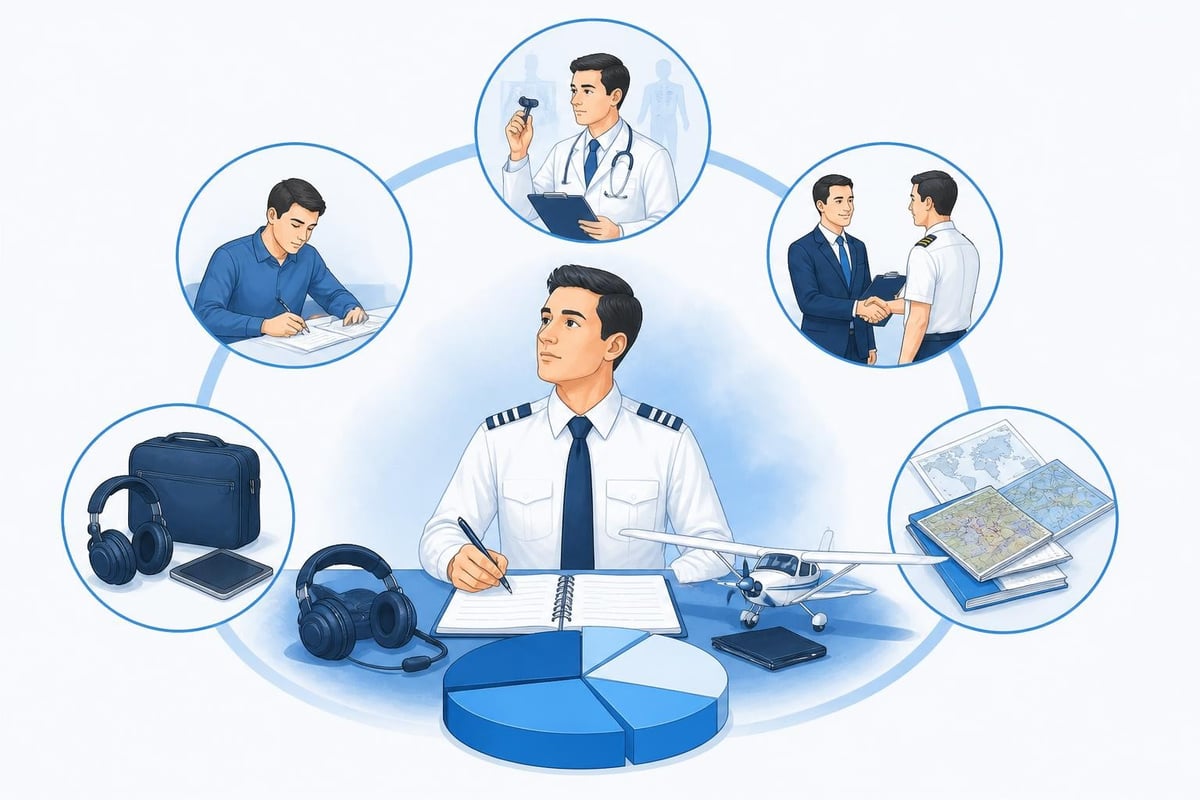
Beyond the obvious hourly rates, several smaller expenses add up. Exams and tests include a written knowledge test (£100 in the UK, $175 in the US), radiotelephony exam if required, and the practical test examiner fee. Medical certificates cost £100 to £200 depending on the Aviation Medical Examiner. Some pilots need corrective lenses or specialist cardiac tests, which increase this line item.
Materials and equipment:
- Headset (good passive or basic ANR): £150–£400
- Charts, current approach plates, navigation tools: £50–£150 annually
- Logbook (paper or digital; see Pilotlog for digital tracking): £0–£15
- Textbooks, online ground school subscriptions: £200–£600
Landing fees and away-airport charges appear during cross-country training flights. Busy controlled airports may charge £15 to £40 per landing. Over 10 hours of cross-country training, these fees might add £200 to £500. Some schools include landing fees in rental rates; others bill separately.
Checkride discontinuances also cost money. If weather or a skill deficiency stops the practical test partway through, you pay another examiner fee (usually half price) plus the aircraft and instructor time to retest. Budgeting an extra £500 or $800 for contingencies covers these scenarios without panic.
How to Reduce Private Pilot Cost
Flying more frequently lowers your total hours because skills stay fresh. A student flying three times per week often solos around 15 hours and finishes in 50 to 55 hours. A student flying once per fortnight might need 70 to 80 hours. The difference in cost can exceed £3,000 or $5,000.
Cost-saving strategies:
- Choose less expensive aircraft. Train in a Cessna 152 or Piper Tomahawk instead of a 172. Complete the minimum hours required, then transition to larger aircraft later if needed.
- Fly off-peak. Early mornings and weekdays often have lower demand and sometimes lower rates.
- Self-study for ground school. Use free FAA materials, online courses, or books instead of paying for every ground hour.
- Bundle payments. Some schools offer block time discounts: pay for 10 hours upfront and receive a 5% to 10% discount.
- Join a flying club. Clubs often rent aircraft at cost plus a small margin, undercutting commercial flight schools by 20% to 40%.
Scholarships and grants offset part of the private pilot cost. The EAA offers flight training scholarships ranging from $2,500 to $10,000. Women in Aviation International, the AOPA, and regional flying clubs also run annual scholarship programmes. Applications typically require an essay, interview, and proof of enrolment at an approved school.
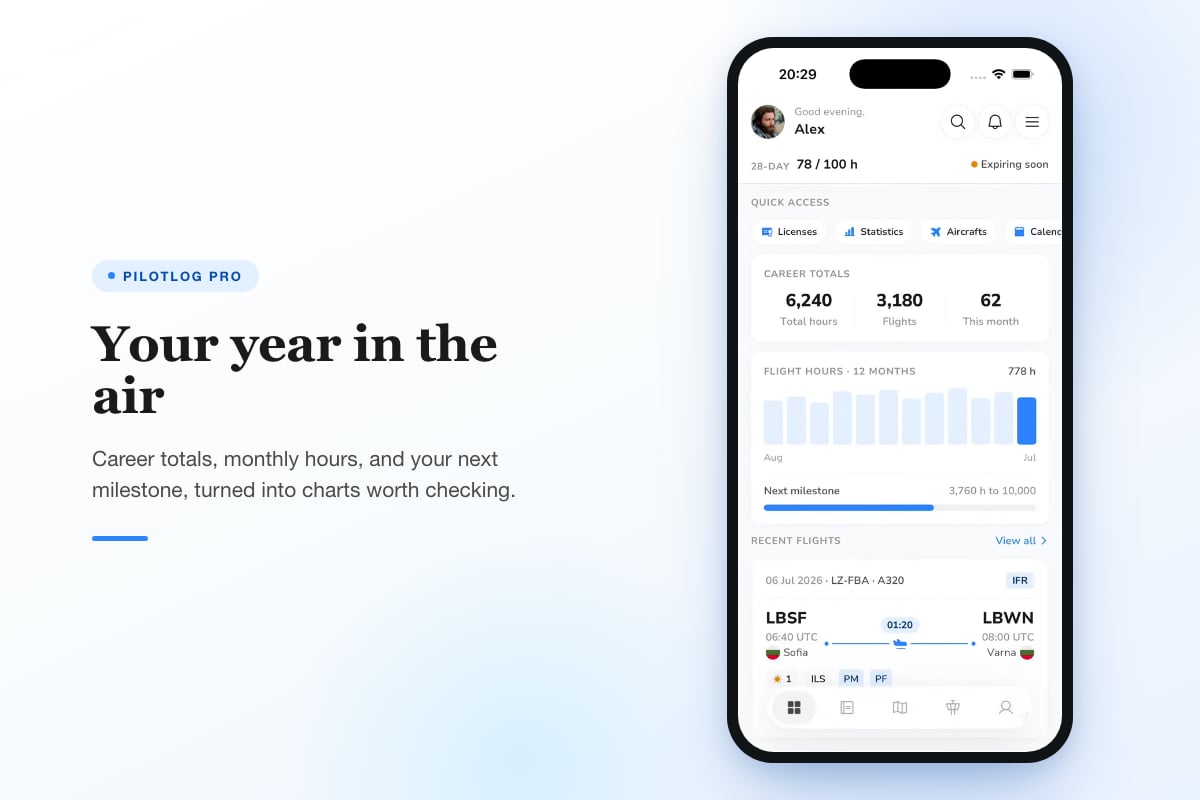
For those watching every penny during training, tracking your logged hours in a digital logbook like Pilotlog helps you see exactly how many dual versus solo hours you have accumulated. You can spot inefficiencies (too many repeated lessons on one manoeuvre) and discuss them with your instructor. Pro subscribers can also set budget alerts and track progress toward milestones, ensuring you stay on pace and on budget.
Financing Your Private Pilot Licence
Most pilots do not pay cash upfront. Loans, payment plans, and personal savings all play a role. AOPA Flight Training Finance provides loans specifically for pilot training, with terms of three to seven years and rates around 7% to 12% APR in 2026. These unsecured loans fund the full training cost, releasing funds as you complete milestones.
Flight schools sometimes offer in-house payment plans. You pay a deposit (£1,000 to £3,000), then monthly instalments over six to twelve months. Interest varies or may be zero if you finish on schedule. Read the contract carefully; some plans penalise delays or add fees if you pause training.
Financing comparison:
| Method | Typical Terms | Pros | Cons |
|---|---|---|---|
| Cash / savings | Immediate | No interest, full control | Requires large upfront sum |
| AOPA training loan | 3–7 years, 7–12% APR | Fixed rate, pilot-focused lender | Interest adds to total cost |
| School payment plan | 6–12 months, 0–8% | Convenient, bundled with training | Penalties for delays common |
| Credit card | Revolving, 18–25% APR | Fast, flexible | High interest, risky if slow |
| Personal loan (bank) | 2–5 years, 6–15% APR | General-purpose, competitive rate | May require collateral or co-signer |
Budget for repayments before you start. A £12,000 loan at 9% APR over five years costs roughly £250 per month. Make sure your income supports that payment alongside living expenses and aviation insurance if you plan to fly post-licence.
Regional and Seasonal Variations in Cost
Training in London, New York, or Sydney costs more than training in rural England, the Midwest US, or regional Australia. Urban airports charge higher landing fees, hangars cost more, and instructor wages reflect local living costs. The difference can reach 30% to 50% for the same training syllabus.
Weather also affects private pilot cost. Students in Arizona or Southern California fly year-round, finishing faster. Pilots training in the UK or Pacific Northwest face more cancellations due to rain, low cloud, and fog, stretching training over more calendar months and sometimes requiring refresher flights. Each extra month adds wear on skills and often means a few additional dual hours to regain proficiency.
Seasonal demand influences pricing. Summer sees more students and higher hourly rates at some schools. Winter might offer discounts but fewer flyable days. Autumn and spring often provide the best balance: moderate weather, steady availability, and standard pricing.
Private Pilot Cost Trends in 2026
Industry data from Redbird's State of Flight Training shows the median private pilot cost in the US rose to around $15,500 in 2025, up from $12,000 in 2020. Fuel prices, aircraft insurance, and maintenance costs all increased. The GAMA 2025 shipment report notes that new trainer deliveries remained flat, keeping used-aircraft prices high and rental rates elevated.
Inflation-adjusted, today's private pilot cost is roughly 20% higher than a decade ago, even as training technology (simulators, online ground school) improved. Simulators approved for logging instrument time help, but private pilot training still requires most hours in real aircraft. This keeps costs tied to fuel, maintenance, and insurance, all of which continue climbing.
Looking ahead, electric trainers and improved simulator approval may moderate cost growth. For now, budget conservatively and expect slight annual increases in hourly rates.
How to Use Cost Calculators and Plan Your Budget
Interactive tools like the Rotate Pilot training cost calculator let you input your local hourly rates, estimated flight hours, and exam fees to generate a personalised budget. Adjust assumptions (55 hours versus 70 hours, £140/hr versus £180/hr aircraft) to see how variables shift the total. This exercise highlights where you have control (frequency of lessons, aircraft choice) and where you do not (examiner fees, medical costs).
Create a spreadsheet tracking every flight, its cost, and cumulative totals. Compare your actual spending against your initial budget every 10 hours. If you are trending over budget, investigate why: are you repeating lessons unnecessarily, or is the school's hourly rate higher than quoted? Early detection lets you course-correct before the bill spirals.
Set aside a contingency fund equal to 15% of your main budget. If your estimate is £12,000, keep an extra £1,800 available for weather delays, additional dual hours, or a checkride discontinuance. This buffer reduces financial stress and keeps you focused on learning rather than worrying about the next invoice.
Insurance and Ongoing Costs Post-Licence
Once you hold your private pilot licence, renting aircraft still costs the same hourly rate, but you will also consider renters insurance. Non-owned aircraft insurance (covering liability and hull damage you might cause) typically costs £200 to £600 annually for a low-time private pilot. Premiums drop as you build hours and maintain a clean record.
Currency requirements (three takeoffs and landings in the preceding 90 days to carry passengers, per FAA 14 CFR 61.57 and EASA Part-FCL FCL.060) mean you need to fly regularly. Budget at least one flight per month (two to three hours) to stay current and proficient. Over a year, that is 24 to 36 hours at your local rental rate, plus tiedown or club membership fees if applicable.
Tracking your currency manually invites mistakes. A digital logbook automatically flags when your 90-day passenger currency or IFR currency lapses, so you never show up to the airport planning a flight with friends only to discover you need three solo patterns first. Pilotlog handles these calculations in the background, alerting you well in advance and keeping your flying legal and efficient.
Comparing Flight Schools and Making the Right Choice
Price alone should not dictate your school. A cheaper hourly rate paired with disorganised scheduling, poor aircraft maintenance, or high instructor turnover can inflate your total hours and final private pilot cost. Visit multiple schools, inspect their aircraft, meet instructors, and ask current students about their experience.
Questions to ask before enrolling:
- What is the fleet's average age and maintenance schedule?
- How many hours does the typical student require to pass the checkride?
- Are instructors full-time or building hours for airline jobs (high turnover)?
- Does the school offer flexible scheduling, or do students wait weeks for aircraft availability?
- What percentage of students pass the checkride on the first attempt?
A school where 80% of students finish in 55 hours at £160/hr beats one where 50% need 75 hours at £140/hr, even though the second school appears cheaper on paper. Quality instruction, reliable aircraft, and good scheduling discipline save you money by keeping training efficient.
Transparency around costs matters too. Schools that break down every fee upfront (landing fees, exam charges, materials) let you budget accurately. Those with vague "package prices" often add surprise charges mid-training. Read contracts carefully and ask for a written cost breakdown before signing.
Budgeting for the Long Term and Building a Flying Career
The private pilot licence is your first certificate, not your last. Many pilots continue toward an instrument rating (adding another £6,000 to £10,000 or $8,000 to $15,000), commercial licence, or instructor rating. If you plan a flying career, factor these future costs into your overall financial picture. Borrowing for private pilot training is manageable if you have a clear path to recoup the investment through instructing, charter, or airline work.
Even if you fly recreationally, plan for recurring costs: annual flight reviews (required by FAA 14 CFR 61.56 every 24 months), medical renewals every five years for under-40 pilots or two years for over-40 (FAA third-class medical), and ongoing rental or club fees. These add £500 to £1,500 annually on top of your flying hours.
Tracking all this in one place simplifies long-term planning. A digital logbook that records every flight, flags upcoming currency and medical expiries, and calculates your total hours by category helps you see the big picture. It also produces accurate logbook exports for insurance applications, job interviews, or further training. Students moving from flight lessons through to multi-engine or type ratings benefit from a single, reliable record that grows with their career.
Remember that regulations and cost structures change. The figures and rules here reflect 2026 norms, but you should always confirm current requirements with your national aviation authority (FAA, UK CAA, EASA) and your flight school before making financial commitments. Budgeting conservatively, flying frequently, and staying organised will keep your private pilot cost predictable and your training on track.
Private pilot cost in 2026 ranges widely, but understanding the variables, aircraft rates, instructor fees, and financing options gives you control over the final bill. Flying regularly, choosing cost-effective aircraft, and tracking every hour keeps expenses in check. Pilotlog helps you log flights in seconds, monitor your progress toward currency milestones, and receive early alerts for licence and medical expiries, so nothing catches you by surprise as you build toward your licence and beyond.
- private pilot cost
- flight training cost
- ppl budget
- learn to fly
- aircraft rental rates
A logbook that keeps itself.
Join the waitlist and be first in line when Pilotlog launches.
Free to join, no spam. Unsubscribe any time.