flying instructor
Flying Instructor: Path, Rules, and Career Overview
24 Oct 2026 · 13 min read
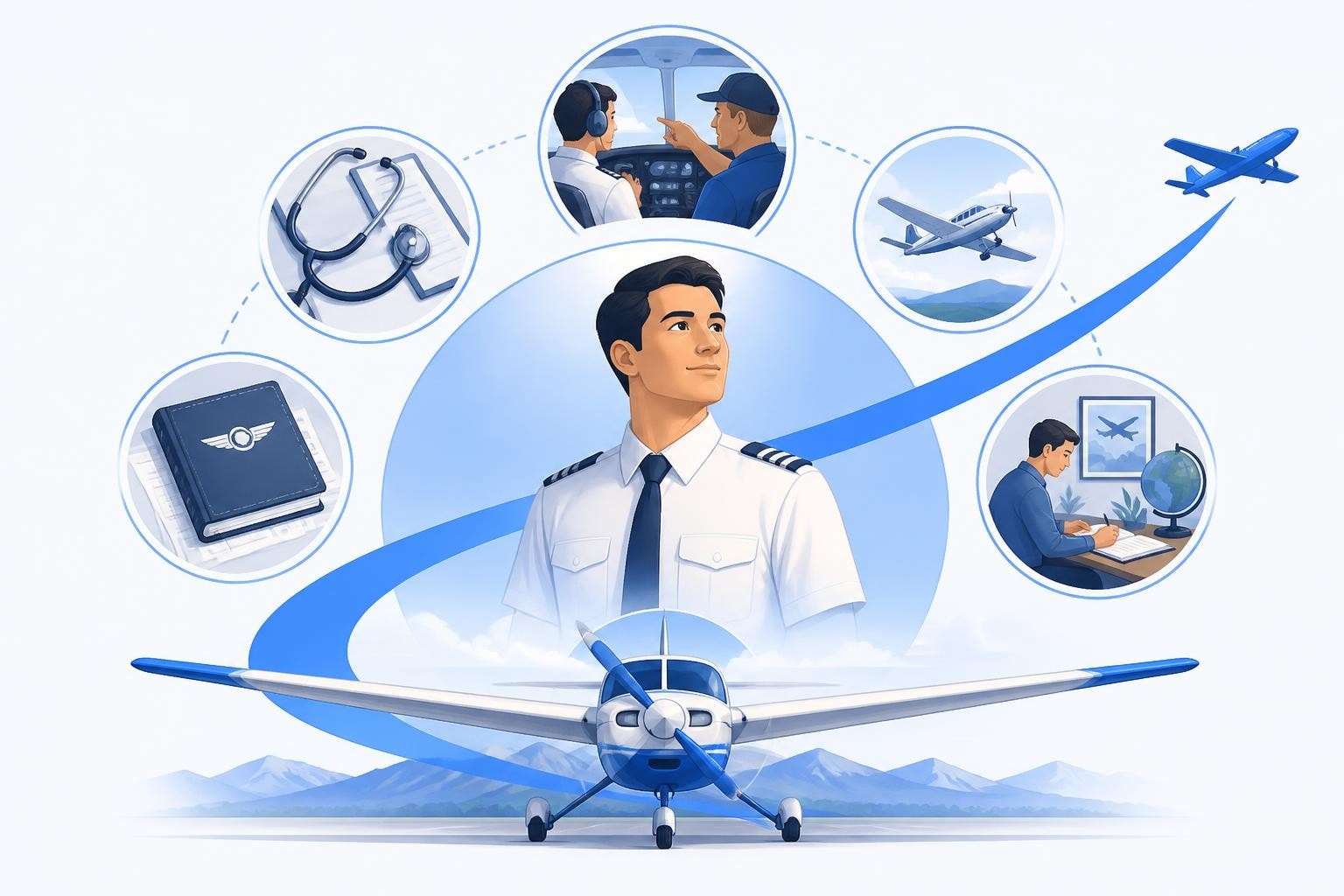
A flying instructor is a licensed pilot authorised to provide flight training and ground instruction to student pilots and certificated pilots pursuing additional ratings or endorsements. Instructors hold a Flight Instructor certificate (CFI, FI, or equivalent under local regulations) and meet specific aeronautical experience, knowledge, and proficiency standards. The role is both technically demanding and foundational to aviation safety, requiring mastery of aircraft systems, regulations, and the ability to teach practical flying skills under a wide range of conditions.
What Does a Flying Instructor Do?
The flying instructor role centers on delivering ground and flight training that meets regulatory standards and prepares pilots for practical tests and real-world operations. Instructors plan lessons, brief students, demonstrate manoeuvres, supervise solo flights, and endorse students for checkrides. They also complete administrative tasks including logbook endorsements, training records, and progress assessments.
Key responsibilities include:
- Pre-flight briefings covering the lesson objectives, manoeuvres, safety procedures, and performance standards
- In-flight instruction demonstrating techniques, correcting errors, and building student proficiency across normal and emergency procedures
- Post-flight debriefs reviewing performance, logging flight time, and setting objectives for the next lesson
- Ground instruction on aerodynamics, regulations, weather, navigation, and aircraft systems
- Endorsements and record-keeping certifying students for solo, cross-country, and practical tests in compliance with licensing authority requirements
Instructors work in varied environments: flight schools, university aviation programmes, military training units, and corporate flight departments. Some specialise in ab initio training, while others focus on instrument, multi-engine, or type-rating instruction.
Licensing and Regulatory Requirements
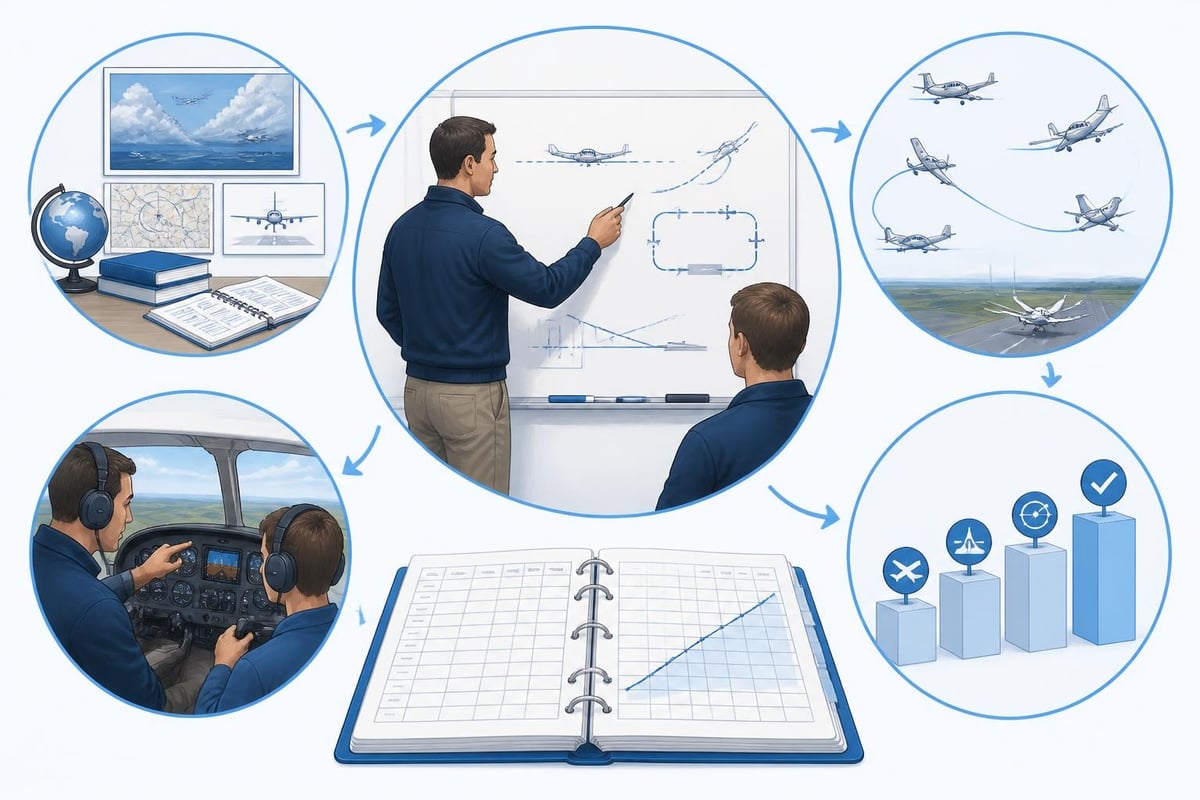
Licensing pathways for a flying instructor differ by jurisdiction but share common requirements: a commercial or airline transport pilot licence, minimum flight time, a separate instructor rating or certificate, and demonstrated teaching ability.
United States (FAA)
Under FAA regulations, a Flight Instructor Certificate (CFI) requires:
- Commercial Pilot Certificate (or ATP) with instrument rating
- At least 250 total flight hours (commercial requirement)
- Pass the Fundamentals of Instructing (FOI) knowledge test
- Pass the CFI knowledge and practical tests aligned with the FAA Airman Certification Standards
The CFI practical test evaluates technical knowledge, instructional ability, and lesson delivery across all areas of operation. Instructors must renew every 24 calendar months via Flight Instructor Refresher Course (FIRC), practical test, or activity-based renewal (8 endorsements and 80% first-time pass rate).
Europe (EASA Part-FCL)
EASA Part-FCL defines the Flight Instructor (FI) certificate with specific prerequisites:
| Requirement | Detail |
|---|---|
| Licence held | CPL(A) or ATPL(A) |
| Flight time | 200 hours total, 150 as PIC, 30 on class/type to instruct |
| Training | Minimum 125 hours instructor training (25 teaching/learning, 100 technical/flight) |
| Assessment | Pass skills test with authorised examiner |
| Privileges | Conduct flight instruction for PPL(A) and class/type endorsements |
The UK CAA mirrors EASA requirements with additional national provisions. The UK CAA Standards Document 10(A) provides detailed instructor assessment and training guidance updated June 1, 2024.
EASA instructors must complete refresher training every three years and maintain recency (minimum instructor activity or refresher).
ICAO Framework
The ICAO Training Instructors Guide (Doc 10097) provides internationally recognised competency-based instructor training guidance, emphasising pedagogy, assessment methods, and standardisation across member states.
Note: Regulatory requirements evolve. Always confirm current rules against official sources before commencing instructor training.
Hour Requirements and Experience Thresholds
Hour requirements vary significantly by region and certificate type. Understanding these thresholds is critical for planning an instructor career path.
Minimum Flight Time by Region
- United States (CFI): 250 hours total (commercial requirement), though most newly certificated CFIs have 250-350 hours
- Europe (EASA FI): 200 hours total, 150 as PIC, 30 hours on aircraft class/type
- United Kingdom (CAA FI): Aligned with EASA; 200 total, 150 PIC, 30 on type
- Australia (CASA FI): 200 hours total, with 75 hours PIC and completion of Grade 3 instructor course
In practice, competitive applicants often exceed minimums. Many flight schools prefer instructors with 300-500 hours and varied experience (cross-country, night, instrument conditions).
Building Towards Instructor Privileges
Students planning an instructor career should track specific categories:
- Dual received during private, instrument, and commercial training
- Solo and PIC time demonstrating independent decision-making
- Cross-country proving navigation and planning competence
- Instrument time for CFII (Certified Flight Instructor Instrument) eligibility
- Multi-engine for MEI (Multi-Engine Instructor) privileges
A well-maintained logbook simplifies the application process and demonstrates professionalism. Pilotlog offers digital logging with automatic currency tracking, making it straightforward to monitor progress toward instructor minimums and maintain compliance once certificated.
The Instructor Training Process
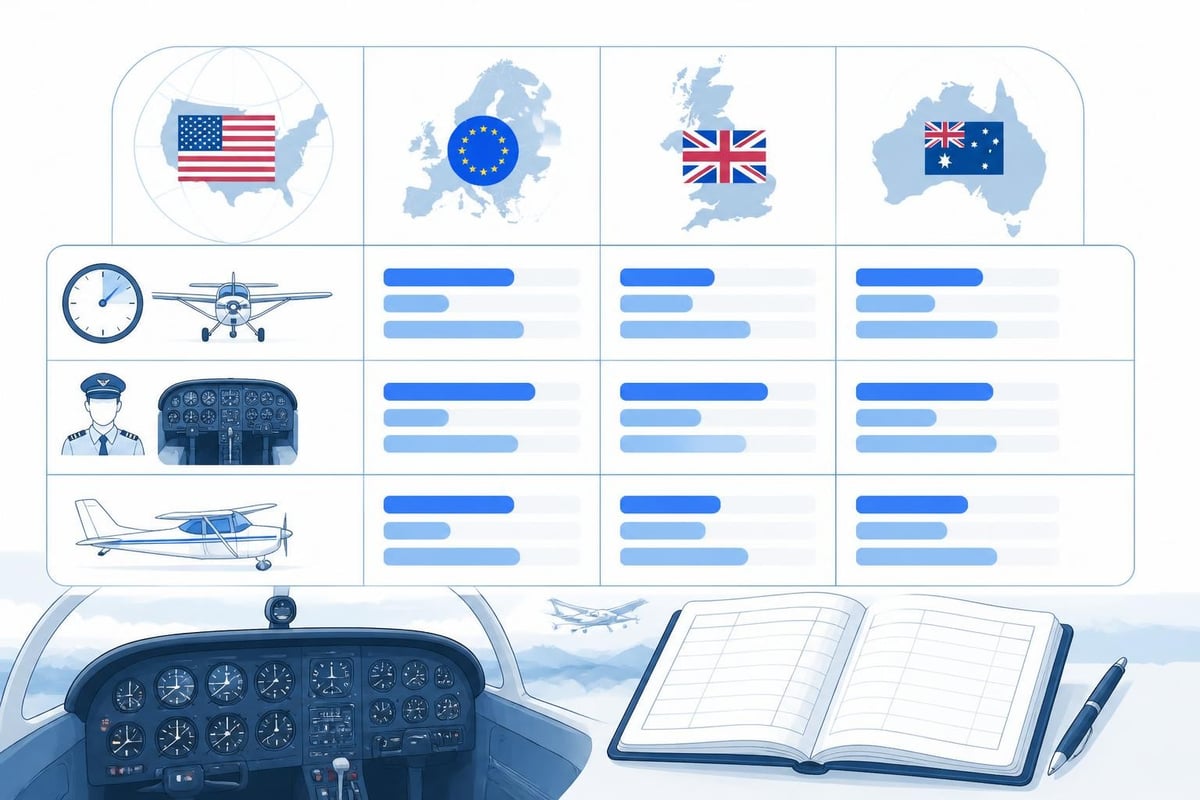
Becoming a flying instructor requires structured training that develops both flying proficiency and teaching skills. Instructor courses are intensive, typically 6-10 weeks full-time or 3-6 months part-time.
Ground School and Teaching Techniques
Instructor candidates complete dedicated ground training covering:
- Fundamentals of Instruction including learning theory, lesson planning, assessment methods, and teaching from the right seat
- Technical Subject Instruction reviewing aerodynamics, systems, regulations, and performance at teaching depth
- Lesson Plan Development creating structured briefs for each manoeuvre and phase of flight
- Human Factors understanding stress, fatigue, decision-making, and error management in student pilots
The FAA Aviation Instructor's Handbook remains the foundational text for teaching methods and instructional best practice.
Flight Training and Demonstration Standards
Flight training emphasises demonstration quality, error recognition, and recovery techniques. Candidates practice:
- Right-seat operations developing proficiency from the instructor's seat, including limited panel and control coordination
- Manoeuvre demonstration to commercial standards plus teaching points (e.g., slow flight while explaining angle of attack and stall warning)
- Scenario-based instruction presenting common student errors and guiding correction
- Emergency procedures from the instructor role, including simulated engine failures and system malfunctions
Instructor trainees log 15-25 hours of flight training before the checkride, practicing each lesson multiple times.
The Checkride and Assessment of Competence
The flying instructor practical test evaluates both flying skill and instructional ability. The examiner acts as a student while the candidate delivers a lesson, then probes technical knowledge and teaching methods.
Typical test structure:
| Phase | Content | Duration |
|---|---|---|
| Oral | FOI principles, technical knowledge, scenario discussion | 2-3 hours |
| Flight | Demonstration of 8-12 manoeuvres with teaching points | 1.5-2 hours |
| Debrief | Error analysis, lesson effectiveness, endorsement authority | 30 minutes |
Pass standards require commercial-level flying precision plus clear, accurate instruction. Common disapproval areas include incomplete lesson plans, failure to identify student errors during scenarios, and insufficient technical depth on complex topics.
Career Pathways and Progression
The flying instructor certificate opens diverse career paths, from flight school employment to corporate training and airline instruction. Many pilots build time as instructors before transitioning to commercial operations.
Flight School Instructor
Most newly certificated instructors start at Part 141 or Part 61 flight schools, teaching private and instrument students. Typical assignments include:
- Primary students learning basic manoeuvres, landings, and solo supervision
- Instrument students building IFR proficiency in actual and simulated conditions
- Commercial students refining precision and preparing for advanced certificates
Instructors typically log 60-100 hours per month, reaching 1,000-1,500 hours within 18-24 months. This time qualifies pilots for regional airline minimums or corporate positions.
Challenges include variable income (often paid per flight hour), weather cancellations, and managing multiple students with different learning speeds.
University and Collegiate Programmes
University aviation programmes offer more stable employment with structured curricula and academic integration. Instructors teach ab initio students through integrated degree programmes, often with benefits and fixed salary.
Positions typically require:
- CFI with 500-1,000 hours
- CFII and MEI certificates
- College degree (bachelor's preferred)
- Commitment to standardised training and assessment
These roles provide teaching experience in a professional environment and often include paths to chief instructor or programme management positions.
Corporate and Contract Instruction
Experienced flying instructors may move into corporate training departments, delivering type-rating instruction, recurrent training, and upgrade courses. Positions require:
- ATP certificate
- 2,000-3,000 hours total time
- Type rating on specific aircraft
- Strong knowledge of advanced systems and automation
Contract instructors work independently, providing specialised training (aerobatics, tailwheel, upset recovery) or supporting flight schools during peak demand.
Airline Training Departments
Airlines employ instructors as ground school lecturers, simulator instructors (SFIs under EASA Part-FCL), and line training captains. Requirements include:
- Airline Transport Pilot Licence
- Type rating on fleet aircraft
- 3,000-5,000 hours (varies by airline)
- Internal instructor upgrade course
These roles offer career stability, advanced training in CRM and evidence-based instruction, and mentorship of new-hire pilots. Some airlines hire direct-entry instructors for cadet programmes, particularly in Europe and Asia.

Maintaining Currency and Professional Development
Flying instructors must meet regulatory currency requirements and pursue ongoing development to remain effective and employable.
Regulatory Currency Requirements
FAA: CFIs renew every 24 calendar months via FIRC (online or in-person refresher course), practical test with examiner, or activity-based renewal (requires 8 endorsements and 80% first-time pass rate among students).
EASA: Flight instructors complete refresher training every 36 months or maintain continuous activity (minimum instructor duties and oversight flights). The instructor standardisation guidance from Flight Safety Foundation emphasises consistency and evidence-based teaching methods.
UK CAA: Aligned with EASA Part-FCL. FI certificates require revalidation every 36 months through instructor activity or approved refresher course.
Tracking Instructor Activity and Endorsements
Professional instructors maintain detailed records of:
- Dual given by manoeuvre category (takeoffs, landings, instrument approaches)
- Student endorsements for solo, checkrides, and additional ratings
- Ground instruction hours for licence and insurance purposes
- Recurrent training completion dates and certificate expiry tracking
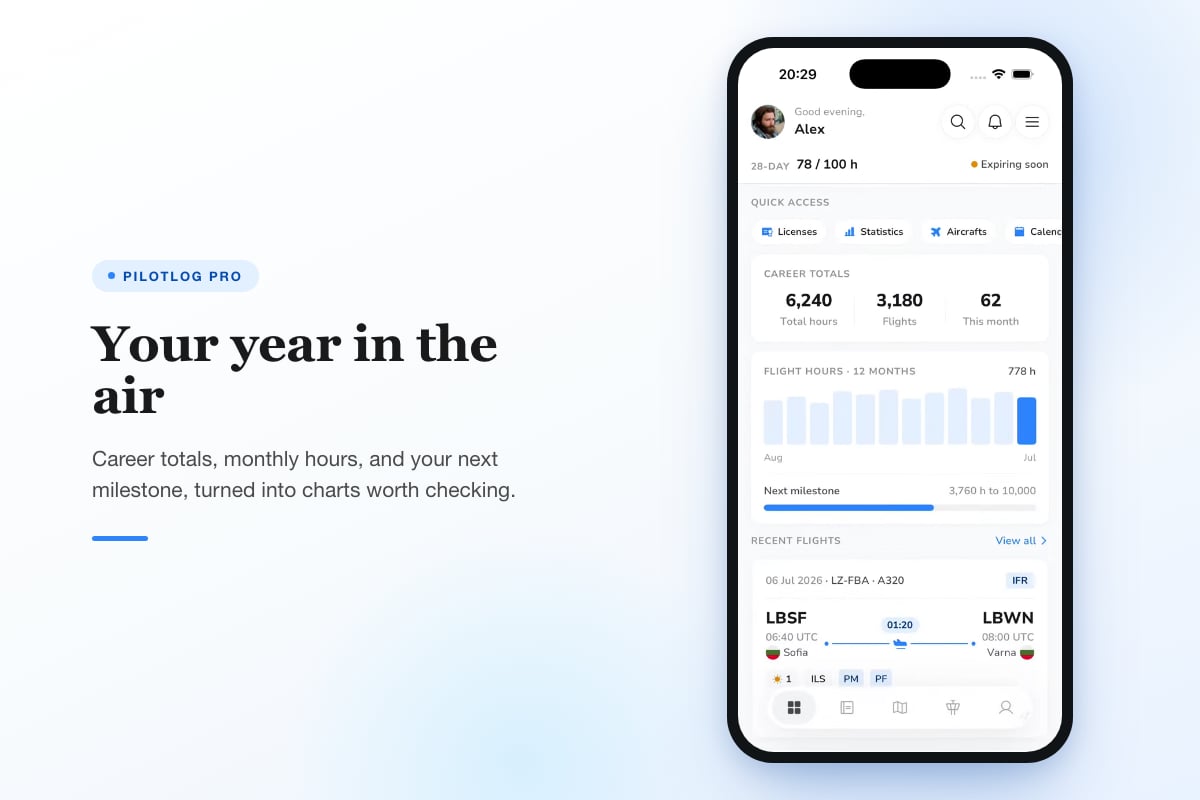
Tracking these metrics manually is time-consuming and error-prone. Pro tier within Pilotlog automatically monitors instructor currency, logs dual given across categories, and flags certificate expiries well in advance. This ensures compliance without constant manual calculation.
Continuing Education and Specialisation
Successful instructors pursue additional certificates and endorsements:
- CFII (Certified Flight Instructor Instrument) for instrument training
- MEI (Multi-Engine Instructor) for twin-engine instruction
- Aerobatic endorsement for upset recovery and advanced manoeuvres
- Type-specific authorisations for complex or high-performance aircraft
Many attend annual training conferences, complete online courses on human factors and teaching methods, and pursue university-level education in aviation safety or instructional design. The FAA Aviation Instructor's Handbook and industry best-practice resources support continuous improvement.
Challenges and Rewards of Flight Instruction
The flying instructor role presents unique challenges alongside significant professional and personal rewards.
Common Challenges
Variable income and weather dependence: Flight schools often pay per flight hour, creating income variability during winter months or extended poor weather. Instructors in northern climates may log 30 hours in January versus 90 in July.
Burnout and repetition: Teaching the same manoeuvres daily can become monotonous. Managing multiple students, each at different stages and learning speeds, requires patience and adaptability.
Regulatory responsibility: Instructors are accountable for student safety and regulatory compliance. Endorsements carry legal weight, and errors in training or record-keeping may result in FAA or CAA enforcement action.
Career progression pressure: Many instructors view the role as time-building toward airline positions, creating tension between teaching quality and rapid hour accumulation.
Rewards and Professional Growth
Skill refinement: Teaching forces instructors to master subjects at a deeper level. Explaining angle of attack, P-factor, or instrument failure modes strengthens technical knowledge beyond initial training.
Mentorship impact: Instructors shape future pilots, instilling safety culture, professionalism, and sound judgement. Many airline captains credit their first flying instructor with foundational skills that defined their careers.
Flexibility and autonomy: Instructors often set their own schedules, choose student assignments, and develop personalised teaching methods. Entrepreneurial instructors build independent practices with loyal student bases.
Pathway to advanced roles: Instructor experience is valued across aviation. Airlines, corporate flight departments, and regulatory bodies prefer candidates with teaching backgrounds, recognising the leadership and communication skills developed in the role.
Practical Example: First 500 Hours as a CFI
Consider a newly certificated CFI beginning work at a Part 61 flight school in April 2026. The instructor holds a commercial certificate with 260 total hours and aims to reach 1,500 hours for airline eligibility.
Month 1-3 (April-June): Primary students dominate the schedule. The instructor logs 78 hours in April, 84 in May, and 92 in June (254 hours), reaching 514 total. Earnings average £3,200-3,600 per month at £38 per flight hour. Weather is favorable, and the school assigns 4-5 active students.
Month 4-6 (July-September): Summer demand peaks. The instructor adds instrument and commercial students, logging 96, 101, and 89 hours (286 hours), reaching 800 total. Income increases to £3,800-4,100 per month. The instructor completes CFII checkride in August, expanding earning potential.
Month 7-12 (October-March): Weather slows activity. The instructor logs 65-80 hours monthly (averaging 72), adding 432 hours and reaching 1,232 total by March 2027. Income drops to £2,700-3,200. The instructor supplements with ground instruction and online courses.
Result: 12 months yields 972 flight hours (1,232 total), strong instrument teaching experience, and readiness for multi-engine training. The instructor tracks every flight, endorsement, and expiry using a digital logbook, eliminating manual calculations and ensuring currency compliance.
Rules and minimums evolve. Always confirm current requirements against official regulatory sources before pursuing instructor certification or relying on hour thresholds for career decisions.
Teaching Methods and Instructional Best Practice
Effective flight instruction balances technical proficiency with sound pedagogy. Evidence-based teaching methods improve learning outcomes and student pass rates.
Lesson Structure and Preparation
Every lesson follows a structured format:
- Pre-flight brief (15-20 minutes): objectives, standards, safety items, and demonstration sequence
- Flight (60-90 minutes): demonstration, student practice, error correction, and guided repetition
- Post-flight debrief (10-15 minutes): performance review, strengths, areas for improvement, and next-lesson preview
Instructors develop detailed lesson plans covering each manoeuvre's setup, execution, common errors, and recovery techniques. The ICAO Training Instructors Guide provides competency-based frameworks and assessment guidance used internationally.
Error Recognition and Correction
Skilled instructors anticipate student errors and intervene before situations escalate. Common techniques include:
- Guided discovery: asking questions that lead students to identify their own errors ("What's happening to our altitude?")
- Progressive complexity: introducing variables incrementally (e.g., adding crosswind only after students master calm-wind landings)
- Positive reinforcement: emphasising correct performance before addressing errors
Avoid negative transfer by ensuring students understand why a technique works, not just how to perform it.
Scenario-Based Training and Decision-Making
Modern instruction emphasises scenario-based training (SBT), presenting realistic situations that require students to integrate knowledge, assess risk, and make decisions. Examples include:
- Diversion to alternate due to deteriorating weather
- System failure requiring precautionary landing
- Traffic conflict requiring assertive communication
SBT develops judgement and situational awareness beyond rote manoeuvre practice, better preparing students for real-world operations. AOPA guidance highlights instructor practices that produce consistently strong student outcomes.
The flying instructor role demands technical mastery, teaching skill, and regulatory compliance, offering a direct path to building flight hours while shaping the next generation of pilots. Whether pursuing a career in flight training or using instruction as a stepping stone to airlines or corporate operations, understanding licensing requirements, maintaining currency, and embracing evidence-based teaching methods ensures success. Pilotlog helps instructors stay current and organised, tracking dual given, endorsements, and certificate expiries automatically so you can focus on delivering safe, effective flight training.
- flying instructor
- cfi certification
- easa part-fcl
- pilot career
- flight instructor hours
A logbook that keeps itself.
Join the waitlist and be first in line when Pilotlog launches.
Free to join, no spam. Unsubscribe any time.