flight instructor
Flight Instructor: Your Complete Career Guide (2026)
28 Oct 2026 · 11 min read

A flight instructor is a certificated pilot authorised to teach others to fly, assess competency, and endorse students for solo flight and practical tests. Flight instructors hold the front line of aviation safety, shaping the next generation of pilots while building their own experience and flight hours. Whether you're considering the role yourself or choosing an instructor for your training, understanding what defines a professional flight instructor helps you make better decisions and recognise quality instruction when you see it.
What Makes a Flight Instructor
A flight instructor must hold both a commercial pilot licence and a separate instructor rating or certificate. In the United States, that means earning a Certified Flight Instructor (CFI) certificate from the FAA. In Europe, pilots obtain a Flight Instructor (FI) rating under EASA Part-FCL. Both require demonstration of advanced piloting skill, thorough aeronautical knowledge, and the ability to teach effectively from the right seat.
The practical test for a flight instructor rating is among the most demanding in aviation. You fly from the right seat, demonstrate manoeuvres to commercial standards, then talk through how you'd teach each one. The examiner plays the role of a student pilot at various experience levels, and you must adapt your instruction on the spot. This tests not just flying ability but pedagogical skill, patience, and the capacity to diagnose and correct errors in real time.
Certification Requirements by Region
| Region | Licence Prerequisite | Minimum Flight Time | Theoretical Exam | Practical Test |
|---|---|---|---|---|
| FAA (USA) | Commercial Pilot | 250 hours total (CPL requirement) | FOI + 2 knowledge tests | CFI checkride (practical + oral) |
| EASA (Europe) | CPL or ATPL (frozen) | 200 hours total, 30 PIC | FI written exam (125 questions) | Skill test + teaching/learning assessment |
| UK CAA (post-Brexit) | CPL (A) | 200 hours, 150 as PIC | Same as EASA Part-FCL | FI(A) skill test |
Beyond the initial rating, many flight instructors add instrument (CFII or IRI), multi-engine (MEI), or type-specific instructor authorisations as their careers progress. Each expansion opens new training opportunities and income streams.
Responsibilities and Legal Duties
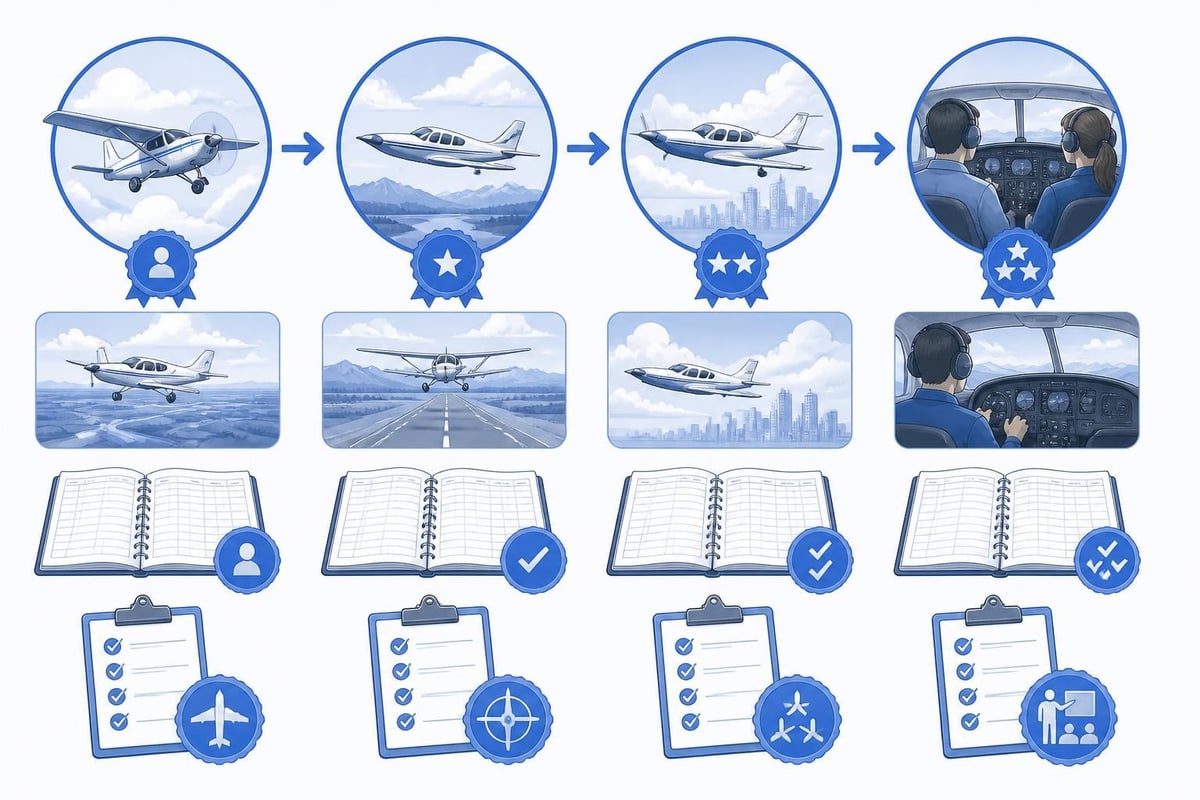
A flight instructor carries significant legal and professional responsibilities. You sign logbooks, endorse students for solo and checkride, and your signature becomes part of the permanent record. If a student you've endorsed has an accident or fails a checkride, examiners and investigators will review your training records and methods.
The FAA Aviation Instructor's Handbook lays out the instructor's role in detail: evaluating student performance, managing risk, structuring lessons, and maintaining professional standards. Instructors must teach to the Airman Certification Standards, ensuring every student meets the same objective benchmarks before solo or checkride.
Key legal duties include:
- Pre-flight and post-flight briefings for every lesson
- Accurate logbook entries and endorsements
- Assessing student readiness before solo endorsement
- Maintaining instructor currency (flight reviews, recurrent training)
- Reporting accidents or incidents involving students
- Staying current on regulatory changes and ACS updates
Liability is real. The Soaring Safety Foundation guidance on instructor liability underscores the importance of thorough documentation, clear communication, and adherence to standards. Every logbook entry, every endorsement, every pre-flight briefing builds a record that protects both you and your student.
Flight instructors also act as gatekeepers. If a student isn't ready, you withhold the endorsement. This decision, while sometimes uncomfortable, is fundamental to maintaining safety standards across the industry.
Teaching Techniques and Modern Training Methods
Effective instruction goes far beyond demonstrating a manoeuvre and saying "your controls." Modern flight instructors employ scenario-based training, aeronautical decision-making (ADM) exercises, and competency-based assessment. These methods, detailed in FAA guidance and EASA's Evidence-Based Training framework, focus on developing pilots who can think critically, not just manipulate controls.
Scenario-Based Training
Instead of teaching steep turns in isolation, you embed the manoeuvre in a scenario: diverting around weather, navigating airspace, or responding to an unforecast wind shift. The student learns the why alongside the how. This approach mirrors real-world flying and builds transferable decision-making skills.
The IATA Evidence-Based Training Implementation Guide offers practical techniques for structuring these scenarios, tracking competencies, and adjusting instruction based on observed performance trends. While written for airline training, the principles apply at every level.
Common instructional techniques:
- Demonstration-performance method – show the manoeuvre, explain key points, let the student try, then debrief
- Guided discovery – ask questions that lead the student to identify errors and solutions themselves
- Collaborative assessment – student and instructor jointly review the lesson and set goals for the next flight
- Positive transfer – connect new skills to previously mastered ones (e.g., linking slow flight to approach configuration)
- Error management – deliberately introduce minor errors or distractions to build resilience and scan discipline

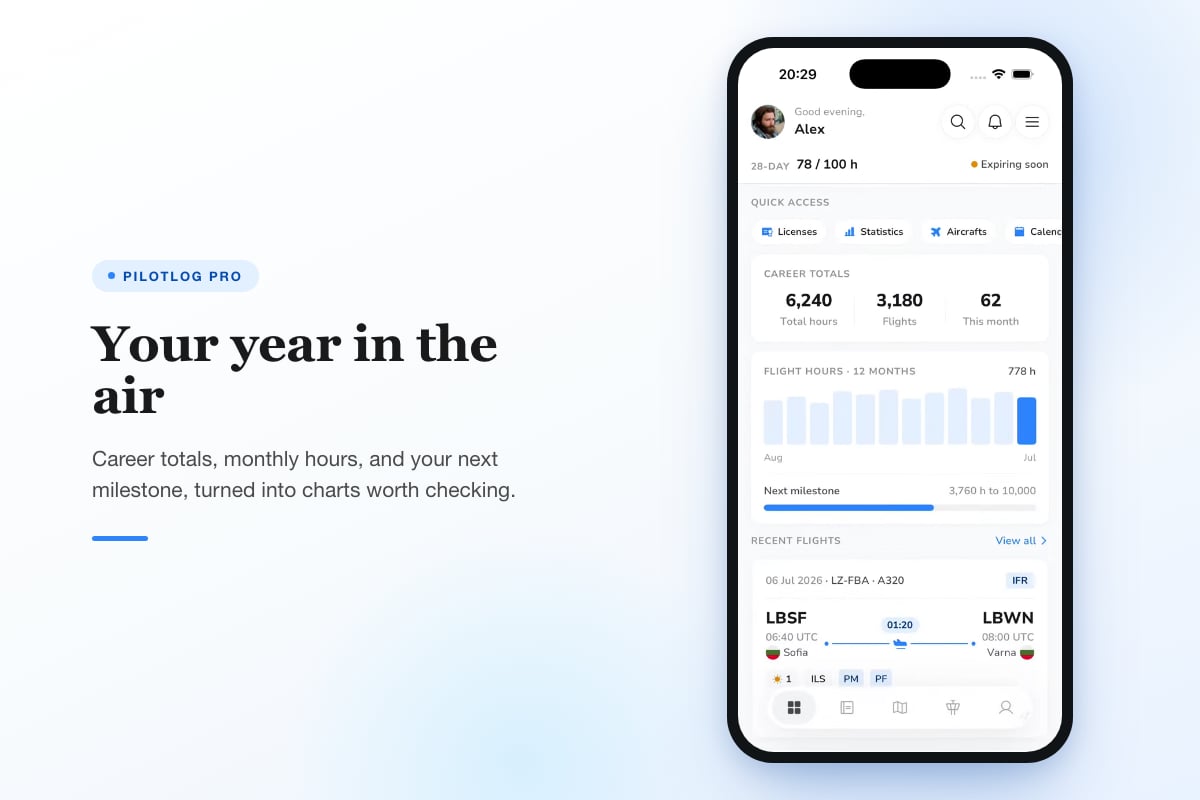
Recording and tracking training progress matters. Many flight instructors now use digital logbooks to monitor student hours, endorsements, and currency milestones. Pilotlog Pro helps instructors and students alike stay on top of rolling currency windows, upcoming medical expiries, and training milestones, with automatic alerts that flag lapsing privileges before they become a problem.
Career Pathways and Professional Development
Most pilots become flight instructors to build time, experience, and income on the path to commercial or airline careers. Instructing offers paid flying, deep systems knowledge, and the right-seat perspective essential for crew operations later. But the role has evolved. Flight Safety Foundation research highlights a shift toward treating instructors as safety professionals with long-term career potential, not just time-builders passing through.
Typical Career Progression
- Junior flight instructor (0-500 hours) – primary students, ground school, basic endorsements
- Senior instructor (500-1,500 hours) – instrument, commercial, complex/high-performance checkouts
- Chief instructor or check instructor – standardisation, examiner liaison, quality assurance
- Corporate or type-specific instructor – jet transition training, recurrent programmes
- Airline training captain or simulator instructor – full-time instructional role in Part 121 or equivalent operations
Some pilots make instruction a lifelong career, especially in university flight programmes, major training organisations, or specialised fields like aerobatics or seaplane instruction. Embry-Riddle's CFI programme illustrates how academic institutions integrate instructor development with degree programmes, creating a pipeline of well-prepared, professional instructors.
Maintaining Currency and Continuing Education
Flight instructors must maintain their own currency. Under FAA rules, a CFI certificate expires every 24 calendar months unless renewed by activity (endorsing students who pass checkrides), attending a Flight Instructor Refresher Course (FIRC), or passing a practical test. EASA Part-FCL requires FI ratings to be revalidated every three years, with specific requirements for instructional hours or refresher training.
Staying current on regulatory changes, new training techniques, and airspace updates is non-negotiable. Many instructors subscribe to FAA or EASA updates, attend industry workshops, and participate in standardisation meetings at their flight schools. This ongoing learning keeps instruction relevant and aligned with current standards.
Choosing and Working with a Flight Instructor
If you're a student or renter pilot looking for an instructor, certain qualities signal professionalism and competence. Look for someone who briefs thoroughly, documents lessons clearly, and tailors instruction to your learning pace. A good flight instructor listens, asks questions, and adjusts technique when something isn't clicking.
Red flags to watch for:
- Skipping or rushing pre-flight briefings
- Incomplete or vague logbook entries
- Reluctance to explain the why behind procedures
- Pressuring you toward solo or checkride before you're ready
- Defensive or dismissive responses to questions
Ask potential instructors about their experience, training philosophy, and availability. Consistency matters. Switching instructors mid-course often means retracing ground, so finding someone whose schedule and teaching style align with yours pays off.
For those pursuing advanced ratings or recurrent training, look for instructors with relevant experience. An instrument instructor who regularly flies IFR in actual conditions brings insights a VFR-only instructor cannot. Similarly, a multi-engine instructor with turbine time offers more than someone who just earned their MEI last month.
If you're logging training in a digital logbook, ensure your instructor can review and endorse entries electronically or provide clear documentation you can import. Platforms like Pilotlog let instructors and students share flight records, track progress, and maintain a complete training history accessible from any device.

Common Challenges and How Instructors Address Them
Every flight instructor faces recurring challenges: students who struggle with landings, nerves before solo, or difficulty grasping complex airspace. Skilled instructors develop strategies to diagnose root causes and adapt their approach.
Landing Difficulties
Landings trouble nearly every student at some point. An instructor might break the approach into phases, focusing on stabilised descent rates, aiming point control, or flare timing individually. Video debriefs, using cockpit cameras or external footage, help students visualise what they're doing versus what they think they're doing.
Pre-Solo Anxiety
Solo flight represents a psychological milestone. Instructors manage this by building confidence incrementally: shorter solo patterns first, then extending to the practice area. Clear, specific endorsements ("authorised for solo pattern work at ABC airport, winds <15 knots, visibility >5 SM") give students and instructors defined boundaries.
Airspace and Regulation Confusion
Understanding class B, C, D, and E airspace, along with associated equipment and clearance requirements, challenges many students. Effective instructors use visual aids, real-world scenarios, and incremental exposure. A flight through progressively complex airspace, with the instructor guiding radio calls and clearances, builds practical competence faster than rote memorisation.
Stall and Spin Training
Stall and spin awareness training, mandatory in most PPL syllabi, requires careful instruction. Instructors teach recognition cues, recovery technique, and the importance of coordination, all while managing a student's natural apprehension. Gradual introduction, starting with slow flight and approach-to-stall exercises, builds comfort before progressing to full stalls.
Modern instructional methods, informed by accident data from NTSB investigations, emphasise threat and error management. Instructors teach students to identify and mitigate risks before they escalate, a skill that transcends any single manoeuvre.
The Business Side of Flight Instructing
Flight instructors are often independent contractors or hourly employees at flight schools. Understanding the business model helps both instructors and students. Instructors typically earn an hourly rate for flight time and sometimes for ground instruction. Rates vary widely: $30-50 per hour at smaller schools, higher at universities or corporate training centres.
Scheduling flexibility can be a double-edged sword. Instructors juggle multiple students, weather cancellations, and aircraft maintenance. Students who book consistently, arrive prepared, and respect cancellation policies make instructors' lives easier and often receive priority scheduling in return.
For instructors building toward airline or corporate careers, logging quality dual-given time matters. Airlines value instructional experience because it demonstrates communication skills, judgement, and the ability to manage a cockpit workload from the right seat. Tracking those hours accurately, along with PIC time, night time, and instrument instruction, is essential. A robust digital logbook keeps all these categories organised and ready for interview or application.
Many instructors also maintain personal logbooks for their own currency and career records. Tools like Pilotlog streamline this, automatically calculating rolling totals, flagging expiring endorsements, and exporting data in formats airlines and regulators require.
Regulatory Considerations and Future Trends
Regulations governing flight instructors continue to evolve. ICAO's work on Competency-Based Training and Assessment influences how national authorities structure instructor requirements and training syllabi. The shift from purely time-based to competency-based frameworks means instructors must demonstrate not just hours flown but mastery of specific teaching and assessment competencies.
In Europe, recent changes under EASA Part-FCL streamline mutual recognition of instructor ratings across member states, making it easier for instructors to work in multiple countries. Brexit introduced additional complexity for UK instructors, who now navigate separate UK CAA and EASA regimes depending on where they teach.
Technology also reshapes instruction. Simulators, virtual reality headsets for procedure training, and advanced flight-tracking apps supplement in-flight lessons. Instructors who embrace these tools, while maintaining the core skills of stick-and-rudder teaching, position themselves as forward-thinking professionals.
Regulatory changes happen. Pilots and instructors should always confirm current requirements with official sources like the FAA, EASA, or their national civil aviation authority before relying on any generalised guidance.
Building a Sustainable Instructor Career
Flight instructing can be transient or long-term. Those who choose it as a career rather than a stepping stone often specialise: upset recovery training, tailwheel endorsements, mountain flying, or aerobatic instruction. Specialisation creates differentiation and allows instructors to command higher rates.
Strategies for long-term success:
- Develop expertise in a niche (seaplanes, complex singles, advanced instruments)
- Pursue examiner or check-instructor authorisations
- Build a reputation through student success and word-of-mouth
- Stay involved in industry organisations and training standards committees
- Continuously update skills with recurrent training and new ratings
Instructors who treat teaching as a profession, not just a time-building phase, bring higher quality to every lesson. They invest in their own education, maintain thorough records, and view each student's progress as a reflection of their own competence.
Flight instructors shape every pilot's foundation, from first solo to type rating. Whether you're pursuing the rating yourself, looking for quality instruction, or simply understanding the role better, recognising the skill, responsibility, and professionalism involved raises the standard across aviation. Track your training progress, currency, and logbook entries with precision using Pilotlog, keeping you current, legal, and ready for every lesson and milestone ahead.
- flight instructor
- cfi certification
- flight training
- pilot careers
- flight instructor duties
A logbook that keeps itself.
Join the waitlist and be first in line when Pilotlog launches.
Free to join, no spam. Unsubscribe any time.