eld compliance
HOS247 ELD: What Pilots Need to Know in 2026
25 Aug 2026 · 12 min read

The hos247 eld system is an electronic logging device designed for commercial trucking operations to track driver hours of service and maintain Federal Motor Carrier Safety Administration (FMCSA) compliance. While pilots operate under different regulations from lorry drivers, the core challenge is identical: both professions require accurate, auditable records of duty time and flight or drive hours to stay legal and safe. Understanding how commercial drivers manage their hours through systems like hos247 eld reveals useful parallels for pilots tracking flight time limits, duty periods, and currency requirements.
What Is HOS247 ELD and Why It Exists
The hos247 eld is a hardware device and software platform that automatically records commercial motor vehicle driving time, engine hours, and vehicle movement. The Federal Motor Carrier Safety Administration mandated electronic logging devices in December 2017 to replace paper logbooks for most interstate lorry drivers. The goal was simple: eliminate falsified paper logs and improve road safety by ensuring drivers respect maximum driving hours and mandatory rest periods.
Key features of the hos247 eld system include:
- Automatic recording of engine start, drive time, and location
- Real-time hours-of-service compliance monitoring
- FMCSA-compliant data retention and transfer
- Driver vehicle inspection reports (DVIR)
- Alerts when approaching daily or weekly drive-time limits
The HOS247 product page states the device supports multiple diagnostic port types and provides live violation warnings. The system aims to prevent drivers from exceeding the 11-hour daily driving limit or 70-hour weekly limit set by US federal rules.
Commercial drivers face hard limits: 11 hours driving after 10 consecutive hours off duty, with a 14-hour on-duty window and a 30-minute break after 8 hours. Violating these rules triggers fines, out-of-service orders, and safety ratings downgrades. The hos247 eld enforces these limits by tracking every minute of engine time and alerting drivers before they breach compliance thresholds.

Parallels Between HOS247 ELD and Pilot Duty-Time Tracking
Pilots operate under flight-time limitations that mirror the logic of trucking hours-of-service rules. Commercial airline pilots in the UK and EU follow CAP 371 and EU-OPS subpart Q, which set rolling flight-time and duty-period limits. For example, flight crew may not exceed 900 flight hours in any calendar year or 100 hours in any 28 consecutive days. Duty periods are similarly capped, with minimum rest requirements between shifts.
Just as the hos247 eld automatically tracks drive time for lorry drivers, pilots need a system that continuously monitors rolling totals for flight time, duty time, and rest periods. Manual logbooks require pilots to calculate 28-day and 365-day totals themselves, a process prone to arithmetic errors and missed deadlines.
Rolling Limits and Real-Time Alerts
The most valuable feature of the hos247 eld for commercial drivers is real-time monitoring. The device counts down remaining hours before the driver hits a limit, preventing violations before they happen. Pilots face the same need: knowing exactly how many hours remain in the current 28-day window or how many duty days are left before a rest period is mandatory.
For airline and charter pilots, exceeding flight-time limits isn't just a paperwork problem. It triggers immediate grounding, regulatory investigation, and potential certificate action. Tracking these limits manually through spreadsheets or paper logs creates risk. A digital logbook that mirrors the hos247 eld approach, automatically calculating rolling totals and flagging approaching limits, removes that risk.
| Feature | HOS247 ELD (Trucking) | Digital Pilot Logbook |
|---|---|---|
| Automatic time capture | Engine hours, drive time | Flight time, duty periods |
| Rolling limit tracking | 70 hours in 8 days | 100 hours in 28 days, 900 in 365 |
| Pre-violation alerts | Warns before 11-hour limit | Warns before exceeding limits |
| Regulatory compliance | FMCSA mandate | CAA, EASA, FAA requirements |
| Audit trail | Immutable electronic record | Complete flight history |
HOS247 ELD Compliance and Data Integrity
The FMCSA requires that ELDs meet strict technical specifications. They must synchronise with the vehicle engine control module, record location data, and create tamper-evident records. Drivers cannot edit or delete logged hours. The hos247 eld generates a file that inspectors can download during roadside checks, providing an instant compliance audit.
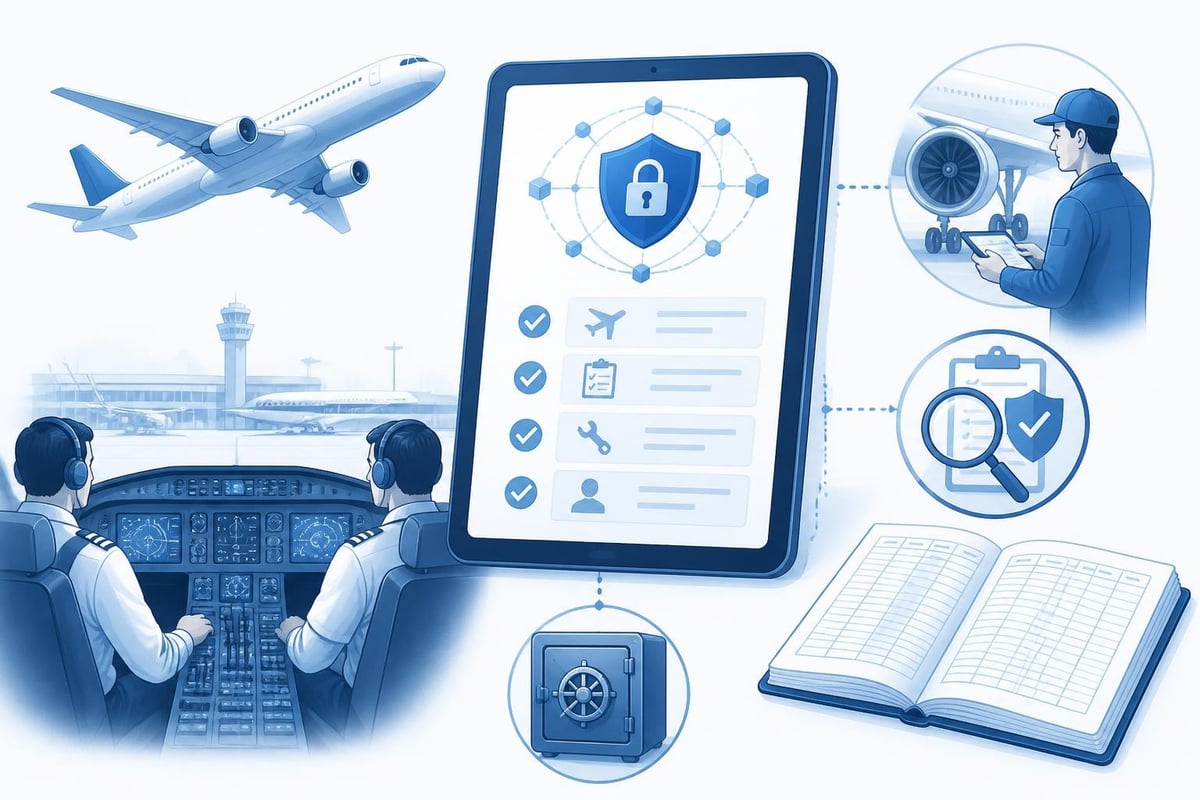
Data integrity is critical. The Scientific Working Group on Digital Evidence best practices for vehicle telematics systems emphasise chain-of-custody, timestamp accuracy, and protection against unauthorised modification. These same principles apply to pilot logbooks. Aviation authorities expect accurate, contemporaneous records. A digital logbook that timestamps entries, prevents backdating, and creates an audit trail meets the same evidentiary standards that the hos247 eld satisfies for trucking.
Pilots undergo ramp checks, line checks, and licence renewals where inspectors review logbook accuracy. Just as a lorry driver must produce ELD records on demand, a pilot must demonstrate current and complete logs. The difference is that pilots often rely on honour-system self-reporting, while trucking moved to enforced electronic monitoring.
Real-World Performance and Industry Reception
The hos247 eld operates in a competitive market. The Better Business Bureau profile for HOS247 shows customer feedback and complaint resolution. ELD vendors vary in hardware reliability, customer support, and software usability. Drivers report frustrations with connectivity issues, inaccurate location data, and rigid enforcement that doesn't account for real-world edge cases.
Industry reporting from FreightWaves highlights ongoing debate about whether the ELD mandate delivered its promised safety benefits. The Department of Transportation analysis found confounding factors that complicate direct before-and-after comparisons. Some drivers argue that rigid enforcement pushes them to drive faster to beat the clock, creating new safety risks.
For pilots, the lesson is clear: automation and compliance monitoring are valuable, but the system must be intelligently designed. A digital logbook should enforce limits without creating perverse incentives. It should accommodate legitimate edge cases, such as flight delays, diversions, and discretionary extensions, while still maintaining regulatory compliance.
Tracking Currency Alongside Flight-Time Limits
The hos247 eld focuses exclusively on hours-of-service limits. Pilots face a second layer of complexity: currency requirements. Beyond total flight time, pilots must maintain recency in specific operations. For example, to carry passengers, a pilot needs three takeoffs and landings in the preceding 90 days in the same category and class of aircraft. Night currency requires three night takeoffs and landings to a full stop within 90 days.
IFR currency demands six instrument approaches, holding procedures, and intercepting and tracking courses within the preceding six months. These requirements reset independently of flight-time limits. A pilot can be under flight-time limits but still be non-current for IFR or night operations. Understanding IFR currency requirements is essential for maintaining privileges without interruption.
Common pilot currency requirements include:
- 90-day passenger currency (three takeoffs and landings)
- Night passenger currency (three night takeoffs and landings to a full stop)
- IFR currency (six approaches, holding, tracking within six months)
- Medical certificate validity (Class 1, 2, or 3 depending on operation)
- Licence ratings and type endorsements with expiry dates
A comprehensive digital logbook for aviation should track both sides: cumulative flight-time limits and discrete currency expirations. The hos247 eld model of automatic calculation and pre-expiry alerts applies directly. Instead of warning a driver they have 2 hours left before hitting the 11-hour limit, a pilot's logbook should warn them that IFR currency expires in 14 days or that they need one more night landing before passenger currency lapses.
How Pilots Can Apply ELD Principles to Flight Logging
The commercial trucking industry moved to electronic logging because paper couldn't keep pace with complex, rolling limits. Aviation faces the same problem. Paper logbooks work for recording individual flights but fail at dynamic compliance monitoring. Calculating a rolling 28-day total by hand across dozens of flights is tedious and error-prone.
Step-by-Step: Tracking Rolling Limits
- Log every flight immediately. Just as the hos247 eld captures drive time automatically, pilots should log flights as soon as they secure the aircraft. Delayed entries lead to forgotten details and inaccurate totals.
- Record flight time, duty time, and sector counts. Many operations have limits on both flight hours and duty periods. Track both.
- Review rolling totals before accepting a trip. Before agreeing to fly, check current 28-day and 365-day totals. If accepting the flight would exceed limits, decline.
- Monitor currency requirements separately. Track passenger, night, and IFR currency alongside flight-time limits. One expired currency grounds specific operations even if flight-time limits permit more hours.
- Set alerts for approaching limits. Configure warnings at 80% of a limit so corrective action is possible before a violation occurs.
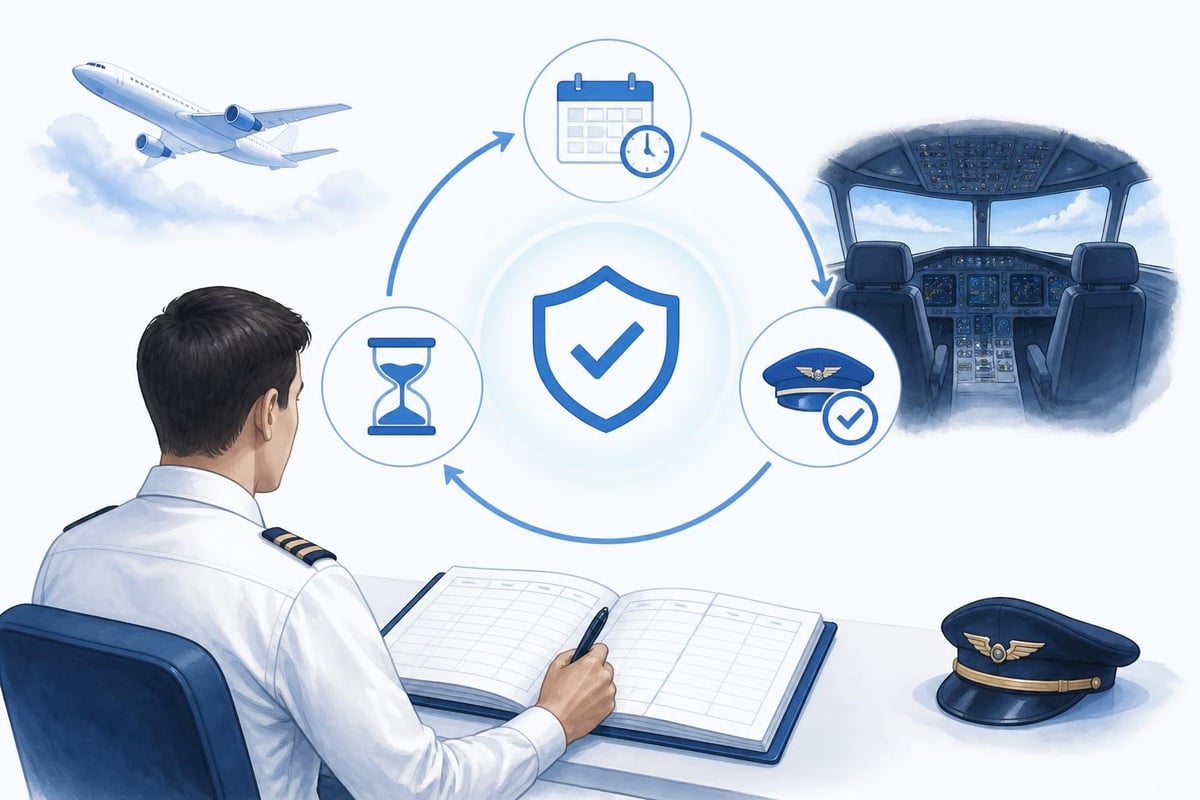
The flight logbook becomes a real-time compliance tool, not just a historical archive. This shift mirrors exactly what the hos247 eld did for trucking: transforming record-keeping into proactive limit management.
Choosing a Digital Logbook That Works Like an ELD
Not all digital logbooks provide hos247 eld-level compliance monitoring. Many are simple electronic versions of paper logs: they store entries but don't calculate rolling limits or alert pilots to approaching expirations. When evaluating a digital pilot logbook, look for features that mirror the core strengths of electronic logging devices in trucking.
Essential features for compliance tracking:
- Automatic calculation of rolling 28-day, 90-day, and 365-day flight-time totals
- Countdown to currency expirations (passenger, night, IFR)
- Alerts for licence and medical expiry, flagged weeks in advance
- Duty-time tracking for commercial operations under CAP 371 or Part 117
- Export capability for audits, interviews, and regulatory inspections
Pilotlog Pro tracks rolling flight-time and duty limits alongside passenger, night, and IFR currency, with lapse dates calculated automatically. Licence and medical expiry alerts flag renewals early, ensuring nothing catches pilots by surprise. It's designed for pilots across the whole career, from students building hours to airline crew managing complex duty rosters.
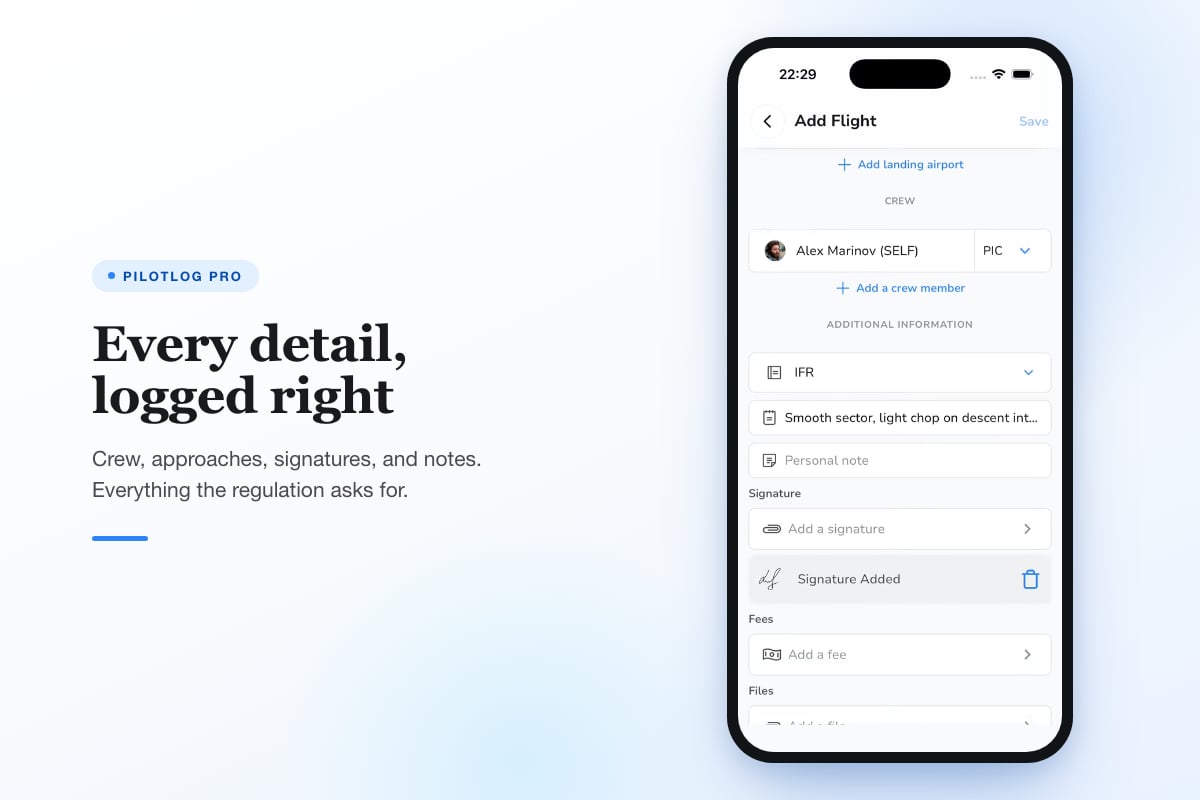
The system mirrors the hos247 eld philosophy: enforce compliance automatically, alert before violations occur, and create an auditable record. Pilots log a flight in seconds; the software tracks the rest.
Lessons from Trucking for Aviation Safety Culture
The ELD mandate in trucking wasn't universally popular. Many drivers resented the loss of flexibility and the perception of surveillance. But the underlying principle, that safety-critical limits should be monitored electronically rather than self-reported, proved sound. The hos247 eld and similar devices reduced logbook violations and made enforcement more consistent.
Aviation already embraces this principle in some areas. Flight data monitoring, cockpit voice recorders, and digital flight management systems all create electronic records that improve safety and accountability. Extending that approach to pilot logbooks is a natural evolution.
| Aspect | Trucking (Pre-ELD) | Trucking (Post-ELD) | Aviation (Paper Logbook) | Aviation (Digital Logbook) |
|---|---|---|---|---|
| Compliance errors | Frequent | Reduced | Occasional | Rare |
| Real-time monitoring | None | Continuous | None | Continuous |
| Audit difficulty | High | Low | Moderate | Low |
| Pilot/driver workload | Moderate | Low | Moderate | Low |
Pilots gain the same benefits that trucking realised: less arithmetic, fewer compliance errors, and confidence that they're legal before every flight. The trade-off, as with the hos247 eld, is accepting that the system enforces hard limits without discretion. But for most pilots, especially those flying commercially, that trade-off improves safety and career longevity.
Practical Implementation for Pilots
Adopting a digital logbook with ELD-style compliance monitoring requires a deliberate transition. Paper logbooks contain years of history that must be transferred. Pilots need to verify that rolling totals are calculated correctly and that currency logic matches regulatory requirements.
Start by ensuring your aviation logbook data is complete and accurate. Import historical flights, then verify that the software calculates currency and limits correctly. Cross-check a few manual calculations against the automated totals. Once confidence is established, the digital logbook becomes the primary reference for compliance decisions.
Implementation checklist:
- Export or photograph existing paper logbook pages
- Enter historical flights into the digital logbook
- Verify rolling 28-day and 365-day totals against manual calculations
- Configure alerts for currency expirations and limit thresholds
- Log new flights immediately and review compliance status before each trip
Regulations change, and pilots should confirm current requirements against official CAA, EASA, or FAA sources. The system should be flexible enough to accommodate rule changes without requiring a complete rebuild.
Comparing ELD and Aviation Logbook Regulations
The FMCSA mandates electronic logging for most commercial drivers, but aviation authorities have not imposed a similar requirement for pilots. The FAA, CAA, and EASA still accept paper logbooks as legal records. This difference reflects the industries' regulatory cultures: trucking moved to mandated automation, while aviation relies on pilot professionalism and voluntary adoption of best practices.
Despite the lack of mandate, the operational benefits of digital logging mirror those that drove the ELD requirement in trucking. Pilots who adopt digital logbooks with compliance tracking experience fewer currency lapses, fewer missed medical renewals, and greater confidence in their legal status. The hos247 eld is compulsory for drivers; a digital logbook is optional but equally valuable for pilots.
Voluntary Adoption and Competitive Advantage
Pilots who track compliance proactively stand out. Airlines, charter operators, and flight schools value crew members who never show up non-current or over limits. During hiring and checkrides, a well-maintained pilot flight logbook with clear currency tracking demonstrates professionalism and attention to regulatory detail.
The parallel to trucking is instructive. Before the ELD mandate, drivers who voluntarily used electronic logs were seen as more reliable and easier to manage. The same dynamic applies in aviation. Pilots who present clean, digitally tracked records during interviews, line checks, or ramp inspections signal that they take compliance seriously.
Tracking duty time, flight hours, and currency requirements demands the same rigour that the hos247 eld brings to commercial trucking. Pilots benefit from applying the core ELD principles: automatic calculation of rolling limits, real-time alerts before expirations, and tamper-evident records for audits. Pilotlog delivers that capability, logging flights in seconds while tracking rolling limits, currency, and expiries automatically. Stay current, legal, and ready with a logbook that works as hard as you do.
- eld compliance
- pilot duty time
- flight time limits
- digital logbook
- hours of service
A logbook that keeps itself.
Join the waitlist and be first in line when Pilotlog launches.
Free to join, no spam. Unsubscribe any time.