flight instructor handbook
Flight Instructor Handbook: Essential Guide for CFIs
10 Oct 2026 · 14 min read
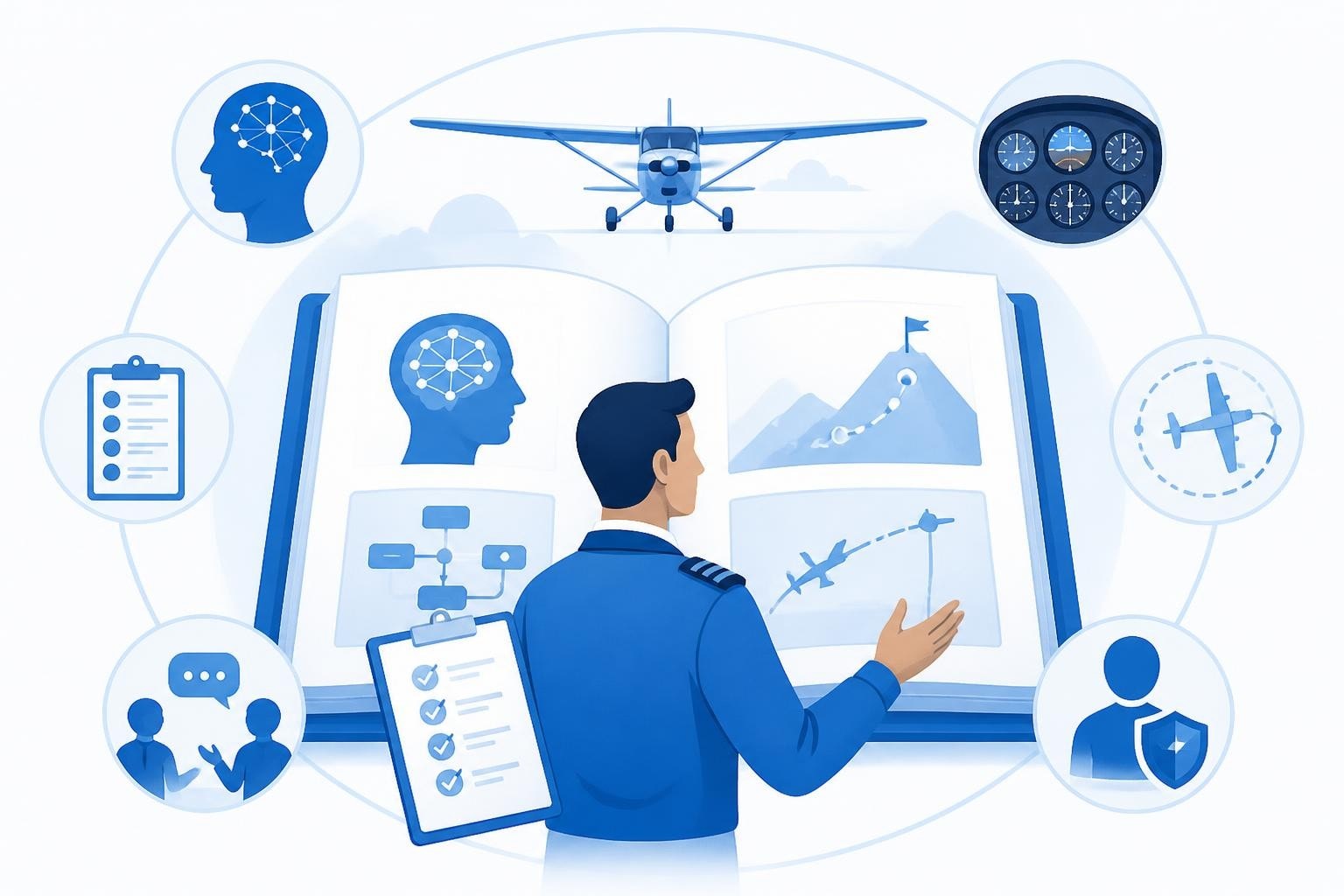
The flight instructor handbook is the foundation document that transforms a competent pilot into an effective educator. Published by aviation authorities worldwide, these handbooks distill decades of learning theory, teaching techniques, and safety practices into structured guidance that every flight instructor should master. Whether you hold a Flight Instructor rating (FAA CFI), Flight Instructor Certificate (EASA FI), or UK CAA Flight Instructor Certificate (Restricted or Unrestricted), the principles remain consistent: understand how students learn, structure lessons systematically, and evaluate progress against clear standards.
What the Flight Instructor Handbook Actually Contains
The FAA Aviation Instructor's Handbook (FAA-H-8083-9B) runs 271 pages and covers seven major domains. Chapter one introduces human behaviour and effective communication, chapter two tackles learning theory (behaviourism, cognitivism, constructivism), and chapter three explains how memory, forgetting, and transfer of learning shape student progress. Chapters four through six dive into teaching methods, lesson planning, and assessment techniques, while chapter seven addresses instructor responsibilities and professionalism.
EASA and CAA instructor guidance follows a parallel structure but embeds requirements from Part-FCL and national standards. The common thread: instructors must understand the science of learning before they teach a single manoeuvre.

Core Learning Theories Every Instructor Should Know
Flight instructor handbooks anchor teaching methods in three learning theories. Behaviourism focuses on stimulus, response, and reinforcement; it underpins the building-block approach where you master straight-and-level before steep turns. Cognitivism recognises that students process information, form mental models, and solve problems; it drives the use of briefings, chair-flying, and post-flight debriefs. Constructivism argues that learners build knowledge from experience; scenario-based training and problem-based learning emerge from this theory.
The FAA flight instructor handbook dedicates 40 pages to these concepts because understanding why a technique works makes you adaptable. When a student struggles with crosswind landings, a behaviourist might drill the same pattern six times, a cognitivist might draw wind components on a whiteboard, and a constructivist might pose a diversion scenario to a windy alternate. All three have a place, and the handbook teaches you when to deploy each.
Teaching Techniques and Lesson Structure
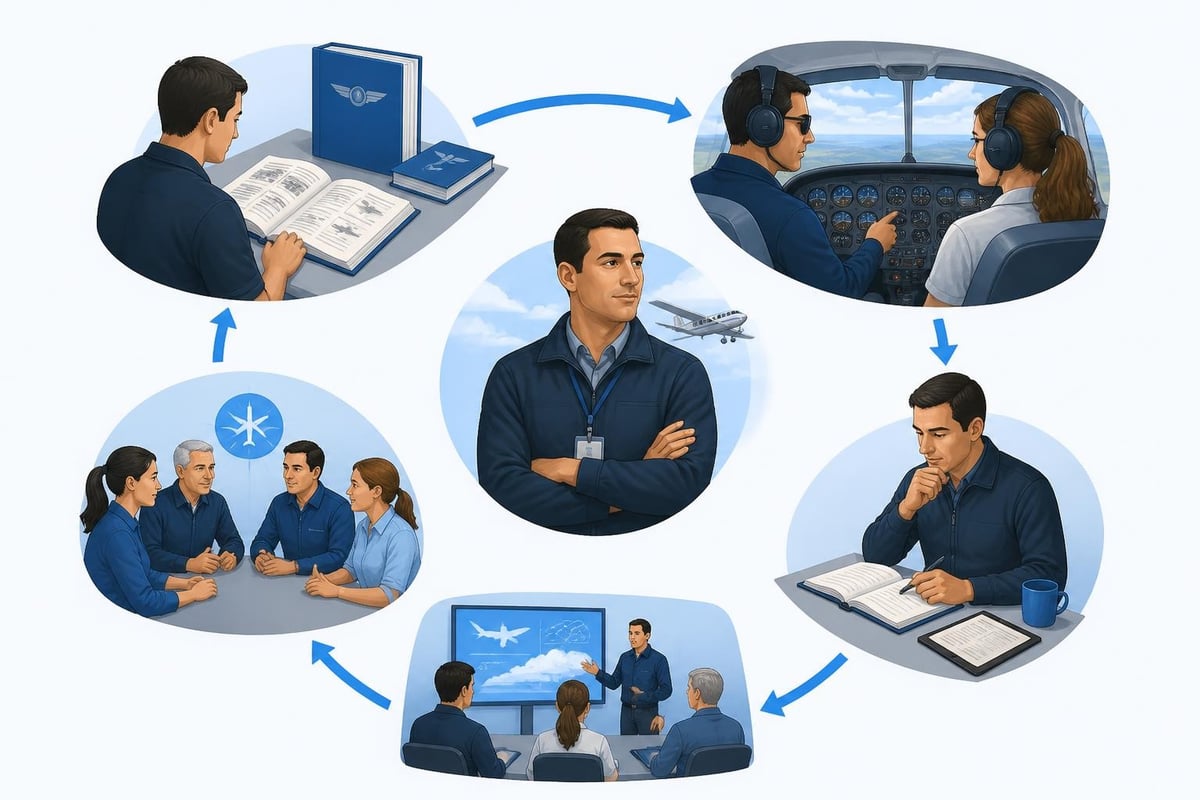
Effective instruction follows a pattern: preparation, presentation, application, and review. The flight instructor handbook breaks this cycle into discrete steps that prevent lessons from drifting.
Preparation includes the pre-flight briefing where you state the objective, motivate the student, and review prerequisite knowledge. If today's lesson is slow flight, you confirm the student knows power-pitch-trim relationships and can interpret the airspeed indicator. Presentation is the demonstration: you fly slow flight, narrate your inputs, and explain the cues (high pitch attitude, high power, low airspeed, mushy controls). Application lets the student practise under your guidance, with you coaching, correcting, and stepping in only when safety demands. Review is the debrief: what went well, what needs work, and how it connects to the next lesson.
This four-step model appears in every major flight instructor handbook because it mirrors how adults learn motor skills. Scenario-based training builds on this framework by embedding manoeuvres in realistic missions, a shift the FAA promotes through its FITS programme.
Demonstration-Performance Method
The demonstration-performance method is the workhorse of flight training. You demonstrate the manoeuvre (or segment of a manoeuvre) once, narrating your actions and the aircraft's response. The student then performs it while you observe, coach, and correct. Over successive lessons, you fade your prompts until the student self-corrects.
The flight instructor handbook warns against two common errors: demonstrating without adequate explanation (the student sees but doesn't understand) and talking too much during the student's attempt (cognitive overload). Skilled instructors know when to stay quiet, letting the student discover the cause-and-effect relationship between control input and aircraft behaviour.
| Technique | Best For | Pitfalls |
|---|---|---|
| Lecture | Ground briefings, regulations, theory | Passive, low retention without visuals |
| Guided discussion | ADM, scenario debrief, complex concepts | Requires prep, can drift off topic |
| Demonstration-perform | Manoeuvres, procedures, flows | Over-narration, inadequate practice |
| Scenario-based | Decision-making, integration, realism | Needs clear learning objectives |
Lesson Planning and Curriculum Development
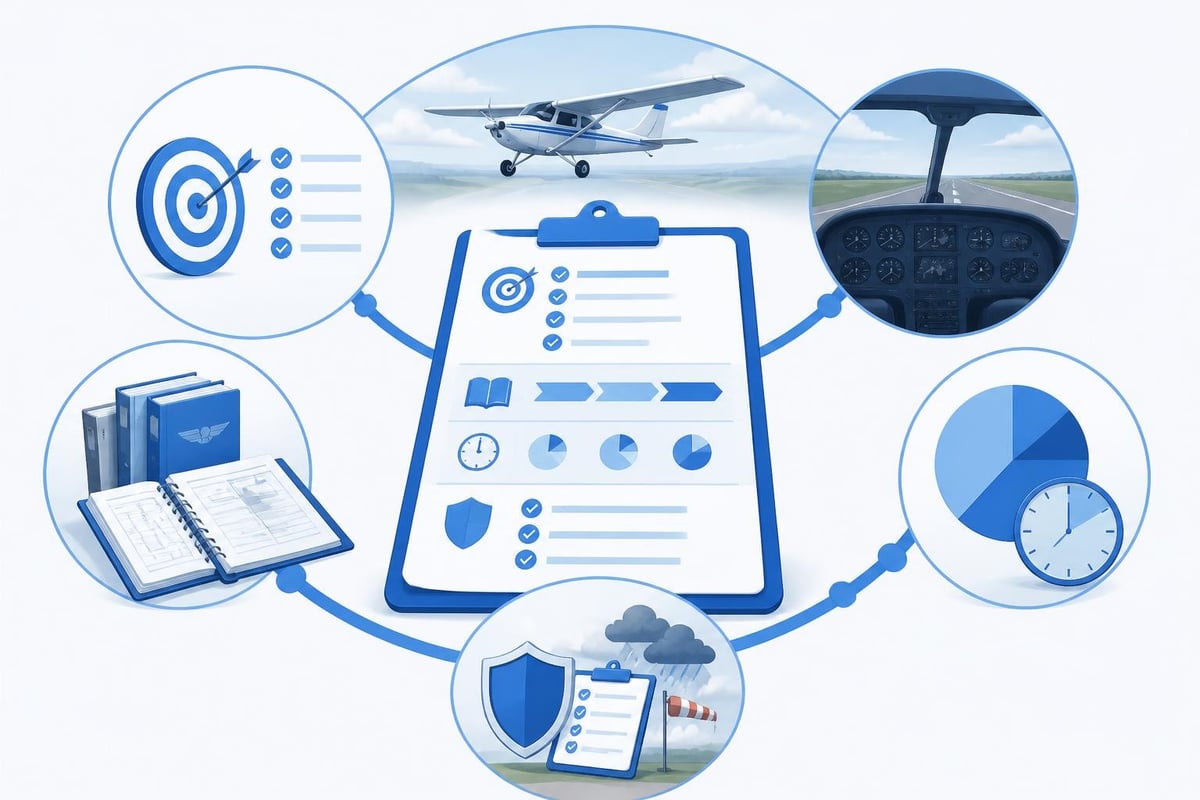
Every flight instructor handbook emphasises written lesson plans. A proper lesson plan states the objective (measurable, specific), lists completion standards (aligned with the ACS or regulatory standard), details the content (ground, pre-flight, airborne, post-flight), and allocates time for each phase.
For example: "By the end of this lesson, the student will perform steep turns in both directions, maintaining altitude ±100 feet, airspeed ±10 knots, and rolling out on heading ±10 degrees (Commercial ACS standards)." You then budget 10 minutes for the ground brief, 15 minutes for climb and manoeuvring area transit, 25 minutes for practice (four attempts each direction), and 10 minutes for the debrief.
Lesson plans prevent mission creep. Without a plan, you might squeeze in another manoeuvre, overload the student, and achieve nothing well. The AOPA Flight Instructor Resources hub offers sample lesson plans and syllabus frameworks you can adapt.
Building a Syllabus vs. Using a Pre-Built Programme
A syllabus is a sequence of lesson plans that takes a student from zero to a certificate or rating. Part 141 schools submit syllabi to the FAA for approval; Part 61 instructors often use informal syllabi or follow the guidance in the flight instructor handbook. EASA Approved Training Organisations (ATOs) must document every lesson in their Operations Manual, and the CAA Standards Document 10(A) prescribes the assessment criteria UK examiners apply.
Building your own syllabus gives you flexibility but demands a deep understanding of standards and learning progression. Pre-built programmes (Cessna, Jeppesen, King Schools) save time and ensure regulatory compliance but may not suit every student. The flight instructor handbook advises tailoring the syllabus to the individual: a low-hour student needs more pattern work; a high-hour commercial pilot converting to multi-engine needs less basic airwork.
Student Evaluation and Providing Feedback
The flight instructor handbook devotes substantial space to assessment because poor feedback derails learning. Formative assessment happens during the lesson: you observe, coach, and correct in real time. Summative assessment occurs at a stage check or practical test: you judge whether the student meets the standard.
Effective feedback is specific, immediate, and constructive. "Nice landing" tells a student nothing. "You held the flare too long and ballooned ten feet, but your crosswind correction was spot on and you recognised the balloon early" gives actionable insight. The best instructors sandwich corrections between positive observations, maintaining motivation without compromising standards.
Common Evaluation Pitfalls
- Instructor-centric standards: Holding students to your personal tolerances instead of the ACS or Part-FCL minimums.
- Halo effect: Letting one strong performance (or one weak one) colour your assessment of unrelated skills.
- Overteaching: Jumping in before the student has a chance to self-correct, robbing them of problem-solving practice.
- Under-documenting: Failing to record weaknesses in the training record, leaving the next instructor (or examiner) surprised.
The flight instructor handbook stresses that evaluation starts with clear objectives. If you never told the student the altitude tolerance is ±100 feet, you cannot fault them for being 150 feet high.
Instructor Responsibilities and Risk Management
Flight instructors carry legal and ethical duties that extend beyond teaching manoeuvres. You endorse students for solo, cross-country, and practical tests, certifying that they meet regulatory standards. An endorsement is a legal statement; if a student causes an accident during an activity you endorsed, investigators will scrutinise your training records.
The FAA flight instructor handbook lists instructor responsibilities:
- Ensure the student meets prerequisites before each new privilege (night, complex, high-performance).
- Maintain accurate records in the student's logbook and your own instructor log.
- Provide ground and flight training that aligns with the applicable ACS or Part-FCL standard.
- Model professionalism, punctuality, and thorough pre-flight planning.
- Stay current with regulations, NOTAMs, and changes to airspace or procedures.
Risk management is now embedded in every training event. The FAA's scenario-based training model asks instructors to identify hazards, assess risk, and teach students to mitigate threats using the PAVE checklist (Pilot, Aircraft, enVironment, External pressures). EASA Part-FCL requires instructors to integrate threat and error management (TEM) into every lesson, a principle borrowed from airline upset-prevention and loss-of-control training.
When you log dual given, you affirm that the training met standards and the student is progressing. Accurate logbook habits protect both you and your students, creating an auditable record if questions arise months or years later.
| Responsibility Area | Examples | Regulatory Basis |
|---|---|---|
| Pre-solo endorsements | 14 CFR §61.87 (FAA), Part-FCL FI privileges (EASA) | FAR 61.87, Part-FCL.905 |
| Knowledge test endorsement | Confirm aeronautical knowledge per ACS, Part-FCL syllabus | FAR 61.35, Part-FCL training records |
| Practical test endorsement | Certify proficiency, prerequisite hours, ground and flight ready | FAR 61.39, Part-FCL.930 |
| Currency and recency | Log dual given, renew CFI every 24 months (FAA) or as required | FAR 61.197, Part-FCL instructor validity |
Keeping Your Own Skills and Knowledge Current
The flight instructor handbook is not a one-time read. Regulations change, aircraft technology evolves, and teaching methods improve. FAA CFIs must renew every 24 calendar months via a Flight Instructor Refresher Course (FIRC), practical test, or activity-based renewal (8 endorsements, 80 per cent pass rate). The AOPA eFIRC syllabus shows current renewal topics: risk management, scenario-based training, runway incursion prevention, and loss of control in flight.
EASA and UK CAA instructors face similar requirements. EASA Part-FCL.940 mandates instructor refresher training and competency checks within validity periods. Transport Canada's Flight Instructor Guide (TP 975) outlines recurrent training expectations for Canadian instructors, including updates to the Canadian Aviation Regulations and recommended teaching techniques.
Beyond formal renewal, effective instructors read accident reports, attend safety seminars, and participate in organisations like the Society of Aviation and Flight Educators (SAFE), which offers mentoring, continuing education, and a public resource centre. The Flight Safety Foundation publishes evidence-based articles on instructor qualification and modern training methods that complement the official flight instructor handbook.
Tracking Your Instructor Currency
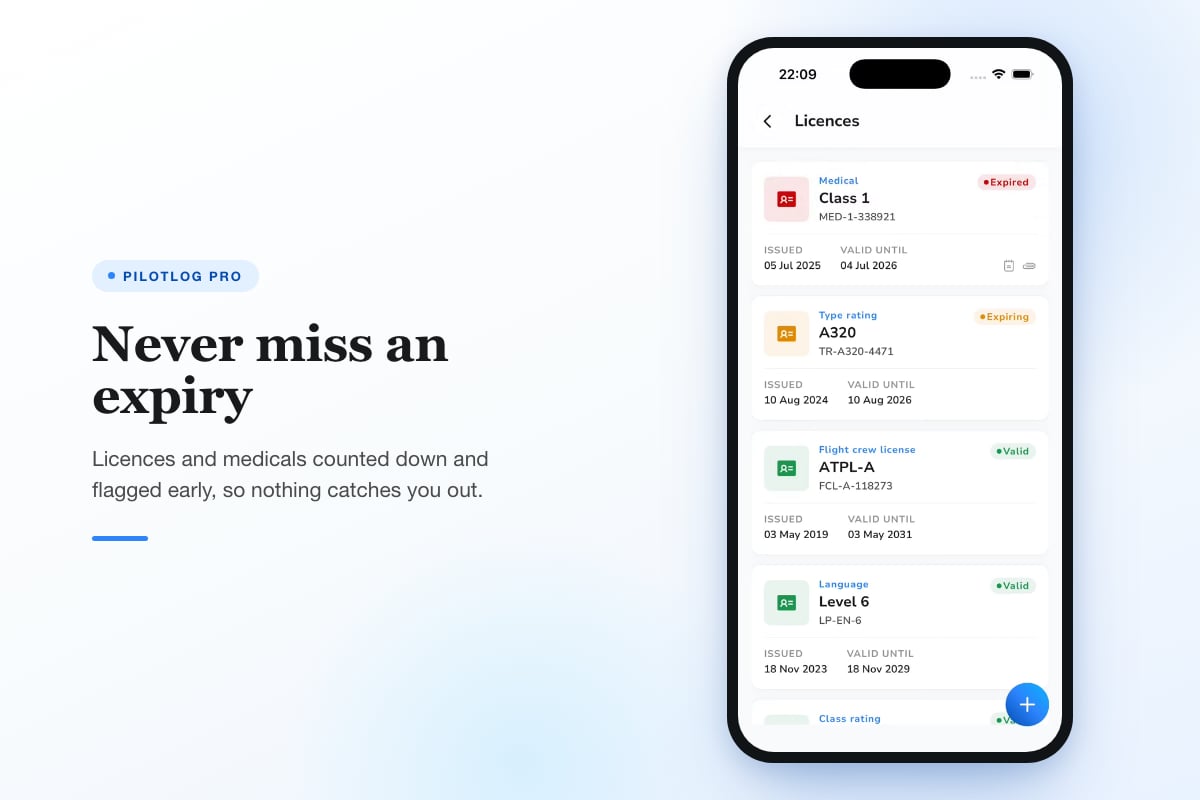
Just as you teach students to monitor their passenger-carrying currency (three takeoffs and landings in 90 days per FAR 61.57(a), or EASA Part-FCL.060 for SEP/MEP), you must track your own instructor validity. FAA CFIs expire on the last day of the 24th month; EASA FI certificates remain valid provided you meet the requirements of Part-FCL.940 within the preceding 36 months (conduct annual refresher training and competency checks).
Many instructors log dual given meticulously but fail to track endorsement counts or student pass rates, only to discover at renewal time that they lack activity-based renewal eligibility. A digital logbook can automate these calculations, flagging upcoming expiries and tallying endorsements. Pilotlog Pro tracks rolling duty and flight-time limits, currency lapse dates, and licence expiries, sending alerts early so you renew before the deadline, not after.
Practical Application: Planning a Stage-One Private Pilot Lesson
Imagine you are preparing Lesson 5 in a Private Pilot syllabus: slow flight and power-off stalls. The flight instructor handbook teaches you to start with the objective and work backward.
Objective: By the end of this lesson, the student will establish and maintain slow flight at minimum controllable airspeed, recognise the indications of an impending stall, and recover from a power-off stall with minimal altitude loss, per Private Pilot ACS standards (altitude ±100 feet, heading ±10 degrees, airspeed +10/-0 knots for slow flight; recognise and recover from stall with wings level within 10 degrees).
Ground brief (15 minutes):
- Review power-pitch-trim relationships and the four forces in slow flight.
- Discuss angle of attack, critical angle of attack, and stall warning cues (buffet, horn, decay in control authority).
- Cover clearing turns, lookout, and recovery procedure (reduce angle of attack, add power, level wings, minimise altitude loss).
Pre-flight and climb (20 minutes):
- Normal pre-flight inspection and take-off.
- Climb to manoeuvring altitude (minimum 1,500 feet AGL or 3,000 feet AGL per local guidance), establish cruise, check area is clear.
Airborne instruction (30 minutes):
- Demonstrate slow flight (5 minutes): reduce power, maintain altitude with back pressure, trim, add power to hold altitude at minimum airspeed.
- Student practises slow flight (10 minutes): coach initially, reduce prompts as student improves.
- Demonstrate power-off stall (5 minutes): reduce power to idle, pitch up to induce stall, announce "stall", recover promptly.
- Student practises power-off stalls (10 minutes): two or three attempts, emphasising recognition cues and immediate recovery.
Post-flight debrief (10 minutes):
- Ask the student what they noticed (self-assessment).
- Highlight what went well (specific examples: "Your first stall recovery was immediate and you kept the wings level").
- Identify improvement areas ("On the second stall, you hesitated before releasing back pressure; aim for instant forward stick next time").
- Preview the next lesson (power-on stalls, secondary stall avoidance).
This structure follows the demonstration-performance method, allocates realistic time, and aligns with ACS standards. The flight instructor handbook provides the framework; you adapt it to the student, the aircraft, and the weather.
Regulatory Differences: FAA, EASA, and CAA Handbooks
While the core teaching principles are universal, regulatory details vary. The FAA flight instructor handbook references 14 CFR Part 61 and the Airman Certification Standards (ACS). EASA's Easy Access Rules for Aircrew and Part-FCL define Flight Instructor (FI) privileges, validity, and training requirements across 31 member states. The UK CAA Standards Document 10(A) provides guidance for instructor trainers and examiners, including assessment forms and competency frameworks retained post-Brexit.
Key differences include:
- Instructor renewal: FAA every 24 months; EASA validity depends on refresher and assessment within 36 months; UK CAA follows EASA-aligned rules.
- Endorsement terminology: FAA uses logbook endorsements; EASA/CAA use training records and instructor authorisations.
- Medical requirements: FAA CFIs must hold at least a third-class medical or BasicMed when acting as PIC during instruction; EASA FIs must hold at least a Class 2 medical.
If you instruct internationally or convert between systems, cross-reference the relevant flight instructor handbook with local regulations. Rules change; always confirm current requirements through official sources before making training or endorsement decisions.
Integrating Technology and Modern Training Methods
The latest editions of the flight instructor handbook acknowledge that glass cockpits, electronic flight bags, and simulation tools have transformed training. The FAA's FITS programme encourages scenario-based training over traditional manoeuvre-by-manoeuvre progression, and modern FTDs (Flight Training Devices) let students practise instrument approaches, system failures, and emergency procedures without burning fuel.
Instructors should integrate technology where it enhances learning, not distract from it. Use a tablet to display TAFs and METARs during the pre-flight brief, brief the route on a moving map, and debrief using recorded GPS tracks or video from a GoPro. But ensure students can navigate without the iPad, interpret a paper chart, and fly the approach without automation if the system fails.
The flight instructor handbook also reminds you that simulator time supplements, but does not replace, aircraft experience. A student might fly perfect ILS approaches in the sim yet struggle with real turbulence, changing winds, and the pressure of actual traffic. Your job is to calibrate simulation and flight training so each reinforces the other.
Maintaining Training Records in a Digital Age
Traditional paper logbooks are legally acceptable, but digital tools offer advantages for instructors managing multiple students. You can track each student's progress against the syllabus, flag upcoming stage checks, and generate endorsement text automatically. Pilotlog's resources include tools for tracking currency and expiry dates, ensuring you and your students stay ahead of deadlines.
Whether you log on paper or screen, the flight instructor handbook's guidance remains: record every lesson, note manoeuvres covered, document performance against standards, and sign each entry. If a student appears before an examiner or (in the worst case) an accident investigator, your training records tell the story.
Mentorship, Standardisation, and Instructor Culture
The flight instructor handbook is silent on one critical topic: the culture you create. Instructors set the tone for professionalism, safety, and continuous improvement. A culture where instructors share lessons learned, debrief challenging flights, and calibrate their standards produces better outcomes than one where each CFI works in isolation.
Mentorship matters. New instructors benefit enormously from observing experienced colleagues, sitting in on stage checks, and discussing difficult student scenarios. The Flight Safety Foundation has documented how instructor standardisation and evaluator calibration improve training outcomes, reduce training failures, and enhance safety.
Whether you instruct at a Part 141 school, a Part 61 freelance operation, or an EASA ATO, seek out peers, ask questions, and study the flight instructor handbook regularly. Teaching is a skill that improves with deliberate practice, reflection, and a commitment to the principles laid out in the official guidance.
The flight instructor handbook is your roadmap to effective teaching, but mastery comes from applying its principles to real students, real weather, and real aircraft. Whether you are preparing for your initial CFI checkride, renewing after 24 months, or mentoring the next generation of instructors, the handbook remains the authoritative source on learning theory, lesson structure, and instructor responsibilities. Pilotlog helps you stay organised by tracking dual given, monitoring currency, and alerting you to upcoming expiries, so you can focus on what matters: turning capable pilots into safe, proficient aviators. Log a flight in seconds and let the platform handle the rest.
- flight instructor handbook
- cfi training
- aviation instructor handbook
- teaching techniques
- lesson planning
A logbook that keeps itself.
Join the waitlist and be first in line when Pilotlog launches.
Free to join, no spam. Unsubscribe any time.