electronic pilot logbook
Electronic Pilot Log Books: A Complete Guide for 2026
26 Jul 2026 · 13 min read
Electronic pilot log books are fully legal under both FAA and EASA regulations, provided they meet specific requirements for accuracy, accessibility, and tamper-evident design. The FAA accepts electronic formats under 14 CFR § 61.51, while EASA permits digital records under Part-FCL requirements. Both authorities require that electronic systems maintain complete, retrievable records and protect against unauthorised changes.
Pilots switching from paper face a learning curve but gain significant advantages in tracking currency, analysing trends, and avoiding expiry surprises. This guide examines the regulatory framework, practical benefits, and compliance considerations that make electronic pilot log books a reliable choice for modern aviators.
Regulatory Framework for Electronic Pilot Log Books
The legal foundation for electronic pilot log books rests on clear regulatory guidance from aviation authorities. The FAA established acceptance criteria through Advisory Circular 120-78B, which addresses electronic signatures and recordkeeping systems. This circular sets standards for authentication, data integrity, and system validation that electronic logbook providers must meet.
Key FAA requirements include:
- Accurate recording of all mandatory flight details per 14 CFR § 61.51
- Protection against unauthorised alteration or deletion
- Immediate accessibility for inspection by FAA personnel
- Backup procedures to prevent data loss
- Complete audit trail of entries and modifications
EASA requirements under Part-FCL similarly mandate that pilots maintain accurate records of all flight time. The authority does not prescribe a specific format, paper or electronic, but requires that records remain legible, accessible, and capable of demonstrating compliance with experience and currency requirements.
Tamper Evidence and Data Integrity
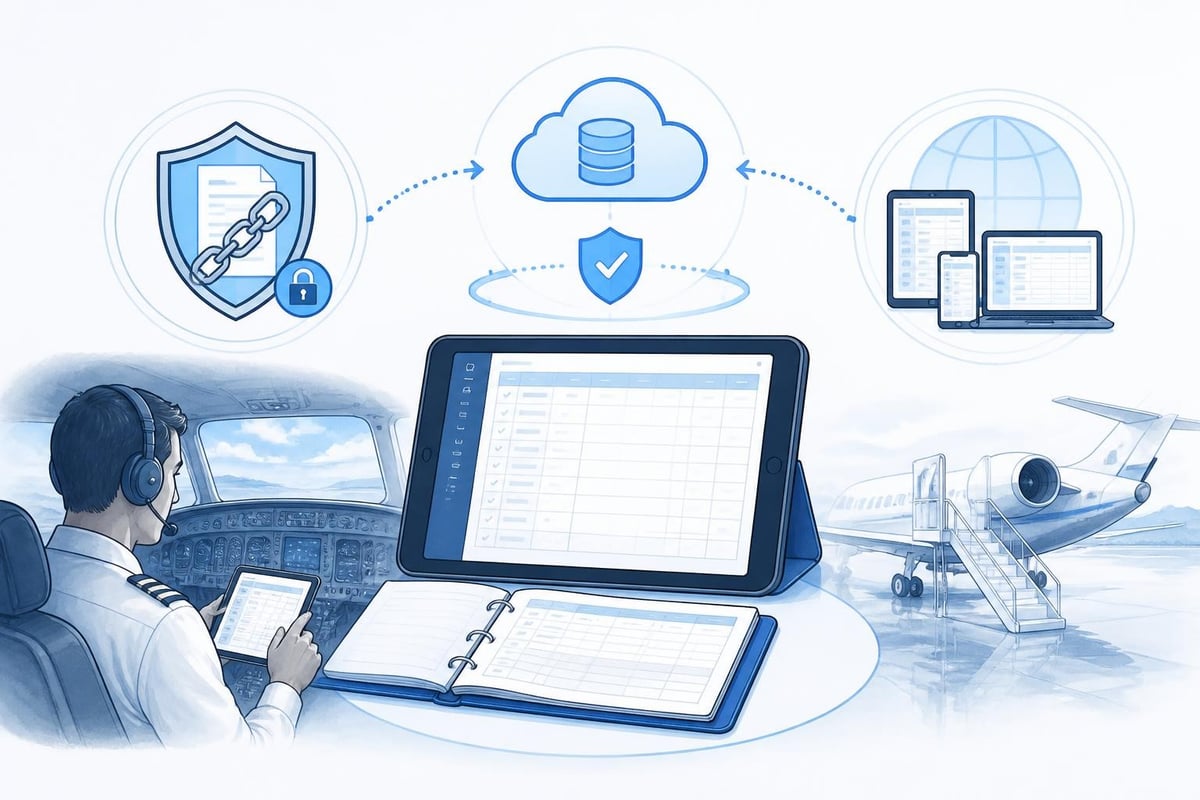
Electronic logbook systems must demonstrate tamper-evident design, meaning any modification leaves a verifiable trail. This differs from paper logbooks, where an incorrect entry might be crossed out and initialled. Digital systems typically implement this through version control, timestamp logs, and cryptographic signatures that authenticate each entry.
The FAA does not require complex blockchain technology or military-grade encryption. Instead, systems must show who made each entry, when it was created, and whether it has been modified. A simple audit log that records the date, time, and user identifier for each change satisfies this requirement in most implementations.
Practical Benefits of Digital Flight Logging
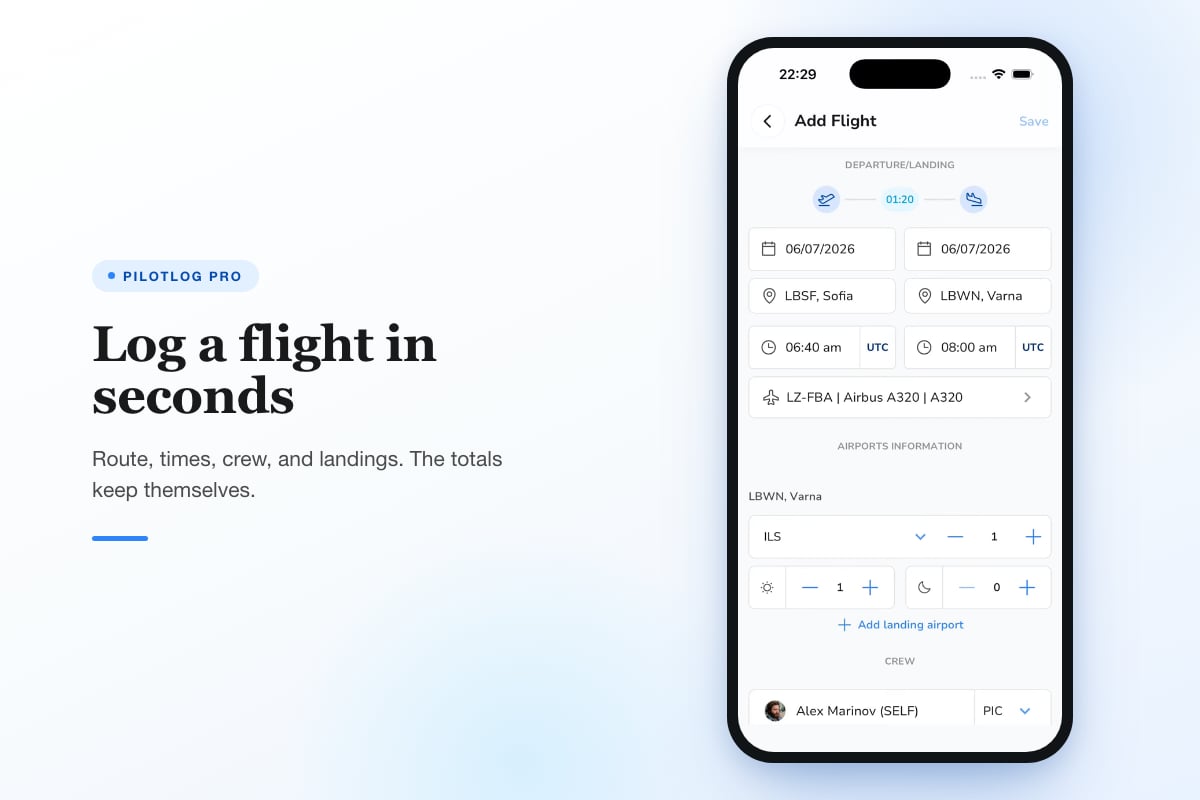
Electronic pilot log books transform routine administrative tasks into automated processes. Logging a flight in a paper book might take three to five minutes per sector when you factor in calculations, cross-checking, and transferring totals. Digital systems reduce this to 30-60 seconds through pre-filled fields, automatic totals, and smart defaults based on your recent activity.
| Task | Paper Logbook | Electronic System |
|---|---|---|
| Log single sector | 3-5 minutes | 30-60 seconds |
| Calculate 90-day currency | 10-15 minutes | Instant |
| Verify 28-day flight limits | 15-20 minutes | Instant |
| Generate CAA report | 30-60 minutes | 2-3 minutes |
Time savings compound across a flying career. A pilot logging 200 sectors annually saves approximately 10-12 hours per year on data entry alone. This excludes time saved on currency calculations, duplicate entries for multiple logbook copies, and periodic total verification.
Automated Currency Tracking
The 90-day passenger carrying currency requirement under FAA 14 CFR § 61.57 demands three takeoffs and landings in the preceding 90 days. For night currency, those landings must occur between one hour after sunset and one hour before sunrise. Calculating this manually requires reviewing three months of entries and identifying qualifying flights.
Electronic pilot log books calculate currency status automatically with each new entry. You see your current status, the date when currency will lapse, and exactly which flights will drop out of the rolling 90-day window. This applies equally to IFR currency (six approaches, holding, and intercepting/tracking in the preceding six months) and type-specific currency requirements.
Pilotlog Pro tracks rolling 28-day and 365-day flight-time limits, passenger and night currency with lapse dates, and IFR recency automatically. Each logged flight updates your currency dashboard, flagging upcoming lapses before they affect your flying privileges. The system also monitors licence and medical expiry dates, sending alerts at configurable intervals.
Career Statistics and Trend Analysis
Paper logbooks provide running totals but offer limited insight into patterns. Electronic systems generate detailed statistics showing flight time by aircraft type, role (PIC, SIC, DUAL), conditions (VFR, IFR, night), and time period. You can identify exactly how many hours you logged in complex aircraft during the past 12 months or track your instrument approach count by airport.
This data proves valuable during job applications, insurance renewals, and training planning. Employers often request specific breakdowns such as "turbine PIC hours in the past 24 months" or "night cross-country time as PIC." Extracting these figures from paper logs requires manual review of potentially hundreds of entries. Electronic systems filter and total the relevant flights in seconds.
Compliance Considerations and Best Practices
Digital aircraft logbook requirements emphasise accessibility and completeness. Your electronic pilot log books must be available for inspection whenever required by aviation authorities. This typically means either carrying a mobile device with offline access or maintaining cloud synchronisation that works without internet connectivity.
Critical compliance elements:
- Backup strategy that protects against device loss, corruption, or service discontinuation
- Export capability to produce PDF or CSV reports matching traditional logbook format
- Offline access to core flight records when network connectivity is unavailable
- Long-term retention meeting CAA and EASA archival requirements
- Signature compliance for instructor endorsements and official certifications
The backup requirement deserves special attention. Electronic systems centralise your entire flying history in one location, creating a single point of failure. Robust backup procedures typically include automatic cloud synchronisation, periodic exports to secure storage, and the ability to restore complete records to a new device within minutes.
Transitioning from Paper to Electronic
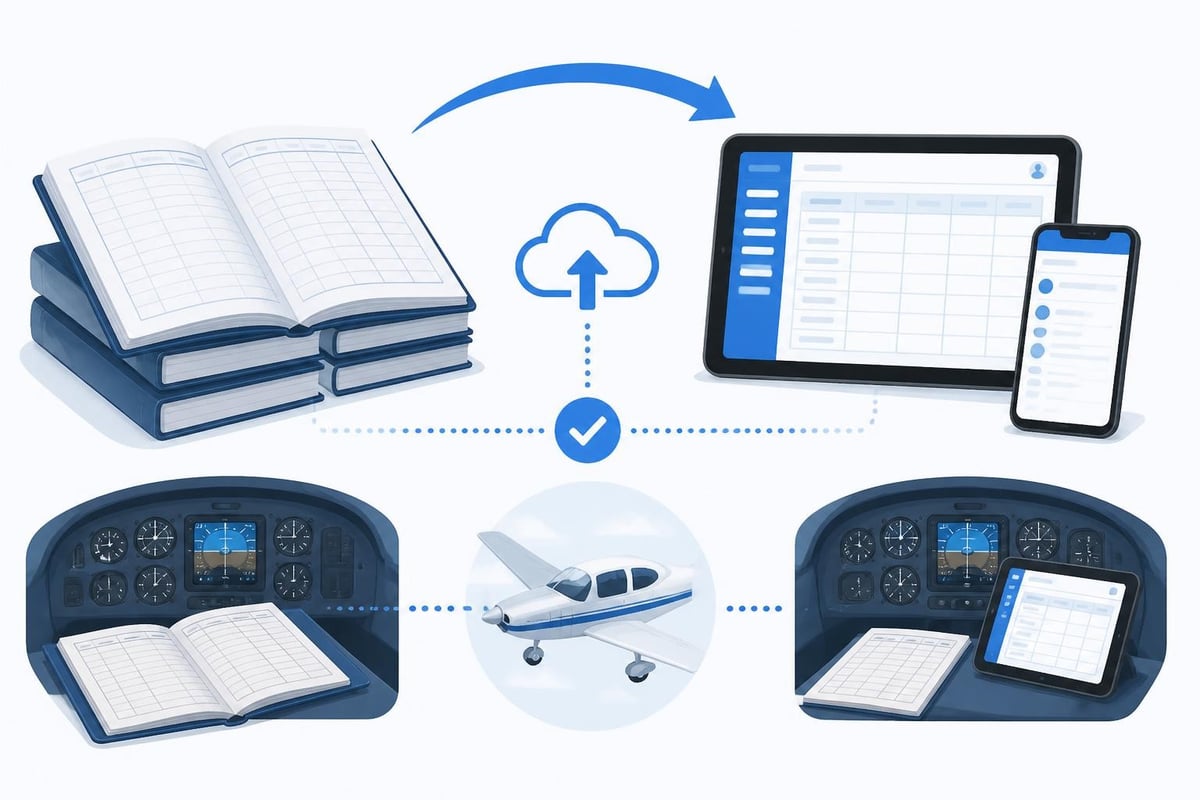
Pilots switching to electronic pilot log books face the task of digitising existing paper records. Complete transcription of every flight provides the most comprehensive dataset but requires significant time investment. A practical alternative involves entering totals from your paper logbook as of the transition date, then logging all subsequent flights digitally.
This hybrid approach maintains legal compliance while building an electronic record going forward. Your paper logbook remains the official record for historical flights, preserved as backup documentation. New entries go exclusively into the electronic system, which then tracks all currency and totals from the transition point onwards.
Some pilots maintain both systems in parallel during a trial period, typically three to six months. This builds confidence in the electronic platform while ensuring no gap in recordkeeping. Once satisfied with reliability and workflow, they retire the paper book and commit fully to digital logging.
Data Security and Ownership Concerns
Electronic pilot log books store sensitive personal information including full name, licence details, medical status, and complete employment history. Data security considerations include protection against unauthorised access, encryption during transmission and storage, and clear policies on data ownership and portability.
Evaluate providers on these security criteria:
- Encryption standards for data at rest and in transit
- Authentication methods (password complexity, two-factor options)
- Data ownership terms in user agreements
- Export formats and ease of migration to alternative systems
- Company stability and long-term viability
- Compliance with data protection regulations (GDPR, etc.)
You own your flight data. Service agreements should explicitly confirm this and guarantee your ability to export complete records in standard formats. Avoid platforms that restrict data portability or claim ownership rights over your logbook entries.
The risk of service discontinuation exists with any electronic platform. A provider might cease operations, change business models, or suffer technical failures. Your backup and export strategy must account for this possibility, ensuring you can transition to an alternative system without data loss.
Cloud Synchronisation vs Local Storage
Electronic pilot log books typically offer cloud-based synchronisation, local device storage, or hybrid models combining both approaches. Cloud systems provide automatic backup and multi-device access but require internet connectivity for full functionality. Local storage apps work offline but need manual backup procedures.
Hybrid implementations offer the best balance. Core flight data resides locally on your device for instant offline access. Background synchronisation uploads changes to cloud storage when connectivity exists, providing automatic backup and the ability to access records from multiple devices. This architecture ensures you can log flights and check currency during overseas layovers without data charges or network access.
Currency Requirements Across Jurisdictions
Electronic pilot log books must accommodate varying currency requirements across different regulatory frameworks. FAA currency under 14 CFR § 61.57 differs from EASA Part-FCL requirements, and commercial operations add further complexity through operator-specific minimums and national variations.
FAA Currency Standards
The FAA mandates specific currency requirements depending on operation type and aircraft category. For single-engine aircraft under VFR, you need three takeoffs and landings in the preceding 90 days to carry passengers. Night currency requires those landings occur between end of evening civil twilight and beginning of morning civil twilight, effectively one hour after sunset to one hour before sunrise.
IFR currency demands six instrument approaches, holding procedures, and intercepting and tracking courses through navigation systems, all within the preceding six months. These approaches may be conducted in actual or simulated instrument conditions, or through an approved flight simulator. If currency lapses, you must complete an instrument proficiency check with an authorised instructor.
EASA Part-FCL Currency
EASA requires pilots to complete 3 takeoffs and 3 landings in the preceding 90 days (FCL.060) to carry passengers. For single-pilot, single-engine operations, this applies straightforwardly. Multi-pilot and type-rated aircraft introduce additional recency requirements including operator proficiency checks and base training.
Understanding these differences matters for pilots operating under multiple jurisdictions or transitioning between regulatory frameworks. Electronic systems can track multiple currency standards simultaneously, flagging requirements specific to your licence endorsements and planned operations.
Integration with Flight Operations
Modern electronic pilot log books integrate with scheduling systems, crew management platforms, and flight planning tools. This connectivity eliminates duplicate data entry and ensures consistency across operational records. A roster update automatically creates logbook entries pre-filled with aircraft registration, departure and arrival airports, and scheduled times.
Integration extends to medical and licence tracking. Import your Class 1 medical expiry date once, and the system tracks time remaining, flags the 45-day warning period for renewal, and calculates how many flight hours remain before the expiry affects your privileges. Similar automation applies to rating expiries, passport validity, and airport authority identification.
Common integration points include:
- Electronic flight bag (EFB) applications for route and aircraft data
- Crew scheduling systems for roster import
- Training management platforms for endorsement tracking
- Medical certification databases for automatic expiry updates
- Aircraft techlog systems for cross-reference validation
These connections reduce administrative overhead and improve data accuracy by maintaining single authoritative sources for each data element.

Instructor Endorsements and Digital Signatures
Instructor endorsements present a unique challenge for electronic pilot log books. Traditional paper logbooks allow instructors to sign and date training entries, providing physical authentication. Electronic signatures must meet legal standards for authentication and non-repudiation while remaining practical for routine use.
The FAA accepts electronic signatures under AC 120-78B provided the system authenticates the signer's identity and creates a tamper-evident record. Practical implementations include instructor accounts within the electronic logbook platform, cryptographic signatures, or hybrid approaches where students obtain physical instructor signatures that are then photographed and attached to digital entries.
Many electronic systems implement instructor endorsements through dedicated accounts. Your instructor logs in, reviews your flight entry, and adds their endorsement electronically. The system records their licence number, signature timestamp, and prevents subsequent modification. This creates a complete audit trail while streamlining the endorsement workflow.
Cost Analysis and Return on Investment
Electronic pilot log books typically operate on subscription models ranging from free basic tiers to professional versions at £5-15 monthly. One-time purchase apps exist but often lack cloud synchronisation and ongoing feature development. The cost comparison against paper logbooks includes both direct purchase price and indirect time savings.
A quality paper logbook costs £20-40 and might last two to three years depending on flight activity. Replacement logbooks, photocopy expenses for backup, and time spent on manual calculations add to lifetime costs. Electronic systems charge ongoing subscriptions but eliminate replacement needs and deliver time savings worth multiples of the subscription cost.
Five-year cost comparison for a pilot logging 150 hours annually:
| Item | Paper System | Electronic System |
|---|---|---|
| Logbooks (2 replacements) | £80 | - |
| Backup photocopies | £30 | - |
| Subscription (60 months) | - | £540 |
| Time saved (50 hrs @ £25/hr) | - | £1,250 benefit |
| Net cost | £110 | -£710 benefit |
This analysis excludes benefits like avoided expired currency incidents, faster job applications, and improved training efficiency through detailed statistics. The time savings alone justify the subscription cost for pilots flying regularly.
Choosing the Right Electronic Logbook
Selecting an electronic pilot logbook requires evaluating features against your specific flying profile. Student pilots need strong training tracking and instructor endorsement workflows. Commercial pilots require duty time monitoring and airline-specific reporting. General aviation pilots prioritise simplicity and reliable currency tracking.
Essential evaluation criteria:
- Platform availability (iOS, Android, web, desktop)
- Offline functionality and synchronisation reliability
- Currency tracking matching your regulatory framework
- Export formats and data portability
- Backup and recovery procedures
- User interface clarity and entry speed
- Support quality and update frequency
- Integration with your existing tools
Trial periods let you test workflow integration before committing. Log 10-15 flights in the trial system while continuing your existing method. This reveals whether the interface suits your habits and the feature set matches your requirements.
The best digital logbook for pilots balances comprehensive features with usability. Avoid platforms requiring complex configuration before logging your first flight. The system should handle standard operations with minimal setup, allowing customisation for edge cases rather than demanding it for basic use.
Common Implementation Challenges
Pilots transitioning to electronic pilot log books frequently encounter specific challenges. Understanding these issues helps you prepare mitigation strategies and set realistic expectations for the changeover period.
Device dependency creates vulnerability to battery drain, screen damage, and operating system compatibility. Carry a backup power bank during long duty days. Maintain your paper logbook current during the first 90 days as a fallback. Test the system's offline mode thoroughly before relying on it during network outages.
Data entry habits formed over years with paper logbooks may not translate directly. Electronic systems often provide shortcuts and automation that seem confusing initially but save time once mastered. Invest two to three hours learning the platform properly rather than discovering features piecemeal over months.
Instructor acceptance varies. Some flight schools and freelance instructors resist electronic endorsements, preferring traditional signatures. Clarify your logbook format during initial contact. Many instructors accommodate electronic systems once shown the endorsement workflow. Others require hybrid solutions with physical signatures attached as photos.
Electronic pilot log books offer legal compliance, significant time savings, and automated currency tracking that paper systems cannot match. The transition requires careful provider selection, robust backup procedures, and attention to regulatory requirements, but delivers immediate benefits through faster logging and reduced administrative burden. Pilotlog handles flight logging in seconds while automatically tracking rolling duty limits, passenger currency, IFR recency, and licence expiries across your entire flying career. Start logging digitally today and never miss another currency deadline or medical renewal.
- electronic pilot logbook
- faa logbook requirements
- currency tracking
- digital flight logging
- easa part-fcl
A logbook that keeps itself.
Join the waitlist and be first in line when Pilotlog launches.
Free to join, no spam. Unsubscribe any time.