pilot training cost
Cost to Become a Pilot: What to Budget in 2026
16 Sep 2026 · 11 min read
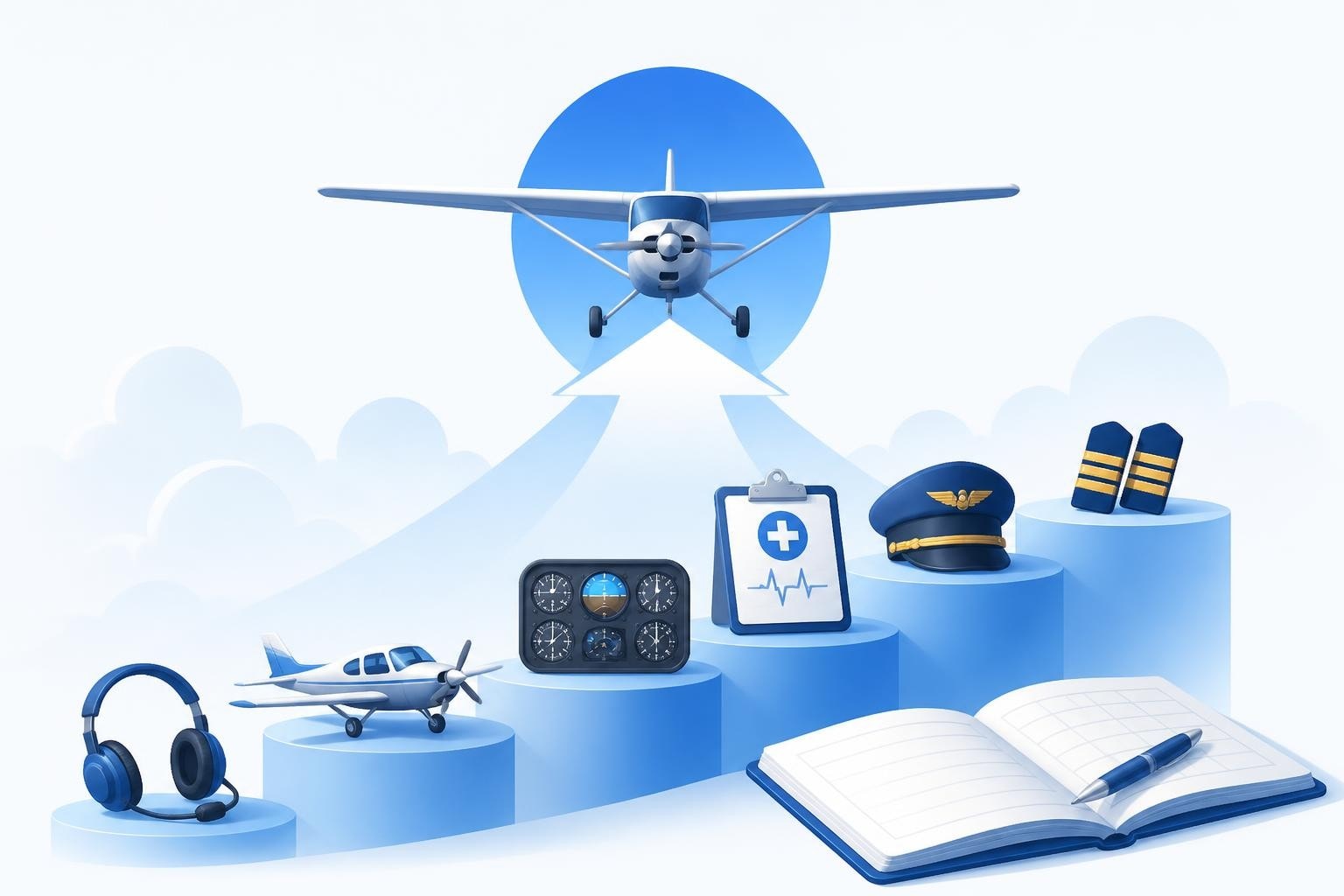
The cost to become a pilot in 2026 ranges from £8,000 to £15,000 for a Private Pilot Licence to well over £100,000 for full Airline Transport Pilot Licence training. The total depends on your goal: recreational flying, commercial work, or an airline first officer seat. Training hours, aircraft type, simulator time, examinations, and medical certificates all add up, so understanding each line item helps you plan.
What Drives the Cost to Become a Pilot
Three factors dominate the final bill: flight hours, aircraft rental rates, and instructor fees. Regulatory minimums set the floor (for example, EASA Part-FCL requires 45 hours for a PPL(A)), but most pilots need more. Industry data shows PPL students average 55 to 65 hours before solo and checkride readiness.
Aircraft rental varies by location and type. A single-engine piston like a Cessna 172 typically costs £130 to £200 per hour wet (fuel included) in the UK and €150 to €220 across Europe. Instructor fees run £40 to £60 per hour. Ground-school courses, books, and examination fees add another £1,000 to £2,000.
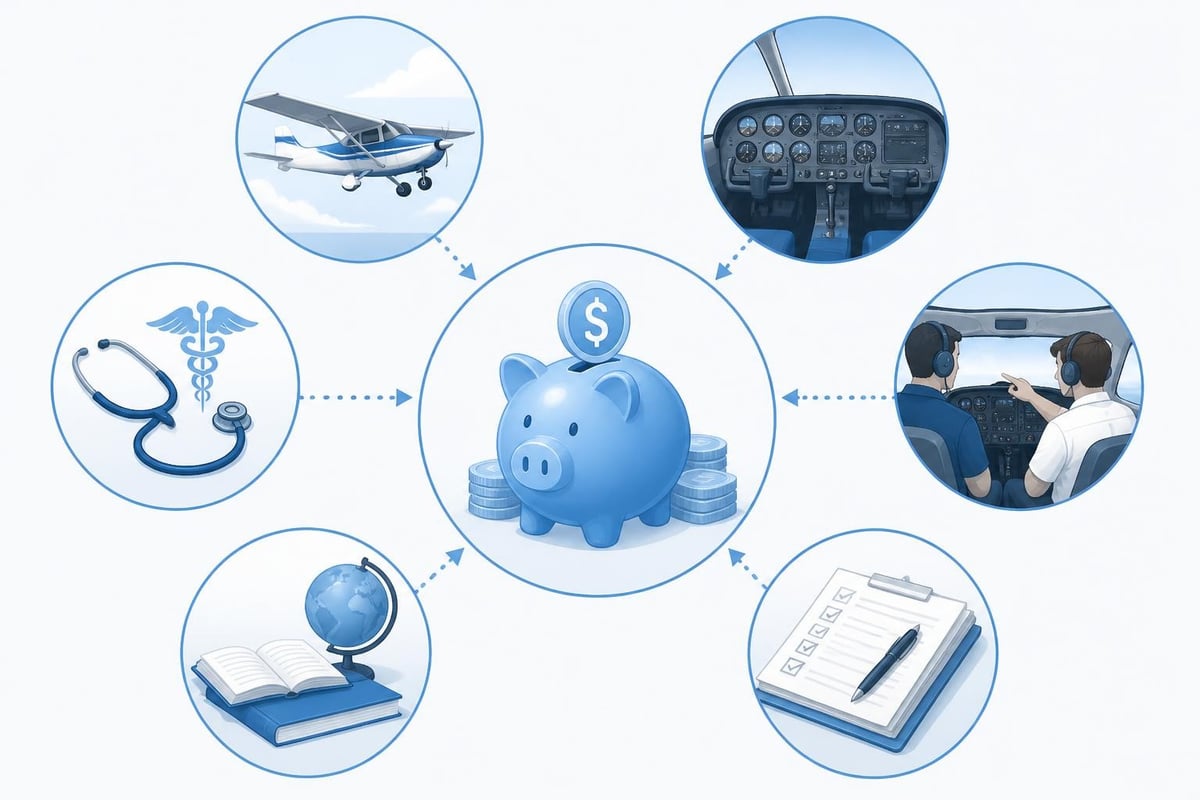
Medical certificates vary by licence class. A Class 2 medical for private pilots costs around £150 to £250 and is valid for 60 months if you are under 40, 24 months if over. A Class 1 medical for commercial pilots costs £300 to £400 and renews annually after age 40 (EASA Part-MED). Factor in initial and renewal costs across your training timeline.
Simulator sessions reduce aircraft time and cut costs. The FAA National Simulator Program allows credit for approved flight simulation training devices. Under EASA rules, approved Aviation Training Devices (ATDs) can replace up to 40 per cent of instrument training hours at £60 to £100 per hour versus £180 for the aircraft.
Private Pilot Licence: The First Step
A Private Pilot Licence (PPL) lets you fly single-engine aircraft for non-commercial purposes. EASA Part-FCL AMC1 FCL.210.A sets the minimum at 45 hours, including at least 25 hours dual instruction and 10 hours supervised solo. Realistically, budget for 55 to 65 hours total.
| Cost Item | Range (£) |
|---|---|
| Flight hours (60 × £160 average) | £9,600 |
| Instructor fees (40 hours dual × £50) | £2,000 |
| Ground school (online or classroom) | £800 – £1,500 |
| Books and materials | £200 – £400 |
| Class 2 medical | £150 – £250 |
| Knowledge test fees (9 exams) | £600 – £800 |
| Skills test (checkride) | £300 – £400 |
| Total | £13,650 – £14,950 |
The AOPA guide to pilot licence costs provides U.S. figures that translate to similar ranges when adjusted for exchange rates and regional differences. Training intensity matters: flying twice a week keeps skills fresh and reduces repeat sessions, lowering total hours.
Hidden Costs and Add-Ons
Headsets, charts, and pilot supplies run £300 to £600. Retake fees for failed exams (theory or practical) add £100 to £400 each. Aircraft checkout fees at new clubs or when renting unfamiliar types cost £150 to £300. Insurance for renters is often included, but confirm before booking.
Training location affects price. Flight schools in Florida and Arizona average 15 to 20 per cent lower hourly rates than coastal hubs, thanks to better weather and higher utilization. UK pilots sometimes travel to Europe or the U.S. for cost savings, but factor accommodation and transport.
Instrument Rating: Precision in All Conditions
An Instrument Rating (IR) allows flight in IMC (Instrument Meteorological Conditions) and is essential for commercial work. EASA Part-FCL FCL.615 requires 50 hours cross-country PIC time before starting IR training and a minimum of 50 hours instrument time (of which up to 30 may be in an FNPT II simulator or 40 in an FFS).
Most pilots complete IR training in 55 to 65 hours. Simulator time cuts costs significantly. A typical breakdown:
- 15 hours FNPT II simulator at £100/hour: £1,500
- 40 hours aircraft at £180/hour: £7,200
- Instructor fees (50 hours at £50): £2,500
- Ground school: £1,200
- Theory exams (7 papers): £600
- Skills test: £400
Total IR cost: £13,400 to £15,000
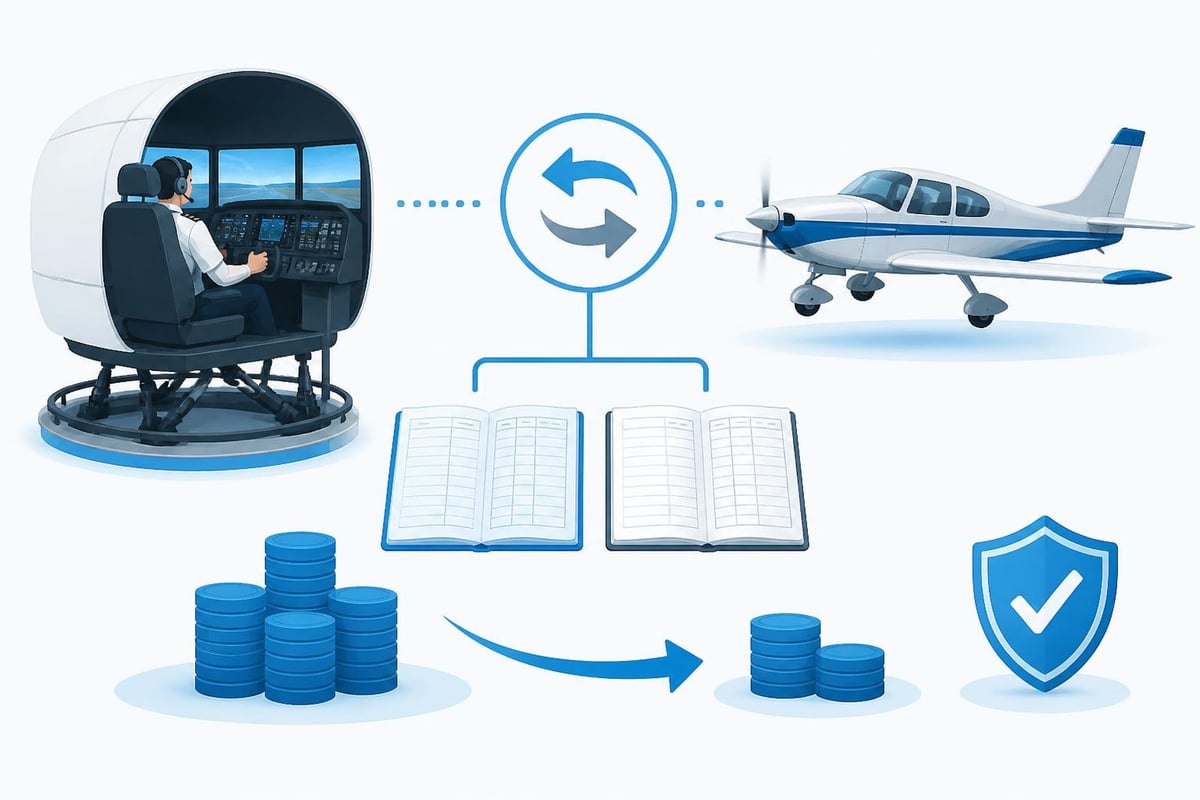
Combining PPL and IR training at one school often unlocks package discounts of 10 to 15 per cent. Some integrated programmes defer solo cross-country requirements until later, spreading costs.
Commercial Pilot Licence: Flying for Pay
A Commercial Pilot Licence (CPL) opens doors to paid flying: charter, cargo, flight instruction, or airline second officer roles. EASA Part-FCL FCL.310 requires 200 hours total time, including 100 as PIC and 20 hours cross-country PIC. Training typically adds 30 to 40 hours beyond the IR.
CPL-specific training costs:
| Item | Cost (£) |
|---|---|
| 35 hours commercial manoeuvres and XC | £6,300 (at £180/hour) |
| Instructor (30 hours) | £1,500 |
| Ground school (distance learning) | £800 – £1,200 |
| Theory exams (14 ATPL subjects) | £1,400 |
| Skills test | £500 |
| Multi-Engine class rating (12 hours) | £4,200 – £5,000 |
| Subtotal | £14,700 – £16,900 |
Add PPL and IR costs, and the modular route to frozen ATPL totals £40,000 to £50,000. Integrated programmes at approved training organizations (ATOs) often run £70,000 to £90,000, including guaranteed simulator slots and streamlined scheduling.
Airline Transport Pilot Licence: The Top Tier
An ATPL (Airline Transport Pilot Licence) is the highest certificate. To hold an unrestricted ATPL, EASA Part-FCL FCL.505.A requires 1,500 hours total time, including 500 multi-crew and 250 as PIC. Fresh CPL graduates hold a "frozen ATPL" and build hours as first officers.
Most pilots reach ATPL hours through instructing (800 to 1,200 hours in 18 to 24 months) or low-hour commercial roles. Type ratings (Boeing 737, Airbus A320) cost £25,000 to £35,000 but are often airline-funded during cadet or direct-entry hiring.
Frozen ATPL integrated course (zero to CPL/IR/MEP with ATPL theory):
- 200 hours flight training (aircraft and simulator): £55,000 – £70,000
- ATPL theory (14 exams, ground school): £6,000 – £8,000
- Accommodation, materials, fees: £8,000 – £12,000
- Total: £69,000 – £90,000
University aviation degrees add tuition (£9,250/year in England, more elsewhere) but may offer better loan terms. Embry-Riddle financial aid FAQs detail U.S. collegiate flight programme costs, which average $150,000 to $200,000 over four years.
Funding Your Training: Loans, Scholarships, and Payment Plans
Few pilots pay upfront. AOPA Aviation Finance offers flight-training loans with terms from £5,000 to £100,000, though interest rates (7 to 12 per cent APR in 2026) add thousands over a five-year term. UK Career Development Loans covered training until 2016; current options include personal loans or finance through ATOs.
Scholarships reduce the burden. The EAA Ray Aviation Scholarship awards up to $11,000 for young pilots. Women in Aviation International administers over 200 scholarships annually, many covering partial or full PPL costs. Competitive but worthwhile: applications open each November.
Pay-as-You-Go vs Upfront Packages
Pay-as-you-go offers flexibility: book lessons weekly, pause if needed, switch schools. You pay only for hours flown. Risk: hourly rates rise mid-training, and no bulk discount.
Block-hour packages (20, 40, or full-course bundles) lock in rates and save 5 to 10 per cent. Downsides: non-refundable if the school closes, and you forfeit unused hours if you leave. Check the school's financial stability and accreditation before committing four or five figures.
Tracking Hours and Staying Current After Qualifying
Once licensed, staying current costs money. EASA Part-FCL FCL.060 requires three takeoffs and landings in the preceding 90 days to carry passengers. Instrument currency (IR) demands six instrument approaches, holding, and intercepting in the past six months (or an IPC). Each costs flight time.
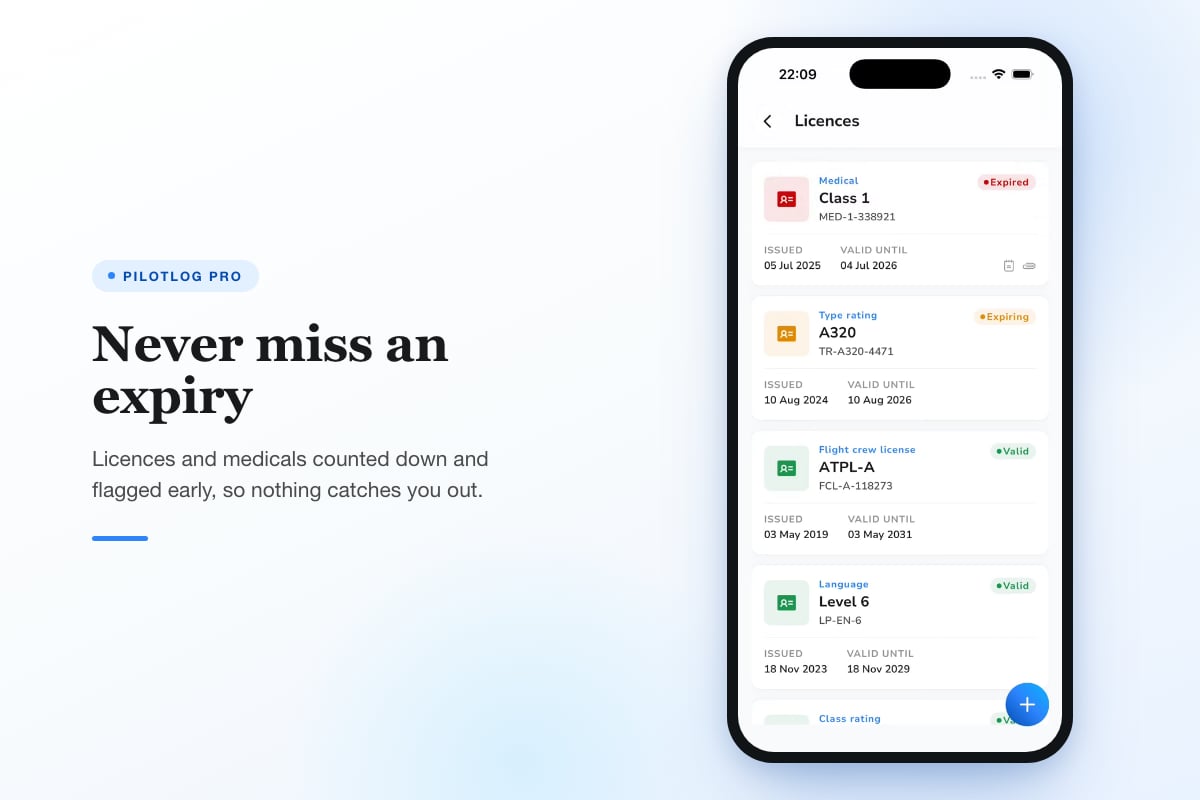
Tracking your flight hours and currency accurately saves repeat training and ensures you meet regulatory minimums. Paper logbooks work but lack alerts. A digital logbook like Pilotlog Pro tracks rolling currency windows, flags upcoming lapses, and logs every sector in seconds, so you know exactly when your night or IFR currency expires and can plan refresher flights before limits lapse.
Regional and Aircraft Type Variations
Helicopter licences follow similar structures but cost more. A Private Pilot Licence (Helicopters) averages 50 to 60 hours at £250 to £350 per hour, totalling £15,000 to £22,000. Commercial helicopter training exceeds £60,000. For detailed breakdowns, see our helicopter pilot licence and helicopter lessons cost guides.
Seaplane, tailwheel, and aerobatic endorsements range from £500 to £2,000 and expand your skills. Type ratings for jets or turboprops cost £15,000 to £35,000 but are employer-paid in most airline or corporate roles.
Comparing Modular and Integrated Training Costs
Modular training lets you complete PPL, then IR, then CPL in stages. You choose the pace, work between modules, and spread costs over years. Total time often exceeds integrated routes by 10 to 20 hours because of gaps between modules.
| Route | Total Hours | Total Cost (£) | Duration |
|---|---|---|---|
| Modular (PPL + IR + CPL + MEP) | 220 – 250 | £40,000 – £52,000 | 18 – 36 months |
| Integrated ATPL course | 195 – 210 | £69,000 – £90,000 | 12 – 18 months |
Integrated courses lock you in, demand full-time commitment, and frontload costs, but finish faster and include ATPL theory. The State of Flight Training 2024 report shows modular students report 15 per cent higher satisfaction with schedule flexibility, while integrated students value completion speed.
Hidden Costs and Unexpected Expenses
Checkride failures cost £300 to £500 per retest. Industry averages hover around 20 per cent first-time failure rates for PPL skills tests. Budget one or two retests.
Currency and recency flights: If you pause training for three months, expect two to four hours refresher dual at £200 to £400. Instrument skills decay faster; a six-month break often requires five to eight hours with an instructor.
Medical issues can derail timelines. Class 1 medicals deny 3 to 5 per cent of applicants on first try for conditions (sleep apnea, vision, cardiac history) requiring specialist reports. Each specialist visit and re-examination adds £500 to £1,500 in delay costs.
Licence conversions: If you train under FAA rules and later convert to EASA, expect difference training (10 to 20 hours) and exam fees (£800 to £1,500). Conversions work both ways; consult FAA guidance on becoming a pilot for U.S. pathways.
Budgeting and Timeline Planning
A realistic budget includes a 15 to 20 per cent contingency for weather delays, retests, and extra dual. If you plan £50,000 for CPL integrated, set aside £57,500 to £60,000.
Sample timeline and cash flow (modular CPL):
- Months 1–6: PPL (£14,000). Fly twice weekly, pass exams, complete checkride.
- Months 7–8: Build hours, save funds (£1,000/month).
- Months 9–14: IR training (£14,000). Simulator and aircraft phases.
- Months 15–16: Hour building to 150 total (£3,000).
- Months 17–22: CPL and MEP (£16,000). ATPL theory (£7,000).
- Month 23: CPL skills test, frozen ATPL issued.
Total elapsed: 23 months. Total cost: £55,000 including hour building.
Full-time integrated students finish in 12 to 14 months but cannot work during training. Part-time modular pilots spread training over two to four years, working between modules.
Keeping Costs Down Without Cutting Corners
Join a flying club rather than a commercial school. Clubs charge membership (£500 to £1,000/year) but aircraft rates run £20 to £40 below commercial operators. Instructor availability may be limited.
Share costs: Part-FCL allows shared flights where qualified pilots split costs (fuel, landing fees). Build cross-country hours by splitting with another pilot working toward the same goal.
Study efficiently: Pass theory exams on first attempt using question banks and focused ground school. Each retake costs £80 to £120 and delays progress.
Fly consistently: Two lessons per week cost less than one per month because you retain skills and avoid repeat sessions. Gaps of three weeks or more double training hours.
Use simulators: For IR and CPL, maximize allowable sim time. A quality home sim (£300 to £800) helps chair-fly procedures between lessons.
When to Pause and When to Push Through
If funds dry up mid-training, pause strategically. Finish a rating before stopping: a completed PPL holds value; 30 hours toward PPL does not. Keep current with one flight every 60 days (£160 to £200) to avoid full refresher courses.
Pushing through intensive training (five flights per week) can save 10 to 15 hours total but increases fatigue and error rates. Balance speed with retention.
The cost to become a pilot in 2026 spans a wide range, but understanding each component lets you plan, budget, and prioritize. Whether you are working toward a PPL for weekend flying or a frozen ATPL for an airline career, tracking every hour and staying on top of currency keeps you efficient and legal. Pilotlog logs your flights in seconds, tracks rolling currency windows, and alerts you when ratings or medicals approach expiry, so you can focus on flying instead of spreadsheets. Start your free trial today and keep your logbook current from student to captain.
- pilot training cost
- ppl cost
- commercial pilot licence
- instrument rating
- atpl training
A logbook that keeps itself.
Join the waitlist and be first in line when Pilotlog launches.
Free to join, no spam. Unsubscribe any time.