uas logbook
UAS Logbook: What Drone Pilots Must Record in 2026
8 Oct 2026 · 13 min read
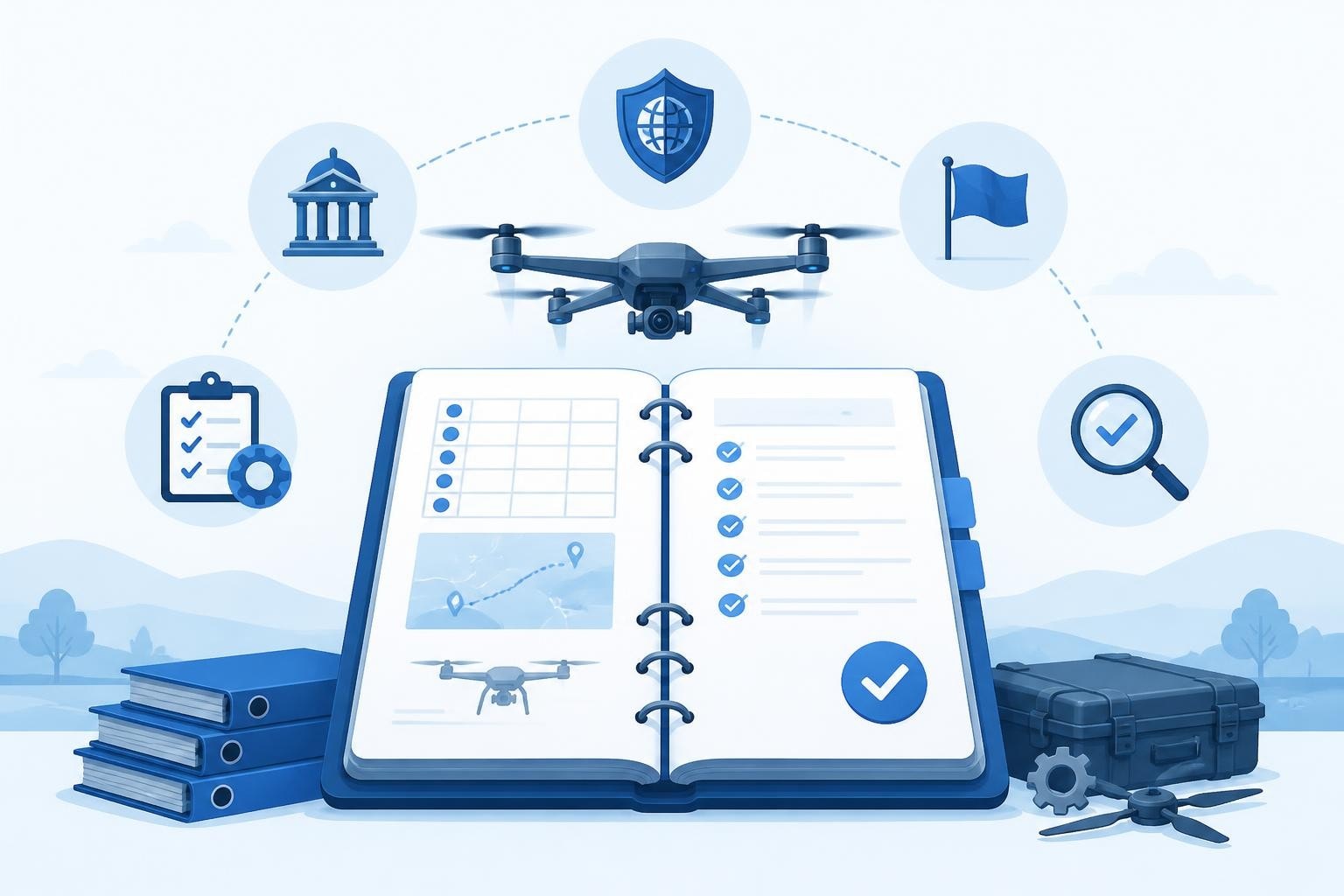
A uas logbook is a structured record of unmanned aircraft system operations, capturing flight time, operational details, maintenance actions, and incidents for regulatory compliance and safety oversight. Most aviation authorities now mandate that UAS operators maintain accurate logs to demonstrate compliance with licensing, currency, and operational limits. Whether you fly commercially under FAA Part 107, hold a Light UAS Operator Certificate (LUC) in Europe, or operate under UK CAA remote pilot rules, you are expected to produce a complete flight log on demand during inspections or audits.
Why UAS Operators Need a Logbook
Unlike traditional manned aviation where pilot logbooks have been standard practice for decades, the uas logbook requirement is relatively new and varies by jurisdiction. Regulators introduced mandatory recordkeeping to ensure oversight, traceability, and accountability in a rapidly growing industry.
Core regulatory reasons include:
- Compliance demonstration: Proving adherence to operational limits (altitude, airspace, visual line of sight) during spot inspections or post-incident reviews
- Currency tracking: Many jurisdictions require recurrent training or flight activity within defined periods to maintain remote pilot certificates
- Maintenance accountability: Documenting pre-flight checks, repairs, software updates, and component replacements to ensure continued airworthiness
- Incident investigation: Providing factual flight data to NTSB investigators or national safety boards following accidents or airspace violations
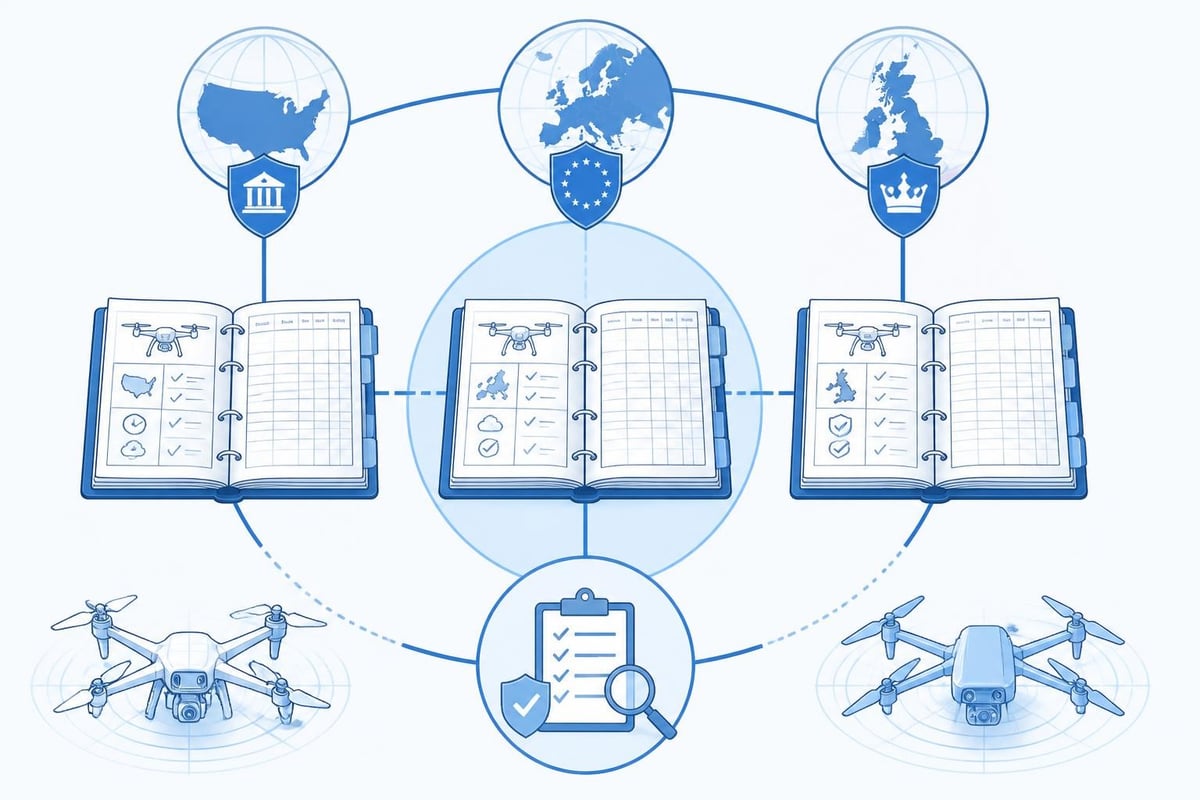
The FAA Advisory Circular AC 107-2A clarifies that while Part 107 does not explicitly mandate a "pilot logbook" in the traditional sense, operators must be able to produce records of flight time, operational details, and maintenance actions if requested by the FAA. The UK CAA takes a more prescriptive approach through CAP 722, which sets out specific retention periods and recommended data fields for both operator and aircraft technical logs.
Commercial vs Recreational UAS Logbooks
Commercial operators face stricter documentation standards than hobbyists. If you operate for hire or under an operational authorisation, your uas logbook becomes a legal document subject to audit. Recreational pilots under the Exception for Recreational Flyers in the US, or the Open Category A1/A3 in Europe, typically face lighter requirements but should still track flights to build experience and maintain safe practices.
| Operator Type | Logbook Requirement | Retention Period | Typical Data Fields |
|---|---|---|---|
| FAA Part 107 Commercial | Records must be available on request | 24 months (general operational records) | Date, time, location, flight duration, PIC name, aircraft serial, operational notes |
| EASA Specific Category (LUC) | Mandatory operator and aircraft logs | Duration of LUC validity + 3 years | Date, pilot name, UAS ID, flight time, operations summary, maintenance actions |
| UK CAA Specific Category | Technical log + remote pilot logbook | 2 years minimum (CAP 722) | Date, departure/arrival time, flight purpose, anomalies, software version |
| Recreational (Open Category) | Not mandatory but recommended | Pilot's discretion | Date, flight time, location, practice manoeuvres |
What to Record in Your UAS Logbook
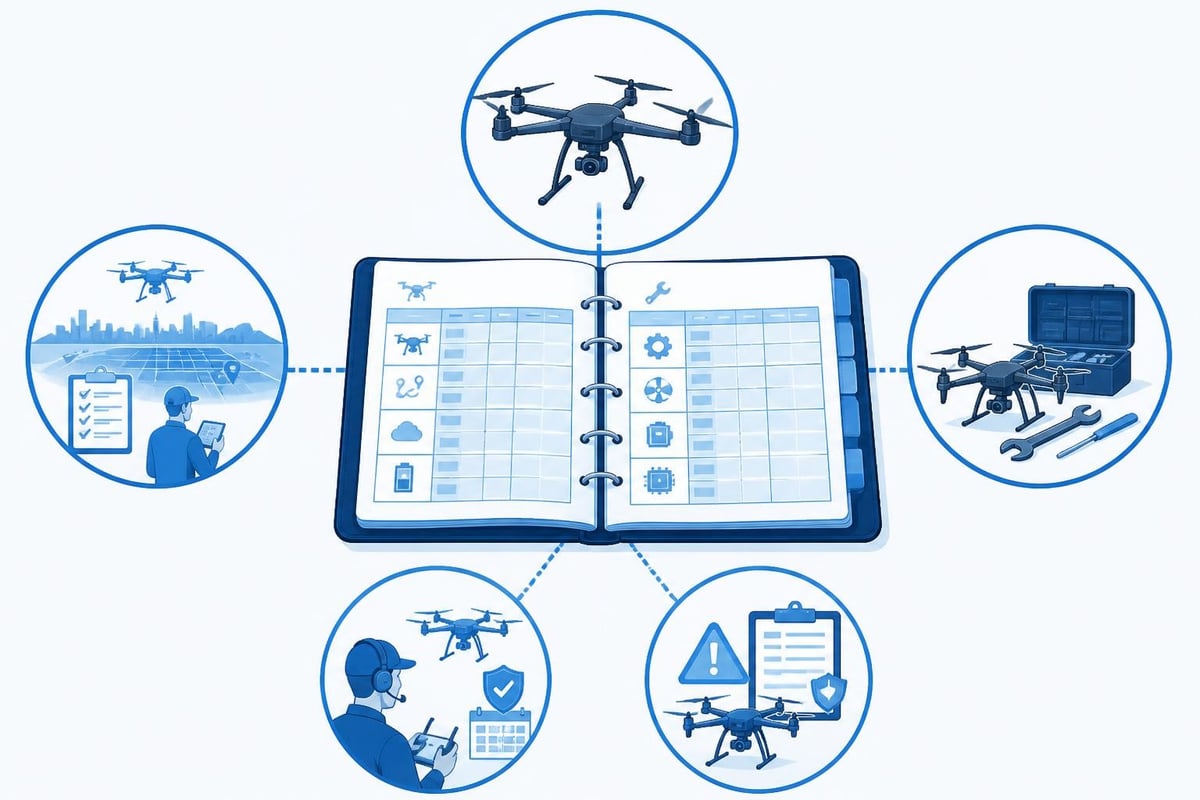
A comprehensive uas logbook captures three categories of information: flight operations, aircraft technical status, and pilot currency. The exact fields vary by regulatory framework, but the underlying principle remains consistent: document what you did, where, when, and with which equipment.
Flight Operations Section
Every flight entry should include:
- Date and time: Record local time or UTC for each departure and landing. Some operators log block time (engine start to shutdown), while others record airborne time only.
- Location: GPS coordinates or a named site (address, landmark, or airfield identifier). Include the operational area if conducting survey work over multiple grid squares.
- Pilot in command: Full name and remote pilot certificate number. If operating under supervision, note the supervising pilot and trainee separately.
- Aircraft identification: Manufacturer, model, and serial number or registration mark if applicable in your jurisdiction.
- Flight purpose: Training, commercial survey, inspection, media production, or test flight. Specificity helps during audits and trend analysis.
- Operational category: Open, Specific, or Certified under EASA; Part 107 waiver conditions under FAA; or equivalent classification in your region.
Additional operational details:
- Maximum altitude reached (AGL or AMSL as appropriate)
- Distance from remote pilot station (especially if operating beyond visual line of sight under waiver)
- Airspace class and any clearances obtained (CTR, TMZ, restricted areas)
- Weather conditions (wind speed, visibility, cloud base) if relevant to operational limits
- Anomalies or deviations from the flight plan
Aircraft Technical Log
The technical section of your uas logbook tracks the condition and serviceability of each airframe. This becomes critical for identifying patterns of wear, scheduling preventive maintenance, and demonstrating due diligence if a component fails.
- Pre-flight inspection results: Date, time, inspector name, and pass/fail for each checklist item (battery health, propeller condition, camera gimbal function, GPS lock)
- Software and firmware versions: Record updates to flight control firmware, ground station software, and payload applications
- Battery cycles and health: Log each battery's cycle count, voltage, and any performance degradation
- Repairs and modifications: Date, description of fault, corrective action, parts replaced, and technician name or reference number
- Component life limits: Track motor hours, propeller replacements, and scheduled overhauls per manufacturer's maintenance manual
Some operators integrate maintenance logs into their uas logbook, while others maintain separate technical logs per aircraft. CAP 722 recommends a dedicated technical log for each UAS, retained for the lifetime of the aircraft plus two years.
Pilot Currency and Training Records
Your uas logbook should also track your own recency and competence. This mirrors the approach manned pilots use to track currency for carrying passengers, instrument flight, or night operations.
- Flight review or recurrent training dates: FAA Part 107 requires knowledge test renewal every 24 calendar months; EASA remote pilot certificates have defined validity periods
- Hours in type: If you operate multiple UAS platforms, track hours per airframe type (multi-rotor, fixed-wing, VTOL) to demonstrate familiarity
- Endorsements and waivers: Log any operational authorisations (night operations, operations over people, BVLOS) with issue and expiry dates
- Simulator or training hours: Some operators log simulator sessions separately to demonstrate proficiency maintenance between live flights
Digital vs Paper UAS Logbooks
Pilots have traditionally relied on paper logbooks with ruled columns and manual entries. For UAS operations, especially high-volume commercial work, digital uas logbook solutions offer significant advantages in speed, accuracy, and audit readiness.
Benefits of digital logs:
- Automatic timestamping and GPS tagging from flight controller telemetry logs
- Cloud backup and instant access from mobile devices or desktop
- Calculated totals and rolling currency windows without manual arithmetic
- Export to PDF or CSV for regulator submissions and client reporting
- Integration with fleet management platforms for multi-aircraft operators
When paper still makes sense:
- Remote operations in areas with no cellular or internet connectivity
- Operators who fly infrequently (fewer than 10 flights per month)
- Regulatory environments that mandate hard-copy signatures (increasingly rare in 2026)
Many pilots use a hybrid approach, recording flights digitally during operations and maintaining a signed paper summary for regulatory compliance. The UK CAA remote pilot responsibilities guidance provides a recommended logbook template that can be printed or adapted for digital use.
If you already use a digital logbook for manned flying, choosing the best digital logbook for pilots requires assessing whether UAS-specific fields and telemetry integration are supported. Many general aviation logbooks now offer UAS modules or companion apps to track both manned and unmanned operations in a single platform.
Common UAS Logbook Mistakes and How to Avoid Them
Even experienced pilots make recordkeeping errors that can complicate audits or investigations. Here are the most common pitfalls and practical solutions.
Incomplete or Missing Entries
The most frequent audit finding is gaps in flight records. Pilots often forget to log routine test flights, firmware update validations, or training sessions.
Solution: Make logging the final step of every flight. Before disconnecting the battery, open your uas logbook (paper or app) and record the essential data. Set a personal policy: battery removed means log complete.
Inconsistent Units and Formats
Mixing metric and imperial units (metres vs feet for altitude), or recording time in decimal hours one day and hours:minutes the next, creates confusion during analysis.
Solution: Pick one standard and stick to it across all entries. Most UAS operators in the UK and Europe record altitude in metres AGL, flight time in hours and minutes (hh:mm), and coordinates in decimal degrees. Document your convention on the first page of your logbook.
Vague Location Descriptions
"City centre" or "client site" is not sufficient for regulatory purposes. Investigators need precise locations to cross-reference airspace, weather data, and any reported conflicts.
Solution: Use What3Words references, GPS coordinates (±0.0001° precision), or named landmarks with postal codes. If you operate from the same sites regularly, create a location library with approved identifiers.
Missing Maintenance Actions
Pilots often log flights but fail to record pre-flight checks, battery swaps, or firmware updates in the technical log. This makes it impossible to correlate failures with maintenance history.
Solution: Treat your uas logbook as an integrated document. After each flight entry, add a technical log line noting any maintenance performed or deferred. If no action was required, write "No defects noted" to show the entry was intentional, not omitted.
Audit and Inspection Readiness
Regulators and clients increasingly request logbook audits to verify compliance. The UAS Dashboard guide on drone flight logs and recordkeeping outlines typical audit scenarios and what inspectors look for.
What auditors check:
- Completeness: Are there gaps in flight records? Do totals add up correctly?
- Accuracy: Do logged locations, times, and altitudes match submitted flight plans or NOTAM applications?
- Currency: Does the pilot's logged flight time meet recency requirements for the claimed authorisations?
- Traceability: Can each flight be linked to a specific aircraft and maintenance state?
- Retention compliance: Are records from the required period available and legible?
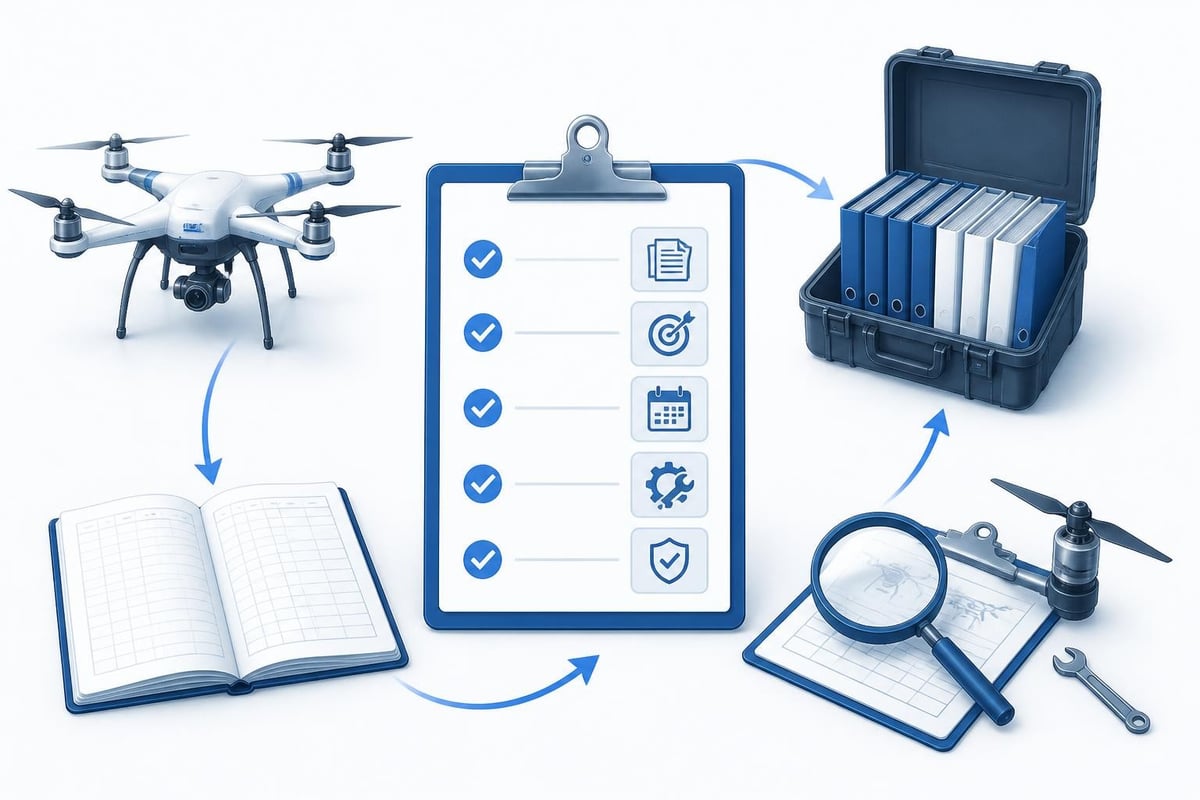
Prepare for an audit by conducting a monthly self-review. Check that every flight has all mandatory fields, cross-reference totals against flight controller logs, and ensure your technical log entries match the flights flown on each aircraft. If you spot a gap, document the correction (date, reason, correcting official) rather than silently amending the entry.
For commercial operators, consider an annual third-party audit. An independent reviewer applying ASTM F3178-24 operational risk assessment principles can identify weaknesses in your recordkeeping before a regulator does.
Integrated Tools for UAS and Manned Logging
Pilots who transition between manned aircraft and UAS, or who hold both an ATPL and a remote pilot certificate, benefit from platforms that consolidate all flight time in one place. Your uas logbook and traditional pilot logbook can share common data structures: date, aircraft type, PIC time, and operational notes.
Pilotlog Pro now supports tracking for both manned and unmanned operations, calculating rolling 28-day and 365-day limits, and flagging currency lapses across multiple licence types. Log a UAS flight in seconds, and the system updates your total flight time, currency windows, and medical expiry alerts automatically. Built for pilots across the whole career, from students to airline crew, it keeps you current, legal, and ready whether you are flying Part 107 surveys or scheduled airline services.
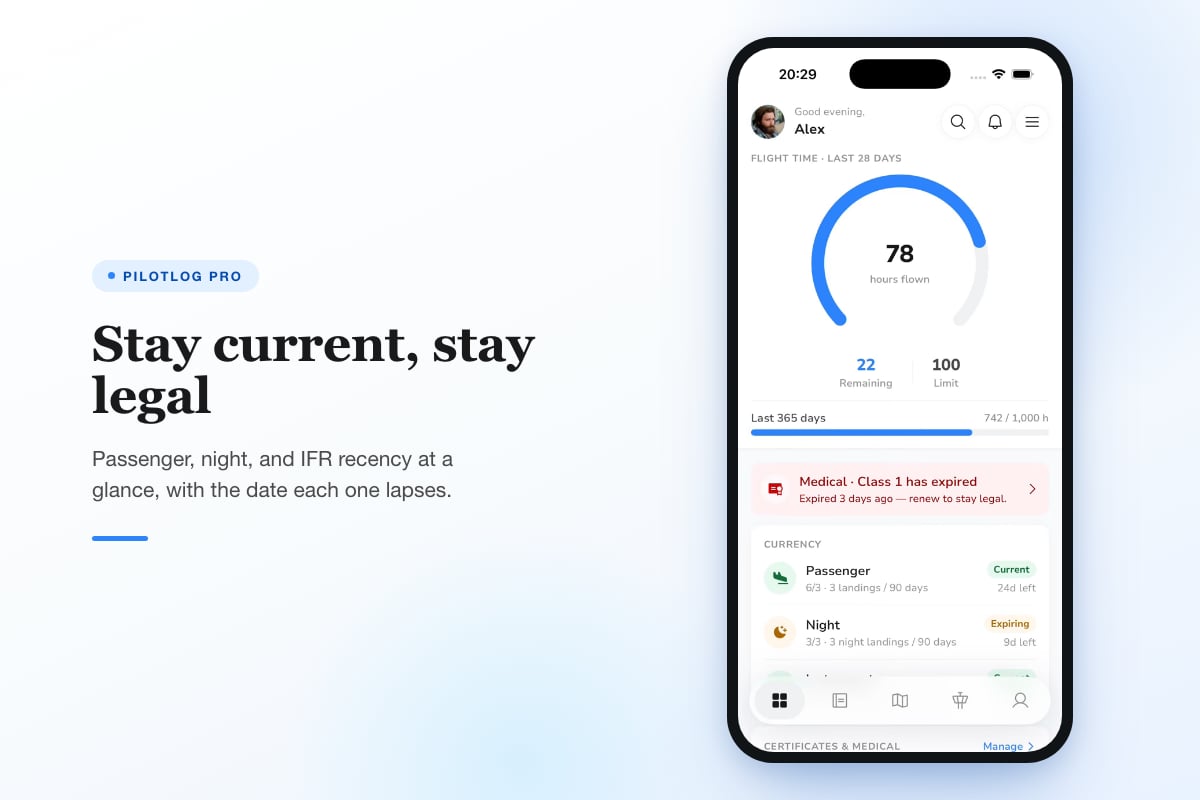
This integration simplifies the transition between roles. A helicopter pilot conducting powerline inspections with a UAS can track both helicopter PIC hours and UAS survey hours in a single logbook, ensuring compliance with both CAA manned aircraft recency rules and UAS operator certificate conditions.
International Harmonisation and ICAO Standards
The ICAO Council's adoption of new Standards and Recommended Practices (SARPs) for remotely piloted aircraft systems signals a move toward global standardisation of uas logbook requirements. By 2026, many states have aligned their national rules with ICAO Annex 19 (Safety Management) and Annex 6 Part IV (RPAS operations), which recommend standardised recordkeeping for operational, maintenance, and training activities.
Expect to see:
- Common data fields across jurisdictions, making it easier to operate internationally
- Electronic submission formats for remote pilot logbooks during licence applications or renewals
- Interoperability standards allowing UAS logs to interface with air traffic management systems and flight data monitoring platforms
Pilots operating across borders should consult each state's civil aviation authority to confirm local logbook requirements. Keep copies of your uas logbook in a format that can be translated or converted to the receiving authority's template.
Building a UAS Logbook Habit
Consistency separates pilots who pass audits from those who scramble to reconstruct records months later. Treat your uas logbook as part of the pre-flight and post-flight ritual, not an administrative afterthought.
Practical steps:
- Log immediately after shutdown: Battery removed, log entry complete. Never defer logging until later in the day or week.
- Review weekly: At the end of each week, scan your entries for missing data, calculate weekly totals, and flag any anomalies.
- Archive monthly: Export a PDF or printed copy of each month's logs and store it securely. This protects against data loss and provides a checkpoint for audits.
- Train consistently: If you supervise or train other remote pilots, review their logbooks as part of the sign-off process. Teach good recordkeeping from the first flight.
For inspiration on structuring your records, how to fill out a pilot logbook provides transferable principles from manned aviation that apply equally to UAS operations.
UAS Logbook Retention and Data Protection
Retention periods vary by regulation. Under Part 107, the FAA expects operational records to be available for 24 months. EASA requires logs to be retained for the duration of the operator certificate plus three years. CAP 722 recommends a minimum of two years for technical logs.
Beyond regulatory minimums, best practice is to retain all uas logbook data for the operational lifetime of each aircraft. If an incident occurs after you have sold or retired an airframe, historical logs may be requested by investigators or insurance assessers.
Data protection considerations:
- Personal data: Your logbook contains your name, certificate number, and operational history. Ensure storage complies with GDPR (EU/UK) or equivalent privacy laws in your jurisdiction.
- Client confidentiality: If flights involve commercial clients or sensitive locations, redact or encrypt entries before sharing with third parties.
- Cloud security: If using digital logs, choose providers with ISO 27001 certification and regular third-party security audits.
- Backup and redundancy: Maintain at least two independent copies (cloud + local, or paper + digital) to protect against data loss from device failure or cyberattack.
Rules change and pilots should confirm against current official sources before relying on specific retention periods or data handling requirements.
A uas logbook is your first line of defence during audits, investigations, and licence renewals, documenting every flight, maintenance action, and currency milestone with regulatory precision. Whether you operate commercially under Part 107, hold a Light UAS Operator Certificate in Europe, or fly under UK CAA rules, accurate records prove compliance and professionalism. Pilotlog makes it simple: log flights in seconds, track rolling limits and currency windows automatically, and receive alerts for licence and medical expiries so nothing catches you by surprise.
- uas logbook
- drone pilot records
- part 107 compliance
- easa drone regulations
- uav flight logging
A logbook that keeps itself.
Join the waitlist and be first in line when Pilotlog launches.
Free to join, no spam. Unsubscribe any time.