jeppesen logbook
Jeppesen Logbook: What You Need to Know in 2026
28 Aug 2026 · 10 min read
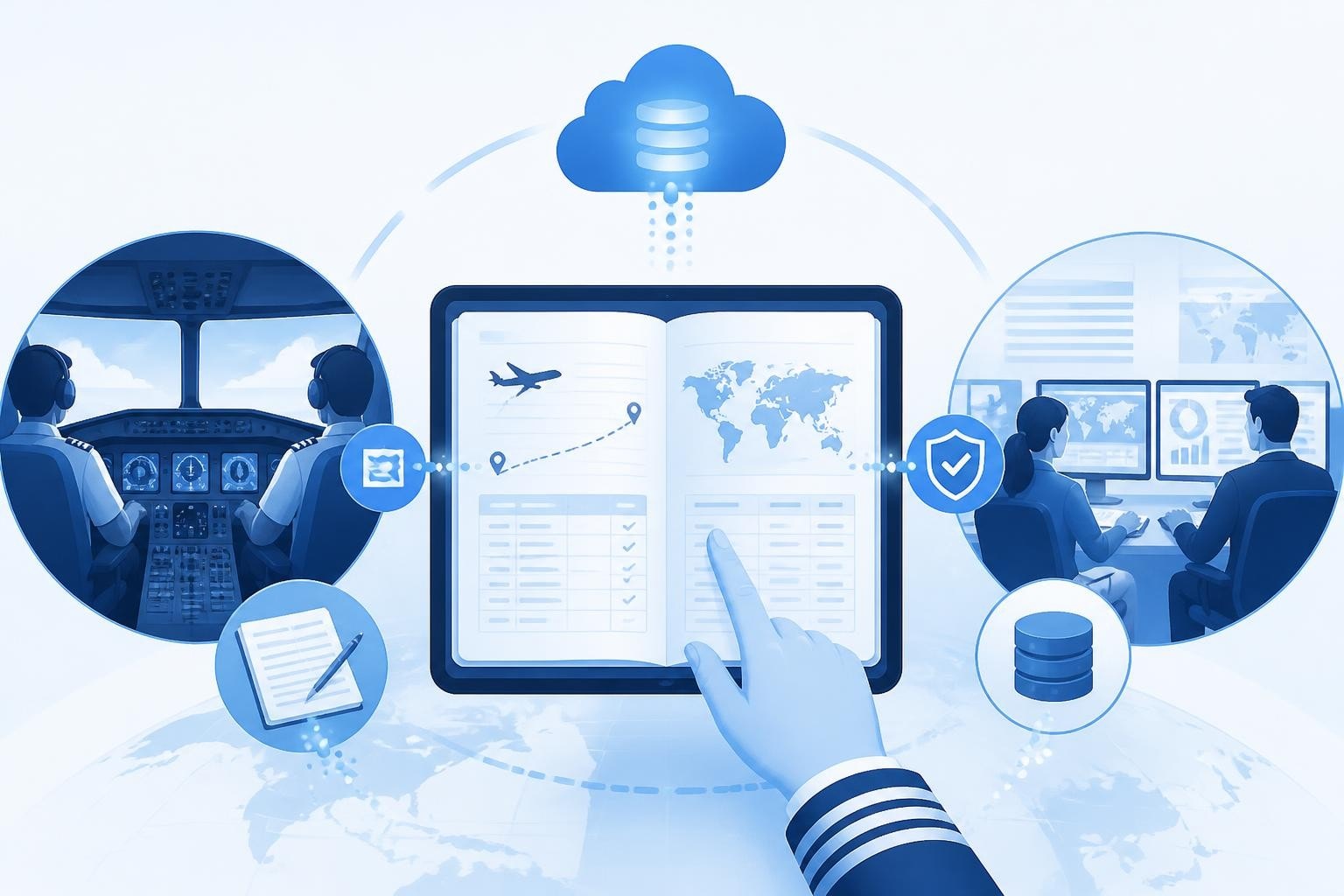
The Jeppesen logbook refers primarily to the Journey Log, a flight-deck document used by commercial operators to record flight details for each sector. While private pilots typically maintain personal logbooks tracking their hours, licences, and currency, the Jeppesen logbook serves a different purpose: operational and technical recordkeeping for airlines and charter companies. Jeppesen, the Boeing subsidiary known for aviation charts and navigation data, has offered paper Journey Logs for decades and now provides electronic versions through FliteDeck Pro. The term "Jeppesen logbook" also appears when pilots search for personal logbook solutions, though Jeppesen does not currently offer a dedicated digital pilot logbook app for individual flight-time and currency tracking.
What Is a Jeppesen Journey Log
A Journey Log is a technical flight record completed by the flight crew for every commercial flight. It captures essential data: aircraft registration, departure and arrival aerodromes, block times, flight time, fuel on board, and crew names. Operators use this information for maintenance tracking, compliance, and flight-following systems.
Jeppesen's paper Journey Logs have been the industry standard for years. Pilots fill out multi-part carbonless forms, retaining copies for the aircraft and filing others with the operator. The process is familiar but manual, and transcription errors or illegible handwriting can complicate dispatch and engineering workflows.
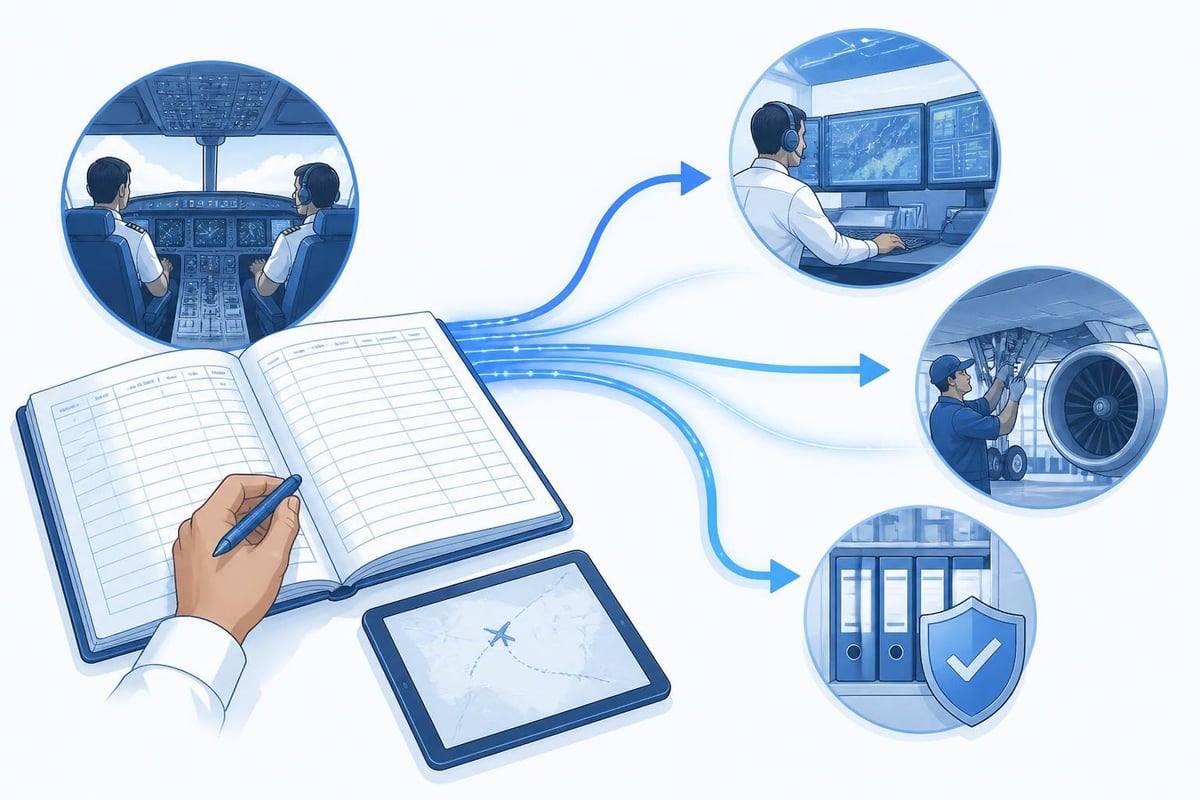
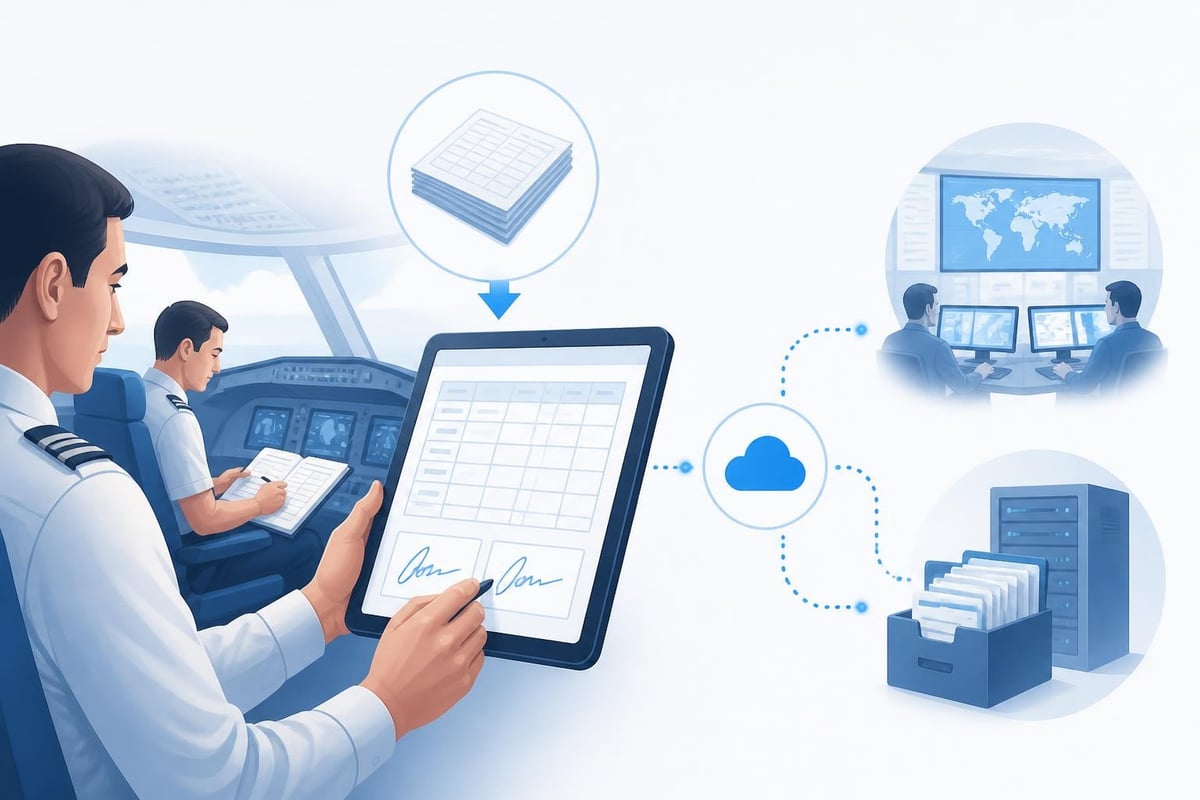
In March 2026, Jeppesen announced electronic Journey Log capability within FliteDeck Pro, its Electronic Flight Bag (EFB) software. Crews enter flight details on a tablet, and the data flows directly to the operator's systems. This digital Jeppesen logbook reduces errors, speeds up turnaround, and integrates with flight-planning and maintenance platforms.
Regulatory Acceptance of Electronic Journey Logs
Aviation authorities worldwide accept electronic journey logs under specific conditions. In the United States, FAA Advisory Circular AC 91-78A (Use of Electronic Flight Bags) permits EFB-hosted documents, including journey logs, provided operators meet data integrity, backup, and accessibility requirements. The FAA rulemaking documentation confirms that electronic records satisfy retention and operational recordkeeping requirements when implemented properly.
In Europe, EASA Annex VI to ED Decision clarifies that electronic journey logs are acceptable alternatives to paper, subject to approval by the national authority. EASA's Easy Access Rules for Aircrew (Regulation (EU) No 1178/2011) also permit electronic pilot logbooks for individual pilots, provided the records are secure, permanent, and tamper-proof.
In Canada, Transport Canada's AIM and advisory circulars provide similar guidance on EFB use and electronic recordkeeping, reinforcing the global trend toward digital flight records.
Jeppesen Journey Log vs Personal Pilot Logbook
Confusion often arises because "logbook" means different things to different pilots. The Jeppesen logbook (Journey Log) is an operational document for the airline or operator. Your personal pilot logbook is your record of flight experience, licences, ratings, and currency.
| Jeppesen Journey Log | Personal Pilot Logbook |
|---|---|
| Completed by crew for each flight | Maintained by individual pilot |
| Records operational and technical data | Records total time, PIC, dual, night, IFR |
| Stored by operator for compliance | Pilot's responsibility to retain |
| Focuses on aircraft and route details | Focuses on hours, currency, and expiries |
| Often paper or EFB-hosted | Increasingly digital apps or spreadsheets |
Airline and commercial pilots still need their own logbooks. The Journey Log proves the flight happened, but your personal logbook demonstrates your qualification, recency, and career progression. When you apply for a job or renew a licence, the authority or employer expects your logbook, not the company Journey Log.
How Jeppesen FliteDeck Pro Implements the Electronic Journey Log
FliteDeck Pro is Jeppesen's flagship EFB application, running on iPads and Windows tablets. The electronic Journey Log feature launched in early 2026 allows crews to complete flight records within the same app they use for charts and weather.
Key features include:
- Pre-populated fields from flight planning (departure, arrival, aircraft registration)
- Automatic capture of block-off, takeoff, landing, and block-on times via ACARS or manual entry
- Crew signature via touchscreen
- Real-time data sync to the operator's ground systems
- Integration with Jeppesen's Flight Following interfaces for seamless data exchange
Operators approve a configuration that matches their regulatory requirements, and crews see only the fields they need. This eliminates blank sections and reduces the risk of omitted data.
Benefits for Airlines and Charter Operators
Electronic Journey Logs in FliteDeck Pro deliver measurable benefits:
- Reduced turnaround time: No waiting for paper forms to reach dispatch or engineering.
- Fewer errors: Pre-filled data and validation checks prevent common mistakes.
- Immediate availability: Ground teams access flight records as soon as the crew submits the log.
- Better data quality: Structured digital entries replace handwritten text.
- Regulatory compliance: Built-in fields ensure all required items are captured.
Airlines using FliteDeck Pro can retire paper Journey Logs entirely, cutting costs and simplifying record retention. The digital Jeppesen logbook integrates with maintenance tracking systems, flagging defects or time-limited components automatically.
Jeppesen Logbook for Individual Pilots
Jeppesen does not currently offer a standalone digital pilot logbook app for GA or commercial pilots to track personal flight time. The FliteDeck Pro Journey Log is designed for operators, not individuals. Pilots searching for a "Jeppesen logbook" to replace their paper records will need to look elsewhere.
What individual pilots need:
- Total flight time, split by PIC, dual, solo
- Night hours, IFR hours, cross-country time
- Aircraft types and tail numbers
- Licence and medical expiry dates
- Currency tracking for passengers, night, and IFR
Several digital pilot logbook platforms address these requirements. Modern logbook apps run on iOS and Android, sync across devices, and automatically calculate rolling currency windows. They also send alerts when your Class 1 medical expires in 14 days or when you need one more night landing to carry passengers after dark.
Pilots who previously used paper Jeppesen professional logbooks (the bound hardcover books with pre-printed columns) have largely moved to digital solutions. These apps eliminate arithmetic errors, back up your data to the cloud, and generate reports for job applications or licence renewals.
Choosing a Digital Logbook Solution
When selecting a digital logbook, consider your flying profile and regulatory environment. Student pilots need simple hour tracking and instructor sign-offs. Airline first officers need duty-time limits, rolling 28-day totals, and automatic currency calculations.
Key features in a modern digital logbook:
- Fast entry: Log a flight in under 30 seconds
- Currency tracking: Automated 90-day passenger recency, IFR approaches, night takeoffs and landings
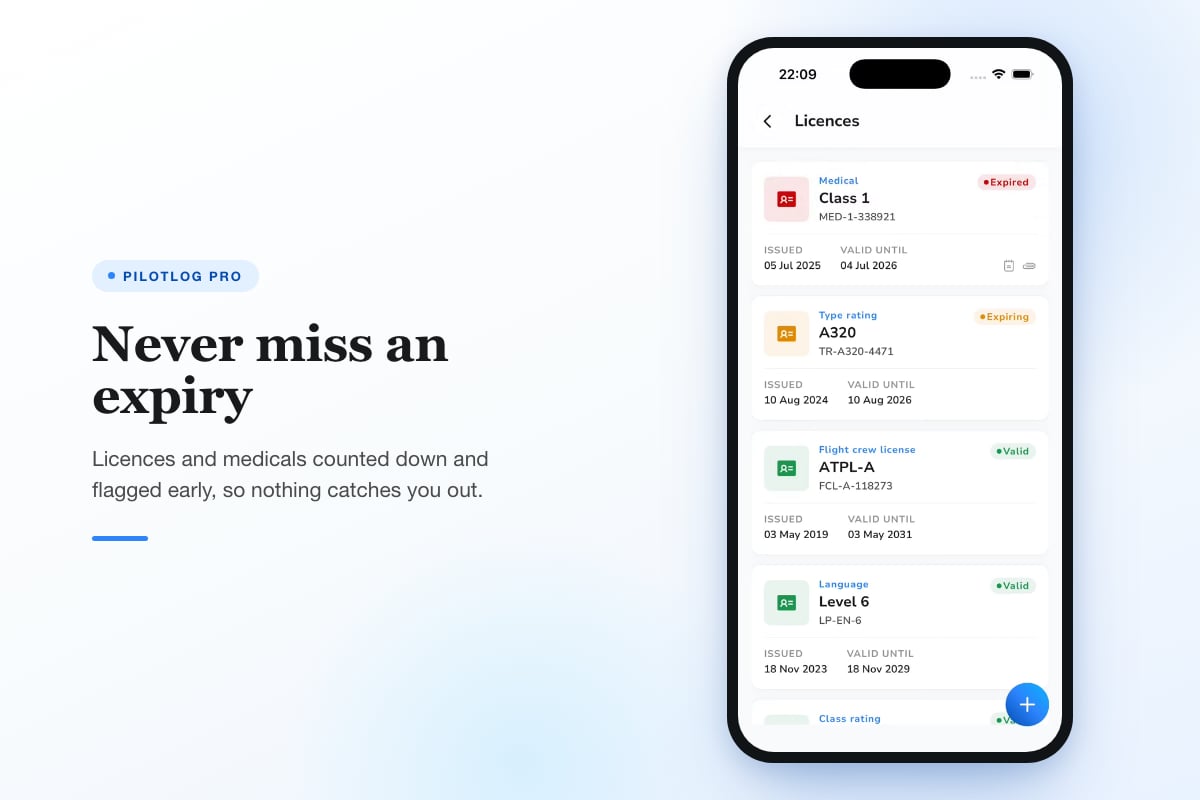
- Expiry alerts: Notifications for licence, rating, and medical expiry
- Flexible reporting: Export to PDF, CSV, or directly to airline application portals
- Cloud backup: Data survives a lost or broken device
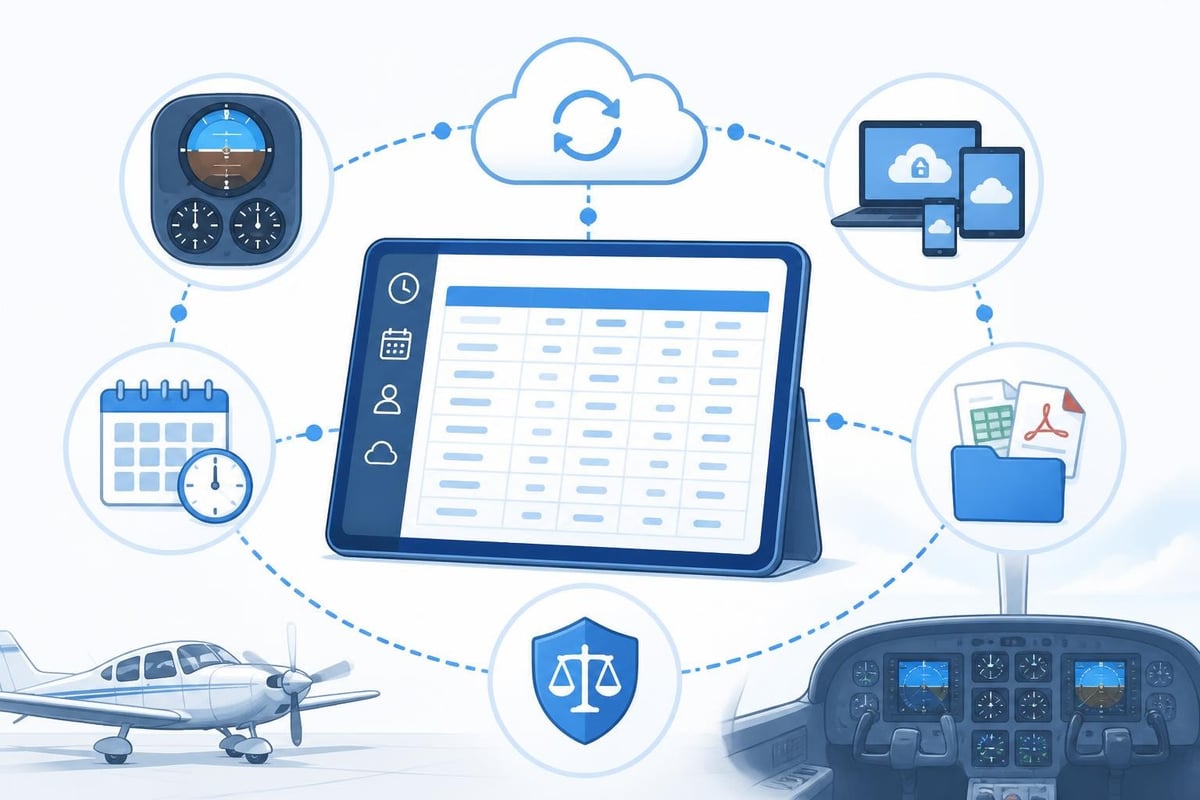
Pilotlog Pro tracks rolling flight-time and duty limits over 28-day and 365-day windows, passenger and night currency with lapse dates, and flags licence and medical expiries early. It's built for the whole career, from students logging dual instruction to airline crew managing complex recency rules.
Integrating Journey Logs and Personal Logbooks
Airline and commercial pilots complete both a Journey Log (for the operator) and a personal logbook (for themselves). In the past, this meant transcribing data from the Journey Log into your logbook at the end of the day. Digital systems reduce duplication.
Some operators export flight data from their scheduling or flight-following systems, allowing pilots to import completed flights into their personal logbook app. Jeppesen's technical interfaces support data exchange, though integration depends on the operator's IT infrastructure and the logbook platform's import capabilities.
Steps to streamline the process:
- Complete the electronic Journey Log in FliteDeck Pro or the operator's system.
- Export your flight data (if the operator provides access).
- Import into your personal digital logbook.
- Verify the data and add any additional details (approaches flown, unusual events).
Even with automation, you remain responsible for the accuracy of your personal logbook. Cross-check totals regularly and keep a backup.
Paper vs Electronic: Practical Considerations
The transition from paper to electronic logbooks raises practical and legal questions. AOPA's guidance on logbook best practices recommends backing up paper logbooks with scanned copies or digital records, and vice versa. If your device fails, you need access to your flight history.
Advantages of paper Jeppesen Journey Logs:
- No battery or device failures
- Familiar workflow for experienced crews
- Simple to archive in fireproof storage
Advantages of electronic Journey Logs:
- Faster data entry with pre-fill
- Immediate transmission to ground systems
- Reduced storage and retrieval costs
- Integration with maintenance and dispatch
For personal logbooks, the same trade-offs apply. Paper is tangible and requires no subscription, but digital logbooks offer automated currency, cloud backup, and instant reporting.
Regulatory Requirements for Logbook Entries
Whether using a Jeppesen logbook or another system, you must capture specific data to meet regulatory requirements. EASA Part-FCL AMC1 FCL.050 specifies that a pilot's logbook shall include:
- Pilot's name and licence number
- Date of flight
- Departure and arrival aerodromes or operating site
- Type and registration of aircraft
- Time (block or flight time, depending on the operation)
- Total flight time and PIC time
- Operational conditions (night, IFR)
- Signature (electronic signature is acceptable)
FAA 14 CFR 61.51 similarly requires name, date, aircraft identification, departure and arrival points, type of piloting time, and conditions. The regulation accepts electronic logbooks provided the data is permanent and the pilot can produce it on request.
Rules change, and pilots should confirm current requirements against the latest official publications from their national authority.
Beyond the Journey Log: Comprehensive Flight Data Management
Modern flight operations generate vast amounts of data. The Journey Log is one piece of a larger ecosystem that includes flight plans, weather briefings, weight and balance, and maintenance records. Jeppesen's suite of products (FliteDeck Pro, FlitePlan, Operator) aims to integrate these elements.
For individual pilots, the goal is similar: bring together your logbook, flight timer, currency tracking, and expiry alerts in one place. You gain a complete picture of your readiness and legal status.
A well-designed digital logbook:
- Imports flight data from multiple sources
- Calculates currency automatically against the correct rules (EASA, FAA, UK CAA, etc.)
- Alerts you before limits lapse
- Exports your history in the format required by employers or authorities
This integrated approach saves time and reduces the risk of an unnoticed currency lapse or expired medical grounding you unexpectedly.
The Future of Pilot Logbooks and Journey Logs
The aviation industry continues to digitize. Paper journey logs and handwritten personal logbooks are giving way to apps and cloud platforms. Jeppesen's electronic Journey Log in FliteDeck Pro reflects this trend, as do the growing adoption of digital pilot logbooks among GA and professional pilots.
Expect further integration between operator systems and personal logbooks. Blockchain-based verification, biometric signatures, and AI-assisted data validation may become standard. Regulators will refine their guidance on electronic records, ensuring security and permanence.
What remains constant is the pilot's responsibility to maintain accurate records. Whether you complete a Jeppesen logbook on paper or tablet, or track your hours in a mobile app, the data must be correct, complete, and accessible when you need it.
Jeppesen logbooks (Journey Logs) serve airline operations, while individual pilots need dedicated tools to track hours, currency, and expiries. Modern digital solutions automate calculations, reduce errors, and keep you legal. Pilotlog offers a digital logbook that logs flights in seconds, tracks your currency, and alerts you to expiring licences and medicals, so nothing catches you by surprise. Available on iOS and Android, it's built for pilots across the whole career.
- jeppesen logbook
- journey log
- flitedeck pro
- electronic journey log
- pilot logbook
A logbook that keeps itself.
Join the waitlist and be first in line when Pilotlog launches.
Free to join, no spam. Unsubscribe any time.