delta flight academy
Delta Flight Academy: Training Path to the Flight Deck
9 Oct 2026 · 13 min read

Delta Flight Academy is the ab-initio training arm of the Delta Propel Pilot Career Path program, launched in 2023 and operated in partnership with Skyborne Aviation at Vero Beach Regional Airport in Florida. It offers aspiring pilots a structured route from zero hours to a conditional job offer with Delta Air Lines. The academy provides integrated Part 141 flight training from private pilot through commercial multi-engine and flight instructor certificates, combined with guaranteed interviews and preferential hiring for Delta.
What Is Delta Flight Academy and How Does It Work?
Delta Flight Academy exists as part of the broader Delta Propel program, which Delta created to address the pilot shortage and build a direct pipeline to its own flight decks. The academy accepts students with no prior flight experience and trains them through all the certificates and ratings required to become flight instructors and later regional airline first officers.
Program Structure and Training Pathway
The academy operates under FAA Part 141 regulations, which allow for slightly reduced hour requirements compared to Part 61 training, provided students meet stricter syllabus and progress standards. Students complete the following sequence:
- Private Pilot Certificate (PPL)
- Instrument Rating (IR)
- Commercial Pilot Certificate, single-engine (CPL-SEL)
- Commercial Pilot Certificate, multi-engine (CPL-MEL)
- Certified Flight Instructor, single-engine (CFI)
- Certified Flight Instructor, instrument (CFII)
- Multi-Engine Instructor (MEI)
Training takes place at the Skyborne campus in Vero Beach, Florida, where Delta officially opened the Propel Flight Academy in June 2023. The facility includes modern aircraft, simulators, and ground-school classrooms purpose-built for accelerated training. Students typically complete the program in 12 to 18 months, depending on weather, individual progress, and instructor availability.
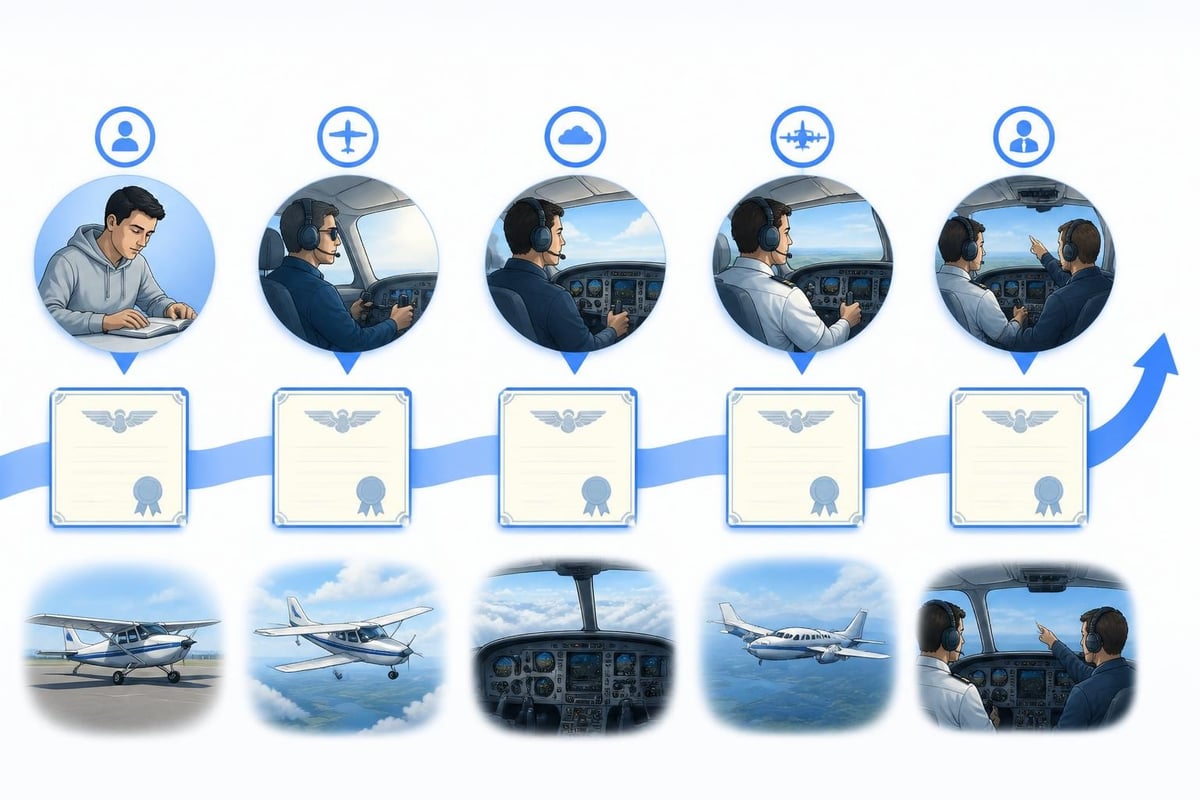
Upon earning the CFI certificate, graduates remain at the academy as instructors, building the 1,500 total flight hours required for an Airline Transport Pilot Licence (ATPL) and regional airline employment. This instructor phase typically takes 12 to 24 months. During that time, pilots receive a Qualified Job Offer (QJO) from Delta Air Lines, conditional on completing all requirements and maintaining professional standards.
Eligibility and Application Requirements
Delta Flight Academy accepts both domestic and international students, but eligibility criteria are specific. Applicants must meet the following baseline requirements:
| Requirement | Details |
|---|---|
| Age | Minimum 18 years old at application |
| Education | High school diploma or equivalent; college degree preferred |
| Medical | Hold or be able to obtain FAA First Class Medical Certificate |
| Language | English proficiency (ICAO Level 4 or higher for international students) |
| Background | Pass TSA vetting and background checks |
| Visa | U.S. citizens, permanent residents, or eligible visa holders (e.g., M-1 student visa for international applicants) |
The program costs approximately USD 95,000 to USD 110,000 for the full zero-to-CFI training, not including living expenses, books, or examination fees. Skyborne and Delta have partnered with financing providers to offer loans, though applicants should carefully review terms and repayment schedules before committing.
International students must secure an M-1 vocational training visa and complete TSA Flight Training Security Program (FTSP) vetting before beginning flight training. Processing can take several weeks, so early application is essential.
The Qualified Job Offer and Career Progression
The Qualified Job Offer (QJO) is the central advantage of the delta flight academy program. Unlike traditional flight training, where pilots must independently build hours and apply competitively to airlines, delta flight academy graduates receive a conditional offer to join Delta Air Lines once they meet all requirements.
QJO Conditions and Timeline
The QJO becomes active after the pilot completes CFI training and begins instructing. To convert the QJO into actual employment at Delta, pilots must:
- Accumulate 1,500 total flight hours (FAA ATP minimum under 14 CFR 61.159)
- Hold a valid ATP certificate or meet Restricted ATP (R-ATP) requirements
- Maintain a clean training record with no significant incidents or violations
- Complete a Delta interview and assessment (typically a formality for QJO holders)
- Meet Delta's hiring standards at the time of application
Note: The 1,500-hour ATP requirement is set by FAA regulation 14 CFR 61.159. Pilots who complete approved university Part 141 programs may qualify for R-ATP at 1,000 or 1,250 hours under 14 CFR 61.160, but delta flight academy's standard pathway requires the full 1,500 hours unless students also participate in a university Propel partner program.
Most pilots reach 1,500 hours within 18 to 24 months of instructing full-time at the academy. Delta does not guarantee a specific timeline from QJO to actual hire, as airline hiring fluctuates with economic conditions and fleet plans. However, QJO holders receive priority consideration and typically bypass the competitive application process entirely.
How Delta Flight Academy Compares to Other Pathways
Delta operates multiple Propel pathways beyond the flight academy, including university partnerships, approved flight schools, and regional airline programs. Understanding how the academy fits into the broader landscape helps pilots choose the best route.
Propel Pathways Overview
| Pathway | Starting Point | QJO Timing | Key Advantage |
|---|---|---|---|
| Delta Flight Academy | Zero hours | After CFI cert | Fully integrated Delta-branded training |
| University Partners | College enrollment | After CPL/CFI | Academic degree + R-ATP at reduced hours |
| Qualified Flight Schools | Any stage | After 250 hours PIC | Flexibility to train anywhere |
| Regional Partners | ATP + hired at regional | On hire | Fastest to mainline for experienced pilots |
The academy pathway suits pilots who want a single, structured program with direct Delta involvement from day one. University pathways offer the benefit of a degree and potentially reduced ATP hour requirements, but take longer and cost more. Qualified flight schools (listed on Delta's Propel page) allow geographic flexibility but lack the dedicated Delta branding and facility.
Regional partner pathways (Endeavor Air, Republic Airways, SkyWest, others) provide a QJO to pilots already hired at those carriers, making them the fastest route for pilots who already hold an ATP and are flying for a regional. These pilots typically flow to Delta after 24 to 36 months at the regional, depending on seniority and Delta's hiring pace.
Training Environment and Student Experience
Skyborne Airline Academy delivers the actual instruction at delta flight academy. Skyborne is a UK-based training organization with experience running integrated airline programs in Europe, and it adapted its model for the U.S. market in partnership with Delta.
The Vero Beach campus sits on Florida's east coast, offering consistent VFR flying weather year-round and access to controlled airspace, including nearby Class C and Class B for instrument training. The fleet includes:
- Piper Archer TX single-engine trainers for PPL and early CPL
- Piper Seminole multi-engine aircraft for MEL and MEI training
- Frasca and other approved simulators for instrument procedures and emergency training
Students follow a competency-based syllabus, meaning they advance by demonstrating proficiency rather than simply logging hours. This aligns with modern airline training philosophy and prepares pilots for the structured, checklist-driven environment they will encounter at Delta and its regional partners.
Instructors at the academy include both Skyborne cadre and former Delta pilots, providing mentorship and insight into airline operations. The official opening in June 2023 included remarks from Delta leadership and local officials, underscoring the company's commitment to the program.
Building and Tracking Hours as a CFI
Once students earn the CFI certificate, they transition to instructor roles at delta flight academy. This phase is critical: it allows pilots to build the flight hours required for ATP and regional airline jobs while earning a salary (typically USD 30,000 to USD 40,000 annually as a new CFI).
Logging and Currency During the CFI Phase
Flight instructors must track numerous regulatory requirements simultaneously:
- Flight and duty time limits (though not subject to Part 117 as CFIs, many track for good practice)
- PIC hours (all dual instruction is loggable as PIC under 14 CFR 61.51(e)(3))
- Night currency for night instruction (three takeoffs and landings within 90 days per 14 CFR 61.57(b))
- IFR currency if providing instrument instruction (six approaches, holding, intercepting/tracking within six months per 14 CFR 61.57(c))
- CFI certificate expiry (24 calendar months from issue or last renewal per 14 CFR 61.197(b))
Staying current and legal requires diligent logbook management. Many pilots at delta flight academy use a digital pilot logbook to automate currency tracking and receive alerts when recency requirements or certificate expiries approach. This ensures instructors never inadvertently lapse currency or miss a CFI renewal, which would interrupt their hour-building and delay progression to Delta.
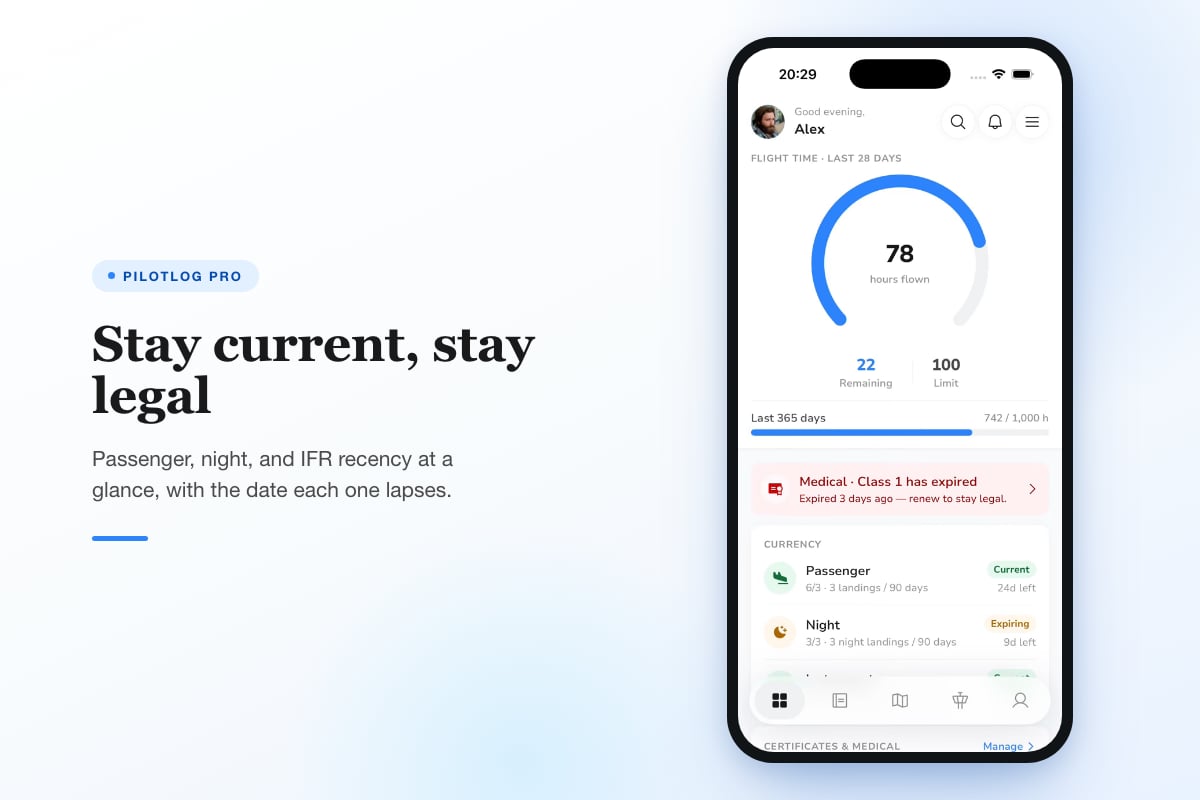
Pilotlog Pro tracks rolling 28-day and 365-day flight and duty limits, passenger and night currency with lapse dates, and licence and medical expiries with early alerts, making it straightforward for CFIs to stay ahead of deadlines. You can log a flight in seconds and the system flags what you need to watch.
Regional Airline Transition and Flow to Delta
Once pilots reach 1,500 hours and hold an ATP certificate, they interview with Delta's regional partners (primarily Endeavor Air, but also Compass, Republic, and SkyWest depending on hiring needs). The QJO does not place pilots directly at Delta mainline; instead, they begin their airline career at a regional carrier and flow to Delta after accumulating turbine PIC and meeting seniority requirements.
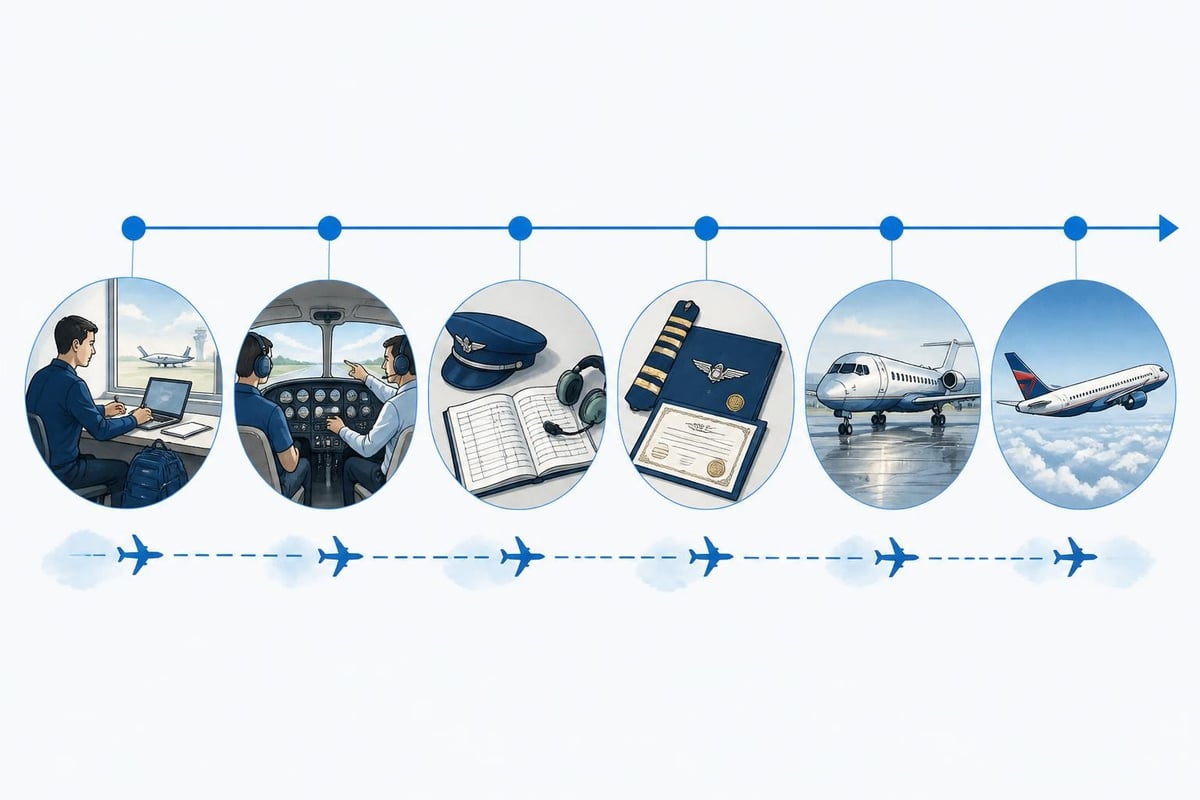
Typical flow timeline:
- 0 to 18 months: Delta Flight Academy (PPL through CFI)
- 18 to 42 months: CFI at the academy (build to 1,500 hours)
- 42 to 78 months: Regional airline first officer (accumulate turbine time, upgrade to captain)
- 78+ months: Flow to Delta Air Lines as first officer
These timelines vary widely based on hiring demand, individual performance, and economic conditions. The FAA's Aviation Career and Technical Education (ACT) report lists Delta Propel among industry pathways addressing the pilot pipeline, noting partnerships like delta flight academy as examples of airlines investing in ab-initio training to ensure future supply.
Costs, Financing, and Return on Investment
Training at delta flight academy is a significant financial commitment. Total costs break down approximately as follows:
- Flight training (PPL to MEI): USD 85,000 to USD 95,000
- Books, supplies, headset, iPad: USD 3,000 to USD 5,000
- FAA written and practical exams: USD 3,000 to USD 4,000
- Housing and living expenses (12 to 18 months): USD 18,000 to USD 30,000 (Vero Beach cost of living)
- Total estimated: USD 110,000 to USD 135,000
Financing is available through partner lenders, with loans typically requiring a co-signer for students without established credit. Repayment begins during the CFI phase, when instructors earn a modest salary. Pilots should model repayment carefully; a USD 100,000 loan at 8% interest over 15 years costs roughly USD 955 per month, which is manageable on a regional first officer salary (USD 50,000 to USD 70,000 starting) but tight on CFI pay.
The return on investment depends on career longevity and progression. A Delta Air Lines captain earns USD 300,000 to USD 400,000+ annually (2026 pay scales), making the training investment recoverable within a few years of reaching the left seat. However, pilots must plan for 8 to 12 years from academy start to Delta captain, including time at the regional.
Key Considerations Before Enrolling
Delta flight academy is not the only path to an airline career, and it is not the right fit for every pilot. Consider the following before committing:
Advantages:
- Direct pathway with QJO removes much hiring uncertainty
- Integrated training environment with consistent instruction
- Delta branding and mentorship throughout
- Immediate transition to CFI role for hour-building
Challenges:
- High upfront cost with financing required for most students
- QJO does not guarantee immediate Delta employment (regional time still required)
- Training location fixed in Vero Beach (no geographic flexibility)
- Competitive application process (not all applicants are accepted)
Pilots should also confirm current program details directly with Delta and Skyborne, as schedules, costs, and requirements evolve. AOPA's coverage of the academy opening provides additional independent perspective, and local government documents detail the academy's economic impact on Vero Beach.
Staying Current and Compliant Throughout Training
Regulatory compliance is non-negotiable at delta flight academy. Students and instructors must track medical expiries, knowledge test validity (24 months from passing), and practical test prerequisites. Missing a deadline can delay training and increase costs.
For example, a First Class Medical is valid for 12 calendar months for pilots under 40 and six months for those 40 and older when exercising ATP or commercial privileges (14 CFR 61.23(d)). A lapsed medical means no solo flight, no CFI duties, and no progression until renewed. Setting reminders 60 days before expiry prevents last-minute scrambles.
Similarly, CFI certificates expire 24 calendar months from issuance or last renewal (14 CFR 61.197). Renewal requires activity as an instructor, an approved refresher course, or a practical test. Letting a CFI certificate lapse means retaking a checkride, losing weeks of hour-building income.
Pilots serious about tracking these details often rely on automated systems. A currency cheat sheet or expiry audit tool helps visualise what is current and what needs attention. Digital logbooks with built-in alerts ensure nothing slips through, even during intense training periods.
Industry Context and the Pilot Shortage
Delta flight academy is part of a broader industry response to the pilot shortage, driven by retirements, fleet growth, and increased air travel demand. Airlines face a sustained need for 5,000 to 8,000 new pilots annually in the U.S. alone through the next decade, and traditional training pipelines have struggled to keep pace.
Aviation International News reported on Delta's plans as part of this wider strategy. By controlling ab-initio training, Delta ensures a steady flow of pilots trained to its standards, familiar with its culture, and committed to the company early in their careers. Other major carriers (United Aviate, American Cadet Academy) have launched similar programs.
The delta flight academy model also benefits Skyborne, which gains a foothold in the lucrative U.S. training market and access to Delta's resources and reputation. The partnership is structured as a long-term collaboration, with both parties invested in program success.
From a student perspective, the academy offers certainty in an uncertain job market. Traditional flight school graduates face competitive hiring with no guarantees, while delta flight academy graduates have a clear path. That security justifies the cost for many pilots, particularly those willing to commit to a major airline career from the outset.
Delta flight academy provides a direct, structured route from zero hours to the Delta Air Lines flight deck, with a Qualified Job Offer removing much of the hiring uncertainty that other pilots face. For those ready to commit to the investment and pathway, it is one of the clearest routes into a major airline career available today. As you build hours and advance through ratings, keeping track of currency, expiries, and limits becomes critical. Pilotlog keeps you current and legal with automated alerts for medicals, licences, and recency requirements, so you can focus on flying instead of spreadsheets.
- delta flight academy
- delta propel
- pilot career path
- ab-initio training
- qualified job offer
A logbook that keeps itself.
Join the waitlist and be first in line when Pilotlog launches.
Free to join, no spam. Unsubscribe any time.