atp certificate
Aviation ATP: Your Complete Guide to the Certificate
27 Aug 2026 · 13 min read

The aviation ATP, or Airline Transport Pilot certificate, represents the highest level of aircraft pilot certification. It permits you to act as pilot-in-command of an aircraft in scheduled air carrier operations and commands specific minimum flight-time requirements, aeronautical knowledge examinations, and demonstrated competency in multi-crew environments. For most professional pilots, the aviation ATP marks the gateway to airline and large-aircraft careers.
What the Aviation ATP Really Means
The aviation ATP differs fundamentally from a commercial pilot licence. Where a commercial certificate allows you to fly for hire or compensation, the aviation ATP specifically qualifies you to command aircraft in airline operations under 14 CFR Part 121 or Part 135 in the United States, or equivalent EU-OPS/CAT operations under EASA regulations. The distinction matters operationally and legally.
Minimum flight-time requirements for a standard U.S. ATP:
- 1,500 total flight hours
- 500 hours cross-country
- 100 hours night
- 75 hours instrument (actual or simulated)
- 250 hours as pilot-in-command
These figures come directly from 14 CFR § 61.159, and they represent the baseline. Many pilots arrive at ATP eligibility with 2,000 or more hours, having built time through instructing, charter, or cargo operations. The aviation ATP also requires an ATP Certification Training Program (CTP), a structured 30-hour academic course mandated since 2014 covering high-altitude aerodynamics, crew resource management, automation, and weather theory specific to transport-category operations.
EASA ATPL vs. U.S. ATP
European pilots pursue an Air Transport Pilot Licence (ATPL) under EASA Part-FCL, consolidated in EASA's Easy Access Rules for Aircrew. The frozen ATPL route allows graduates of integrated programmes to hold an ATPL with restricted privileges until they complete 1,500 hours total time, including 500 multi-crew hours. This differs from the U.S. restricted ATP pathways, which reduce the total-time floor but still require full unrestricted privileges upon issuance.
Key EASA ATPL minimums (unrestricted, Part-FCL.510.A):
| Requirement | Hours |
|---|---|
| Total time | 1,500 |
| Multi-crew or PIC | 500 |
| Cross-country PIC | 200 |
| Instrument (aeroplane) | 75 |
| Night (aeroplane) | 100 |
Both systems align broadly with ICAO Annex 1 standards, ensuring global licence conversion and mutual recognition through bilateral agreements. Pilots moving between jurisdictions should verify specific conversion requirements with the issuing authority.
Restricted ATP Pathways in the U.S.
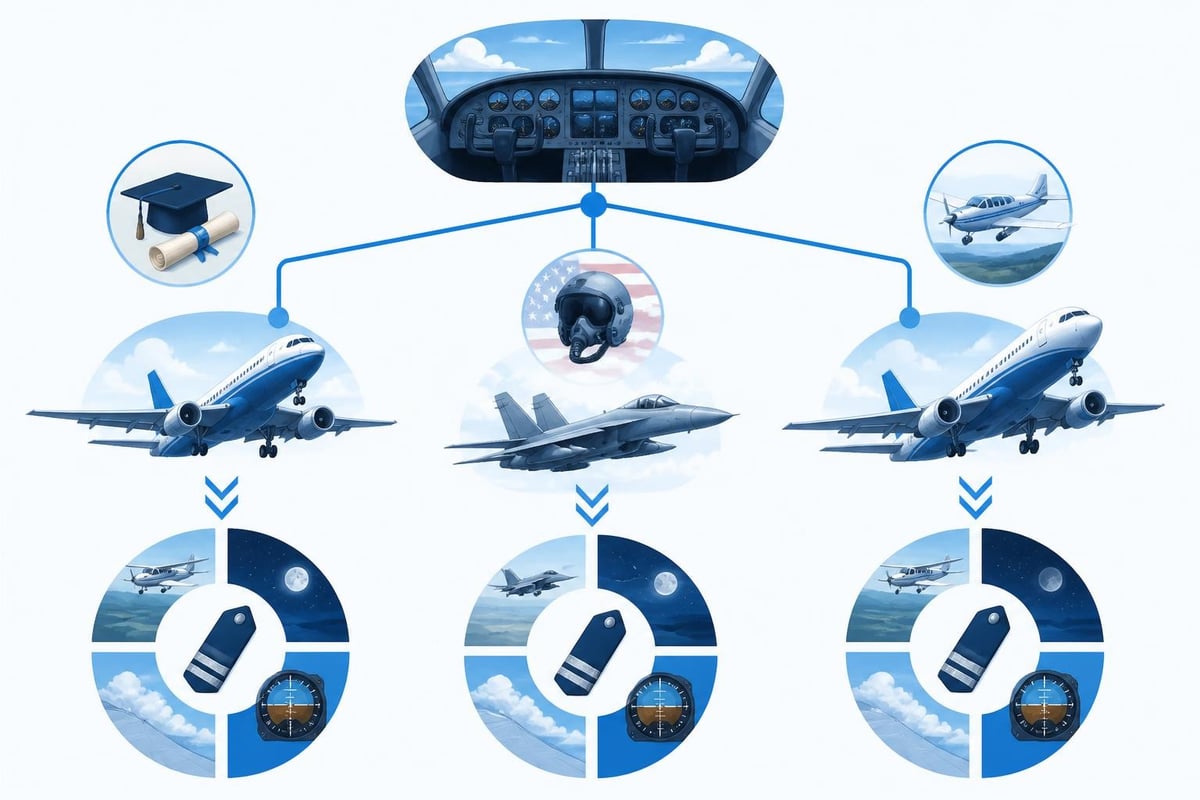
The FAA introduced restricted ATP eligibility in 2013 to recognise structured training and military experience. These pathways reduce the total-time requirement but impose an operational restriction: you may only act as second-in-command in Part 121 operations until you accrue 1,500 hours, at which point the restriction automatically lifts. The certificate itself does not expire or require reissue; the limitation simply falls away.
Restricted ATP minimums:
- Academic (bachelor's degree in aviation): 1,000 hours total, with 200 cross-country, 100 night, 75 instrument, 500 cross-country, and completion of FAA-approved aviation programme
- Academic (associate's degree in aviation): 1,250 hours total, same cross-country, night, and instrument minimums
- Military: 750 hours total, with 500 fixed-wing or 500 powered-lift in military operations, 200 cross-country, 100 night, 75 instrument
Each pathway mandates ATP CTP completion. Graduates of university programmes accredited under 14 CFR Part 141 Appendix R can begin airline second-in-command roles earlier, accelerating career progression by 6 to 18 months compared to the 1,500-hour standard route.
Why Accurate Hour Tracking Matters
Every hour you log counts toward ATP eligibility, and discrepancies invite FAA scrutiny during application review. Cross-country definitions vary: for ATP purposes, a cross-country flight must include a landing at least 50 nautical miles from the departure point (14 CFR § 61.1). Night time is logged from the end of evening civil twilight to the beginning of morning civil twilight. Instrument time includes actual IMC and simulated instrument conditions under a qualified instructor or safety pilot.
A digital pilot logbook tracks these categories automatically, flagging when you pass thresholds and preventing errors that delay certification. Pilots approaching ATP minimums often discover missing endorsements or miscategorised time during pre-application audits, costing weeks in corrections.
The ATP CTP Course
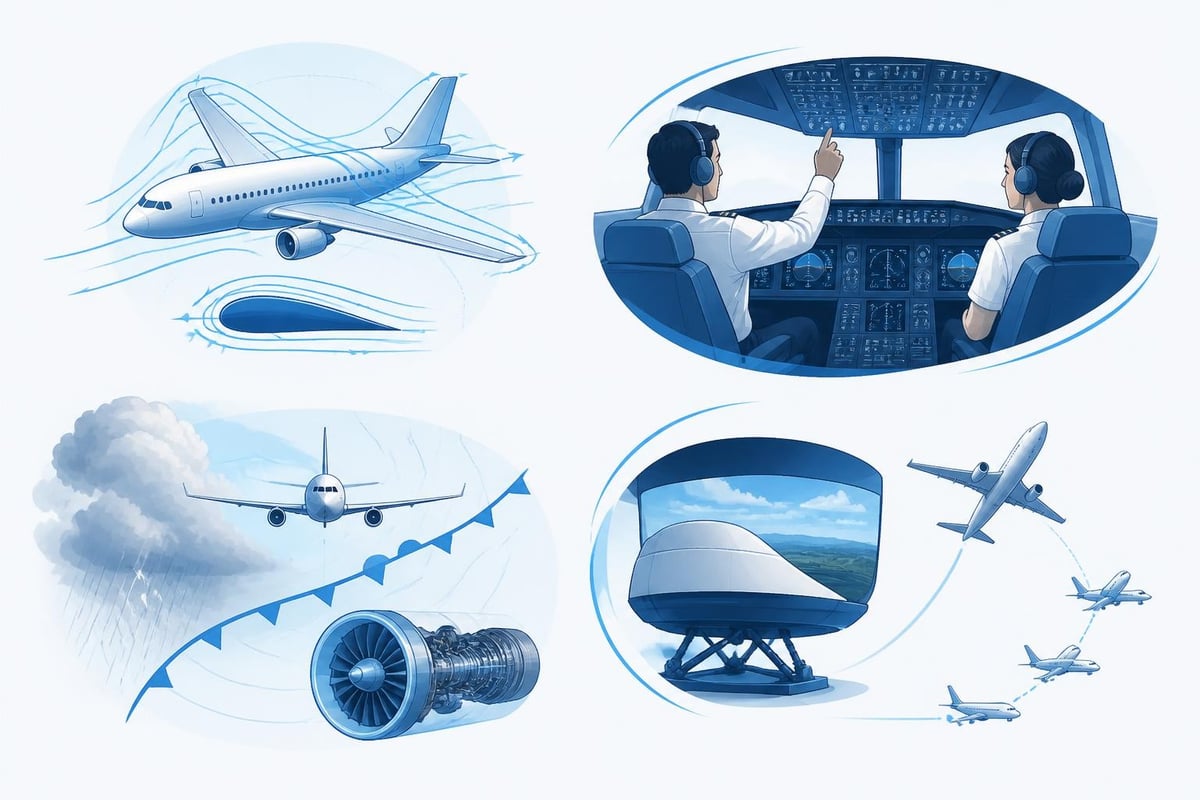
Since July 31, 2014, all U.S. ATP applicants must complete an FAA-approved Airline Transport Pilot Certification Training Program before sitting the ATP knowledge test. The CTP is a 30-hour academic and simulator course covering:
- High-altitude aerodynamics and upset recovery
- Transport-category aircraft performance
- Automation management and mode awareness
- Crew resource management and leadership
- Weather hazards at altitude (icing, turbulence, windshear)
- Physiological factors and fatigue management
The course includes a minimum of 10 hours in a full-flight simulator qualified at Level C, D, 6, or 7, practicing stall recovery, manual flight, and failure scenarios. Most training providers deliver CTP over 5 to 7 consecutive days, and course fees range from $3,500 to $5,500 depending on location and provider. The FAA maintains a current list of approved CTP providers on its site.
You receive a graduation certificate valid indefinitely; once completed, the CTP satisfies the prerequisite permanently. Pilots who completed military pilot training or graduated from certain university programmes may receive partial or full CTP credit, but must verify eligibility with the FAA directly.
Preparing for the ATP Knowledge and Practical Tests
The ATP knowledge test (often called the ATP written) covers 90 multiple-choice questions across meteorology, regulations, aerodynamics, aircraft systems, and IFR procedures. You need 90 questions administered in 180 minutes, with a passing score of 70 per cent or higher. The question bank includes transport-category scenarios: RVSM operations, ETOPS fuel planning, Part 121 duty and rest rules, and high-altitude weather phenomena.
Study materials and question banks:
- FAA-H-8083 series handbooks (especially -25, -15, and -16)
- ATP test prep software (Sheppard Air, Sporty's, King Schools)
- Airline-specific study guides provided by regional carriers
- FAA-S-ACS-11, the ATP and Type Rating Airman Certification Standards
After passing the knowledge test (valid 24 calendar months), you schedule the ATP practical test, which combines with a type rating checkride for most airline new hires. Part 121 carriers typically conduct ATP practical tests during initial type-rating training in a full-flight simulator, satisfying both the ATP certificate issuance and the type rating simultaneously. This integrated checkride includes instrument approaches, engine failures, system malfunctions, and crew coordination exercises evaluated against the ATP Airman Certification Standards.
Maintaining Currency and Tracking Limits
Once you hold an aviation ATP and begin airline operations, regulatory currency and duty-time tracking become daily concerns. FAA Part 117 imposes flight-time and duty-period limits, with rolling 28-day and 365-day caps. EASA ORO.FTL sets comparable limits for EU operators, detailed in the Easy Access Rules. Exceeding these limits grounds you until rest requirements reset the counter, disrupting airline schedules and your pay.
Pilotlog Pro tracks rolling 28-day and 365-day totals automatically, flagging approaching limits and IFR currency lapses before they catch you off guard. It also monitors licence and medical expiry dates, sending alerts 30, 14, and 7 days ahead.
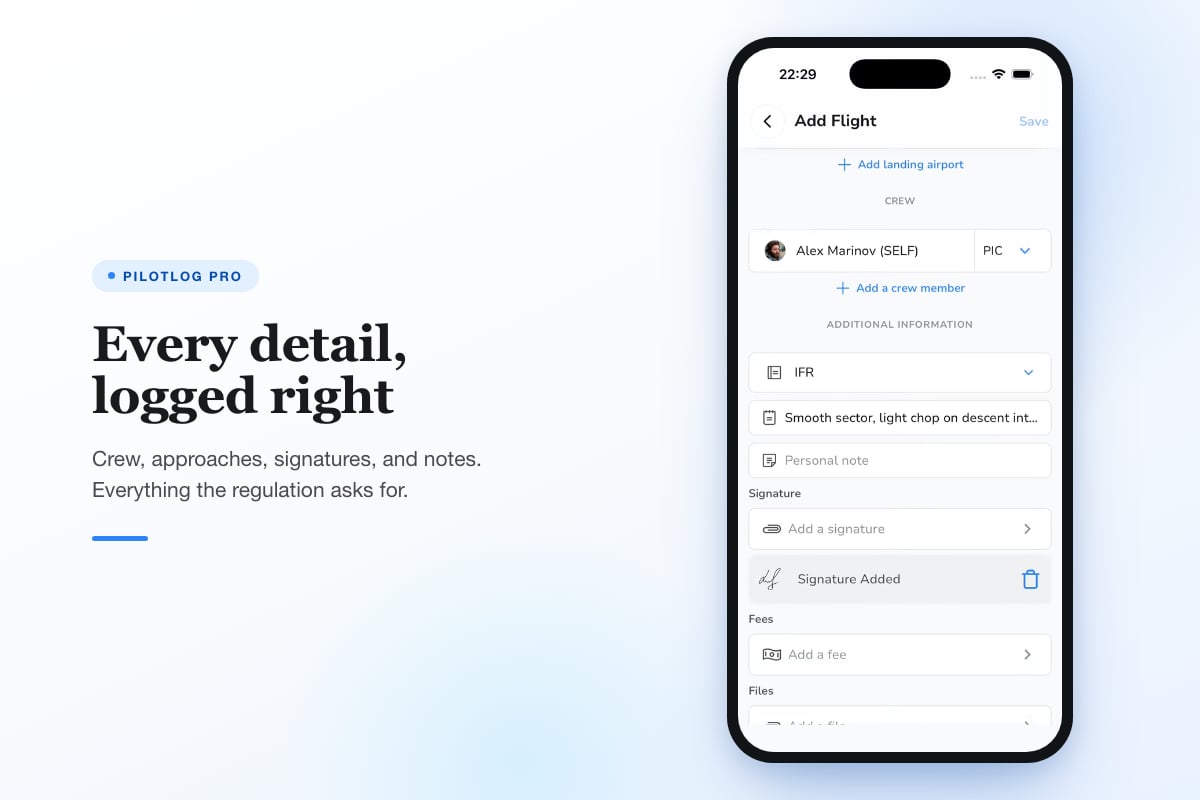
Many ATP-rated pilots also maintain instrument currency under 14 CFR § 61.57(c), requiring six instrument approaches, holding, and intercepting/tracking courses every six months, or completion of an instrument proficiency check. A digital logbook that tracks IFR currency calculates your lapse date from the last qualifying flight, preventing surprises during scheduling.
Career Pathways After the Aviation ATP
The aviation ATP opens doors across scheduled airlines, cargo carriers, corporate flight departments, and charter operators. Regional airlines in the U.S. hire ATP-qualified pilots into first-officer roles, often providing type-rating training as part of the hiring package. Major and legacy carriers typically require ATP minimums plus additional turbine PIC or total time, ranging from 1,000 to 3,000 hours depending on hiring market conditions.
Common career steps post-ATP:
- Regional airline first officer (ATP certificate, type rating, 1,000–1,500 hours)
- Regional captain upgrade (1,000 hours Part 121 PIC, company seniority)
- Major airline first officer (ATP, 3,000+ hours, competitive interview)
- Major airline captain (company seniority, internal upgrade training)
European pilots with a frozen ATPL begin as second officers or cruise relief pilots until they accrue the 500 multi-crew hours required to lift restrictions. Low-cost carriers and regional operators in Europe offer cadet and entry-level programmes, building hours toward unrestricted ATPL issuance. EUROCONTROL operational guidance highlights how European airline operations integrate new ATP-qualified crews within network ATM constraints and slot coordination.
Safety and Continuing Competency
The aviation ATP is not a finish line; it marks the start of a career-long commitment to proficiency and safety. Flight Safety Foundation resources emphasise data-driven, competency-based training that goes beyond minimum regulatory requirements. Airlines conduct recurrent training every 9 or 12 months, and many adopt evidence-based training (EBT) frameworks that tailor scenarios to observed performance gaps.
Accident data from the NTSB and SKYbrary case studies show that ATP-rated crews benefit from continuous exposure to realistic failure scenarios, manual handling practice, and crew resource management refreshers. Complacency and automation dependency remain persistent threats, even among highly experienced pilots. Regular simulator training, combined with disciplined logbook habits and currency tracking, keeps skills sharp and regulatory compliance intact.
Logging and Documentation Best Practices
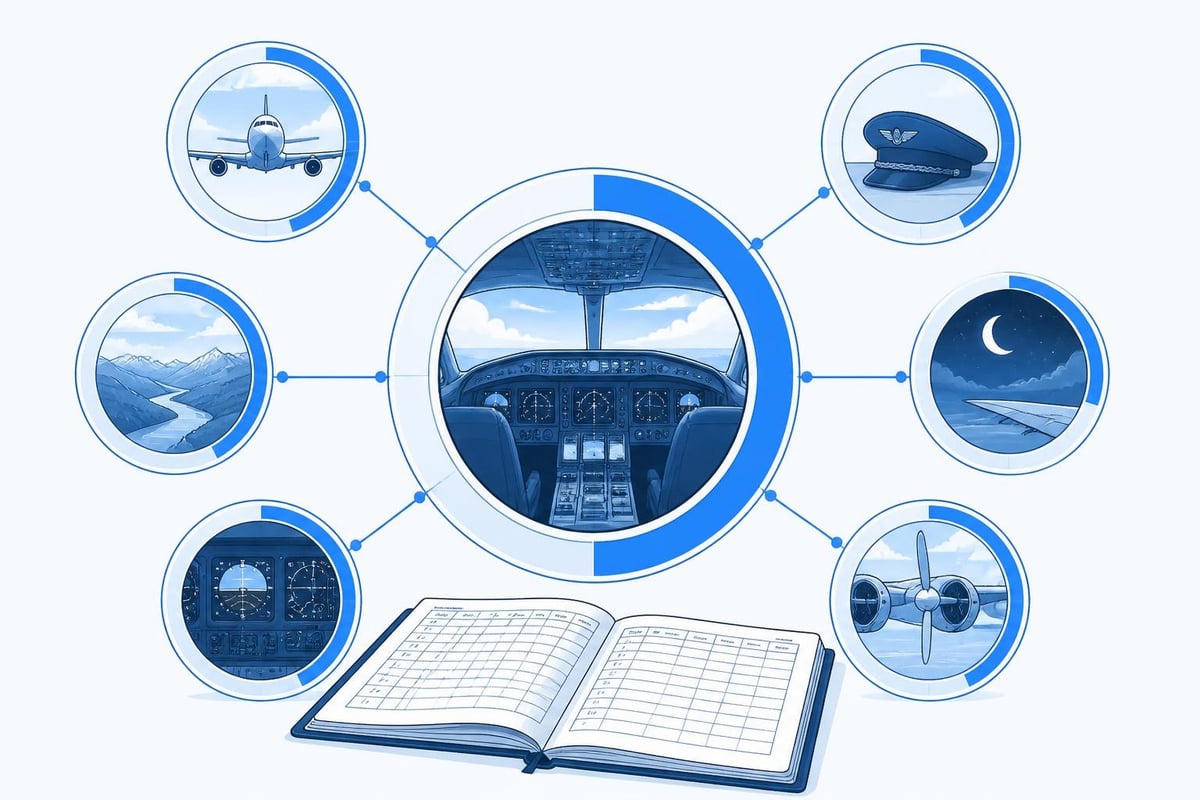
Accurate, complete logbook records protect your certificate and simplify future applications, insurance claims, and job transitions. Each entry should include date, aircraft type and registration, departure and arrival points, flight time (total, PIC, SIC, dual, solo), landings (day, night), instrument time (actual, simulated, approaches), and endorsements or remarks. For ATP qualification, also track cross-country legs meeting the 50-nautical-mile criterion and multi-engine time if applicable.
What to log for ATP eligibility:
- Total flight time: all piloting time, including dual received
- PIC time: sole manipulator plus acting PIC under Part 91, 121, or 135
- Cross-country: each leg with a landing ≥50 NM from departure
- Night time: end of evening civil twilight to start of morning civil twilight
- Instrument: actual IMC plus simulated with safety pilot or instructor
- Multi-engine: time in aircraft with more than one engine
Retain supporting documents: training course certificates, instructor endorsements, medical certificates, and checkride results. The FAA may request these during ATP application review or enforcement actions. Electronic backups prevent loss; a secure digital logbook replicates entries across devices and exports full records in PDF or spreadsheet formats for submission.
International Recognition and Conversion
Aviation ATP certificates and EASA ATPLs enjoy broad international recognition under ICAO standards, but conversion requirements vary by state. A U.S. ATP converting to an EASA licence typically must pass EASA theoretical knowledge exams, demonstrate English language proficiency (ICAO Level 4 or higher), and complete a skill test or proficiency check on an EASA-registered aircraft. Conversely, EASA ATPL holders seeking FAA ATP certificates verify their hours meet Part 61 minimums, pass the FAA ATP knowledge test, and complete an FAA checkride.
Some bilateral agreements streamline conversion. The FAA and Transport Canada share reciprocal validation agreements that reduce duplicate testing. Pilots moving to the Middle East, Asia-Pacific, or Africa should consult the local civil aviation authority early in the process; some states require additional training, bond guarantees, or employment sponsorship before issuing local licences.
Steps for FAA ATP to EASA ATPL conversion:
- Verify 1,500 total hours, 500 multi-crew or PIC, and other EASA minimums (Part-FCL.510.A)
- Obtain certified FAA logbook extracts and certificate verification letter
- Pass EASA ATPL theoretical knowledge exams (14 subjects) if not previously completed
- Complete EASA skill test with approved examiner on EASA-registered aircraft
- Demonstrate ICAO English Level 4 (English Language Proficiency test)
- Submit application to EASA member state authority with required documents and fees
Conversion timelines range from 3 to 12 months, depending on knowledge exam scheduling, aircraft availability, and administrative processing. Budget 6 to 12 months and verify current requirements with the issuing authority, as regulations evolve.
Cost and Time Investment
Reaching aviation ATP eligibility represents a significant financial and time commitment. Costs vary widely depending on the pathway: university-based programmes with restricted ATP eligibility total $80,000 to $150,000 including tuition, flight training, and living expenses. Time-building routes (flight instructing, charter, aerial survey) defer costs but require 18 to 36 months to accumulate 1,500 hours from a commercial certificate. Military pathways incur no direct cost to the pilot but require a service commitment of 8 to 12 years.
Typical cost breakdown for 1,500-hour ATP pathway:
| Item | Cost (USD) |
|---|---|
| Private pilot licence | $10,000–$15,000 |
| Instrument rating | $8,000–$12,000 |
| Commercial (single + multi) | $20,000–$30,000 |
| CFI/CFII/MEI ratings | $8,000–$12,000 |
| Time-building (1,500 hours total) | $5,000–$15,000 |
| ATP CTP course | $4,000–$5,500 |
| ATP knowledge and practical test | $1,000–$2,000 |
| Total | $56,000–$91,500 |
These figures assume you build most hours as a flight instructor, minimising aircraft rental costs. Pilots financing training through loans face additional interest expenses. Regional airlines often offer tuition reimbursement or signing bonuses (up to $20,000 in competitive markets), partially offsetting costs. For detailed budget planning, see pilots licence cost breakdowns.
Common Pitfalls and How to Avoid Them
Miscategorising cross-country time: Not every flight away from your home airport counts. For ATP purposes, the destination must be more than 50 nautical miles from departure. Double-check distances and annotate logbook entries clearly.
Ignoring night-time definitions: Logging night as "after sunset" fails the regulatory test. Use official civil twilight times from the U.S. Naval Observatory or aviation apps. Incorrect night-time tallies delay ATP applications when discovered during FAA review.
Letting currency lapse: Instrument currency (six approaches, holding, tracking/intercepting) expires quickly if you stop flying IFR regularly. Schedule proficiency flights every 60 days or plan an instrument proficiency check before the six-month window closes. A dedicated currency tracker sends reminders based on your last qualifying flight.
Skipping the pre-application audit: Before submitting your ATP application (FAA Form 8710-1 via IACRA), conduct a logbook audit verifying every hour category, endorsement, and cross-country leg. Errors discovered during FAA review add weeks to processing time.
Forgetting medical validity: ATP operations require a first-class medical. Under BasicMed, you cannot exercise ATP privileges. Schedule your Class 1 exam early, allowing time for special issuance if needed. Track expiry dates diligently; a lapsed medical grounds you until renewed.
Staying Current Beyond Certification
The aviation ATP certificate does not expire, but staying current and legal requires ongoing attention to flight reviews, instrument currency, medical validity, and employer-specific recurrent training. Part 121 carriers manage most compliance administratively, scheduling recurrent simulator sessions and line checks every 9 or 12 months. Corporate and charter pilots operating under Part 91 or 135 bear more personal responsibility for tracking currency and scheduling proficiency checks.
Regulations change, and pilots must confirm requirements against current official sources. The FAA, EASA, and ICAO publish updates to Part 61, Part-FCL, and Annex 1 regularly. Subscribe to regulatory update services or follow official channels to stay informed. Treat your logbook as a legal document: complete, accurate, and backed up. Automation helps, but the ultimate responsibility for currency and legality rests with you.
The aviation ATP represents the pinnacle of pilot certification, opening doors to airline and transport-category careers worldwide. Tracking your hours, maintaining currency, and managing medical and licence expiries demands disciplined record-keeping throughout your career. Pilotlog keeps you current, legal, and ready by logging flights in seconds, tracking rolling limits, and sending alerts before licences or medicals expire, so nothing catches you by surprise.
- atp certificate
- airline transport pilot
- easa atpl
- restricted atp
- atp ctp course
A logbook that keeps itself.
Join the waitlist and be first in line when Pilotlog launches.
Free to join, no spam. Unsubscribe any time.