Article
Private Pilot Lessons: What to Expect and How to Plan
20 Nov 2026 · 6 min read
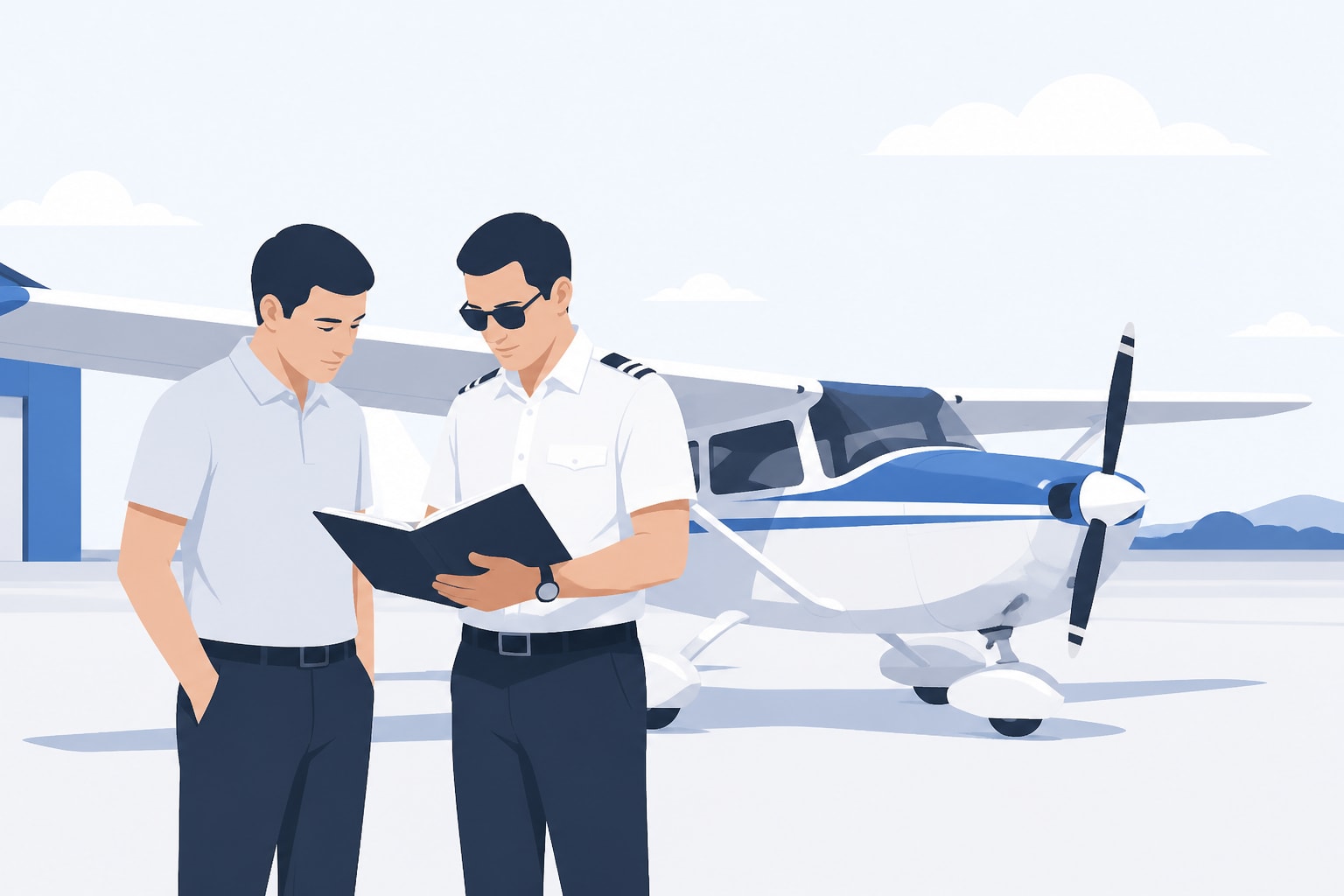
Private pilot lessons combine ground school and flight training with an instructor until you pass a skills test, and most students need 50 to 60 hours to get there. The legal minimum is lower, but the real number depends on how often you fly and how well you retain each lesson. This guide covers the hours, the medical, the lesson format and how to plan the budget and the paperwork.
How long does it take to become a trained pilot?
Many students take well over the legal minimum. Under 14 CFR Part 61, the FAA minimum is 40 flight hours, including at least 20 hours of instructor training and 10 hours of solo flight training. AOPA notes that Part 141 schools have a 35-hour minimum, and that most students take 50 to 60 hours.
This article uses FAA rules (14 CFR) because those are the figures sourced here. If you train in Europe or the UK, the equivalent course is the PPL under EASA Part-FCL or UK CAA rules, and the hour minimums and theory exams differ. Do not mix the two sets of numbers when you plan.
Calendar time follows frequency. Two lessons a week keeps skills fresh. One lesson a month means you spend part of every lesson relearning the last one, which adds hours and cost.
What happens during a typical lesson?
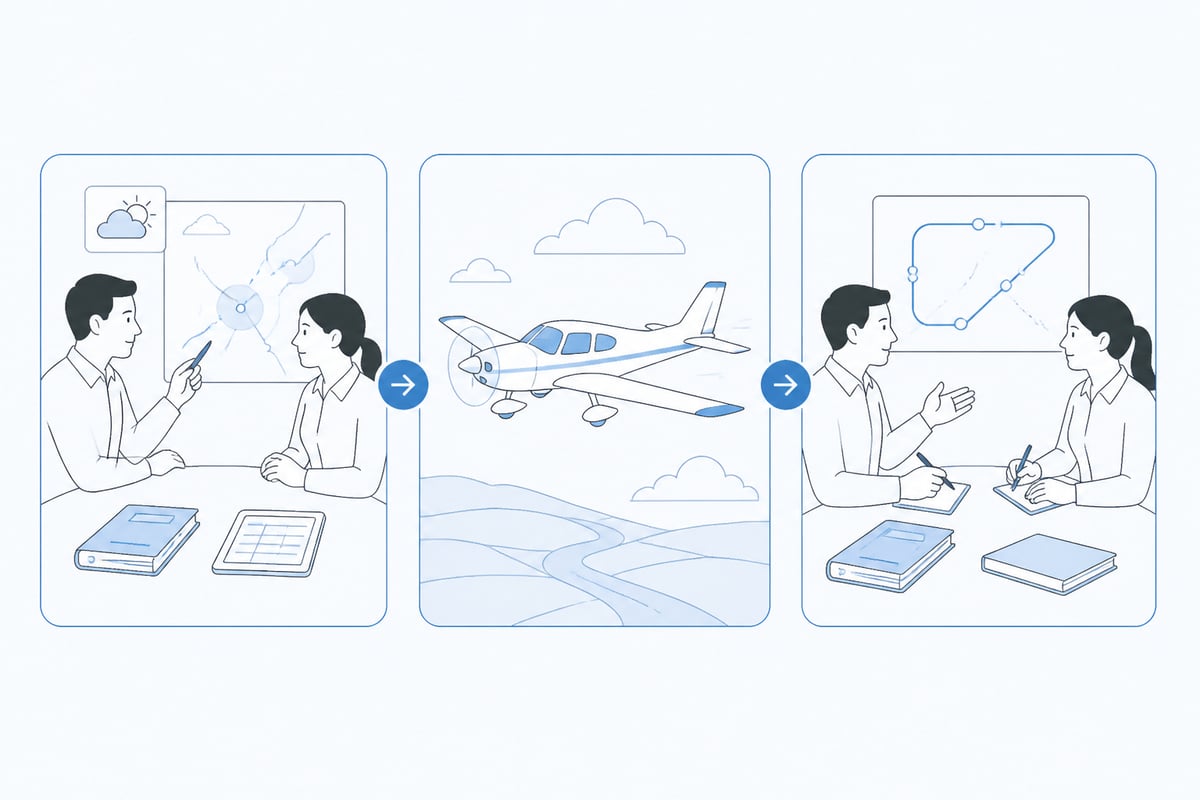
A typical lesson has three parts: a preflight briefing, the flight, and a postflight debrief. AOPA describes the same structure, with the debrief giving feedback and preparing you for the next lesson.
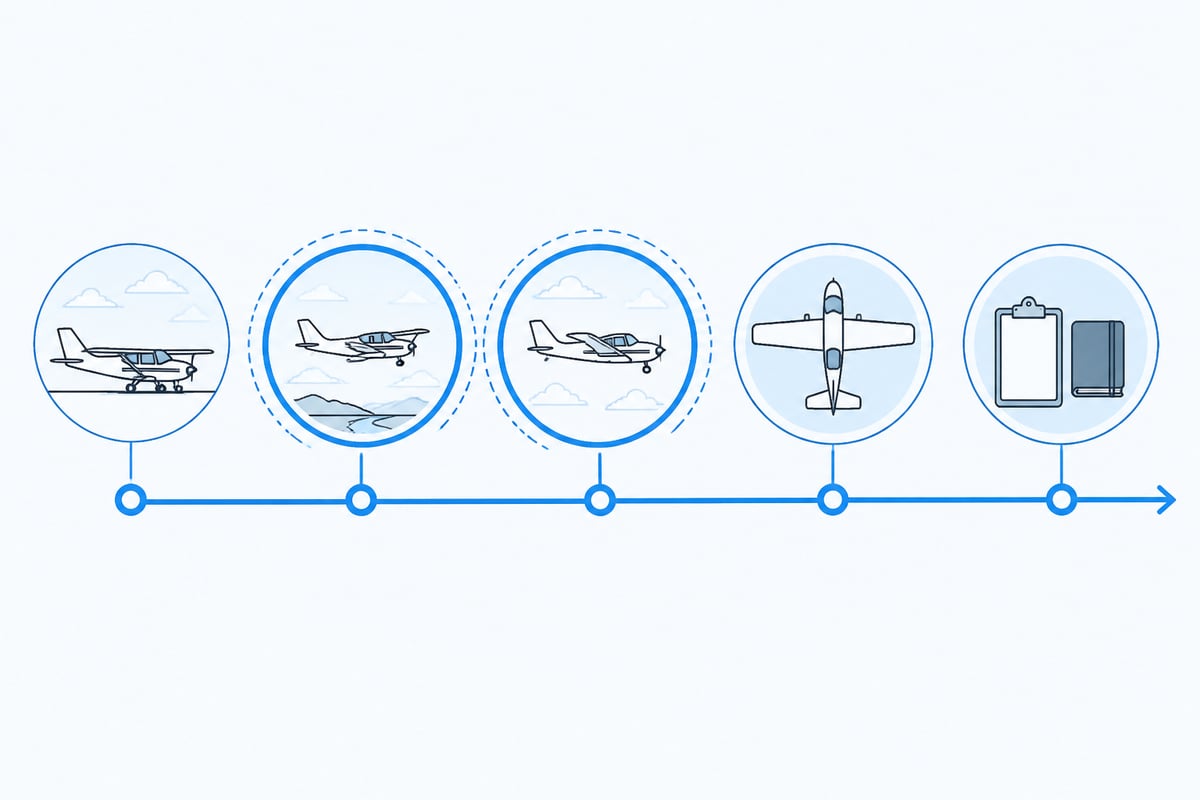
Expect the early flights to cover straight and level flight, climbs, descents, turns and slow flight. Later lessons add stalls, traffic patterns, take-offs and landings, emergency procedures, navigation and night flying. Many students are ready to solo after about 15 to 20 hours in the aircraft, though progress varies.
When do you need a medical, and can you fly with a condition?
Student pilots generally need an FAA third-class medical certificate before their first solo flight, with glider and balloon students as exceptions. Get the medical early. If something disqualifying turns up after you have paid for 20 hours, that money is gone.
Questions about flying with a medical condition cannot be answered in a blog post. Eligibility depends on the specific diagnosis, treatment and history, and it is decided by an FAA-designated Aviation Medical Examiner and, where needed, the FAA itself. Speak to an AME before you book lessons, not after.
Can you be a pilot if you are bad at math?
Private pilot math is mostly arithmetic and basic formulas: fuel burn, time, distance, speed, wind correction and weight and balance. You do not need advanced maths to get through it.
The pace of ground school is the harder part. Practise the same few calculations until they are routine, then check your work against the E6B or the flight computer in your planning app. Accuracy matters more than speed.
How do you choose a school and an instructor?
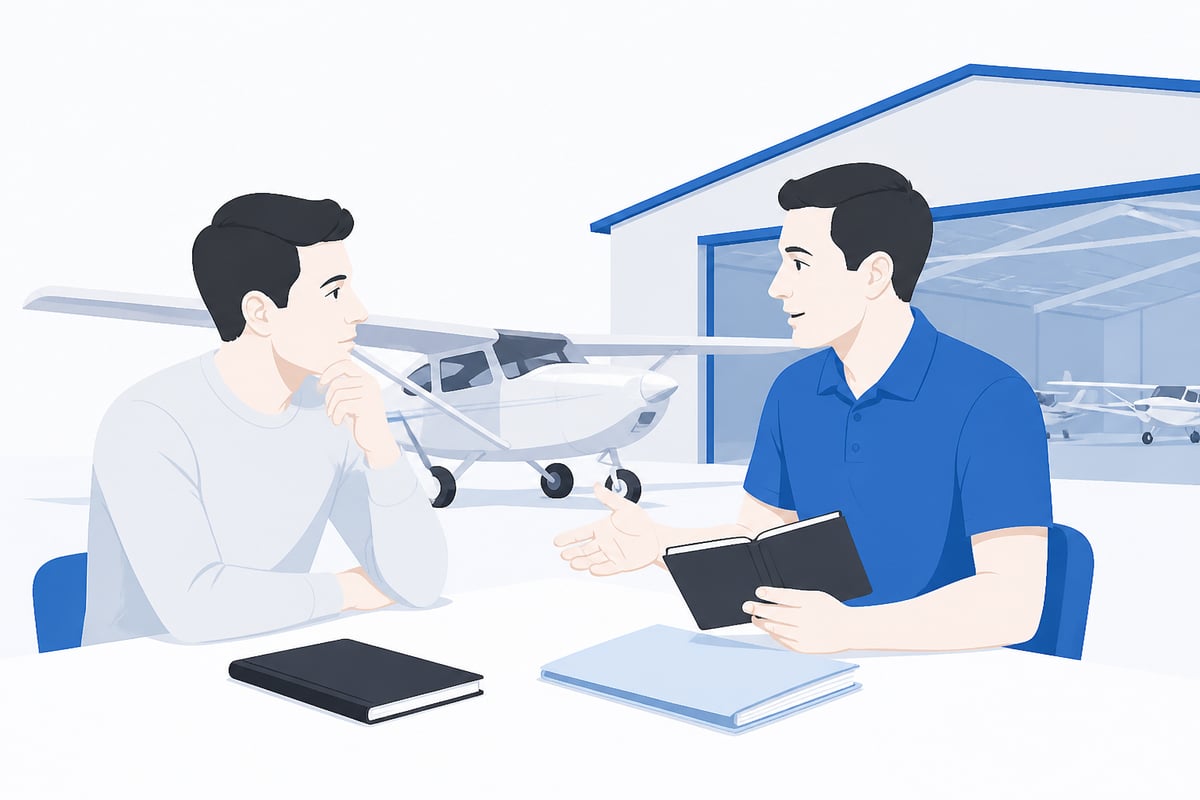
Choose on curriculum, instructor, aircraft and availability, not on the lowest hourly rate. AOPA recommends checking the curriculum, instructor credentials and availability, fleet and scheduling, safety record, facilities, and how the school monitors student progress.
Ask these before you commit:
- How many aircraft are in the fleet, and how often are they down for maintenance?
- Will you have one regular instructor, or whoever is free?
- How is progress tracked between lessons?
- What does a Part 61 or Part 141 course change for your schedule and total hours?
How should you plan the budget and calendar?
Plan for the typical 50 to 60 hours, not the 40-hour minimum. Add to that:
- Aircraft rental, per flight hour.
- Instructor time, which includes briefings and debriefs.
- Ground school or written exam fees.
- The medical and the practical test fee.
- Headset, charts or a tablet, and study materials.
Build a buffer of 10 to 20 percent for weather cancellations and repeat lessons. Fly consistently once you start.
What is the 1500 rule, and does it apply to you?
The 1500 hour rule does not apply to private pilot lessons. It refers to the total time generally needed for an airline transport pilot certificate, which is a later goal for career pilots. A private pilot certificate needs far less, as set out in 14 CFR Part 61.
How should you log your training hours?
Log every lesson on the day you fly it, because your logbook is the evidence for the practical test. Record date, aircraft, route, dual and solo time, landings and the instructor, and get the endorsement signatures your instructor adds as you progress.
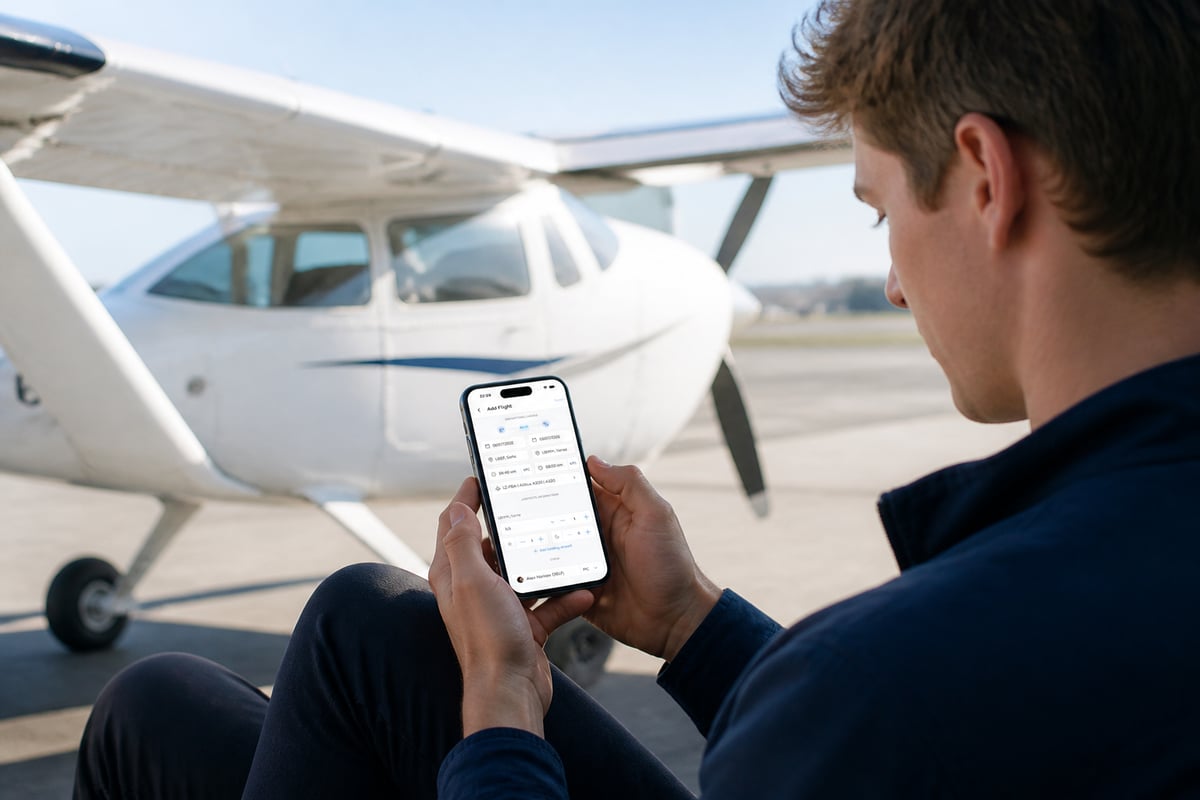
A paper logbook works, but totals drift when you add columns by hand. A digital logbook removes the arithmetic. Pilotlog Pro lets you log a flight in a few taps after landing, with route, times, crew and landings, and totals your hours automatically from each entry. Once you hold a certificate, it also shows passenger, night and IFR recency with the date each lapses, and warns you before your medical or licence expires.
Worked example: tracking hours to the practical test
Hypothetical example, with all numbers invented to show the arithmetic. A student logs 6 flights, and wants to know how far they are from the 40-hour minimum.
| Item | Hours |
|---|---|
| Dual flights 1 to 5 | 1.2 + 1.4 + 1.1 + 1.3 + 1.5 = 6.5 |
| Dual flight 6 | 1.0 |
| Solo flight | 0.8 |
| Total logged | 6.5 + 1.0 + 0.8 = 8.3 |
Remaining to the minimum: 40.0 minus 8.3 equals 31.7 hours. If the student flies twice a week at roughly 1.2 hours each, that is 2.4 hours a week, so 31.7 divided by 2.4 gives about 13 weeks. That is the floor. At the typical 50 to 60 hours, more flying is needed beyond the minimum.
Summary
- The FAA minimum is 40 hours; most students take 50 to 60.
- Get the medical before your first solo.
- Expect a briefing, a flight and a debrief every lesson.
- Choose the school on instructors, fleet and scheduling.
- Fly at least once a week and log every flight the same day.
Rules change, so check current requirements with the FAA or, in Europe and the UK, EASA and the UK CAA.
FAQ
Can I start private pilot lessons before I have a medical?
You can start lessons, but get the third-class medical before your first solo. If you have a condition that might affect eligibility, see an AME first.
Do private pilot lessons need ground school?
Yes. You study aeronautical knowledge and pass a written test as well as the practical flight test. You can do this through a school course or self-study with an instructor's endorsement.
Where can I read more about logging and currency?
The Pilotlog blog covers logbook practice, currency and expiries for student and licensed pilots.
Book a medical appointment with an AME this week, and start a logbook entry for every lesson from the first one. When you are ready to stop adding hours by hand, Pro keeps your totals, recency and expiries in one place, and you can join the waitlist for Pilotlog to log your first flight in a few taps.
A logbook that keeps itself.
Join the waitlist and be first in line when Pilotlog launches.
Free to join. We’ll email you about the launch and Pilotlog news. Unsubscribe any time. Privacy policy