cessna logbook
Cessna Logbook Guide for Pilots
12 Nov 2026 · 6 min read

A Cessna logbook is really two separate sets of records: your personal pilot logbook, which proves your experience and currency, and the aircraft's maintenance logbooks, which prove the airframe is airworthy. You keep the first. The owner or operator keeps the second. This guide uses EASA Part-FCL and UK CAA rules for pilot records, and 14 CFR only where it is named as an FAA rule.
Pilot logbook or aircraft logbook: which one is yours?
Your pilot logbook is yours, and the aircraft logbooks belong to the aircraft. Mixing them up is a common error on checkrides and renewals.
- Pilot logbook: your flights, hours, landings, ratings and recency. Under EASA and the UK CAA, it is your evidence for licence issue, revalidation and renewal.
- Airframe, engine and propeller logbooks: maintenance, inspections, airworthiness directives and total time in service. They stay with the Cessna and transfer with it on sale.
Renting a Cessna 172 means you only ever write in your own logbook. Owning one means you also hold the aircraft records.
What a Cessna logbook entry must contain
An entry must let an examiner reconstruct the flight. Under EASA Part-FCL, the recording of flight time is covered by FCL.050, and the data below is the practical core. The FAA's equivalent is 14 CFR § 61.51, which lists the date, total time, departure and arrival locations, aircraft type and identification, and the applicable pilot-experience and flight-condition categories.
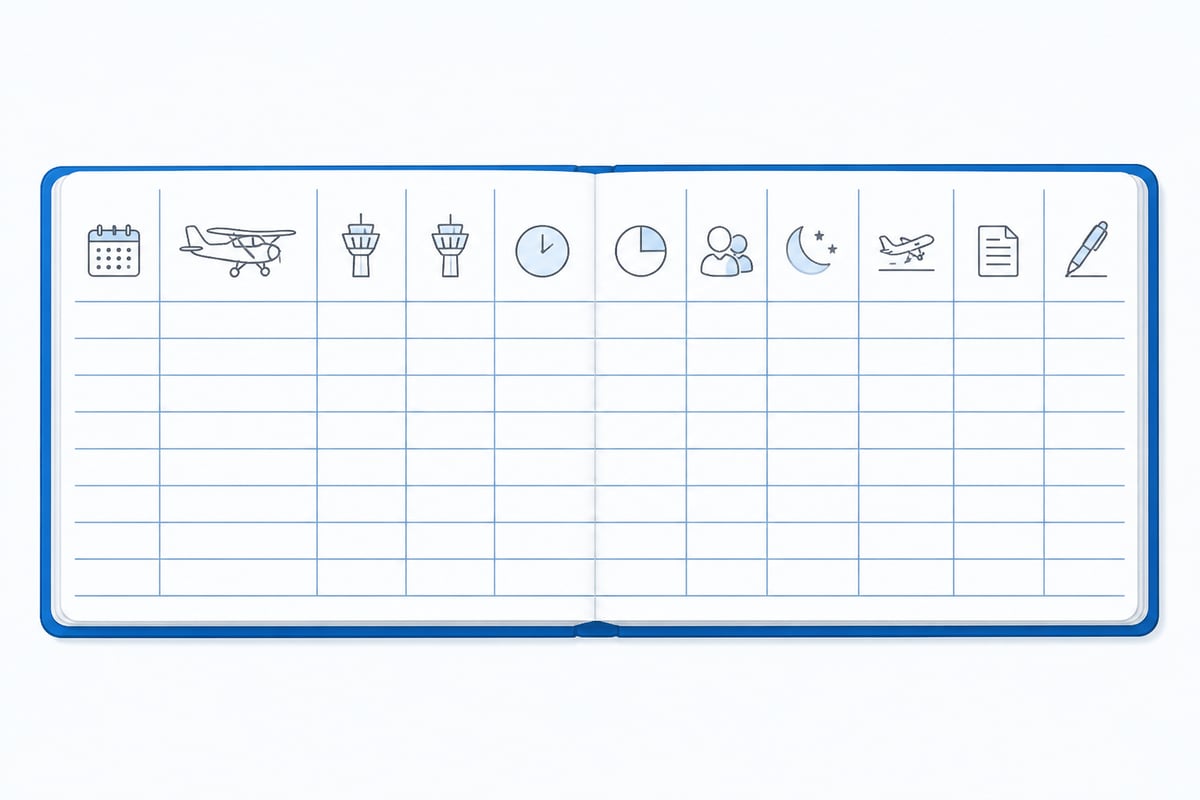
A complete line for a Cessna flight normally holds:
- Date
- Aircraft type and registration (for example C172S, G-ABCD)
- Departure and arrival places, with off-block and on-block or take-off and landing times
- Total flight time
- Your function: PIC, dual, SPIC or co-pilot
- Night time, IFR time and instrument approaches where flown
- Take-offs and landings, day and night
- Instructor or PIC name and signature where the entry is dual or training
Round times consistently and use the same convention across the whole book.
What the aircraft's Cessna logbook records must show
The maintenance side is stricter about content than pilots expect. Under FAA rules, 14 CFR § 91.417 requires a description of work performed, its completion date, and the signature and certificate number of the person approving return to service. It also requires total time in service for the airframe, each engine and each propeller, plus life-limited parts, overhaul status, inspection status and airworthiness-directive status.
Retention matters when you buy or sell. Under that section, maintenance and inspection records are kept until the work is repeated or superseded, or for one year after the work. The status records must be kept and transferred with the aircraft when it is sold. A Cessna with gaps in its airframe logbook loses value fast, and a missing record can ground it.
For aircraft under EASA or the UK CAA, the Part-M and Part-ML continuing airworthiness rules apply instead, and the CAMO or approved person handles much of this. Confirm which regime covers your aircraft.
Worked example: checking passenger-carrying recency
Take a PPL holder on EASA Part-FCL. To carry passengers as PIC you need recent take-off and landing experience in the same class or type, so check the current requirement for your licence.
Your logbook shows these landings on a Cessna 172:
- 14 August 2026: 2 landings
- 3 September 2026: 1 landing
- 9 October 2026: 1 landing
Check on 11 November 2026. The rolling window is then counted back from that date, and every landing you have logged is totalled inside it.
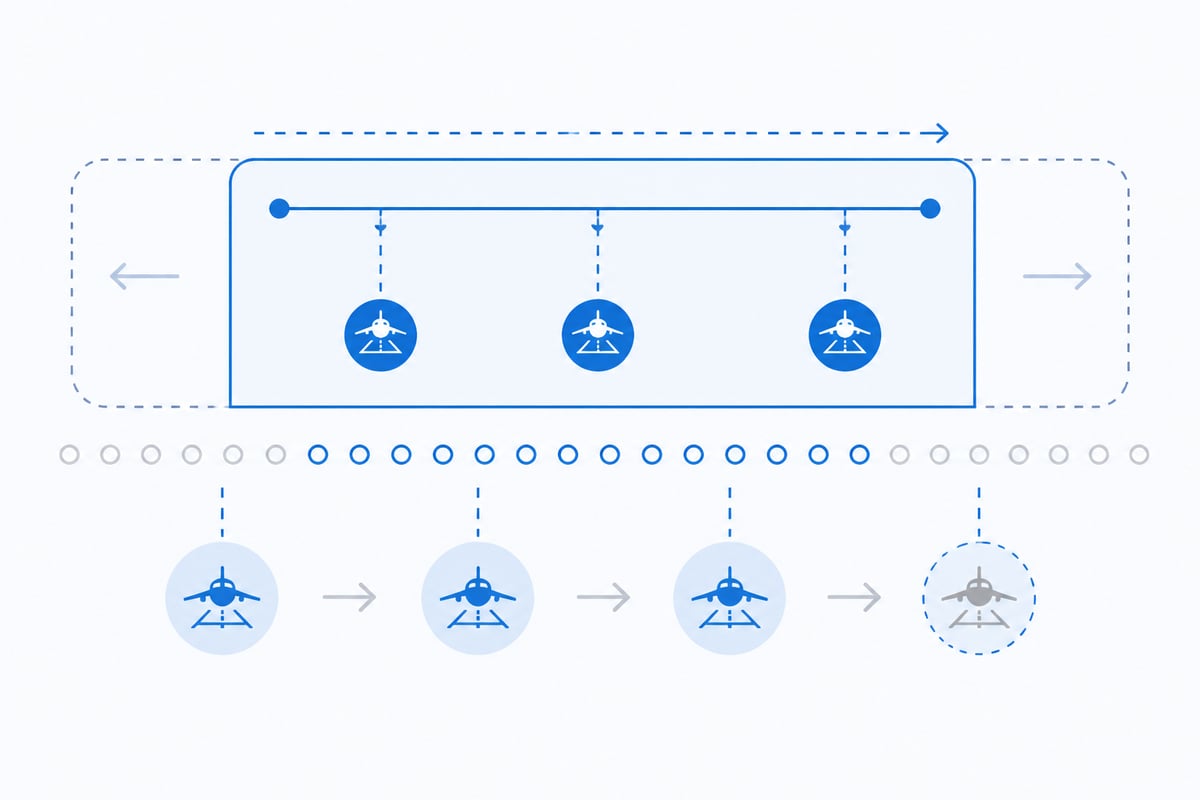
Now look ahead. As the window moves on, older landings drop out, so you can lapse for passengers without any new flying. Logging every landing accurately is what keeps this arithmetic right.

Tracking currency and expiries without a spreadsheet
A paper logbook records the past. It does not warn you that your medical lapses in 14 days or that your 90-day window closes tomorrow. Spreadsheets need manual formulas, and one wrong date range gives a wrong answer.
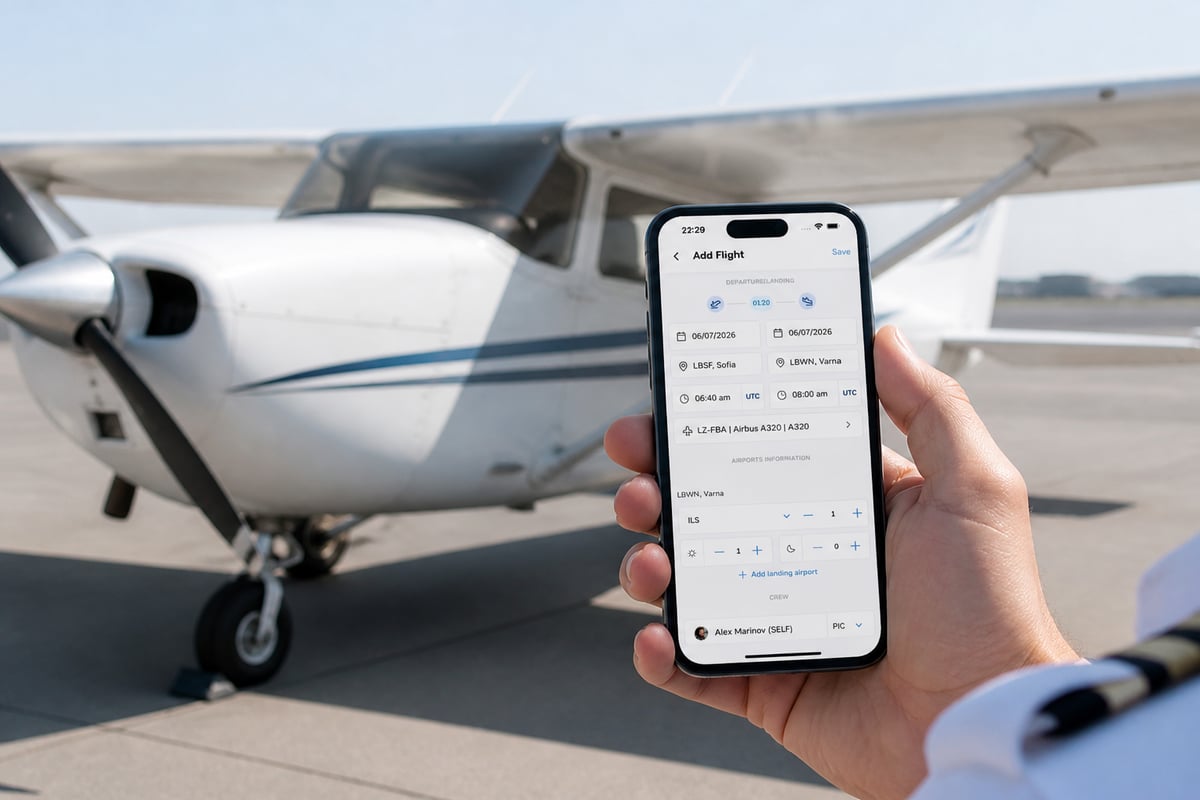
A digital logbook does the totalling for you. Pilotlog logs a flight in a few taps after landing, with route, times, crew and landings. It shows passenger, night and IFR recency with the date each lapses, and warns about licence, medical and rating expiries before they catch you out. Pilotlog Pro adds rolling 28-day and 365-day flight-time and duty limits, which airline and commercial pilots need alongside ATPL progress.
Keep a paper or exported backup anyway. Your authority may ask for records in a specific form, so check what yours accepts.
Common Cessna logbook mistakes
- Logging the registration or type inconsistently, which breaks class and type recency counts
- Counting landings as passenger-currency landings when the flight was not as PIC
- Leaving dual entries unsigned
- Totalling hours by hand and carrying an arithmetic error forward for years
- Forgetting that night landings need to be logged separately from day landings
Rules change, and authorities amend their requirements. Check current official sources, such as EASA, the UK CAA or the FAA, before relying on any detail here.
Summary
- Your pilot logbook and the aircraft's maintenance logbooks are separate records with separate owners.
- Each flight entry needs date, aircraft, route, times, function, conditions and landings.
- Maintenance records must show work done, completion date and the approving signature.
- Recency is a rolling window, so recalculate it whenever you plan to carry passengers.
- Back up your records and verify requirements with your authority.
FAQ
How long must I keep my pilot logbook?
Keep it for as long as you hold or may apply to renew a licence or rating, and ideally for life, since hours support later upgrades such as an ATPL. Your authority may specify a minimum; check it directly.
Can I use an electronic logbook for my Cessna flying?
Authorities generally accept electronic records, but acceptance rules vary by authority and by purpose, such as an initial skill test. Confirm with your authority or examiner before relying on a digital-only record.
Who signs the aircraft maintenance logbook?
The person approving the aircraft for return to service signs it. Under 14 CFR § 91.417 that signature comes with the person's certificate number. Under EASA and the UK CAA, the approved maintenance organisation or certifying staff signs the release.
Pull your current logbook, count the landings inside your last 90 days, and note your medical and rating expiry dates today. To have that work done for you from each logged flight, Pilotlog is a digital pilot logbook for iOS and Android that keeps you current, legal and ready, so join the waitlist and get recency and expiry warnings before they become a problem.
- cessna logbook
- pilot logbook
- easa part-fcl
- passenger currency
- aircraft maintenance records
A logbook that keeps itself.
Join the waitlist and be first in line when Pilotlog launches.
Free to join. We’ll email you about the launch and Pilotlog news. Unsubscribe any time. Privacy policy