amelia earhart
Amelia Earhart Flight: What Really Happened in 1937
14 Nov 2026 · 6 min read

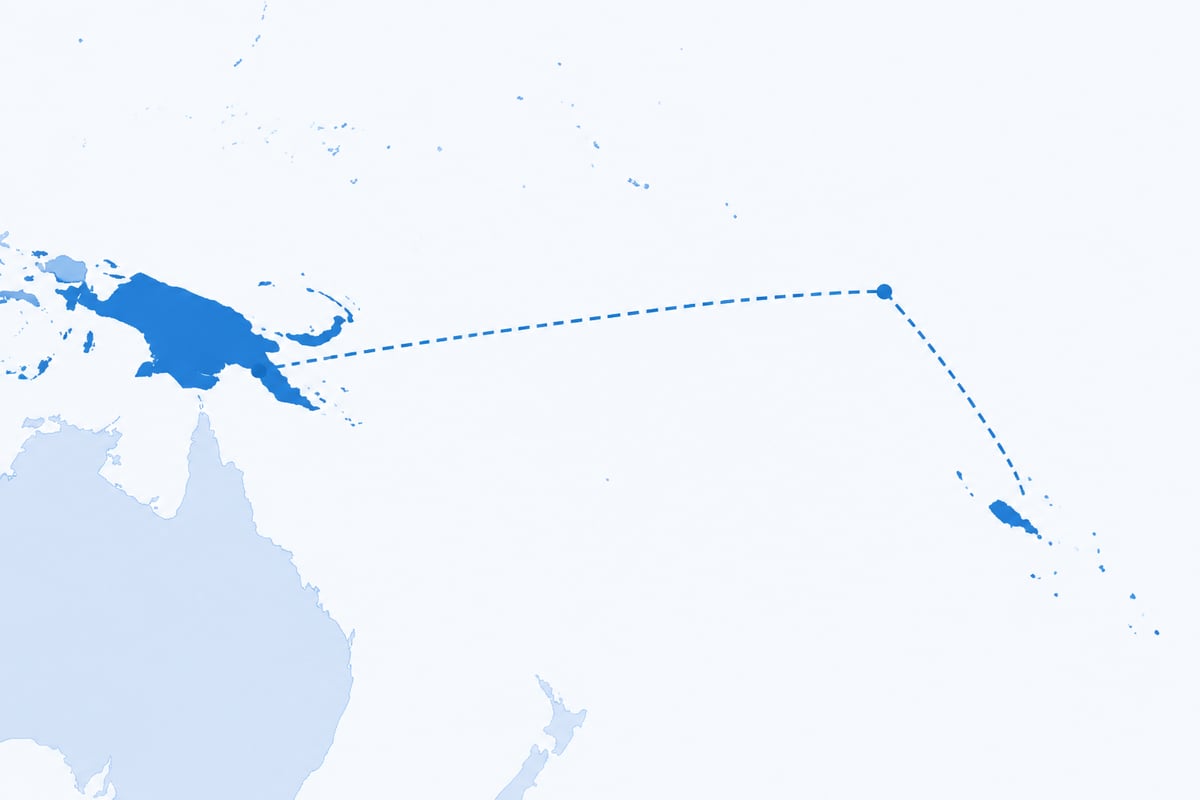
The Amelia Earhart flight ended on July 2, 1937, when she and navigator Fred Noonan failed to reach Howland Island in the central Pacific and were never seen again. No wreckage, remains or confirmed landing site has been found. The leading explanation is that they ran out of fuel and went into the sea near Howland after being unable to fix their position by radio or celestial navigation.
The Final Leg: Lae to Howland Island
Earhart and Noonan left Lae, New Guinea, for Howland Island on July 2, 1937, a leg of about 2,556 miles, according to the Smithsonian National Air and Space Museum. By the time they reached Lae on June 29, they had flown about 22,000 miles, with roughly 7,000 miles remaining to Oakland, according to the Smithsonian National Air and Space Museum.
Howland was the problem. It is a tiny, remote refueling stop, and the leg was expected to take about 20 hours, as Smithsonian Magazine reports. Finding a tiny island in open ocean demands accurate dead reckoning, a good sun or star fix and a working radio bearing.

What Plane Was Amelia Earhart Flying When She Disappeared?
She was flying a Lockheed Electra 10E, a twin-engine all-metal monoplane, modified for long-range flight. The aircraft carried a radio direction finder loop antenna, which was meant to help home in on a transmitter at Howland. The Coast Guard cutter Itasca, stationed off the island, was the ship that would have provided the signal.
The workload on the leg was heavy. Two crew had to manage fuel, navigation and radio over a long leg with little margin for error. Pilots reading the record today will recognize the pattern: a long leg, a small destination, and a communication plan that did not match the equipment on board.
What Did Amelia Earhart Say Before She Disappeared?
Her last message that was clearly received came at approximately 8:43 a.m. on July 2, when she reported being on a north-south line of position. The U.S. National Archives holds the Itasca's radio log that records it. Earlier transmissions had said she was low on fuel and could not find the island.
A line of position is not a fix. It tells you that you are somewhere along a line, not where. Earhart reported flying along it, which suggests she believed Howland lay close but could not identify it. The Smithsonian Air & Space Magazine examines this final transmission and the competing explanations for what followed.
Worked Example: Fuel Endurance on the Final Leg
Endurance arithmetic shows why the margin was thin. The leg was planned at about 20 hours. If the aircraft had fuel for roughly 24 hours at planned consumption, the reserve would be 24 minus 20, or 4 hours. These figures are illustrative, not documented values for the Electra.
Now add a headwind. If a headwind of 15 knots cut the ground speed from 128 knots to 113 knots, the 2,556-mile leg stretches from 2,556 / 128 = 20.0 hours to 2,556 / 113 = 22.6 hours. The reserve falls from 4.0 hours to 24 minus 22.6 = 1.4 hours. Add a search for the island and the reserve is gone.
The point is not that these numbers are exact. It is that a small error in wind, fuel flow or position consumes a reserve quickly on a leg this long. The same logic applies to any cross-country you plan today.

Was Amelia Earhart's Plane Ever Found?
No. No confirmed wreckage of the Electra has ever been recovered. Searches by the U.S. Navy and Coast Guard in 1937 covered a large area and found no trace of the aircraft. Later expeditions have followed sonar images and island artifacts, and none has produced a verified piece of the aircraft.
A recent case shows how easily a target can mislead. An apparent underwater plane-shaped object drew wide attention, then proved to be a rock formation, as Smithsonian Magazine reported. The Britannica biography gives a concise overview of the search and the last messages.
The Main Theories
Three explanations dominate. Each rests on the same missing evidence, so none is proven.
- Crash and sinking near Howland. The aircraft ran out of fuel and ditched. This fits the radio log and the fuel arithmetic best, and it requires no unproven events.
- Landing on Nikumaroro. A castaway theory holds that they reached a reef flat in the Phoenix Islands and survived for a time. Supporters point to artifacts and possible radio calls. No aircraft part has been confirmed.
- Capture by Japanese forces. This theory holds that they came down in the Marshall Islands and were taken prisoner. It lacks documentary proof and is not accepted by most researchers.
Lessons for Pilots Logging Flights Today
The 1937 flight is a study in margins, and margins are what a good logbook protects. Your own limits are smaller than a Pacific crossing but just as real: passenger carrying requires recent take-offs and landings under the applicable rules, and you should check current EASA and UK CAA requirements. Night privileges carry their own conditions. Medical and licence expiry dates add another set of deadlines.
Pilotlog Pro tracks rolling flight-time limits, passenger, night and IFR currency with lapse dates, and licence and medical expiry alerts. You log the flight in a few taps after landing, and the totals update from there.

Summary
- The final leg was Lae to Howland, 2,556 miles, planned at about 20 hours.
- The last clear radio report, about 8:43 a.m. on July 2, placed them on a north-south line of position.
- The aircraft was a Lockheed Electra 10E, and it has never been found.
- Fuel exhaustion near Howland is the best-supported explanation; the others lack physical proof.
- Small errors in wind, fuel and position consume reserves quickly on long legs.
Regulations change, so check current official sources such as EASA and the UK CAA for the rules that apply to you. This article cites EASA and UK CAA sources only where stated.
FAQ
When did Amelia Earhart take her last flight?
Her last flight departed Lae, New Guinea, on July 2, 1937, bound for Howland Island. The last clear radio report was received at about 8:43 a.m. that day. She and Fred Noonan were declared lost after an extensive search.
Has anyone proved what happened to Amelia Earhart?
No. There is no confirmed wreckage, no remains and no verified landing site. The fuel-exhaustion explanation fits the radio record, but it remains an inference rather than a proven finding.
Why was Howland Island so hard to find?
It is a very small, flat island in a vast ocean, with no landmarks to aid visual identification. The crew needed an accurate position fix or a working radio bearing to locate it. Neither is reported to have worked on the day.
Pick one currency or expiry date today, whether your 90-day passenger recency or your medical, and write down the day it lapses. Pilotlog keeps those dates in front of you, totals your hours from each logged flight and warns you before a licence, medical or rating expires. Join the waitlist to be among the first to log flights without a spreadsheet.
- amelia earhart
- lockheed electra
- aviation history
- flight navigation
- fuel planning
A logbook that keeps itself.
Join the waitlist and be first in line when Pilotlog launches.
Free to join. We’ll email you about the launch and Pilotlog news. Unsubscribe any time. Privacy policy