stick and rudder
Wolfgang Langewiesche Stick and Rudder: A Pilot's Guide
16 Nov 2026 · 6 min read

Wolfgang Langewiesche was an American aviator and writer whose 1944 book Stick and Rudder: An Explanation of the Art of Flying remains one of the most quoted texts on how an aeroplane actually flies. It is a good book, and parts of it are still correct and useful in 2026. A few parts need reading alongside current training material.
The short version for a working pilot: read it for the physics of control, not for procedures. It will not replace your approved syllabus or your type-specific handbook. It will change how you think about the angle of attack, the elevator and the rudder.
When was Stick and Rudder written?
Stick and Rudder was first published in 1944, during the Second World War, and written by a pilot who had flown light aircraft for years before that. Langewiesche (1907 to 2002) wrote for pilots of simple, low-powered airplanes, and the book reflects that world. It covers tailwheel aircraft, fixed-pitch propellers and visual flight. It does not cover glass cockpits, autopilots or modern regulatory frameworks.
That context matters. Any regulatory or procedural detail you meet in the book is of its era. Treat it as a flying-technique text, and use your current national syllabus for rules.
Is Stick and Rudder a good book?
Yes. Its lasting strength is that it explains why the controls do what they do, in plain language and without equations.
The ideas pilots return to most often:
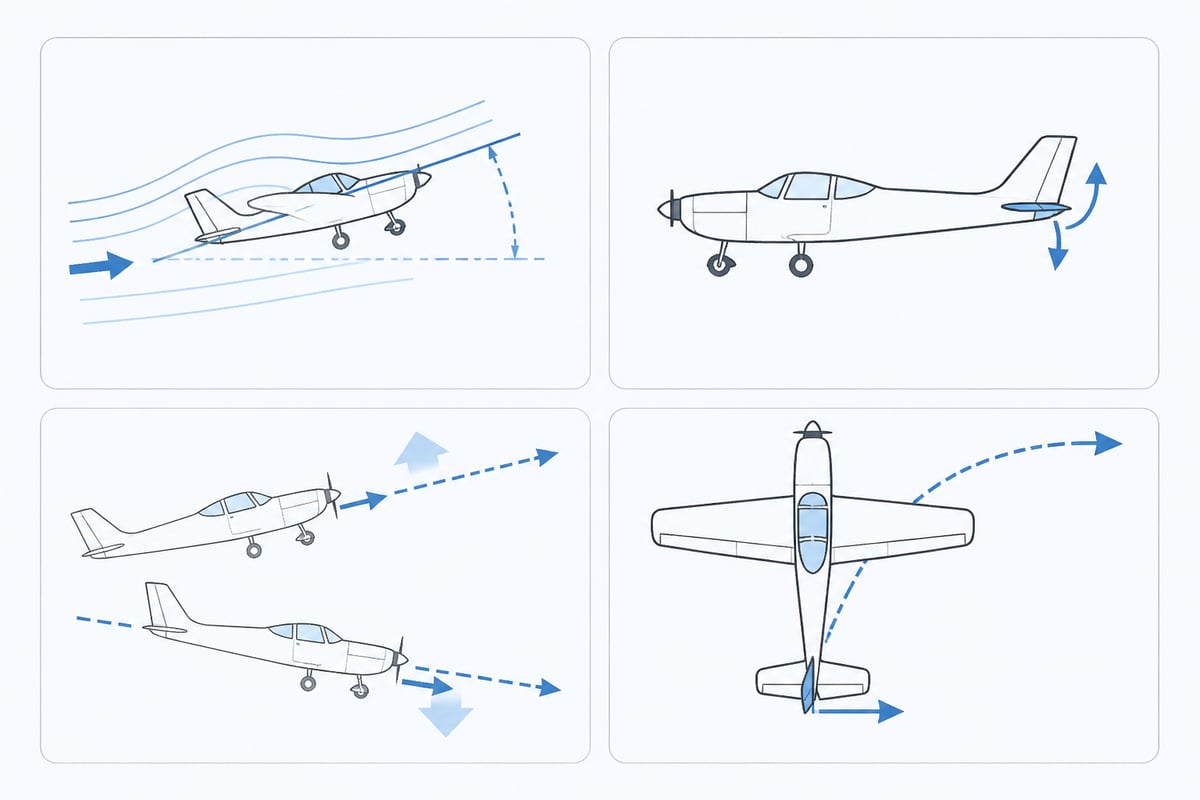
- Angle of attack, not airspeed, governs the stall. An aeroplane stalls when the wing exceeds its critical angle of attack, at any airspeed and any attitude.
- The elevator controls angle of attack. The elevator does not "make the nose go up"; it sets the angle at which the wing meets the air.
- The throttle controls the climb or descent. At a given trim, power changes the flight path, and the elevator holds the speed.
- The rudder is for coordination. Its job is to keep the aircraft flying straight through the air, not to steer it.
- Ground effect and the "region of reversed command" are described clearly, and both still matter on short final.
The style is conversational and occasionally opinionated. Some pilots find the prose dated. Few find the content wrong on fundamentals.
Are Stick and Rudder's lessons still relevant?
Yes for fundamentals, with caveats on specifics. The aerodynamics have not changed since 1944, and the book's core argument still matches how instructors teach upset prevention and stall awareness.
The caveats are worth stating plainly:
- Terminology has moved on. Modern texts use different labels for some concepts, so cross-check unfamiliar terms.
- Aircraft have changed. Advice written around tailwheel types and fixed-pitch propellers needs adapting for tricycle gear, constant-speed propellers and modern avionics.
- Some explanations are simplified. Langewiesche chose clarity over completeness, which is why the book reads well but should not be your only source.
For a current reference, the FAA's Aviation Handbooks & Manuals page lists the Airplane Flying Handbook, and checking it will confirm the latest edition and any addenda. Pilots training under EASA Part-FCL or UK CAA rules should use their approved training organisation's material and the relevant authority's syllabus, and use Langewiesche as a companion for understanding.
How to read it alongside your training
Use the book to explain what you have already felt in the aeroplane. Read the stall and turn chapters after a lesson on those topics, then fly them again with the book's model in mind.

Hypothetical example: checking passenger recency under EASA rules
Skill fades without regular flying. This hypothetical example shows how to check your own recency under EASA rules.
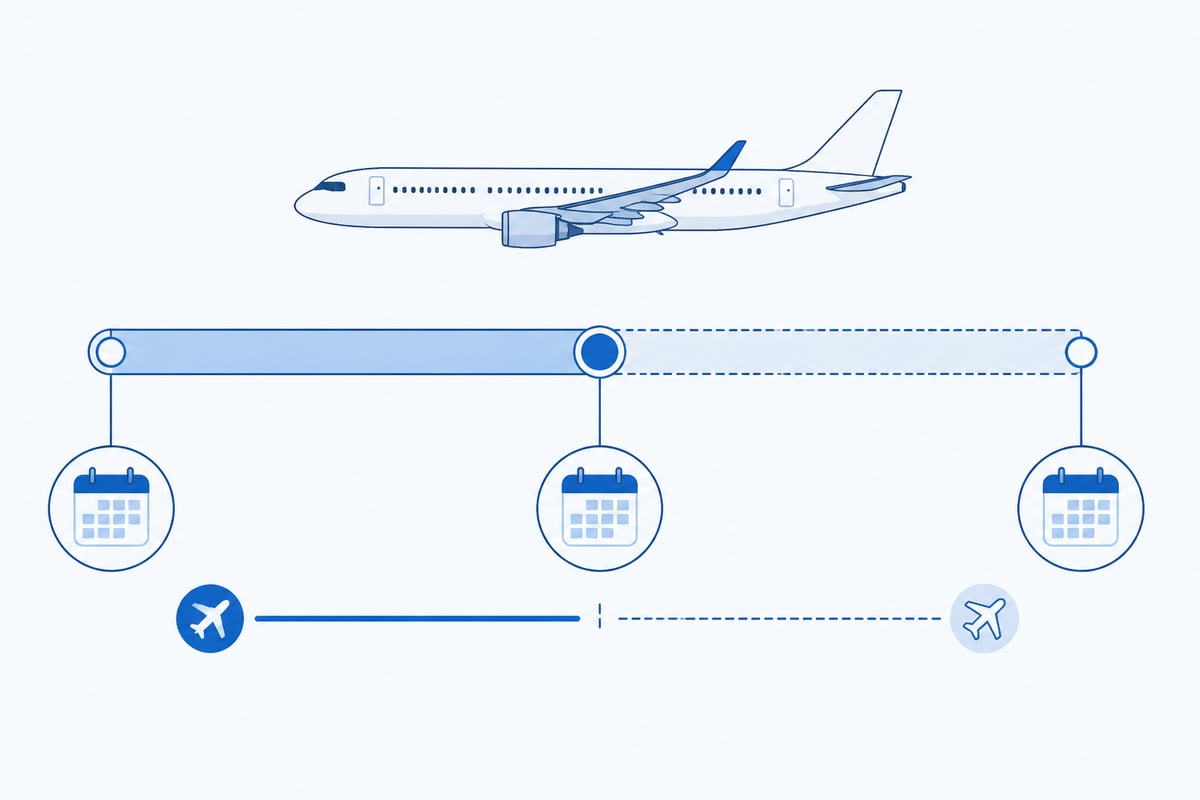
Rule applied (EASA Part-FCL): to carry passengers as pilot in command of an aeroplane, you must have completed at least 3 take-offs, 3 approaches and 3 full-stop landings as pilot flying in the preceding 90 days, on the same type or class (FCL.060(b)). This is about the minimum for passenger carriage, not general competence.
Hypothetical dates and arithmetic:
- Your last three full-stop landings on type fall on a given date.
- The 90-day window runs forward from that date.
- Count the days month by month until the total reaches 90.
- The window ends on the day the 90-day count is reached.
- Subtract the days elapsed from 90 to find the days remaining.
- Part-way through the window, subtract the days elapsed from 90 to see how much passenger currency remains.
If you hold a UK CAA licence, the UK rule set applies and should be checked in the CAA's current documents rather than assumed identical. Never mix EASA and FAA figures in one calculation. If you fly under 14 CFR, the passenger-carrying recency rule is a separate regulation with its own wording.
Rules change, so check current official sources at EASA and the UK CAA before relying on any figure here.
Tracking recency without spreadsheets
A spreadsheet can do that arithmetic, but you have to remember to open it. Pilotlog Pro totals hours, currency and limits from each logged flight, shows passenger, night and IFR recency with the date each lapses, and warns you before licence, medical and rating expiries. For pilots working towards ATPL hours or watching duty limits, the same logged flights feed the totals, so nothing is entered twice.

Summary
- Wolfgang Langewiesche published Stick and Rudder in 1944, for light-aircraft pilots of that era.
- The book is good, and its explanation of angle of attack, elevator and rudder remains sound.
- Use it as a companion to your approved syllabus, not a replacement.
- Check recency against the authority that issued your licence, and never mix EASA, UK CAA and FAA figures.
FAQ
Who was Wolfgang Langewiesche?
He was an American writer and pilot (1907 to 2002), best known for Stick and Rudder and for his flying journalism. His strength was explaining aerodynamics to working pilots in plain language.
Is Stick and Rudder suitable for student pilots?
Yes, as a supplement. It helps you understand what the aircraft is doing, but your training organisation's syllabus and current handbooks govern what you are tested on.
Does the book cover instrument flying?
No. It concentrates on visual flight and basic aircraft control, so it will not help with IFR procedures or approved instrument training.
Pick your next flight and write down the date your three take-offs and landings lapse, using the 90-day arithmetic above. A logbook that does that sum for you is easier to trust than a note on the back of a kneeboard. Pilotlog Pro is built for this, and you can join the waitlist at Pilotlog to keep your currency, limits and expiries visible after every landing.
- stick and rudder
- langewiesche
- angle of attack
- easa recency
- flight training
A logbook that keeps itself.
Join the waitlist and be first in line when Pilotlog launches.
Free to join. We’ll email you about the launch and Pilotlog news. Unsubscribe any time. Privacy policy