recreational pilot licence
Recreational Pilot Licence: Requirements & Steps 2026
14 Oct 2026 · 16 min read
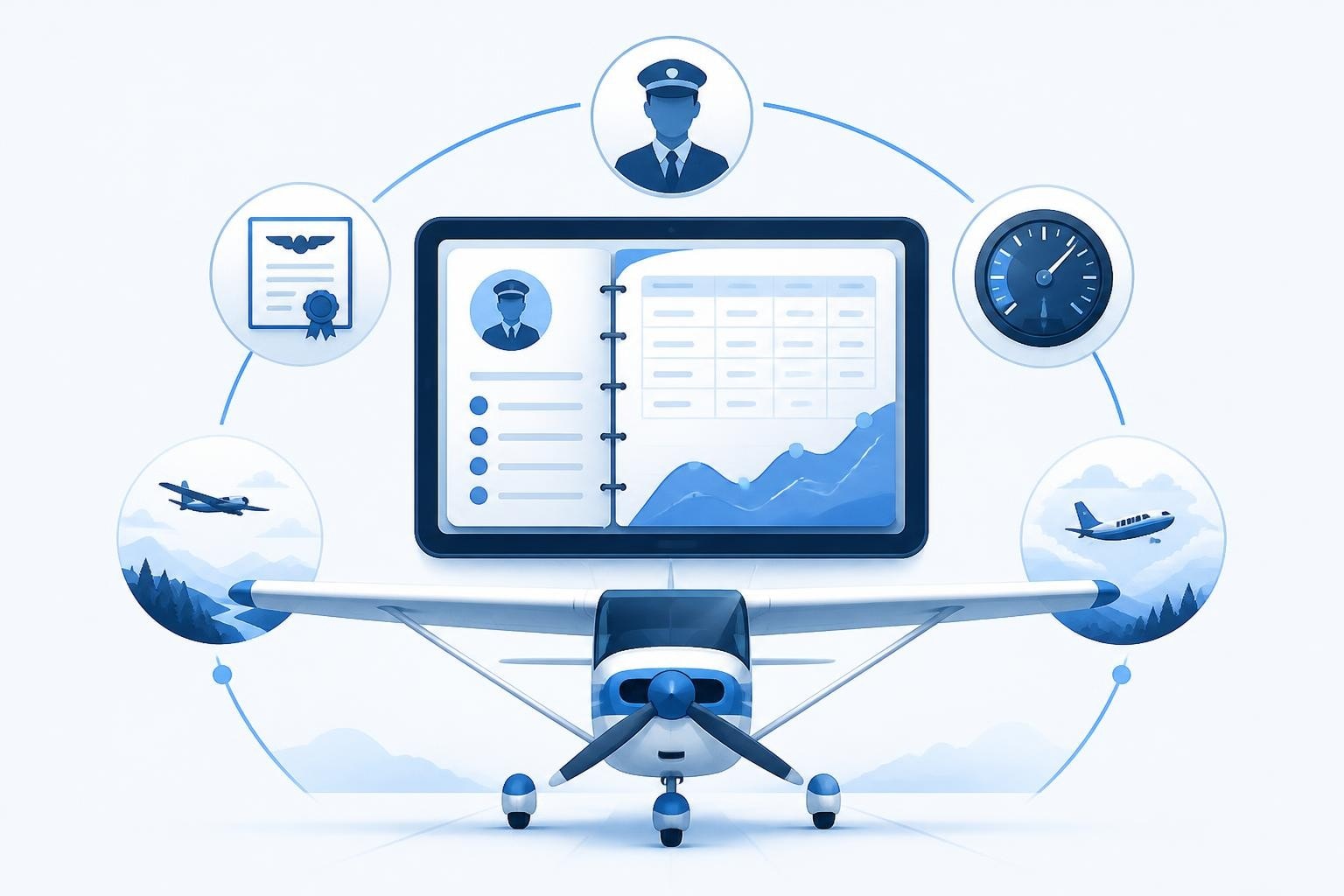
A recreational pilot licence is a stepping stone into aviation that requires fewer hours and less training than a private pilot licence but comes with specific operating limits. In the United States, the FAA's Recreational Pilot Certificate demands 30 hours minimum training versus 40 for private, while Canada's Recreational Pilot Permit sets a 25-hour minimum under Transport Canada rules. Both grant you the privilege to fly day VFR within defined distances of your departure aerodrome, but you cannot fly for compensation, carry more than one passenger, or operate in controlled airspace without additional endorsements.
What is a Recreational Pilot Licence
The recreational pilot licence sits between the sport pilot certificate and the private pilot licence in terms of training commitment and operating privileges. The FAA defines the Recreational Pilot Certificate as requiring 30 flight hours, including 15 hours of dual instruction and 3 hours of solo flight, plus a knowledge test and practical exam. Canada's version, the Recreational Pilot Permit, follows different minimums set out in Transport Canada Standard 421, which requires 25 hours total time with 15 dual and 5 solo.
Both certificates allow single-engine, single-pilot operations during daylight hours under visual flight rules. You may carry one passenger, and in the U.S. you are limited to aircraft with up to 180 horsepower and four seats maximum. Canada's permit restricts you to aircraft not requiring a type rating and sets a weight limit of 1,200 kg for aeroplanes.
Geography matters. The U.S. recreational pilot certificate limits flight to within 50 nautical miles of the departure aerodrome unless you hold an endorsement for cross-country operations. Canada's permit does not impose a strict radius but requires pilots to operate within 25 nautical miles of their training aerodrome unless they complete additional navigation training and receive an endorsement.
Regulatory foundations
The recreational pilot licence exists in different forms depending on jurisdiction. In Europe, the Light Aircraft Pilot Licence (LAPL) serves a similar purpose under EASA Part-FCL rules, requiring 30 hours flight time with 15 dual and 6 solo. The EASA general aviation licensing framework sets out these minimums and defines aircraft categories permitted under each licence type.
Each system aims to lower the barrier to entry for pilots who want to fly recreationally without the time and cost of a full private licence. The trade-off is restricted privileges: no night flight, no IFR, no flights in controlled airspace without specific endorsements, and no compensation or hire.
Training Requirements and Flight Hours
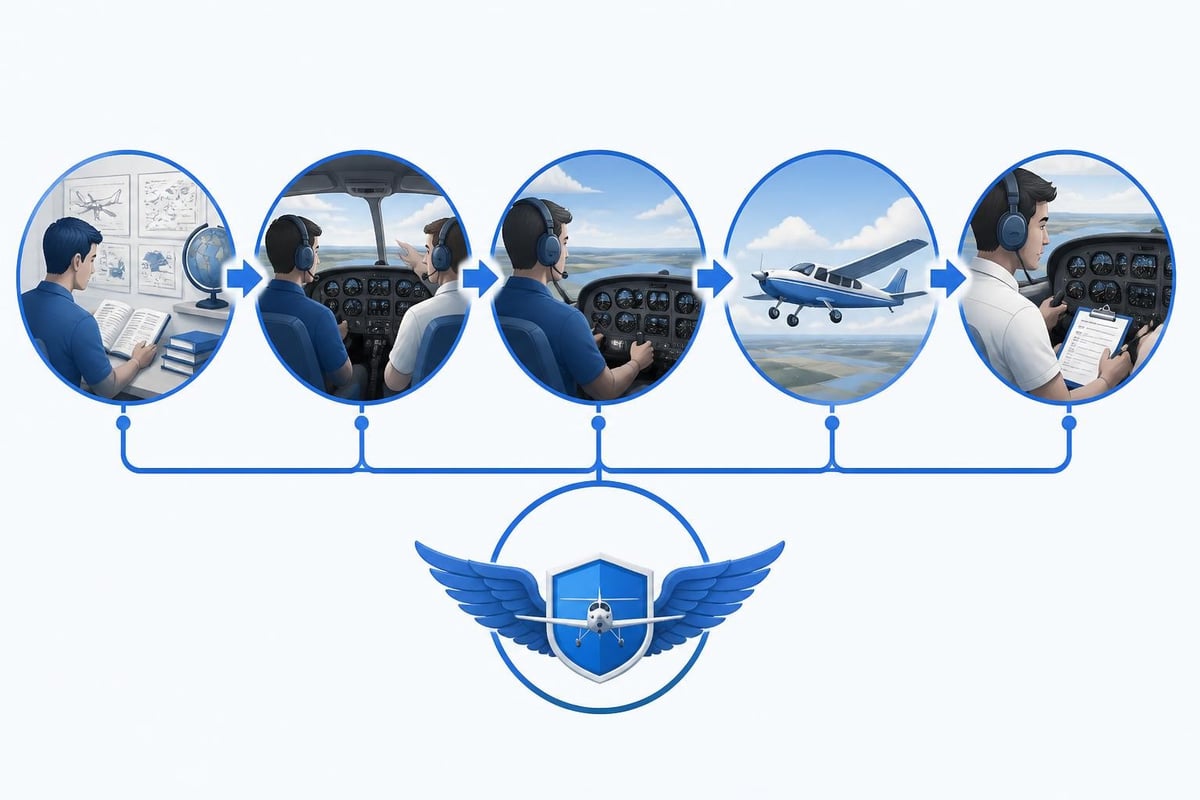
Training for a recreational pilot licence follows a structured syllabus covering aeronautical knowledge, pre-flight preparation, airport operations, takeoffs and landings, performance manoeuvres, ground reference, navigation, slow flight and stalls, and emergency procedures. The FAA Recreational Pilot Practical Test Standards (FAA-S-8081-3a) describe every task and the performance criteria an examiner will assess during your practical test.
Minimum flight time breakdown (U.S. Recreational Pilot Certificate):
- 30 hours total flight time
- 15 hours dual instruction with an authorised instructor
- 2 hours dual en-route to an airport at least 25 nautical miles away (if seeking cross-country endorsement)
- 3 hours dual within the preceding 60 days before the practical test
- 3 hours solo flight time
- Solo cross-country flight covering at least 50 nautical miles total distance with full-stop landing at an aerodrome at least 25 nautical miles from departure
Canada Recreational Pilot Permit minimums:
- 25 hours total flight time
- 15 hours dual instruction
- 5 hours solo flight
- 3 hours cross-country dual
- 5 hours solo time including 2 hours cross-country solo
These figures represent regulatory minimums. Most pilots require additional hours to meet competency standards. The average student completes a recreational pilot licence in 35 to 40 hours in practice, depending on frequency of training and weather.
Ground school and knowledge test
Ground training covers airspace classification, weather theory and METAR interpretation, navigation principles, aircraft systems, aerodynamics, and regulations. You must pass a written knowledge test before the practical exam. The U.S. FAA knowledge test for recreational pilots comprises 60 multiple-choice questions; you need 70% to pass. Canada's PSTAR (Pre-Solo Test of Air Regulations) and the recreational permit written exam cover similar topics with a pass mark of 60% and 60% respectively.
Many students complete ground school online or in evening classes over 8 to 12 weeks while flying once or twice per week. Balancing theory with practice helps you connect concepts like weight and balance or density altitude to real decisions in the cockpit.
Privileges and Limitations
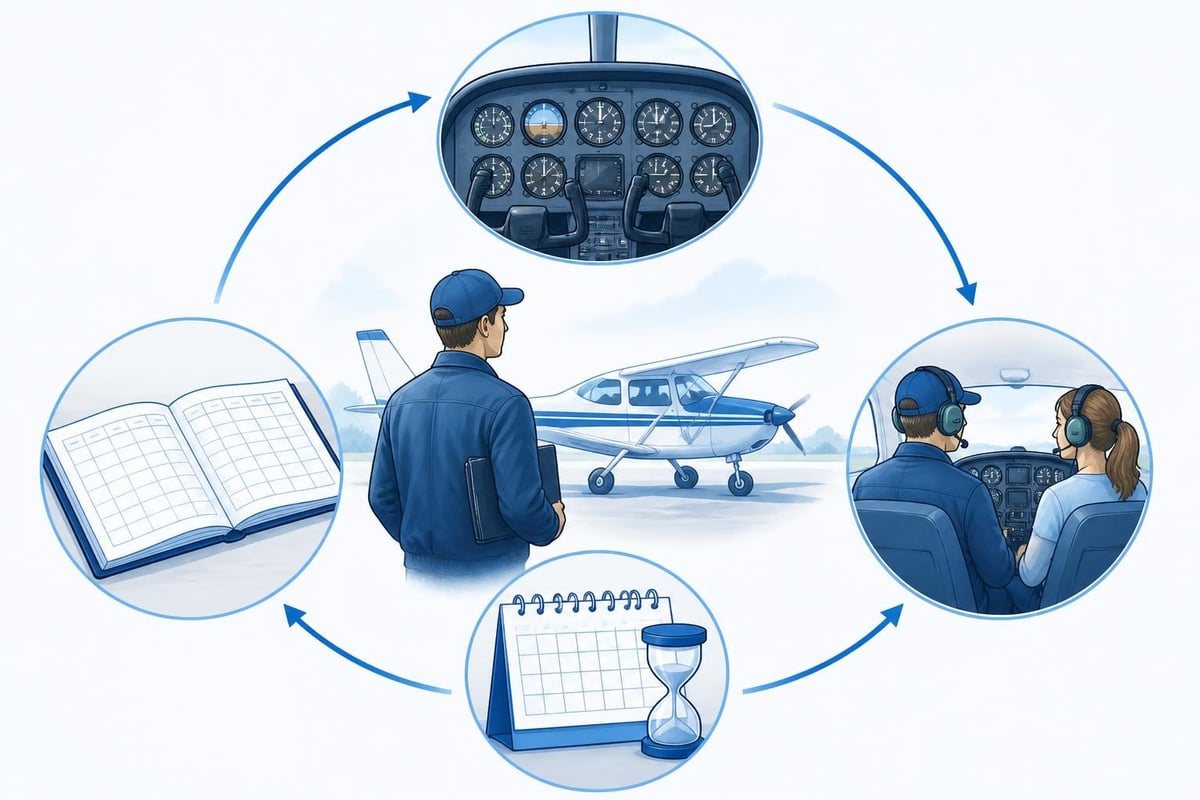
A recreational pilot licence grants specific flying privileges with clear boundaries. Understanding those limits is essential for planning every flight and staying legal.
| Privilege | U.S. Recreational Pilot | Canada Recreational Permit |
|---|---|---|
| Passengers | One only | One only |
| Flight time | Day VFR only | Day VFR only |
| Airspace | Class G and E (with endorsement for B, C, D) | Uncontrolled; endorsement needed for controlled |
| Distance | 50 NM from departure (endorsement for beyond) | 25 NM from training aerodrome (endorsement for navigation) |
| Aircraft | Single-engine, ≤180 HP, ≤4 seats | ≤1,200 kg, no type rating required |
| Compensation | Not permitted | Not permitted |
You cannot act as pilot-in-command on a flight carrying persons or property for compensation or hire. You cannot operate in furtherance of a business. Both rules ensure the recreational pilot licence remains non-commercial.
Endorsements and additional authorisations
Your instructor may issue logbook endorsements to expand your privileges within the recreational framework. Common endorsements include:
- Cross-country flight beyond 50 NM (U.S.): requires dual cross-country training and instructor sign-off
- Class B, C, or D airspace (U.S.): requires ground and flight training specific to that airspace
- Navigation beyond 25 NM (Canada): additional dual and solo cross-country flights logged and endorsed
- Radio communications (Canada): required for controlled airspace operations
Each endorsement comes with training requirements and must be recorded in your logbook. Tracking endorsements and currency becomes simpler when every flight, rating, and expiry lives in one digital record.
Medical Certificate and Eligibility
Medical certification for a recreational pilot licence is less stringent than for private or commercial licences. In the U.S., you may fly under recreational privileges using either a third-class medical certificate or a valid U.S. driver's licence if you meet BasicMed eligibility under FAA rules introduced in 2017. BasicMed requires an online medical education course, a physical exam by any state-licensed physician every four years, and a comprehensive medical checklist.
Canada requires a Category 4 medical certificate for the recreational pilot permit, the least restrictive medical standard. The exam covers vision (6/12 uncorrected or corrected in each eye), hearing, cardiovascular health, and a general assessment. The certificate is valid for 60 months if you are under 40, and 24 months if you are 40 or older.
Eligibility requirements (U.S. Recreational Pilot Certificate):
- Minimum age 17 years
- Read, speak, write, and understand English
- Hold at least a third-class medical or valid driver's licence (BasicMed)
- Receive and log ground and flight training from an authorised instructor
- Pass the FAA knowledge test and practical test
Canada Recreational Pilot Permit:
- Minimum age 16 years
- Category 4 medical certificate
- Pass the recreational pilot written exam and flight test
- Complete minimum flight hours and endorsements
Europe's LAPL under EASA Part-FCL requires an LAPL medical certificate, which is less demanding than the Class 2 medical needed for a private pilot licence (PPL).
Currency and Recency Rules
Holding a recreational pilot licence is only half the equation. Staying current to carry passengers requires recent flight experience. Under FAA regulations (14 CFR 61.56 and 61.57), you must complete a flight review every 24 calendar months with an authorised instructor, and to carry passengers you need three takeoffs and landings within the preceding 90 days in the same category and class of aircraft.
Canada's rules under CAR 401.05 require pilots to complete a flight review every 24 months and log five hours PIC time in the preceding 12 months to exercise passenger-carrying privileges under a recreational permit. If night currency is added later, separate recency applies.
Currency checklist for recreational pilots:
- Flight review: every 24 months (both U.S. and Canada)
- Passenger recency (U.S.): 3 takeoffs and 3 landings in preceding 90 days
- Passenger recency (Canada): 5 hours PIC in preceding 12 months for permit holders
- Medical currency: valid medical certificate or driver's licence/BasicMed (U.S.); Category 4 medical in date (Canada)
Missing one of these elements grounds you for passenger-carrying or all operations, depending on the lapsed requirement. Tracking multiple rolling windows manually invites error. Pilotlog Pro automatically monitors 28-day and 90-day currency windows, flags passenger recency, and alerts you when your medical or flight review approaches expiry, so nothing catches you by surprise.
Costs and Time Commitment
The cost to earn a recreational pilot licence sits below private pilot training but still represents a significant investment. Instructor rates, aircraft rental, ground school, and test fees vary by region and flight school.
Estimated costs (U.S., 2026):
- Dual instruction (15 hours minimum at $60-80/hour instructor + $150-180/hour aircraft): $3,150 to $3,900
- Solo flight (3 hours at $150-180/hour aircraft): $450 to $540
- Ground school: $200 to $500
- Books and materials: $150 to $300
- Knowledge test fee: $175
- Practical test (examiner fee): $500 to $700
- Medical or BasicMed: $75 to $150
Total typical range: $4,700 to $6,200 for the minimum 30 hours, though most pilots log closer to 35-40 hours before checkride.
Canada's costs run slightly lower in some regions due to different aircraft and instructor rates, but the overall investment remains comparable. For detailed breakdowns, understanding pilot licence costs across certificate types helps you budget and compare pathways.
Time commitment depends on flight frequency. Training twice per week, most students complete the recreational pilot licence in 4 to 6 months. Flying once per week stretches the timeline to 6 to 9 months and may increase total hours due to skill decay between lessons.
Comparing recreational to private pilot licence
Choosing between a recreational pilot licence and a private pilot licence depends on your flying goals and budget. The AOPA guide on the recreational pilot certificate highlights the trade-offs clearly: fewer hours and lower cost, but tighter restrictions.
| Factor | Recreational | Private |
|---|---|---|
| Minimum hours | 30 (U.S.) / 25 (Canada) | 40 (U.S.) / 45 (Canada) |
| Typical completion cost | $5,000-$6,500 | $10,000-$14,000 |
| Passengers | One | Multiple (limited by aircraft) |
| Night flight | Not permitted | Permitted with training |
| Cross-country range | 50 NM (endorsement for beyond) | Unrestricted |
| IFR operations | Not permitted | Possible with instrument rating |
| Controlled airspace | Endorsement required | Full access after training |
If you plan to travel beyond local flying, carry family or friends, or fly at night, the private pilot licence offers better long-term value. The recreational pilot licence suits pilots who fly locally, rarely carry more than one passenger, and want to minimize training time and expense. Hours logged under a recreational licence count toward private licence requirements, so you can upgrade later without starting over.
Logging and Tracking Your Recreational Licence Hours
Accurate logbook records underpin every aspect of your recreational pilot licence: proving eligibility for checkrides, demonstrating currency for passenger flight, and tracking hours toward future certificates or endorsements. The FAA recreational pilot practical test standards require you to present your logbook with endorsements, training records, and solo flight documentation.
Every flight must be logged with date, aircraft type and registration, departure and arrival aerodromes, flight time (total, PIC, dual, solo), day or night, and conditions (VFR or IFR, though recreational pilots fly VFR only). Takeoffs and landings must be tallied for recency tracking. Endorsements, flight reviews, and instructor signatures go in the logbook remarks or endorsements section.
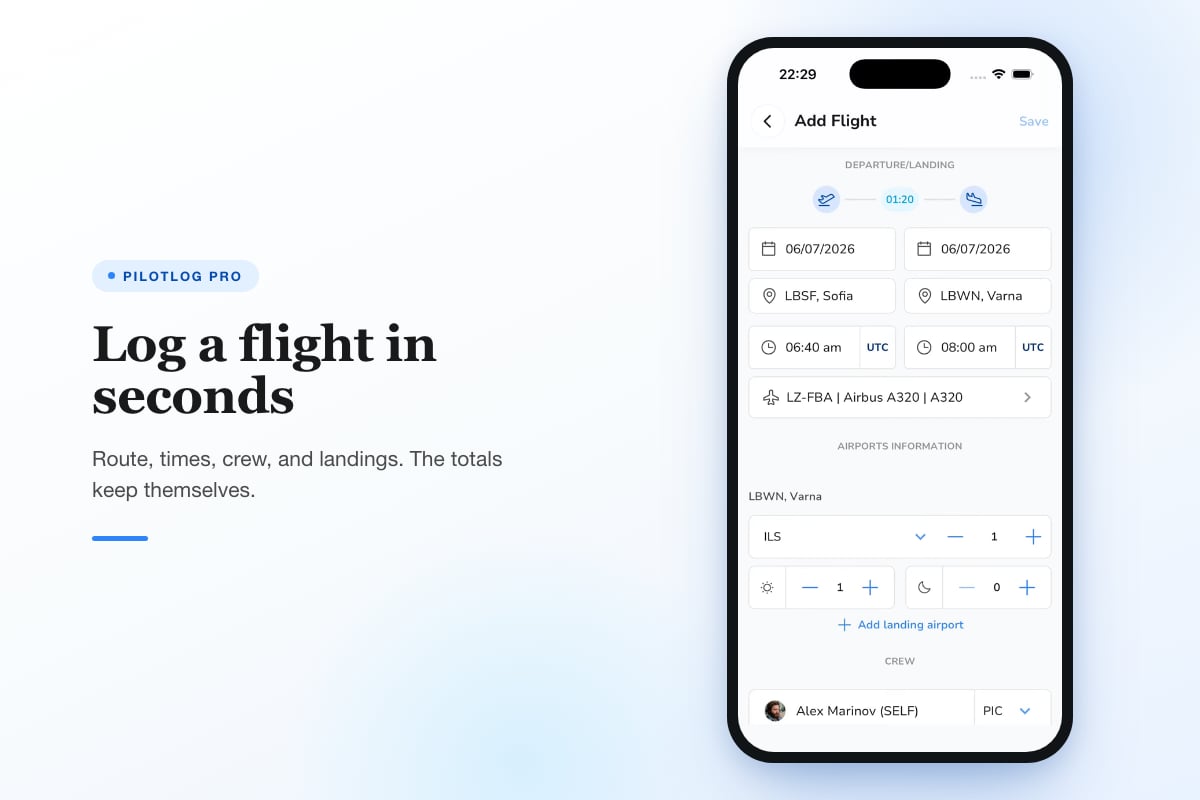
Paper logbooks work but demand manual arithmetic and leave you vulnerable to lost records. A digital pilot logbook like Pilotlog logs flights in seconds, calculates totals automatically, and tracks rolling currency windows so you know exactly where you stand on passenger recency, flight review due dates, and medical expiry.
Worked example: recreational pilot hour tracking
Imagine you earned your recreational pilot licence on 15 March 2026 with 35 total hours (18 dual, 17 solo). You flew 12 flights between April and June, logging 22 hours PIC. Your last three flights were on 10 June (1.2 hours, 3 landings), 18 June (1.4 hours, 4 landings), and 25 June (1.1 hours, 3 landings). On 10 July you plan to take a passenger on a local flight.
Currency check:
- 90-day passenger recency (FAA 61.57): last three takeoffs and landings were 10, 18, 25 June, all within 90 days of 10 July. Current.
- Flight review: completed as part of practical test on 15 March 2026; valid until 31 March 2028. Current.
- Medical: third-class medical issued 10 February 2026, valid 60 months (you are 28 years old). Expires 28 February 2031. Current.
All requirements met. You may carry the passenger legally. If your last landing had been on 8 April, you would be outside the 90-day window on 10 July and would need to complete three solo takeoffs and landings before carrying passengers again.
Tracking this manually across multiple flights, rolling windows, and calendar math is tedious and error-prone. Pilotlog flags the currency lapse 14 days before it happens, giving you time to plan a recency flight without grounding your weekend plans.
International Recognition and Conversion
Recreational pilot licences and permits are national certificates, not covered by ICAO Annex 1 international standards for private pilot licences. If you hold a U.S. recreational pilot certificate, you cannot fly in Canada, Europe, or other countries without converting or validating it to a local licence. Conversely, Canada's recreational permit is not recognised by the FAA for operations in U.S. airspace.
However, hours and training completed under a recreational licence do count toward higher certificates. If you hold a U.S. recreational certificate and later apply for a private pilot licence, the FAA credits your 30 (or more) hours toward the 40-hour private minimum. Similarly, Canada's recreational permit hours transfer toward a private pilot licence. This makes the recreational licence a viable stepping stone if you plan to upgrade.
Europe's LAPL issued by an EASA member state is valid across the EU and EASA-member countries but not automatically recognised in the U.S. or Canada. Pilots moving between jurisdictions should research conversion requirements well before travel.
For more on entry pathways and hour requirements, FLYING Magazine's guide to getting a recreational pilot certificate walks through real-world steps and timelines.
Practical Advice for Recreational Pilots
Once you hold your recreational pilot licence, treat every flight as an exercise in planning, discipline, and continuous learning. Even local flights within 50 nautical miles require weather checks, weight and balance, fuel planning, and NOTAM review. Currency is not just a number-it reflects proficiency. If you have not flown in 60 days, consider flying with an instructor before taking a passenger, even if you are technically current.
Tips for staying sharp:
- Fly consistently. Once or twice per month maintains skills better than long gaps.
- Join a flying club or partnership to spread aircraft costs and connect with other pilots.
- Practice landings regularly. Currency requires three in 90 days; competency benefits from more.
- Review procedures before each flight.Ormalise checklists for pre-flight, run-up, takeoff, cruise, approach, and shutdown.
- Log every flight immediately. Details fade fast; accurate logs protect you and inform your progress.
Weather minimums for VFR flight under a recreational licence are the same as for private pilots: 3 statute miles visibility and cloud clearances depending on airspace class. Never launch into marginal conditions just because you are legal. Personal minimums should exceed regulatory minimums, especially in your first 100 hours post-licence.
Planning your first cross-country under recreational privileges
If you hold the cross-country endorsement, planning a flight beyond 50 nautical miles requires the same discipline as any VFR navigation. Select an aerodrome with good weather, controlled pattern if you have the endorsement, and services (fuel, restaurant, maintenance) that make the trip worthwhile. File a flight plan or use flight following where available. Calculate wind correction, estimated time en route, and fuel burn with a reserve of at least 45 minutes (FAA day VFR minimum).
Plot your course, note checkpoints every 10 to 15 nautical miles, and prepare a navigation log with headings, distances, groundspeed estimates, and times. Carry current charts (paper or electronic), and cross-check GPS with visual pilotage. On return, log the flight with departure and arrival aerodromes, route, time, and any unusual events or lessons learned.
Upgrading from Recreational to Private Licence
Many pilots use the recreational pilot licence as a foundation, logging hours and gaining experience before upgrading to a private pilot licence. The process is straightforward: you need to meet the additional hour requirements (40 total for FAA private vs. 30 for recreational), complete night training (3 hours dual including cross-country and 10 takeoffs and landings to a full stop), and pass the private pilot knowledge and practical tests.
Canada's pathway from recreational permit to private licence similarly credits your permit hours and requires additional training (night rating, cross-country, and advanced manoeuvres) plus the private pilot written and flight test.
Upgrading opens significant new privileges: night flight, unrestricted cross-country range, more than one passenger, and eligibility for instrument and commercial ratings later. It also improves insurance options and aircraft rental access, as many clubs and rental operators prefer private-licence holders.
Typical additional costs to upgrade recreational to private (U.S., 2026):
- 10 additional flight hours (dual and solo): $2,000 to $2,600
- Night training (3 hours dual): $600 to $780
- Cross-country dual beyond recreational minimums: $400 to $600
- Knowledge test (if not already passed): $175
- Practical test (examiner): $500 to $700
Total upgrade cost: approximately $3,700 to $4,900, depending on hours already logged and proficiency.
The time investment is 2 to 4 months of part-time training. Pilots who stay current during recreational flying often upgrade faster and with fewer total hours.
The recreational pilot licence offers a practical, cost-effective route into general aviation with clear privileges and limitations. Logging every flight accurately, tracking currency, and staying current on medical and flight review dates keeps you legal and confident. Pilotlog makes that simple: log a flight in seconds, monitor rolling currency windows automatically, and receive early alerts for licences and medicals so nothing catches you by surprise.
- recreational pilot licence
- recreational pilot permit
- faa pilot certificate
- flight training hours
- lapl
A logbook that keeps itself.
Join the waitlist and be first in line when Pilotlog launches.
Free to join, no spam. Unsubscribe any time.