faa handbooks
Pilot Flying Handbook: What Each Chapter Covers
7 Nov 2026 · 5 min read
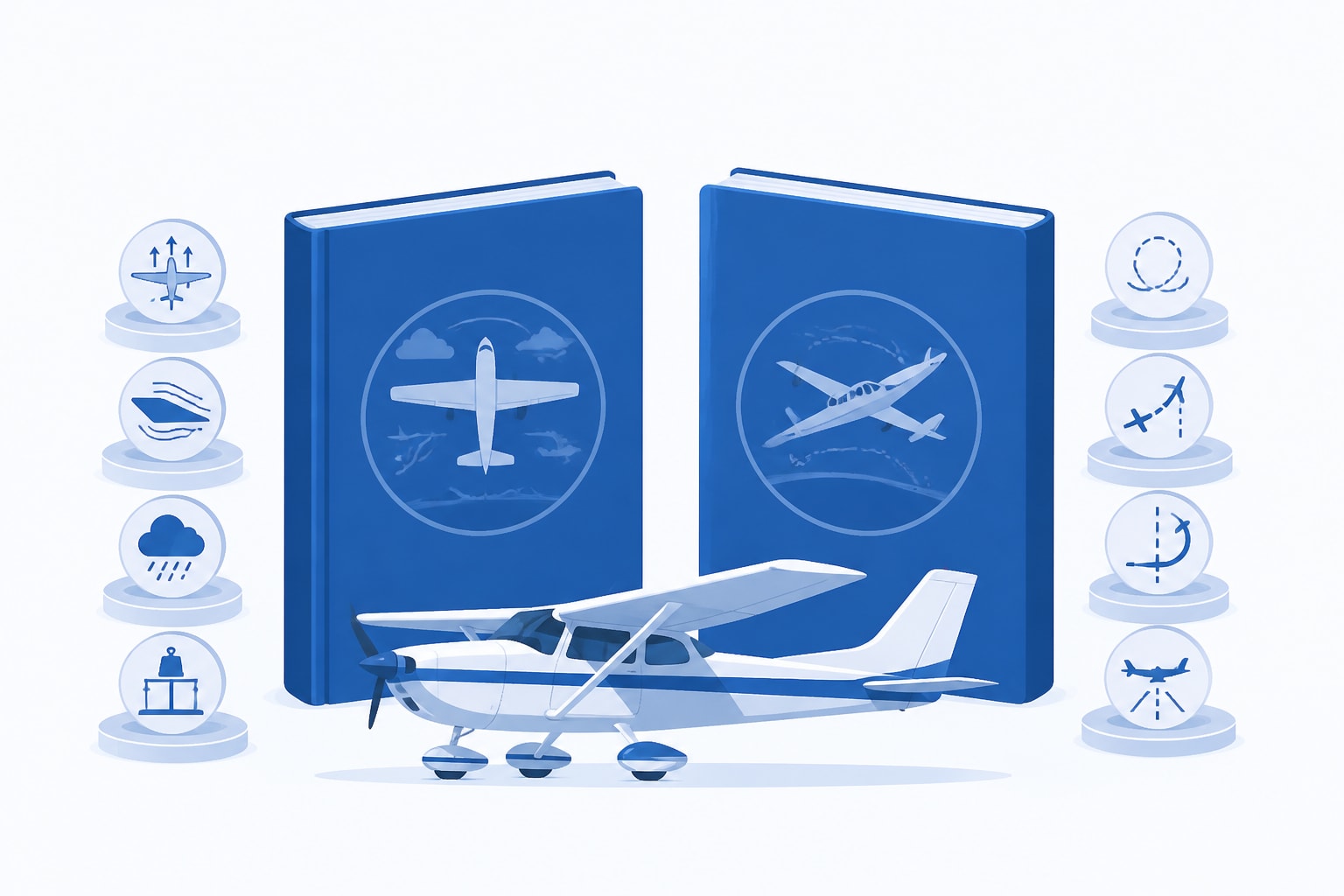
There is no single book called the "Pilot Flying Handbook". The phrase usually points to two FAA publications: the Pilot's Handbook of Aeronautical Knowledge (FAA-H-8083-25C), which covers theory, and the Airplane Flying Handbook (FAA-H-8083-3C), which covers technique. Both are free from the FAA and are US documents. If you train under EASA Part-FCL or UK CAA rules, they remain useful references for aerodynamics, weather and handling, but the regulations in them are 14 CFR, not yours.
Which handbook is the pilot flying handbook?
The FAA lists the Pilot's Handbook of Aeronautical Knowledge as a book of chapters from Introduction to Flying through Aeromedical Factors, plus appendices, a glossary and an index. The Airplane Flying Handbook is a separate book. The FAA describes its chapters as covering flight training, maneuvers, operations, transitions to different aircraft and emergency procedures.
Think of it this way: the first book teaches you why the aircraft behaves as it does, and the second teaches you how to fly it. The FAA also publishes other titles for specific ratings on its pilot handbooks page.
Both are written to the US system, with FAA terminology and 14 CFR as the legal basis. EASA and UK CAA students should treat any regulatory content as background only and take legal requirements from Part-FCL or the CAA.
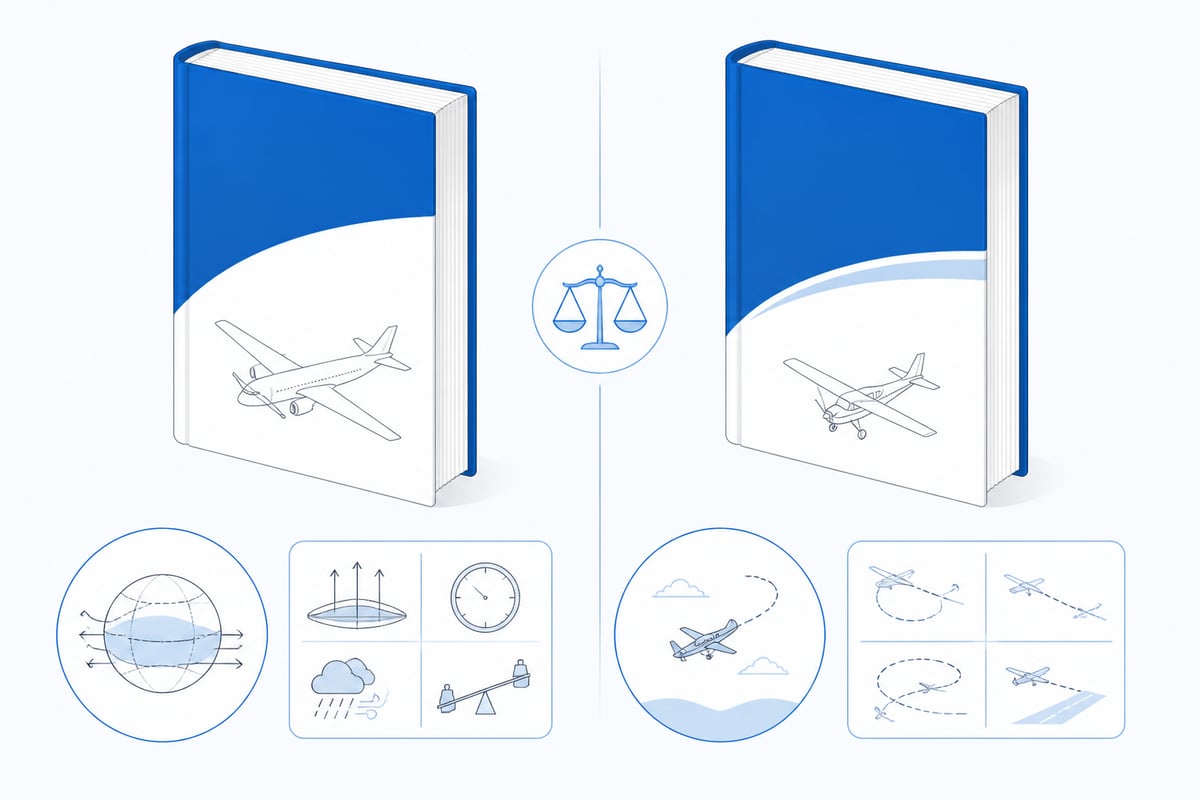
Pilot's Handbook of Aeronautical Knowledge: chapter groups
The chapters fall into natural blocks. Using the FAA's own chapter list, they map to the theory subjects you will meet in ground school.
- Foundations (Chapters 1-2): Introduction to Flying, then Aeronautical Decision-Making in Chapter 2. This is the human factors and risk management groundwork.
- Aerodynamics (Chapters 4-5): Principles of Flight and Aerodynamics of Flight. Lift, drag, stability and stalls.
- Aircraft and performance (Chapters 9-11): Flight Manuals and Other Documents, Weight and Balance, and Aircraft Performance. These feed directly into flight planning.
- Environment and navigation (Chapters 12-16): Weather Theory and Aviation Weather Services in Chapters 12 and 13, then Airport Operations, Airspace and Navigation in Chapters 14-16.
Aeromedical Factors closes the book.
Airplane Flying Handbook: what the 18 chapters teach
The Airplane Flying Handbook follows the order of a training syllabus, covering flight training, maneuvers, operations, transitions to different aircraft and emergency procedures.
Read it alongside your instructor's briefings, not instead of them. The handbook describes technique in general terms, and your aircraft's flight manual and your school's standards set the actual numbers.
How to read the handbook against your training stage
Match the chapters to what you are flying that week, not to page order.
- Pre-solo: Chapters on controls, aerodynamics, decision-making and airport operations, then the matching ground and basic maneuvers chapters in the flying handbook.
- Navigation phase: Weight and balance, performance, weather services, airspace and navigation.
- Checkride or skills test preparation: The emergency procedures and performance maneuvers chapters, then a full read of weather and decision-making.
A written syllabus is easier to keep when your logbook shows where you stand. A digital logbook tracks the hours that the handbooks never will.
A worked example: turning study into a legal logbook
Handbooks teach you what is required. They do not track whether you are current on a given day. Take a pilot under EASA Part-FCL who wants to carry passengers.
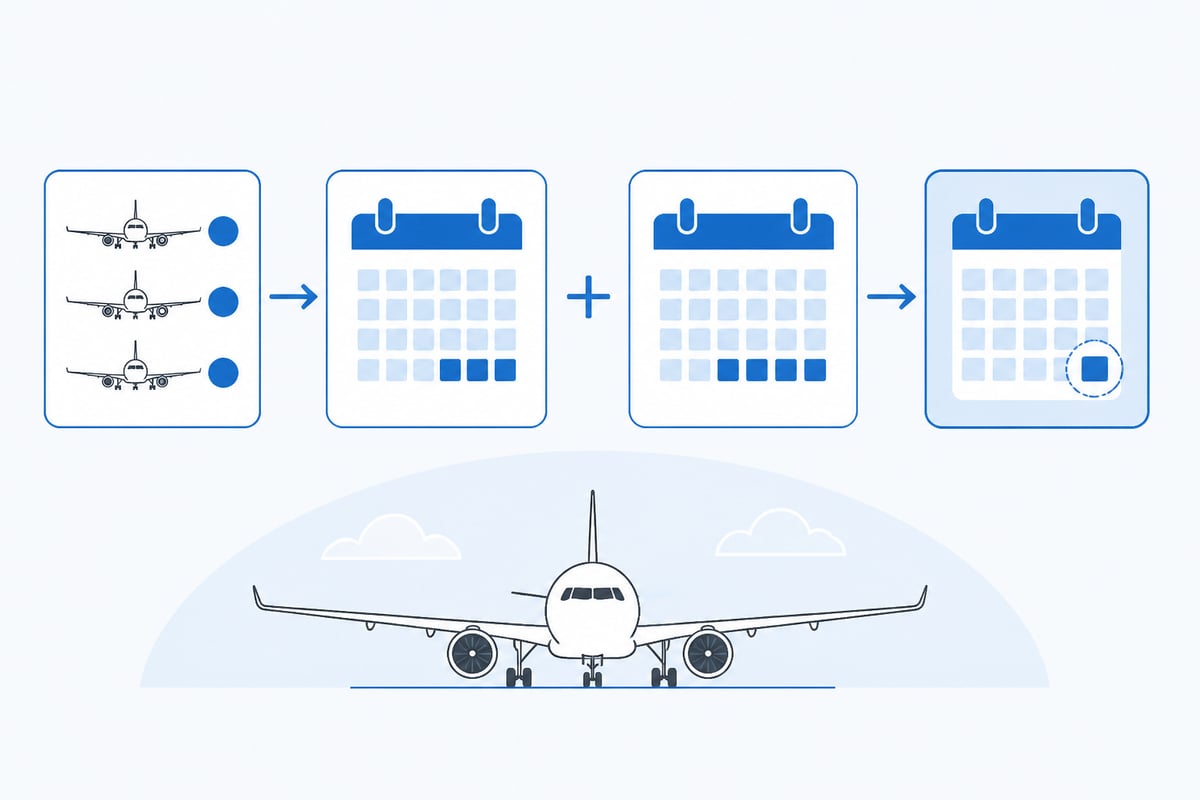
The rule is 3 take-offs and landings in the preceding 90 days as pilot flying on the same type or class (FCL.060(b)). Suppose the last three landings were on 12 August 2026.
- 12 August + 90 days: 19 days remain in August (31 - 12), 30 in September and 31 in October gives 80, plus 10 days into November.
- Passenger currency lapses on 10 November 2026.
- Today is 6 November 2026, so there are 4 days left.
Under UK CAA rules, check the UK Part-FCL text for your licence and class. FAA pilots work from 14 CFR 61.57(a). Never mix figures between authorities.
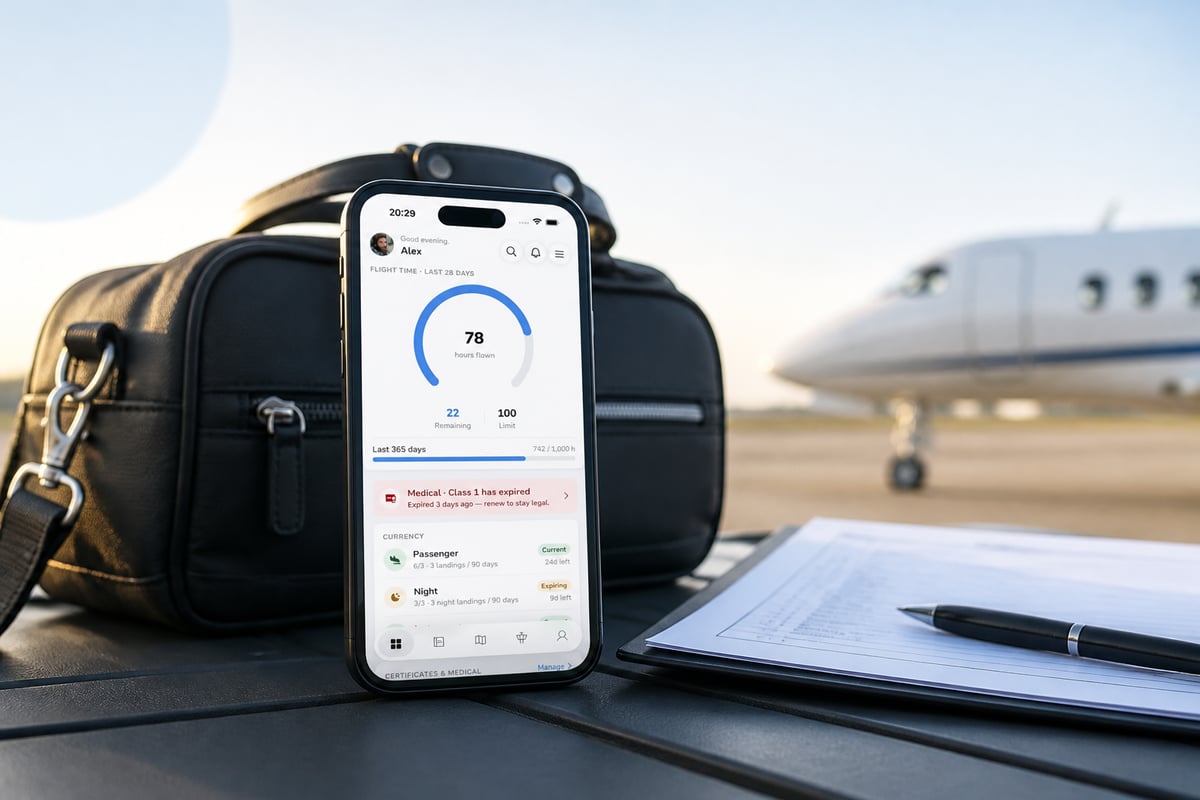
Pilotlog Pro tracks this automatically. Each logged flight updates recency with the lapse date, plus rolling flight-time totals and licence and medical expiries, so a lapse is flagged before it arrives.
Summary
- The "pilot flying handbook" means two FAA books: theory and technique.
- The regulations they reference are 14 CFR; EASA and UK CAA students take legal requirements from Part-FCL or the CAA.
- Study theory chapters alongside the matching flying chapters for the same lesson.
- Handbooks do not track currency. Count from your logbook dates.

Rules change, so check the current official sources: EASA, the UK CAA or the FAA for your licence.
FAQ
Is the Airplane Flying Handbook enough to pass my checkride or skills test?
No. It teaches technique, but your test standards, the aircraft flight manual and your instructor's briefings set what is examined. Pair it with the Pilot's Handbook of Aeronautical Knowledge for theory.
Can EASA or UK CAA students use these FAA handbooks?
Yes, for aerodynamics, weather, performance and handling, which are largely the same physics everywhere. For licensing, medicals and currency, use Part-FCL or the UK CAA rules, not 14 CFR.
Do I need to buy the handbooks?
No. The FAA publishes both as free downloads.
Start by listing your last three landings and counting 90 days forward to find your own passenger currency date. To have that date, your medical expiry and your licence validity tracked for you, log each flight in a few taps with Pilotlog Pro and join the waitlist at Pilotlog to be among the first on iOS and Android.
- faa handbooks
- airplane flying handbook
- ground school
- pilot training
A logbook that keeps itself.
Join the waitlist and be first in line when Pilotlog launches.
Free to join. We’ll email you about the launch and Pilotlog news. Unsubscribe any time. Privacy policy