Article
How to Pilot an Airplane: A Beginner's Guide
25 Nov 2026 · 6 min read
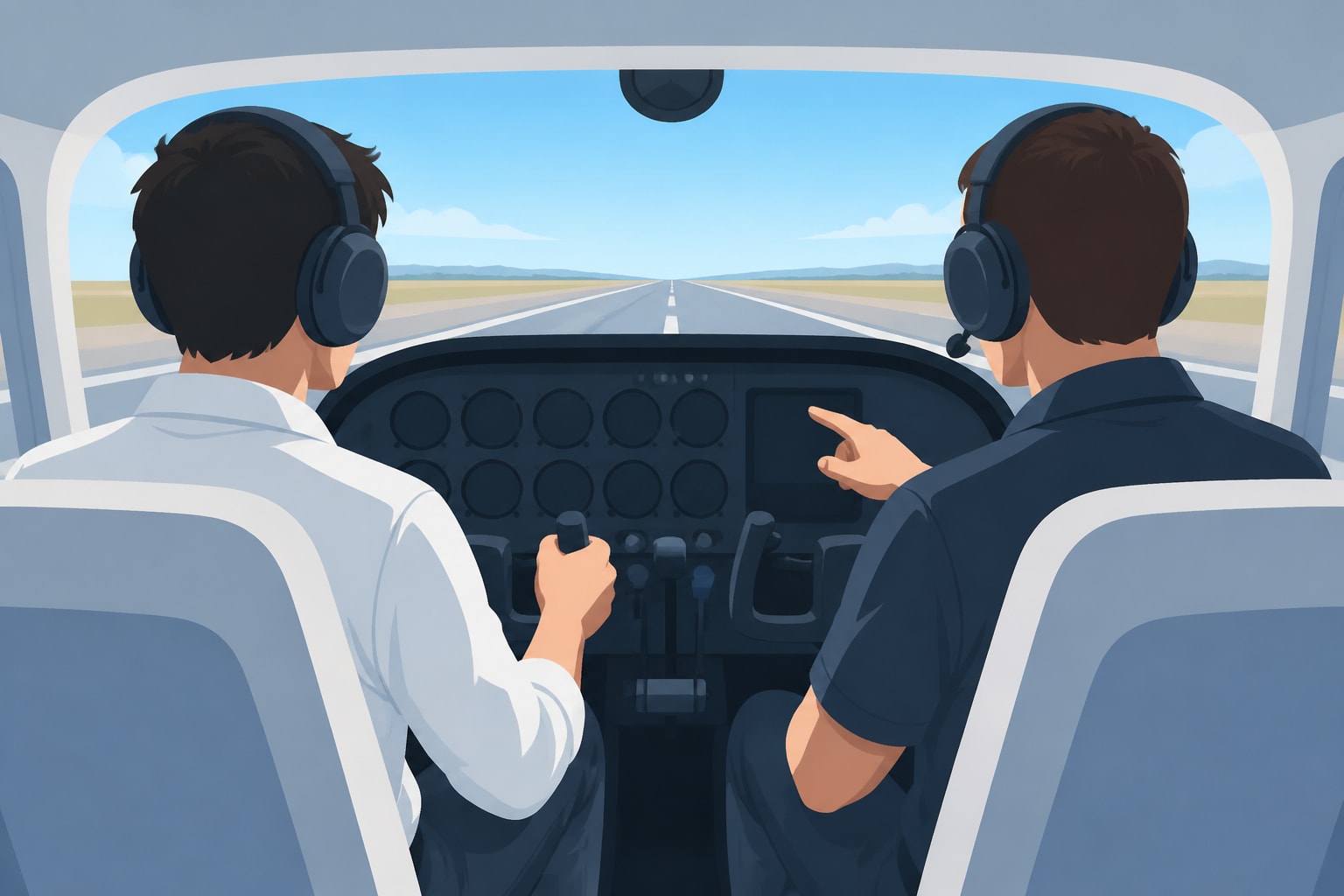
To pilot an airplane, you control pitch with the yoke, bank with the ailerons, and yaw with the rudder pedals, while managing power and watching your instruments. You learn this with an instructor, build hours toward a certificate, and log every flight as you go. This guide covers the controls, how a plane turns, the path to a private certificate under 14 CFR (the FAA rules), and how to keep your records straight.
What does the pilot in the plane actually do?
The pilot in command (PIC) is the person with final authority over the aircraft and responsibility for its safe operation. In a training aircraft that means you fly the plane, navigate, talk to air traffic control, and make the go or no-go decision before every flight.
Your core tasks fall into four groups:
- Aviate: control attitude, airspeed and altitude.
- Navigate: follow your route using charts, GPS and visual references.
- Communicate: talk to ATC and other traffic on the radio.
- Manage: monitor fuel, engine instruments and weather.
Aviate comes first. When workload climbs, fly the aircraft before anything else.
What are the main controls of an airplane?
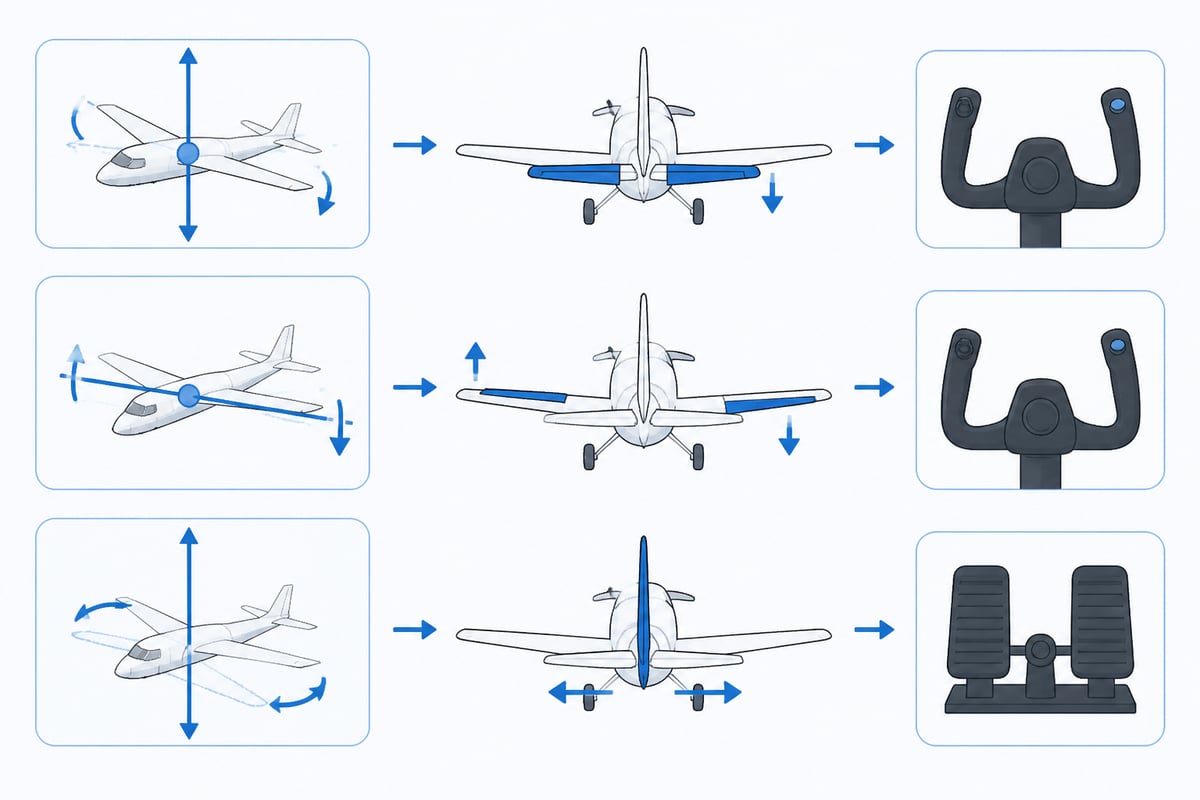
A light airplane has three primary flight controls plus a throttle, and each one moves the aircraft about a different axis.
| Control | You operate it with | Surface it moves | Effect |
|---|---|---|---|
| Elevator | Yoke forward or back | Horizontal tail | Pitch (nose up or down) |
| Ailerons | Yoke left or right | Trailing edge of wings | Roll (bank) |
| Rudder | Pedals | Vertical tail | Yaw (nose left or right) |
The throttle sets engine power. Trim removes control pressure so you are not holding the yoke constantly. Flaps change wing shape for slower, steeper approaches.
How does a plane change direction?
A plane changes direction by banking: you turn the yoke to roll the wings, and the tilted lift force pulls the aircraft around the turn. The rudder does not steer the plane like a car's wheel.
A coordinated turn works in four steps:
- Roll into the bank with the ailerons.
- Add rudder in the direction of the turn to keep the nose tracking smoothly.
- Add a little back pressure on the yoke, because lift is now partly used for turning and the nose tends to drop.
- Roll out with opposite aileron and release the back pressure.
Your instructor will drill this until it becomes habit. Keeping the ball centred in the turn coordinator tells you the turn is coordinated.
What do you need before you can fly as a student?
Under the FAA rules, a student pilot must be at least 16 years old to fly an airplane and must be able to read, speak, write and understand English. Before your first solo, you also need a student pilot certificate, which you apply for through IACRA or paper Form 8710-1.
You will generally need at least a third-class FAA medical certificate before your first solo flight. Book your medical early. A problem found at the examiner's office is far easier to deal with before you have paid for training hours.
This section follows the FAA (14 CFR). EASA Part-FCL and UK CAA requirements differ, so check your own authority if you train outside the United States.
How many hours does it take to earn a private certificate?
The FAA minimum for a private airplane single-engine certificate is 40 flight hours, including at least 20 hours of instructor training and 10 hours of solo flight. If you complete an approved course at a Part 142 training center, you may qualify with 35 hours, subject to the regulation's conditions. The full rule set sits in the private pilot requirements in Part 61, Subpart E.
Those are minimums. Many students need more time to reach test standard, so treat 40 as a floor and not a target.
What does the path to your first solo look like?
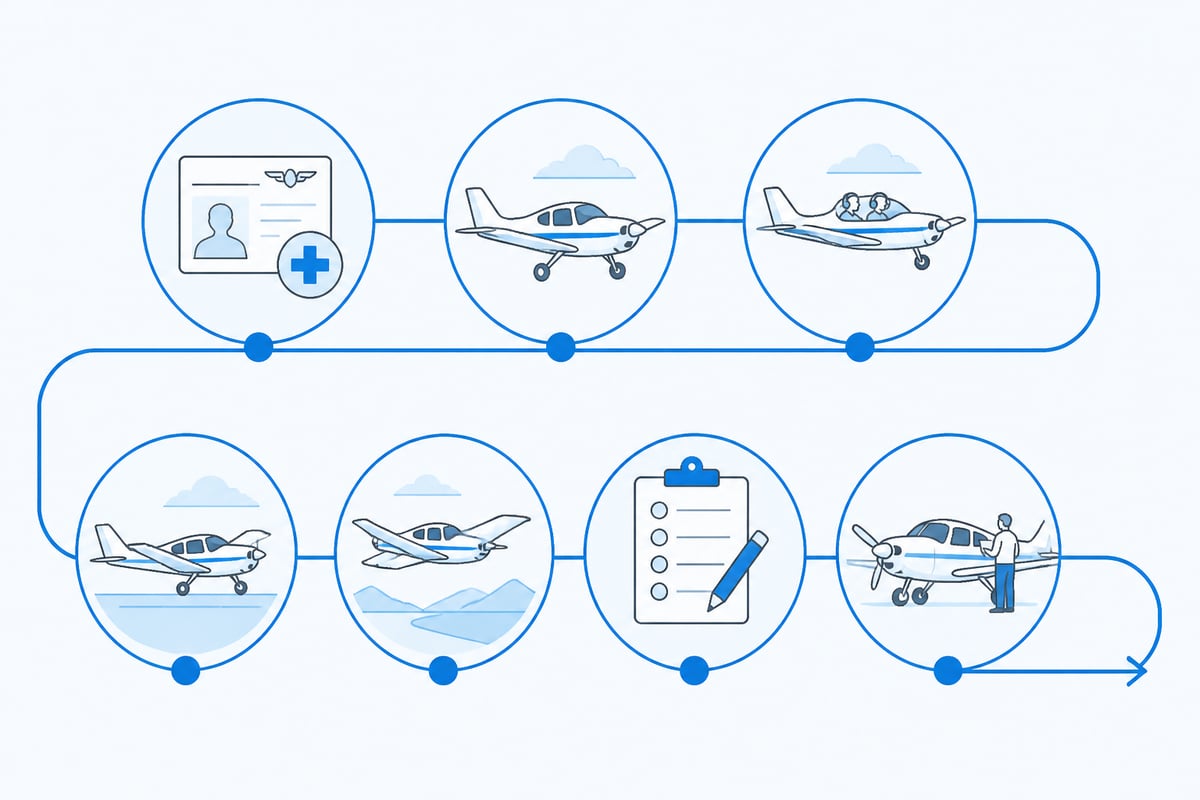
Training builds in a predictable order. You start with straight and level flight, climbs, descents and turns. Next come slow flight, stalls and traffic pattern work. Takeoffs and landings take the most time, and your instructor sends you solo once your landings are consistent and safe.
After first solo you add solo practice areas, then cross-country navigation, then night flying and instrument reference. Each stage ends with the next set of hours to log.
How do you log your training hours accurately?
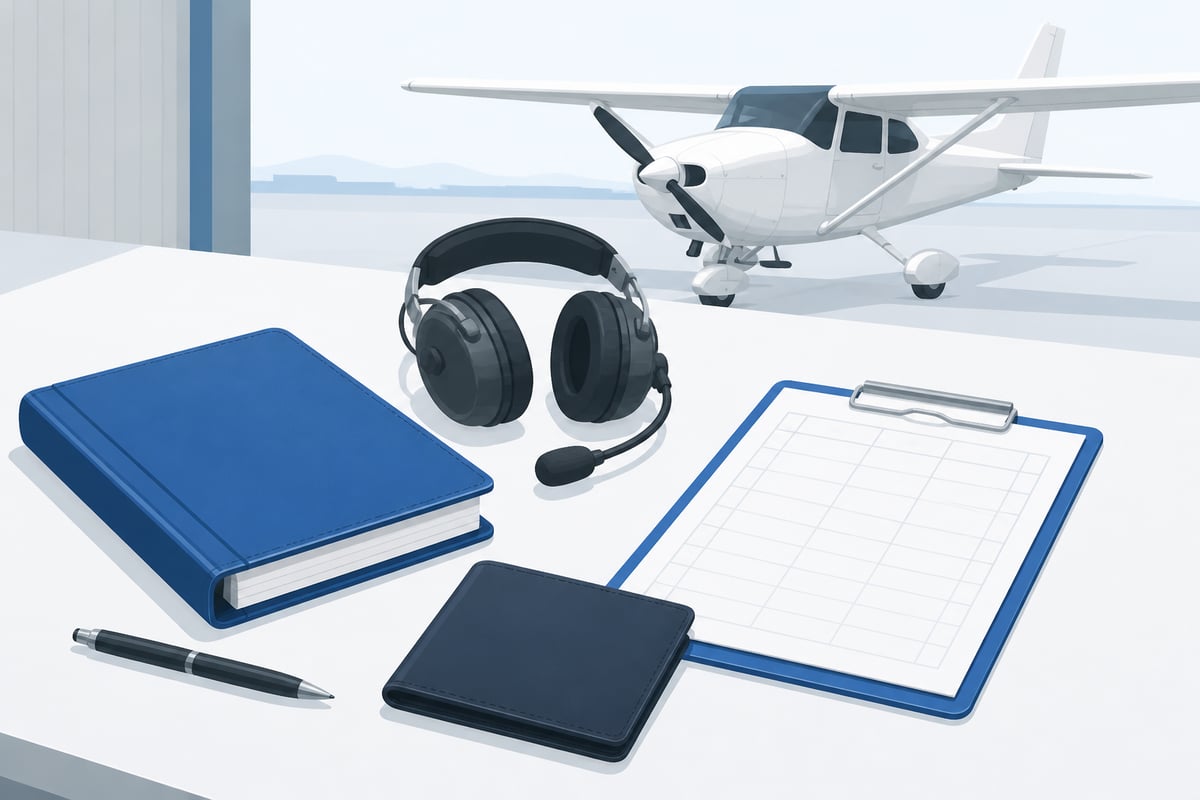
Log every flight the same day: date, aircraft, route, times, landings, and whether the time was dual, solo or PIC. Accurate records matter because your certificate eligibility rests on specific minimums, such as the 10 solo hours above.
Hypothetical example: a student checks progress toward the FAA minimums (14 CFR 61.109) using an imagined logbook showing 14.5 hours dual and 2.0 hours solo.
- Dual still needed: 20.0 − 14.5 = 5.5 hours
- Solo still needed: 10.0 − 2.0 = 8.0 hours
- Total so far: 14.5 + 2.0 = 16.5 hours, leaving 40 − 16.5 = 23.5 hours to the minimum total
A spreadsheet can do this arithmetic, but it will not warn you when something expires. Pro from Pilotlog totals your hours, shows passenger, night and IFR recency with the date each lapses, and warns about licence, medical and rating expiries before they catch you out.
Quick summary
- Pitch, roll and yaw come from the elevator, ailerons and rudder.
- You turn by banking, with rudder and back pressure to keep it coordinated.
- FAA solo needs a student certificate and, generally, a third-class medical.
- The FAA private minimum is 40 hours: 20 dual and 10 solo.
- Log every flight the day you fly it.
Rules change, so check current official sources such as the FAA and your national authority before you plan your training.
FAQ
What does the word "aviator" mean?
An aviator is a person who flies aircraft. The word is a traditional synonym for pilot and is often used for military or historic flying.
How many pilots are there in the world?
Counts differ by country and by certificate type, so check the aviation authority of the country you are interested in for current numbers.
Do I need an instructor to learn to fly?
Yes. You train with a certificated flight instructor, and the FAA minimum includes at least 20 hours of instructor training before you can qualify for a private certificate.
Your next step is to book a medical with an aviation medical examiner and request your first lesson, then start logging from flight one. Pilotlog keeps your hours, currency and expiries in one place on iOS and Android. If you want to see it for yourself, visit Pilotlog.
A logbook that keeps itself.
Join the waitlist and be first in line when Pilotlog launches.
Free to join. We’ll email you about the launch and Pilotlog news. Unsubscribe any time. Privacy policy