helicopter training
Learn to Fly a Helicopter: Training, Costs & Licences
23 Aug 2026 · 10 min read
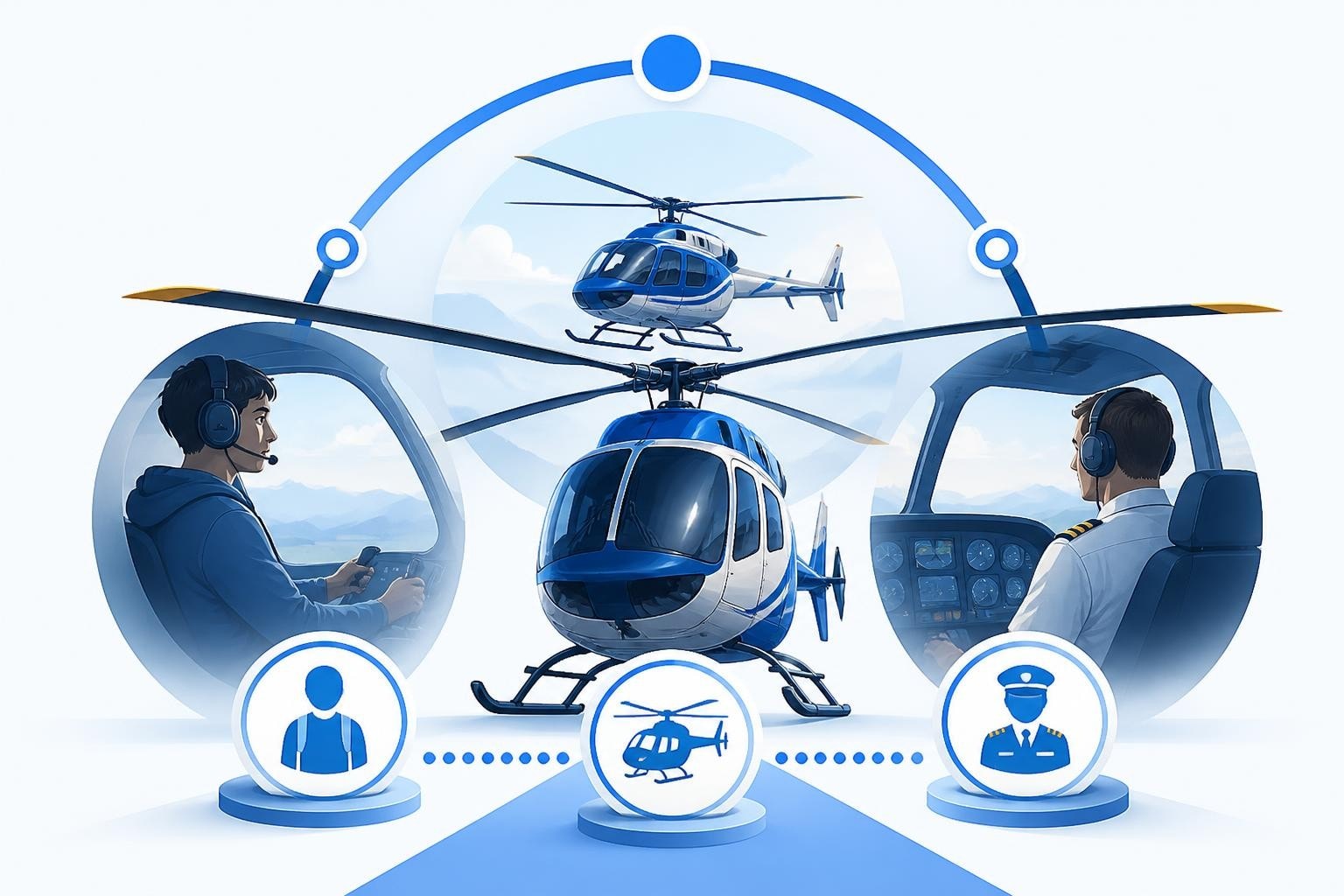
Helicopter pilots earn their wings through a structured progression of ground study, dual instruction, solo flight, and rigorous testing. The path from first lesson to private or commercial helicopter licence demands 40 to 150 flight hours depending on the certificate, plus mastery of hovering, autorotations, cross-country navigation, and emergency procedures. Costs range from £10,000 to £45,000, and you will need medical certification, examiner sign-off, and proof of aeronautical knowledge before the flight test.
Eligibility and medical requirements
Before you book a lesson, check you meet the basic criteria. Student pilot eligibility in the United States requires you to be 16 years old (14 for gliders and balloons), able to read, speak, write, and understand English, and hold at least a third-class medical certificate. European regulations mirror these minimums under Part-MED and Part-FCL. A Class 2 medical allows private pilot privileges; a Class 1 is required for commercial operations.
Medical certification steps:
- Book an appointment with an Aviation Medical Examiner (AME)
- Bring photo ID, glasses or contact lenses if you wear them, and any prescription medication details
- Expect vision, hearing, cardiovascular, and neurological checks
- AME enters findings into MedXPress; FAA or CAA issues certificate if you meet standards
Medical certificates expire every 12 to 60 months depending on age and class, so plan renewals early to avoid currency gaps.
Choosing a flight school and instructor
Helicopter training runs at specialist schools, many co-located with fixed-wing operations. Look for Part 141 approval (structured syllabus, higher standards) or reputable Part 61 schools with experienced rotorcraft instructors. Check the school's aircraft fleet; Robinson R22 and R44 are common trainers, though some schools operate Schweizer 300s or Bell models.
Visit at least two schools and ask:
- Average time-to-licence for recent students
- Instructor qualifications (CFI-H minimum experience)
- Maintenance standards and aircraft availability
- Ground-school format (in-person, online, or self-study)
- Stage-check and progress-test frequency
Instructor personality matters as much as credentials. You will spend 40 to 100 hours in a confined cockpit; clear communication and patience are essential during the steep learning curve of hovering and autorotations.
Ground school and knowledge test
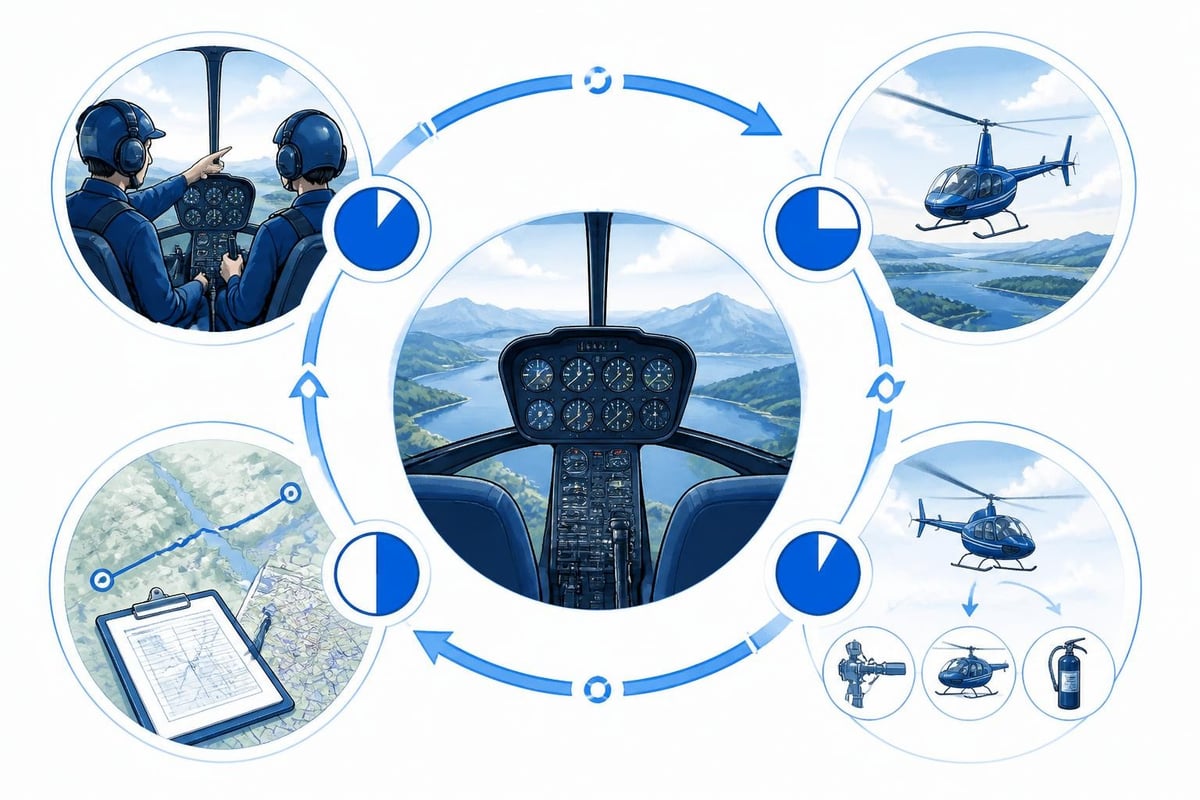
Rotorcraft aerodynamics differ fundamentally from fixed-wing flight. The Helicopter Flying Handbook covers dissymmetry of lift, translating tendency, ground effect, and height-velocity diagrams you must understand before solo. Ground school spans 30 to 60 hours and parallels flight lessons; most students alternate classroom days with flying days to reinforce concepts.
| Topic area | Key elements | Study hours |
|---|---|---|
| Aerodynamics | Rotor system, induced flow, retreating-blade stall | 8–10 |
| Flight controls | Cyclic, collective, anti-torque pedals, throttle correlation | 6–8 |
| Performance | Density altitude, weight-and-balance, height-velocity curve | 6–8 |
| Weather | METAR, TAF, wind shear, density altitude effects | 8–10 |
| Navigation | VOR, GPS, pilotage, dead reckoning, airspace classification | 6–8 |
| Regulations | 14 CFR Part 61, 91; medical, currency, privileges and limitations | 6–8 |
After ground school you sit the FAA knowledge test (60 questions, 70 per cent pass mark) or EASA theoretical exams (nine subjects). Results are valid for 24 months, giving you time to complete flight training without re-sitting.
Flight training phases
When you learn to fly a helicopter, expect three distinct phases: basic manoeuvres and hovering, advanced flight and solo, then cross-country and test prep. Hour allocations vary by student aptitude and weather, but the structure remains consistent.
Phase one: dual instruction and hovering (hours 1–20)
Your first lesson introduces the controls and demonstrates a circuit. The instructor will handle most inputs while you follow on the controls to build muscle memory. Within two or three flights you attempt hover taxi; by hour five you may hold a stable hover for 30 seconds. Hovering demands coordination of all four controls simultaneously, a skill that takes 10 to 15 hours to master for most students.
- Straight-and-level flight
- Climbs, descents, and turns
- Hover taxi, spot turns, and hovering patterns
- Autorotations (engine-off descents)
- Takeoffs and landings (normal, slope, confined area)
Phase two: solo and skill refinement (hours 21–50)
Once your instructor endorses your logbook for solo, you fly pattern work alone to build confidence. Solo requirements vary: FAA demands at least three hours including one cross-country flight of 50 nautical miles with three landings; EASA Part-FCL requires a minimum of 10 hours solo for the PPL(H).
During this phase you also learn:
- Emergency procedures: engine failure, tail-rotor failure, low-rotor RPM recovery
- Navigation: pilotage, dead reckoning, radio navigation using VOR or GPS
- Advanced autorotations to full touchdown
- Confined-area operations and pinnacle/platform landings
Phase three: cross-country and test preparation (hours 51–licence)
Final training polishes weak areas and adds the long cross-country requirement. For a private helicopter licence, you need one solo cross-country of at least 75 nautical miles with landings at two other airports. Commercial students complete longer trips (totalling 35 hours cross-country for FAA commercial) and practice advanced manoeuvres like steep approaches and maximum-performance takeoffs.
Hour requirements by certificate
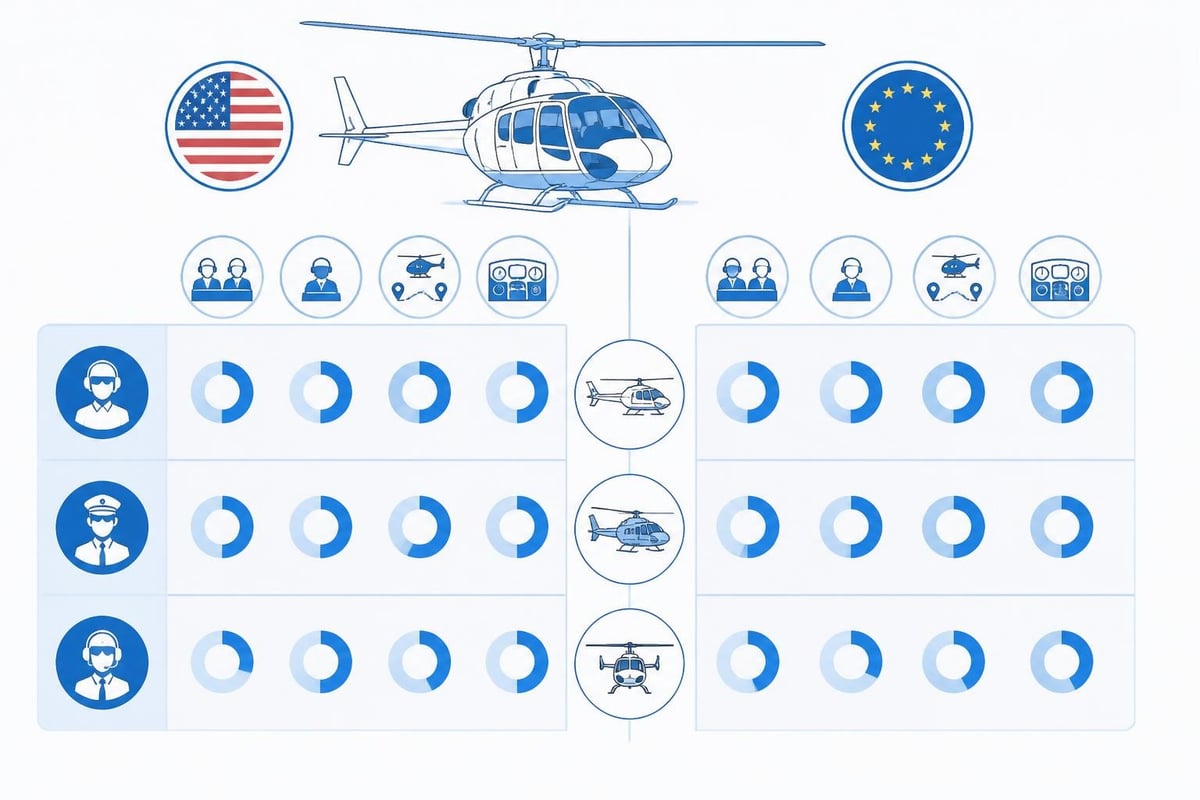
Different licences unlock different privileges. The table below shows minimum hours under 14 CFR Part 61 and EASA Part-FCL. Most students exceed minimums by 5 to 20 hours due to weather, scheduling, and individual progress.
| Licence type | Minimum total | Dual instruction | Solo | Cross-country | Instrument |
|---|---|---|---|---|---|
| FAA Private (PPL) | 40 hours | 20 hours (min) | 10 hours | 3 hours (dual), 3 hours (solo) | 3 hours |
| EASA PPL(H) | 45 hours | 25 hours | 10 hours | 10 hours | - |
| FAA Commercial (CPL) | 150 hours | 50 hours (includes 10 instrument) | - | 35 hours PIC | 10 hours |
| EASA CPL(H) | 135 hours | 85 hours (includes 30 instrument) | 35 hours PIC | 50 hours XC | 30 hours |
PIC means pilot-in-command time, which includes solo and certain supervised flights. EASA totals assume integrated training; modular routes may require additional hours.
Costs and budgeting
Flight training invoices by the hour: aircraft rental, instructor fee, fuel surcharges, and landing fees if you use towered airports. Average rates in 2026:
- R22 rental: £180–£250 per hour
- R44 rental: £300–£450 per hour
- Instructor fee: £40–£70 per hour (sometimes included in aircraft rate)
- Ground school: £500–£1,500 (classroom or online package)
- Knowledge test: £120–£180
- Checkride (practical test): £450–£750 (examiner fee)
A realistic budget for a private helicopter licence is £12,000 to £18,000 if you train in an R22 and finish near minimums. Commercial training in an R44 often runs £35,000 to £50,000, especially if you build hours from zero. Cost guides suggest setting aside 10 per cent contingency for weather delays, repeated stage checks, or extra dual before solo.
Ways to reduce costs:
- Fly frequently (two to three times per week) to avoid relearning between lessons
- Study thoroughly before each flight; brief and debrief with your instructor on the ground, not at flight rates
- Join a club or group-buy scheme if one operates locally
- Consider an accelerated course where you train full-time for six to eight weeks
Logging hours and tracking currency
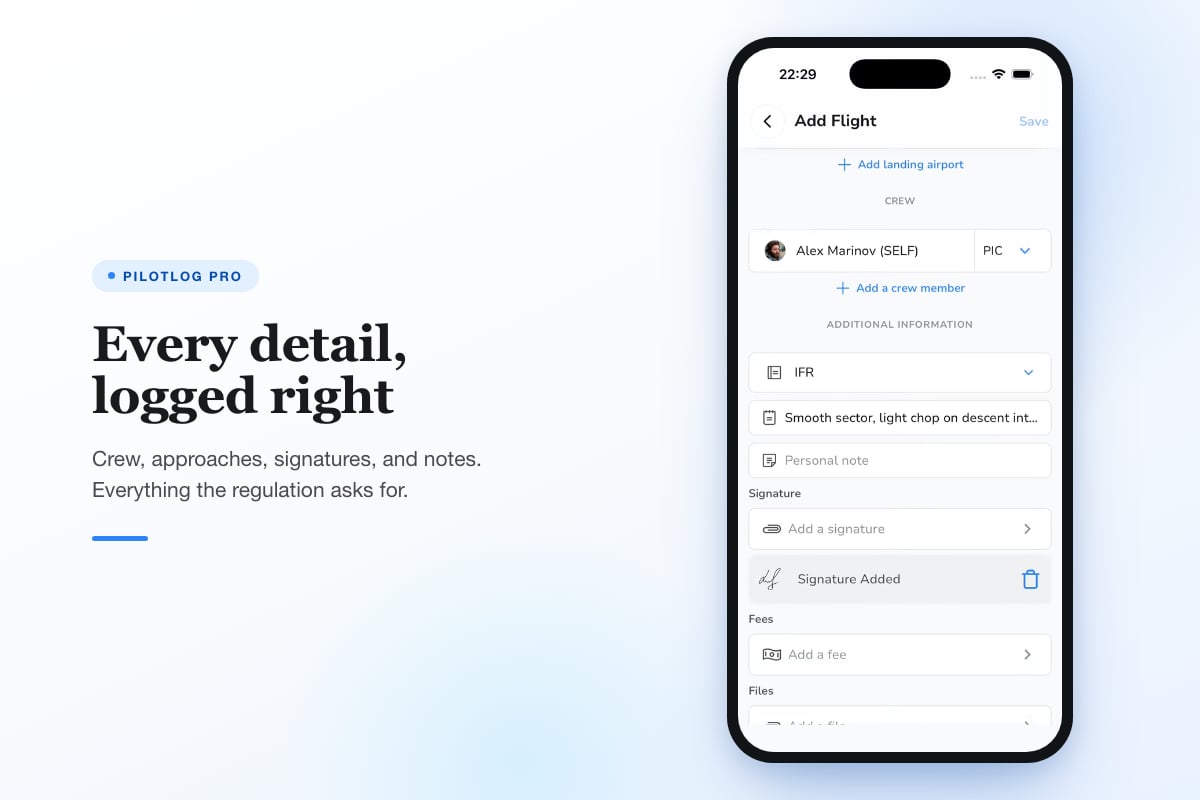
From your first lesson, every flight goes into your logbook. You record date, aircraft type and registration, departure and arrival points, flight time (dual, solo, PIC), and manoeuvres practised. Accurate logs prove eligibility for checkrides and later job applications. Many pilots now keep digital logbooks alongside paper to simplify hour summaries and currency tracking.
Helicopter currency under FAA rules requires three takeoffs and landings in the preceding 90 days to carry passengers. Night currency demands three takeoffs and landings to a full stop between one hour after sunset and one hour before sunrise. EASA Part-FCL mandates similar recency: three takeoffs, approaches, and landings in 90 days, or a proficiency check with an examiner.
If you plan a professional career, Pilotlog Pro tracks rolling 28-day and 365-day flight-time limits, passenger and night currency with lapse dates, and licence or medical expiry alerts flagged early. You log each flight in seconds, and the app calculates which currency windows are current and which need attention. For helicopter pilots juggling private and commercial operations, this automation means you never miss a deadline.
The checkride and beyond
When your instructor believes you meet all requirements, they endorse your logbook for the practical test. You schedule with a Designated Pilot Examiner (DPE) or CAA examiner, who conducts an oral exam (one to two hours) followed by a flight test (one to two hours). Expect questions on weather minimums, airworthiness, performance calculations, and emergency procedures, then a flight profile covering all private-pilot manoeuvres plus an emergency scenario such as simulated engine failure.
Pass rates vary, but thorough preparation and a mature attitude toward risk management improve your odds. If you fail a task, the examiner issues a notice of disapproval and you retrain the weak area before a retest. Once you pass, the examiner issues a temporary certificate; your plastic licence arrives by post within weeks.
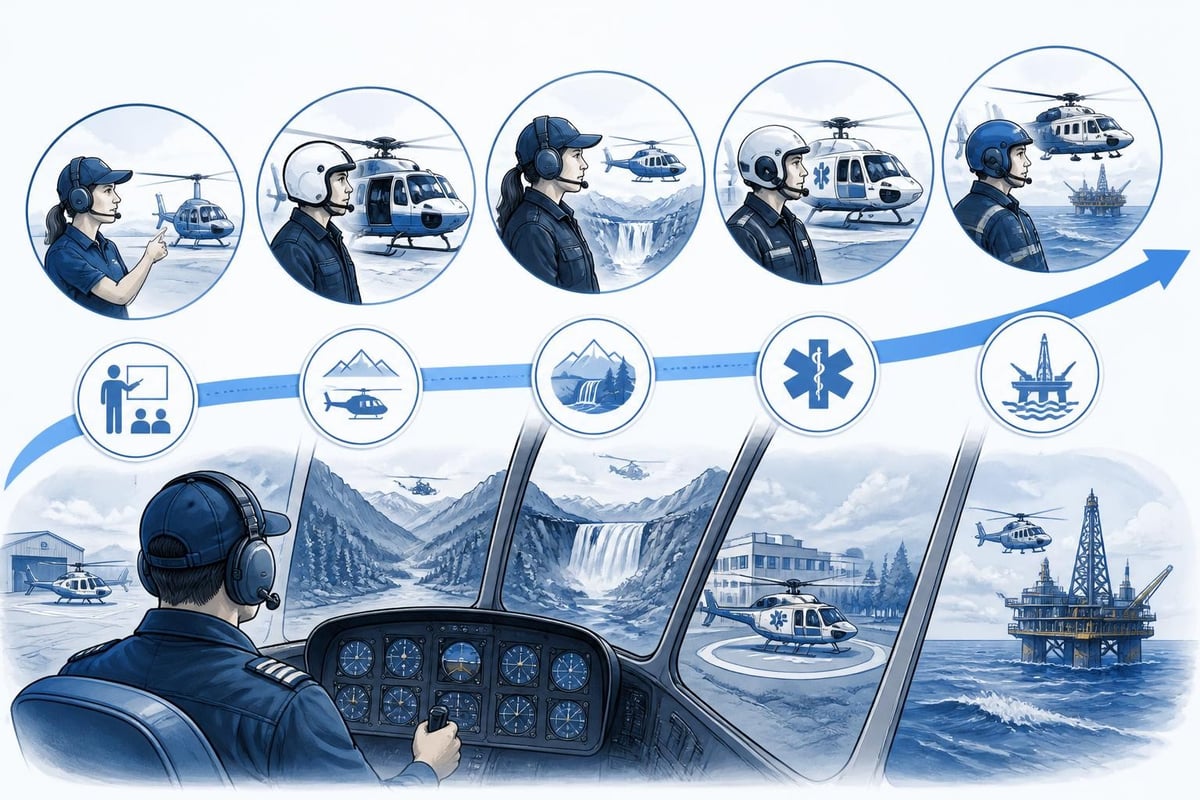
After earning a private helicopter licence, you can fly for personal or business travel but not for hire. To fly commercially, you need a commercial pilot licence (CPL) plus additional ratings (instrument, night, or type ratings for turbine helicopters). Many pilots build hours as instructors (requiring a CFI-H rating), tour operators, or utility pilots before moving into emergency medical services, offshore oil support, or corporate transport.
Regulations and staying current
Aviation rules evolve, so verify current minimums before you start training. The Pilot's Handbook of Aeronautical Knowledge and the Aeronautical Information Manual provide official guidance, but consult your national authority (FAA, EASA, UK CAA) for the latest amendments. Medical standards, currency windows, and proficiency-check intervals change through rulemaking; a currency cheat sheet helps you remember the key figures, but always cross-check against source documents.
Common challenges and how to overcome them
Every student faces hurdles. Hovering feels impossible for the first 10 hours; autorotations trigger anxiety; cross-country navigation in poor visibility tests decision-making. Recognise these as normal milestones, not personal failings.
Tips for success:
- Chair-fly at home: rehearse control inputs for each manoeuvre while seated, verbalising the sequence
- Watch your instructor closely: note how they adjust cyclic and collective during transitions
- Record your lessons: many schools allow audio recording of radio calls and instructor feedback
- Debrief immediately: write down what went well and what needs work before you leave the school
- Manage fatigue: two-hour flights in a noisy, vibrating cockpit drain energy; schedule rest days
If progress stalls, consider a stage check with a different instructor. Fresh eyes often pinpoint habits that your regular instructor has stopped noticing.
Next steps after your licence
Once you learn to fly a helicopter and hold a private or commercial licence, the sky opens. Add an instrument rating to fly in cloud and low visibility; this requires 40 hours of instrument time (actual or simulated) and an instrument checkride. Night ratings extend your operating window, though helicopters face greater limitations than fixed-wing due to lack of visual references.
Type ratings become necessary when you transition to turbine helicopters or specific models above a certain weight. Each new aircraft demands ground school, simulator time (if available), and flight training with a type-rated instructor. Keep logging every hour, every approach, every landing in a reliable logbook system so you can prove aeronautical experience for future ratings or job applications.
Helicopter flying rewards precision, discipline, and situational awareness. The training is demanding and costly, but the privileges are unmatched: vertical takeoff, confined-area access, and the ability to hold position above a point that no aeroplane can reach. Whether you fly for pleasure, business, or a full-time career, the skills you build from day one will serve you every flight.
Learning to fly a helicopter demands time, money, and dedication, but the structured pathway from student to licensed pilot is clear. Track every flight, monitor your currency windows, and stay ahead of medical and licence renewals so nothing catches you by surprise. Pilotlog keeps your hours, currency, and expiries in one place, alerting you early when deadlines approach and letting you focus on flying rather than spreadsheets. Log a flight in seconds on iOS or Android, and let the app handle the rest.
- helicopter training
- helicopter licence
- learn to fly helicopter
- ppl(h) requirements
- flight training costs
A logbook that keeps itself.
Join the waitlist and be first in line when Pilotlog launches.
Free to join, no spam. Unsubscribe any time.