jeppesen pilot logbook
Jeppesen Pilot Logbook: Paper vs Digital in 2026
6 Sep 2026 · 11 min read

The Jeppesen pilot logbook has served as the gold standard for paper flight records since commercial aviation took off. For decades, pilots have reached for the familiar blue or black cover to record their hours, endorsements, and currency. In 2026, though, the question is no longer just which edition to buy, but whether paper still makes sense when digital logbooks track currency, expiries, and rolling limits automatically.
What is a Jeppesen Pilot Logbook
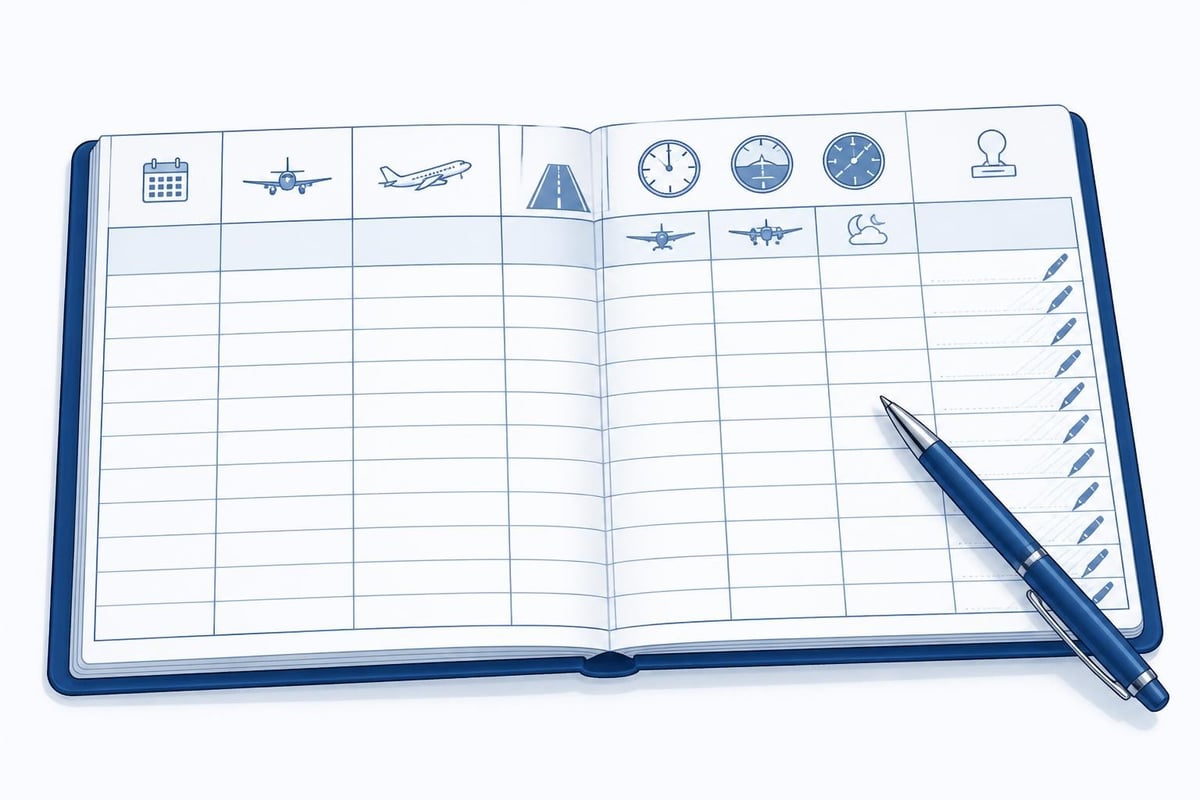
A Jeppesen pilot logbook is a printed, bound logbook published by Jeppesen (a Boeing subsidiary) for recording flight time, aircraft types, approaches, landings, and endorsements. The company offers two main formats: the Professional Pilot Logbook (designed for commercial and airline pilots with columns for multi-crew, type ratings, and instrument approaches) and the Private Pilot Logbook (simplified layout for student and recreational pilots). Each logbook contains pre-printed columns aligned with FAA and international regulatory requirements, space for instructor signatures, and guidance on totalling hours.
Jeppesen logbooks are sold through Jeppesen's official pilot supplies storefront and aviation retailers worldwide. The Professional edition typically contains 280 pages and costs around $30-$40, while the Private edition has fewer pages and sells for $15-$25.
Why Pilots Chose Jeppesen
Jeppesen built its reputation on three pillars:
- Regulatory compliance: columns and headings match FAA and ICAO standards, accepted by examiners and licensing authorities globally
- Durability: hardback cover, quality paper stock, and binding that survives years of cockpit use
- Consistency: generations of pilots learned on the same format, making it familiar to instructors, examiners, and airline hiring teams
For pilots who trained in the 1980s or 1990s, a Jeppesen pilot logbook was often handed out on day one of flight school alongside a navigation plotter and flight computer.
Paper Logbook Limitations in 2026
Paper served well when flights were few and currency rules were simple. Today's regulatory environment demands real-time awareness of rolling limits, recency windows, and stacked expiry dates. A Jeppesen pilot logbook records history, but it cannot calculate forward.
Manual Calculation Risk
Every time you open your paper logbook, you must add, subtract, and count:
- Total hours in each aircraft category (single-engine, multi-engine, helicopter)
- Instrument currency: six approaches and holding in the last six calendar months (FAA 61.57(c))
- Night currency: three takeoffs and landings to a full stop in the last 90 days (FAA 61.57(b))
- Passenger currency: three takeoffs and landings in category/class in the last 90 days
- Rolling 28-day and 365-day flight-time limits if you fly commercially
One missed row or transposed number means you think you're current when you're not. The FAA does not accept "I miscounted" as a defence when enforcement begins.
No Alerts or Warnings
Your Class 1 medical expires in 14 days. Your instrument rating lapses in three weeks. Your CFI certificate renews next month. A paper logbook sits silent. You only notice when you flip to the endorsement page and realise the date has passed. By then, you're grounded until you complete a proficiency check or renewal.
Backup and Loss
A single house fire, flood, or stolen flight bag destroys decades of records. The FAA provides guidance on reconstructing lost logbooks, but the process is slow, frustrating, and incomplete. You'll need old receipts, insurance records, employer letters, and instructor statements to rebuild even a partial record. AOPA's feature on lost logbooks walks through the reconstruction nightmare and emphasises the critical need for backups.
| Challenge | Paper Jeppesen | Digital Logbook |
|---|---|---|
| Calculate 28-day totals | Manual addition across multiple pages | Automatic, real-time |
| Track currency lapse dates | Count backwards, write reminder | Alert 30 days ahead |
| Back up records | Photocopy or scan manually | Cloud sync, automatic |
| Submit for licence application | Print, sign, post original or certified copy | Export PDF, email or upload |
Digital Alternatives to the Jeppesen Pilot Logbook
Digital logbooks have matured from basic spreadsheets to purpose-built apps that handle regulatory complexity, automate currency tracking, and integrate with operator scheduling systems. In 2026, electronic records are accepted by the FAA (under AC 120-78B guidance), EASA, the UK CAA, and most national authorities, provided the software meets auditability and tamper-resistance standards.
What Digital Logbooks Track Automatically
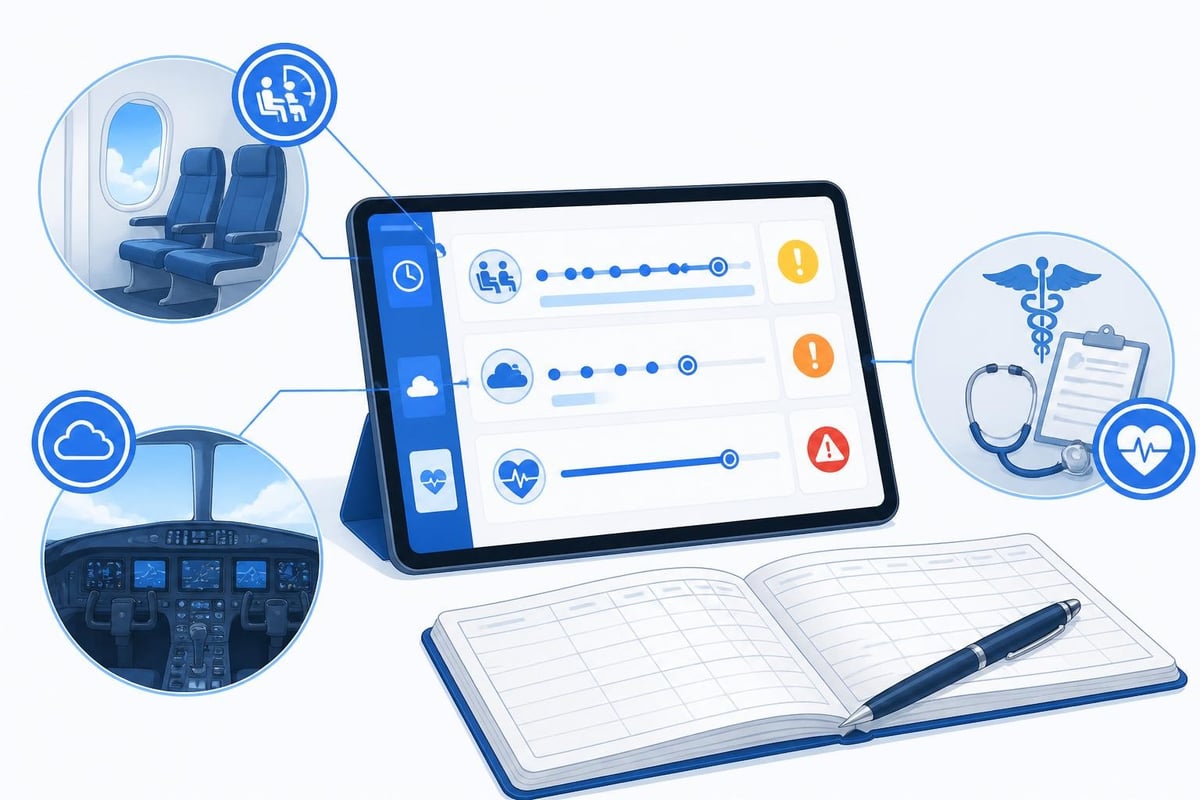
Modern digital logbooks calculate in the background while you focus on flying. Key features include:
- Rolling limits: 28-day and 365-day totals for commercial pilots, updated after every entry
- Currency windows: passenger, night, IFR recency with exact lapse dates
- Expiry alerts: licence renewals, medical certificates, ratings, and endorsements flagged 30, 60, or 90 days ahead
- Aircraft type totals: hours on type, PIC time, and recency for each aircraft in your logbook
- Career stats: total hours, breakdowns by day/night/IFR/VFR, trends, and milestones
A digital logbook removes the arithmetic and gives you clarity. You know where you stand the moment you open the app.
Regulatory Acceptance
Regulators care about three things: accuracy, auditability, and tamper resistance. The FAA's AC 120-78B sets standards for electronic signatures and records. EASA's Easy Access Rules for Aircrew describe acceptable electronic logbook content and retention. The UK CAA's guidance on submitting logbooks confirms that printed and signed exports from approved electronic logbooks are acceptable for licence applications.
For airline and Part 135 operators, the path is more formal. The NBAA has documented the FAA electronic recordkeeping approval process, which typically involves an OpSpec amendment. The IATA's Electronic Logbook Implementation Roadmap from May 2024 outlines the industry's move toward standardised e-logbooks and the technical, regulatory, and operational hurdles being addressed.
Transitioning from Paper
You don't abandon your Jeppesen pilot logbook overnight. Most pilots keep their paper logs as the legal record and start fresh with a digital app, entering new flights digitally while the paper book stays sealed in a drawer. Over time, some transcribe their full history into the digital system for completeness. Others simply start digital from a known total (for example, "1,247 hours at 1 January 2026") and build forward.
When transitioning, verify your totals carefully:
- Add up category, class, and condition totals from your paper logbook
- Cross-check against employer records, insurance renewals, or previous licence applications
- Enter the verified totals as your starting point in the digital logbook
- Log all new flights digitally
- Keep paper logbooks stored securely as your archive
Jeppesen's Digital Tools
Jeppesen itself has moved into digital territory with products like Jeppesen Aviator, which includes modules for electronic documents, weight and balance, and navigation logs. Aviator is designed for Part 91 and 135 operators and integrates with Jeppesen's charting and weather products. However, Aviator is not primarily a pilot logbook in the same sense as the traditional paper product. It's an operational suite for flight planning and documentation, not a personal flight-time tracker with currency alerts.
Pilots looking for a true replacement for the Jeppesen pilot logbook typically turn to dedicated logbook apps rather than Jeppesen's own digital ecosystem.
What Pilots Need from a Logbook in 2026
Your logbook is more than a list of flights. It's your regulatory safety net, your career proof, and your personal flight history. In 2026, a logbook should:
- Log flights in seconds: quick entry on mobile, with autofill for common routes and aircraft
- Track currency automatically: calculate rolling windows, flag lapse dates, and alert you ahead of time
- Monitor expiries: licence renewals, medicals, ratings, instructor certificates
- Export for applications: generate PDF or printed logs that meet regulator requirements
- Back up reliably: cloud sync so your records survive device loss or failure
If you're still using a paper Jeppesen pilot logbook, ask yourself: when did you last manually check your IFR currency? How confident are you that your 28-day totals are correct? Do you have a backup if your logbook is lost?
A Worked Example
You fly 78 of 100 hours in a rolling 28-day period as a Part 135 first officer. Your paper logbook shows entries, but you must add each flight, filter by crew position, and exclude ground training. You spend 20 minutes with a calculator and arrive at 78.2 hours. A digital logbook displays "78.2 of 100 hours (28 days)" the moment you save your last flight. No maths. No missed entries. No risk of exceeding limits because you miscounted.
Your Class 1 medical expires in 14 days. A paper logbook cannot remind you. A digital logbook sends an alert 30 days out, again at 14 days, and a final warning at seven days. You book your medical, stay legal, and avoid grounding.

Choosing Between Paper and Digital
Some pilots prefer the ritual of writing in a logbook. The physical act of recording a flight, totalling hours, and flipping through pages connects them to their training and history. There's nothing wrong with that, provided you also maintain a digital backup and verify your currency regularly.
Most pilots, though, value time and accuracy over nostalgia. Logging a flight on your phone while walking to the car takes 15 seconds. Checking your currency takes one tap. Exporting your logbook for a job application or licence renewal takes two taps. The Jeppesen pilot logbook was the right tool for its era. Digital is the right tool for 2026.
For pilots who fly regularly and need to track complex currency and limits, Pilotlog Pro offers rolling 28-day and 365-day flight-time and duty limits, passenger and IFR currency with lapse dates, licence and medical expiry alerts flagged early, plus career stats, trends, and full logbook export. It's built for pilots across the whole career, from students to airline crew.
Practical Tips for Digital Logbook Users
If you're moving to digital, set yourself up for success:
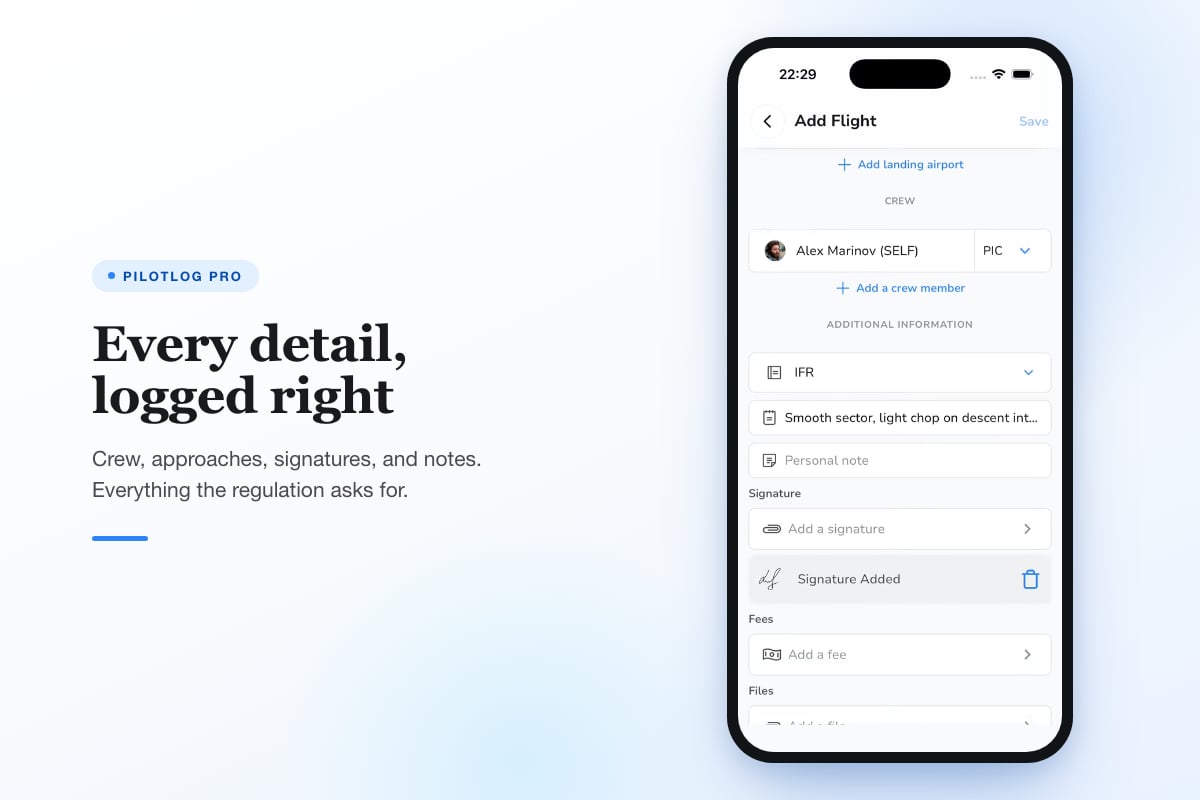
- Enter flights immediately: log while memory is fresh, ideally before you leave the airport
- Enable alerts: configure licence, medical, and currency notifications at intervals that give you time to act
- Verify totals monthly: cross-check digital totals against your last paper total or employer records
- Export regularly: save a PDF backup every quarter and store it outside your primary device
- Review currency weekly: make it a Sunday habit to glance at your currency dashboard and plan upcoming flights to stay current
Understanding IFR currency rules and tracking them digitally prevents the common mistake of assuming you're current when you're one approach short.
Why Rules Change and You Must Confirm
Regulatory requirements evolve. The FAA publishes rule changes in the Federal Register, EASA updates Part-FCL, and national authorities issue amendments. A blog article written in September 2026 reflects today's rules, but you must verify against current official sources before making compliance decisions. Check the current edition of FAA Part 61, EASA Part-FCL, or your national regulations before relying on any currency or hour requirement.
| Feature | Jeppesen Paper Logbook | Digital Logbook (e.g. Pilotlog) |
|---|---|---|
| Initial cost | $30-$40 | Free tier or $50-$100/year Pro |
| Currency calculation | Manual | Automatic |
| Expiry alerts | None | 30, 60, 90-day alerts |
| Backup | Manual scan/photocopy | Automatic cloud sync |
| Regulatory acceptance | Universal | FAA, EASA, CAA accepted |
| Time to log flight | 2-3 minutes | 15 seconds |
| Export for applications | Photocopy or certified copy | PDF, instant |
The Future of Pilot Logbooks
Airlines and commercial operators are moving to integrated crew management systems that populate logbooks automatically from flight operations data. GA and private pilots are adopting apps that sync across devices and integrate with scheduling, weather, and flight planning tools. The Jeppesen pilot logbook will remain available, just as paper charts still exist, but its role is shifting from primary record to nostalgic backup.
In ten years, a newly licensed pilot may never own a paper logbook. They'll log their first solo on a phone, track their hours toward the CPL digitally, and export a PDF for their first airline application. The skills that matter, decision-making, airmanship, and situational awareness, remain timeless. The tools for tracking your progress should keep pace with technology.
The Jeppesen pilot logbook set the standard for generations, but paper cannot compete with automatic currency tracking, expiry alerts, and instant backups in 2026. Whether you're a student building toward your first licence or an airline captain managing complex limits, digital logbooks save time and reduce compliance risk. Pilotlog keeps you current, legal, and ready by logging flights in seconds, tracking rolling limits and currency windows, and alerting you before licences and medicals expire, so nothing catches you by surprise.
- jeppesen pilot logbook
- digital logbook
- paper vs digital
- pilot currency tracking
- flight logbook app
A logbook that keeps itself.
Join the waitlist and be first in line when Pilotlog launches.
Free to join, no spam. Unsubscribe any time.