gleim pilot logbook
Gleim Pilot Logbook: What It Is and What to Know in 2026
29 Oct 2026 · 14 min read
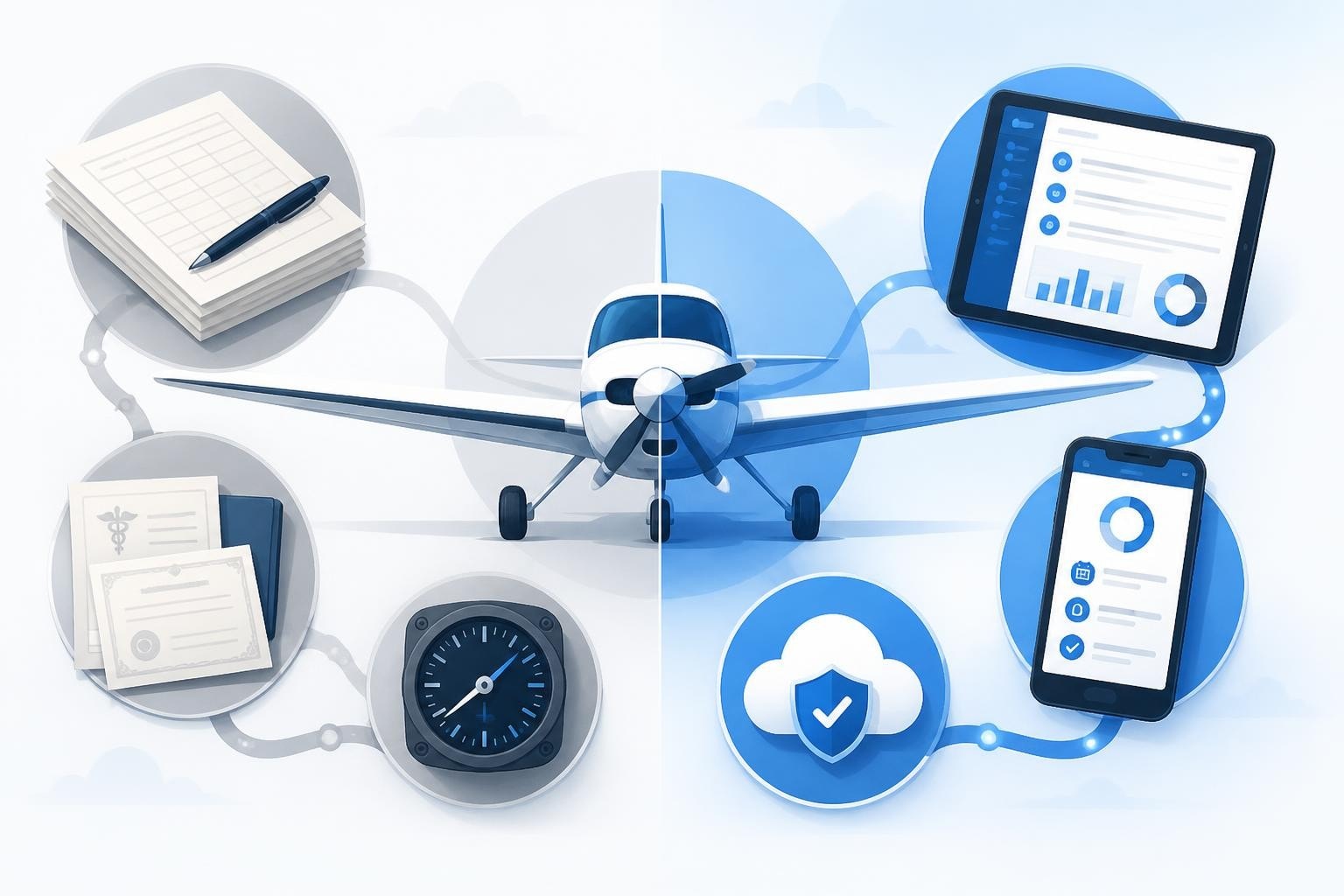
The Gleim pilot logbook is a printed training record designed to help student and career pilots organise flight time, endorsements, and proficiency checks. It is not a single product but a family of paper logbooks that includes the Career Pilot Training Logbook and the Commercial Pilot Training Record, both published by Gleim Aviation. These books are structured around FAA Part 61 and Part 141 training syllabi, with pre-printed columns for totals, dual received, PIC, cross-country, and instrument time. Whether you choose paper or digital, the logbook you use must meet the standard set by 14 CFR § 61.51, which requires entries "in a manner acceptable to the Administrator." Gleim's print logbooks have been a training staple for decades, but in 2026 many pilots also weigh digital options that offer automated currency tracking and mobile access. This article explains what the Gleim pilot logbook offers, how it compares to digital tools, and what to consider when choosing your recording method.
What is the Gleim Pilot Logbook?
Gleim Aviation publishes training logbooks tailored to specific certificate levels and career stages. The Career Pilot Training Logbook is the flagship product, designed for pilots from first solo through airline transport pilot. It includes pages for flight experience, ground training, endorsements, knowledge test results, practical test records, and a systematic syllabus aligned with FAA requirements. Each column is clearly labelled: you log date, aircraft ident, type, route, landings, conditions, and hour totals by category.
The Commercial Pilot Training Record is a more focused edition, centred on the commercial pilot certificate. It pairs flight logging with structured lesson plans, self-study checklists, and stage checks. Both logbooks are printed, bound, and durable. They sit in your flight bag, ready for an instructor's signature or an examiner's review at checkride time.
Typical features you will find
- Pre-printed columns for all Part 61 hour categories: dual, solo, PIC, SIC, cross-country, night, actual instrument, simulated instrument, ground trainer.
- Endorsement pages structured around specific FAR references, so your instructor signs the exact regulatory text required for solo, night, complex aircraft, or high-performance operations.
- Checklists for knowledge tests, stage checks, and practical tests, mapping out what you need before each milestone.
- Space for aircraft make and model, N-number, and simulator device identifiers.
- Running totals at the bottom of each page, making it straightforward to tally hours on demand.

How the Gleim Pilot Logbook Fits Into Your Training
For student pilots and those working toward a commercial certificate, the Gleim pilot logbook serves as both record and roadmap. You write down each lesson, and the book's structure reminds you what you still need to complete: three hours of night cross-country, ten takeoffs and landings to a full stop, or the long solo cross-country with landings at three points more than 50 nautical miles apart. The syllabus pages double as a study guide, linking each lesson to the Practical Test Standards or Airman Certification Standards task.
Many flight schools issue Gleim logbooks as part of training kits, especially Part 141 programmes that follow a tightly sequenced curriculum. Instructors appreciate the consistency: every student's book looks the same, endorsements appear in the same place, and totals are easy to verify. At stage check or checkride, you hand the examiner a familiar format. There is no learning curve.
Endorsements and regulatory text
One practical benefit of the Gleim pilot logbook is its endorsement library. Each endorsement page prints the exact FAR citation and wording, so your instructor need only fill in your name, date, and certificate number, then sign. This reduces the risk of missing or incorrectly worded endorsements, which can delay a checkride or solo flight.
For example, the pre-solo aeronautical knowledge endorsement references 14 CFR § 61.87(b) verbatim. The instructor initials that you received and logged training in the manoeuvres and procedures listed, and that you demonstrated satisfactory knowledge. The same pattern applies to complex, high-performance, and tailwheel endorsements. Everything is templated and traceable.
Paper Logbooks Versus Digital: What Changes in 2026
Regulations have long accepted electronic logs. FAA Advisory Circular AC 120-78B, issued in December 2024, confirms that electronic signatures and electronic recordkeeping systems are acceptable if they meet data integrity, security, and auditability standards. The FAA does not mandate a specific format; you may use paper, spreadsheet, or app, provided the entries are legible, complete, and retrievable.
In practice, most pilots today use a hybrid system: a primary logbook (paper or digital) plus backup copies. The Gleim pilot logbook remains popular because it is tangible, portable without a battery, and immune to cloud service outages. You can update it on the ramp, in the crew room, or at home with a pen. There is no subscription fee and no risk that a company discontinues the product mid-career.
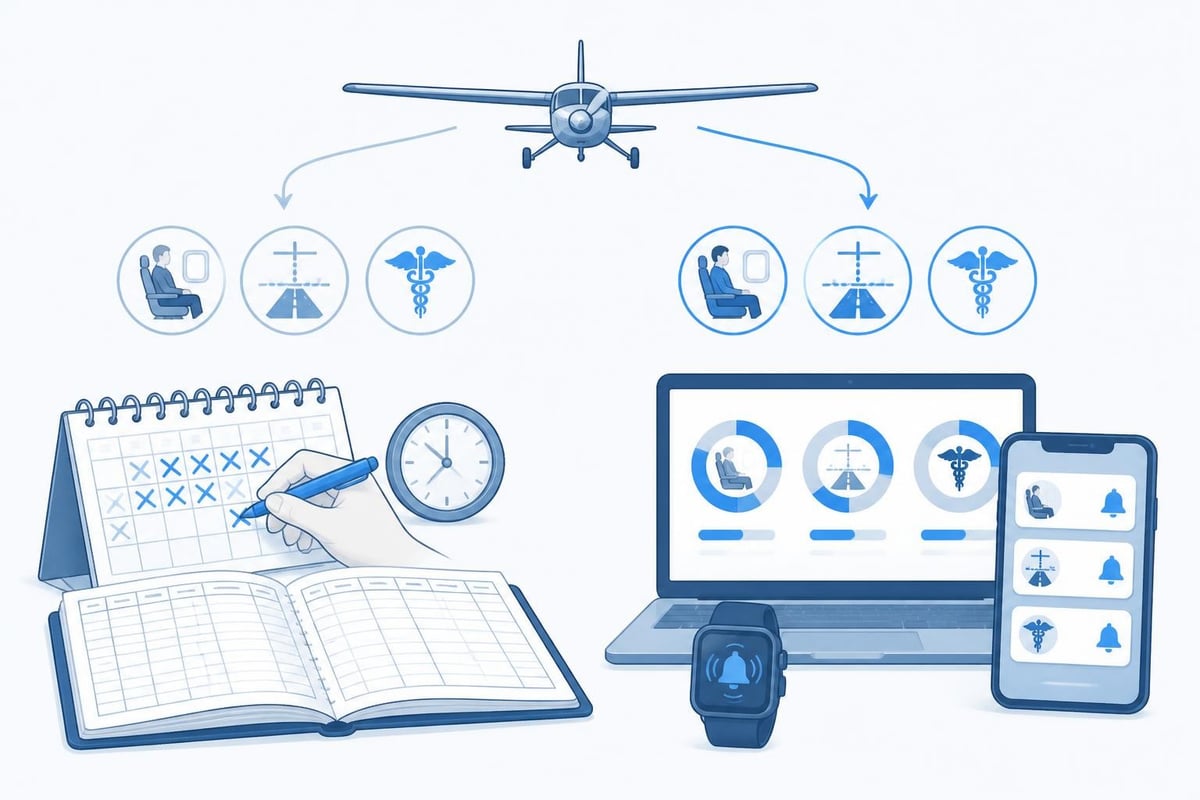
Digital logbooks, by contrast, automate many tasks. They calculate rolling totals, track currency windows, and alert you when an IFR approach or night landing recency period is about to lapse. If you log 50 hours in the past 28 days, a digital tool instantly flags any Part 117 or FTL limit approaching. A paper book requires you to add columns by hand and remember to check expiry dates yourself.
| Feature | Gleim Pilot Logbook (Paper) | Digital Logbook (e.g. Pilotlog) |
|---|---|---|
| Initial cost | One-time purchase (~£30–40) | Free tier or subscription (~£50/year for Pro features) |
| Automatic totals | Manual addition after each entry | Instant, updated on every save |
| Currency tracking | You count days and landings yourself | Automated alerts for 90-day PAX, IFR approaches, night currency |
| Backup / redundancy | Photocopy or scan pages | Cloud sync, export to CSV/PDF, offline mode |
| Endorsements | Instructor handwrites and signs | Digital signature (if CFI uses electronic tool); some print for physical signature |
| Searchability | Flip pages; skim totals | Filter by aircraft type, route, or date range in seconds |
| Mobile access | Carry physical book | iOS and Android apps; access anywhere with phone |
When the Gleim Pilot Logbook Makes Sense
Certain scenarios favour a printed logbook. If you are a student pilot in a Part 141 school that standardises on Gleim, using the same book as your classmates simplifies instructor review and examiner familiarity. If you fly occasionally-ten hours a year-a paper log is inexpensive and requires no app updates or subscription renewals.
Some pilots prefer the physical act of writing each entry. It becomes a ritual that reinforces memory of the flight. You review the route, conditions, and any lessons learned as you fill in columns. Paper also serves as a reliable backup. Even if you keep a digital primary log, maintaining a Gleim pilot logbook as a secondary record ensures you have a hard copy if electronic systems fail or if you need to present a traditional logbook to an employer, insurance underwriter, or foreign aviation authority.
Career transitions and employer expectations
When you apply for a charter, corporate, or airline position, recruiters often ask for a complete logbook covering all flight time. Some hiring departments still request PDF scans of paper pages, particularly if your early training predates digital tools. A Gleim pilot logbook from your student and commercial days, properly filled out, provides a clear audit trail. Lenders evaluating aircraft financing also scrutinise logbooks; AOPA Finance notes that incomplete or inconsistent records can delay loan approval or reduce aircraft valuation.
If you trained in the 2010s or earlier, you likely have several years logged on paper. Transferring those entries to a digital system is feasible-AOPA's digitising guide walks through scanning pages, manual re-entry, and optical character recognition tools-but it takes time. Keeping your original Gleim pilot logbook intact alongside a digital log is a pragmatic middle path.
What Digital Tools Add That Paper Cannot
Digital logbooks shine when you need real-time tracking and alerts. Consider a commercial pilot flying Part 135 on-demand charter. You must not exceed 1,400 flight hours in any 365 consecutive days, 120 hours in any 30 consecutive days, or 34 hours in any 7 consecutive days (14 CFR § 135.265, for example, though exact limits vary by operation type). Calculating rolling windows by hand is tedious and error-prone. A digital system recalculates every time you log a flight.
Currency is another area where automation helps. To carry passengers, you need three takeoffs and landings in the preceding 90 days in the same category, class, and type (if a type rating is required). For night passenger currency, those landings must occur between one hour after sunset and one hour before sunrise. IFR currency under 14 CFR § 61.57(c) requires six instrument approaches, holding, and intercepting/tracking courses in the preceding six months. A digital logbook counts these automatically and warns you 14 or 30 days before you go out of currency, so you can plan a proficiency flight in advance.
Licence and medical expiries follow similar logic. A Class 1 medical is valid for 12 months if you are under 40, six months if you are 40 or older and flying single-pilot commercial operations. Tracking this on paper means writing a reminder in your calendar. A digital tool flags the expiry date as soon as you enter the medical issue date and your birthdate, then sends push notifications as the deadline approaches.
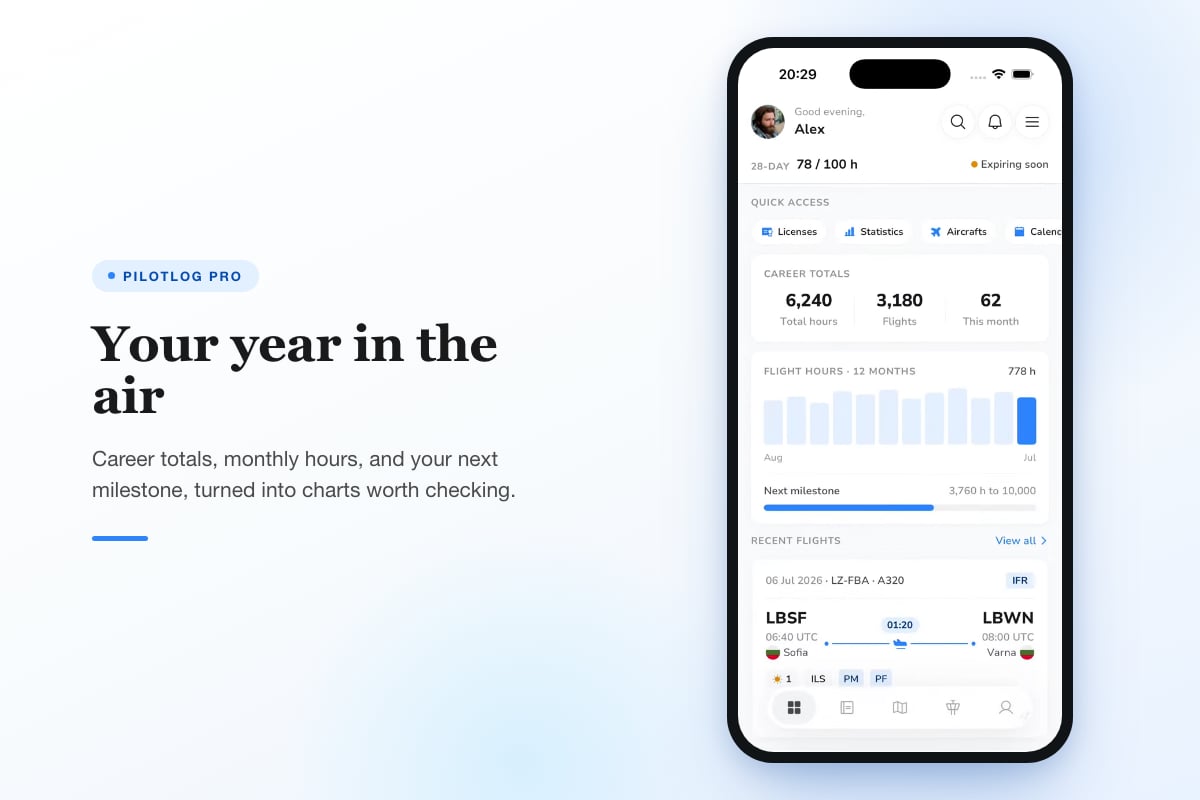
Pilotlog Pro is built around these workflows. You log a flight in seconds-aircraft type, route, block time-and the system updates rolling totals, checks currency windows, and highlights any limits or expiries due in the next 30 days. It works offline, syncs when you reconnect, and exports your full logbook to PDF or spreadsheet for job applications or audits. For pilots managing complex schedules across multiple aircraft types, this level of automation reduces workload and eliminates the risk of overlooking a deadline.
International considerations
If you hold or plan to hold an EASA licence, logbook requirements follow Part-FCL. EASA's guidance on electronic documents accepts digital logs provided the record is secure, tamper-evident, and accessible during ramp checks. The UK CAA similarly allows electronic logbooks for licence applications; CAA documentation guidance states that scanned or digital copies are acceptable if the original entries are clear and the record is complete.
Some non-EASA states still prefer paper at the point of licence issue or conversion. If you are pursuing a foreign validation or working in a region with limited digital infrastructure, carrying a printed Gleim pilot logbook alongside your electronic record ensures you meet local expectations. Printing logbook pages from a digital app before an overseas checkride is another common practice.
Combining Gleim and Digital: A Hybrid Workflow
Many pilots use both systems in parallel. You might keep the Gleim pilot logbook as your official record of training and endorsements through private, instrument, and commercial certificates, then switch to a digital logbook once you begin professional flying. Alternatively, you log every flight digitally but print summary pages into a binder or maintain a Gleim book for significant milestones: first solo, checkride, first passenger flight, transition to turbine aircraft.
Here is a worked example of a hybrid approach for a newly certificated commercial pilot:
- Flight training (0 to 250 hours): Use the Gleim Commercial Pilot Training Record for all dual and solo flights. Instructor signs each lesson and endorsement page. Checkride completed with the paper logbook presented to the examiner.
- Time building (250 to 500 hours): Continue logging in the Gleim book, but also enter each flight into a digital app for automated totals. Cross-check paper and digital every 50 hours.
- First commercial job (500+ hours): Primary logging shifts to digital, which tracks duty limits and rolling totals. Gleim logbook remains on the shelf as the authoritative record of training endorsements and early career flights. Scan the Gleim pages and store PDFs in cloud backup.
- Airline application (1,500+ hours): Export full digital logbook to PDF. Attach scanned Gleim pages covering training phase. Employer's HR system accepts both formats without question.
This workflow preserves the advantages of each medium: tactile, examiner-friendly paper during training, and fast, automated digital records during high-tempo operations.

Choosing Between Gleim and Other Paper Logbooks
Gleim is not the only printed logbook publisher. ASA, Jeppesen, and generic aviation stationers all sell pilot logs. The Gleim pilot logbook distinguishes itself through its syllabus integration and endorsement templates. If you are working through a structured training programme-particularly one using Gleim's online ground school or test prep-the logbook aligns seamlessly with the rest of the curriculum. Lesson numbers, stage checks, and knowledge test records all cross-reference the same training outline.
Generic logbooks offer more blank space and fewer pre-printed prompts. Some pilots prefer this flexibility, especially if they fly a mix of rotorcraft, gliders, and aeroplanes. A Gleim product is optimised for aeroplane training under FAA Part 61 and Part 141, so if your flying falls outside that scope, a generic log may be simpler.
Cost is similar across brands: most printed logbooks retail between £25 and £45. Durability varies. Gleim uses sturdy binding and heavier paper stock, designed to survive years in a flight bag. Cheaper options may dog-ear or tear after a training season. Weigh longevity against price if you expect to fill the book over several years.
Legal and Practical Recordkeeping Standards
Regardless of format, your logbook must satisfy regulatory requirements. 14 CFR § 61.51 specifies that each entry include date, total flight or lesson time, location, type and identification of aircraft, and the name of a safety pilot or instructor if required. For instrument time, you must log the location and type of each approach. For night currency, log the number of night takeoffs and landings to a full stop.
The phrase "in a manner acceptable to the Administrator" gives you format freedom but imposes a standard of accuracy and completeness. An inspector or examiner must be able to verify your claimed experience. This means legible entries, consistent date formats, and no unexplained gaps. If you use abbreviations, they should be standard: XC for cross-country, PIC for pilot in command, NVG for night vision goggles.
Some pilots add narrative notes in a remarks column: weather encountered, lessons learned, or unusual events. This is not required but can be valuable for insurance claims, accident investigation, or your own professional development. Digital logs often include a notes field; the Gleim pilot logbook provides a narrow remarks column on each line.
Data integrity and backup
A 2026 research paper on electronic aircraft records emphasises provenance and tamper-evidence as key trust factors. For digital logbooks, this means using apps that timestamp entries, store edit history, and offer cryptographic export signatures. For paper logs, it means writing in permanent ink, dating corrections, and keeping photocopies or scans in a separate location.
Losing your logbook-paper or digital-can set your career back months. Reconstruct flight time by cross-referencing aircraft rental receipts, instructor records, and FBO sign-in sheets, but this is laborious and may not recover every detail. The best practice is redundancy: if you use a Gleim pilot logbook, scan each page after 20 hours of flying. If you use a digital app, export a CSV or PDF monthly and store it in cloud storage separate from the app provider.
Making the Choice: What Works for Your Stage and Style
Deciding between the Gleim pilot logbook and a digital solution depends on where you are in your career and how you prefer to work. If you are a student pilot just starting, a printed Gleim book offers structure, examiner familiarity, and a permanent record with minimal learning curve. If you are a working commercial pilot juggling multiple aircraft types and duty limits, a digital logbook with automated currency tracking and alert notifications saves time and reduces risk.
Many pilots find that the ideal system evolves. You might begin with the Gleim pilot logbook to satisfy training requirements and build the habit of logging every flight, then add a digital tool once you reach 100 or 200 hours and need more sophisticated reporting. You might keep the Gleim book current through your instrument and commercial checkrides, then rely primarily on digital thereafter, using the paper log as a backup and historical archive.
Neither choice is wrong. The critical factor is consistency: whichever method you choose, log every flight, verify totals regularly, and back up your records. Gaps, errors, or lost data cost you time and credibility when you apply for a job, renew a licence, or submit to a ramp check.
Regulations and hour requirements change. Always confirm current limits and validity periods against official sources such as the FAA pilot resources page, EASA Part-FCL, or your national aviation authority before relying on any summary in this article.
The Gleim pilot logbook remains a solid choice for structured training and a tangible record of your early flying career. As your hours and complexity grow, digital tools offer automation, alerts, and mobile access that paper cannot match. Whether you stick with one format or blend both, the key is accurate, complete, and backed-up records. Pilotlog is designed to complement that discipline: log a flight in seconds, track currency and expiries automatically, and know you are current, legal, and ready every time you step to the aeroplane. Available on iOS and Android, it keeps your logbook secure, synced, and always within reach.
- gleim pilot logbook
- pilot logbook
- digital logbook
- flight time tracking
- pilot endorsements
A logbook that keeps itself.
Join the waitlist and be first in line when Pilotlog launches.
Free to join, no spam. Unsubscribe any time.