gleim logbook
Gleim Logbook: How to Use It for Pilot Records
10 Nov 2026 · 6 min read
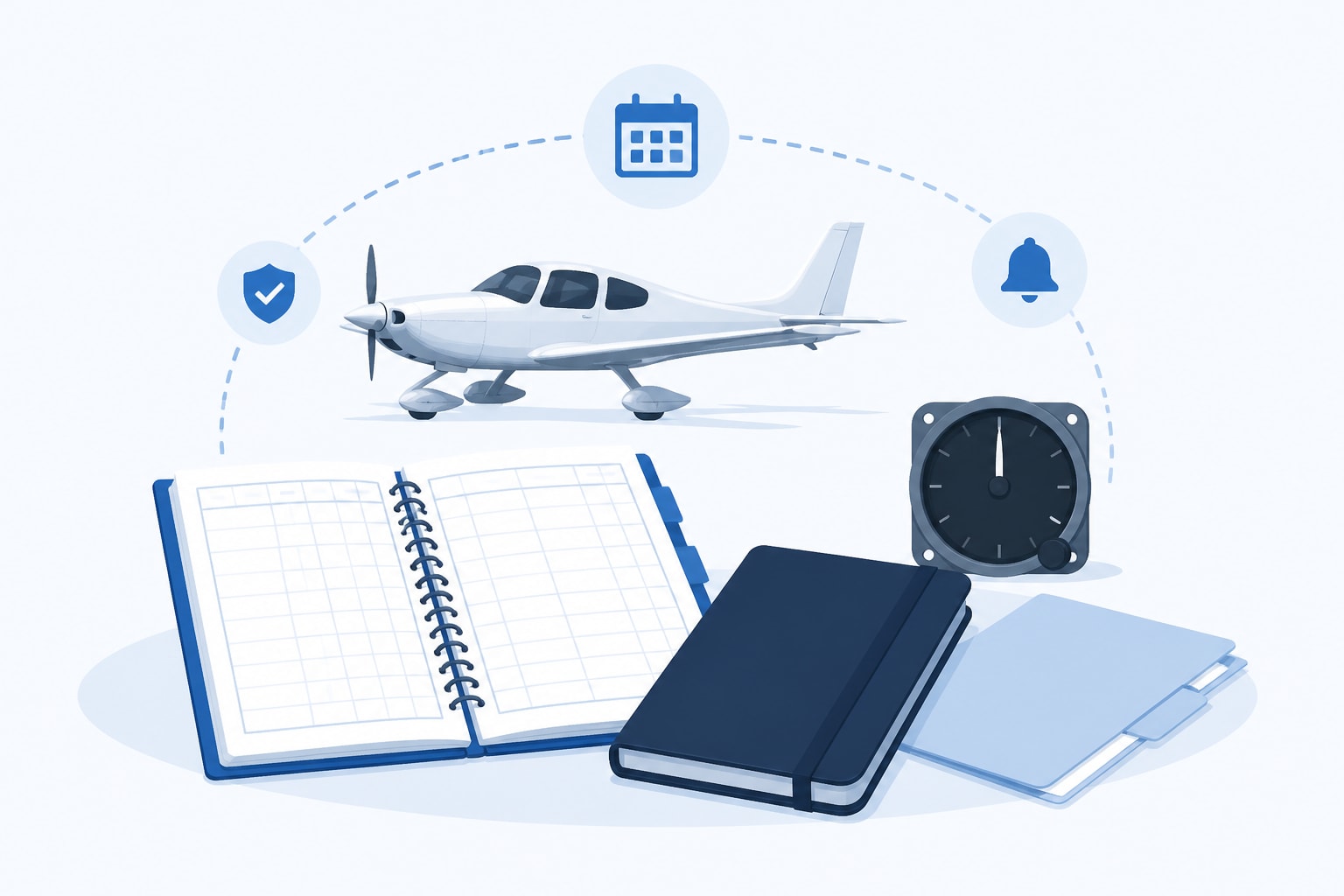
A Gleim logbook is a paper pilot logbook, with Gleim's career-oriented version laid out for tracking flight time and checkride requirements. You fill it in by hand after each flight, then total the columns yourself. The book records your flying; it does not tell you whether you are current. That part is your job, under whichever authority issued your licence.
One point on authority before the detail. Gleim is a US publisher, so its layouts follow FAA practice. The entry requirements below come from 14 CFR 61.51 and apply to FAA certificates only. If you hold an EASA or UK CAA licence, your record-keeping rules sit in Part-FCL and the UK equivalent, and the two sets of figures must not be mixed.
What a Gleim logbook entry must contain
Under FAA rules, each entry needs specific data points. 14 CFR 61.51 requires the date, flight or lesson time, departure and arrival locations (or lesson location), aircraft or device type and identification, and the safety pilot's name where applicable.
The same section sets out the experience categories you record:
- Solo time
- Pilot in command
- Second in command
- Instruction received from an authorized instructor
You also record conditions: day or night, actual instrument, simulated instrument, and night-vision-goggle time where it applies. Gleim's career logbook overview describes a layout with a checkride checklist and IACRA-oriented columns, which suits FAA applicants filling in their application.

When you must show your logbook
You must present your logbook on reasonable request. Under 14 CFR 61.51, that means a request from the FAA Administrator, an authorized NTSB representative, or a federal, state, or local law-enforcement officer. The regulation itself sets out who may request a logbook for inspection.
Student pilots carry an extra duty. On solo cross-country flights, a student must carry the logbook, the student pilot certificate and other required records. A logbook left in the flight bag at home is a compliance problem, not just an inconvenience.
Worked example: a paper logbook and a currency check
A paper book gives you totals. You then work out currency by hand. Take an EASA or UK CAA example, since the arithmetic differs by authority.
Passenger-carrying currency rules differ by authority and aircraft category, so check the current requirements. Suppose your logbook shows these landings:
| Date | Landings |
|---|---|
| 12 August 2026 | 2 |
| 20 September 2026 | 1 |
| 3 October 2026 | 1 |
Take a sample date of 9 November 2026 and count back 90 days. The 12 August flight falls inside that window, so all four landings count.
- Total landings in window: 2 + 1 + 1 = 4
- Requirement in this example: 3
- You would be current, with 1 landing to spare.
Now find the lapse date. Work from the date that leaves you with exactly 3 landings. If you drop the 2 landings of 12 August, you hold 2, which is short. So currency lapses when the 12 August landings age out, 90 days after 12 August: 10 November 2026. Passenger currency would then have one day left unless you fly again. That calculation is simple once, tedious every week.
Where a paper logbook runs out
A bound book is a legal record, and many pilots keep one. Its limits are practical:
- Totals carry forward by hand, so one arithmetic slip travels through every later page.
- Nothing warns you that a medical or rating expiry is close.
- Rolling windows, such as 28-day and 365-day limits, need manual recounting.
- A lost book cannot be reconstructed from memory.
Airline and commercial pilots feel this most. Tracking flight-time limits and progress toward an ATPL by hand means recounting every period against the latest entries.
Gleim logbook versus a digital logbook
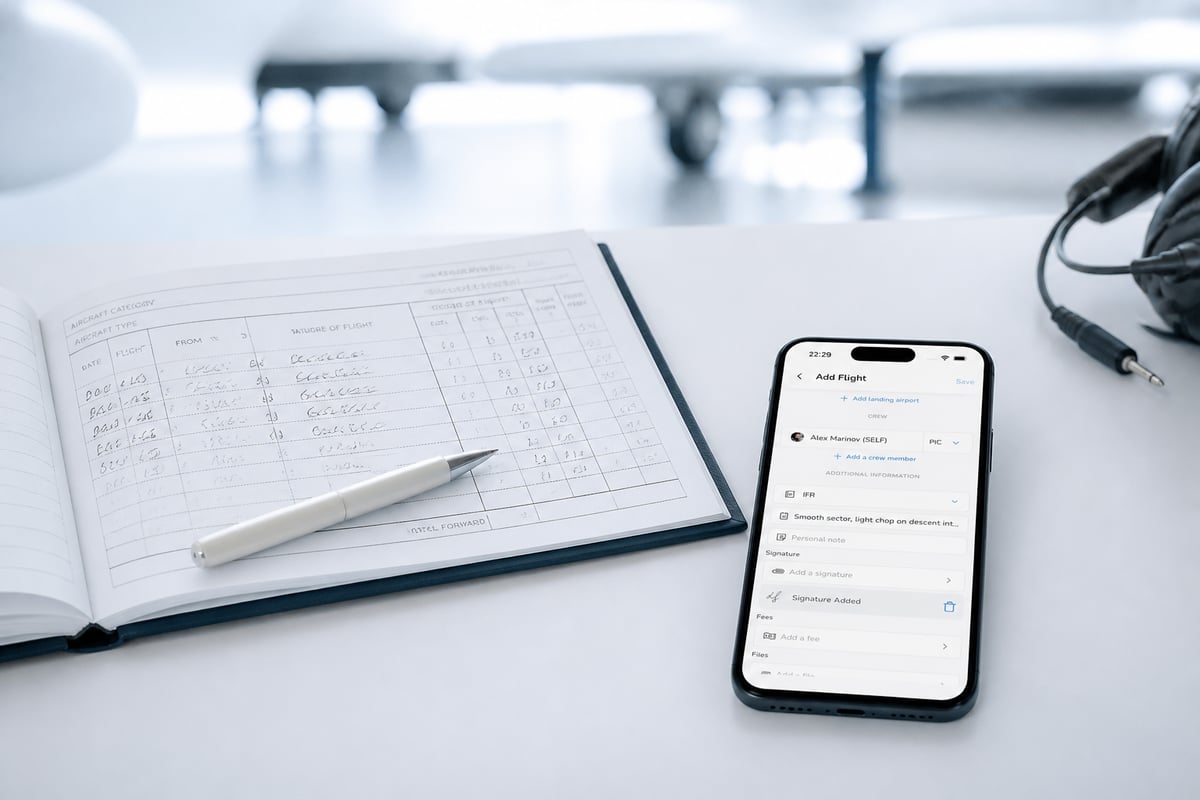
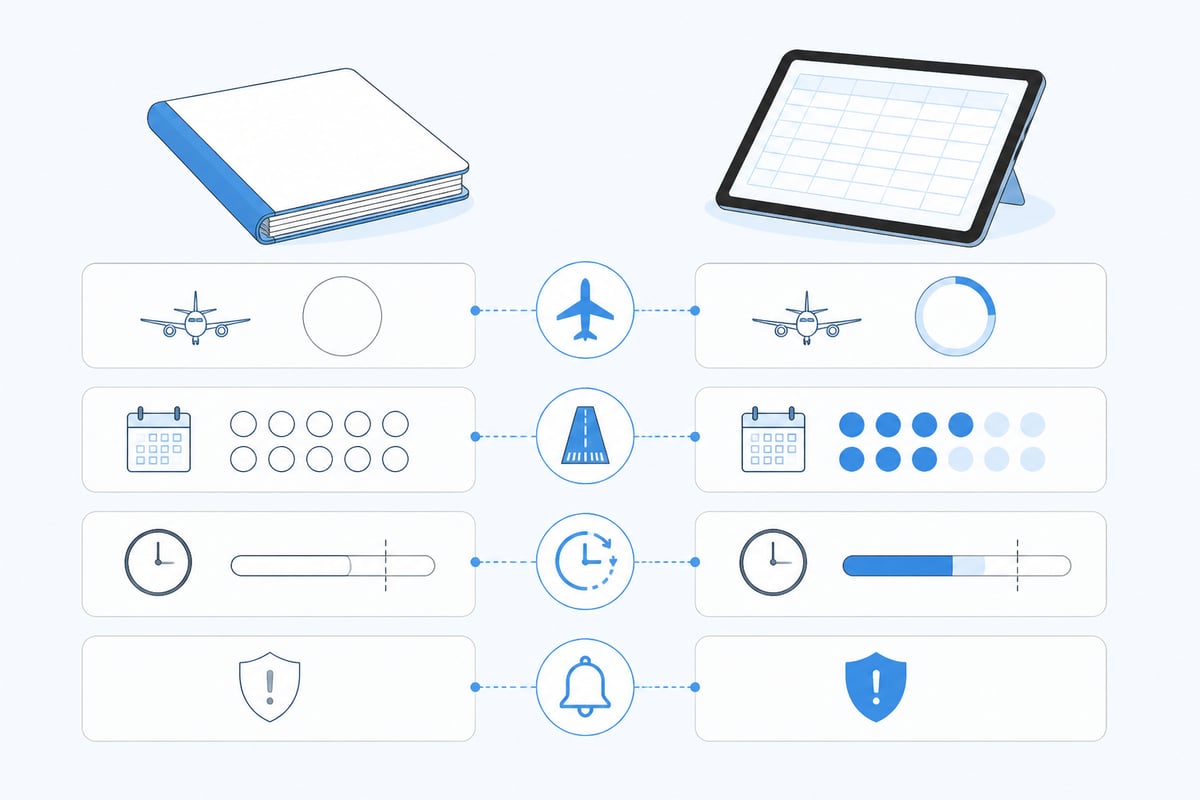
Many pilots keep both: the book as the signed record, an app for the arithmetic. Pilotlog is a digital logbook that totals hours, currency, limits and expiries automatically from each logged flight. You log a flight in a few taps after landing, with route, times, crew and landings. Passenger, night and IFR recency show at a glance, with the date each lapses, and you get warnings about licence, medical and rating expiries before they catch you out.
The paid tier, Pro, tracks rolling flight-time limits, currency lapse dates and expiry alerts, plus career stats and a logbook export. Whether a given authority accepts an electronic record in place of a paper one depends on that authority, so check before you stop writing in the book. The same applies to your training organisation's requirements.
Habits that keep any logbook accurate
- Write the entry within a day of the flight, while times and landings are fresh.
- Record the exact aircraft registration, not just the type.
- Total each page before moving to the next.
- Log night and instrument time in their own columns at the time, not retrospectively.
- Photograph or back up each page regularly.
Beginners who are still preparing for a first flight can read Gleim's article on starting out, which covers the logbook's role and endorsements.
Summary
- A Gleim logbook records flying; it does not calculate currency for you.
- 14 CFR 61.51 sets the FAA entry requirements; EASA and UK CAA rules are separate.
- Passenger currency under EASA is 3 take-offs and landings in 90 days (FCL.060(b)).
- Carry and produce your logbook when the regulation requires it.
- Back up your records, on paper and digitally.
Rules change, so check the current regulation and your authority's official site: FAA, EASA and the UK CAA.
FAQ
Is a Gleim logbook accepted by the FAA?
The FAA does not approve specific logbook brands. What matters is that your entries contain the information 14 CFR 61.51 requires.
Can I use a Gleim logbook under EASA or UK CAA rules?
You can record flights in it, but the layout follows FAA practice. Check your authority's and training organisation's requirements for the data you must hold.
Do I still need a paper logbook if I use an app?
That depends on your authority and your employer or school. Confirm in current official sources before relying on an electronic record alone.

Today, pull your last 90 days of entries and count your landings against the 3 you need, so you know your passenger-carrying status before you next fly. If you would rather have the arithmetic, currency dates and expiry alerts handled automatically, Pilotlog is built for that, so join the waitlist and keep your records current without a spreadsheet.
- gleim logbook
- pilot logbook
- 14 cfr 61.51
- flight currency
- digital logbook
A logbook that keeps itself.
Join the waitlist and be first in line when Pilotlog launches.
Free to join. We’ll email you about the launch and Pilotlog news. Unsubscribe any time. Privacy policy