flight tech
Flight Tech: Tools Pilots Use to Stay Current in 2026
21 Jul 2026 · 11 min read
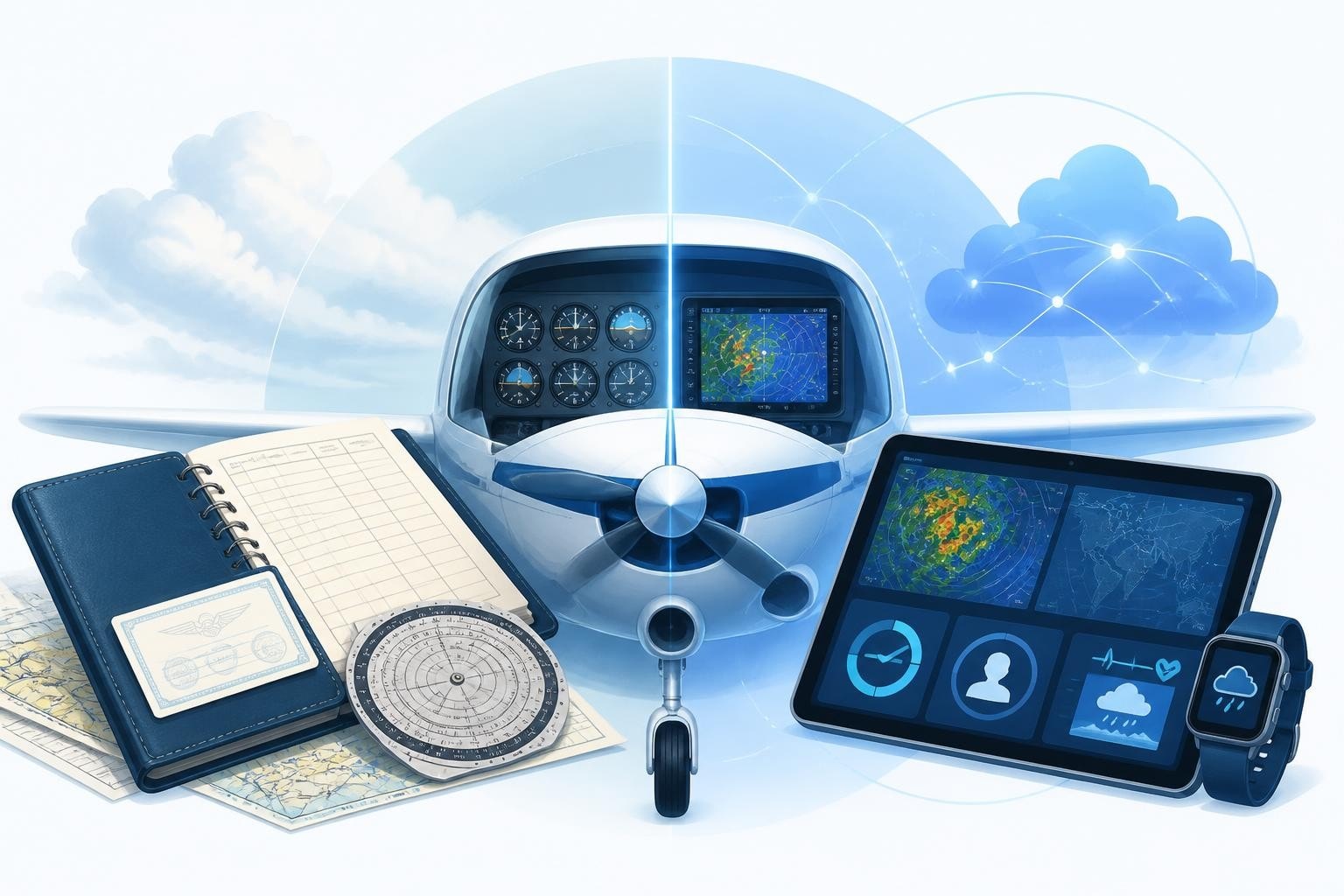
Flight tech has transformed how pilots maintain currency, log hours, and prepare for every sector. In 2026, digital logbooks, tablet-based navigation apps, AI-enhanced training platforms, and real-time weather systems form the backbone of professional flight operations. These tools don't just save time; they reduce workload, flag expiries before they become grounding events, and help you prove recency when the examiner asks.
Digital Logbooks Replace Paper and Spreadsheets
Paper logbooks still have a place in many cockpits, but flight tech has made them optional rather than essential. Digital logbook applications now track flight hours, currencies, and expiry dates automatically, eliminating manual arithmetic and the risk of missing a 90-day deadline.
Modern logbook platforms offer:
- Automatic currency tracking for passenger, night, and IFR recency (EASA FCL.060 requires three take-offs and landings in 90 days)
- Medical and licence expiry alerts sent 30, 14, and 7 days ahead
- Duty-time monitoring against rolling 28-day and 365-day limits
- Export to CSV, PDF, or printed formats for job applications and renewals
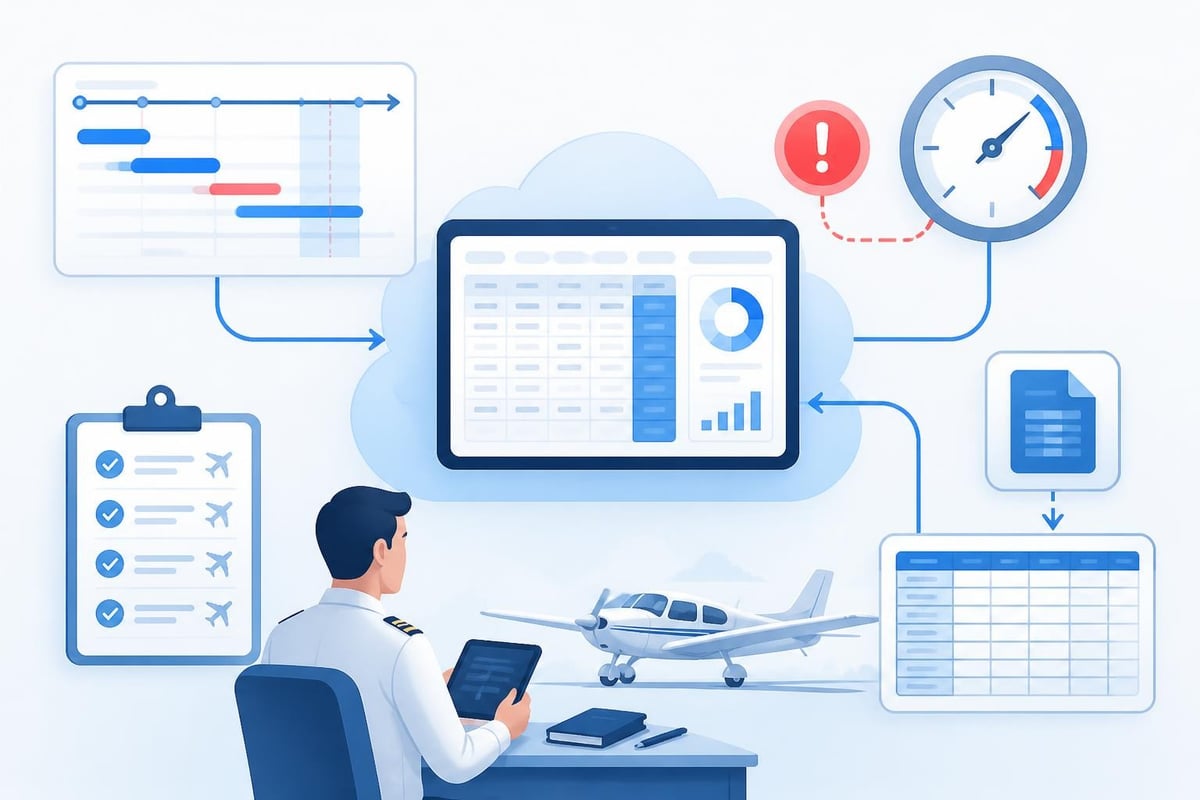
A first officer logging 78 hours across April can see immediately whether those sectors maintain night currency or if a training flight is needed before the next night departure. Pilotlog automates this tracking across iOS and Android devices, syncing entries in seconds and surfacing the data pilots need without hunting through pages.
Integration With Flight Operations Systems
Flight tech doesn't operate in isolation. Many airlines now pull roster data directly into crew logbooks, pre-populating sectors with aircraft type, departure and arrival airports, block times, and duty periods. The pilot verifies, adds PIC or co-pilot role, notes any unusual conditions (circling approach, alternate diversion, contaminated runway), and saves.
This integration cuts logging time from five minutes per sector to under 30 seconds. It also reduces data-entry errors that can invalidate experience claims during type rating applications or command upgrades.
Tablet-Based Navigation and Electronic Flight Bags
The shift from paper charts to electronic flight bags (EFBs) defines modern flight tech more than any other change. iPads running ForeFlight, SkyDemon, or Jeppesen FliteDeck eliminate the need to carry 10 kg of approach plates, en-route charts, and airport diagrams.
| Feature | Paper Charts | EFB Apps |
|---|---|---|
| Update cycle | 28 days, manual replacement | Automatic, real-time |
| Weight | 8–12 kg | 500 g |
| Weather overlay | Separate briefing required | Live METAR, TAF, radar on map |
| Route planning | Manual or separate tool | Integrated with performance data |
EFBs also overlay real-time weather, temporary restrictions, and NOTAMs directly onto the moving map. A VFR pilot planning a cross-country in April 2026 can see convective activity building 40 nm ahead and adjust routing before entering deteriorating conditions. IFR crews review approach plates on the tablet while the autopilot flies the arrival, reducing heads-down time and workload.
Battery management remains the practical constraint. Experienced pilots carry external power banks and ensure the EFB is charged before every sector, because losing the chart display on final approach creates a distraction you don't need.
AI and Machine Learning in Training and Simulation
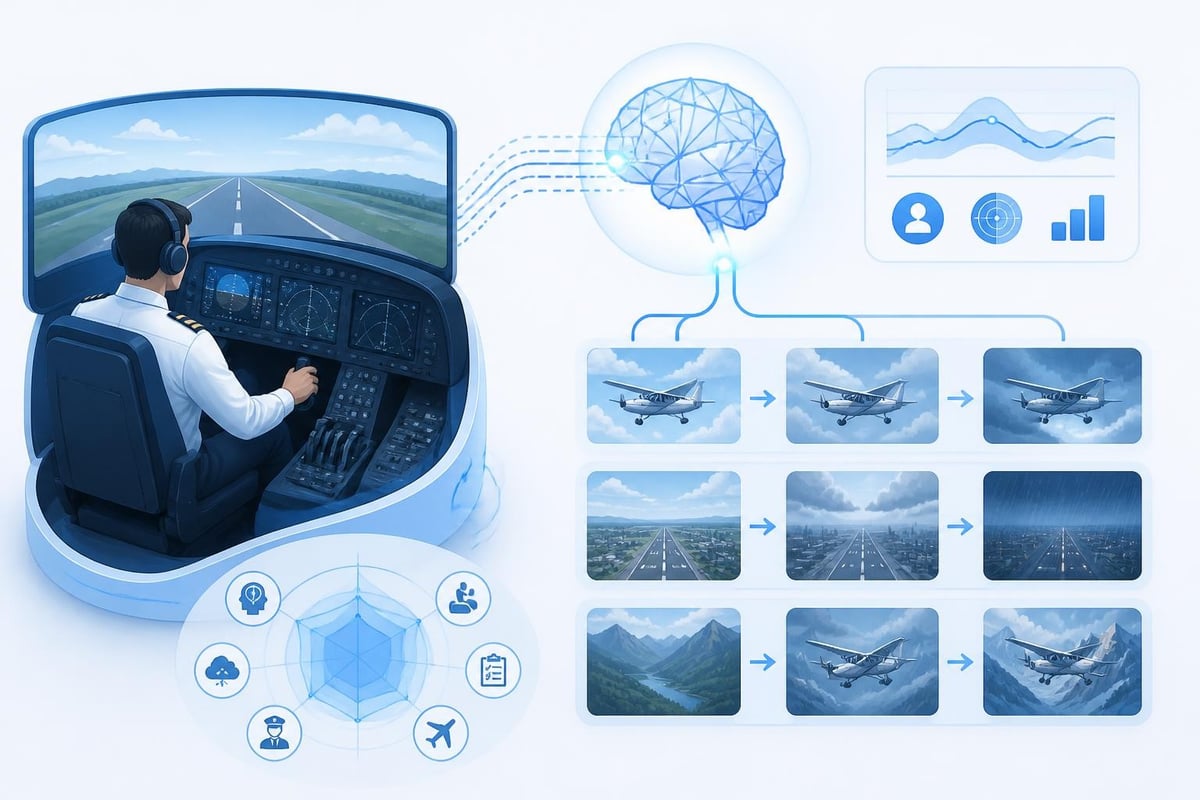
Aviation technology trends in 2025 highlight AI's growing role in flight training. Simulators now adapt scenarios based on pilot performance, increasing difficulty when you handle turbulence smoothly and repeating engine-failure drills if your scan breaks down under pressure.
BETA Technologies uses scalable display systems to create immersive training environments that respond to control inputs with minimal latency. The result is training that builds muscle memory and decision-making speed faster than traditional fixed-sequence simulators.
AviationGPT and Language Models
Research teams have developed AviationGPT, a large language model trained on aviation documentation, incident reports, and regulatory texts. While still experimental, these models can answer questions about complex procedures, retrieve relevant sections from the operations manual, and assist with pre-flight briefings.
Potential applications include:
- Searching thousands of pages of company SOPs for a specific checklist item
- Translating technical NOTAM language into plain English
- Generating briefing summaries from weather data and airport information
- Providing context for unfamiliar airspace rules during international operations
The challenge lies in ensuring accuracy. A language model that confidently states an incorrect fuel-planning rule creates a hazard. Pilots must verify outputs against primary sources, treating AI as a research assistant rather than an authority.
Weather Technology and Real-Time Data
Flight tech for weather briefing has advanced beyond static TAF and METAR text. Pilots now access:
- Satellite imagery updated every 10 minutes showing cloud tops, convective development, and frontal movement
- Lightning strike data plotting electrical activity along planned routes
- Icing forecasts derived from temperature, moisture, and pilot reports
- Turbulence prediction models combining forecast winds with terrain and jet-stream analysis
A flight from Manchester to Edinburgh in October 2026 might encounter embedded CBs forecast along the Pennines. Real-time weather overlays show the cells forming 20 nm west of track, letting you request a 10-degree deviation before entering moderate turbulence rather than reacting after the event.
Datalink Weather in the Cockpit
Some aircraft now receive FIS-B or ADS-B weather directly in the panel, updating NEXRAD radar images and METARs without requiring a tablet or phone connection. This datalink service is standard in the United States and expanding in Europe, bringing the same situational awareness to VFR pilots that IFR crews have enjoyed through company datalink for years.
The limitation is latency. NEXRAD composites can be 5–10 minutes old by the time they appear on your display, meaning a rapidly developing cell may be closer than the image suggests. Cross-check with ATC reports and eyeball evidence before assuming the gap in the weather is still open.
Legacy Systems and the Technology Gap
Despite rapid progress, airlines face foundational technology challenges that limit how quickly new flight tech can be deployed. Many carriers operate on 1980s-era mainframe systems that struggle to integrate modern APIs, cloud storage, or mobile applications.
Modernising these platforms requires capital investment, staff retraining, and acceptance of temporary disruption. Smaller operators and general aviation pilots bypass the issue by adopting consumer-grade flight tech that runs on personal devices, but airlines must maintain security, auditability, and regulatory compliance across thousands of crew members.
The result is a two-tier ecosystem: independent pilots using cutting-edge apps on their own tablets, and airline crews waiting for IT departments to approve software updates that released six months ago.
Sustainable Aviation and Propulsion Innovation
Flight tech isn't limited to software and displays. Aviation innovation through time shows how electrification and hybrid propulsion are reshaping aircraft design. Eviation's Alice all-electric commuter aircraft completed test flights in 2022, and by 2026 several regional operators are evaluating electric and hydrogen-powered types for short-haul routes.
Key propulsion technologies under development:
- Battery-electric systems offering 200–300 nm range for commuter operations
- Hydrogen fuel cells with longer endurance but requiring new ground infrastructure
- Hybrid turbine-electric architectures combining jet engines with electric motors for efficiency
- Sustainable aviation fuels (SAF) reducing lifecycle carbon emissions in conventional turboprops and jets
Pilots flying these aircraft use flight tech adapted for electric propulsion: battery state-of-charge displays replace fuel gauges, thermal management systems monitor motor temperatures, and performance planning accounts for battery degradation over charge cycles.
The Future Aircraft Sizing Tool demonstrates how engineers model these new propulsion types during the design phase, optimising range, payload, and efficiency before metal is cut.
Blockchain in Avionics and Maintenance Records
Blockchain technology is being explored for avionics applications, particularly in maintenance tracking and parts provenance. A turbine blade installed in 2023 generates a blockchain record every time it's inspected, overhauled, or transferred between operators. This immutable log prevents counterfeit parts from entering the supply chain and simplifies compliance audits.
For pilots, blockchain-based flight tech could verify logbook entries, linking each sector to ATC records, GPS tracks, and aircraft maintenance logs. An examiner reviewing your 1,500 hours for an ATPL application could confirm every entry against independent data sources, eliminating questions about whether hours were flown or fabricated.
Adoption is slow because the technology requires industry-wide standards and regulatory acceptance. Expect to see blockchain pilots (no pun intended) in specific fleets or regions before widespread use.
Currency Tracking and Expiry Management
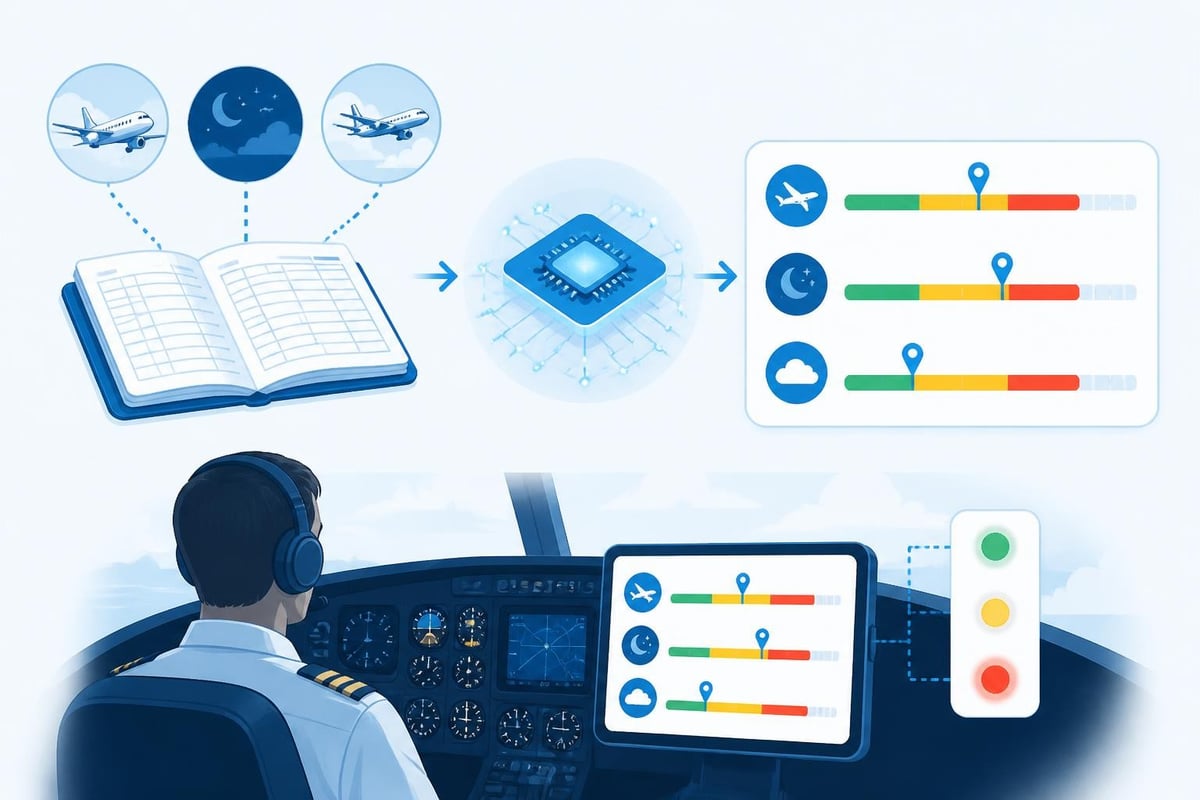
Maintaining currency across multiple aircraft types, IFR privileges, and instructor ratings demands meticulous record-keeping. Flight tech solves this by automating the arithmetic and flagging lapses before they ground you.
Example scenario: You hold an IR(A) and fly as PIC on a PA-28 and a DA40. EASA FCL.060 requires six instrument approaches, holds, and intercepts in the previous six months to maintain IFR privileges. Your last IFR sector was on January 15, 2026, meaning your currency expires July 15, 2026.
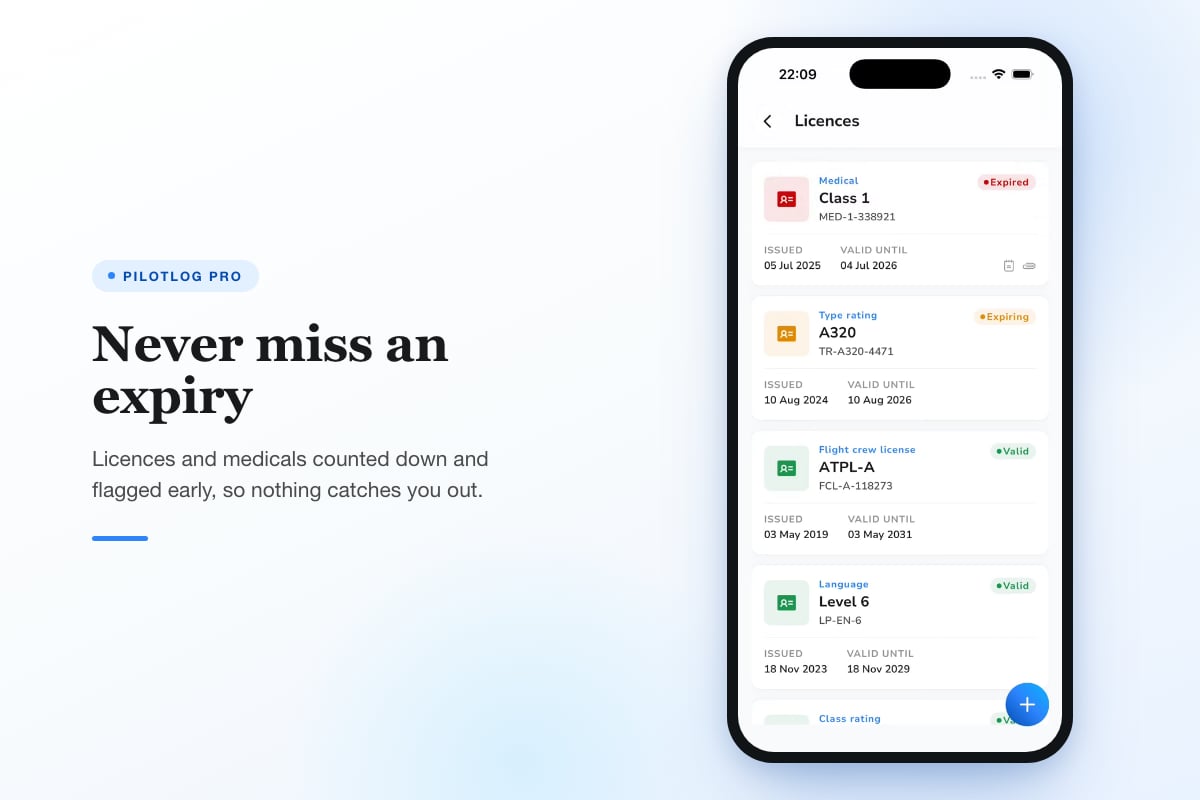
A digital logbook running Pilotlog Pro flags this 30 days ahead, giving you time to book a training flight or file for a revalidation. The app also tracks rolling 28-day and 365-day flight-time limits for commercial pilots, passenger currency (three landings in 90 days), and medical expiry dates. You see all upcoming deadlines on one screen and plan training or renewals accordingly.
Multi-Type and Multi-Licence Complexity
Pilots operating helicopters and aeroplanes, or holding both UK CAA and EASA licences, face overlapping currency rules. Flight tech handles this by creating separate currency buckets for each type and rating, pulling the relevant sectors from your logbook and applying the correct 90-day or 6-month windows.
A CFI maintaining SEP, MEP, and FI(A) privileges might have nine different currency requirements active simultaneously. Manual tracking invites errors; automated systems ensure nothing slips through.
Wireless Power and Emerging Flight Tech
Research into laser-based wireless power for drones suggests future flight tech could eliminate battery constraints altogether. While current applications focus on small uncrewed systems, the principle could extend to electric aircraft receiving mid-flight energy transfers from ground stations or chase aircraft.
This technology is years from certification for crewed operations, but it illustrates how flight tech continues pushing boundaries that seemed fixed a decade ago.
Data Security and Privacy in Flight Tech
As more flight data moves to cloud platforms, pilots must consider who controls their logbook entries, flight tracks, and personal information. Reputable flight tech providers use encryption, regular security audits, and compliance with GDPR or equivalent privacy regulations.
Best practices:
- Enable two-factor authentication on logbook and EFB apps
- Review privacy policies to understand data retention and sharing
- Export logbook data regularly to a local backup (CSV or PDF)
- Use strong, unique passwords for each flight tech account
A breach exposing your 3,000-hour logbook, licence number, and medical expiry date creates identity-theft risk and could compromise job applications if altered entries circulate.
Regulatory Compliance and Flight Tech
Aviation authorities in the UK, Europe, and the US accept digital logbooks provided they meet certain requirements: entries must be tamper-evident, exportable, and backed up against data loss. EASA Part-FCL does not mandate a specific format, but inspectors expect you to produce a complete, legible record of your flying experience on request.
Flight tech platforms typically include export functions that generate PDFs matching the format of traditional paper logbooks, with running totals, signatures (digital or scanned), and instructor endorsements. This satisfies regulatory requirements while preserving the convenience of digital entry and currency tracking.
Always confirm that rules change and consult current CAA or EASA guidance before relying solely on digital records for licence renewals or job applications.
Integration Across the Flight Deck
The best flight tech doesn't operate in silos. Your EFB pulls weather data, your logbook syncs flight times, and your weight-and-balance app shares results with performance calculators. This integration reduces workload and ensures consistency across planning, execution, and post-flight logging.
| Tool | Primary Function | Integration Points |
|---|---|---|
| Digital logbook | Record hours, track currency | Imports GPS tracks, exports for licences |
| EFB (ForeFlight, SkyDemon) | Charts, weather, route planning | Shares flight plans with ATC filing services |
| Weight & balance | Load calculations | Sends CG data to performance apps |
| Performance calculator | Take-off, landing distances | Receives weight, weather, runway data |
A pilot planning a flight from Biggin Hill to Le Touquet in May 2026 uses the EFB to file the VFR flight plan, checks weather overlays for sea fog, calculates take-off performance with two passengers and baggage, then logs the 45-minute sector in the digital logbook immediately after shutdown. Each app contributes one piece without requiring duplicate data entry.
Flight tech in 2026 keeps you current, legal, and prepared by automating currency tracking, integrating real-time data, and reducing administrative workload. Whether you're a student building hours or an airline captain managing multiple type ratings, the right tools flag expiries before they ground you and surface the information you need when you need it. Pilotlog brings all of this together in a digital logbook that tracks your hours, currencies, and deadlines across every device, so you spend less time on paperwork and more time flying.
- flight tech
- digital logbooks
- electronic flight bags
- pilot currency
- aviation weather apps
A logbook that keeps itself.
Join the waitlist and be first in line when Pilotlog launches.
Free to join, no spam. Unsubscribe any time.