cfi
Flight Instructor Near Me: How to Find the Right CFI
29 Aug 2026 · 11 min read

Searching for a flight instructor near me starts with understanding what you actually need. Whether you're beginning PPL training, working toward an instrument rating, or rebuilding currency after a break, the right CFI makes the difference between efficient progress and wasted hours. The best instructor for you combines the right qualifications, availability that matches your schedule, access to suitable aircraft, and a teaching style that fits how you learn.
Your first decision is simple: what are you training for? A student pilot needs someone patient and thorough with ab initio training. A commercial pilot building multi-engine time needs a MEI with turbine or complex aircraft access. A rusty private pilot getting current again after five years needs an instructor comfortable with remedial work, not someone focused only on first-time students.
Match Instructor Qualifications to Your Goals
Not every CFI holds the same ratings or experience level. In the United States, the basic Certified Flight Instructor certificate authorises training for private and commercial single-engine land. Add-on ratings include CFII (instrument instruction), MEI (multi-engine instruction), and specialisations like seaplanes or aerobatics.
Check your instructor's certificates before booking. If you're working toward an instrument rating, you need a CFII. For multi-engine training, you need a MEI. These aren't optional, they're regulatory requirements under 14 CFR Part 61.
Experience matters beyond the certificate:
- Total flight time and instructional hours given
- Time in type (especially for complex or high-performance aircraft)
- Pass rate for students on checkrides
- Specialisation in your training area (IFR, tailwheel, upset recovery)
- Professional background (airline pilot, corporate, military transition)
A CFI with 300 hours and a fresh certificate brings energy and recent knowledge. A senior instructor with 5,000 hours and fifteen years of teaching brings pattern recognition and troubleshooting skills. Neither is automatically better. Match experience to your needs.
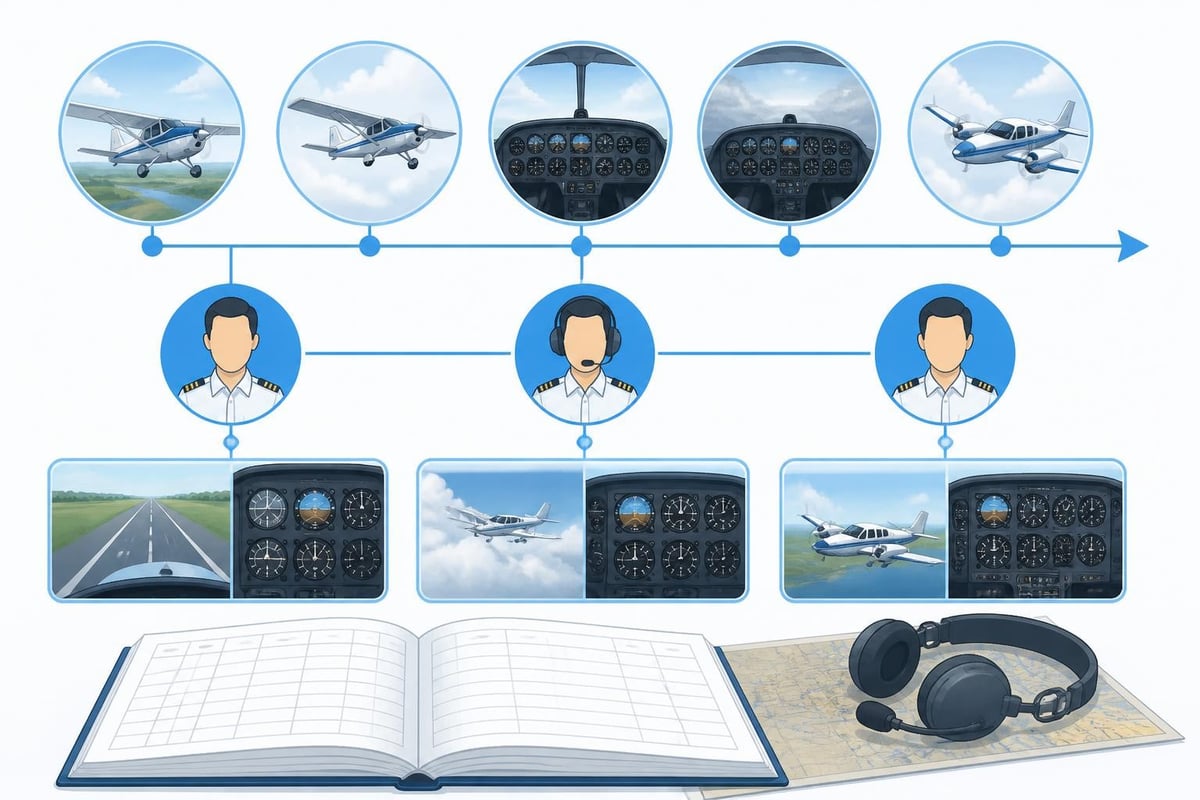
Evaluate Location and Aircraft Access
The phrase "flight instructor near me" assumes geography matters, and it does. Driving 90 minutes each way to a cheaper instructor costs you time and fatigue. Calculate door-to-door time, not just airfield distance.
But aircraft access often matters more than location. An instructor 40 minutes away with a well-maintained Cessna 172 available three days a week beats a local CFI with a single aircraft booked solid for two months.
| Factor | Why It Matters | Questions to Ask |
|---|---|---|
| Aircraft availability | Gaps in training hurt retention and currency | How far ahead do I need to book? Can I schedule twice weekly? |
| Maintenance quality | Downtime delays training; safety matters first | What's the average maintenance downtime? Who does the annual? |
| Aircraft type | Complex/high-performance time has career value | Can I build retract time? Is the fleet IFR-certified? |
| Fuel and rental rates | Hourly costs add up over 50-100 hours of training | All-in hourly rate? Fuel surcharges? Minimum daily rental? |
Some instructors own their aircraft. Others work at schools with fleets of ten or twenty. Independent instructors may have access to your aircraft if you own or lease. Each model has trade-offs in cost, availability, and scheduling flexibility.
Assess Teaching Style and Availability
The best-qualified instructor in the region is useless if they're never available or if their teaching style doesn't match how you learn. Book a single flight or ground session before committing to a full course.
Watch how they brief. Do they explain the why behind each manoeuvre, or just demonstrate and expect you to copy? Do they adapt when you don't understand something, or repeat the same explanation louder? Do they let you make mistakes and learn, or take controls at the first sign of trouble?
Scheduling compatibility is non-negotiable:
- Full-time instructors can usually fly mornings, afternoons, or weekends
- Part-time instructors (airline pilots, corporate) have restricted availability
- School-based instructors may have student quotas or required availability windows
- Independent instructors set their own hours but may juggle multiple students
Training momentum matters. Flying once a month means relearning the same lessons. Twice a week builds skills efficiently. Three times a week accelerates progress but requires serious schedule commitment and budget.
According to recent GAMA data, general aviation activity remains strong in 2026, which means instructor availability can be tight in busy training markets. Book early and communicate your goals clearly.
Verify Currency and Safety Record
Every flight instructor must maintain currency under 14 CFR 61.57 and 61.195. A CFI certificate expires every 24 calendar months unless renewed through a Flight Instructor Refresher Course (FIRC) or by activity (recommending five students who pass checkrides within the preceding 24 months, per 14 CFR 61.197).
Ask to see current certificates. Verify the expiry date. Check that ratings match your training needs. This isn't rude, it's professional due diligence.
Safety record is harder to verify but worth investigating. Ask the school or instructor directly:
- Have you had any accidents or incidents as PIC or instructor?
- What's your student pass rate on first-time checkrides?
- How do you handle weather decisions and personal minimums?
The NTSB database tracks accident reports. A clean record over years of instruction is a strong positive signal. Any accident deserves explanation and context.

Compare Flight Schools vs Independent Instructors
When you search for a flight instructor near me, results include both flight schools and independent CFIs. Each model suits different pilot needs.
Flight schools offer:
- Structured syllabi with clear milestones (useful for ab initio students)
- Fleet access and backup aircraft when one goes down for maintenance
- Multiple instructors if yours leaves or becomes unavailable
- Ground school classes, simulator access, and examiner relationships
- Financing options and veteran benefits in some cases
Independent instructors offer:
- Lower hourly rates (no school overhead)
- Flexible scheduling and personalised curriculum
- Continuity (same instructor start to finish)
- Ability to train in your aircraft
- Often more experience (senior CFIs who left school environments)
Cost structures differ. Schools charge a bundled rate (aircraft plus instructor). Independent CFIs charge separately for instruction, and you pay aircraft rental directly to the owner or club. Total cost per hour can favour either model depending on local market rates.
Understand the Financial Commitment
Flight training is expensive. Pretending otherwise wastes everyone's time. Budget for the full licence or rating before you start, not just the first ten hours.
Typical hour requirements (these are minimums; most pilots need more):
- Private Pilot Licence: 40 hours minimum under Part 61 (realistically 50-70 hours)
- Instrument Rating: 40 hours of actual or simulated instrument time (realistically 50-65 total hours including cross-country IFR)
- Commercial Pilot: 250 hours total time with specific requirements for cross-country, night, and training (you build most of this through time-building, not instruction)
In 2026, wet rental rates for a Cessna 172 run $140-180 per hour depending on region and equipment. Add $60-80 per hour for instructor time. Budget $10,000-15,000 for a private licence, $8,000-12,000 for an instrument rating, and significantly more for commercial if you're building the 250 hours from zero.
Ask about block time discounts, prepayment options, and what happens if you need to pause training. Understand cancellation policies (weather, maintenance, instructor illness). Get the fee structure in writing.
| Training Phase | Estimated Hours | Hourly Cost (Aircraft + Instructor) | Phase Total |
|---|---|---|---|
| PPL Pre-solo | 15-20 | $220 | $3,300-4,400 |
| PPL Solo Practice | 10-15 | $160 (no instructor) | $1,600-2,400 |
| PPL Cross-country & Checkride Prep | 15-20 | $220 | $3,300-4,400 |
| PPL Total | 40-55 | Mixed | $8,200-11,200 |
These are illustrative figures. Your region and aircraft type will vary.
Use Digital Tools to Track Progress
Once you've found the right flight instructor near me and started training, tracking your progress becomes critical. You need to know exactly where you stand on hour requirements, currency, and training milestones.
A digital pilot logbook keeps your training organised and ensures you don't overshoot required hours or miss currency windows. Student pilots benefit from seeing their progress toward solo, cross-country, and checkride minimums. Rated pilots can track instrument currency, night currency, and complex time requirements.
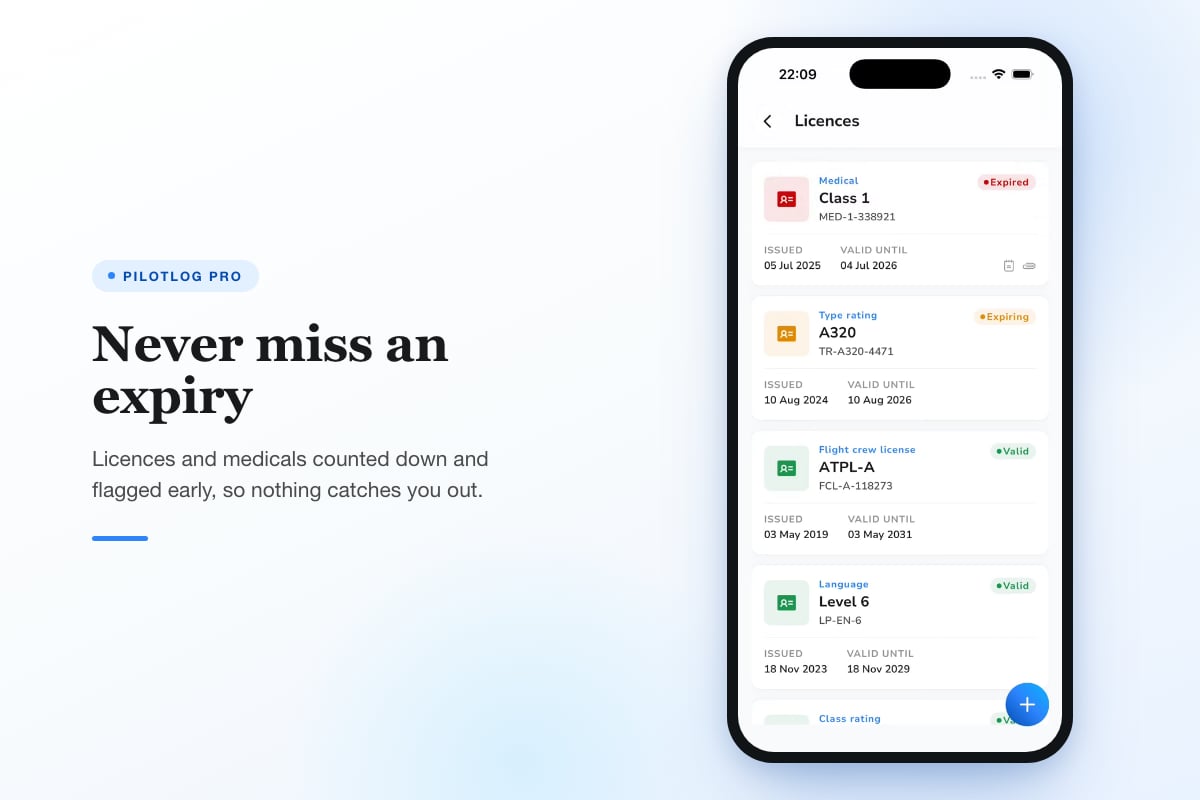
Pilotlog Pro automatically calculates rolling 28-day and 365-day totals, flags currency lapses before they happen, and tracks licence and medical expiries. You log each flight in seconds, and the app handles the arithmetic. That means you and your instructor spend briefing time on learning, not adding columns in a paper logbook.
Ask the Right Questions Before Committing
Before you sign anything or hand over a deposit, interview your potential instructor. These questions separate serious professionals from those just building hours:
- What's your typical student timeline from zero to checkride?
- How do you structure lessons and what syllabus do you follow?
- What's your policy on weather cancellations and rescheduling?
- How do you track student progress between lessons?
- What's your checkride pass rate, and what happens if I fail?
- Can I speak with current or former students?
- What are your personal weather minimums for training flights?
- How do you handle students who plateau or struggle with specific skills?
Good instructors answer these directly and specifically. Vague answers or defensiveness are red flags.
Rebuild Currency with the Right Support
Pilots who've been away from flying often search for a flight instructor near me to regain currency. Under 14 CFR 61.56, pilots need a flight review every 24 calendar months. If you've also lost passenger currency (three takeoffs and landings in the preceding 90 days per 14 CFR 61.57) or night currency (three takeoffs and landings to a full stop at night), you'll need supervised practice before carrying passengers again.
Rusty pilots need instructors comfortable with remedial training. You're not a first-time student, but you're also not current. The best instructors for this work are patient, safety-focused, and willing to let you rebuild skills methodically rather than rushing through a two-hour flight review.
The Pilotlog currency cheat sheet breaks down passenger, night, IFR, and other currency requirements with exact regulatory references. Bookmark it and review before your first flight back.

Transition Instructors for Advanced Ratings
As you progress through ratings, you may need different instructors. Your private pilot CFI may not hold a CFII. Your instrument instructor may not have multi-engine experience. This is normal.
Changing instructors mid-training is common and not a sign of failure. What matters is continuity within each rating. Starting instrument training with one CFII, switching to another for ten hours, then switching back creates gaps and confusion.
When you transition instructors:
- Request a formal handover (written notes or a briefing)
- Share your logbook so the new instructor knows exactly what you've completed
- Expect one or two flights to assess your current skill level
- Discuss any weaknesses or areas where you struggled with the previous instructor
Senior pilots working toward ATP or type ratings face a different challenge. ATP-level instruction requires instructors with significant turbine or airline experience. These instructors are expensive, often $150-250 per hour, and their availability is limited. Book months in advance.
Verify Regulatory Compliance and Insurance
Your instructor should carry professional liability insurance. Flight schools typically carry this as part of their operation. Independent instructors should have their own coverage. Ask directly.
Also verify that the aircraft you'll train in is:
- Properly certificated and insured for training operations
- Equipped to meet the requirements of your intended rating (e.g., IFR-certified GPS for instrument training per AIM)
- Maintained to manufacturer and regulatory standards with current inspections
Under 14 CFR 91.409, aircraft need an annual inspection every 12 calendar months. If it's used for hire (including instruction), it also needs a 100-hour inspection. Check the logbooks before your first flight. This isn't paranoia; it's standard practice.
Move Forward with Confidence
Finding the right flight instructor near me takes research, interviews, and a trial flight. Don't settle for the first result or the cheapest rate. Match qualifications to your training goals, verify currency and safety records, assess teaching style and availability, and understand the full financial commitment before you start.
Aviation safety data consistently shows that quality instruction reduces accident rates and improves pilot decision-making over entire careers. The hours you spend finding the right CFI pay dividends for decades. Take the time to choose well.
Rules, hour requirements, and currency timelines change. Always verify current regulations against official CAA, EASA, or FAA sources before starting training. The information in this article reflects 2026 understanding but should be confirmed with your instructor and the relevant authority.
Finding the right flight instructor transforms your training from a frustrating chore into efficient, confidence-building progress. Once you start flying, keeping your hours, currency, and expiries organised ensures you stay legal and ready. Pilotlog logs every flight in seconds, tracks your rolling totals and currency windows, and alerts you before licences or medicals expire. It's built for pilots across every stage, from students to airline crew, on iOS and Android.
- cfi
- flight instructor
- flight training
- pilot training
- ppl training
A logbook that keeps itself.
Join the waitlist and be first in line when Pilotlog launches.
Free to join, no spam. Unsubscribe any time.