flight logbook app
Flight Discovery: Track, Log, and Stay Current in 2026
15 Oct 2026 · 12 min read

Flight discovery is the process of identifying, logging, and tracking every flight you operate to maintain an accurate record of your hours, currency, and regulatory compliance. For pilots, effective flight discovery means capturing each sector the moment you land, cross-referencing it against rolling currency windows, and spotting upcoming expiries before they catch you off guard. In 2026, with tighter duty limits and more granular currency rules, flight discovery has evolved from pencil logbooks to real-time digital systems that alert you when your night currency or medical is about to lapse.
Why Flight Discovery Matters for Every Pilot
Flight discovery sits at the heart of staying current and legal. Every rating, endorsement, and operating privilege depends on you proving you have flown the right aircraft, in the right conditions, within the right time window. Under EASA Part-FCL, passenger-carrying privileges require three take-offs and landings in the preceding 90 days on the same class or type (FCL.060). Miss that window by a single day and you need a check flight with an examiner or instructor before you can carry passengers again.
Digital flight discovery automates much of this. When you log a sector, the system immediately updates your rolling totals for the past 28 days, 90 days, 12 months, and lifetime. It flags which currencies are still valid, which are about to lapse, and which have already expired. That instant feedback loop turns flight discovery into a risk-management tool, not just a compliance chore.
Key benefits of systematic flight discovery:
- Immediate visibility of your current currency status across all ratings
- Early warnings for licences, medicals, and recency requirements
- Accurate career totals for job applications, insurance, and command upgrades
- Audit-ready records if the CAA or an operator requests proof

How Pilots Perform Flight Discovery Today
Modern flight discovery blends several data sources. Most pilots still manually enter each sector into a logbook app or spreadsheet immediately after landing. You record date, departure and arrival airports, aircraft registration, flight time, landings, and any instrument approaches. That manual entry is the foundation, but the real power comes from what happens next.
Automatic Currency Calculations
Once the flight is logged, your digital logbook recalculates every relevant currency window. If you just flew a night VFR sector with one landing, the system checks whether you now have the required take-offs and landings in the past 90 days to carry passengers at night. It does the same for IFR recency, multi-engine time, and any endorsements you hold. This automated flight discovery prevents the classic mistake of assuming you are current when you have actually slipped out of recency by a few days.
Integration with Official Databases
Some platforms pull live data from FlightAware or ADS-B Exchange to prefill departure and arrival times, aircraft type, and route. This integration speeds up data entry and reduces transcription errors. However, you remain responsible for verifying the logged details, especially for currency-critical fields like night time, instrument time, and PIC vs dual.
Expiry Alerts and Notifications
Flight discovery is not just about the flights you have completed; it is also about the deadlines you are approaching. A good system monitors your licence validity, medical expiry, rating renewals, and recurrent training due dates. It sends push notifications or email alerts 60, 30, and 14 days before an item lapses, giving you time to book the examiner or AME appointment.
| Currency Type | Requirement (EASA FCL.060) | Discovery Window | Alert Lead Time |
|---|---|---|---|
| Passenger (day) | 3 T/O & L in 90 days | Rolling 90 days | 30 days before lapse |
| Passenger (night) | 3 T/O & L (night) in 90 days | Rolling 90 days | 30 days before lapse |
| IFR (SE piston) | 1 hour, 1 approach in 90 days | Rolling 90 days | 30 days before lapse |
| Class 1 medical | 12 months (under 40) / 6 months (over 40) | Fixed expiry | 60 days before expiry |
Flight Discovery Across Different Pilot Populations
Flight discovery looks different depending on where you are in your career. A student pilot working toward a PPL needs to track dual and solo hours, cross-country distance, and instrument time under the hood. An airline first officer managing a roster of 80 sectors per year must monitor flight-duty period limits, rolling 28-day and 365-day totals, and line checks. Both rely on flight discovery, but the complexity and automation requirements diverge sharply.
Students and Private Pilots
If you are building hours toward a CPL or ATPL, flight discovery means meticulously logging every minute of PIC, dual, solo, cross-country, night, and instrument time. Each category feeds into the licensing requirements, and under-reporting even a few hours can delay your checkride or force expensive make-up flights. Many students still use paper logbooks endorsed by instructors, but digital options now let you export a PDF logbook with instructor e-signatures for CAA submission.
Commercial and Airline Pilots
For professional pilots, flight discovery extends to duty-time and rest-period tracking. European regulations (EU-OPS / EASA FTL) impose rolling limits on flight time (900 hours in any calendar year, 100 hours in any 28 consecutive days) and cumulative duty periods. Modern crew-management systems auto-populate rosters, but you remain legally responsible for verifying the data. Cross-checking your personal flight discovery records against the operator's roster is standard practice during audits or incident investigations.
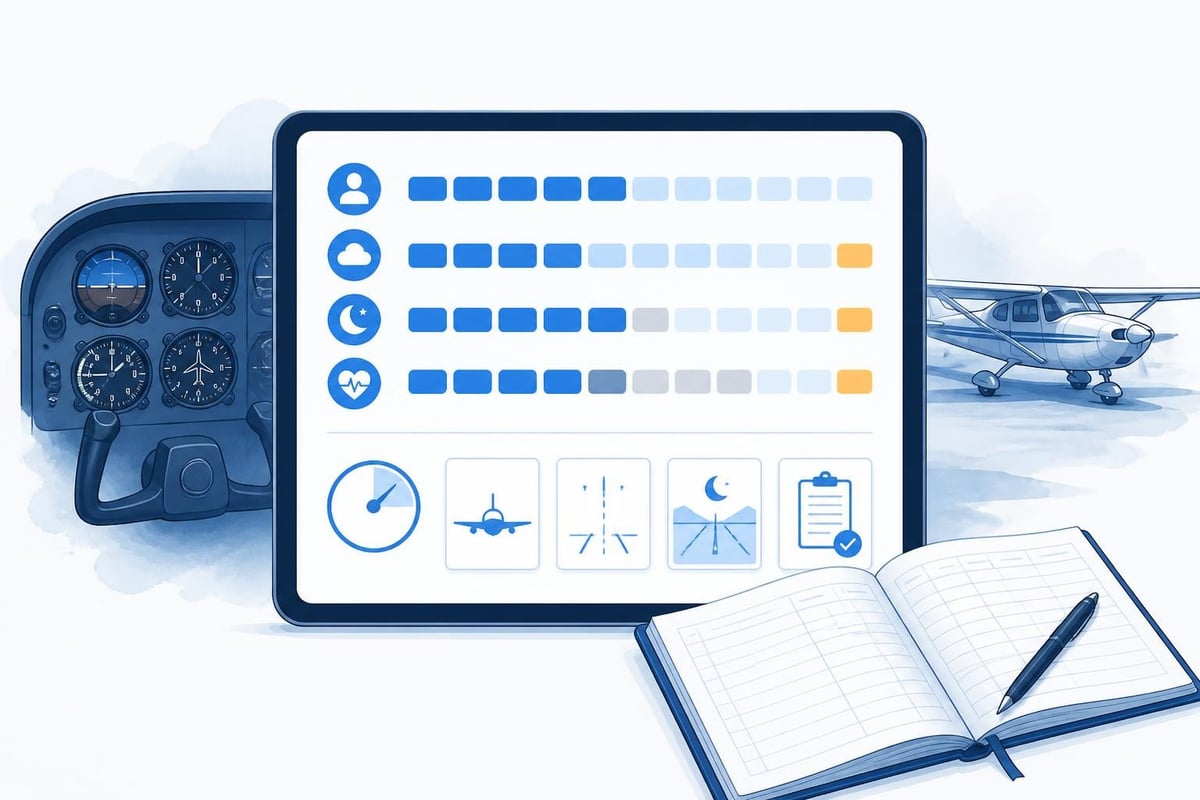
Data Sources That Power Flight Discovery
Effective flight discovery depends on reliable, timely data. In 2026, pilots and operators draw on a mix of official schedules, live surveillance feeds, and crowdsourced position data.
Official airline schedules come from sources like OAG, which aggregates SSIM (Standard Schedules Information Manual) data from hundreds of carriers. These schedules tell you planned departure and arrival times, aircraft type, and flight numbers, but they do not reflect real-time delays or cancellations.
Live ADS-B and ADS-C feeds provide actual position reports from aircraft transponders. The OpenSky Network publishes open APIs for researchers and developers, and recent studies (OpenSky Report 2025) show how combining ADS-C satellite data with crowdsourced ADS-B improves global trajectory coverage. For pilots, this means more accurate flight times and the ability to verify logged data against independent surveillance records.
NextGen and SWIM (System Wide Information Management) initiatives, documented in the FAA NextGen Final Report 2025, aim to share aeronautical data across stakeholders in near-real time. While these programs target air-traffic management and flow optimization, the underlying infrastructure also supports better flight discovery by making authoritative departure, arrival, and delay information available to third-party apps.
Machine Learning and Predictive Alerts
Emerging research (arXiv 2024) applies machine learning to predict flight delays and disruptions based on historical patterns, weather, and network congestion. For flight discovery, predictive models can flag high-risk sectors where you might lose currency due to cancellations or where scheduling conflicts could push a checkride past your expiry date. While still experimental, these tools will likely become standard in professional logbooks within the next few years.
Practical Steps for Effective Flight Discovery
You can improve your flight discovery process today with a few straightforward changes.
- Log every flight within 24 hours. Memory fades, and details like instrument approaches or night landings are easy to misremember.
- Use a digital logbook that auto-calculates currency. Manual spreadsheets work, but they do not alert you when you are about to lapse.
- Cross-check against official sources. If you fly commercially, verify your logged sectors against the operator's roster or published flight data.
- Set calendar reminders for non-flight items. Medical exams, rating renewals, and recurrent training do not appear in your flight log, so add them to your calendar and your logbook's expiry tracker.
- Export and back up your logbook regularly. Keep a PDF or CSV backup in cloud storage. If your device fails or your app shuts down, you need an independent copy.
Pilots who fly irregularly face the steepest flight discovery challenge. If you only log 20 hours per year, you might go months between sectors and forget which currencies you hold. A digital logbook with push notifications bridges that gap by reminding you when your passenger currency is about to lapse, giving you time to book a local flight and restore recency.
Flight Discovery and Regulatory Compliance
Regulators expect you to prove your hours, currency, and experience on demand. During a ramp check or licence renewal, the CAA may ask to see your logbook, medical certificate, and recent flight records. If your flight discovery system is incomplete or inaccurate, you risk enforcement action, even if you were genuinely current at the time of the flight.
Common compliance pitfalls:
- Logging night time incorrectly (night is defined as 30 minutes after sunset to 30 minutes before sunrise in EASA states, or the period between the end of evening civil twilight and the beginning of morning civil twilight in the UK)
- Counting dual-received time as PIC when you do not hold the rating
- Missing instrument approaches that do not count toward recency because they were flown in VMC without an instrument rating
A robust flight discovery process catches these errors before they become audit findings. By tagging each flight with the correct categories at the time of entry, you build a defensible, auditable record that stands up to regulatory scrutiny.

How Pilotlog Pro Simplifies Flight Discovery
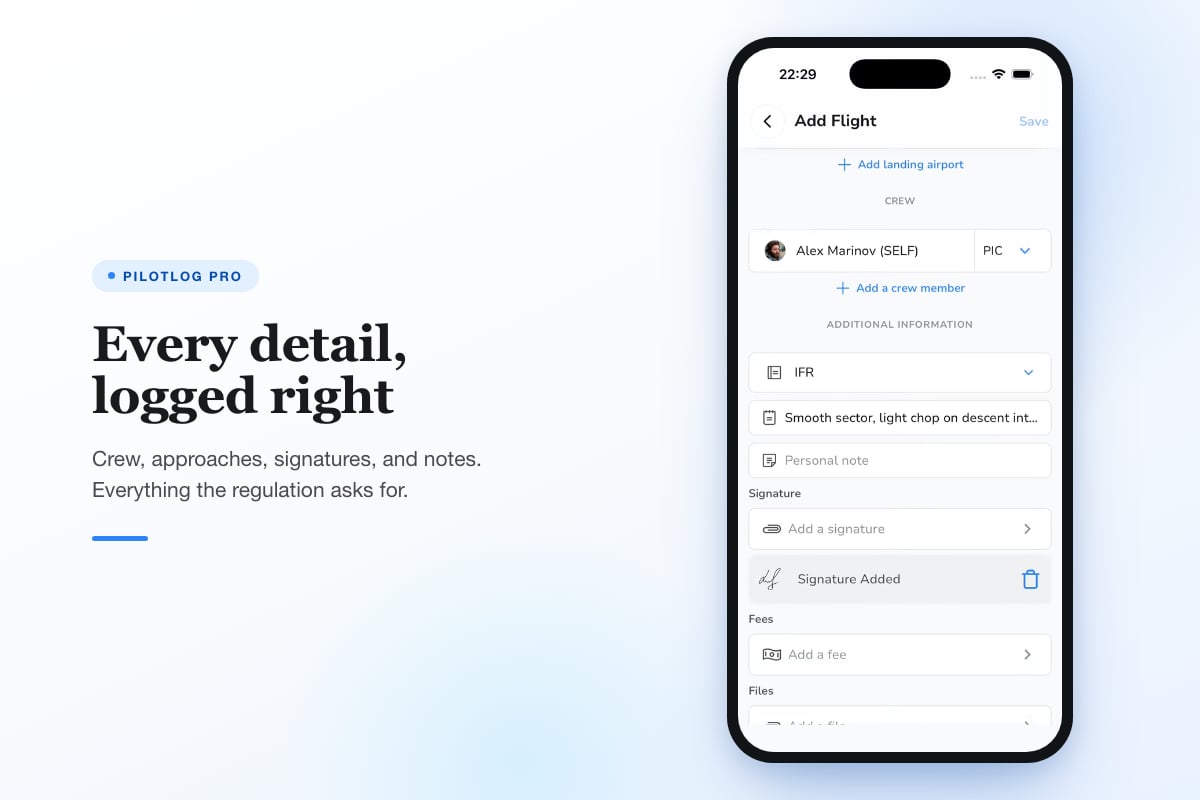
Tracking every flight, currency window, and expiry manually is time-consuming and error-prone. Pilotlog Pro automates the entire flight discovery workflow. Log a sector in seconds and the system recalculates your rolling 28-day and 365-day flight-time and duty limits, updates passenger, night, and IFR currency with exact lapse dates, and flags licence and medical expiries well in advance. You also get career stats, trends, and milestones, plus full logbook export for job applications or CAA submissions. Built for pilots at every stage, from students logging dual time to airline crew managing complex rosters, Pro keeps you current, legal, and ready without the spreadsheet overhead.
Advanced Flight Discovery Techniques
Experienced pilots often layer additional data onto basic flight logs. You might track fuel burns, passenger loads, or specific airport conditions to build a richer operational history. Some log every ILS, RNAV, or circling approach separately to prove proficiency for insurance or type-rating renewals. Others annotate unusual weather, turbulence, or ATC delays to support post-flight debriefs or safety reports.
Custom Tags and Notes
Most digital logbooks let you add free-text notes and custom tags. Use these fields to record anything relevant to future flight discovery: "First solo cross-country," "Passed instrument checkride," or "Night currency restored." When you review your logbook months later, these tags help you reconstruct what happened and why it mattered.
Integration with Scheduling and Dispatch
If you operate under Part-NCC or Part-CAT, your operator's dispatch system may auto-populate your logbook with planned flights. You still need to verify and sign off each entry, but the pre-fill saves time and reduces typos. Some pilots export their personal logbook to CSV, merge it with roster data, and re-import the combined file for a complete flight discovery record that spans duty time, rest periods, and regulatory limits.
The Future of Flight Discovery
Looking ahead, expect tighter integration between logbooks, operator systems, and official data sources. The IATA NDC initiative is reshaping how airlines distribute flight information, and similar standards may emerge for crew and operational data. Blockchain-based logbooks, where each flight is hashed and timestamped on a distributed ledger, promise tamper-proof records that regulators and insurers can trust without manual audits.
Artificial intelligence will also play a larger role. Imagine a logbook that not only calculates your currency but also suggests which flights to book next to maintain recency across all your ratings, or that predicts when your career total will hit the next insurance or hiring threshold. These tools are already in development, and early adopters will gain a competitive edge in job markets where accurate, real-time flight discovery is the baseline expectation.
Emerging trends in flight discovery:
- Real-time sync between operator rosters and personal logbooks
- AI-driven scheduling assistants that optimize currency maintenance
- Regulatory APIs that auto-verify licence and medical status
- Blockchain-timestamped flight records for audits and insurance
Flight Discovery Best Practices
Consistency matters more than complexity. A simple logbook maintained every day is more valuable than a sophisticated system you only update monthly. Set a post-flight routine: park the aircraft, complete the shutdown checks, and log the flight before you leave the apron. That discipline ensures your flight discovery data is always current and complete.
Review your logbook monthly, even if you fly every day. Check that your totals match your expectations, verify that currency alerts are accurate, and reconcile any discrepancies with official records. This monthly audit catches data-entry errors early and gives you confidence that your logbook will hold up under regulatory review.
Finally, treat your logbook as a career asset. Your flight discovery records support every rating upgrade, every job application, and every insurance renewal. Invest the time to keep them accurate, back them up regularly, and store them in a format that will remain readable for decades. A well-maintained logbook is the single best investment you can make in your aviation career.
Flight discovery transforms raw flight data into the currency, totals, and compliance proof you need to stay legal and advance your career. By logging every sector promptly, automating currency calculations, and monitoring expiries, you turn routine record-keeping into a strategic advantage. Pilotlog makes this process effortless: log flights in seconds, track hours and currency automatically, and receive alerts for licences and medicals before they lapse, all on iOS and Android. Start building a complete, audit-ready flight discovery record today.
- flight logbook app
- flight currency tracking
- easa fcl.060
- pilot recency requirements
- digital logbook
A logbook that keeps itself.
Join the waitlist and be first in line when Pilotlog launches.
Free to join, no spam. Unsubscribe any time.