flight schools
Learn to Fly a Plane Near Me: Complete 2026 Guide
22 Oct 2026 · 14 min read
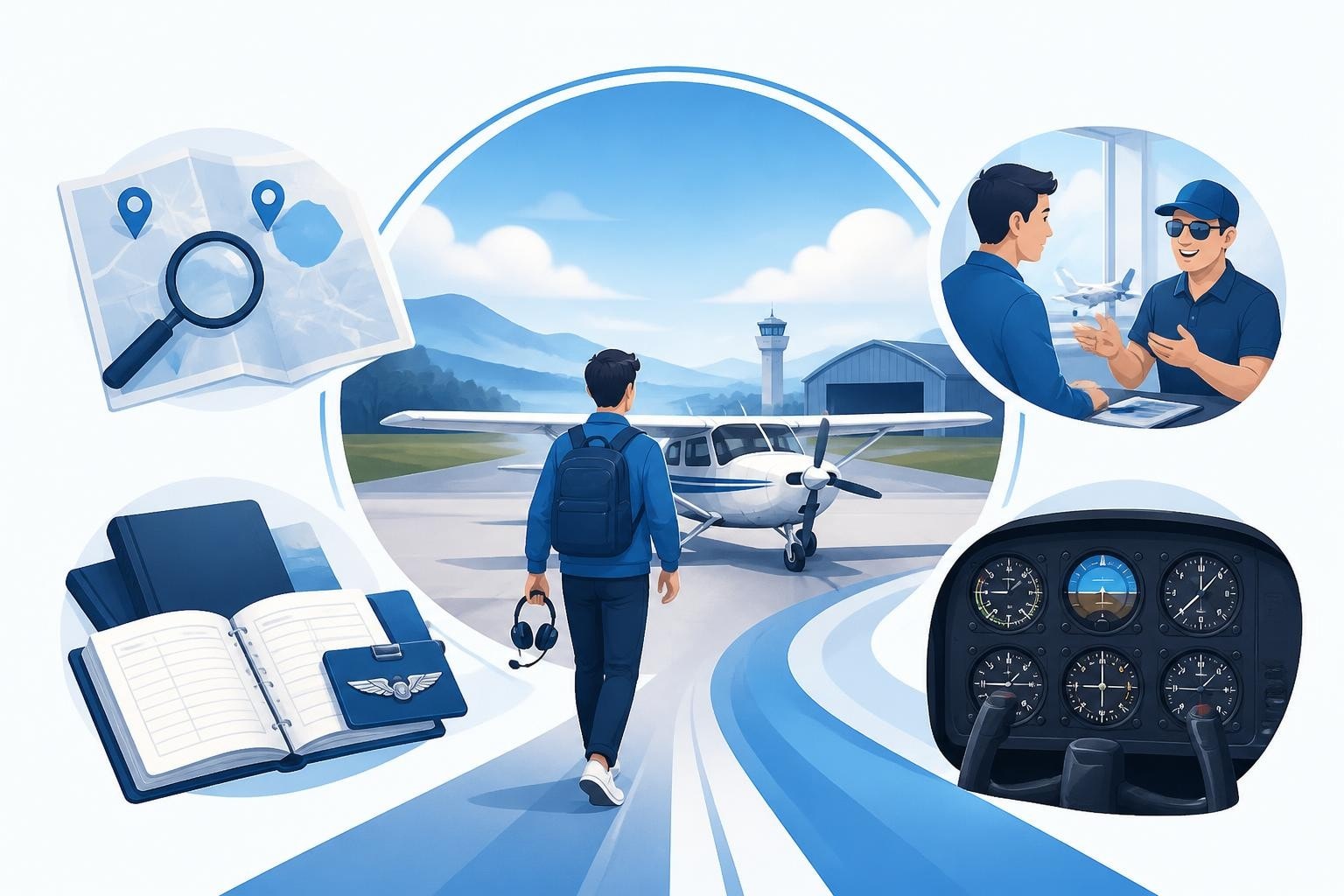
When pilots search "learn to fly a plane near me", they want practical answers about local flight schools, costs, and how to start training without travelling across the country. The good news: nearly every region of the United States and the UK has accessible flight training, from small airfields running Part 61 programmes to university aviation departments offering structured degrees. This guide covers how to find quality instruction close to home, what to ask before you commit, and how to track your progress from day one.
Finding Flight Schools in Your Area
Your local airport is the obvious first stop. Even small general aviation fields often host at least one flight school or independent instructor. Start by visiting AOPA's guidance on choosing where to train, which includes a flight school finder tool that maps certified schools across the United States.
Walk onto the ramp and ask. Fixed-base operators (FBOs) can point you toward active instructors, and many operate their own training fleets. If the field feels too quiet, try the next closest airport. Driving an extra twenty minutes often opens up more options and competitive pricing.
Part 61 Versus Part 141 Schools
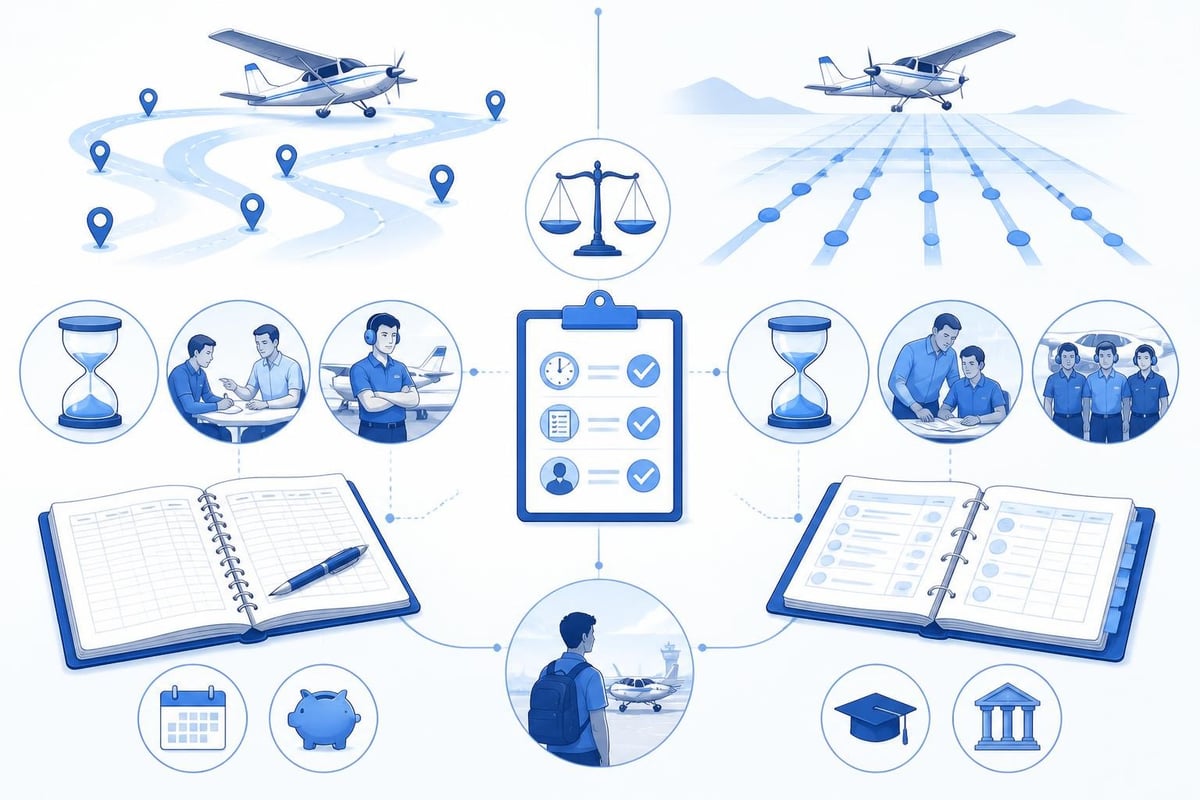
When you learn to fly a plane near me, you will encounter two regulatory frameworks: Part 61 and Part 141. Both lead to the same FAA private pilot licence, but the structure differs.
- Part 61 allows flexible, individually tailored training. Minimum required hours: 40 (realistically, most students finish between 55 and 70).
- Part 141 follows an FAA-approved syllabus with stricter stage checks and progress tests. Minimum required hours: 35, though actual completion times are similar to Part 61.
- Part 141 may be necessary if you plan to use VA benefits or certain scholarships that require structured programmes.
Most independent instructors and small clubs operate under Part 61. Larger academies and university programmes often hold Part 141 certificates. Neither is inherently better; your choice depends on schedule flexibility, funding, and learning style.
Evaluating Local Instructors and Aircraft
Once you identify a few schools within driving distance, visit in person. Email and phone calls tell you opening hours; a ramp visit shows you the real operation.
Check the aircraft logbooks. Ask to see the maintenance records for the trainers you will fly. Look for consistent 100-hour inspections, annual inspections signed off on time, and squawks addressed promptly. The FAA requires detailed aircraft maintenance documentation, and any hesitation to show you the logs is a red flag.
Meet your instructor. Ask how many students they currently teach, their availability, and their pass rates on checkrides. A good instructor will have recent students you can contact as references. Avoid anyone who rushes you or dismisses questions about safety culture.
Fly the trainer. Most schools offer a discovery flight for £100 to £150 (or $150 to $200 in the United States). You will sit left seat, take the controls, and see if the aircraft and instructor feel right. If the aeroplane feels tired or the instructor spends the flight on their phone, walk away.
| What to Check | Why It Matters | Red Flags |
|---|---|---|
| Maintenance logs | Aircraft airworthiness and safety culture | Missing entries, overdue inspections, vague squawk resolutions |
| Instructor availability | Consistent training pace, fewer gaps between lessons | Booked solid for months, frequent cancellations, no backup CFI |
| Fleet age and condition | Reliability, modern avionics, training efficiency | Peeling paint, worn interiors, outdated panels with no GPS |
| Safety record | School's commitment to risk management | Recent accidents, NTSB reports, dismissive attitude toward safety questions |
Understanding the True Cost of Training
National averages hide huge regional variation. When you learn to fly a plane near me, expect costs to reflect local demand, fuel prices, and aircraft availability. The Redbird Flight Training 2025 report shows the median private pilot licence in the United States now costs between $12,000 and $16,000, with coastal cities and university programmes running higher.
Break the total into components:
- Aircraft rental: $140 to $220 per hour (Cessna 172 or Piper Warrior, including fuel)
- Instructor fee: $60 to $90 per hour
- Ground school: $300 to $800 (online or in-person group course)
- Books and materials: $200 to $400
- FAA written exam: $175
- FAA medical certificate: $100 to $200 (Class 3 or BasicMed; see FAA medical certification)
- Checkride (DPE fee): $600 to $900
- Misc (headset, charts, supplies): $300 to $600
Total at 60 hours: roughly $13,500 to $18,000 depending on location. University degree programmes can exceed $100,000 over four years. For example, Southeast Missouri State's professional pilot cost sheet shows multi-year programmes approaching six figures when you include tuition, housing, and advanced ratings.
Scholarships and Funding Options
If cost is a barrier, apply for scholarships early. The AOPA Flight Training Scholarships award thousands of dollars annually to student pilots. The EAA Flight Training Scholarships, including the Ray Scholarship, cover a significant portion of training costs for young aviators.
Many scholarships require you to train at a participating school or with an EAA chapter, so confirm eligibility before you commit to a particular instructor.
Medical Certificate and Legal Requirements
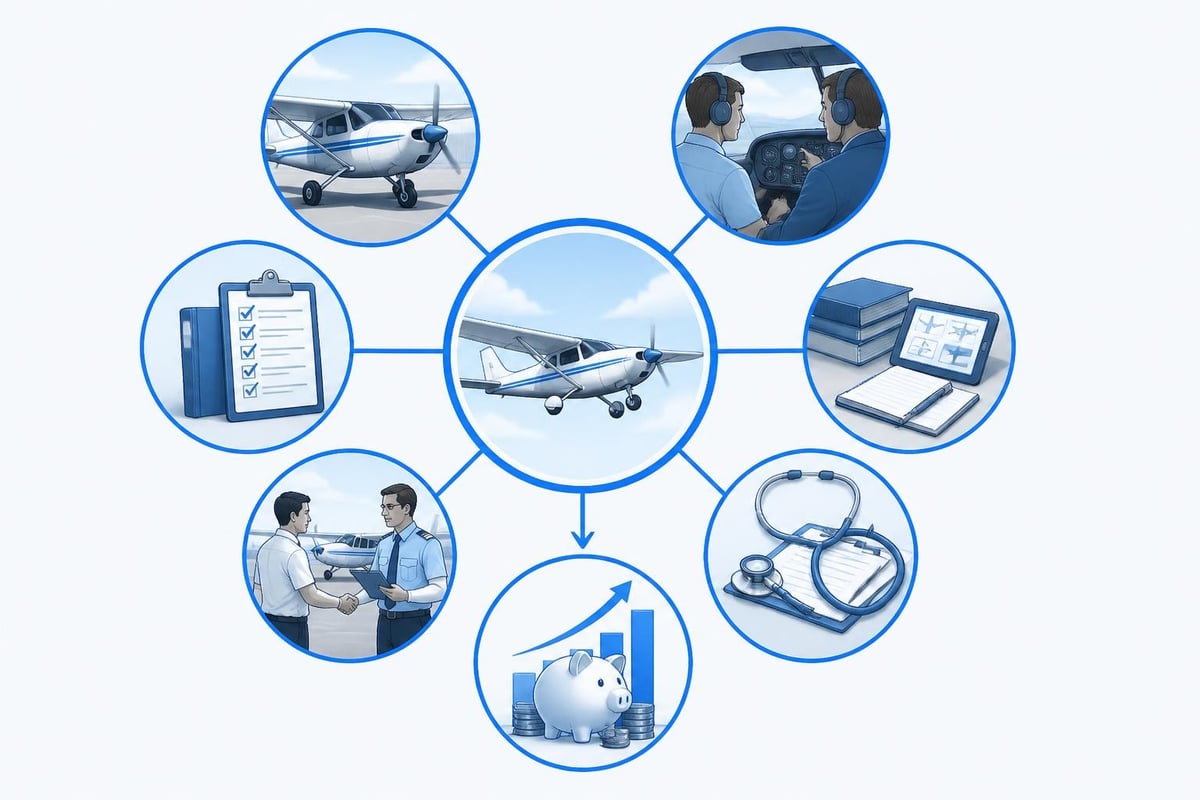
Before you solo, you need a medical certificate. The FAA offers three classes, but most private pilots pursue a Class 3 medical or BasicMed. A Class 3 is valid for 60 calendar months if you are under 40, or 24 months if you are 40 or older (14 CFR 61.23).
BasicMed lets you fly without an FAA medical if you meet specific conditions: you hold a valid driver's licence, completed a medical education course online, and had a physical exam by any state-licensed physician within the previous 48 months. BasicMed works for most light aircraft under 6,000 lb and fewer than six seats, flying below 18,000 ft and 250 knots.
Visit an Aviation Medical Examiner (AME) for a Class 3. The exam costs $100 to $200 and covers vision, hearing, cardiovascular health, and mental fitness. If you have a history of certain conditions (diabetes on insulin, cardiac issues, or specific medications), the AME may defer your application to the FAA for further review. Plan ahead: a deferral can take weeks or months to resolve.
Tracking Your Training Progress
From your first lesson, you will log every flight. The FAA requires a record of flight time, including:
- Date and aircraft registration
- Departure and arrival airports
- Total time, including solo and dual
- Conditions (day, night, VFR, IFR, simulated instrument)
- Manoeuvres and procedures practiced
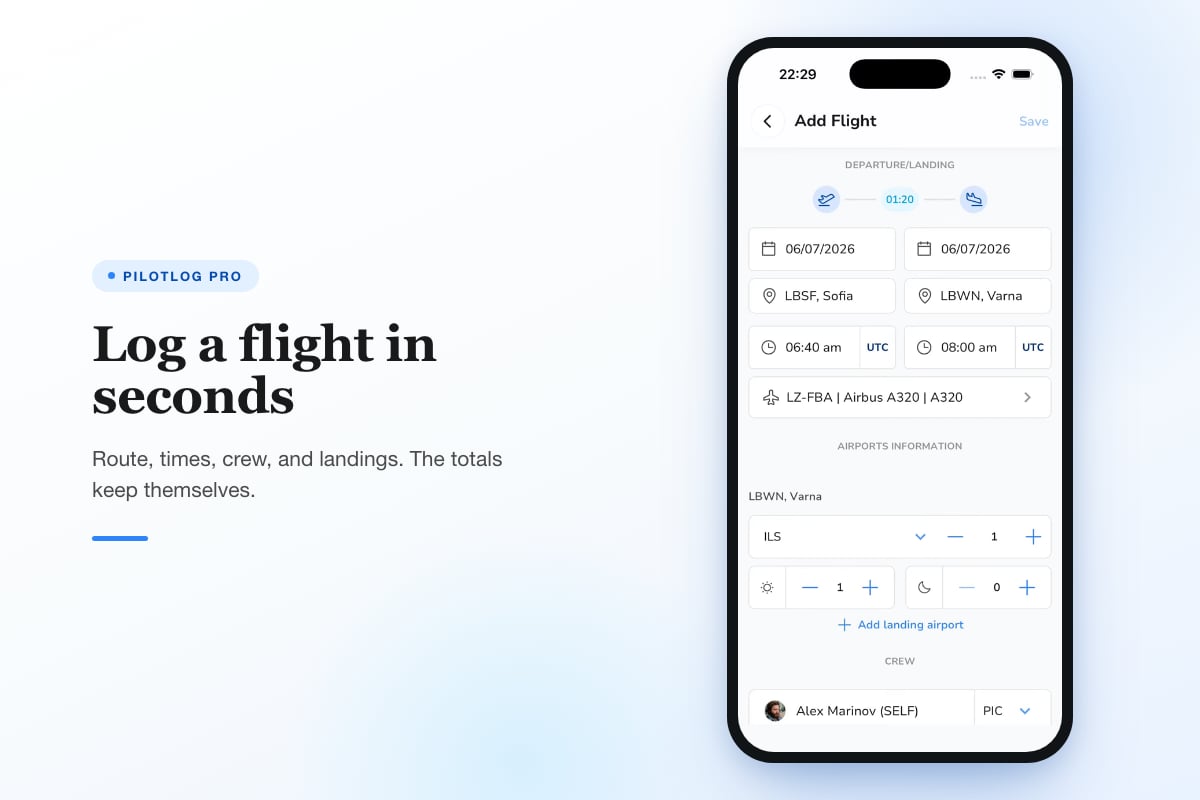
Paper logbooks work, but they are easy to lose and hard to query when you need to prove currency. A digital logbook like Pilotlog keeps your hours safe, calculates rolling totals, and flags upcoming expiries. You can log a flight in seconds and let the software track your progress toward licence requirements, passenger currency (three takeoffs and landings in 90 days per 14 CFR 61.57), and medical expiry.
Pilotlog Pro adds career statistics, trends, and full logbook export, so you have a complete record ready for interviews, insurance renewals, or type-rating applications.
Solo and Cross-Country Milestones
Your instructor will endorse you for solo flight once you demonstrate consistent landings, emergency procedures, and good decision-making. FAA regulations (14 CFR 61.87) require at least 10 hours of flight training, including specific manoeuvres and three solo takeoffs and landings.
After solo, you will plan cross-country flights. The FAA defines a cross-country as a flight with a landing at an airport more than 50 nautical miles from the departure point (14 CFR 61.1). You need at least 5 hours of solo cross-country time for the private pilot licence, including one flight of at least 150 nautical miles total distance with full-stop landings at three points.
Document every flight immediately. Note weather (grab the METAR), fuel burn, route, and any lessons learned. This habit builds the foundation for a professional logbook you will rely on for decades.
Checkride Preparation and Pass Rates
The private pilot checkride has two parts: an oral exam and a flight test. Your examiner (a Designated Pilot Examiner, or DPE) will quiz you on regulations, weather, airspace, aerodynamics, and flight planning. Expect two to three hours of oral questioning, followed by 60 to 90 minutes in the aeroplane demonstrating manoeuvres within the FAA Airman Certification Standards.
National first-time pass rates hover around 80 per cent for private pilot applicants. If you fail a portion, you will retest only that section after additional training with your instructor. Most schools schedule a mock checkride a week or two before the real thing to identify weak areas.
Continuing After the Private Licence
Once you hold a private pilot licence, you can carry passengers, fly cross-country, and rent aircraft at any FBO in the country (subject to checkout requirements). But your learning does not stop. Many pilots immediately pursue an instrument rating (40 hours of instrument time, 50 hours cross-country PIC per 14 CFR 61.65) to fly in clouds and low visibility.
Others add a complex or high-performance endorsement, explore tailwheel flying, or work toward a commercial licence. Each step requires precise logging of flight time, approaches, holds, and other tasks. A digital logbook becomes essential as your experience grows and your currency requirements multiply.
Safety Culture and Accident Data
General aviation has measurably improved its safety record over the past two decades. The NTSB Civil Aviation Dashboard tracks accident rates per 100,000 flight hours, showing a steady decline in fatal accidents among private pilots. However, loss of control, fuel mismanagement, and VFR into IMC remain leading causes.
When you learn to fly a plane near me, choose a school that treats safety as non-negotiable. Ask about their safety management system, how they handle weather minimums, and whether they encourage students to cancel flights when conditions are marginal. The NTSB Aviation Information Resources publish accident dockets and safety alerts you can study to learn from others' mistakes.
Regional Variations: United Kingdom and EASA
If you are based in the UK, the process differs slightly. The Civil Aviation Authority (CAA) oversees flight training, and most pilots pursue an EASA Private Pilot Licence (PPL). Minimum required hours: 45, though the average is closer to 55 to 60. The UK CAA guidance on learning to fly covers first steps, medical requirements (Class 2 medical), and how to find a training organisation near you.
EASA regulations require specific currency: to carry passengers, you need three takeoffs and landings in the preceding 90 days on the same class or type (EASA Part-FCL, FCL.060). Night currency demands one takeoff and landing at night in the same period if you plan to fly passengers after sunset.
UK flight schools often operate under an Approved Training Organisation (ATO) certificate. Costs are similar to the United States once you account for exchange rates: expect £8,000 to £12,000 for a PPL(A) including exams, medicals, and materials.
Practical Steps to Start This Week
Stop researching and start doing. Here is a five-step plan:
- Visit three local airports. Walk into the FBO, ask for the chief flight instructor, and request a tour of the fleet.
- Book a discovery flight. Choose the school that felt most welcoming and professional. Fly the aeroplane.
- Apply for a medical certificate. Schedule an appointment with an AME this month. Do not wait until you have logged hours; a deferral or denial will halt your training.
- Start ground school. Online courses (Sporty's, King Schools, Pilot Institute) let you study regulations, weather, and aerodynamics before your first lesson. You will solo faster if you arrive with knowledge.
- Set up a digital logbook. Log your discovery flight. Track each lesson. Pilotlog keeps your data safe and calculates your totals automatically, so you always know where you stand.
| Step | Timeline | Cost | Why It Matters |
|---|---|---|---|
| Visit airports | This week | Free | Narrows your school options, shows you the local training environment |
| Discovery flight | Within 2 weeks | $150–$200 | Confirms you enjoy flying, tests the instructor and aircraft |
| Medical exam | Within 1 month | $100–$200 | Identifies any deferral issues early, before you invest heavily in training |
| Ground school | Start immediately | $300–$500 | Accelerates flight training, reduces total dual hours needed |
| Digital logbook | Before first lesson | Free (basic) | Establishes accurate records from day one, simplifies endorsements and currency tracking |
How Training Pace Affects Total Cost
Flying twice a week cuts your total cost compared to once a month. Longer gaps mean you spend the first 15 minutes of each lesson relearning what you forgot. The Redbird report shows students who fly at least twice weekly finish in 55 to 65 hours; those who fly monthly often exceed 80 hours, adding thousands to the final bill.
Block your calendar. Treat flight lessons like any other non-negotiable commitment. If your instructor cancels frequently or the aeroplane is down for maintenance every other week, consider switching schools. Consistency matters more than proximity when you learn to fly a plane near me.
Choosing Between Independent Instructors and Schools
Independent CFIs often charge less per hour and offer flexible scheduling. You can meet them at any airport, rent an aeroplane from an FBO, and train on your own timetable. The downside: if your instructor leaves town or gets hired by an airline, you start over with someone new.
Flight schools provide continuity. If your primary instructor is unavailable, another CFI familiar with the syllabus can step in. Schools also carry insurance that covers instructional flights, simplifying rental agreements. Larger schools may have simulators, which reduce costs for instrument and emergency training.
Neither model is universally superior. Evaluate based on instructor quality, aircraft condition, and your own learning style.
International Licence Conversion
Pilots who hold an EASA PPL can convert it to an FAA private pilot certificate under 14 CFR 61.75, provided they pass the FAA written exam and demonstrate English proficiency. Similarly, FAA licence holders can validate their certificate in EASA states, though specific rules vary by country.
If you train in one system and later move, expect to complete additional ground school and possibly a skills test to meet the new authority's standards. Keep detailed logbook records from day one; conversion examiners will scrutinise your training history.
Weather, Seasons, and Training Interruptions
If you live in a region with harsh winters or monsoon seasons, plan your training around the weather. Starting in late spring or early autumn gives you the best chance of consistent VFR conditions. Winter training in northern states often means weeks between lessons due to ice, snow, or low ceilings.
Coastal areas face marine layers and afternoon sea breezes. Mountain states deal with density altitude and gusty winds. Desert regions offer clear skies but extreme heat that reduces aircraft performance. Ask your instructor how local weather patterns will affect your schedule, and build extra time into your budget.
The Role of Simulators in Local Training
Many schools now integrate FAA-approved Advanced Aviation Training Devices (AATDs) into their syllabi. You can log up to 2.5 hours of AATD time toward the instrument training required for a private pilot licence (14 CFR 61.109), and simulators cost $40 to $80 per hour, far less than an actual aeroplane.
Simulators excel at teaching instrument scanning, emergency procedures (engine failures, electrical fires), and unusual attitudes. They are terrible at landings and real-world decision-making. Use them for procedures and systems; fly the aeroplane for stick-and-rudder skills.
Regulations Change: Verify Current Requirements
This article cites FAA and EASA regulations current as of October 2026. Rules evolve. Always confirm hour requirements, medical standards, and currency rules against the latest official sources before you make decisions that affect your training or budget.
Finding the right flight school close to home takes research, but the effort pays off in lower costs, faster progress, and a network of local pilots who will support your aviation journey for years. Whether you train under Part 61 with an independent instructor or enrol in a university Part 141 programme, accurate logging from day one sets you up for success. Pilotlog keeps your hours, currency, and expiries organised across your entire career, from student pilot to airline captain, so you stay current, legal, and ready for every flight.
- flight schools
- learn to fly
- flight training cost
- part 61 vs 141
- pilot license
A logbook that keeps itself.
Join the waitlist and be first in line when Pilotlog launches.
Free to join, no spam. Unsubscribe any time.