Article
How to Pilot an Aircraft: A Beginner's Guide
24.11.2026 г. · 6 мин четене
Тази статия е на английски.
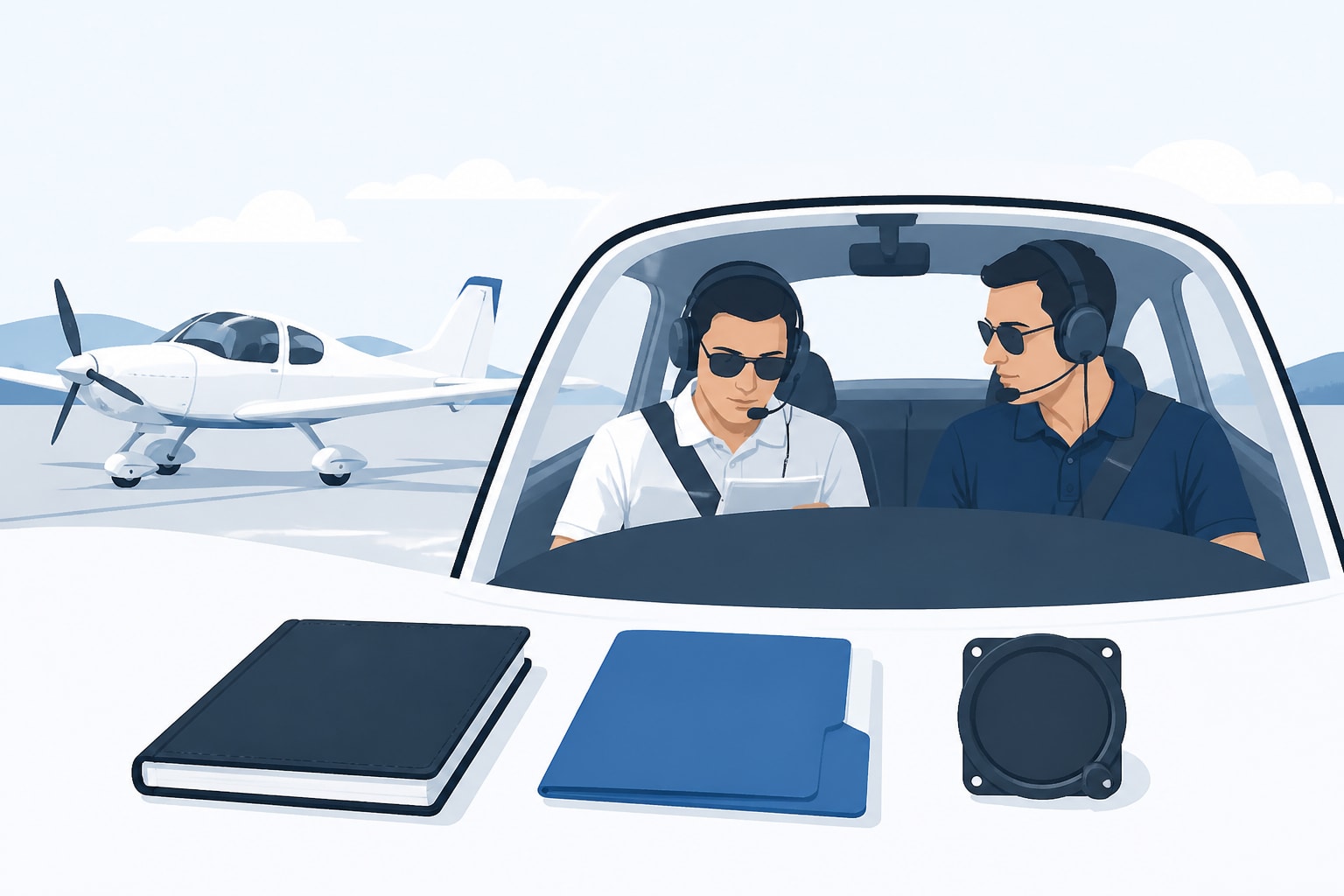
To pilot an aircraft, you learn the four basic controls, train with an instructor, pass a medical, and meet your licensing authority's theory, flight-hour and skill-test requirements. In Europe that authority is EASA, or the UK CAA in the United Kingdom. In the United States it is the FAA. Most people start with a trial lesson and have a private licence within a year or two, depending on weather, budget and how often they fly.
This guide takes you from the first lesson to a logged, current pilot, using EASA Part-FCL and UK CAA rules by default. FAA rules appear only where labelled.
How do you learn to pilot an aircraft?
You learn by combining ground school with dual flight instruction, then flying solo once your instructor judges you ready.
Ground school covers air law, meteorology, navigation, aircraft systems and human performance. Flight training builds from the basics to the circuit, navigation and your first solo. Every flight sits in your logbook from lesson one, so start logging properly on day one.
What are the four controls and the basic flying skills?
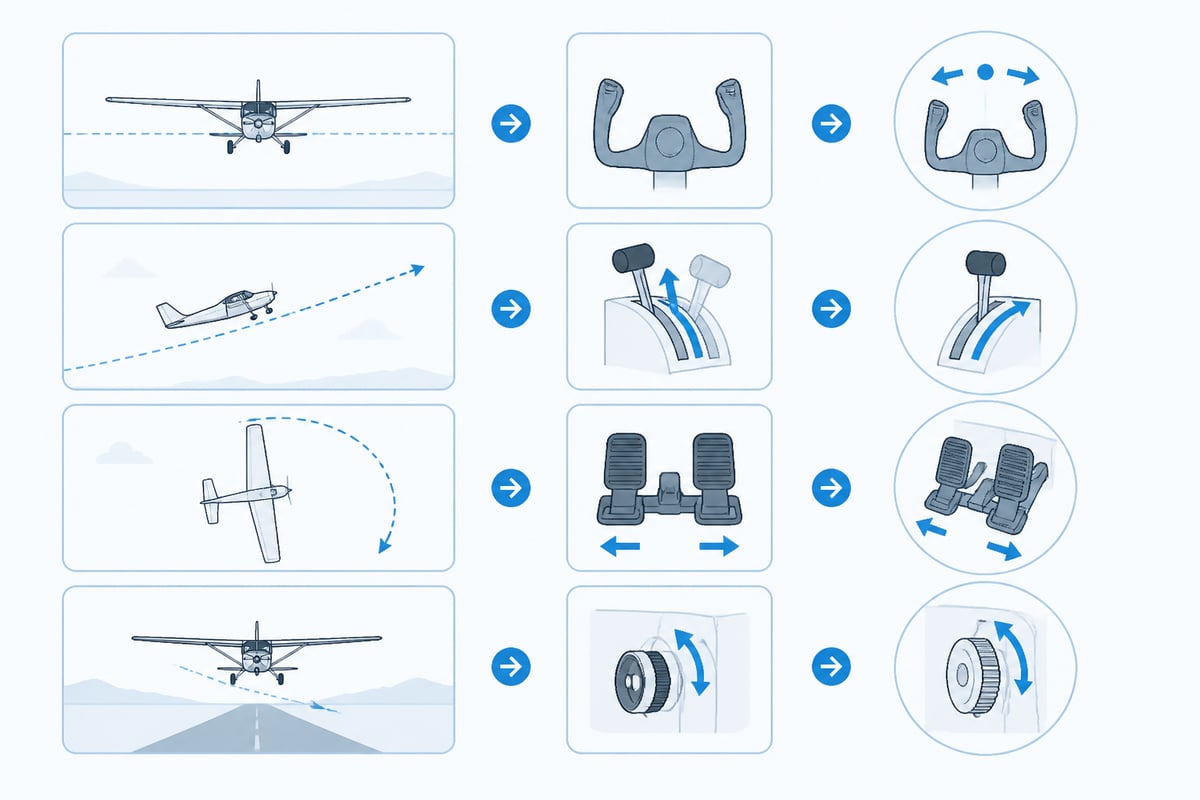
A light aeroplane is flown with the control column (or yoke), rudder pedals, throttle and trim, and four skills come first.
- Straight and level. Hold altitude and heading using attitude and trim.
- Climbing and descending. Set power and pitch together, then trim.
- Turns. Bank with the ailerons, balance with the rudder, and keep the nose on the horizon.
- Take-off and landing. The hardest part of early training, and the most practised.
You also learn the checks that keep you safe: pre-flight inspection, checklists, radio calls and lookout. Treat them as part of the flying, not extras.
What do you need before you can fly solo?
You need to meet your authority's age, medical and training requirements before you fly without an instructor.
In the United States, a student pilot certificate is required before flying solo, but not to take flying lessons, according to the FAA. Applicants must be at least 16 years old for aircraft other than gliders or balloons, and must be able to read, speak, write and understand English under 14 CFR Part 61, Subpart C. The FAA also advises students to get a medical certificate before starting training, as one is required before solo flight in an airplane, subject to exceptions.
Under EASA rules, you need a medical certificate matched to your licence. Book the medical early, because a problem found after many hours of lessons is an expensive surprise.
How long does it take to get a licence?
Training time depends on your authority and licence type, and the hours are minimums, not targets.
EASA says a private pilot licence for aeroplanes requires around 100 hours of theory lessons and 45 hours of flight instruction. Many students fly more than the minimum before the skill test. Weather, flying frequency and revision habits all move the date.
The usual route:
- Trial lesson and medical
- Ground school and theory exams
- Dual instruction, then first solo
- Navigation and solo cross-country flights
- Skill test with an examiner
How many pilots are on an aircraft?
Light aircraft normally have one pilot. Airliners are certified for two pilots as minimum crew, and long-haul flights carry augmented crews so that pilots can rest.
On a training flight with an instructor on board, the time is usually logged as dual, and you are the pilot in command (PIC) mainly when you fly solo. The distinction matters when you log hours.
How do you stay current once you are licensed?
You stay current by meeting recency rules, and legal by keeping your licence, rating and medical valid.
Under EASA Part-FCL, to carry passengers as PIC you must have recent take-offs and landings in the same type or class, with recency rules set out in the regulations. Rating and medical validity run on separate clocks. Authorities change rules, so check current official sources such as EASA and the UK CAA before relying on any figure here.
Hypothetical example, passenger currency: you last made three landings on 2 September 2026. Add 90 days: 28 days remain in September (to 30 September), then 31 in October, then 31 in November, which reaches 90 on 1 December 2026. Counting from the day after your last flight, your passenger privileges lapse at the end of 1 December 2026. On 23 November 2026 you have 8 days left. Fly again before then, or fly with an instructor to regain recency.
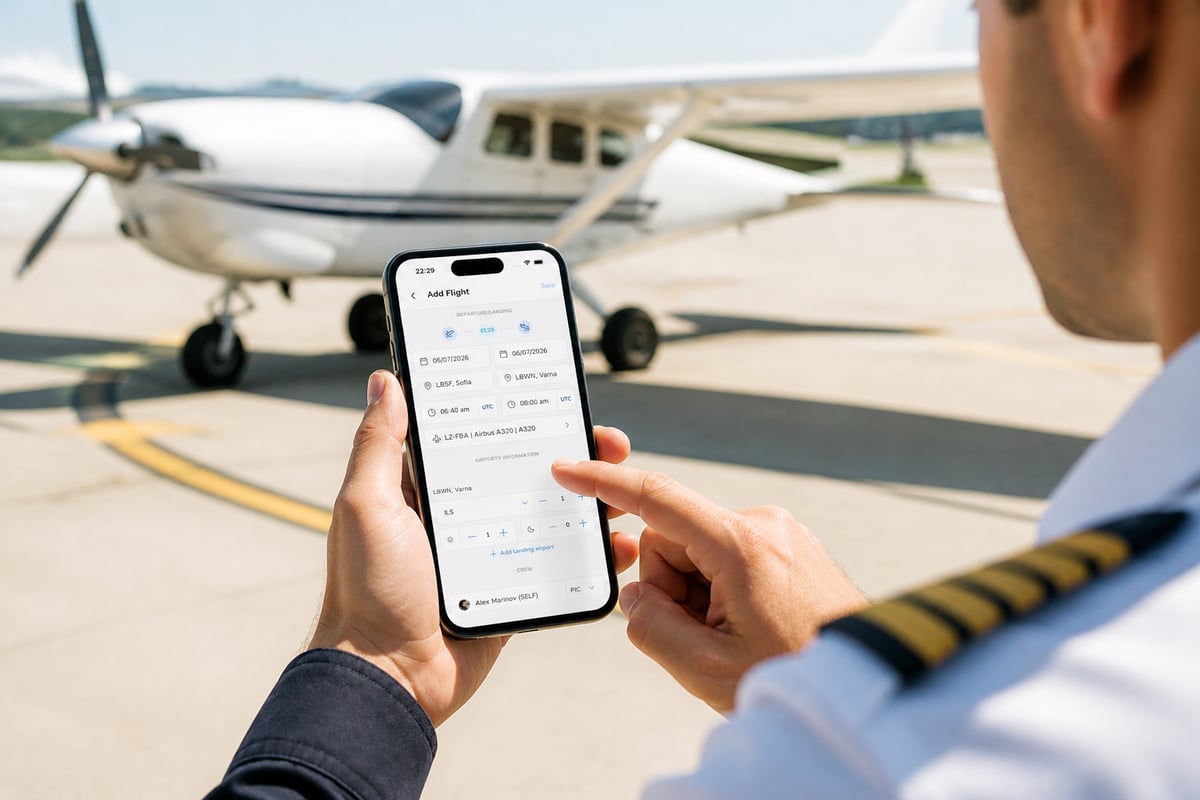
Pilotlog's Pro tier totals hours, currency, limits and expiries from each logged flight, shows passenger, night and IFR recency with the date each lapses, and warns you before licence, medical and rating expiries catch you out.
Which pilot aircraft licence should you aim for?
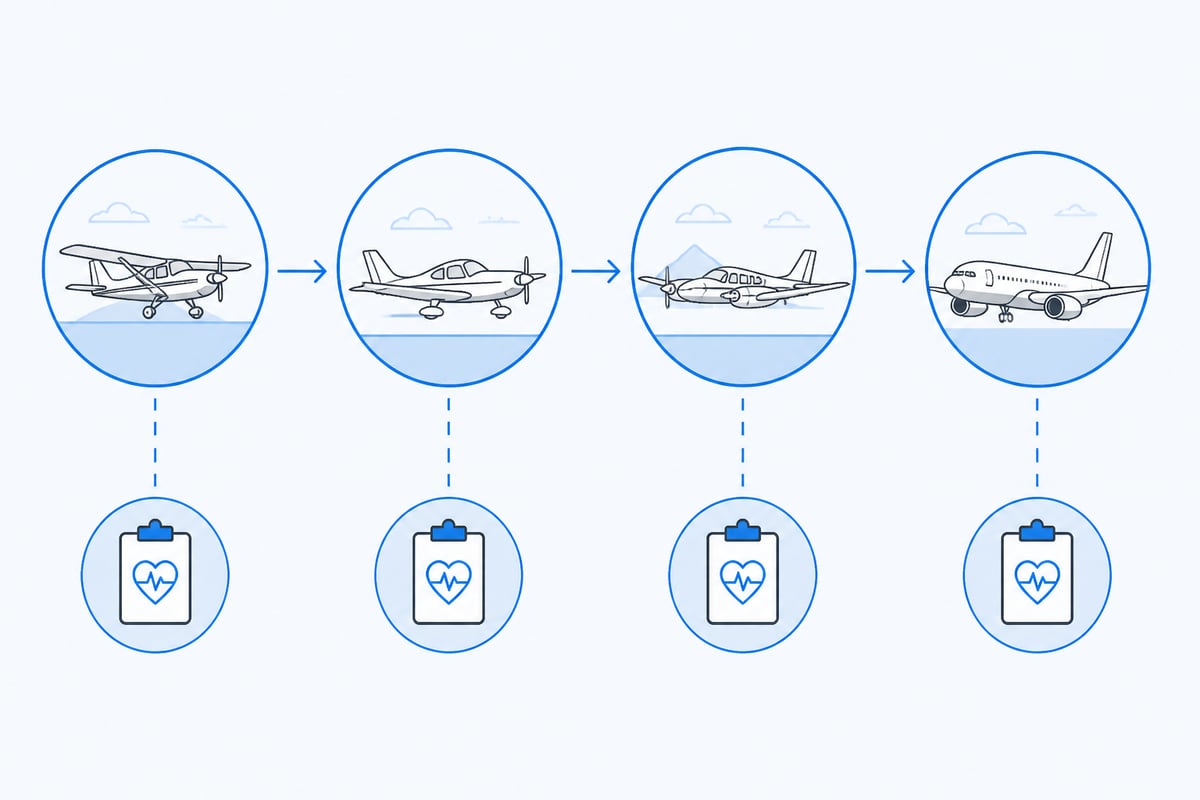
Your goal decides your licence, and each step builds on the last.
| Licence | Typical use |
|---|---|
| Student | Training under instruction |
| Private (PPL) | Flying for pleasure, no pay |
| Commercial (CPL) | Paid flying |
| ATPL | Airline captain |
Career pilots log hours toward the flight-time requirements for their licence. Keep every flight in your logbook from the start, because reconstructing hours later is slow and error-prone.
How do you log your flying properly?
Log each flight right after landing, with date, aircraft type and registration, route, times, PIC or dual capacity, landings and conditions such as night or IFR.
A spreadsheet works until a column breaks or a total is wrong when an examiner asks for it. A digital logbook totals your hours and flags what is about to lapse. Whatever you use, log immediately, because details fade within a day.
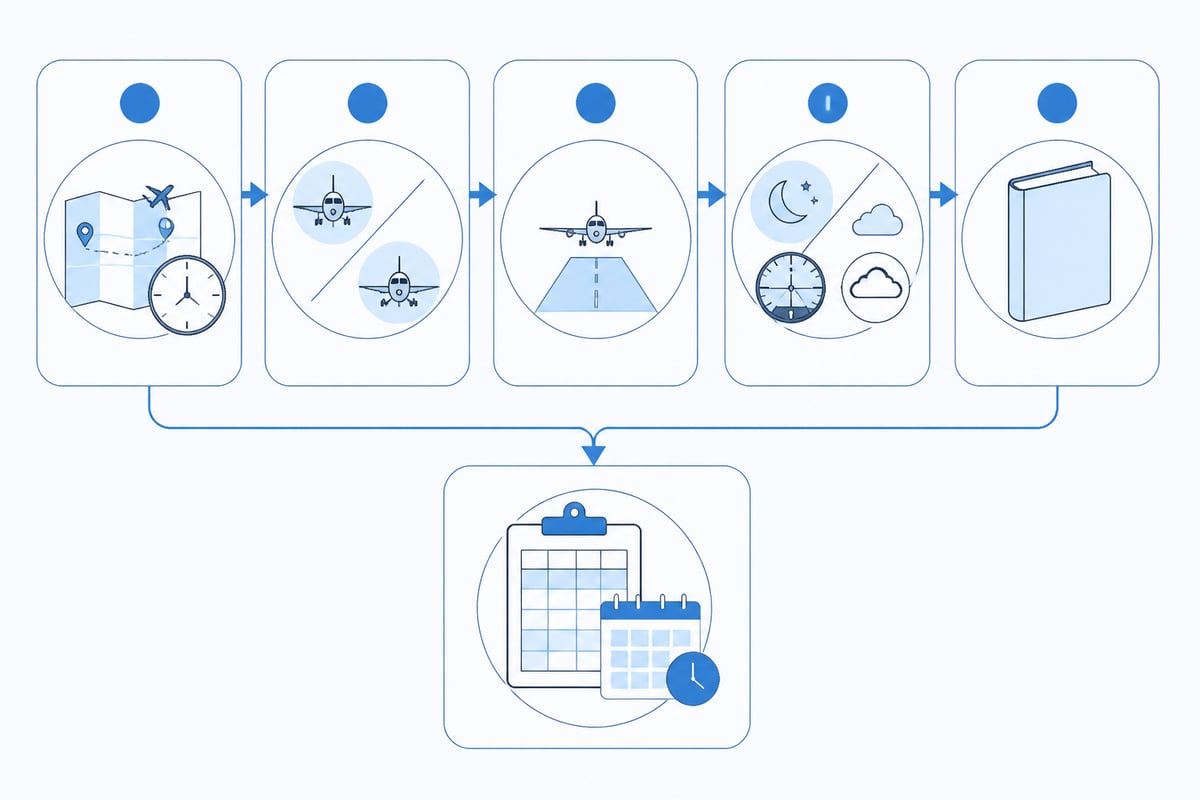
Summary
- Learn the four controls and four basic skills with an instructor.
- Get a medical early, before spending heavily on lessons.
- EASA's general aviation guidance cites around 100 hours of theory and 45 hours of flight instruction for a private pilot licence for aeroplanes.
- Passenger currency under EASA is three take-offs and landings in 90 days (FCL.060(b)).
- Log every flight at once, and track expiries before they arrive.
Rules change, so check current official sources before you rely on any requirement.
Pilot aircraft FAQ
What does the word "aviator" mean?
An aviator is a person who flies aircraft, and the word is a traditional synonym for pilot. It is used for both military and civil flyers, though "pilot" is the official term in licensing.
What is the salary of a plane pilot?
It varies widely by employer, aircraft type, country and experience, and no single figure applies. Instructors and regional pilots earn less than airline captains. Check recent pay data from your country's airlines or pilot associations rather than relying on a general number.
How much does a Cessna pilot make?
There is no fixed Cessna pilot salary, since Cessna is an aircraft type and not an employer. Pay depends on the operator and the job, such as instructing, charter, survey or air taxi. Compare job listings for the role you want.
Next, book your medical and a trial lesson, then start a logbook from your first flight so no hour goes unrecorded. Pilotlog is a digital pilot logbook for iOS and Android that keeps you current, legal and ready, and its Pro tier handles currency, limits and expiry alerts. Join the waitlist to log your first flight in a few taps after landing.
Летателна книжка, която се води сама.
Запиши се в списъка с чакащи и бъди сред първите при старта на Pilotlog.
Безплатно е. Ще ти пишем за старта и за новини от Pilotlog. Можеш да се отпишеш по всяко време. Политика за поверителност