Article
PPL Licence Guide: Requirements, Cost and Training Steps
18 nov 2026 · 6 min de lectura
Este artículo está en inglés.
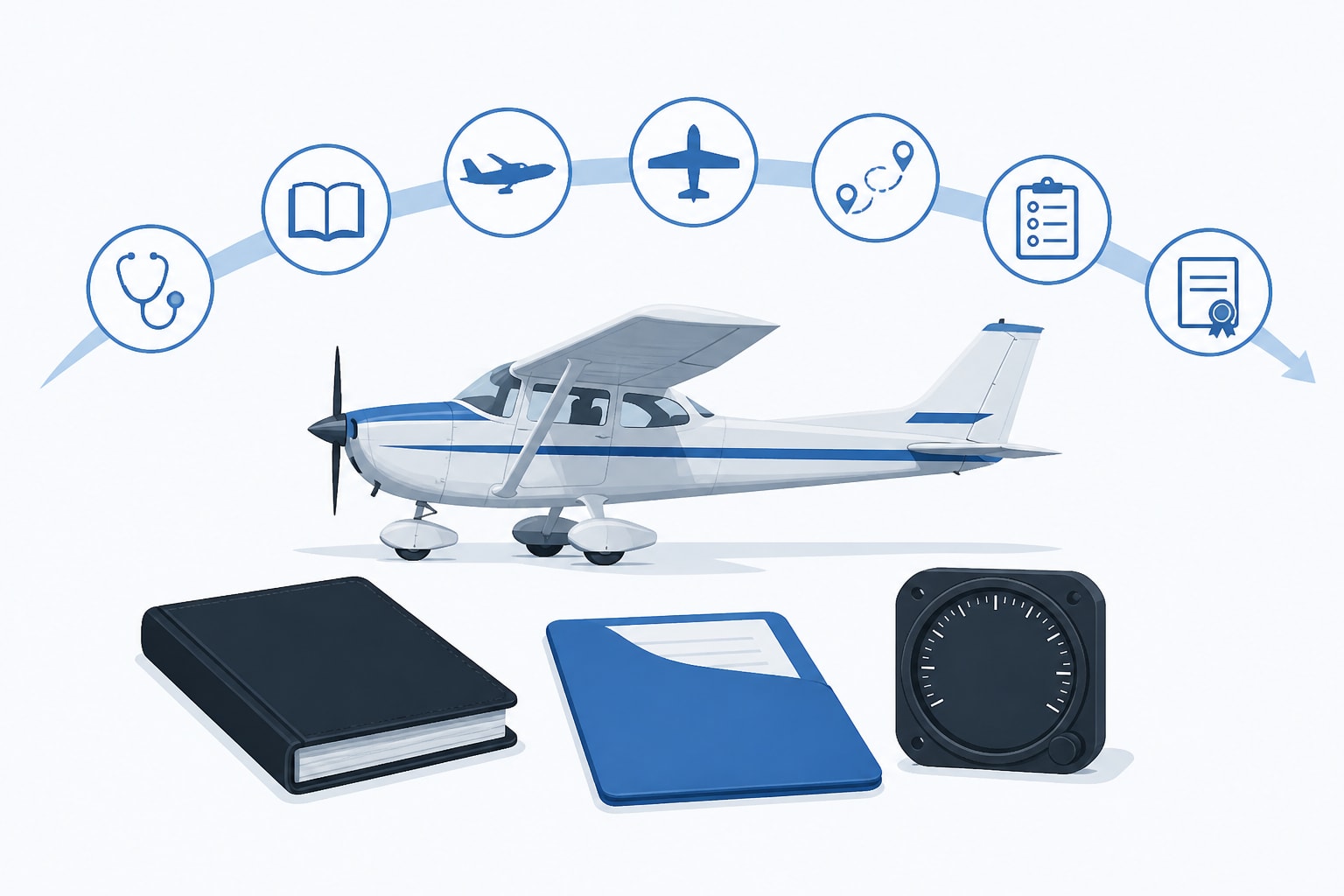
A PPL licence lets you fly an aircraft as pilot in command for private flying, not for hire or reward. Under UK CAA rules you must be at least 17 and hold a Part-MED Class 2 medical certificate, and the course requires at least 40 hours of flight instruction (UK CAA). This guide defaults to UK CAA and EASA Part-FCL; FAA figures are labelled where they appear.
What are the different types of PPL licences?
A PPL licence comes in several categories, set by the type of aircraft you fly: aeroplane PPL(A), helicopter PPL(H), and the lighter options for balloons, sailplanes and microlights.
- PPL(A): the most common route, covering single-engine piston aeroplanes.
- PPL(H): covers helicopters, with its own age, medical and experience requirements. The UK CAA helicopter PPL page lists them.
- LAPL: a lighter aeroplane licence with a LAPL medical and a lower hours threshold. EASA notes that a Class 2 or LAPL medical is required for PPL(A) training (EASA).
A PPL(A) is also the base for later ratings such as night, instrument and multi-engine, and for a later CPL and ATPL.
What are the requirements for a PPL licence?
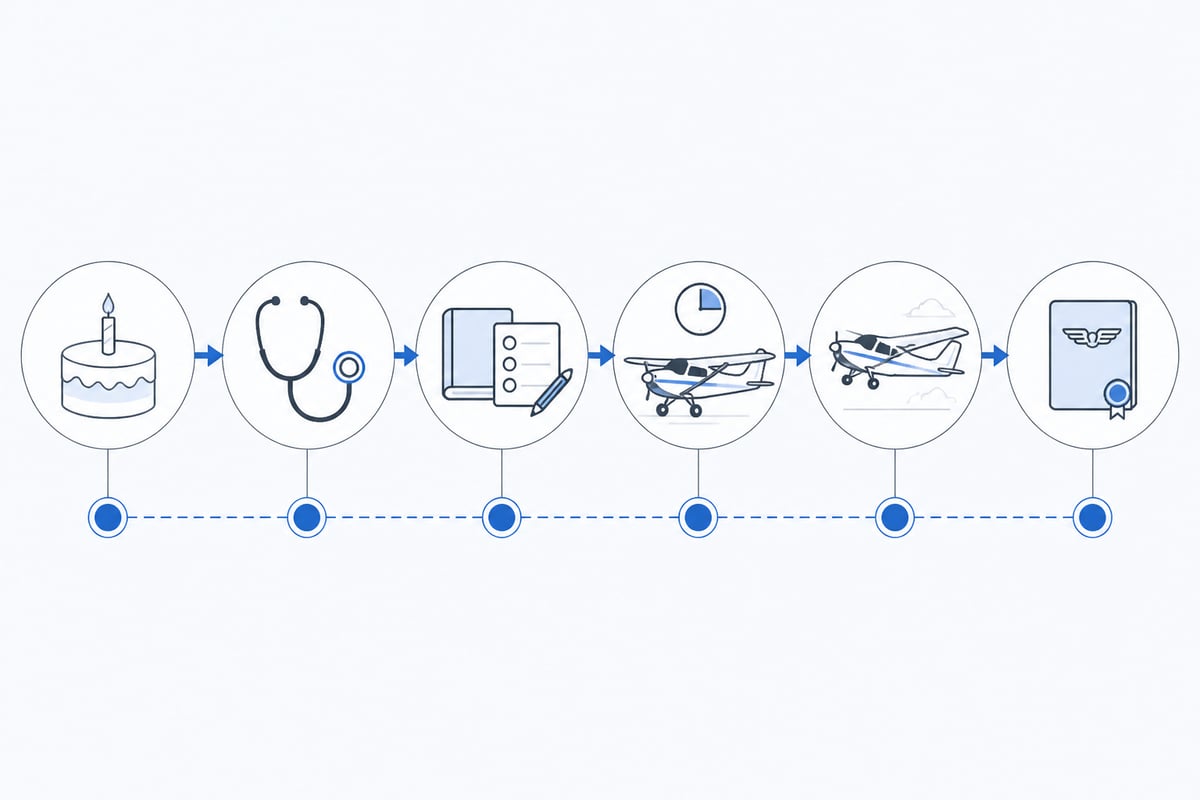
You need to meet an age limit, hold a valid medical, pass theory exams and complete the minimum flight training.
- Age: at least 17 for the UK PPL(A).
- Medical: Part-MED Class 2. Get this before you spend money on lessons, because a medical problem found later wastes the training.
- Theory: a substantial set of theory exams is required before the skill test, so plan ground school alongside flying.
- Flight training: at least 40 hours of instruction, including at least 10 hours of supervised solo. Up to 5 hours may be flown in an approved flight simulation training device (UK CAA).
- Skill test: a practical test with an examiner at the end of the course. The UK CAA publishes guidance for the PPL skill test.
The minimum may drop to 35 hours when the course is completed at an ATO approved for that purpose.
What disqualifies you from a PPL licence?
A medical condition that fails Part-MED Class 2 standards is the main bar, and it is assessed individually by an aeromedical examiner or the authority.
Age alone does not disqualify anyone. If you wonder whether 32 is too late to start, it is not: the rules set a minimum age of 17 and no maximum for starting. What matters is a valid medical and the time and budget to fly regularly. Declare any condition honestly at your medical, because a concealed one can invalidate the certificate.
How many hours does a PPL licence take, and how hard is it?
Most pilots need more than the minimum, and the course is demanding but achievable. Most people need more than the regulatory minimum, so plan for more than 40 hours. US guidance for the FAA private pilot route reflects this pattern (FAA).
The hardest parts tend to be radio work, navigation planning and crosswind landings. The solo navigation exercise has a fixed shape: at least one flight of 270 km (150 NM), with full-stop landings at two aerodromes other than the departure aerodrome (UK CAA). Flying often, rather than in long gaps, is what keeps the hours near the minimum.
For comparison under 14 CFR (FAA), the airplane private pilot minimum is 40 flight hours, with at least 20 hours of instructor training and 10 hours of solo (FAA). Do not mix those figures with UK or EASA numbers.
How much does a PPL licence cost?
Your total depends mostly on how many hours you fly, because aircraft hire and instructor time are charged per hour. The one fixed figure from the UK CAA is the initial issue fee for a PPL(A) or PPL(H): £263 (UK CAA).
Budget separately for:
- the Class 2 medical
- theory exam fees
- headset, charts, flight computer and a kneeboard
- the skill test, including examiner and aircraft time
- extra hours beyond the 40-hour minimum
If a school charges a set hourly rate for aircraft plus instructor, multiply it by the hours you expect to need rather than the 40-hour minimum, then add the fixed fees. The gap between the minimum and the hours you actually fly is often the largest surprise in the budget.
What are the training steps from first lesson to licence?
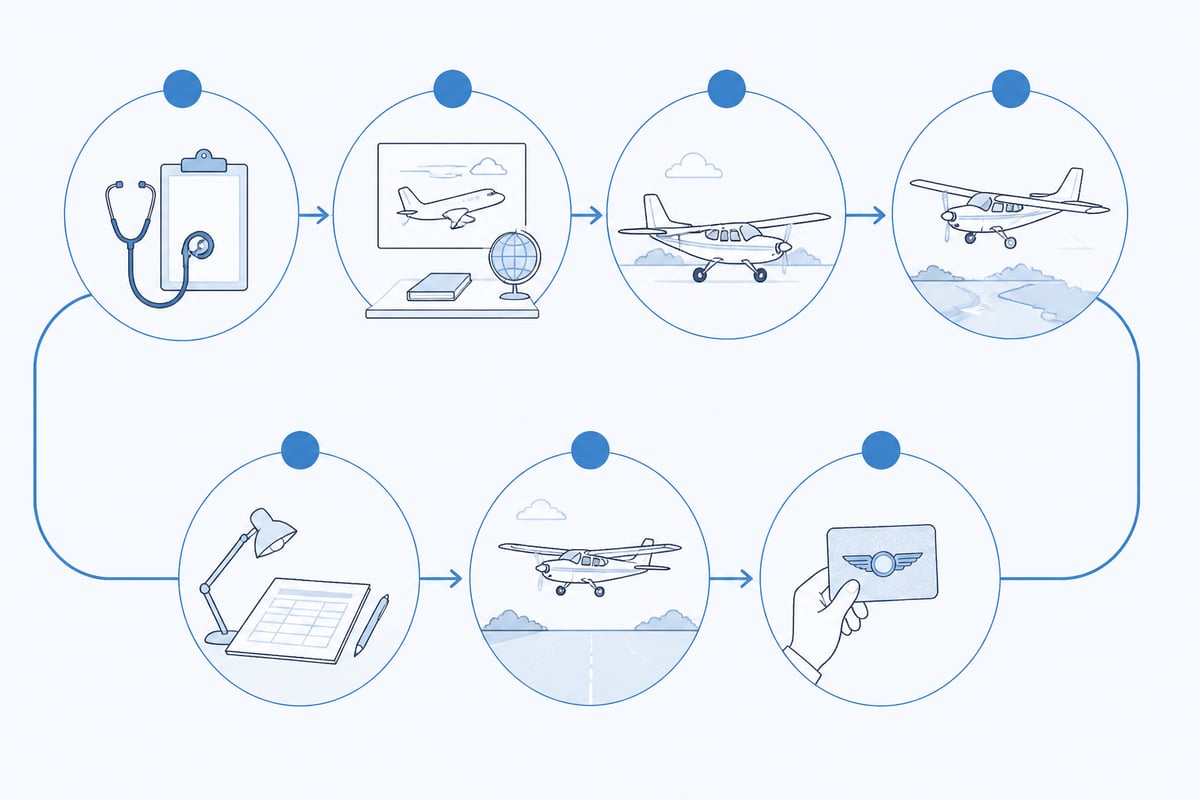
The usual sequence runs medical first, then flying and theory in parallel, then the skill test.
- Book a trial lesson and an application for the medical.
- Start ground school while you learn aircraft handling, circuits and stalls.
- Fly your first solo once your instructor judges you ready.
- Complete solo and dual navigation, including the 270 km exercise.
- Pass the theory exams.
- Take the skill test with an examiner.
- Apply for the licence and pay the issue fee.
The UK CAA learning to fly page outlines the pathway and confirms the skill test at the end.
How do you track your hours and keep a PPL licence current?
Log every flight from the first lesson, because your hours decide when you can apply and later what you can do with the licence. A paper or spreadsheet log works until a total is wrong or a date slips.
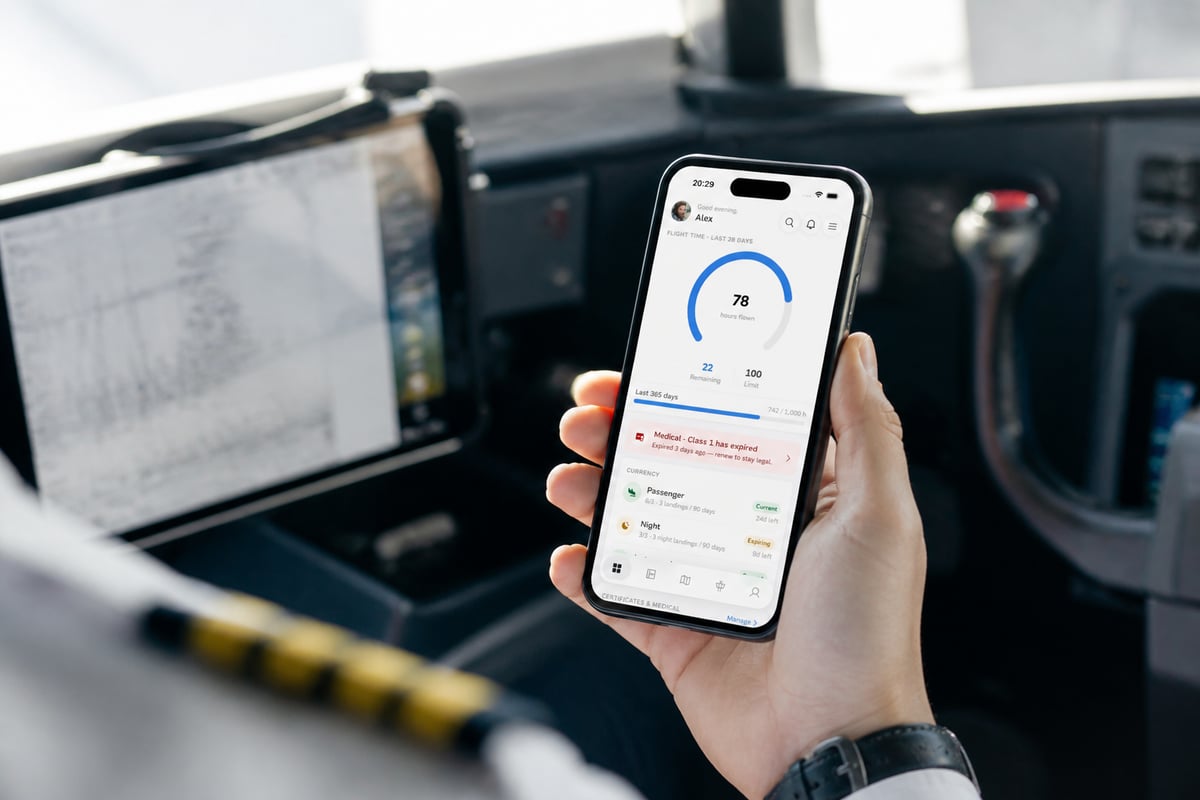
Under EASA Part-FCL, passenger carrying requires 3 take-offs and landings in the previous 90 days (FCL.060(b)). Count the 90 days from your most recent qualifying flights and fly enough before that window closes to keep carrying passengers.
Pro tracks passenger, night and IFR currency with lapse dates, and flags licence and medical expiries early, so you do not do that arithmetic by hand. You log a flight in a few taps after landing, with route, times, crew and landings.
Summary
- A PPL licence needs age 17 (UK), a Class 2 medical, theory and a skill test.
- UK minimum is 40 hours of instruction with 10 solo; 35 may apply at an approved ATO.
- Most students fly more than the minimum.
- The UK initial issue fee is £263.
- Passenger currency under EASA Part-FCL is 3 take-offs and landings in 90 days (FCL.060(b)).
Rules change, so check current official sources before you plan.
FAQ
Is 32 too late to become a pilot?
No. The UK rules set a minimum age of 17 for a PPL(A) and do not set an upper limit for starting. You need a valid Class 2 medical and enough time to fly regularly.
Can I train toward a PPL licence part-time?
Yes. Most private pilots train part-time. Flying at regular intervals, rather than with long gaps, helps you avoid repeating exercises and keeps you closer to the minimum hours.
Does a PPL licence expire?
Your medical has its own validity period, and the licence carries ratings with expiry dates. Check the exact periods with the UK CAA or EASA for your situation, and track every expiry date so none lapses unnoticed.
Your next step is to book a Class 2 medical, since nothing else in training matters without it. Once you start flying, keep your hours, currency and expiry dates in one place from lesson one. Pro does the totals and lapse dates for you, and you can join the waitlist for Pilotlog to start a clean logbook before your first solo.
Un libro de vuelo que se lleva solo.
Únete a la lista de espera y sé de los primeros cuando Pilotlog se lance.
Unirse es gratis. Te escribiremos sobre el lanzamiento y las novedades de Pilotlog. Puedes darte de baja cuando quieras. Política de privacidad