cfi logbook
Flight Instructor Logbook: How to Track CFI Hours
9 nov 2026 · 6 min de lectura
Este artículo está en inglés.

A flight instructor logbook records two things: your own flight time, and the training you give. Under the FAA rules (14 CFR Part 61), you log dual given as pilot in command time, sign each student's logbook, and keep your own instruction records for at least 3 years. EASA Part-FCL and UK CAA instructors follow different rules, so check which authority issued your certificate first.
This article uses FAA rules, because the CFI title and the regulations cited below are FAA. If you hold an EASA or UK CAA instructor rating, the logging principles are similar, but the record-keeping rules and figures are not. Do not transfer the numbers below to Part-FCL or CAA requirements.
What a flight instructor logbook must record
The core requirement is a legible record of each flight and each instruction session. Under 14 CFR § 61.51, a pilot logging training received from an authorized instructor must record the training description and lesson length. The instructor's endorsement must be legible and include their signature, certificate number, and certificate expiration date or recent-experience end date.
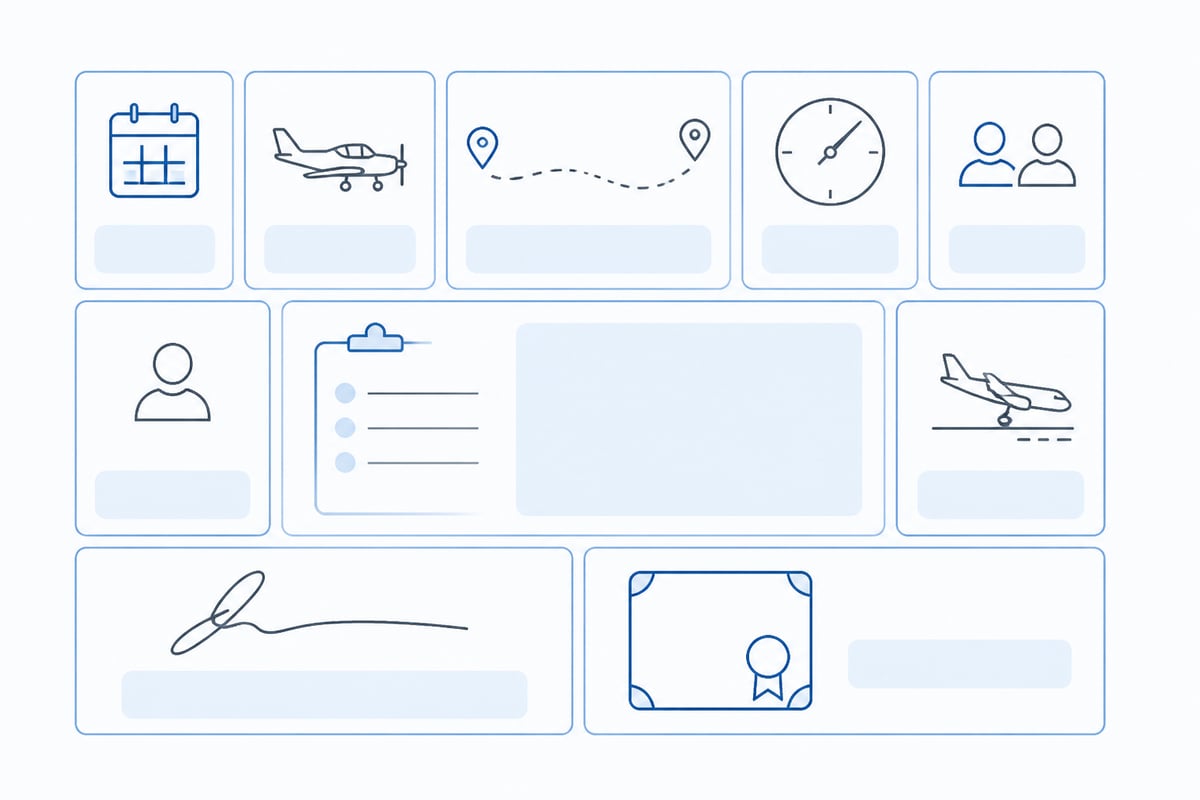
For your own entries as an instructor, record at least:
- Date, aircraft type and registration
- Departure and arrival points
- Total flight time and instruction given
- Student name and the lesson content
- Landings, with day and night kept separate
You can find the full set of flight-instructor rules in the FAA's Part 61 Subpart H, which covers eligibility, privileges, limitations, records and recent experience.
Two logbooks, two obligations
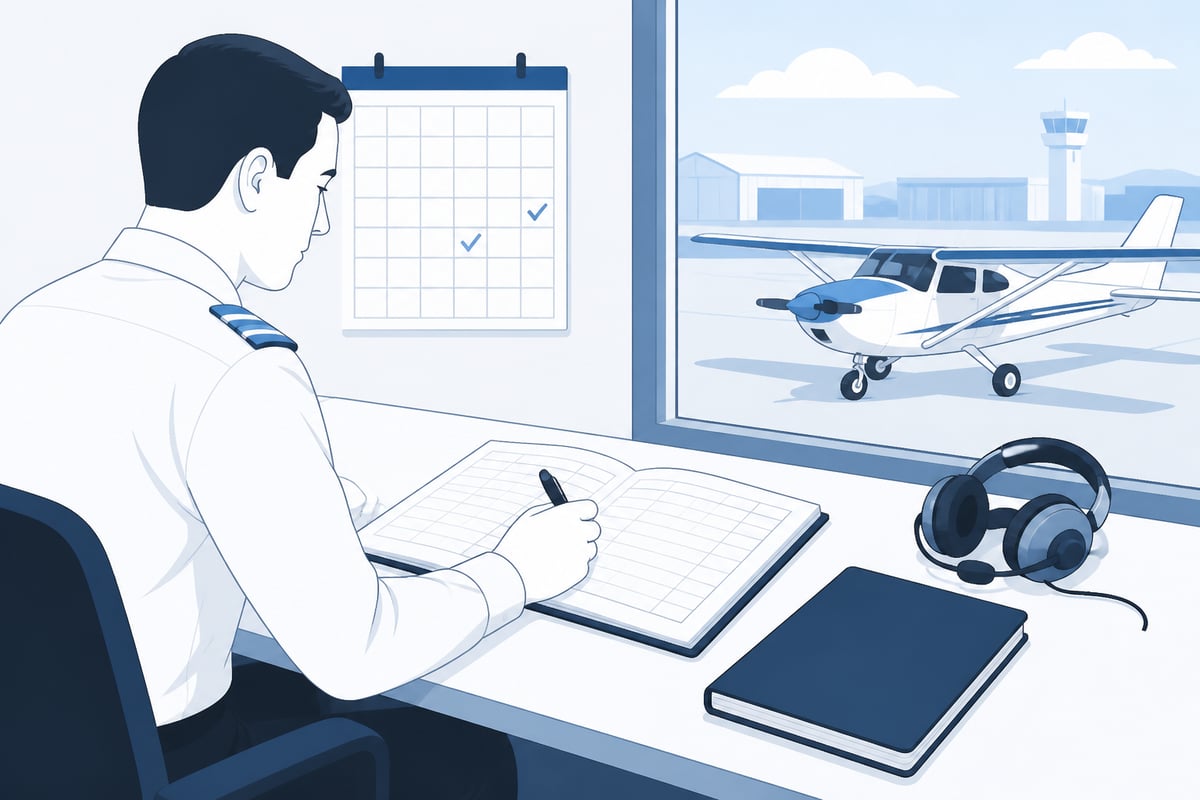
A CFI keeps their own logbook and also signs the logbooks of others. These are separate duties.
Your own logbook proves your flight time, currency and experience. The student's logbook holds your endorsements for them. Per 14 CFR § 61.189, a flight instructor must sign the logbook of each person who receives flight or ground training from them.
The same section also requires your own instruction records. For knowledge-test or practical-test endorsements, those records must include the student's name, test type, date and result. You must retain them for at least 3 years. A signed entry in the student's logbook does not replace this record in yours.
How to log dual given
Dual given is flight time you spend giving flight instruction in flight. FAA rules let you log it as pilot in command time, whether or not you act as a required crew member (14 CFR § 61.51). Log it as dual given, and add it to total time and PIC.
Ground instruction is different. It does not count as flight time. Record it as a separate entry with the student, date, topic and duration, because it still supports your endorsement records.
Keep these points straight:
- Dual given is logged as instruction given, not as dual received.
- Time you receive from another instructor, such as for a CFII or MEI, goes in the dual received column.
- Simulator or training device time follows its own rules. Check the logging conditions before you enter it.
Worked example: a CFI's week and 90-day currency
Say you instruct at a flight school and also need to carry passengers in a single-engine aircraft. Under FAA rules, passenger-carrying currency requires recent takeoffs and landings in the same category and class of aircraft, and night passenger currency has its own separate requirement (14 CFR § 61.57). Check the current text of the regulation for the exact numbers that apply to you.
Here is a sample week in 2026:
| Date | Entry | Landings |
|---|---|---|
| Mon 2 Feb | Dual given, pattern work | 5 day |
| Wed 4 Feb | Dual given, cross-country | 2 day |
| Fri 6 Feb | Solo repositioning flight | 1 day |
Total day landings: 5 + 2 + 1 = 8.
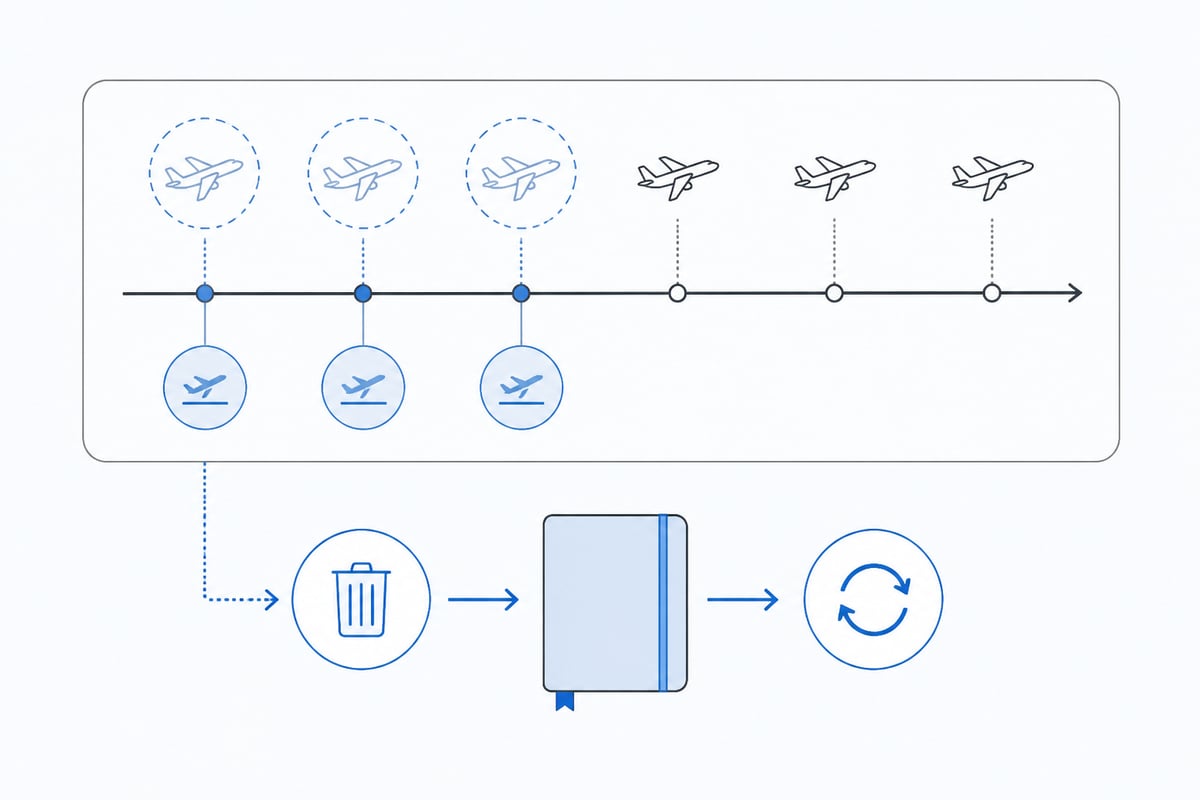
The earliest landing in this set is 2 February 2026. Your day passenger currency stays valid as long as you still have 3 landings inside the rolling 90-day window. The landings from 2 February drop out of that window after 90 days, so recalculate from the remaining flights as the window moves.
The rolling window is the point. Currency is a count of landings in a moving period, not a fixed expiry date, so you recalculate it after every flight.
Tracking your flight instructor logbook digitally
A digital logbook removes the arithmetic. You log each flight with route, times, crew and landings, and the totals update from there.
Pilotlog Pro tracks rolling 28-day and 365-day flight-time limits and flags licence and medical expiries early. For a CFI that covers the dates that matter, and you can still sign and keep paper endorsements where your authority requires them.
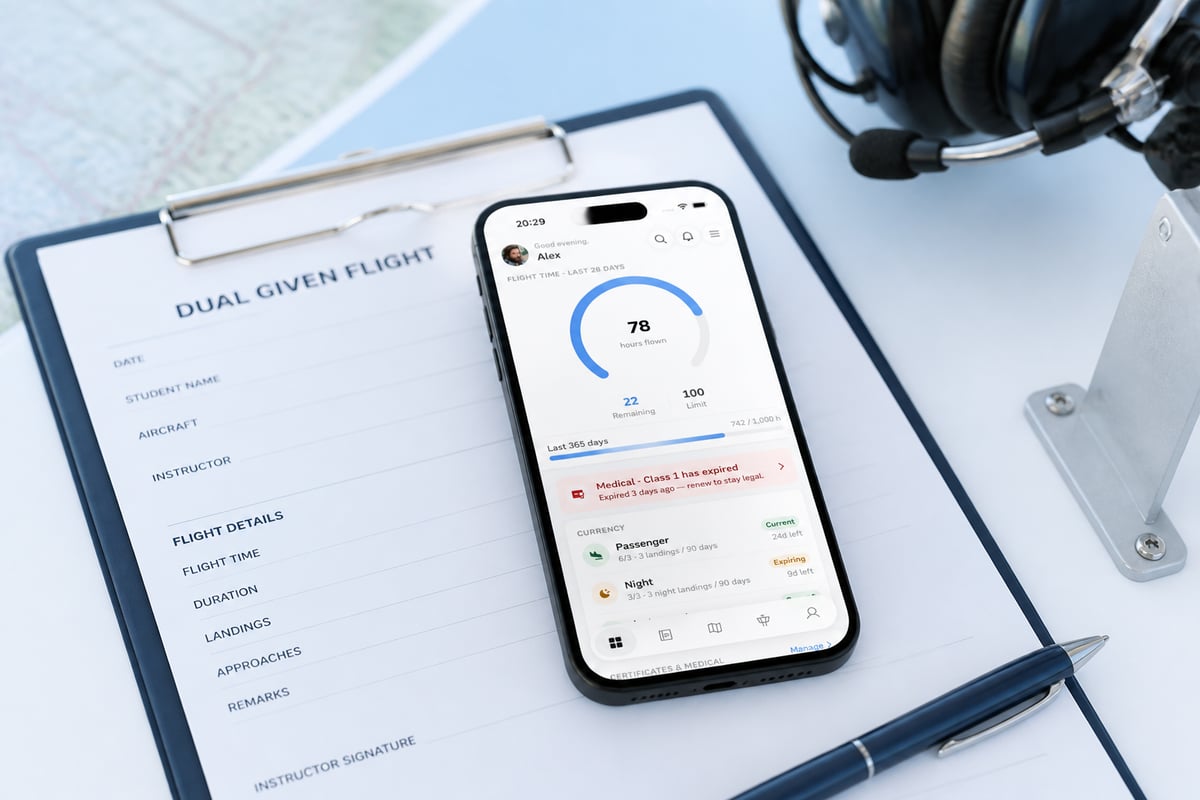
A digital record does not replace the rules above. Your student's signed logbook entry and your 3-year instruction records still need to exist in whatever form your authority accepts. Check that before you retire any paper records.
Common logbook errors for instructors
Most problems come from small habits that add up:
- Logging dual given as dual received, or the reverse
- Missing the certificate number or expiry on an endorsement
- Mixing day and night landings in one column
- Skipping the student name on instruction entries
- Not reconciling your own total time against your records at the end of each month
Summary
- A CFI logbook records your flight time and your instruction given.
- Sign the logbook of every person you instruct (14 CFR § 61.189).
- Keep your instruction records for at least 3 years (14 CFR § 61.189).
- Log dual given as PIC time (14 CFR § 61.51).
- Recalculate rolling currency after every flight.
- Rules change. Check current official sources, such as the FAA, before relying on any figure here. For EASA or UK CAA certificates, use EASA or the UK CAA.
FAQ
Do I log ground instruction as flight time?
No. Ground instruction is not flight time. Record it as a separate entry with the student, date, topic and duration, because it supports your endorsement records.
How long must a CFI keep student records?
Under 14 CFR § 61.189, a CFI must retain the required records for at least 3 years. The records for test endorsements include the student's name, test type, date and result.
Does the same advice apply to EASA or UK CAA instructors?
Not directly. The figures and record rules above are FAA. Part-FCL and UK CAA instructors must follow their own authority's requirements, so check the regulation that applies to your certificate.
Start by checking your recent landings against the passenger currency rule that applies to your certificate. If you want the totals and expiries tracked automatically, Pilotlog Pro does that after each flight. Pilotlog is available on iOS and Android to keep every flight, limit and expiry in one place.
- cfi logbook
- dual given
- flight instructor records
- part 61
- 90-day currency
Un libro de vuelo que se lleva solo.
Únete a la lista de espera y sé de los primeros cuando Pilotlog se lance.
Unirse es gratis. Te escribiremos sobre el lanzamiento y las novedades de Pilotlog. Puedes darte de baja cuando quieras. Política de privacidad