asa logbook
ASA Log Book: Guide for Pilots in 2026
23 Oct 2026 · 12 min read
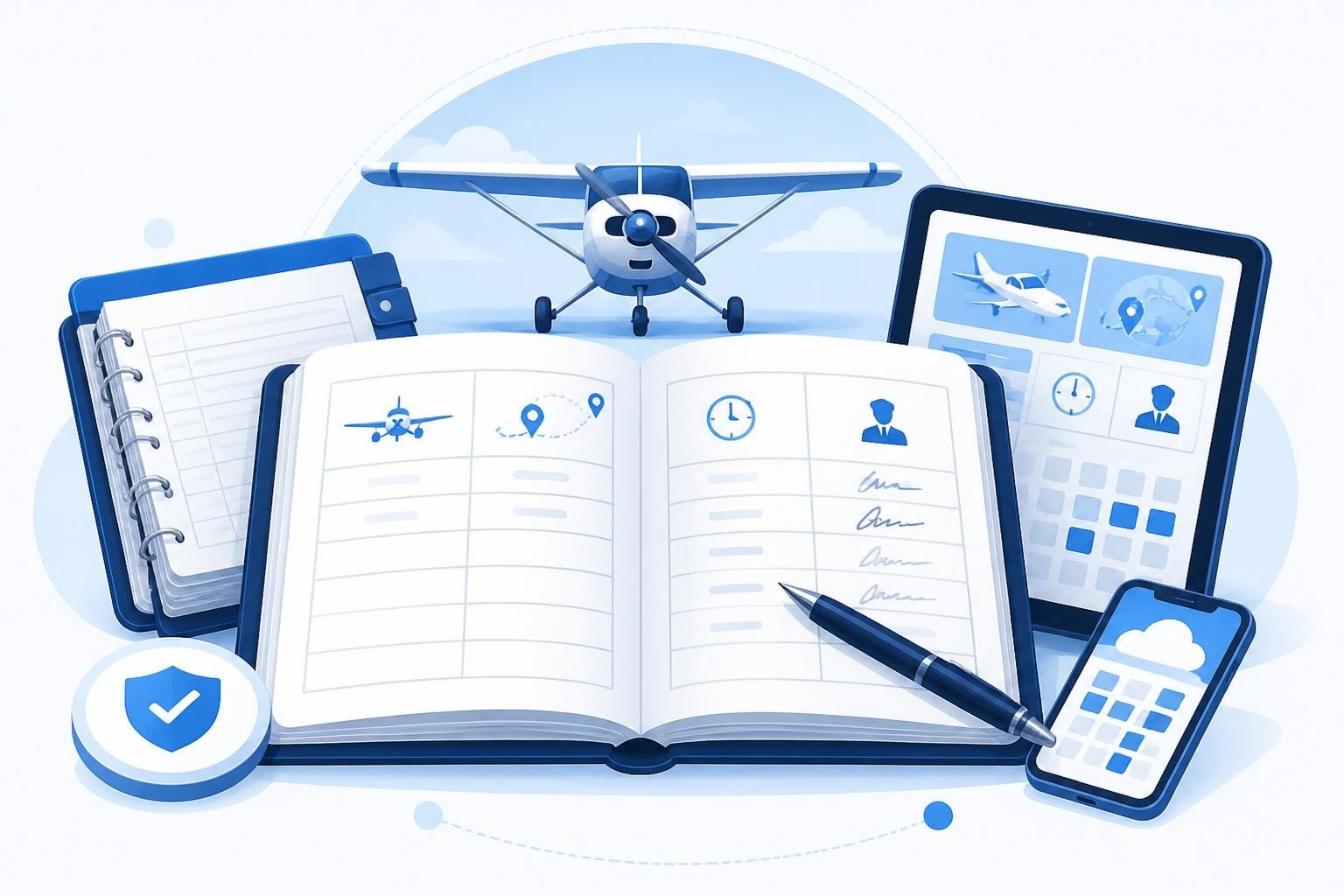
An ASA log book is a paper pilot logbook published by Aviation Supplies & Academics (ASA), designed to help pilots meet FAA recordkeeping requirements under 14 CFR §61.51. The standard ASA pilot logbook features columns for date, aircraft make and model, registration, departure and arrival airports, instrument approaches, flight time by category, and endorsements. It remains one of the most widely used paper logbooks in the United States, trusted by student pilots, instructors, and professionals for its clear layout and durable binding. Whether you're building hours toward a commercial certificate or maintaining records for an airline interview, understanding what the ASA log book offers and how it fits into modern recordkeeping helps you stay current, legal, and ready.
What Makes the ASA Log Book Different
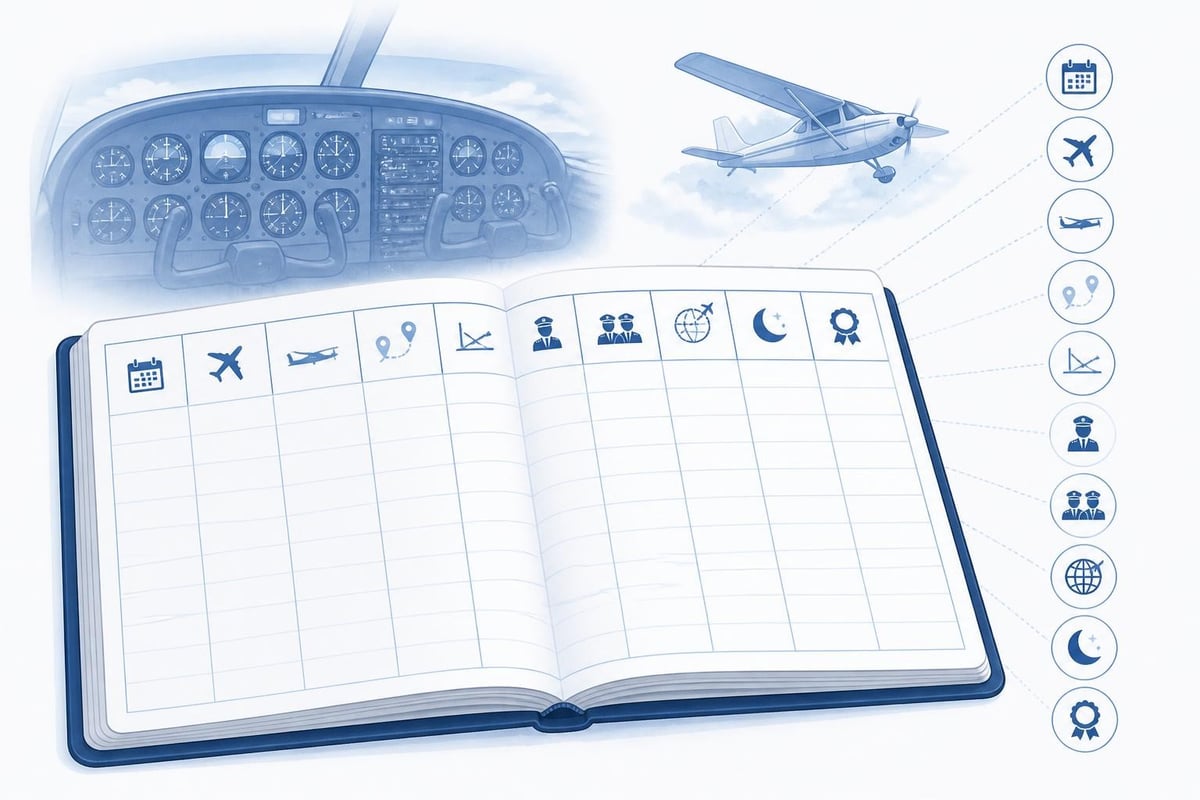
The ASA log book follows a traditional row-and-column format that mirrors the regulatory requirements in Part 61. Each double-page spread records multiple flights, with pre-printed headings that guide you through the essential data points the FAA expects.
Standard ASA Logbook Layout
Most ASA log books include these core columns:
- Date of the flight
- Aircraft make and model (e.g., Cessna 172S)
- Aircraft identification (registration number)
- Route (departure and arrival airport identifiers)
- Number of instrument approaches
- Flight time broken into categories: total duration, PIC, solo, cross-country, night, actual instrument, simulated instrument, dual received, and instructor time
- Remarks and endorsements section for additional details, CFI signatures, and endorsement text
This structure aligns with the minimum information pilots must log, as set out in 14 CFR §61.51. The regulation states that each pilot must record general flight information, the type and identification of aircraft, and flight time by category. ASA's layout anticipates those needs, reducing the risk of omitting required data.
Formats and Editions
ASA publishes several editions of pilot logbooks to suit different career stages:
| Edition | Target User | Special Features |
|---|---|---|
| Standard Pilot Log (Black) | Private and commercial pilots | 10 pages of sample endorsements, space for 242 flights |
| Flight Instructor Log (Red) | Certificated flight instructors | Instructor-specific columns, CFI renewal tracking |
| Airline Transport Pilot Log (Blue) | ATP and airline pilots | Type-rating pages, larger flight-time capacity |
| Student Pilot Log (Green) | Ab initio students | Simplified columns, educational notes on requirements |
Each format holds roughly 240 to 300 flight entries depending on binding and page count. The standard black ASA log book retails for approximately USD 15 to 18 in 2026, making it an accessible option for pilots starting out or maintaining backup records.
Regulatory Compliance and the ASA Log Book
Federal Aviation Regulations do not mandate any specific brand or format of logbook. 14 CFR §61.51 requires pilots to document flight time and present it to the FAA upon request, but the regulation explicitly allows "any format" as long as the information is complete and readable.
Electronic Logbooks and FAA Guidance
Advisory Circular AC 120-78B, issued in December 2024, clarifies that electronic records are acceptable provided they meet reliability and accessibility criteria. The circular states that electronic logbook systems must ensure data integrity, allow inspection by FAA personnel, and include safeguards against loss or corruption.
This means an ASA log book satisfies the regulatory requirement by default, but so does a properly maintained digital logbook. Pilots often use both: the ASA log book as a primary or backup record and a digital system for currency tracking and analysis.
What You Must Record
Regardless of format, you must log:
- General information: date, total flight time, departure and arrival locations
- Type and identification of each aircraft
- Pilot role: whether you acted as PIC, sole manipulator, safety pilot, or received dual instruction
- Conditions: day or night, actual or simulated instrument time, cross-country distance
- Instructor endorsements: CFI signature and certificate number when dual is logged
The AOPA guidance on logging flight training time explains common questions about who may log what, especially during complex scenarios like safety-pilot operations or multi-pilot aircraft. The ASA log book provides dedicated columns for these categories, so you tick the right boxes without needing to interpret blank pages.
How the ASA Log Book Compares to Digital Logbooks
Paper logs and digital systems serve the same ultimate purpose, but the workflow and features differ significantly.
Advantages of the ASA Log Book
Simplicity: You write down the essentials and sign off the page. No app downloads, account setup, or battery anxiety.
Examiner familiarity: Designated pilot examiners and check airmen have seen thousands of ASA log books. The format is instantly recognizable, which can speed up pre-flight logbook reviews.
Backup reliability: Paper cannot be locked by a forgotten password or lost to a server failure. Keep it dry and legible, and it will serve you for decades.
No subscription: You buy the book once. There are no recurring fees or feature gates.
Limitations of Paper
Manual totals: Each time you apply for a rating or prepare for a checkride, you calculate subtotals by hand or spreadsheet. A 500-hour logbook can take an hour or more to audit.
No automatic currency tracking: The ASA log book won't warn you when your 90-day passenger currency expires in 14 days or flag that your Class 1 medical lapses next month.
Bulk and fragility: Carrying several filled logbooks on a trip adds weight and risk of loss or damage.
Limited search: Finding all night cross-country flights flown in a specific aircraft type means flipping pages and reading each entry.
When Digital Makes Sense
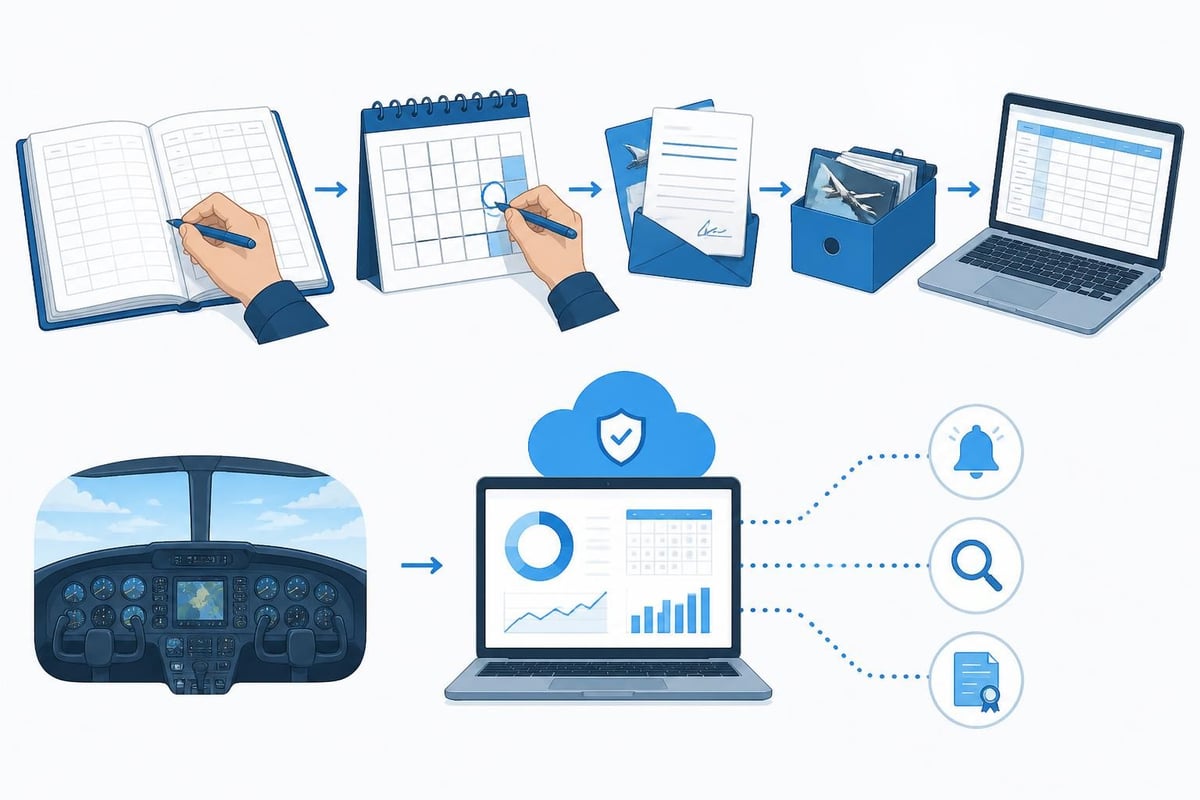
Digital logbooks excel at currency automation and data analysis. Pilotlog, for example, tracks rolling 28-day and 365-day flight-time limits, passenger and IFR currency with lapse dates, and licence and medical expiry alerts. You log a flight in seconds, and the system updates every affected counter without manual arithmetic.
For pilots building hours toward an airline role or managing multiple aircraft types and endorsements, the time saved on totals and the confidence from proactive alerts can outweigh the cost of a subscription. Many pilots maintain their ASA log book alongside a digital system, entering flights in both or exporting digital records to paper at intervals.
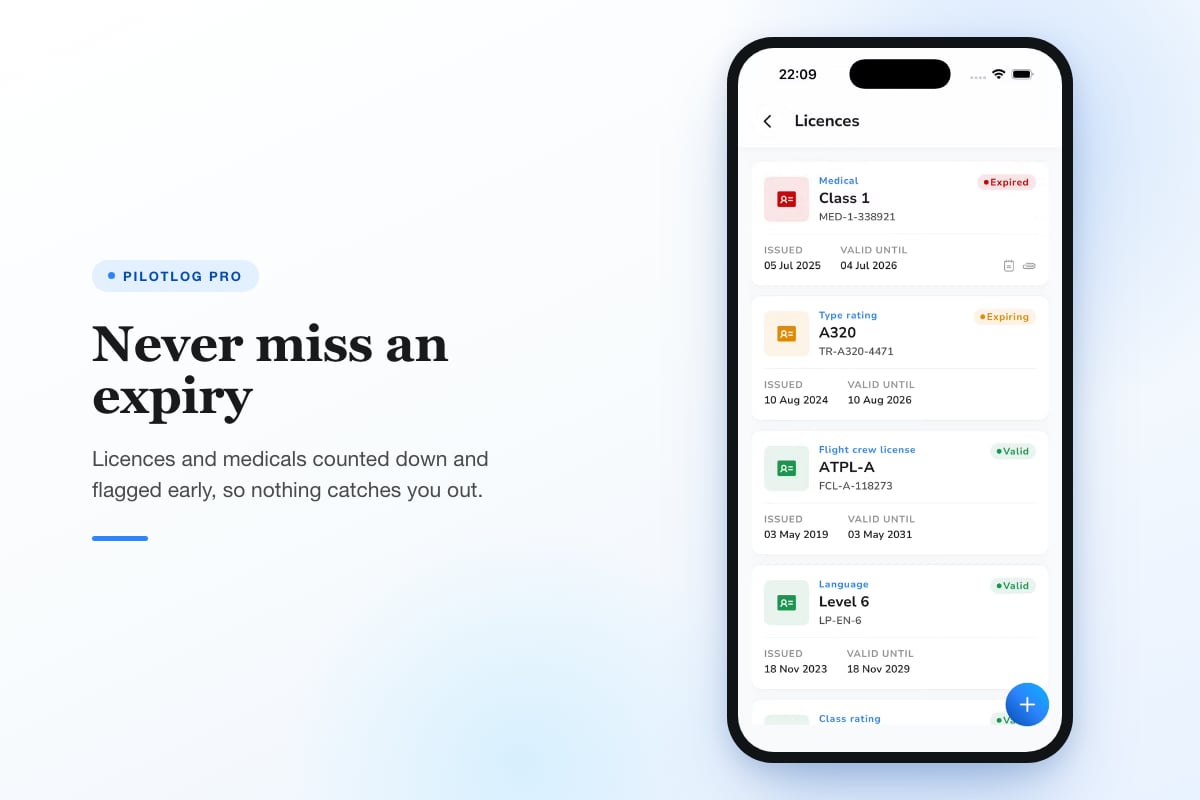
If you choose a hybrid approach, consistency matters. Decide which record is authoritative and update the backup regularly. Some pilots treat the ASA log book as the legal master and the digital app as a convenience tool; others reverse that priority once they trust the electronic system's reliability and export functions.
Filling Out an ASA Log Book Correctly
Accuracy and clarity protect you during FAA inspections and checkrides. Follow these practices to keep your ASA log book audit-ready.
Entry Workflow
- Date: Write the date of the flight in the first column (e.g., 23 Oct 2026).
- Aircraft: Enter make, model, and registration (e.g., Cessna 172S, N12345).
- Route: Use ICAO or FAA identifiers (e.g., KPAE to KBFI).
- Approaches: Note the number and type if you flew instrument approaches (e.g., 2 ILS).
- Flight time: Fill the appropriate category columns. If you were sole manipulator under the hood, log simulated instrument and PIC (if appropriately rated). If you received dual, log dual received and total time.
- Remarks: Record lesson content, maneuvers practiced, endorsement references, or anything that might clarify the entry six months later.
Common Mistakes to Avoid
Overwriting: Use a pen and write clearly. Crossed-out entries raise questions. If you make an error, draw a single line through the mistake, initial it, and write the correction.
Missing endorsements: When a CFI signs you off for solo, a stage check, or a practical test recommendation, ensure the full text and CFI details appear in the remarks or endorsement section. The AOPA article on logging like a pro highlights that vague remarks cost pilots time when an examiner or inspector asks for proof.
Incorrect PIC logging: You may log PIC time when you are the sole manipulator of an aircraft for which you are rated, even if another pilot is the legal PIC. Conversely, safety-pilot time has specific rules. The FAA regulation 14 CFR §61.51 and AOPA guidance clarify these scenarios. The ASA log book includes notes and examples to help, but read the regulation yourself.
Inconsistent units: The United States uses hours and tenths (e.g., 1.3 hours). If you fly internationally and log in hours and minutes, convert before entering into a U.S. logbook to avoid confusion.
ASA Log Book for Different Pilot Careers
How you use your ASA log book varies with your goals.
Student Pilots
During flight training, your logbook becomes a narrative of your progress. Each dual flight should note the maneuvers practiced (e.g., steep turns, emergency descents, soft-field landings). When you reach milestones such as first solo or solo cross-country, ask your instructor to write a detailed endorsement. Many students who start with an ASA log book continue using it through their private pilot checkride and beyond, valuing the continuity and the tangible record of their learning.
Private and Recreational Pilots
Once certificated, you'll use the ASA log book to track passenger currency (three takeoffs and landings in the preceding 90 days to carry passengers, per 14 CFR §61.57) and any additional ratings or endorsements. The remarks column is ideal for logging flight reviews, instrument proficiency checks, or high-performance and complex endorsements.
Commercial and Airline Pilots
Professional pilots often switch to multi-volume systems or digital logs to manage high flight counts. However, many keep their original ASA log book from training as a historical record and maintain a current ASA volume for backup. Airlines and charter operators may require logbook submission during interviews or audits; a neatly kept ASA log book alongside digital exports demonstrates professionalism and attention to detail.
Integrating ASA and Digital Systems
You do not have to choose one format forever. A practical strategy is to start with an ASA log book during training, then add a digital logbook once you understand the basics.
Migration Steps
| Step | Action | Notes |
|---|---|---|
| 1 | Continue logging in ASA | Maintain paper entries for legal continuity |
| 2 | Enter recent flights into digital app | Begin with the last 30 or 90 days |
| 3 | Backfill historical data | Import older flights when time allows, or keep ASA as archive |
| 4 | Cross-check totals | Compare app subtotals against hand-calculated ASA totals |
| 5 | Decide primary record | Choose which system is authoritative going forward |
Some pilots keep the ASA log book current for every flight and use the digital app for currency alerts and analytics. Others log only digitally and print or export summary pages to insert into the ASA log book at intervals. There is no single correct method, but consistency and backup matter more than the specific workflow.
Maintenance and Long-Term Storage
An ASA log book can last a career if you treat it carefully.
Storage: Keep your logbook in a fireproof safe or document box when not in use. Avoid leaving it in aircraft or vehicles where temperature extremes, moisture, or theft could damage or destroy it.
Photocopies and scans: Periodically scan or photocopy every page. Store digital images in cloud storage and keep a printed copy in a separate location. If the original is lost or damaged, the copy provides evidence for licence applications and insurance claims.
Ink quality: Use archival-quality pens (pigment-based ink) to prevent fading. Avoid gel pens that smudge or pencils that can be erased.
Regular reviews: At least annually, review your entries for legibility and completeness. Recalculate your totals and verify that all required endorsements are signed and dated.
International Recognition and Electronic Logs
Pilots flying under EASA, UK CAA, or Transport Canada rules should note that those authorities also accept electronic logbooks, subject to similar integrity and accessibility criteria. The UK CAA guidance on documentation states that logbooks may be maintained electronically, provided they can be made available for inspection. EASA and Transport Canada publish similar guidance.
If you hold licences in multiple jurisdictions, confirm the acceptable formats with each authority before relying solely on an ASA log book or any single digital platform. Some authorities request original signatures on endorsements; others accept scanned copies or certified digital records. The ICAO annexes and guidance set international baseline standards, but national civil aviation authorities retain discretion.

Choosing Between ASA and Other Paper Logbooks
ASA is not the only option. Jeppesen, Sporty's, and other publishers offer paper pilot logbooks with similar layouts. What sets the ASA log book apart is its widespread adoption and the included reference material. Many editions feature sample endorsement text, a summary of common ratings and requirements, and guidance on logging complex scenarios.
If you prefer a different layout or binding, compare the column headings against 14 CFR §61.51 to ensure nothing essential is missing. Some logbooks add columns for type ratings, simulator time, or multi-crew operations that might suit your career track better than the standard ASA format.
Ultimately, the best logbook is the one you fill out consistently and correctly. Whether you use an ASA log book, a competitor's paper product, or a digital system like Pilotlog, the goal remains the same: maintain a complete, accurate, and accessible record of your flying.
An ASA log book offers proven simplicity and regulatory compliance for pilots at every stage, from first solo to airline command. Paper records remain legally valid and examiner-friendly, but digital logbooks add automation, alerts, and analytics that save time and reduce the risk of missed currency or expiry deadlines. Pilotlog combines quick flight entry with automatic tracking of rolling limits, currency, and licence expiries, keeping you current, legal, and ready. Log a flight in seconds on your phone or tablet, and let Pilotlog handle the rest.
- asa logbook
- pilot logbook
- paper logbook
- 14 cfr 61.51
- logbook recordkeeping
A logbook that keeps itself.
Join the waitlist and be first in line when Pilotlog launches.
Free to join, no spam. Unsubscribe any time.